
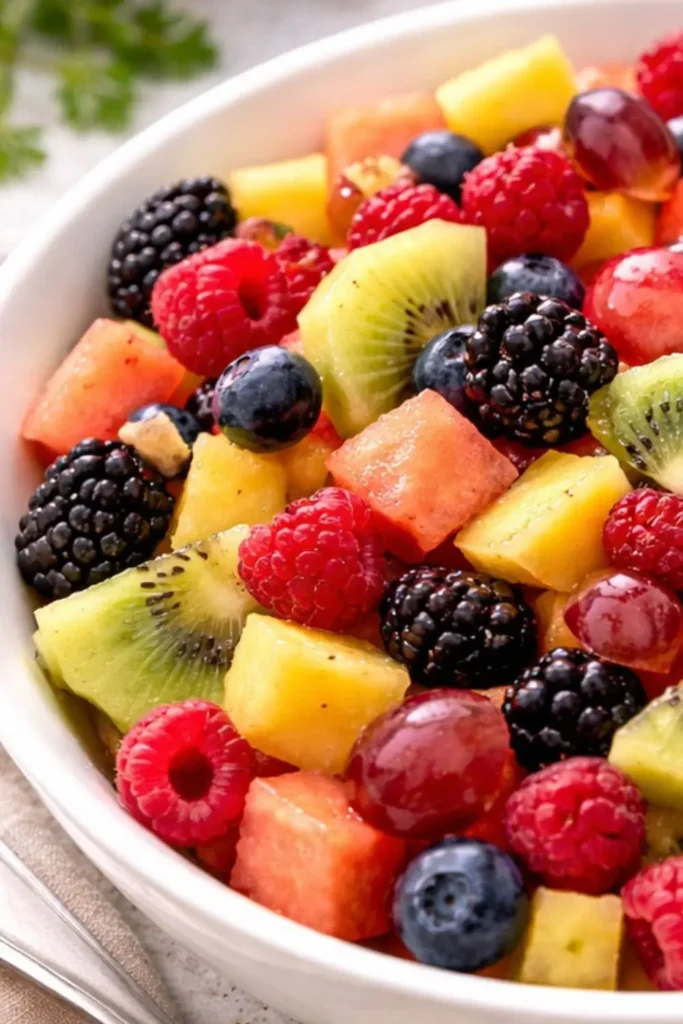
You know that moment at a brunch table when the fruit salad shows up and everyone politely takes a tiny spoonful just to be nice? This is not that fruit salad. This Easy Vegan Mimosa Fruit Salad is the kind that disappears before the main course even hits the table. Watermelon, mango, pineapple, four kinds of berries, grapes, kiwi all tossed in a bright lime and maple syrup dressing that ties everything together like it was always meant to be this way.
I first brought this to a summer brunch gathering expecting it to be a “side note” dish. It became the most talked-about thing on the table. Nobody could figure out what made the dressing taste so good, and honestly, the simplicity of the answer made it even better. Let me walk you through it.
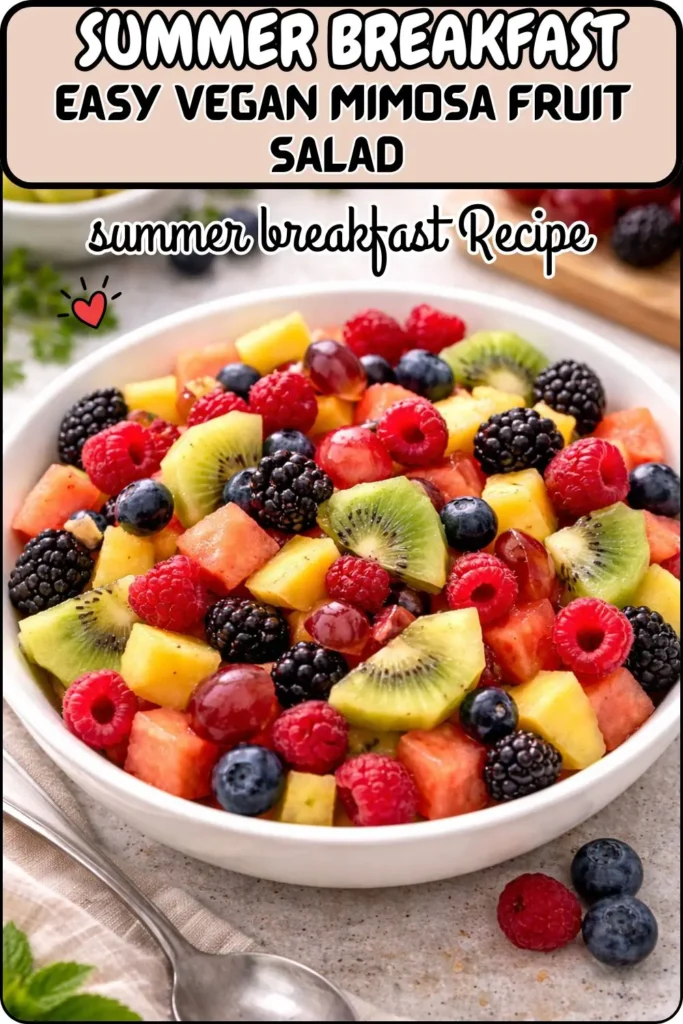
My Recipe Details at a Glance
Before we get into the good stuff, here’s your quick overview:
- Course- Breakfast, Brunch, or Dessert
- Prep Time- 20 minutes
- Cook Time-0 minutes
- Total Time- 20 minutes
- Servings- 8–10 people
- Calories- Very low per serving (the dressing itself is only ~3 kcal per drizzle the bulk of your calories come from the natural fruit sugars, which vary based on your portions)
- Diet-100% Vegan, Gluten-Free, Refined Sugar-Free
This is the definition of a crowd-pleasing, no-cook, plant-based brunch centerpiece and it takes just 20 minutes to pull together.
Why Call It a Mimosa Fruit Salad?
Fair question. There’s no champagne in this recipe it’s completely vegan and alcohol-free. The “mimosa” in the name comes from the bright, citrus-forward dressing that echoes the orange-meets-bubbly flavor profile of a classic brunch mimosa. The lime juice brings that same zippy, acidic brightness, and the maple syrup softens it just enough to feel celebratory.
Think of it as the fruit salad that captures the spirit of brunch mimosas without anyone needing a drink. It works just as well at a kids’ brunch, a baby shower, a backyard party, or a quiet Sunday morning for two.
Equipment You’ll Need For
The good news you need almost nothing. Here’s your complete setup:
- A large serving bowl – This recipe makes 8–10 servings, so go big. A wide, shallow bowl shows off the colors beautifully and makes it easy to toss without everything tumbling out.
- A sharp chef’s knife – You’ll be cutting watermelon, cantaloupe, pineapple, and mango. A sharp knife makes clean cuts and keeps soft fruit like mango from getting crushed.
- A cutting board – Large enough to handle half a watermelon without things sliding around.
- A small bowl and whisk – For mixing the dressing. You can also just shake it in a mason jar if you’re keeping it casual.
- A large spoon or silicone spatula – For tossing gently without destroying the berries.
- Measuring spoons – Just for the dressing portions.
FYI the only skill this recipe requires is basic knife work. If you can slice a mango and segment a pineapple, you’re fully qualified to make this.
Ingredients Building the Perfect Fruit Salad
The Fruit
One of the best things about this vegan mimosa fruit salad is its flexibility. The recipe scales up or down easily based on how many people you’re feeding. For a generous 8–10 servings, here’s what works:
- ½ small watermelon– Cut into bite-sized cubes or use a melon baller for a fancier look.
- ½ cantaloupe – Cubed. The melon-on-melon combination with watermelon is a classic summer pairing.
- ½ pineapple – Core removed, cut into chunks. Fresh pineapple makes a significant difference over canned here – more flavor, better texture.
- 1 mango – Peeled and cubed. Choose a mango that gives slightly when pressed; it’ll be perfectly ripe and sweet.
- About 20 green grapes – Halved if large, left whole if small.
- About 20 red grapes – The color contrast between green and red grapes is visually stunning in the bowl.
- About 20 strawberries – Hulled and halved or quartered depending on size.
- About 20 blackberries – Leave whole; they’re delicate.
- About 20 red raspberries -Handle these last and as gently as possible.
- A couple of generous handfuls of blueberries – These scatter beautifully and fill in all the gaps.
- 2 kiwis -Peeled and sliced into rounds or half-moons.
The Mimosa Dressing
- ½ cup fresh lime juice – Or use frozen limeade concentrate (thawed) for a slightly sweeter, more concentrated citrus hit. Both work well; the fresh lime version is brighter and more natural-tasting.
- 2 tablespoons pure maple syrup – This balances the tartness of the lime and adds a subtle caramel-like depth that regular sugar simply doesn’t bring.
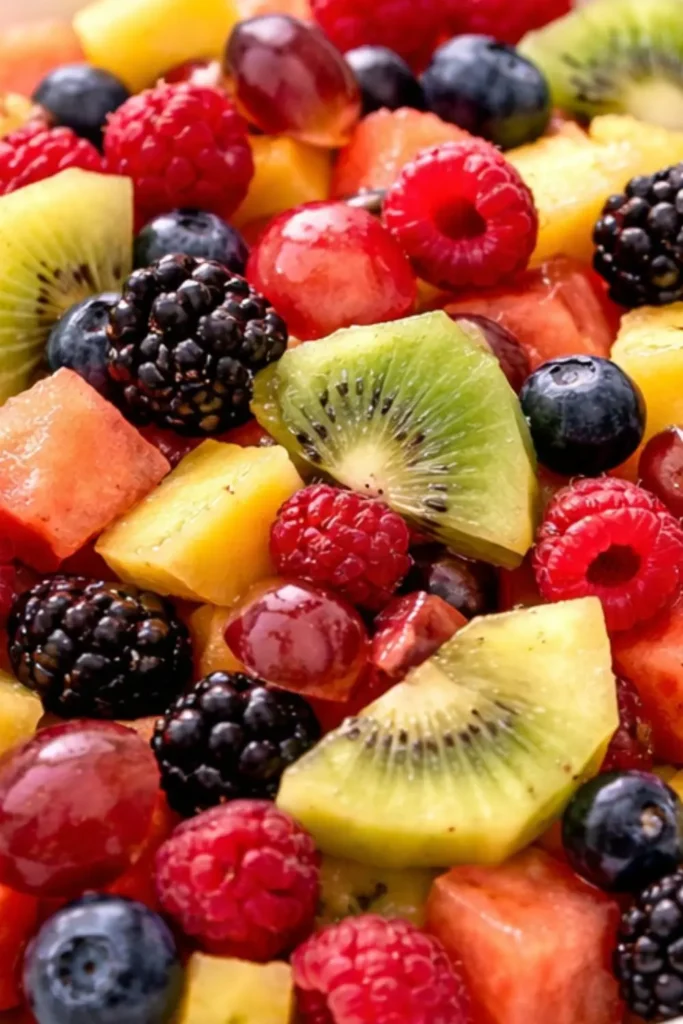
How to Make Easy Vegan Mimosa Fruit Salad
Three steps. That’s all this takes.
Step 1 – Prep and Cut All the Fruit
Work through the fruit from largest to smallest. Start with the watermelon and cantaloupe (most time-consuming), then move to pineapple and mango, then the grapes and strawberries, and finish with the delicate berries and kiwi. Add everything to your large serving bowl as you go.
Cut everything into similar bite-sized pieces so each forkful catches multiple fruits at once. Giant watermelon chunks next to whole blueberries looks awkward and eats unevenly. Consistent sizing makes a real difference in both presentation and the eating experience.
Step 2 – Make the Lime Maple Dressing
Whisk together the lime juice and maple syrup in a small bowl until fully combined. Taste it. It should hit tart first, then finish slightly sweet. If your lime juice is particularly sharp, add an extra half-teaspoon of maple syrup. If you like it more tart, pull back on the maple. This dressing is forgiving and easy to adjust.
Step 3 – Dress, Toss, and Chill
Drizzle the dressing evenly over the fruit. Use your large spoon or spatula to toss everything very gently you want to coat the fruit without crushing the raspberries and blackberries into a colorful mush. Store the bowl in the refrigerator until chilled before serving, at least 15–20 minutes. The cold temperature makes everything taste more vibrant and refreshing.
Store any leftovers covered in the refrigerator. The salad keeps well for up to 2 days, though the berries will soften slightly over time.
Nutritional Notes What You’re Actually Eating
The dressing itself contributes negligible calories about 3 kcal per serving. The bulk of the nutritional value comes directly from the fresh fruit, which varies based on your portion sizes. Here’s what the fruit lineup broadly delivers per serving:
| Nutrient | What’s Driving It |
| Natural sugars | Primarily watermelon, mango, and grapes |
| Fiber | Berries, kiwi, and pineapple |
| Vitamin C | Strawberries, kiwi, and pineapple all exceptionally high |
| Vitamin A | Cantaloupe and mango are outstanding sources |
| Potassium | Watermelon, mango, and cantaloupe |
| Antioxidants | All four berry varieties blueberries especially |
A standard serving of this fruit salad (roughly 1.5 cups) lands around 100–140 calories depending on your fruit ratios making it one of the most nutrient-dense, calorie-light dishes you can put at a brunch table. IMO, the fact that it tastes this indulgent at that calorie count is genuinely impressive.
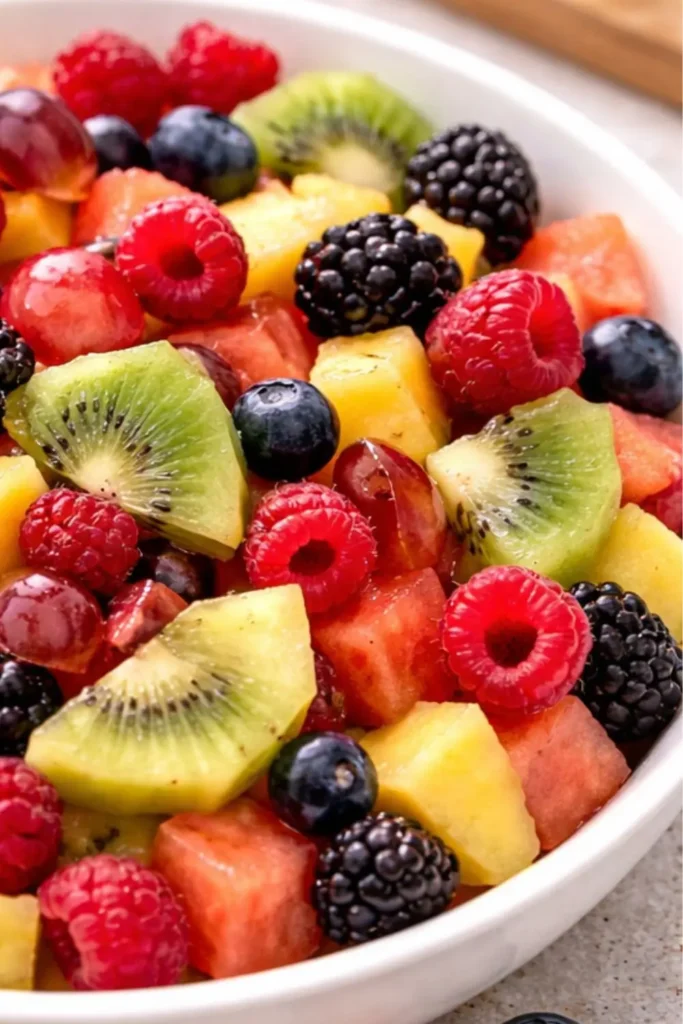
The Lime Maple Dressing Why It Works So Well
Most fruit salads skip the dressing entirely or dump bottled stuff on top. This dressing is what separates a good fruit salad from one people actually talk about after brunch.
Why Lime Instead of Lemon?
Lime juice has a slightly different flavor profile than lemon a little more tropical, a little more complex, and a little less sharp. It pairs particularly well with summer fruits like mango, watermelon, and pineapple in a way that lemon doesn’t quite match. The lime amplifies the tropical notes already in the fruit bowl rather than competing with them.
Why Maple Syrup Instead of Regular Sugar?
Two reasons. First, maple syrup dissolves instantly into the lime juice no grainy sugar sitting at the bottom of your bowl. Second, maple syrup carries its own subtle flavor: a gentle warmth with slight caramel undertones that makes the dressing taste more interesting than sugar water ever could. It’s a small swap with a noticeable payoff.
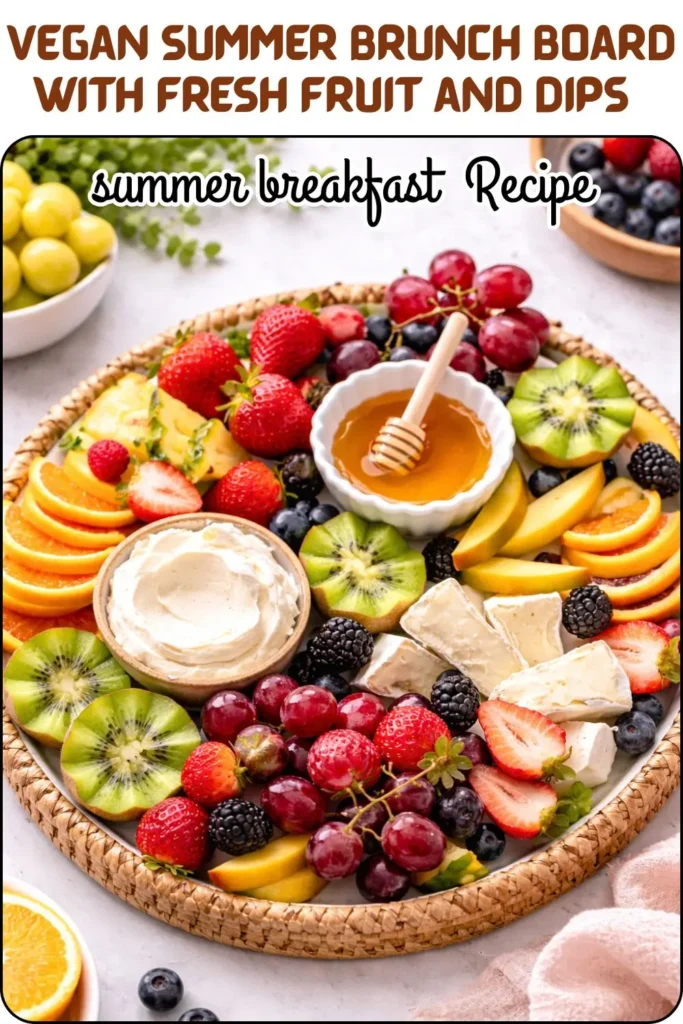
You may also like Next recipe
Vegan Summer Brunch Board with Fresh Fruit and Dips
Tips for the Best Vegan Mimosa Fruit Salad
A few things that genuinely elevate this recipe:
- Use the ripest fruit you can find- This salad has nowhere to hide mediocre fruit. A mealy mango or a flavorless watermelon will drag the whole bowl down. Shop at your farmers market if you can peak-season summer fruit is on an entirely different level.
- Cut everything cold- Refrigerate your whole fruits before cutting if possible. Cold fruit holds its shape better on the knife and stays firmer longer in the bowl.
- Add the delicate berries last-Raspberries and blackberries are fragile. Add them on top after everything else is in the bowl, then fold them in very gently. This keeps them intact and prevents purple streaks running through your beautiful fruit salad.
- Dress right before serving if possible- The dressing is fine made ahead, but for the freshest look, drizzle it over the fruit just before you bring the bowl to the table.
- Garnish with fresh mint- A small handful of torn mint leaves scattered on top right before serving adds a pop of green color and a fresh aroma that makes the whole presentation feel intentional and elevated.
Scaling Up or Down This Recipe Is Flexible
One of the most practical things about this recipe is how easily it scales. Serving 4 people for a quiet weekend brunch? Halve everything. Hosting a graduation party for 25? Triple it and use the biggest bowl you own.
The dressing ratio stays the same regardless of scale -roughly ½ cup lime juice to 2 tablespoons maple syrup per 8–10 servings. Scale the dressing proportionally with the fruit and you’ll always hit the right balance.
For a smaller version (2–4 servings), use just one or two types of melon, cut back to two varieties of berries, and keep the kiwi and grapes. The salad still works beautifully with fewer components.
Make-Ahead and Storage Guide
Make-Ahead
You can cut all the harder fruits (watermelon, cantaloupe, pineapple, mango, grapes) up to 24 hours ahead and store them covered in the refrigerator. Prep the delicate berries and kiwi the morning of. Mix the dressing up to 2 days ahead and refrigerate separately. Assemble everything within 1–2 hours of serving for the best texture and appearance.
Leftovers
Cover the bowl tightly and refrigerate. The salad keeps for up to 2 days, though day one is undeniably the best. The berries soften and release juice over time, which actually creates a lovely natural syrup at the bottom of the bowl spoon that over the fruit when you serve leftovers.
My Final Thoughts
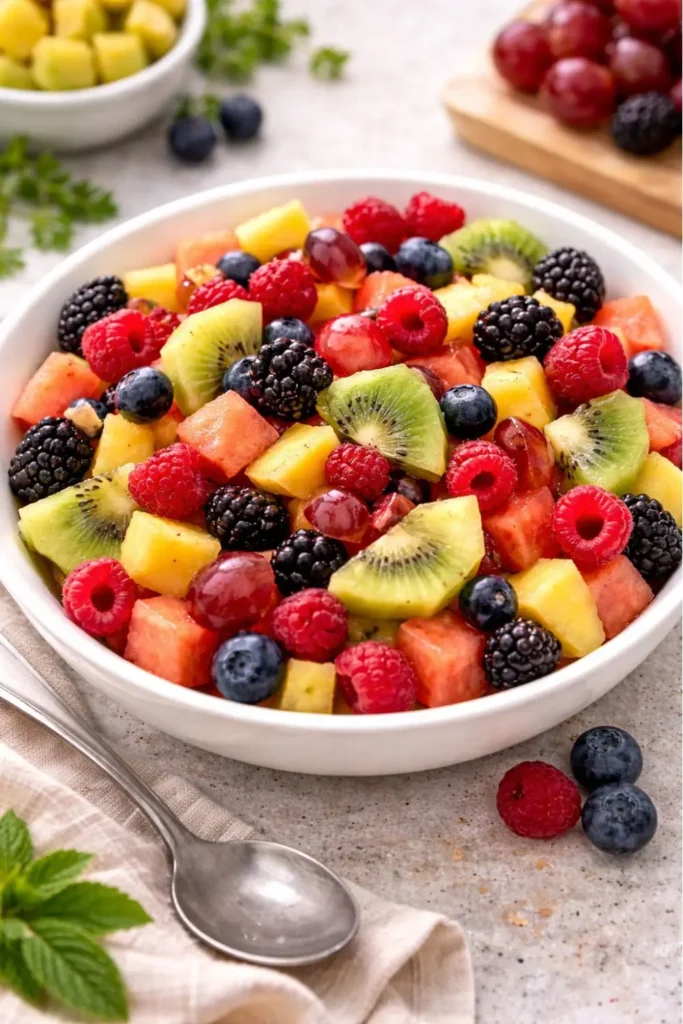
This Easy Vegan Mimosa Fruit Salad is exactly the kind of recipe that makes a brunch spread look effortlessly impressive without asking much of you at all. Twenty minutes of prep, zero cooking, one beautiful bowl, and a crowd that will ask for the recipe before they even finish their first serving.
The lime maple dressing is the secret weapon. The rainbow of summer fruit is the showstopper. And the fact that it’s completely plant-based, naturally sweetened, and loaded with vitamins and fiber makes it one of those rare dishes that’s as good for you as it tastes.
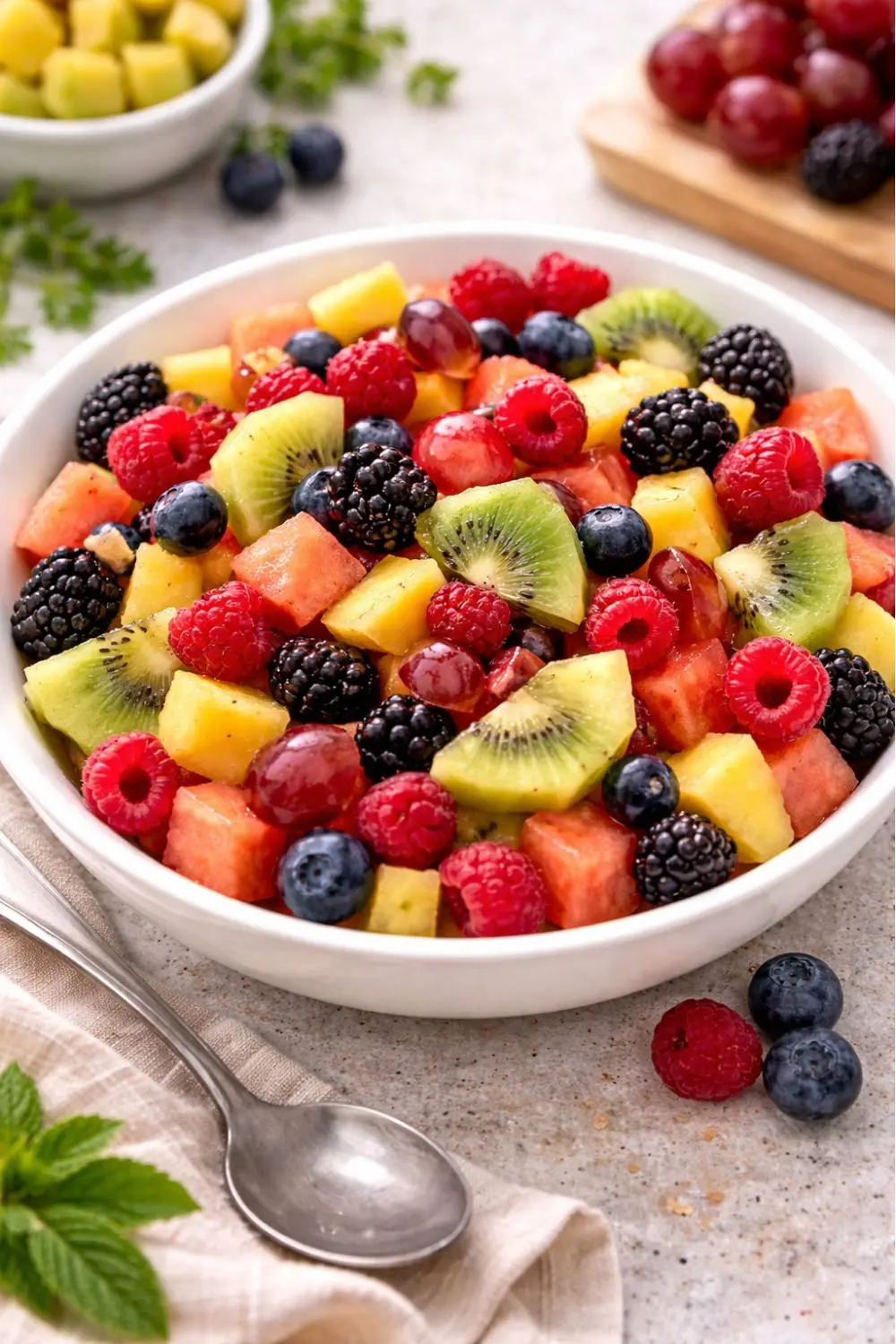
Easy Vegan Mimosa Fruit Salad
Ingredients
Equipment
Method
- Step 1 – Prep and Cut All the Fruit
- Work through the fruit from largest to smallest. Start with the watermelon and cantaloupe (most time-consuming), then move to pineapple and mango, then the grapes and strawberries, and finish with the delicate berries and kiwi. Add everything to your large serving bowl as you go.
- Cut everything into similar bite-sized pieces so each forkful catches multiple fruits at once. Giant watermelon chunks next to whole blueberries looks awkward and eats unevenly. Consistent sizing makes a real difference in both presentation and the eating experience.
- Step 2 – Make the Lime Maple Dressing
- Whisk together the lime juice and maple syrup in a small bowl until fully combined. Taste it. It should hit tart first, then finish slightly sweet. If your lime juice is particularly sharp, add an extra half-teaspoon of maple syrup. If you like it more tart, pull back on the maple. This dressing is forgiving and easy to adjust.
- Step 3 – Dress, Toss, and Chill
- Drizzle the dressing evenly over the fruit. Use your large spoon or spatula to toss everything very gently you want to coat the fruit without crushing the raspberries and blackberries into a colorful mush. Store the bowl in the refrigerator until chilled before serving, at least 15–20 minutes. The cold temperature makes everything taste more vibrant and refreshing.
- Store any leftovers covered in the refrigerator. The salad keeps well for up to 2 days, though the berries will soften slightly over time.
Notes
Nutritional Notes What You’re Actually Eating
The dressing itself contributes negligible calories about 3 kcal per serving. The bulk of the nutritional value comes directly from the fresh fruit, which varies based on your portion sizes. Here’s what the fruit lineup broadly delivers per serving:| Nutrient | What’s Driving It |
| Natural sugars | Primarily watermelon, mango, and grapes |
| Fiber | Berries, kiwi, and pineapple |
| Vitamin C | Strawberries, kiwi, and pineapple all exceptionally high |
| Vitamin A | Cantaloupe and mango are outstanding sources |
| Potassium | Watermelon, mango, and cantaloupe |
| Antioxidants | All four berry varieties blueberries especially |

Hi — I’m Rachel. I’m a wife, a mom, and a home cook who believes that food should bring comfort, joy, and compassion to the table. I live with my family — two hungry little foodies who are my most honest recipe testers — and together we’ve built a kitchen culture that’s all about good food that happens to be 100% vegan. I started this blog because I wanted a place to share the recipes that keep our days moving, the dishes that make weeknights feel a little easier, and the meals that become our little family traditions.