
Raise your hand if you’re tired of sweet breakfasts. Smoothie bowls are great, fruit salads are lovely, but sometimes your body wakes up and just wants something savory, something with crunch, real protein, and a dressing that makes you do a double take. That’s exactly what this Easy Vegan Edamame and Veggie Breakfast Bowl delivers and it does it in 15 minutes flat.
I started making this on summer mornings when I needed a breakfast that could also pull double duty as a packed lunch. One bowl prep, four servings, zero cooking beyond shelling some edamame and the flavor is genuinely restaurant-level. The sesame ginger dressing alone is worth making this recipe. Let me show you how it all comes together.
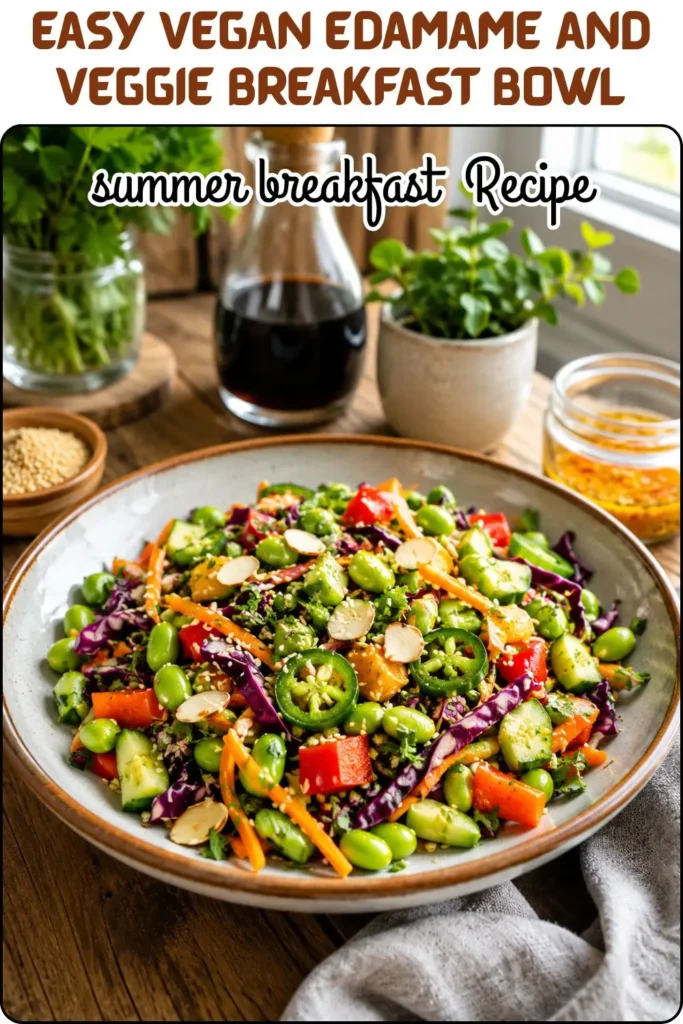
My Recipe Details at a Glance
Here’s everything upfront before we get into the details:
- Course-Breakfast, Lunch, or Light Dinner
- Cuisine- Asian-Inspired
- Prep Time- 15 minutes
- Cook Time- 0 minutes (edamame is pre-cooked)
- Total Time- 15 minutes
- Servings- 4
- Calories per Serving- 375 kcal
This is a high-protein, high-fiber, fully plant-based breakfast bowl that keeps you full for hours. No stove required once your edamame is cooked and cooled.
Why a Savory Breakfast Bowl Changes Everything
Most people default to sweet at breakfast cereal, fruit, granola, toast with jam. And there’s nothing wrong with that. But if you’ve ever eaten a savory, protein-packed breakfast and noticed how much longer you stay full and focused, you already know what I’m talking about.
This vegan edamame and veggie breakfast bowl gives you 20.4g of protein per serving from whole plant sources. That’s comparable to what you’d get from eggs without the cholesterol. It also packs 11.1g of fiber which means your digestion stays happy, your energy stays steady, and you’re not raiding the snack cabinet by 10:30am.
And let’s be honest a bowl this colorful and vibrant is just a better way to start the day.
Equipment You’ll Need For
Nothing fancy here. Your complete kitchen setup:
- A large mixing bowl – Big enough to toss all four servings comfortably without ingredients flying out.
- A small bowl and whisk – For building the sesame ginger dressing. A fork works too in a pinch, but a whisk emulsifies the oils more evenly.
- A sharp chef’s knife and cutting board – You’ll be slicing cucumbers, dicing bell peppers, and shredding cabbage. Sharp knife = clean cuts and less bruising on the vegetables.
- A box grater or microplane – For grating the fresh ginger and garlic into the dressing. Fresh grated ginger is non-negotiable here; powdered ginger simply doesn’t give you the same punch.
- Measuring spoons – The dressing ratios matter, so measure rather than eyeball, at least the first time.
- A garlic press (optional) – Makes the garlic prep faster if you have one.
FYI this entire recipe comes together in one large bowl and one small bowl. Cleanup takes about two minutes. That’s the kind of morning cooking experience everyone actually wants.
Ingredients The Full Breakdown
For the Bowl
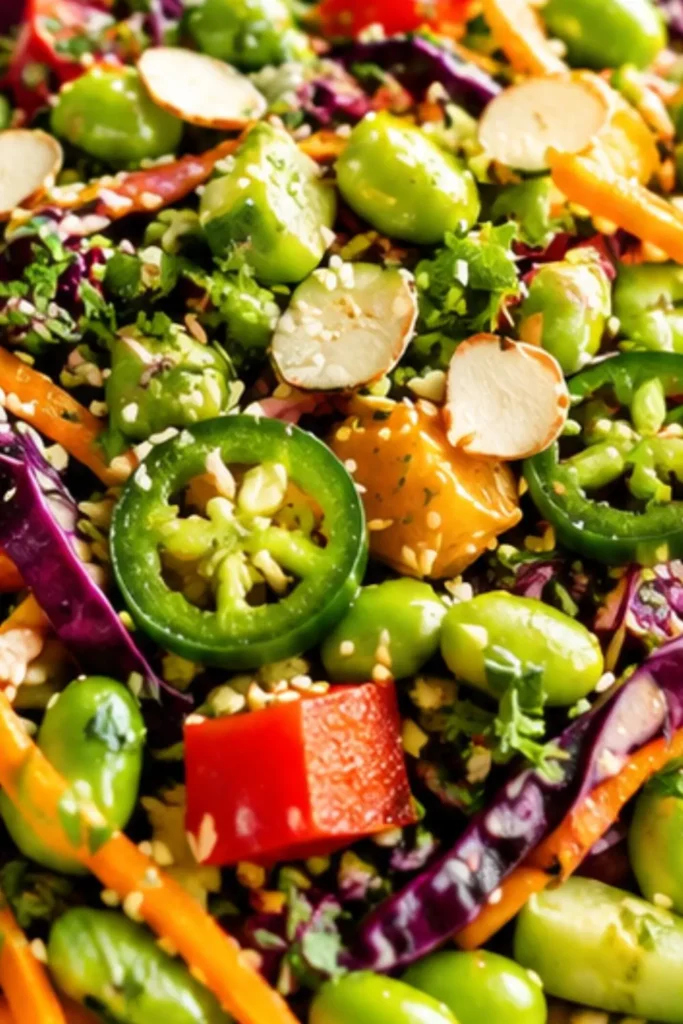
- 3 cups shelled edamame beans, cooked and cooled – The protein backbone of this entire recipe. Buy frozen shelled edamame and cook according to the package usually just 3–5 minutes in boiling water. Cool them completely before using so the dressing clings rather than sliding off warm beans.
- 2–3 cups shredded red cabbage – Brings a gorgeous deep purple color, satisfying crunch, and a solid hit of vitamin C and fiber. Use a sharp knife or a mandoline for even, thin shreds.
- 2 Persian cucumbers, quartered and sliced – Persian cucumbers have thinner skin and fewer seeds than regular cucumbers they’re crunchier and less watery, which keeps the bowl from getting soggy. Regular English cucumbers work fine as a substitute.
- 1 red bell pepper, diced – Sweet, crisp, and loaded with vitamin C. One red bell pepper has more vitamin C than an orange. Just putting that out there.
- 1 orange bell pepper, diced – The red and orange bell peppers together create a warm color contrast against the purple cabbage that makes this bowl genuinely stunning.
- 1 cup shredded carrots – Adds natural sweetness, beta-carotene, and another layer of texture.
- ½ cup chopped fresh cilantro – This is where opinions get divided. Cilantro lovers you’re welcome. If you’re in the “cilantro tastes like soap” camp, swap it for fresh flat-leaf parsley. No judgment.
- 2 scallions, sliced – Mild onion flavor that doesn’t overpower. Use both the white and green parts.
- 1 jalapeño or Fresno chile pepper, thinly sliced (optional) – For heat. Fresno chiles are slightly milder and fruitier than jalapeños. Either works beautifully, or skip entirely if you’re heat-sensitive.
For the Sesame Ginger Dressing
This dressing is the heart of the recipe. Every element pulls its weight:
- 2–3 tablespoons reduced-sodium soy sauce – The umami foundation. Use reduced-sodium to keep the salt level manageable; regular soy sauce can overpower the other flavors. For a gluten-free version, swap with tamari or coconut aminos.
- 2 tablespoons rice vinegar – Bright and lightly acidic without being sharp. It balances the richness of the sesame oil beautifully.
- 2 tablespoons toasted sesame oil – The most important flavor element in the dressing. Toasted sesame oil has a deep, nutty, fragrant quality that regular sesame oil completely lacks. Don’t substitute.
- 1 tablespoon extra-virgin olive oil – Smooths out the dressing and adds body.
- 1 tablespoon pure maple syrup– Just enough sweetness to round out the soy sauce and vinegar without making the dressing taste sweet.
- 1 tablespoon grated fresh ginger – Fresh ginger brings warmth, brightness, and a slight peppery bite. It’s one of the ingredients that makes people say “what’s in this dressing?” after the first taste.
- 1 clove garlic, grated – Grated garlic (rather than minced) distributes more evenly through the dressing and avoids any harsh raw garlic chunks.
For the Garnish
- ¼ cup toasted sliced almonds – Crunch, healthy fats, and a mild nuttiness that complements the sesame notes in the dressing.
- 1 tablespoon toasted sesame seeds – Tiny but impactful. They add texture, a subtle nutty flavor, and visual finish that makes the bowl look polished and intentional.
Try It Next recipe
How to Make Your Vegan Edamame and Veggie Breakfast Bowl
Step 1 – Build the Salad Base
Add the cooked, cooled edamame, shredded red cabbage, sliced cucumbers, diced red and orange bell peppers, shredded carrots, cilantro, and scallions to your large bowl. If you’re using jalapeño or Fresno chile, add it now.
Resist the urge to toss everything together before the dressing is ready. Keeping the ingredients loosely layered until you dress it gives you a better final toss and more even coating.
Step 2 – Make the Sesame Ginger Dressing
In your small bowl, whisk together the soy sauce, rice vinegar, toasted sesame oil, olive oil, maple syrup, grated ginger, and grated garlic. Whisk until fully emulsified you want a cohesive dressing, not separated oil floating on top of soy sauce. Taste it. It should hit savory and umami-forward first, then a subtle brightness from the vinegar, then a gentle warmth from the ginger.
Adjust as needed more soy sauce for saltiness, more rice vinegar for brightness, more maple syrup to soften the edge. The dressing forgives easy adjustments.
Step 3 -Dress, Toss, and Garnish
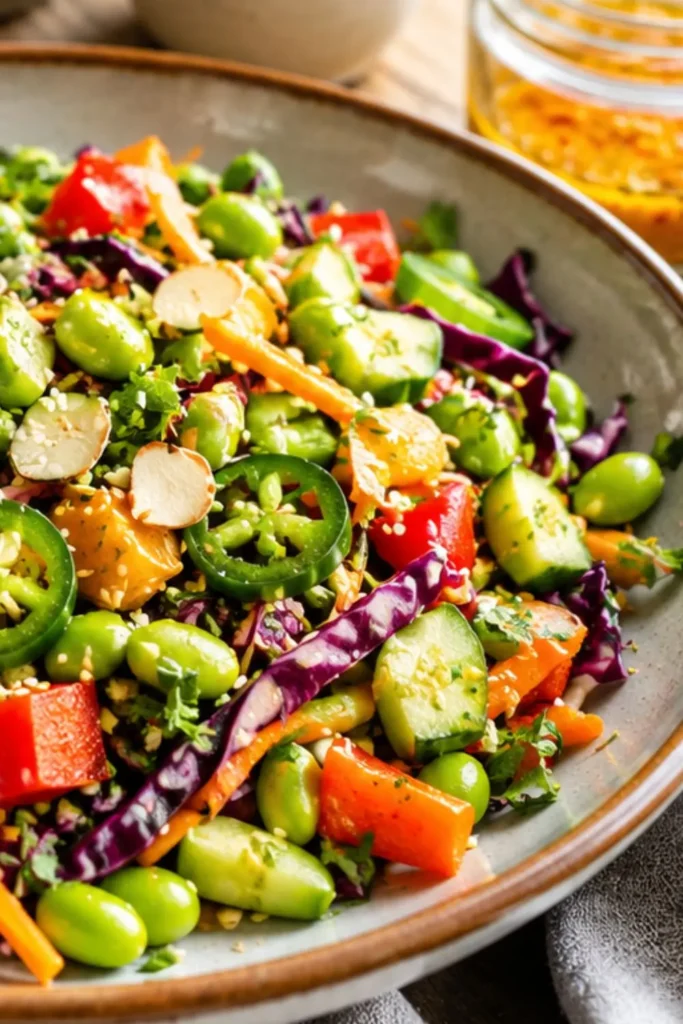
Pour the dressing over the salad and toss thoroughly until every ingredient gets fully coated. Take your time here you want the dressing to reach the edamame at the bottom of the bowl, not just sit on top of the cabbage.
Sprinkle the toasted sliced almonds and sesame seeds over the top immediately before serving. Add the garnishes last they lose their crunch quickly once they hit the dressing.
Serve immediately or refrigerate. This bowl keeps beautifully for 3–4 days in an airtight container, making it one of the best meal-prep breakfast options you’ll find.
Full Nutritional Breakdown (Per Serving Based on 4 Servings)
| Nutrient | Amount |
| Calories | 375 kcal |
| Carbohydrates | 29.6g |
| Protein | 20.4g |
| Fat | 22.2g |
| Saturated Fat | 3g |
| Fiber | 11.1g |
| Sugar | 11g |
A few numbers worth highlighting:
- 20.4g of protein – Exceptional for a plant-based breakfast. Edamame is a complete protein, meaning it contains all nine essential amino acids. That’s rare in the plant world.
- 11.1g of fiber – Nearly 40% of the recommended daily intake in one bowl. This is what keeps you full until lunch without a second thought.
- 22.2g of fat – Almost entirely from healthy unsaturated sources: sesame oil, olive oil, and almonds. This is the kind of fat that supports brain function and keeps you satiated, not the kind to worry about.
- 375 calories – Filling, balanced, and substantial enough to call this a real breakfast without overdoing it.
Why Edamame Makes Such a Good Breakfast Protein
Most people associate edamame with appetizers at Japanese restaurants. They absolutely should not stop there. Edamame is one of the most nutritionally complete plant proteins available whole soybeans at their freshest, mildest, most versatile stage.
Unlike tofu or tempeh, edamame requires almost no preparation beyond cooking. It has a naturally mild, slightly sweet flavor that pairs with bold dressings like this sesame ginger base without fighting for attention. And it eats well both warm and cold making it perfect for a meal-prepped breakfast bowl you can grab straight from the fridge.
Meal Prep Tips Making This Work All Week
This recipe is genuinely one of the best breakfast meal-prep options out there. Here’s how to maximize it:
- Cook and cool a large batch of edamame on Sunday. Store in an airtight container in the fridge for the whole week.
- Pre-shred the cabbage and carrots both keep well for 4–5 days refrigerated in separate containers.
- Make a double batch of dressing and store it in a mason jar. It keeps for up to a week in the fridge and works on other salads and grain bowls too.
- Keep the garnishes separate until serving. Store toasted almonds and sesame seeds in a small bag at room temperature and add them right before eating to preserve the crunch.
- Assembled (without garnishes) Keeps 3–4 days covered in the fridge. The vegetables stay crisp longer than you’d expect because the cabbage and edamame both hold up well to the dressing.
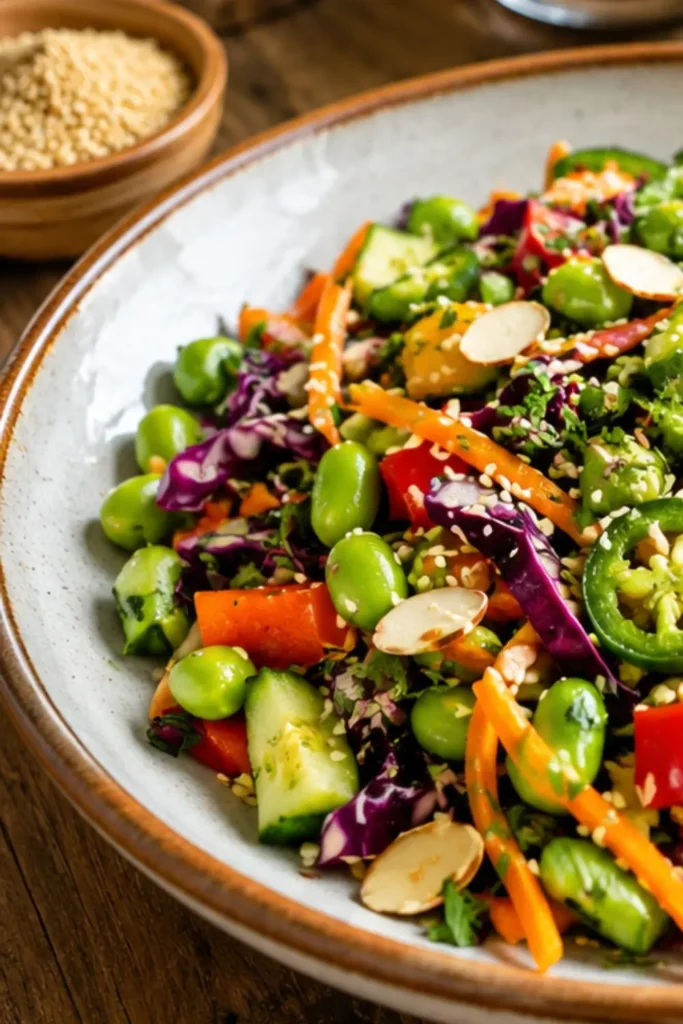
Customization Options Make It Your Own
IMO, one of the best things about this bowl is how many directions you can take it:
- Add avocado for extra creaminess and healthy fats slice it fresh just before serving.
- Swap edamame for chickpeas if you want a different protein base with a slightly heartier texture.
- Add cooked quinoa or brown rice to the base to make this even more substantial for bigger appetites.
- Use coconut aminos instead of soy sauce for a slightly sweeter, gluten-free dressing that’s milder in salt.
- Top with sliced mango or mandarin orange segments for a sweet-savory contrast that’s particularly good in summer.
- Add crushed peanuts alongside or instead of the almonds for a more peanut-satay flavor profile.
The Bottom Line
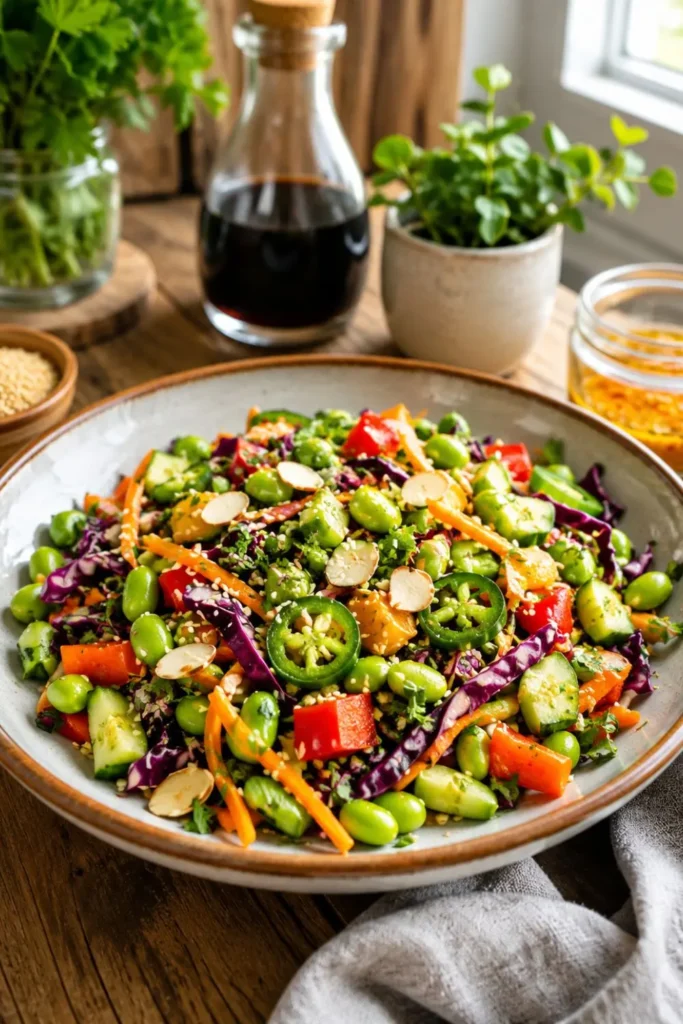
This Easy Vegan Edamame and Veggie Breakfast Bowl proves that savory plant-based breakfasts can be just as fast, just as satisfying, and honestly more interesting than the usual sweet morning routine. Fifteen minutes, four servings, 20g of protein per bowl, and a sesame ginger dressing that you’ll want to put on everything.
Make a full batch on Sunday, portion it into containers, and your breakfast situation is handled for most of the week. Add your garnishes fresh each morning and you’ve got something that tastes like you made it right then and there.
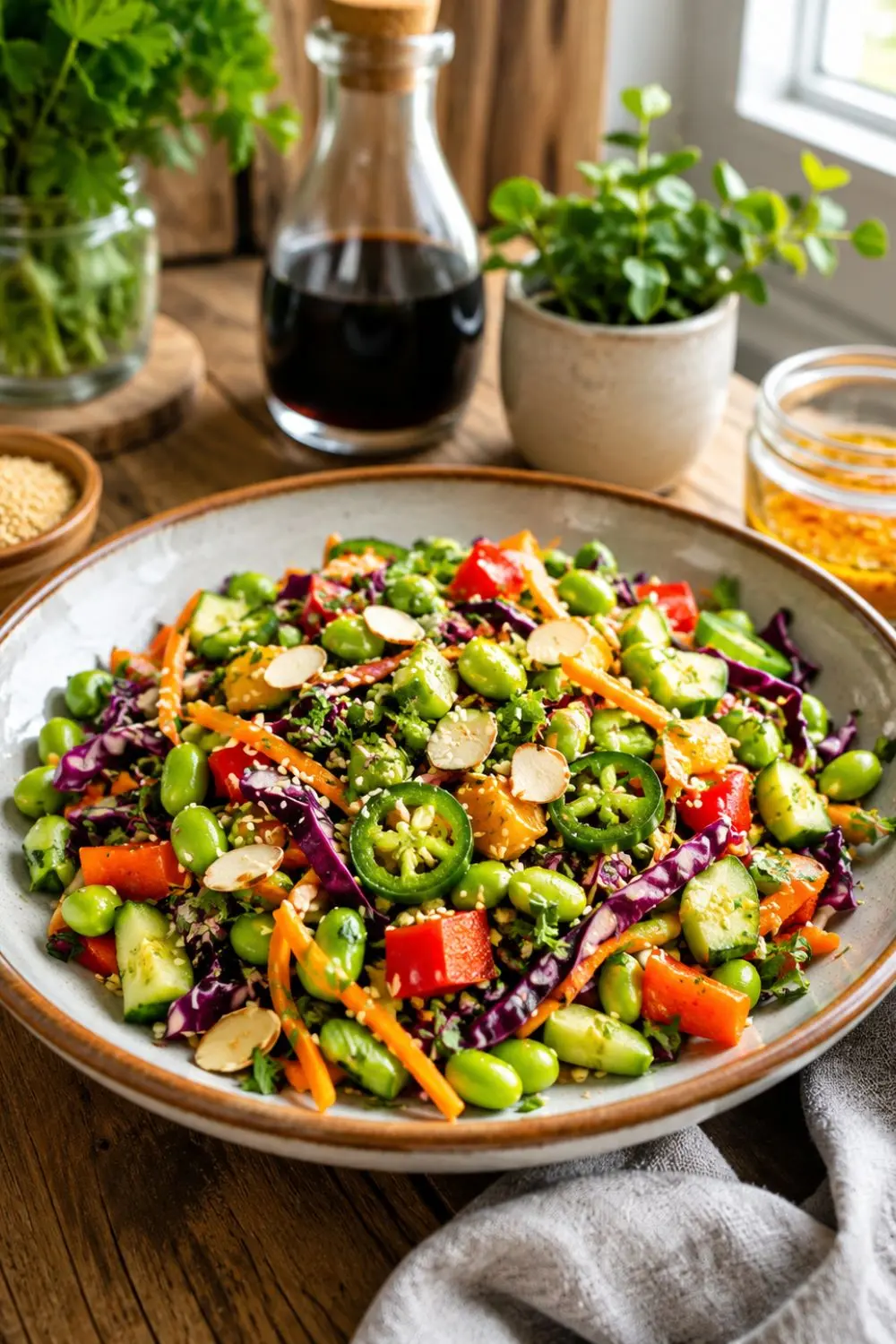
Easy Vegan Edamame and Veggie Breakfast Bowl
Ingredients
Equipment
Method
- Step 1 – Build the Salad Base
- Add the cooked, cooled edamame, shredded red cabbage, sliced cucumbers, diced red and orange bell peppers, shredded carrots, cilantro, and scallions to your large bowl. If you’re using jalapeño or Fresno chile, add it now.
- Resist the urge to toss everything together before the dressing is ready. Keeping the ingredients loosely layered until you dress it gives you a better final toss and more even coating.
- Step 2 – Make the Sesame Ginger Dressing
- In your small bowl, whisk together the soy sauce, rice vinegar, toasted sesame oil, olive oil, maple syrup, grated ginger, and grated garlic. Whisk until fully emulsified you want a cohesive dressing, not separated oil floating on top of soy sauce. Taste it. It should hit savory and umami-forward first, then a subtle brightness from the vinegar, then a gentle warmth from the ginger.
- Adjust as needed more soy sauce for saltiness, more rice vinegar for brightness, more maple syrup to soften the edge. The dressing forgives easy adjustments.
- Step 3 -Dress, Toss, and Garnish
- Pour the dressing over the salad and toss thoroughly until every ingredient gets fully coated. Take your time here you want the dressing to reach the edamame at the bottom of the bowl, not just sit on top of the cabbage.
- Sprinkle the toasted sliced almonds and sesame seeds over the top immediately before serving. Add the garnishes last they lose their crunch quickly once they hit the dressing.
- Serve immediately or refrigerate. This bowl keeps beautifully for 3–4 days in an airtight container, making it one of the best meal-prep breakfast options you’ll find.
Notes
Full Nutritional Breakdown (Per Serving Based on 4 Servings)
| Nutrient | Amount |
| Calories | 375 kcal |
| Carbohydrates | 29.6g |
| Protein | 20.4g |
| Fat | 22.2g |
| Saturated Fat | 3g |
| Fiber | 11.1g |
| Sugar | 11g |

Hi — I’m Rachel. I’m a wife, a mom, and a home cook who believes that food should bring comfort, joy, and compassion to the table. I live with my family — two hungry little foodies who are my most honest recipe testers — and together we’ve built a kitchen culture that’s all about good food that happens to be 100% vegan. I started this blog because I wanted a place to share the recipes that keep our days moving, the dishes that make weeknights feel a little easier, and the meals that become our little family traditions.