
Deli coleslaw has a reputation problem it’s often either drowning in watery dressing or stuck together in a way that suggests it’s been sitting since last Tuesday. Creamy Vegan Coleslaw fixes both problems completely, using a genuinely creamy vegan mayo-based dressing with just the right tang from Dijon mustard and red wine vinegar, tossed with crisp cabbage and carrots in 15 minutes flat. No cooking, no special equipment, no waiting around just a genuinely excellent side dish that holds up at room temperature for hours and tastes better the longer it sits.
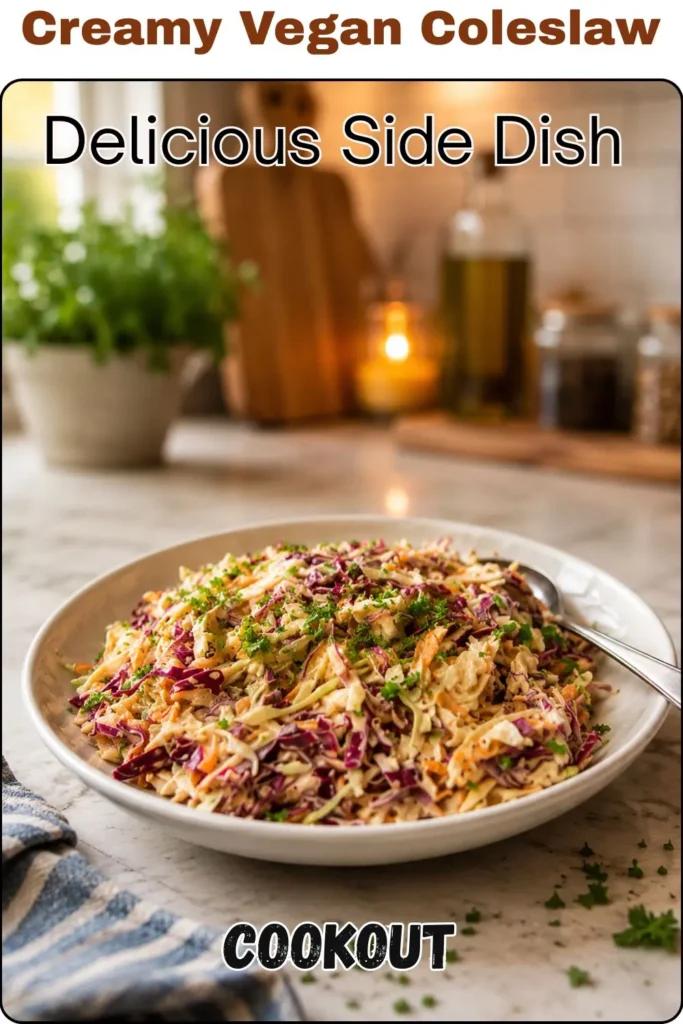
I make this coleslaw constantly because it’s the side dish that quietly does the most work on any plate it cuts through rich sandwiches, balances smoky BBQ, and adds crunch and brightness to wraps and bites & wraps of every kind. Once you taste how good a properly balanced creamy slaw can be, the bagged deli version starts to look genuinely sad by comparison.
My Recipe Timing and Serving Details
| Detail | Info |
| Prep Time | 15 minutes |
| Cook Time | 0 minutes |
| Total Time | 15 minutes |
| Servings | 8 |
| Serving Size | 1 of 8 portions |
| Calories Per Serving | 160 kcal |
| Course | Side Dish |
| Diet | 100% Vegan |
This creamy vegan coleslaw serves 8 people as a generous side portion. At 160 calories per serving, it’s a satisfying side that doesn’t compete for space with your main dish it complements it. The 15-minute total time is genuinely accurate: this is purely an assembly recipe with zero cooking involved, which makes it one of the fastest sides in any cookout, picnic, or weeknight dinner rotation.
Why This Coleslaw Tastes Genuinely “Creamy” Without Dairy
The word “creamy” in this recipe’s name isn’t aspirational it’s accurate, and it comes down to a specific combination of ingredients working together:
Vegan mayonnaise (¾ cup) is the foundation. Quality vegan mayo Just Mayo, Vegan Hellmann’s, or Sir Kensington’s Fabanaise has the same emulsified, rich texture as traditional mayo because it’s built the same way: oil emulsified with an acid and a binder (often aquafaba in vegan versions). This creates the coating quality that makes coleslaw taste “creamy” rather than just “dressed.”
Dijon mustard (1 tablespoon) adds body and a slight sharpness that prevents the mayo from tasting flat or one-dimensional. Mustard is also an emulsifier itself, which helps the dressing stay cohesive rather than separating.
Red wine vinegar (3 tablespoons) cuts through the richness of the mayo and brightens the entire dressing. Without enough acid, creamy coleslaw becomes heavy and cloying the vinegar is what keeps this tasting fresh rather than like straight mayo on cabbage.
Sugar (1 teaspoon) balances the vinegar’s sharpness without making the slaw taste sweet. It’s a small quantity doing a specific job rounding out the acidity, not adding dessert-like sweetness.
Celery salt (½ teaspoon) is the ingredient most home cooks skip and shouldn’t. It adds a savory, slightly herbal undertone that makes the dressing taste like deli-style coleslaw rather than just mayo and vinegar. FYI if you don’t have celery salt, regular salt plus a pinch of celery seed works as a substitute.
Full Ingredient List
A short, purposeful list:
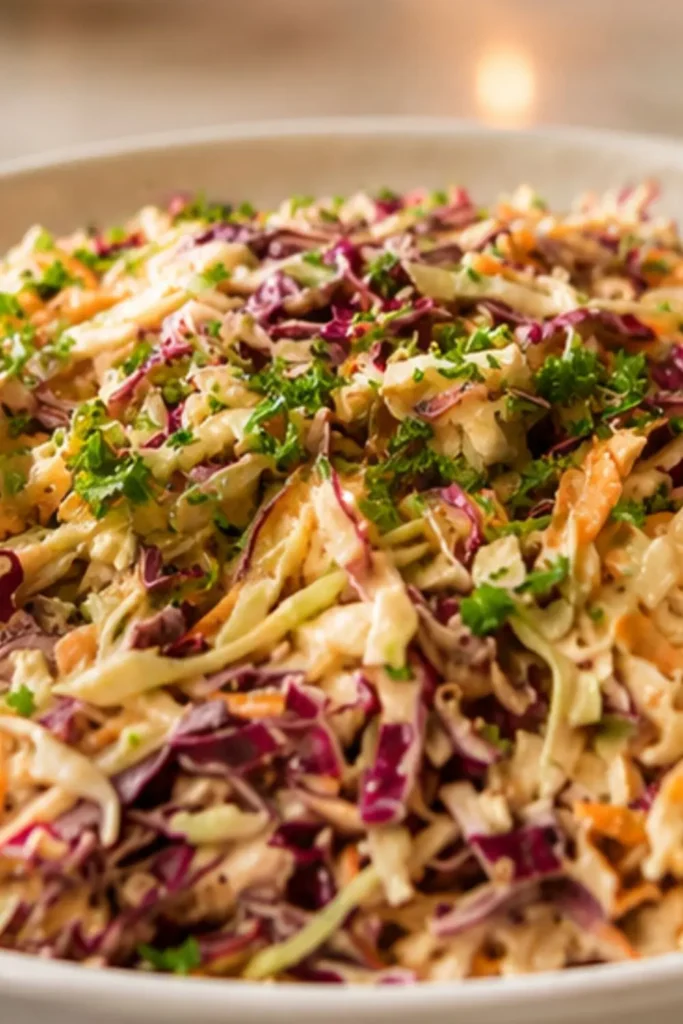
- 6 cups shredded cabbage (about 2½ pounds red, green, or a mix)
- 1 cup shredded carrots (about 3 medium carrots)
- ¾ cup vegan mayonnaise
- 3 tablespoons red wine vinegar
- 1 tablespoon Dijon mustard
- 1 teaspoon organic granulated sugar
- ½ teaspoon celery salt
- 2 tablespoons fresh parsley (optional)
- Salt and pepper, to taste
Red Cabbage vs. Green Cabbage vs. Mix
Green cabbage is the traditional coleslaw choice mild flavor, classic pale appearance, and the texture most people associate with deli slaw.
Red cabbage adds vibrant color and a slightly more peppery, robust flavor. Visually striking, especially mixed with the orange carrots.
A mix of both is IMO the best choice the color contrast makes the slaw look genuinely vibrant on a plate, and the flavor difference between the two cabbage types adds subtle complexity that single-cabbage versions don’t have.
The 2½ Pounds of Cabbage Question
Six cups of shredded cabbage from 2½ pounds sounds like a lot, and it is but cabbage compresses significantly once dressed. What looks like an overwhelming bowl of shredded cabbage becomes a reasonably sized coleslaw once the dressing coats everything and the cabbage softens slightly. Don’t be alarmed by the volume before mixing.
Equipment You’ll Need For Creamy Vegan Coleslaw
This is genuinely one of the lowest-equipment recipes possible:
Primary Equipment
- Large mixing bowl – needs to comfortably hold 6 cups of shredded cabbage plus carrots and dressing with room to stir without spilling. A bowl that feels slightly oversized is actually correct here.
- Box grater or food processor with shredding attachment – for shredding the carrots. A food processor saves significant time if you’re shredding 3 carrots, though a box grater works fine for smaller quantities.
- Sharp knife and cutting board – if you’re shredding cabbage by hand rather than buying pre-shredded. A mandoline slicer produces the most uniform, thin shreds if you own one.
Mixing Tools
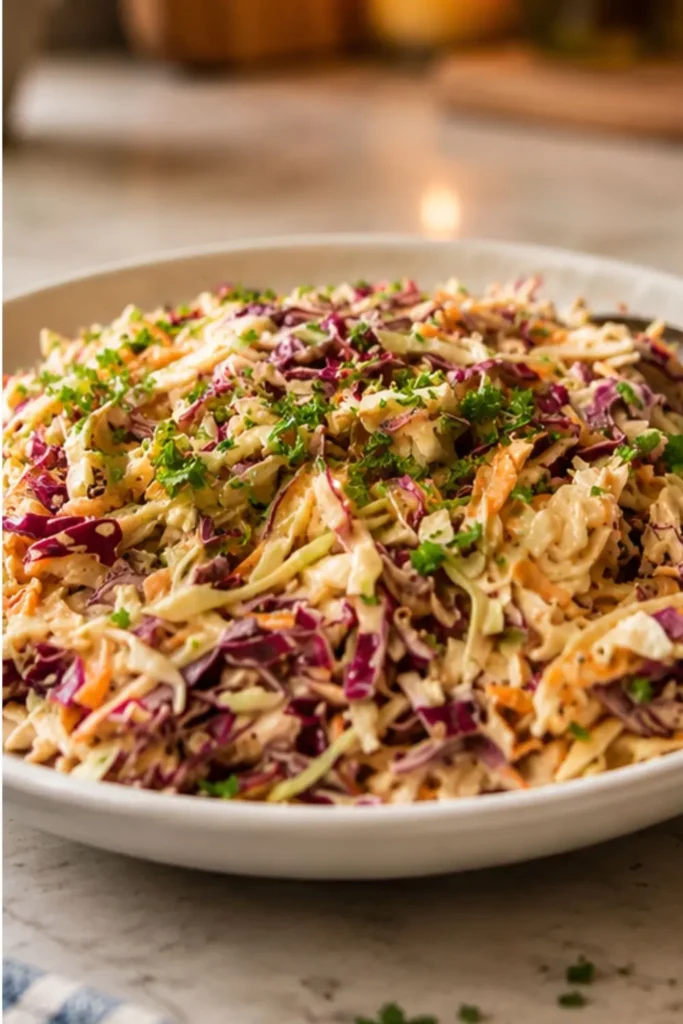
- Large spoon or tongs -for combining the cabbage, carrots, and dressing. Tongs specifically work well for tossing without crushing the cabbage shreds.
- Small bowl – for whisking the dressing components together before adding to the cabbage, if you prefer to combine the dressing separately first (this produces a more evenly distributed dressing than adding each ingredient directly to the cabbage bowl).
Storage
- Airtight container with lid – for storing leftovers or for making ahead
Step-by-Step Instructions For Creamy Vegan Coleslaw
Step 1 – Shred the Cabbage and Carrots
If using whole cabbage, slice it in half, remove the core, and shred thinly using a knife, mandoline, or food processor. Shred the carrots using a box grater or food processor.
Pre-shredded option- Bagged coleslaw mix (cabbage and carrots pre-shredded) works perfectly and saves significant time. If using bagged mix, you’ll need approximately 7 cups total to match the recipe’s cabbage-to-carrot ratio.
Step 2 – Combine Everything in One Bowl
Add the shredded cabbage, shredded carrots, vegan mayonnaise, red wine vinegar, Dijon mustard, sugar, and celery salt all to your large mixing bowl.
Stir until everything is fully combined the dressing should coat every piece of cabbage and carrot evenly. This takes about 1-2 minutes of thorough stirring.
Step 3 – Season and Adjust
Taste the coleslaw and season with salt and pepper to your preference. This is also the moment to adjust any other element if it needs more tang, add a touch more vinegar; if it needs more sweetness, a small additional pinch of sugar.
Add the fresh parsley if using it adds color and a fresh, herbal note that brightens the finished dish.
Step 4 – Serve Immediately or Chill
This coleslaw is genuinely good immediately the dressing is already creamy and the cabbage is crisp. But it’s also excellent after chilling, when the cabbage softens slightly and absorbs more of the dressing’s flavor.
Serve immediately if- You want maximum crunch and a brighter, fresher taste.
Chill for at least 1 hour if- You want the more traditional “deli-style” texture where the cabbage has softened slightly and the flavors have melded.
The Texture Question Crisp vs. Softened
This is genuinely a matter of personal preference, and understanding what happens over time helps you choose:
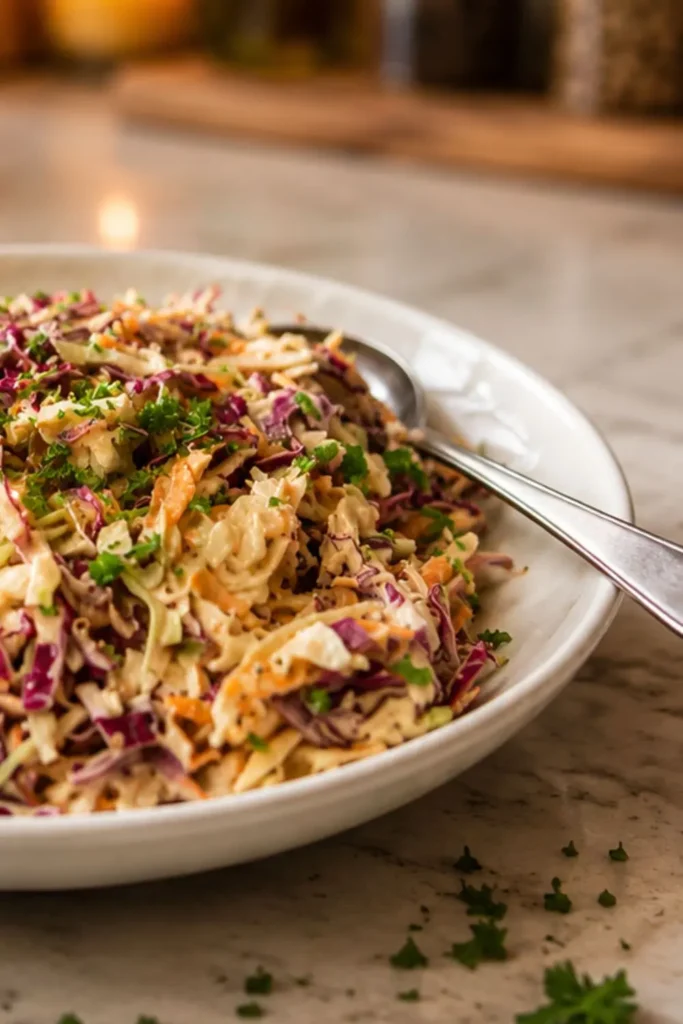
Immediately after mixing- The cabbage is at its crispest. The dressing sits on the surface of the shreds rather than being absorbed. The flavor is bright and the texture is crunchy.
After 1-2 hours chilled- The salt in the dressing begins drawing moisture from the cabbage through osmosis. The cabbage softens slightly and the dressing thins very slightly as it mixes with the released cabbage liquid. The flavors integrate more thoroughly.
After 24 hours- The cabbage has softened considerably more closer to the texture of deli coleslaw that’s been sitting in its container. Some people prefer this; others find it too soft. IMO, the sweet spot is 2-4 hours of chilling enough time for flavor development without losing all the crunch.
Serving Ideas Beyond the Cookout Plate
While this coleslaw is a natural cookout side, its applications extend well beyond the side dish position:
As a Sandwich and Wrap Topping
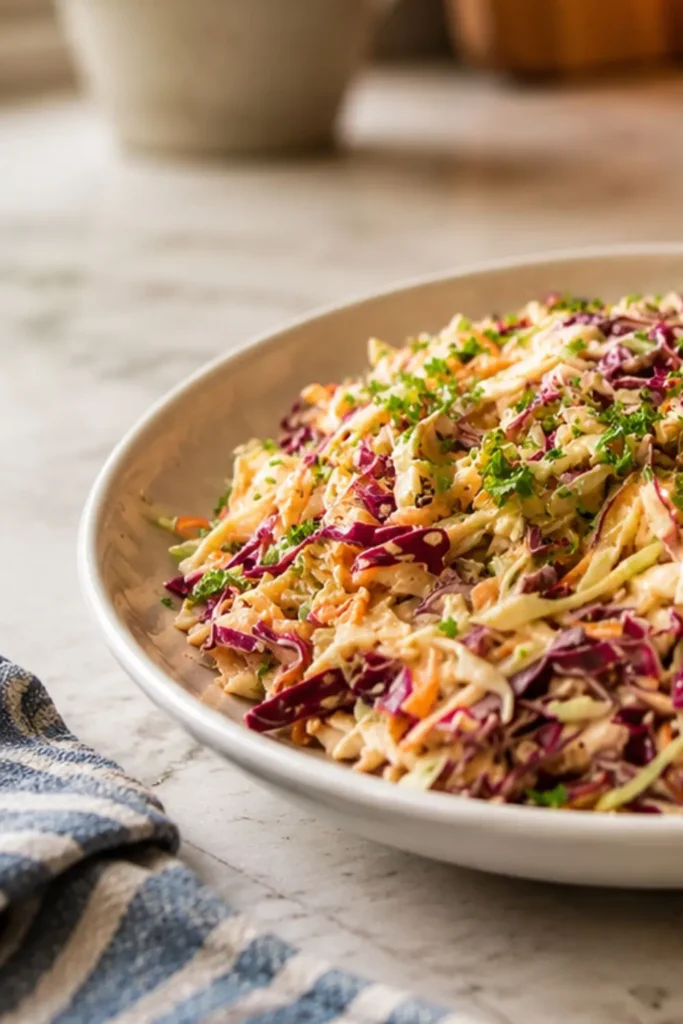
Creamy vegan coleslaw on pulled jackfruit sandwiches- is a classic pairing the cool, creamy crunch against warm, saucy BBQ jackfruit creates textural and temperature contrast that makes every bite better.
In wraps and bites & wraps – a scoop of this coleslaw inside a wrap with crispy tofu, chickpea patties, or roasted vegetables adds crunch and creaminess that elevates a simple wrap into something genuinely satisfying. The slaw’s acidity also helps cut through any richness from sauces or spreads inside the wrap.
As a Topping for Tacos and Bowls
A spoonful of this slaw on top of vegan tacos particularly anything with a smoky or spicy filling adds cooling crunch that balances heat. The same applies to grain bowls; a small portion of coleslaw adds textural variety that many bowls lack.
As a Standalone Light Meal
On particularly hot days, a generous bowl of this coleslaw with some crusty bread and perhaps a scoop of hummus on the side makes a genuinely satisfying light lunch cool, crunchy, and not at all heavy.
Make-Ahead Strategy
This coleslaw is genuinely one of the best make-ahead sides for entertaining:
Up to 1 day ahead- Make the complete coleslaw and refrigerate in an airtight container. The flavors continue developing and the texture softens slightly many people (myself included) prefer day-old coleslaw to fresh.
Up to 3 days ahead (component prep)- Shred the cabbage and carrots and store separately from the dressing. Combine the day of serving for maximum crunch with developed-but-not-overdone texture.
Whisk the dressing separately- If making ahead, whisking the mayo, vinegar, mustard, sugar, and celery salt together in a separate container lets you store the dressing for up to 5 days and combine with freshly shredded cabbage whenever you’re ready this produces the freshest possible result while still saving prep time.
Troubleshooting Common Coleslaw Problems
Too watery- This usually happens after extended storage as the cabbage releases moisture. Drain excess liquid before serving, or add a small additional spoonful of mayo to re-thicken.
Not tangy enough- Add red wine vinegar ½ tablespoon at a time, tasting between additions. The tang should be noticeable but not sharp.
Too sharp/tangy- Add a small additional pinch of sugar, or a small additional spoonful of mayo to mellow the acidity.
Bland overall- This is almost always a salt issue. Coleslaw needs more salt than people initially expect taste and add salt incrementally until the flavors “wake up.”
Still Hungry, Try It Next recipe
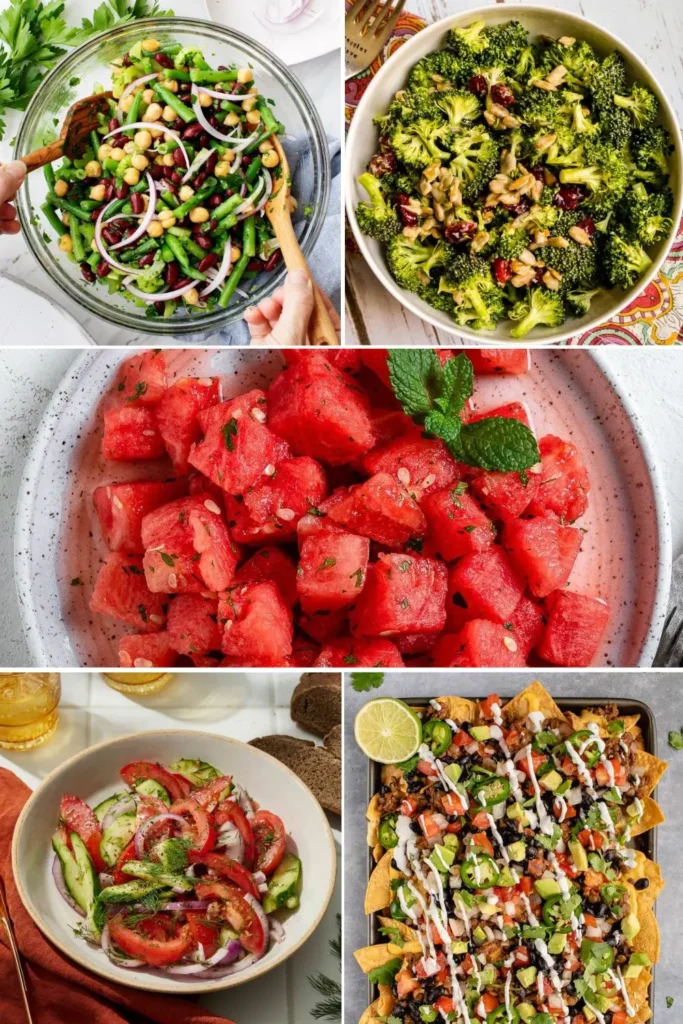
25 Vegan Cookout Side Dishes That Everyone Will Love
Nutrition Information Per Serving
At 160 calories per serving for 8 servings:
| Nutrient | Per Serving |
| Calories | 160 kcal |
| Carbohydrates | 5.3g |
| Protein | 1g |
| Fat | 15.2g |
| Saturated Fat | 1.5g |
| Fiber | 1.8g |
| Sugar | 2.9g |
| Sodium | 310mg |
| Potassium | 150mg |
The 15.2 grams of fat per serving comes primarily from the vegan mayonnaise predominantly unsaturated fat from the oil base that most vegan mayo brands use. At only 5.3 grams of carbohydrates and 2.9 grams of sugar, this coleslaw is genuinely one of the lower-carb side dishes you can serve, despite tasting rich and satisfying.
Storage
- Refrigerator- Store in an airtight container for up to 4-5 days the coleslaw remains good throughout this period, with the texture gradually softening
- Freezer- Not recommended the cabbage’s texture and the mayo-based dressing don’t hold up well after freezing and thawing
- Transport- This coleslaw travels well in a sealed container for picnics and cookouts no special handling required beyond normal refrigerated food safety
My Final Thoughts
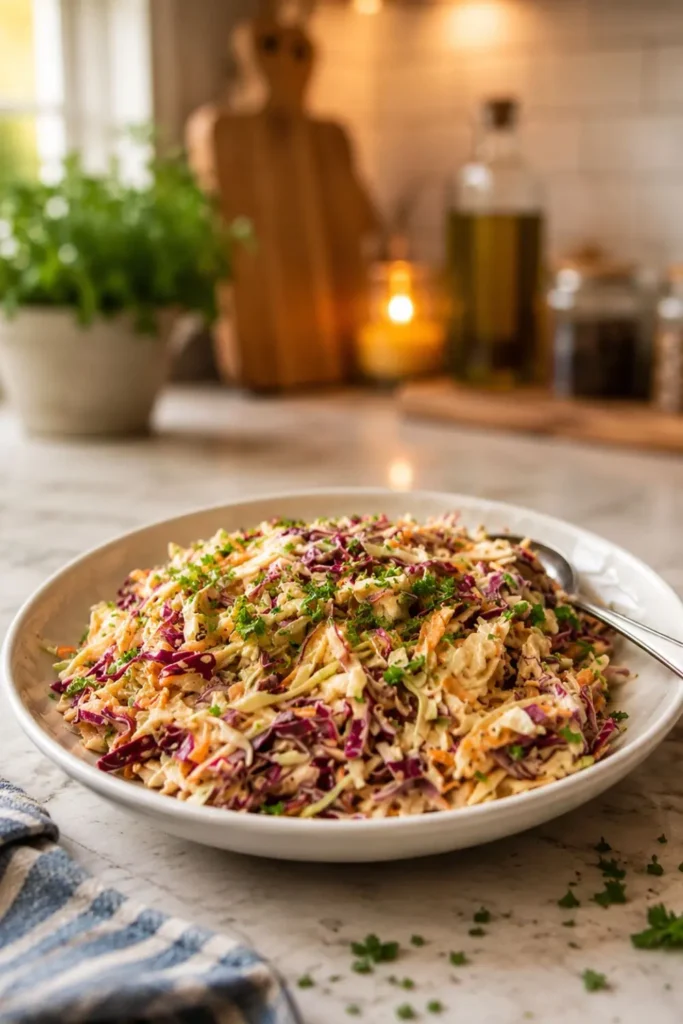
Creamy Vegan Coleslaw delivers exactly what its name promises genuinely creamy, properly tangy, crisp cabbage and carrots in a dressing that tastes like real deli coleslaw without any dairy. 15 minutes, 8 servings, 160 calories per serving, zero cooking required.
Use a mix of red and green cabbage for color. Don’t skip the celery salt. Chill it for a couple hours if you can, but don’t feel bad eating it immediately either.
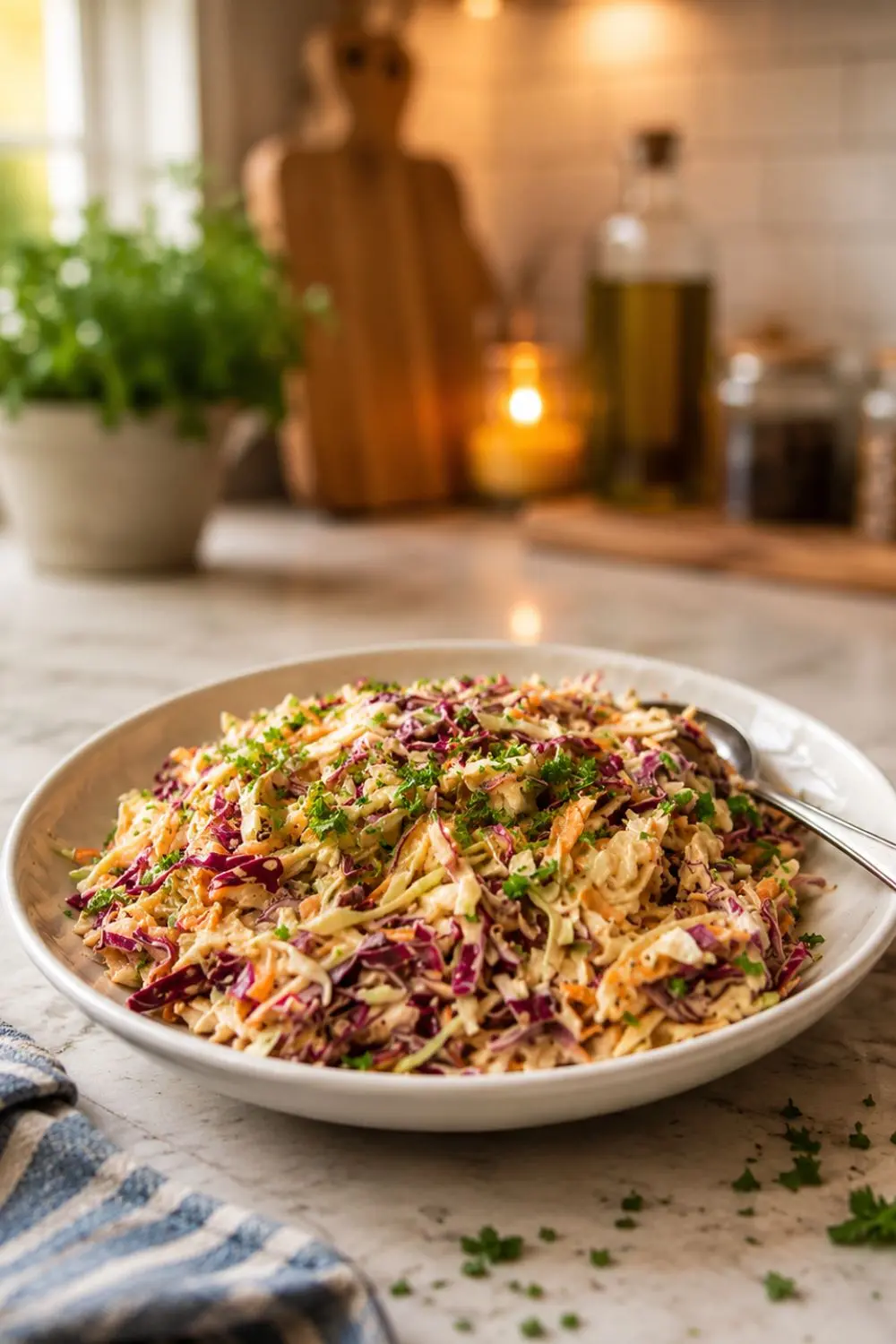
Creamy Vegan Coleslaw
Ingredients
Equipment
Method
- Step 1 – Shred the Cabbage and Carrots
- If using whole cabbage, slice it in half, remove the core, and shred thinly using a knife, mandoline, or food processor. Shred the carrots using a box grater or food processor.
- Pre-shredded option- Bagged coleslaw mix (cabbage and carrots pre-shredded) works perfectly and saves significant time. If using bagged mix, you’ll need approximately 7 cups total to match the recipe’s cabbage-to-carrot ratio.
- Step 2 – Combine Everything in One Bowl
- Add the shredded cabbage, shredded carrots, vegan mayonnaise, red wine vinegar, Dijon mustard, sugar, and celery salt all to your large mixing bowl.
- Stir until everything is fully combined the dressing should coat every piece of cabbage and carrot evenly. This takes about 1-2 minutes of thorough stirring.
- Step 3 – Season and Adjust
- Taste the coleslaw and season with salt and pepper to your preference. This is also the moment to adjust any other element if it needs more tang, add a touch more vinegar; if it needs more sweetness, a small additional pinch of sugar.
- Add the fresh parsley if using it adds color and a fresh, herbal note that brightens the finished dish.
- Step 4 – Serve Immediately or Chill
- This coleslaw is genuinely good immediately the dressing is already creamy and the cabbage is crisp. But it’s also excellent after chilling, when the cabbage softens slightly and absorbs more of the dressing’s flavor.
- Serve immediately if- You want maximum crunch and a brighter, fresher taste.
- Chill for at least 1 hour if- You want the more traditional “deli-style” texture where the cabbage has softened slightly and the flavors have melded.
Notes
Nutrition Information Per Serving
At 160 calories per serving for 8 servings:| Nutrient | Per Serving |
| Calories | 160 kcal |
| Carbohydrates | 5.3g |
| Protein | 1g |
| Fat | 15.2g |
| Saturated Fat | 1.5g |
| Fiber | 1.8g |
| Sugar | 2.9g |
| Sodium | 310mg |
| Potassium | 150mg |

Hi — I’m Rachel. I’m a wife, a mom, and a home cook who believes that food should bring comfort, joy, and compassion to the table. I live with my family — two hungry little foodies who are my most honest recipe testers — and together we’ve built a kitchen culture that’s all about good food that happens to be 100% vegan. I started this blog because I wanted a place to share the recipes that keep our days moving, the dishes that make weeknights feel a little easier, and the meals that become our little family traditions.