
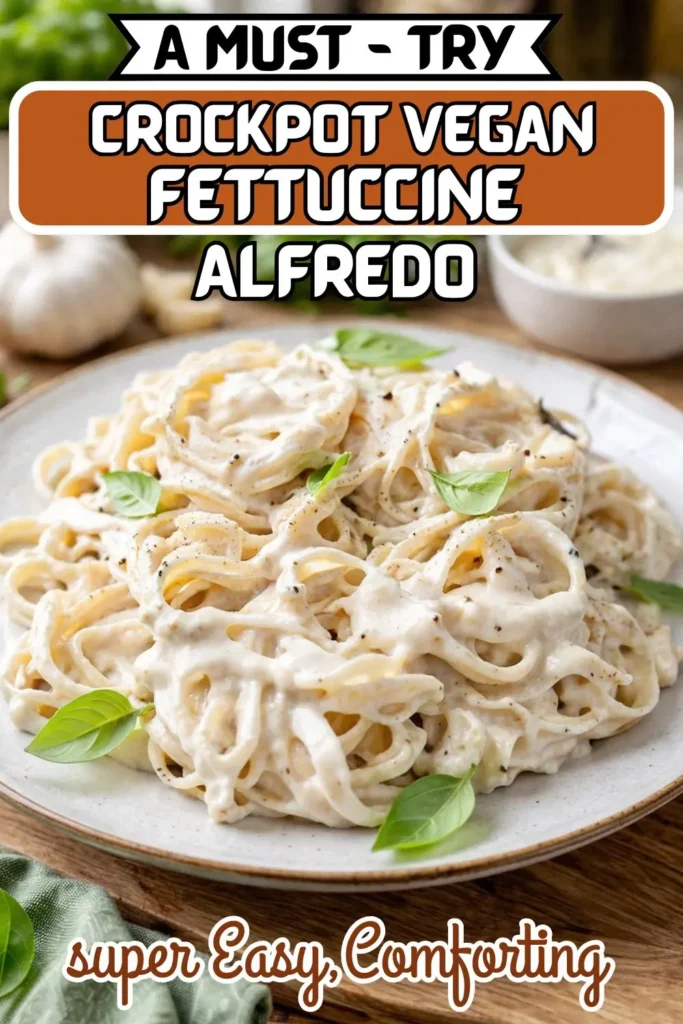
Every vegan Alfredo recipe on the internet falls into one of two camps: the ones that require soaked cashews blended for ten minutes, and the ones that taste disappointingly thin and sad. This Crockpot Vegan Fettuccine Alfredo belongs to neither camp. It uses a classic French-style roux — vegan butter, flour, and dairy-free milk — to build a genuinely thick, rich, properly creamy white sauce that coats pasta beautifully and tastes like the real thing. No cashews. No blender. No complicated technique.
“This post contains affiliate links. If you purchase through my links, I may earn a small commission at no extra cost to you.”
I made this for a dinner party where half the guests weren’t vegan and didn’t know the Alfredo was plant-based until I told them after they’d had seconds. That’s the reaction this recipe produces. Six servings, 405 calories each, 15g of protein, and a sauce so good you’ll be making it on regular rotation from this week onwards. Let’s get into it.
Quick Stats
- Prep Time: 15 minutes
- Cook Time: 15 minutes
- Total Time: 30 minutes
- Servings: 6
- Calories: 405 kcal per serving
- Diet: 100% Vegan
- Course: Main
The Full Ingredient List
For the Alfredo Sauce:
- 6 tablespoons (84g) salted vegan butter (Violife or Country Crock Plant Butter work brilliantly)
- 2 tablespoons extra virgin olive oil
- ½ teaspoon freshly grated garlic (about 1 clove)
- 6 tablespoons (45g) all-purpose flour
- 3 cups unsweetened, unflavoured dairy-free milk (extra creamy oat milk or almond milk recommended)
- ¾ teaspoon salt
- ⅛ teaspoon black pepper
- 1 cup grated Violife Parmesan cheese (or Trader Joe’s vegan parmesan)
For the pasta:
- 1 lb (450g) fettuccine pasta
- Fresh basil for garnish, chopped
How to Make It – Step by Step for Crockpot Vegan Fettuccine Alfredo
Step 1: Fill a large pot with water and bring to a boil. Cook the fettuccine according to package instructions until al dente. While the pasta cooks, start the sauce immediately — the timing works out perfectly.
Step 2: In a medium saucepan over medium-low heat, melt the vegan butter with the olive oil. Add the freshly grated garlic and cook for one minute, stirring constantly.
Step 3: Whisk in the all-purpose flour one tablespoon at a time, fully dissolving each addition before adding the next. The mixture will look thick and paste-like — this is your roux, and it’s exactly right.
Step 4: Add the dairy-free milk one cup at a time, whisking constantly after each addition to prevent lumps. This is the most important technique step — patience and constant whisking produces a smooth sauce.
Step 5: Reduce the heat to low. Continue stirring until the sauce bubbles and thickens to the point where it coats the back of a spoon. This takes about 5–8 minutes.
Step 6: Stir in the grated vegan Parmesan, salt, and black pepper. The sauce will look generous — almost too much. That’s correct. It thickens further when it meets the pasta.
Step 7: Drain the pasta and return it to the large pot. Pour the Alfredo sauce over the pasta and toss to combine. The sauce thickens more as the hot pasta absorbs it.
Step 8: Serve immediately, garnished with extra vegan Parmesan, fresh basil, and additional pepper to taste.
Equipment You’ll Need
- A large pot — for cooking the pasta. At least 6-quart capacity to give the fettuccine room to cook without sticking together.
- A medium saucepan — for the Alfredo sauce. Medium-weight with a thick base distributes heat evenly and prevents the roux from burning. A thin-bottomed pan creates hot spots that can scorch the flour.
- A whisk — the single most important piece of equipment for this recipe. You’re making a roux-based sauce, and constant whisking is what produces a smooth, lump-free result. A flat-bottomed whisk gets into the corners of the saucepan better than a standard balloon whisk.
- A colander or pasta strainer — for draining the fettuccine
- Measuring cups and spoons — precision matters more in sauce-making than in most cooking
- A grater or microplane — for the fresh garlic (grated garlic distributes more evenly than minced) and for the vegan Parmesan
- Tongs or pasta forks — for tossing the pasta and sauce together
The whisk is worth emphasising. Alfredo sauce made with a spoon instead of a whisk almost always has lumps. A whisk keeps everything smooth throughout the entire process and makes the roux-building stage significantly easier.
Calorie & Nutrition Breakdown (Per Serving — 1 of 6)
| Nutrient | Per Serving |
| Calories | 405 kcal |
| Carbohydrates | 37g |
| Protein | 15g |
| Total Fat | 23g |
| Saturated Fat | 6g |
| Polyunsaturated Fat | 15g |
| Fibre | 4g |
| Sugar | 2g |
| Sodium | 490mg |
At 405 calories per serving with 15g of protein, this is a genuinely satisfying main course that holds you properly. The 23g of fat comes from the vegan butter, olive oil, and vegan Parmesan — plant-based fats that contribute to the rich, silky texture of the sauce. The 4g of fibre is solid for a pasta dish.
FYI: Using extra creamy oat milk rather than standard almond milk increases the creaminess of the sauce meaningfully — the higher fat content in extra creamy oat milk behaves more like dairy milk in a roux. It’s a small swap that produces a noticeably richer result.
The Roux Technique — Why It’s Better Than Cashews
Most vegan Alfredo recipes reach for soaked blended cashews because they produce a naturally creamy texture without any cooking technique. Cashews work — but they require a high-speed blender, soaking time, and produce a sauce with a distinct cashew flavour that some people detect. The roux method is better for three reasons.
It Produces a Classically Thickened Sauce
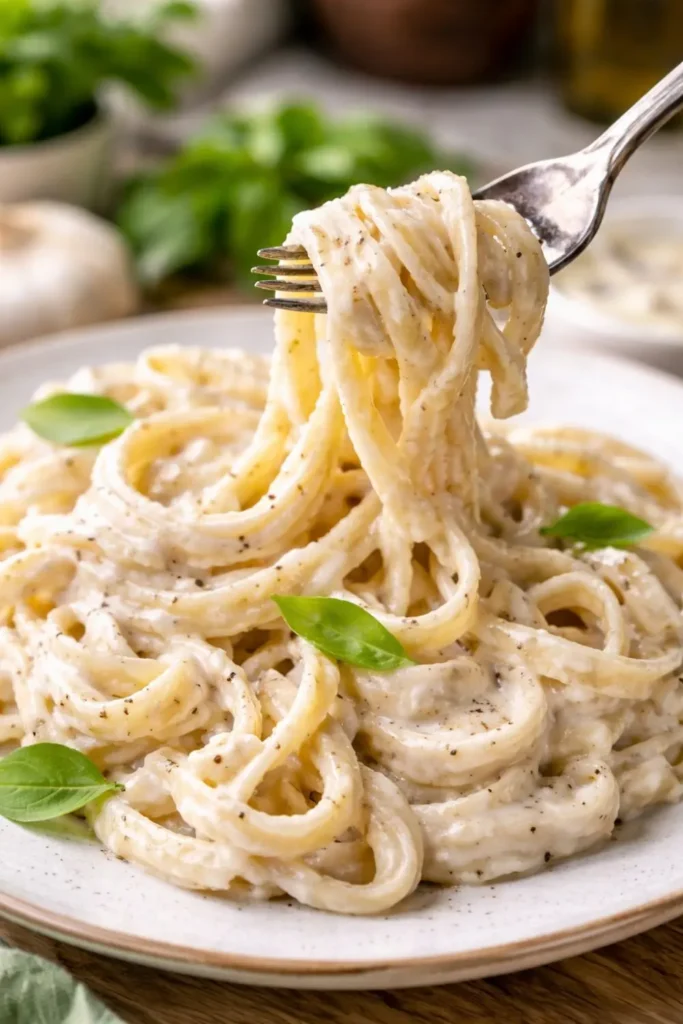
A roux — fat cooked with flour — is the foundation of classic French white sauces like béchamel and velouté. When you cook flour in fat and then add liquid, the starch granules in the flour absorb the liquid and swell, creating a smooth, thick sauce with a neutral flavour. The texture this produces is identical to a dairy-based Alfredo — silky, coating, and stable enough to cling to pasta properly.
No Special Equipment Required
The cashew method needs a high-speed blender and a strainer. The roux method needs a whisk and a saucepan. That’s it. This recipe is genuinely accessible to anyone with basic kitchen equipment — which makes it a much more practical weeknight dinner option.
The Flavour Is Neutral and Clean
Cashew Alfredo has a subtle nuttiness that, while pleasant, doesn’t replicate the clean, dairy-like flavour of traditional Alfredo. The roux-based sauce with vegan Parmesan has a genuinely neutral, savouriness that makes the Parmesan and garlic flavours shine clearly rather than competing with nut undertones.
The Vegan Butter and Parmesan — Brand Choices That Matter
This recipe is specific about ingredients, and for good reason. Not all vegan butter and Parmesan behave the same way in a cooked sauce.
Vegan Butter
The recipe recommends Violife or Country Crock Plant Butter, and both are excellent choices for sauce-making. These are designed with fat contents and behaviours close to dairy butter, which means they form a proper roux rather than separating or creating a greasy sauce. Avoid spread-style vegan butter in tubs — they have higher water content than stick/block butter and produce inferior sauces. Look specifically for vegan butter in stick or block form.
Vegan Parmesan
Violife Parmesan is the top recommendation here, and it earns it. It melts into the sauce properly rather than clumping or staying solid, and its flavour profile — salty, slightly sharp, savoury — closely mimics the role that dairy Parmesan plays in traditional Alfredo. Trader Joe’s vegan parmesan is a good alternative if Violife isn’t available. Grating it fresh from a block produces better results than pre-grated versions, which often contain anti-caking agents that affect how they melt.
Still Hungry, Try It Next recipe :-

The Dairy-Free Milk — Which One Works Best
The recipe calls for unsweetened, unflavoured dairy-free milk, and the choice of milk affects the final sauce more than you might expect.
Extra Creamy Oat Milk (Best Choice)
The fat content in extra creamy oat milk is closer to dairy milk than most plant milks, producing a richer, more stable sauce. Brands like Oatly Barista or Califia Farms Extra Creamy work particularly well. This is IMO the best option for this recipe.
Standard Almond Milk (Good, Slightly Thinner)
Works well but produces a slightly thinner sauce than oat milk. The flavour is neutral enough that it doesn’t compete with the Parmesan and garlic. Use unsweetened and unflavoured only — vanilla almond milk in Alfredo is… not the experience you want.
Soy Milk (Best Nut-Free Option)
The highest protein plant milk, which adds a small amount of extra body to the sauce. Unflavoured soy milk is very neutral and produces a good sauce — excellent for nut-free cooking.
Rice Milk (Works, Less Creamy)
Thinner and slightly sweeter than the other options. Works in a pinch but produces the least creamy result of these four options.
Tips for Making This Alfredo Absolutely Perfect
- Whisk constantly during the roux stage. From the moment you add the first tablespoon of flour to when the sauce finishes thickening, the whisk should be moving almost continuously. This is what prevents lumps and ensures a silky final sauce.
- Add milk slowly. One cup at a time, whisking thoroughly after each addition to fully incorporate before adding the next. Rushing this step creates lumps that are difficult to smooth out.
- Cook the pasta al dente. The pasta continues cooking slightly from the heat of the sauce when you toss them together. If you cook the pasta fully before tossing, it’ll end up slightly overcooked in the final dish.
- Don’t panic when the sauce looks very generous. The recipe notes specifically address this — the sauce volume before adding pasta looks like too much. Once it hits the hot pasta and the pasta absorbs some of it, the proportions are exactly right.
- Reserve a cup of pasta water. Before draining the fettuccine, scoop out a cup of the starchy cooking water. If the sauce is too thick when you toss it with the pasta, add splashes of pasta water to loosen it to the right consistency. Pasta water is better than plain water for this because the starch helps the sauce cling to the pasta.
- Serve immediately. Alfredo sauce thickens significantly as it cools. This is one of those dishes that needs to go straight from pot to plate to mouth.
Variations to Try
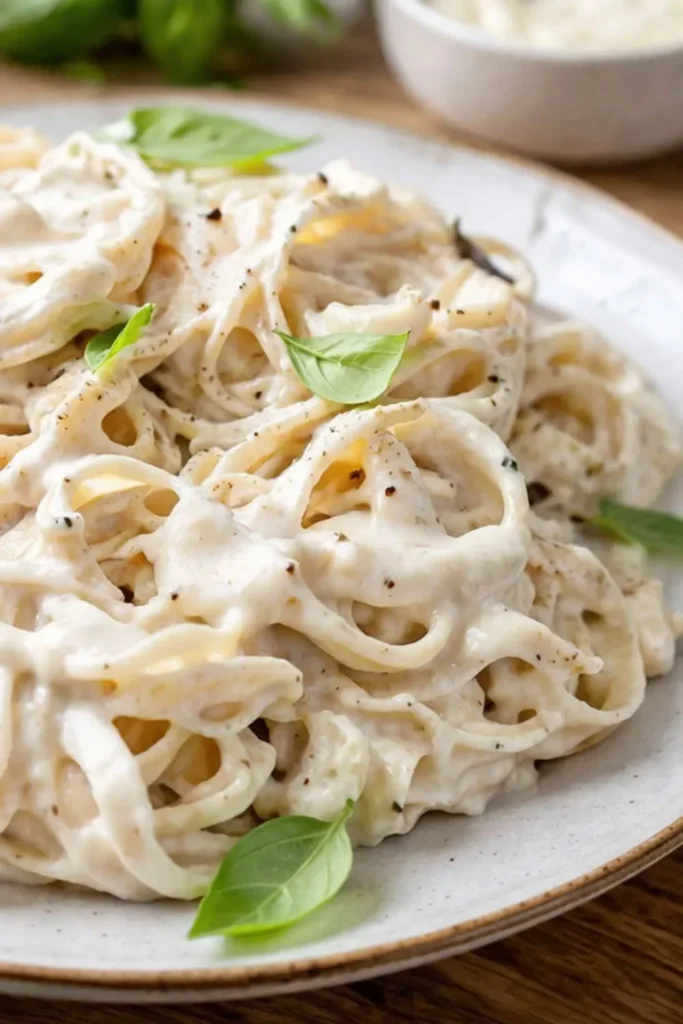
Add Roasted Garlic
Roast a whole head of garlic at 400°F for 40 minutes, squeeze the soft cloves into the sauce in place of the fresh garlic. The roasted garlic adds a deep, sweet, mellow garlic flavour that’s considerably more complex than fresh.
Add Broccoli or Asparagus
Blanch broccoli florets or asparagus spears and toss with the pasta and sauce. The vegetables add colour, texture, nutrition, and make the dish feel more substantial.
Mushroom Alfredo
Sauté sliced mushrooms in a separate pan until golden and slightly crispy, then toss with the finished pasta. The earthiness of the mushrooms against the rich Alfredo sauce is one of those combinations that feels completely natural.
Spinach and Sun-Dried Tomato
Stir a large handful of baby spinach and a few tablespoons of chopped sun-dried tomatoes into the hot sauce before tossing with pasta. The spinach wilts immediately and the sun-dried tomato adds a sweet-tart intensity.
Add Vegan “Chicken” or Sausage
Slice vegan sausage or plant-based chicken strips and pan-fry until golden before adding to the finished pasta. It adds protein and makes the dish more substantial for bigger appetites.
Storage and Reheating
Refrigerator
Leftover Alfredo pasta keeps for 2–3 days in a sealed container in the fridge. The sauce thickens considerably when cold — this is normal and not a sign something went wrong.
Reheating
Reheat in a saucepan over low heat, stirring frequently. Add splashes of dairy-free milk or pasta water as you reheat to restore the sauce to a creamy, pourable consistency. Don’t microwave on high — the sauce can split and become greasy. Low and slow, with liquid added as needed.
Freezing
Not recommended for the assembled pasta — pasta texture deteriorates significantly when frozen. If you want to make ahead, freeze the sauce separately and cook fresh pasta when ready to serve.
Frequently Asked Questions
Still Hungry, Try It Next recipe :-
Vegan Slow Cooker Oatmeal Crockpot Recipe

Why does my sauce have lumps? Lumps form when flour isn’t properly incorporated into the fat before adding liquid, or when milk is added too quickly. If lumps form, whisk vigorously — most lumps smooth out with enough whisking. If the sauce remains lumpy, pass it through a fine sieve.
Can I make the sauce gluten-free? Yes — substitute a 1:1 gluten-free flour blend for the all-purpose flour. The sauce may be slightly thinner; add an extra tablespoon of flour if needed to achieve the right consistency.
Can I make the sauce ahead of time? You can make the sauce up to 2 hours ahead and keep it warm over very low heat, stirring occasionally and adding splashes of dairy-free milk to maintain consistency. Cook the pasta fresh when ready to serve.
The sauce seems too thin — what do I do? Continue cooking over low heat, stirring constantly. The sauce thickens more with time. If it’s still too thin after 10 minutes, whisk in another tablespoon of flour dissolved in a small amount of cold plant milk.
Can I use a different pasta shape? Yes — pappardelle, tagliatelle, linguine, or even penne all work well. Fettuccine is traditional for Alfredo because its flat, wide surface area holds the thick sauce best, but any pasta you enjoy will work.
Make This Tonight
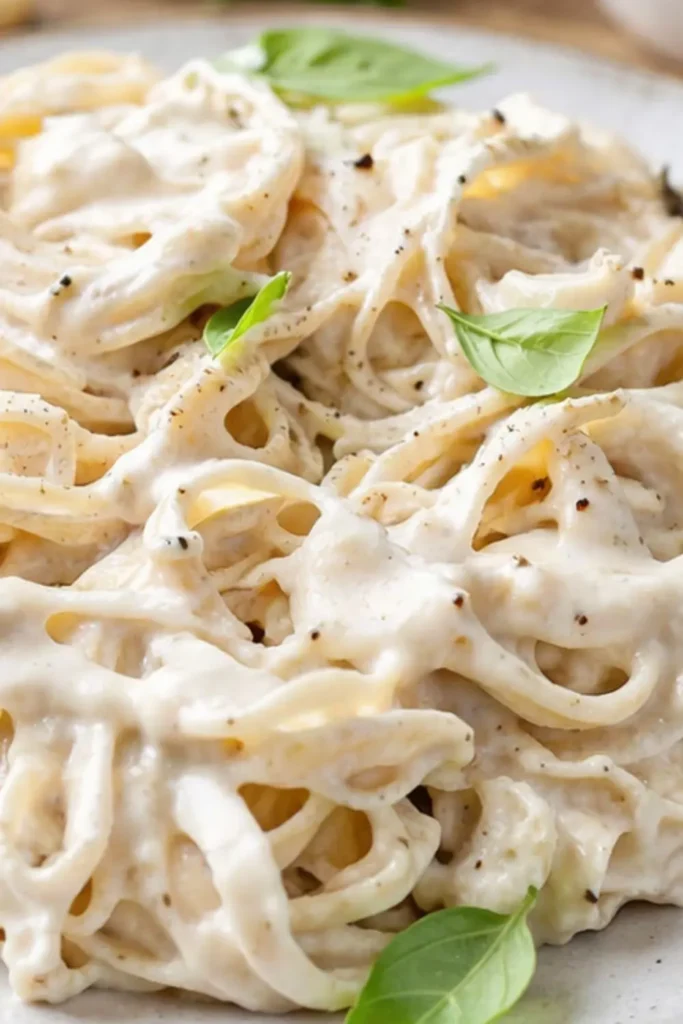
Here’s the complete picture: 30 minutes, one saucepan, one pot, and six servings of genuinely creamy, properly thick, 405-calorie vegan Alfredo pasta that requires no soaking, no blending, and no specialist equipment. Vegan butter, flour, dairy-free milk, and vegan Parmesan — a classic French technique applied to plant-based ingredients, producing something indistinguishable from the dairy version.
Serve it with extra Parmesan grated on top, a scatter of fresh basil, and some garlic bread on the side. Watch the people who “could never go vegan” eat two plates. That’s always the best part
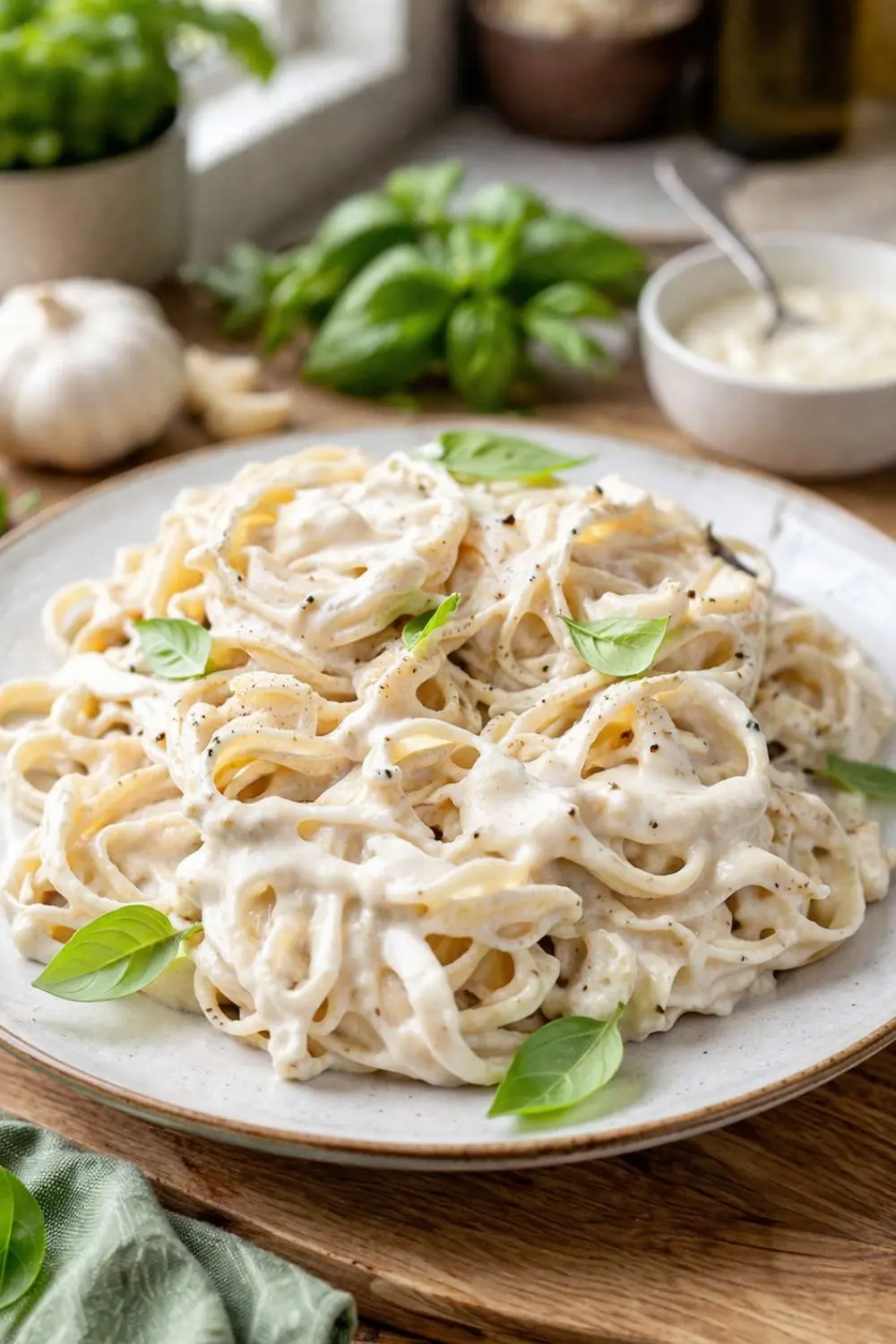
Crockpot Vegan Fettuccine Alfredo (No Cashews Needed!)
Ingredients
Equipment
Method
- Step 1: Fill a large pot with water and bring to a boil. Cook the fettuccine according to package instructions until al dente. While the pasta cooks, start the sauce immediately — the timing works out perfectly.
- Step 2: In a medium saucepan over medium-low heat, melt the vegan butter with the olive oil. Add the freshly grated garlic and cook for one minute, stirring constantly.
- Step 3: Whisk in the all-purpose flour one tablespoon at a time, fully dissolving each addition before adding the next. The mixture will look thick and paste-like — this is your roux, and it’s exactly right.
- Step 4: Add the dairy-free milk one cup at a time, whisking constantly after each addition to prevent lumps. This is the most important technique step — patience and constant whisking produces a smooth sauce.
- Step 5: Reduce the heat to low. Continue stirring until the sauce bubbles and thickens to the point where it coats the back of a spoon. This takes about 5–8 minutes.
- Step 6: Stir in the grated vegan Parmesan, salt, and black pepper. The sauce will look generous — almost too much. That’s correct. It thickens further when it meets the pasta.
- Step 7: Drain the pasta and return it to the large pot. Pour the Alfredo sauce over the pasta and toss to combine. The sauce thickens more as the hot pasta absorbs it.
- Step 8: Serve immediately, garnished with extra vegan Parmesan, fresh basil, and additional pepper to taste.
Notes
Calorie & Nutrition Breakdown (Per Serving — 1 of 6)
| Nutrient | Per Serving |
| Calories | 405 kcal |
| Carbohydrates | 37g |
| Protein | 15g |
| Total Fat | 23g |
| Saturated Fat | 6g |
| Polyunsaturated Fat | 15g |
| Fibre | 4g |
| Sugar | 2g |
| Sodium | 490mg |

Hi — I’m Rachel. I’m a wife, a mom, and a home cook who believes that food should bring comfort, joy, and compassion to the table. I live with my family — two hungry little foodies who are my most honest recipe testers — and together we’ve built a kitchen culture that’s all about good food that happens to be 100% vegan. I started this blog because I wanted a place to share the recipes that keep our days moving, the dishes that make weeknights feel a little easier, and the meals that become our little family traditions.