
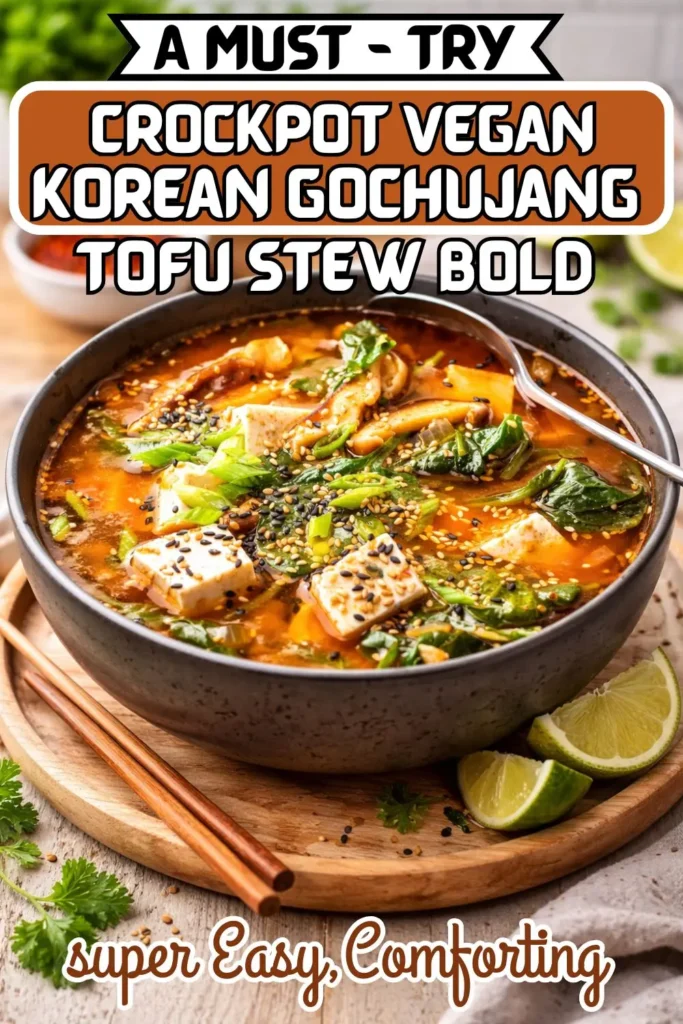
Some soups are subtle. This is not one of them. Crockpot Vegan Korean Gochujang Tofu Stew comes at you with deep, fermented heat, silky tofu, earthy mushrooms, and a broth so bold and complex it tastes like it simmered all day. The reality? You’re done in 30 minutes. Summer might seem like an odd time for a spicy stew, but hear me out — a warming, sweat-inducing bowl of gochujang broth actually cools you down faster than you’d expect. Science, apparently, is on our side.
I first made this on a weeknight when I wanted something that felt genuinely exciting rather than just “healthy.” One bowl later, it earned a permanent spot in my rotation. The combination of gochujang, ginger, sesame, and silken tofu is one of those flavor profiles that’s deeply satisfying on every level.
Recipe Timing and Serving Details
Let’s start with the quick overview so you can plan your cooking session:
| Detail | Info |
| Prep Time | 10 minutes |
| Cook Time | 20 minutes |
| Total Time | 30 minutes |
| Servings | 4 servings |
| Serving Size | 1.5 cups |
| Calories Per Serving | 188 kcal |
| Course | Soup |
| Cuisine | Korean-American |
| Diet | 100% Vegan |
30 minutes from start to finish for a restaurant-quality Korean-inspired stew. It serves 4 people generously as a main course — pair it with steamed rice to stretch it further or round out the meal. At just 188 calories per serving, this stew is light in calories but absolutely not light on flavor.
What Makes This Stew Special — The Key Ingredients Explained
Before we talk technique, let’s talk about the two ingredients that define this entire dish. If you’ve never cooked with either of them, this recipe is a genuinely excellent introduction.
Gochujang — The Star of the Show
Gochujang is a Korean fermented red chili paste made from chili powder, glutinous rice, fermented soybeans, and salt. It’s thick, deeply savory, slightly sweet, and brings a layered heat that builds gradually rather than hitting you all at once. It’s nothing like sriracha or hot sauce — the fermentation gives it an umami depth that transforms an entire pot of broth.
You’ll find gochujang in most Asian grocery stores and increasingly in mainstream supermarkets in the international foods aisle. It comes in small tubs and lasts for months in the fridge. FYI — once you have it, you’ll find yourself reaching for it constantly in marinades, dressings, noodle dishes, and stir-fries.
Gochugaru — The Supporting Heat
Gochugaru is Korean red pepper flakes — coarser and more vibrant than standard chili flakes, with a slightly fruity, smoky quality. While gochujang carries the fermented depth, gochugaru adds a brighter, more direct heat. The two work together in this stew to create a multi-dimensional spice profile that’s genuinely complex.
Can you skip one or the other? Technically yes, but using both gives you the full Korean flavor experience that makes this stew worth making.
Ingredients You’ll Need

Everything in this recipe is plant-based and most of it is pantry-friendly once you stock the Korean staples.
The Aromatics and Base:
- 1 tablespoon peanut oil — high smoke point, adds a subtle nuttiness
- 1 small onion, diced
- 3 cloves garlic, minced
- 2 teaspoons fresh ginger, grated
- 1 teaspoon gochugaru (Korean red pepper flakes), or more to taste
The Broth and Seasoning:
- 5 cups low-sodium vegetable broth — the base of the stew
- 2 tablespoons gochujang — start here, add up to 4 tablespoons total depending on your heat tolerance
- 1 tablespoon soy sauce — adds savory depth
- 1 tablespoon rice vinegar — brightens the entire broth
The Vegetables and Protein:
- 4 oz shiitake mushrooms, stems removed, cleaned and sliced
- 1 small zucchini, quartered and sliced
- 4 oz fresh spinach leaves (about 2 packed cups)
- 1 package (12.3 oz) silken tofu, cut into ½-inch cubes
The Finishing Touches:
- 1 teaspoon toasted sesame oil — added at the very end for aroma
- Salt to taste
- 2 teaspoons toasted sesame seeds — for garnish
- 2 scallions, sliced — for garnish
The silken tofu is specifically the right choice here — it’s soft, delicate, and absorbs the spicy broth beautifully. Don’t swap it for firm tofu, which would give you a completely different texture and a less authentic result.
Equipment You’ll Need
This recipe runs on a single pot, which keeps cleanup minimal and the process streamlined.
- Large heavy-bottomed pot or Dutch oven — a 4–6 quart pot works perfectly for this batch. The heavy bottom distributes heat evenly and prevents the aromatics from scorching during the sauté stage.
- Wooden spoon or silicone spatula — for stirring without scratching your pot
- Microplane or fine grater — for grating fresh ginger efficiently. Pre-grated ginger from a jar works in a pinch but fresh makes a noticeable difference.
- Sharp knife and cutting board — for slicing mushrooms, zucchini, scallions, and cubing the tofu
- Ladle — for serving
- Measuring spoons and cups
That’s genuinely the entire equipment list. One pot, a few basic tools, and you’re making a deeply impressive Korean-inspired vegan stew. The simplicity of the process is part of what makes this recipe so compelling — minimal effort, maximum reward.
Step-by-Step Instructions for Crockpot Vegan Korean Gochujang Tofu Stew
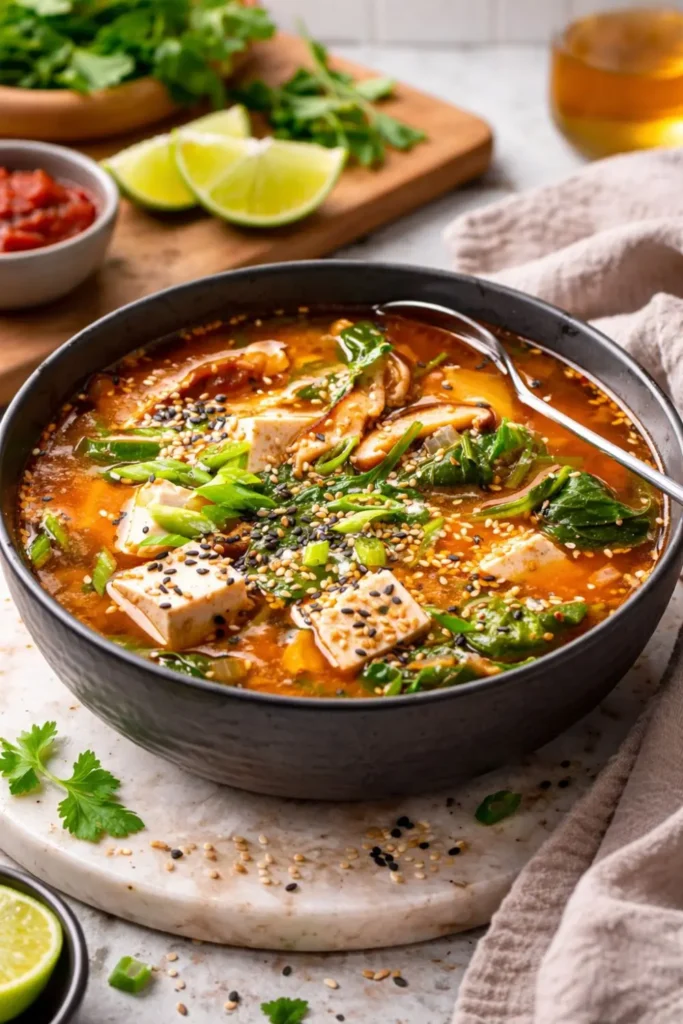
Step 1 — Build the Aromatic Base
Coat the bottom of your large pot with 1 tablespoon of peanut oil and place it over medium heat. Add the diced onion and sweat it for about 5 minutes, stirring frequently, until it becomes soft and translucent. You want the onion cooked through and gentle — not browned or caramelized.
Add the minced garlic, grated ginger, and gochugaru. Stir everything together and cook for about 1 minute, until the mixture becomes intensely fragrant. Your kitchen will smell incredible at this point — ginger, garlic, and chili paste blooming together in hot oil is one of those aromas that makes everyone wander into the kitchen asking what you’re making.
Step 2 — Add the Broth and Vegetables
Stir in the vegetable broth, gochujang, soy sauce, and rice vinegar. Add the sliced shiitake mushrooms and zucchini. Raise the heat and bring the liquid to a full boil, then lower the heat and let the soup simmer for about 8 minutes until the mushrooms and zucchini are completely tender.
This simmering stage is where the broth really comes together. The gochujang dissolves into the vegetable stock, the mushrooms release their earthy juices into the broth, and the whole pot starts smelling like something genuinely special. Resist the urge to rush this step.
Step 3 — Add the Spinach and Tofu
Stir in the fresh spinach leaves and the cubed silken tofu. Let the soup continue simmering for just 2 minutes — long enough for the spinach to wilt completely into the broth. Handle the tofu gently during this stage. Silken tofu is delicate and breaks apart easily, so stir carefully rather than aggressively.
The tofu doesn’t need long cooking — it just needs to heat through and absorb some of the surrounding broth. Over-cooking silken tofu makes it rubbery and less pleasant, so two minutes is genuinely enough.
Step 4 — Finish with Sesame Oil and Season
Remove the pot from heat. Stir in 1 teaspoon of toasted sesame oil. This last-minute addition is important — sesame oil loses its fragrance when cooked at high heat for too long, so adding it off-heat preserves that distinctive nutty aroma that makes the whole bowl smell irresistible.
Taste the broth and adjust seasoning. Add more gochujang for heat, soy sauce for saltiness, or rice vinegar for brightness. Season with salt if needed. This is your stew — make it taste exactly the way you want it.
Step 5 — Serve and Garnish
Ladle the stew into bowls. Top each serving generously with sliced scallions and toasted sesame seeds. Serve immediately while hot.
How to Manage the Gochujang Heat Level
This is the question everyone has, and it deserves a straightforward answer. Gochujang heat varies by brand, and your tolerance for spice is personal. Here’s how to navigate it:
- Start with 2 tablespoons — this gives you solid flavor with moderate heat
- Taste before adding more — always taste the broth before ramping up the gochujang
- Add up to 4 tablespoons total if you genuinely love heat
- The heat builds slowly — gochujang’s fermented spice tends to intensify as the soup sits, so what tastes moderate right after cooking might feel spicier five minutes later
If you accidentally over-spice the broth, a splash more vegetable broth and an extra squeeze of rice vinegar can help balance it. A spoonful of nut butter stirred in also helps — peanut butter in Korean-inspired soups sounds unconventional but actually works really well.
What to Serve Alongside This Stew
Crockpot Vegan Korean Gochujang Tofu Stew is a complete meal on its own, but these pairings make it even better:
- Steamed white or brown rice — the classic Korean pairing. The mild rice balances the bold, spicy broth perfectly and stretches the recipe to feed more people.
- Kimchi — if you have vegan kimchi, serve it as a side. The fermented, tangy notes complement the gochujang broth beautifully.
- Korean glass noodles (dangmyeon) — add them directly to the stew during the last few minutes of simmering for a heartier, more filling bowl.
- Steamed bok choy — simple, clean, and adds additional greens alongside the spinach.
- Crusty bread — unexpected but excellent for soaking up the spicy broth.
IMO, a bowl of this stew over steamed jasmine rice with a side of kimchi is the perfect weeknight meal. Simple, nutritious, deeply satisfying.
Ingredient Substitutions That Work

Instead of Shiitake Mushrooms
- Cremini or button mushrooms — milder flavor but still add great texture
- King oyster mushrooms — meaty, substantial, and hold their shape well in the broth
- Dried shiitake reconstituted in water — use the soaking liquid as part of your broth for extra umami depth
Instead of Peanut Oil
- Sesame oil for sautéing — use the regular (not toasted) variety for cooking
- Avocado oil — high smoke point, neutral flavor
- Coconut oil — works well but adds a faint tropical note
Instead of Silken Tofu
- Soft tofu — very similar texture, slightly more structure
- Firm tofu — cubed and added to the stew gives a completely different, chewier result. Some people prefer this. Others don’t. Totally personal.
No Gochugaru Available?
- Use extra gochujang and reduce slightly — gochujang contains chili so you can compensate
- A small amount of smoked paprika plus cayenne approximates the color and heat, though not the exact flavor
Nutrition Information Per Serving
At just 188 calories per 1.5-cup serving, this stew delivers serious nutritional value without a heavy caloric load:
| Nutrient | Per Serving (1.5 cups) |
| Calories | 188 kcal |
| Carbohydrates | 19.2g |
| Protein | 9.2g |
| Fat | 7.9g |
| Saturated Fat | 1.2g |
| Fiber | 3.1g |
| Sugar | 10.8g |
| Sodium | 753mg |
| Potassium | 608mg |
| Calcium | 121mg |
| Iron | 2mg |
9.2 grams of plant-based protein per serving comes primarily from the silken tofu — solid for a light broth-based soup. The 608mg of potassium from the combination of mushrooms, zucchini, and spinach makes this genuinely impressive from a nutritional standpoint. Serve it over rice and your protein and carbohydrate numbers climb to a proper complete meal.
Still Hungry, Try It Next recipe :-

Storage and Reheating
This stew stores beautifully, making it an excellent meal prep option.
- Refrigerator: Store in an airtight container for up to 4 days. The flavors deepen significantly after the first day — this stew genuinely tastes better as leftovers.
- Freezer: Freeze for up to 2 months. Note that silken tofu changes texture slightly after freezing — it becomes a bit more grainy. Still delicious, but different. If texture matters to you, add fresh tofu when reheating rather than freezing the original.
- Reheating: Warm gently on the stovetop over medium-low heat. Add a splash of vegetable broth if the stew has thickened. Avoid boiling aggressively as this breaks up the tofu further.
My Final Thoughts Make This Stew Tonight

Crockpot Vegan Korean Gochujang Tofu Stew delivers a genuinely thrilling bowl of food in 30 minutes with completely plant-based, nutritious ingredients. It’s bold, warming, deeply flavored, and satisfying in a way that light summer salads simply can’t touch. At 188 calories per serving, it proves definitively that exciting food and healthy food are not mutually exclusive.
The gochujang does most of the heavy lifting here — that fermented depth turns a simple vegetable broth into something that tastes complex and intentional. All you have to do is let it work.
So pick up a tub of gochujang, grab some silken tofu, and make this stew before the week is out. Your Tuesday night dinner just got a serious upgrade — and honestly, it was about time.
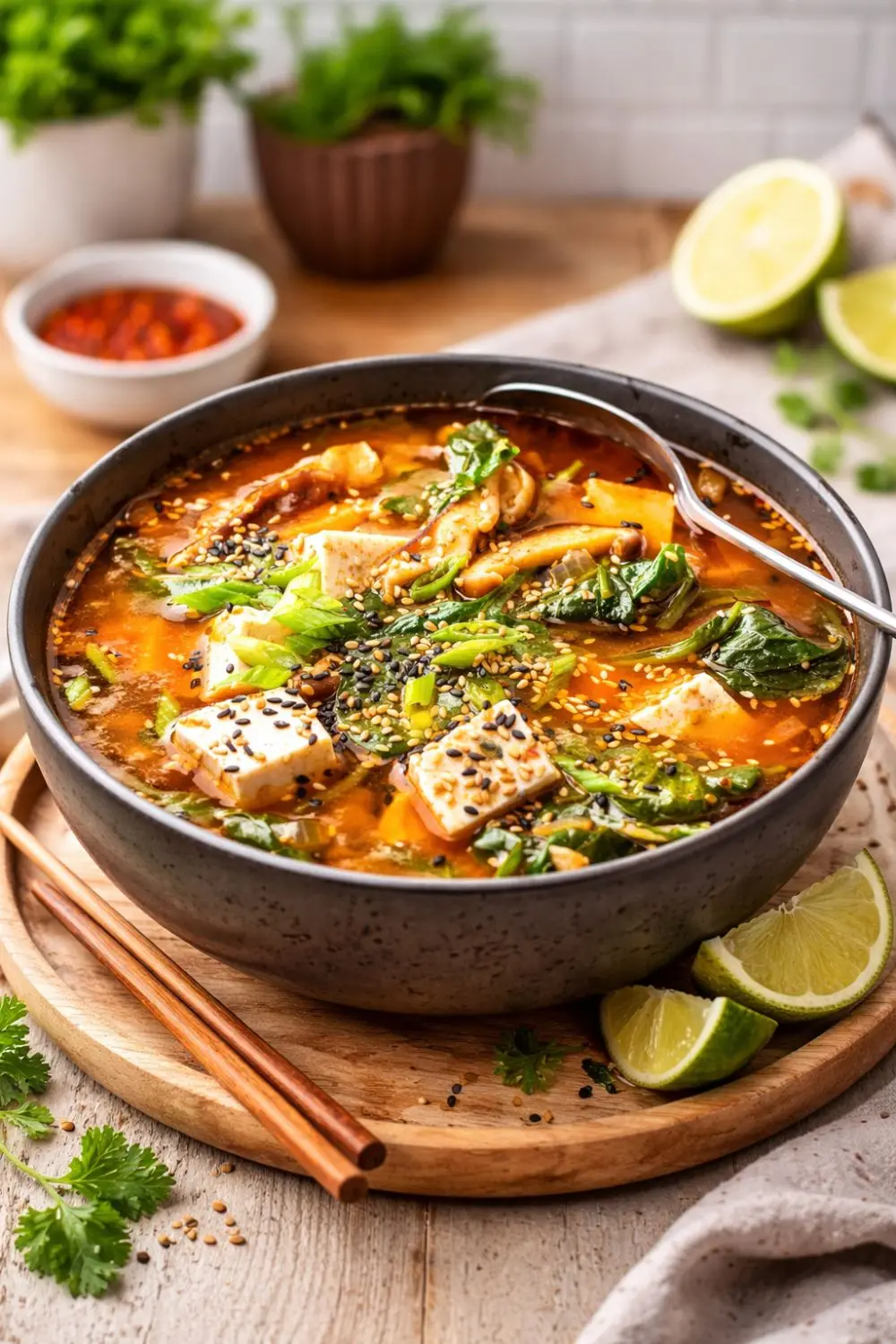
Crockpot Vegan Korean Gochujang Tofu Stew Bold
Ingredients
Equipment
Method
- Step 1 — Build the Aromatic Base
- Coat the bottom of your large pot with 1 tablespoon of peanut oil and place it over medium heat. Add the diced onion and sweat it for about 5 minutes, stirring frequently, until it becomes soft and translucent. You want the onion cooked through and gentle — not browned or caramelized.
- Add the minced garlic, grated ginger, and gochugaru. Stir everything together and cook for about 1 minute, until the mixture becomes intensely fragrant. Your kitchen will smell incredible at this point — ginger, garlic, and chili paste blooming together in hot oil is one of those aromas that makes everyone wander into the kitchen asking what you’re making.
- Step 2 — Add the Broth and Vegetables
- Stir in the vegetable broth, gochujang, soy sauce, and rice vinegar. Add the sliced shiitake mushrooms and zucchini. Raise the heat and bring the liquid to a full boil, then lower the heat and let the soup simmer for about 8 minutes until the mushrooms and zucchini are completely tender.
- This simmering stage is where the broth really comes together. The gochujang dissolves into the vegetable stock, the mushrooms release their earthy juices into the broth, and the whole pot starts smelling like something genuinely special. Resist the urge to rush this step.
- Step 3 — Add the Spinach and Tofu
- Stir in the fresh spinach leaves and the cubed silken tofu. Let the soup continue simmering for just 2 minutes — long enough for the spinach to wilt completely into the broth. Handle the tofu gently during this stage. Silken tofu is delicate and breaks apart easily, so stir carefully rather than aggressively.
- The tofu doesn’t need long cooking — it just needs to heat through and absorb some of the surrounding broth. Over-cooking silken tofu makes it rubbery and less pleasant, so two minutes is genuinely enough.
- Step 4 — Finish with Sesame Oil and Season
- Remove the pot from heat. Stir in 1 teaspoon of toasted sesame oil. This last-minute addition is important — sesame oil loses its fragrance when cooked at high heat for too long, so adding it off-heat preserves that distinctive nutty aroma that makes the whole bowl smell irresistible.
- Taste the broth and adjust seasoning. Add more gochujang for heat, soy sauce for saltiness, or rice vinegar for brightness. Season with salt if needed. This is your stew — make it taste exactly the way you want it.
- Step 5 — Serve and Garnish
- Ladle the stew into bowls. Top each serving generously with sliced scallions and toasted sesame seeds. Serve immediately while hot.
Notes
Nutrition Information Per Serving
At just 188 calories per 1.5-cup serving, this stew delivers serious nutritional value without a heavy caloric load:| Nutrient | Per Serving (1.5 cups) |
| Calories | 188 kcal |
| Carbohydrates | 19.2g |
| Protein | 9.2g |
| Fat | 7.9g |
| Saturated Fat | 1.2g |
| Fiber | 3.1g |
| Sugar | 10.8g |
| Sodium | 753mg |
| Potassium | 608mg |
| Calcium | 121mg |
| Iron | 2mg |

Hi — I’m Rachel. I’m a wife, a mom, and a home cook who believes that food should bring comfort, joy, and compassion to the table. I live with my family — two hungry little foodies who are my most honest recipe testers — and together we’ve built a kitchen culture that’s all about good food that happens to be 100% vegan. I started this blog because I wanted a place to share the recipes that keep our days moving, the dishes that make weeknights feel a little easier, and the meals that become our little family traditions.