
Servings: 4 Prep Time: 10 minutes
Cook Time: 15 minutes Total Time: 20 minutes
Calories: 426 kcal per serving
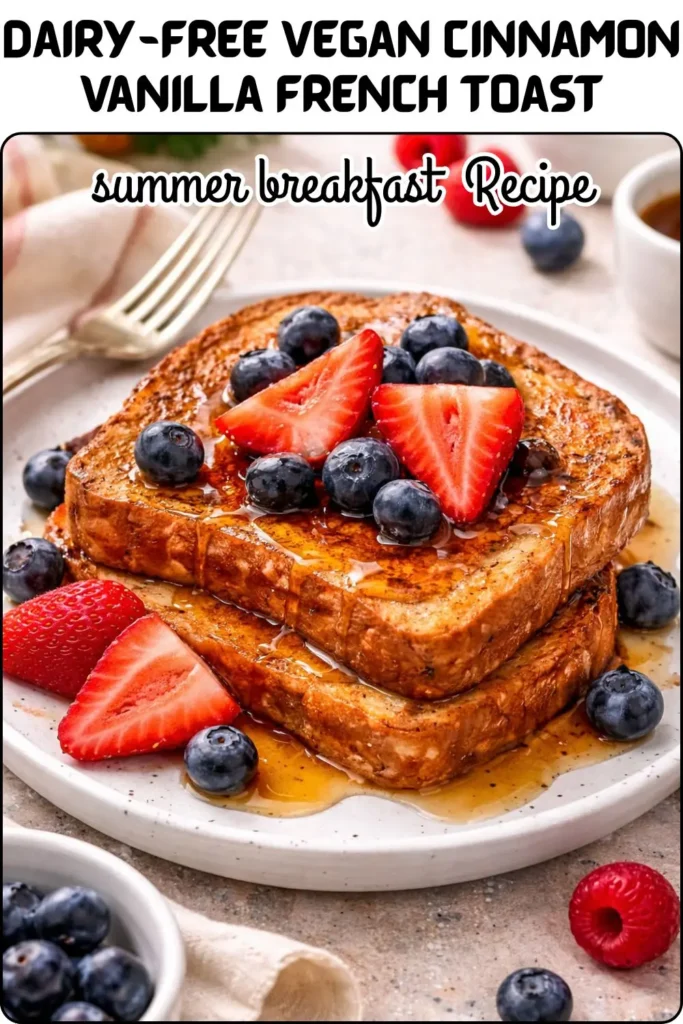
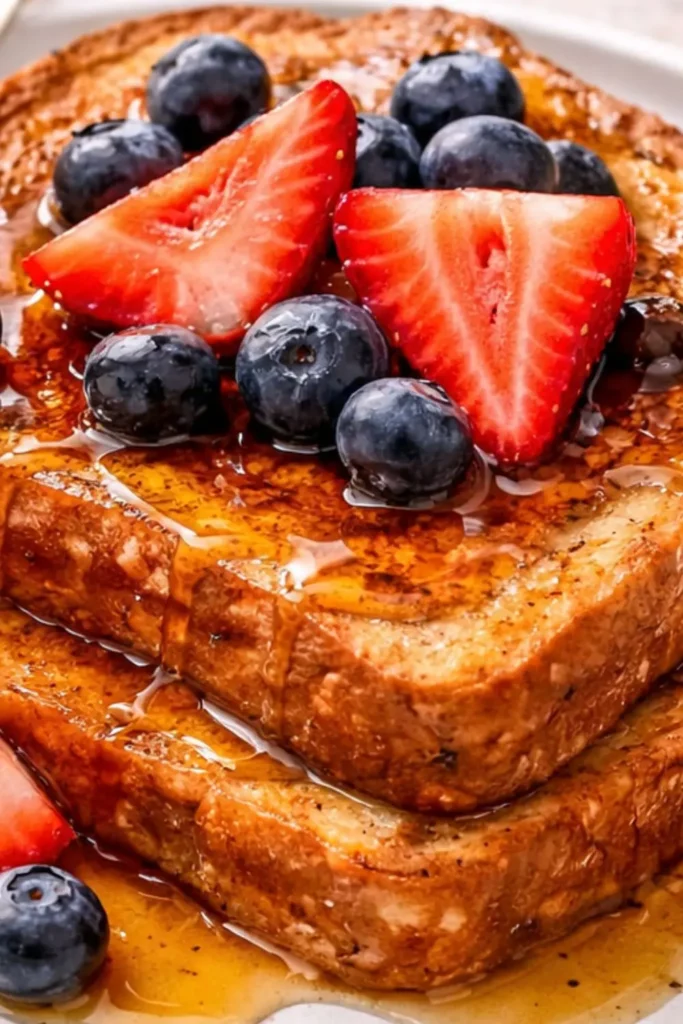
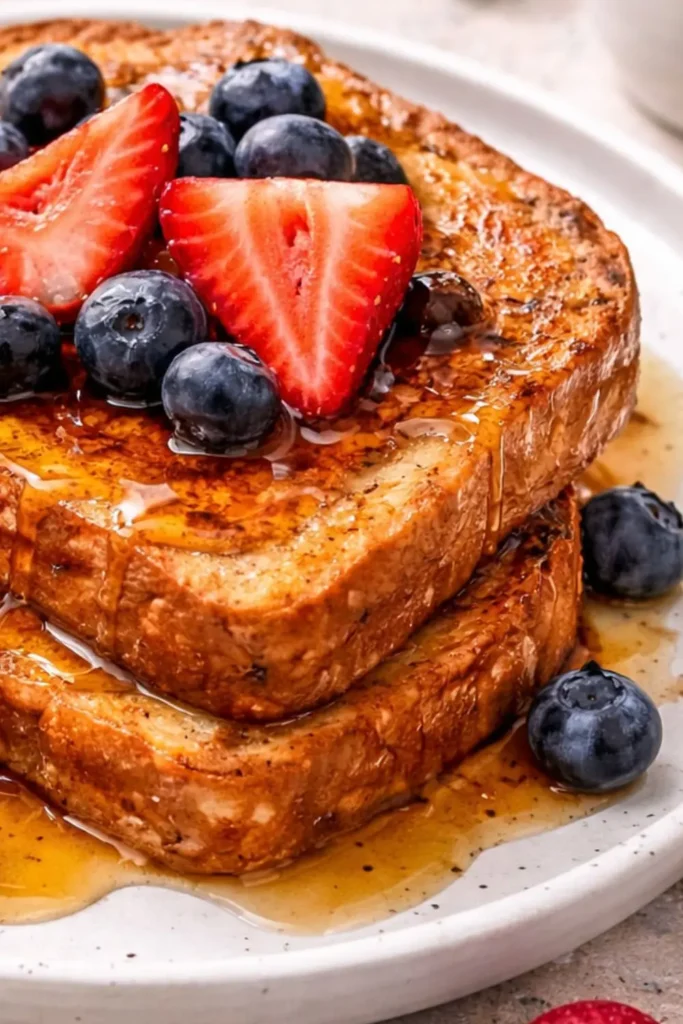
French toast without eggs or dairy sounds like a compromise. It isn’t. This Dairy-Free Vegan Cinnamon Vanilla French Toast produces eight golden, crispy-edged slices of cinnamon-spiced, vanilla-kissed toast that genuinely rivals the classic egg-based version and honestly, depending on the bread you use, might beat it. Twenty minutes, one pan, and a handful of pantry ingredients stand between you and the best vegan French toast you’ve ever made.
I spent an embarrassingly long time being skeptical of egg-free French toast before I tried this cornstarch batter method. The first batch converted me completely. The cornstarch creates a coating that crisps up beautifully in the pan, the almond milk carries the cinnamon and vanilla into every bite, and the nutmeg adds that subtle warmth that most French toast recipes skip but absolutely shouldn’t. Let me show you the full picture.
Why This Cornstarch Batter Works So Well
The central challenge of vegan French toast is replacing the binding and coating function that eggs provide in conventional recipes. Eggs coat bread in a protein-rich layer that sets when it hits heat, creating that characteristic golden exterior and custardy interior. Cornstarch dissolved in plant milk does the same job it thickens the batter slightly, creates a coating that adheres to the bread, and crisps at medium-high heat in a way that’s indistinguishable from the egg-based original.
The spice combination here is deliberate and balanced. cinnamon brings the warmth everyone expects, vanilla adds the aromatic sweetness that makes French toast smell incredible while it cooks, and nutmeg adds a depth that most people can’t identify by name but immediately notice by its absence. Together they create a batter that tastes complex and intentional rather than just “cinnamon bread.”
What you don’t get here: any trace of egg, dairy, or animal product. What you do get: a breakfast that feeds four people, takes 20 minutes, and tastes like Sunday morning did the work for you.
Ingredients You’ll Need For
Every ingredient in this recipe serves a specific function nothing is filler:
- 1 cup almond milk – the liquid base of the batter; unsweetened works best so you control the sweetness level; oat or soy milk also work well
- 2 tablespoons cornstarch – the egg-replacement that thickens the batter and creates the golden, slightly crispy crust; must be fully dissolved before dipping
- 1 teaspoon vanilla extract – the aromatic backbone of the batter; use pure vanilla extract, not imitation, for the cleanest flavor
- ½ teaspoon ground cinnamon – classic French toast warmth; the amount feels modest but distributes into all eight slices
- ¼ teaspoon ground nutmeg – the subtle depth that makes this batter taste bakery-quality; don’t skip it
- 8 slices vegan bread – thick-cut is essential; thin sandwich bread soaks through and falls apart; a sturdy vegan white, sourdough, or brioche-style loaf gives the best result
- 2 tablespoons unsalted vegan butter or coconut oil – for frying; vegan butter gives a richer, more buttery result; refined coconut oil is more neutral
FYI if you don’t have cornstarch, arrowroot powder or potato starch both work as direct substitutes in the same quantity. The texture is slightly different with each arrowroot gives a cleaner finish, potato starch produces a marginally crispier crust but all three produce excellent results.
Equipment You’ll Need For
No specialty equipment required just standard kitchen basics:
- Shallow dish or baking dish – wide enough to fit one slice of bread flat; the bread needs to lie completely in the batter for even coating; a 9×13 inch baking dish works perfectly
- Whisk – for combining the batter until the cornstarch completely dissolves; undissolved cornstarch clumps create uneven coating and occasional gummy spots
- Large non-stick skillet or griddle – the cooking surface matters significantly; a non-stick surface prevents sticking without requiring excessive oil, and allows you to use the minimal butter or coconut oil needed for a clean, golden sear
- Spatula – for flipping without tearing; a thin, wide spatula slides under the toast cleanly
- Plate lined with paper towel (optional) – for resting cooked slices while subsequent batches cook; keeps them warm without steaming and softening the crust
- Measuring cups and spoons – for batter accuracy; the cornstarch-to-milk ratio matters for the right batter consistency
No oven, no baking sheets, no special gadgets. A shallow dish, a whisk, and a non-stick pan get you all the way there.
Servings & Who This Recipe Is For
This recipe makes 8 slices of French toast a generous serving for 4 people at 2 slices each, or a very comfortable serving for 2 people with planned leftovers.
It works perfectly for:
- A family weekend breakfast – 8 slices feed four people simultaneously without anyone waiting; cook in batches and keep warm in a low oven (200°F) while you work through all the slices
- A solo or couple’s brunch – make the full batch and refrigerate the leftovers; vegan French toast reheats remarkably well in a dry pan
- Weekend meal prep – cool on a wire rack, freeze in a single layer, and toast from frozen on weekday mornings in 3–4 minutes
- Impressing non-vegan guests -this recipe consistently produces results that people don’t recognize as dairy-free or egg-free; it’s the kind of vegan food that changes minds
At 426 calories per 2-slice serving, this is a satisfying and genuinely substantial breakfast. Add fresh fruit and maple syrup and you have a complete morning meal.
Caloric & Nutritional Info (Per Serving 2 Slices)
| Nutrient | Amount |
| Calories | 426 kcal |
| Carbohydrates | 71g |
| Protein | 14g |
| Fat | 10g |
| Saturated Fat | 2g |
| Fiber | 3g |
| Sugar | 6g |
| Iron | 5mg |
| Calcium | 145mg |
| Sodium | 898mg |
| Potassium | 154mg |
The protein at 14 grams per serving surprises most people it comes primarily from the vegan bread, which often contains more protein than people expect, particularly sourdough or whole grain varieties. The iron at 5mg per serving is also worth noting: that covers about 25–28% of most people’s daily iron target from a single breakfast, which is a meaningful contribution from what’s essentially spiced toast. The sugar at just 6g reflects that this recipe adds very little sweetness to the batter itself the maple syrup topping is where you control the sweetness according to your preference.
The sodium at 898mg is the one number to be aware of, and it comes primarily from the vegan bread rather than anything added to the recipe. Choosing a lower-sodium bread variety brings that number down noticeably if it’s a concern.
Step-by-Step Instructions
Step 1- Make the Batter (3 Minutes)
Combine 1 cup of almond milk, 2 tablespoons of cornstarch, 1 teaspoon of vanilla extract, ½ teaspoon of cinnamon, and ¼ teaspoon of nutmeg in your shallow dish. Whisk vigorously until the cornstarch dissolves completely with no visible lumps or white powder streaks. The batter should look smooth, slightly thicker than plain milk, and uniformly spiced.
Don’t rush the whisking – undissolved cornstarch settles to the bottom of the dish and creates uneven coating across bread slices. Thirty extra seconds of whisking here produces a consistently better result across all eight slices. Let the batter rest for 2 minutes after whisking to fully hydrate the cornstarch.
Step 2- Heat the Pan
Set your non-stick skillet or griddle over medium-high heat and let it fully come to temperature before adding anything to it. A properly preheated pan is what creates the golden crust add bread to an underheated pan and you get pale, slightly soggy toast instead of the crispy, golden result this recipe aims for.
Test the heat by flicking a few drops of water onto the surface if they dance and evaporate immediately, the pan is ready.
Step 3- Soak the Bread
Dip each slice of bread into the batter one at a time. Let the first side sit in the batter for 10–15 seconds, then flip and soak the second side for another 10–15 seconds. The bread should absorb some batter without becoming completely saturated.
Thick-cut bread is non-negotiable for this step. Thin sandwich bread soaks through almost immediately, loses its structural integrity, and tears when you try to lift it out of the dish. A sturdy sourdough, vegan brioche, or thick-cut white vegan bread holds the batter without collapsing. If your bread slices feel too soft after soaking, lift them carefully with both hands and transfer quickly.
Step 4- Fry in Batches
Add 1 tablespoon of vegan butter or coconut oil to the hot pan and let it melt and coat the surface. Place 2 soaked bread slices in the pan don’t crowd the surface or the slices steam each other rather than sear. Cook for 2–3 minutes without moving until the underside develops a deep golden color. Flip carefully and cook the second side for another 2–3 minutes until equally golden.
The medium-high heat is important too low and the toast cooks slowly, absorbing oil and becoming greasy rather than crispy; too high and the exterior burns before the interior sets. Medium-high, steady, and patient delivers the golden result consistently.
Step 5- Repeat and Keep Warm
Transfer cooked slices to a plate (or a rack in a 200°F oven to keep warm) and add more vegan butter or coconut oil to the pan between batches as needed. The pan may need a very brief rest between batches if it gets too hot a 30-second break off the heat prevents scorching on subsequent batches.
Repeat until all eight slices are cooked. The whole cooking process takes approximately 15 minutes from first slice to last, working in batches of two.
Step 6- Serve Hot with Your Chosen Toppings
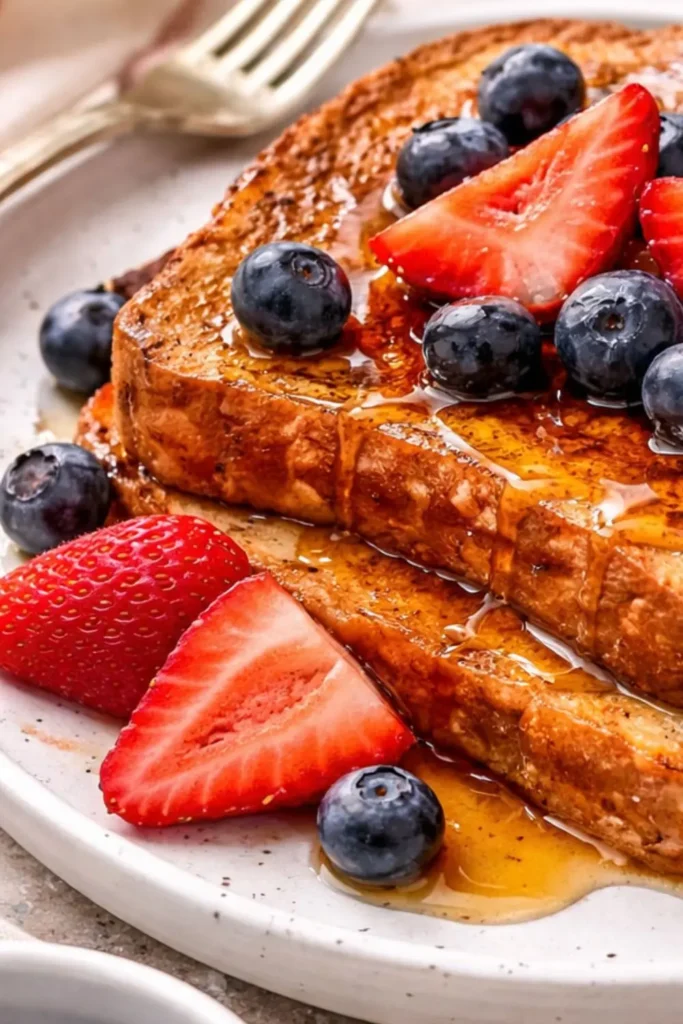
Plate two slices per person and serve immediately with maple syrup, fresh fruit, vegan whipped cream, powdered sugar, or whatever combination calls to you. The toast stays crispy for about 10 minutes after cooking serve it while it’s hot for the optimal texture experience.
Tips for Perfect Dairy-Free Vegan French Toast
Bread Selection Is the Most Important Variable
The bread makes or breaks this recipe more than any other single ingredient choice. Here’s how common options compare:
- Vegan sourdough – the top recommendation; sturdy structure, tangy flavor that complements cinnamon beautifully, holds batter without collapsing
- Thick-cut vegan white bread – reliable and accessible; produces clean, classic French toast flavor
- Vegan brioche-style – richest result; slightly sweet and buttery already; makes the most indulgent version of this recipe
- Whole wheat vegan bread – adds nutty depth; slightly denser crumb; works well but produces a heavier result
- Thin sandwich bread – avoid; soaks through immediately and tears during cooking
Day-old bread actually works better than fresh slightly stale bread absorbs batter more evenly without becoming waterlogged. If your bread is very fresh, toast it lightly before dipping to reduce its moisture absorption rate.
Vegan Butter vs. Coconut Oil Which Wins?
Both work, and both produce slightly different results:
- Unsalted vegan butter – richer, more buttery flavor; browns the toast with slightly more depth; IMO this is the better choice for weekend French toast when flavor is the priority
- Refined coconut oil – completely neutral flavor; produces a clean, golden sear without any coconut note; better choice if you want the cinnamon-vanilla flavor to lead without competition
- Virgin coconut oil – adds a coconut flavor; can work but competes with the vanilla and cinnamon; only use if you enjoy that combination
You may also like Next recipe
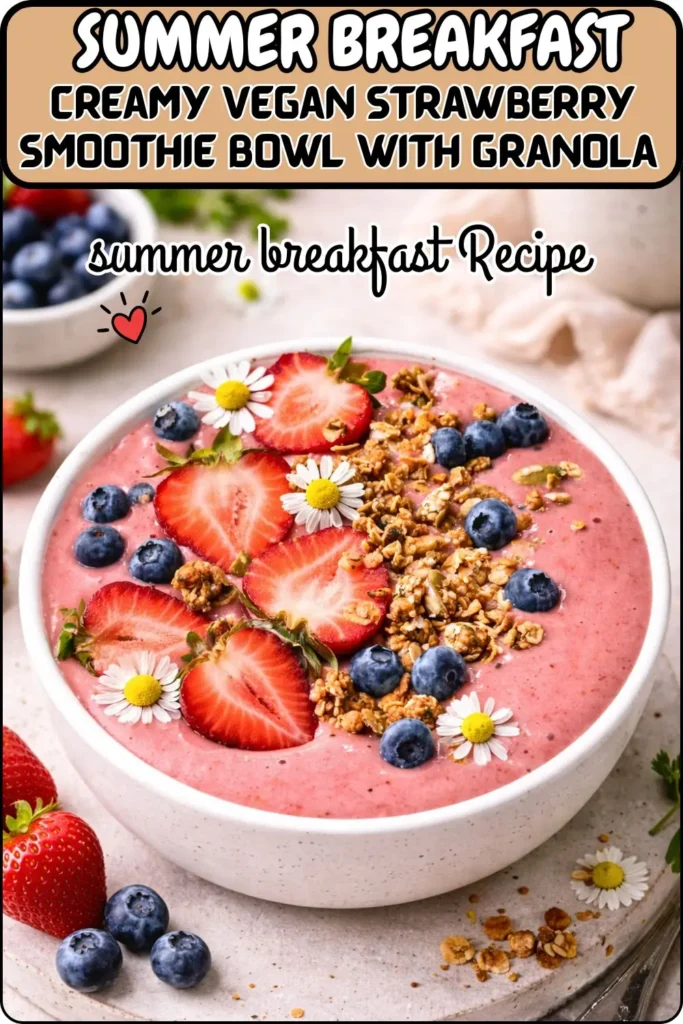
Creamy Vegan Strawberry Smoothie Bowl with Granola
The Nutmeg Is Not Optional
I know it’s listed as a quarter teaspoon and looks like a rounding error in the recipe. It isn’t. Nutmeg has an almost magical effect on sweet, egg-based (or egg-replacement-based) batters it adds a warm, slightly floral depth that amplifies the cinnamon and vanilla without announcing itself. Remove it from this recipe and the batter tastes one-dimensional by comparison. Keep it in and the French toast tastes like a professional made it. That’s the whole deal.
Topping Ideas That Work Beautifully
The recipe suggests maple syrup and fruit as the go-to both excellent choices. Some additional combinations worth trying:
Classic Summer Toppings
- Fresh sliced strawberries + maple syrup – the quintessential summer French toast topping
- Mixed berry compote – warm blueberries, raspberries, and blackberries cooked briefly with a teaspoon of maple syrup; stunning and simple
- Sliced peaches + cinnamon + maple syrup – peak summer stone fruit on warm spiced toast; genuinely one of the best flavor combinations in warm-weather breakfast
Indulgent Options
- Vegan whipped cream + powdered sugar + fresh berries – brunch-level presentation in under two minutes
- Almond butter drizzle + sliced banana + maple syrup – the nut butter toast combination applied to French toast; filling and rich
- Vegan Nutella-style spread + fresh raspberries – chocolate and raspberry on cinnamon toast; barely qualifies as breakfast but fully qualifies as excellent
Make-Ahead & Storage Tips
This recipe rewards batch cooking:
- Cook and cool- Let cooked French toast cool completely on a wire rack
- Refrigerator-Store in an airtight container for up to 3 days; reheat in a dry non-stick pan over medium heat for 2 minutes per side to restore crispiness
- Freezer- Freeze in a single layer first, then transfer to a freezer bag for up to 1 month; reheat directly from frozen in a toaster or 375°F oven for 5–6 minutes
- Batter- Make the batter up to 24 hours ahead and refrigerate; whisk again before using as the cornstarch settles
The toaster reheating method from frozen genuinely works the toast comes back almost as crispy as fresh-made. Meal prepping a full batch on Sunday and pulling slices throughout the week is a very real and very efficient strategy.
Frequently Asked Questions
Can I use a different plant milk instead of almond milk? Yes oat milk gives the creamiest, most neutral result and is the best substitute. Soy milk adds slightly more protein and a neutral flavor. Coconut milk (carton) works but adds a subtle tropical note. Avoid canned full-fat coconut milk it’s too rich and makes the batter too thick to dip evenly.
What if I don’t have cornstarch? Arrowroot powder is the closest substitute use the same quantity and it behaves almost identically. Potato starch also works and produces a slightly crispier crust. Regular flour doesn’t perform as well it makes the batter gummy rather than crisp.
Can I substitute almond extract for vanilla? Yes almond extract creates a completely different but equally delicious flavor profile. Use only ½ teaspoon instead of a full teaspoon since almond extract is significantly more potent than vanilla. Coconut extract also works if you want a tropical twist that pairs well with mango or pineapple toppings.
My French toast is coming out soggy. What went wrong? Two likely causes: the pan wasn’t hot enough when the bread went in, or the bread soaked too long in the batter. Make sure the pan is fully preheated to medium-high before the first slice goes in, and limit the soaking time to 15 seconds per side maximum for standard-thickness bread.
My Final Thoughts
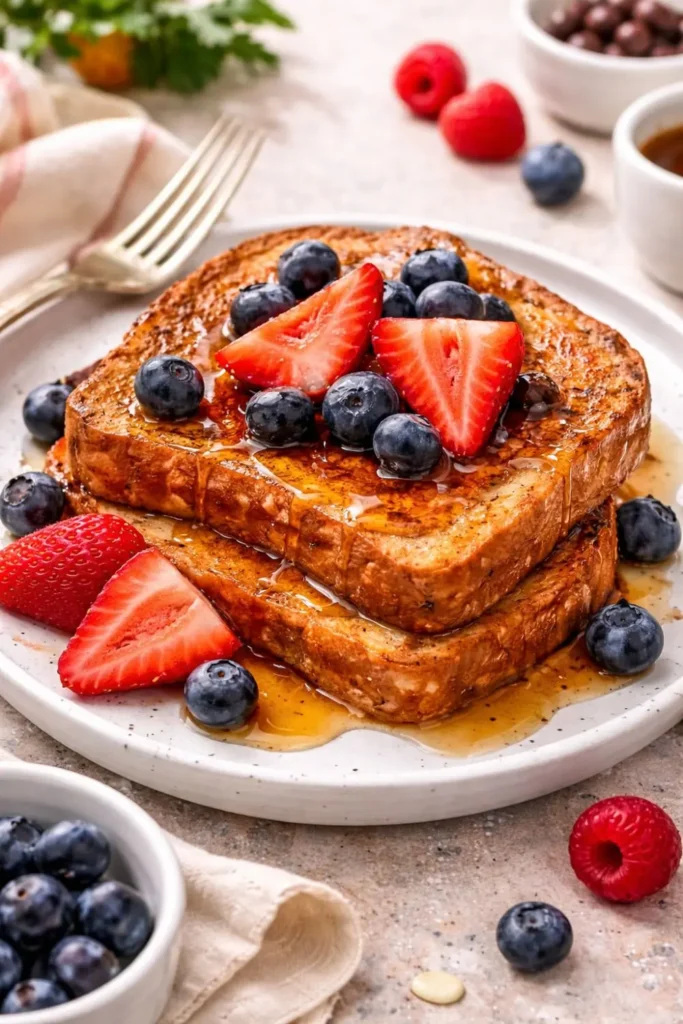
This Dairy-Free Vegan Cinnamon Vanilla French Toast is the recipe that makes vegan breakfast feel like zero compromise. Golden, crispy edges, warm cinnamon-vanilla aroma filling the kitchen, and eight perfectly cooked slices that feed four people in 20 minutes from a pantry-staple ingredient list.
The cornstarch batter works. The nutmeg matters. The bread choice defines the result. Get those three things right and you have vegan French toast that genuinely holds its own against any conventional version and might quietly outperform most of them.
Make it this weekend. Drench it in maple syrup and summer fruit. And maybe, just maybe, start questioning every other recipe that told you eggs were necessary.
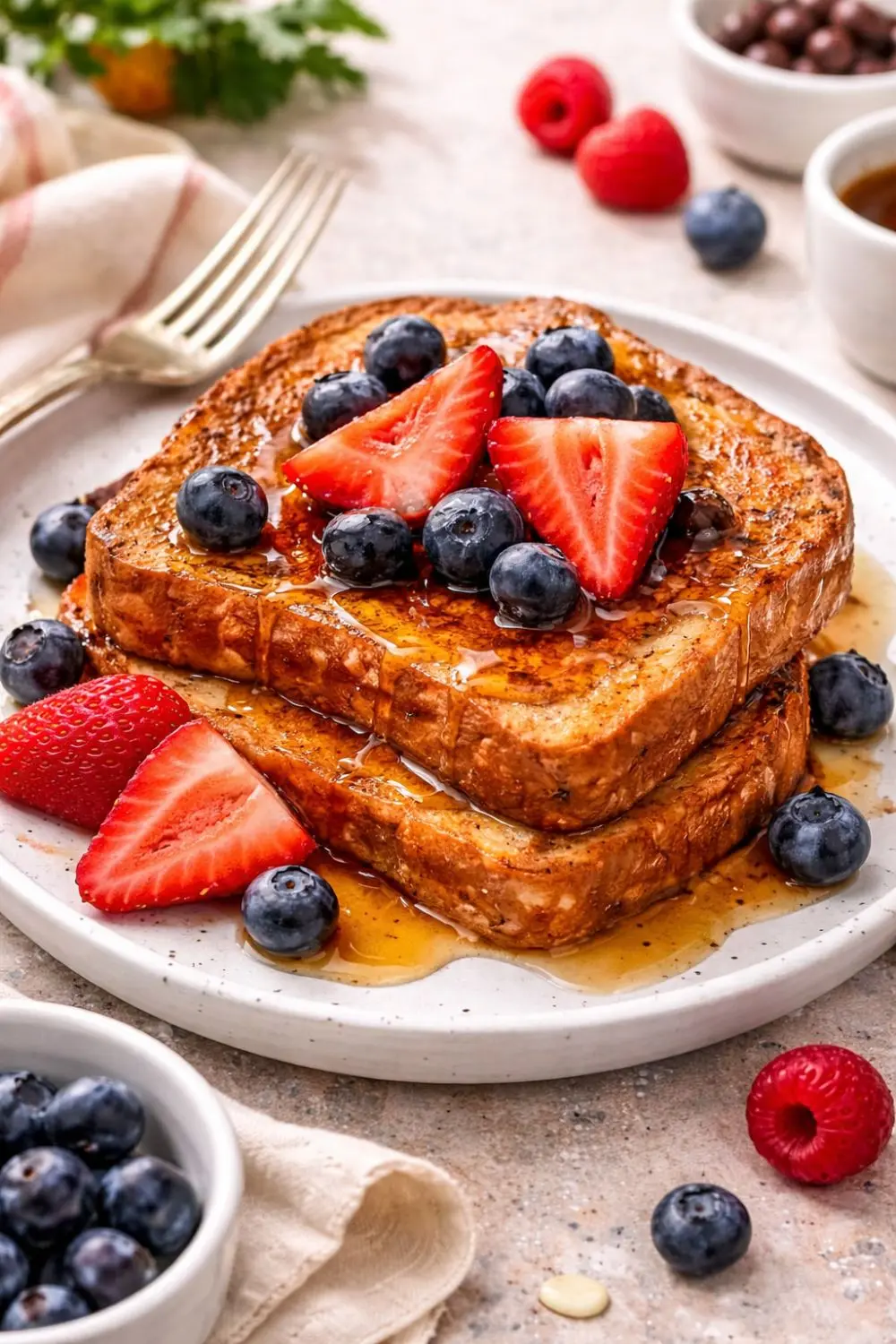
Dairy-Free Vegan Cinnamon Vanilla French Toast
Ingredients
Equipment
Method
- Step 1- Make the Batter (3 Minutes)
- Combine 1 cup of almond milk, 2 tablespoons of cornstarch, 1 teaspoon of vanilla extract, ½ teaspoon of cinnamon, and ¼ teaspoon of nutmeg in your shallow dish. Whisk vigorously until the cornstarch dissolves completely with no visible lumps or white powder streaks. The batter should look smooth, slightly thicker than plain milk, and uniformly spiced.
- Don’t rush the whisking – undissolved cornstarch settles to the bottom of the dish and creates uneven coating across bread slices. Thirty extra seconds of whisking here produces a consistently better result across all eight slices. Let the batter rest for 2 minutes after whisking to fully hydrate the cornstarch.
- Step 2- Heat the Pan
- Set your non-stick skillet or griddle over medium-high heat and let it fully come to temperature before adding anything to it. A properly preheated pan is what creates the golden crust add bread to an underheated pan and you get pale, slightly soggy toast instead of the crispy, golden result this recipe aims for.
- Test the heat by flicking a few drops of water onto the surface if they dance and evaporate immediately, the pan is ready.
- Step 3- Soak the Bread
- Dip each slice of bread into the batter one at a time. Let the first side sit in the batter for 10–15 seconds, then flip and soak the second side for another 10–15 seconds. The bread should absorb some batter without becoming completely saturated.
- Thick-cut bread is non-negotiable for this step. Thin sandwich bread soaks through almost immediately, loses its structural integrity, and tears when you try to lift it out of the dish. A sturdy sourdough, vegan brioche, or thick-cut white vegan bread holds the batter without collapsing. If your bread slices feel too soft after soaking, lift them carefully with both hands and transfer quickly.
- Step 4- Fry in Batches
- Add 1 tablespoon of vegan butter or coconut oil to the hot pan and let it melt and coat the surface. Place 2 soaked bread slices in the pan don’t crowd the surface or the slices steam each other rather than sear. Cook for 2–3 minutes without moving until the underside develops a deep golden color. Flip carefully and cook the second side for another 2–3 minutes until equally golden.
- The medium-high heat is important too low and the toast cooks slowly, absorbing oil and becoming greasy rather than crispy; too high and the exterior burns before the interior sets. Medium-high, steady, and patient delivers the golden result consistently.
- Step 5- Repeat and Keep Warm
- Transfer cooked slices to a plate (or a rack in a 200°F oven to keep warm) and add more vegan butter or coconut oil to the pan between batches as needed. The pan may need a very brief rest between batches if it gets too hot a 30-second break off the heat prevents scorching on subsequent batches.
- Repeat until all eight slices are cooked. The whole cooking process takes approximately 15 minutes from first slice to last, working in batches of two.
- Step 6- Serve Hot with Your Chosen Toppings
- Plate two slices per person and serve immediately with maple syrup, fresh fruit, vegan whipped cream, powdered sugar, or whatever combination calls to you. The toast stays crispy for about 10 minutes after cooking serve it while it’s hot for the optimal texture experience.
Notes
Caloric & Nutritional Info (Per Serving 2 Slices)
| Nutrient | Amount |
| Calories | 426 kcal |
| Carbohydrates | 71g |
| Protein | 14g |
| Fat | 10g |
| Saturated Fat | 2g |
| Fiber | 3g |
| Sugar | 6g |
| Iron | 5mg |
| Calcium | 145mg |
| Sodium | 898mg |
| Potassium | 154mg |

Hi — I’m Rachel. I’m a wife, a mom, and a home cook who believes that food should bring comfort, joy, and compassion to the table. I live with my family — two hungry little foodies who are my most honest recipe testers — and together we’ve built a kitchen culture that’s all about good food that happens to be 100% vegan. I started this blog because I wanted a place to share the recipes that keep our days moving, the dishes that make weeknights feel a little easier, and the meals that become our little family traditions.