

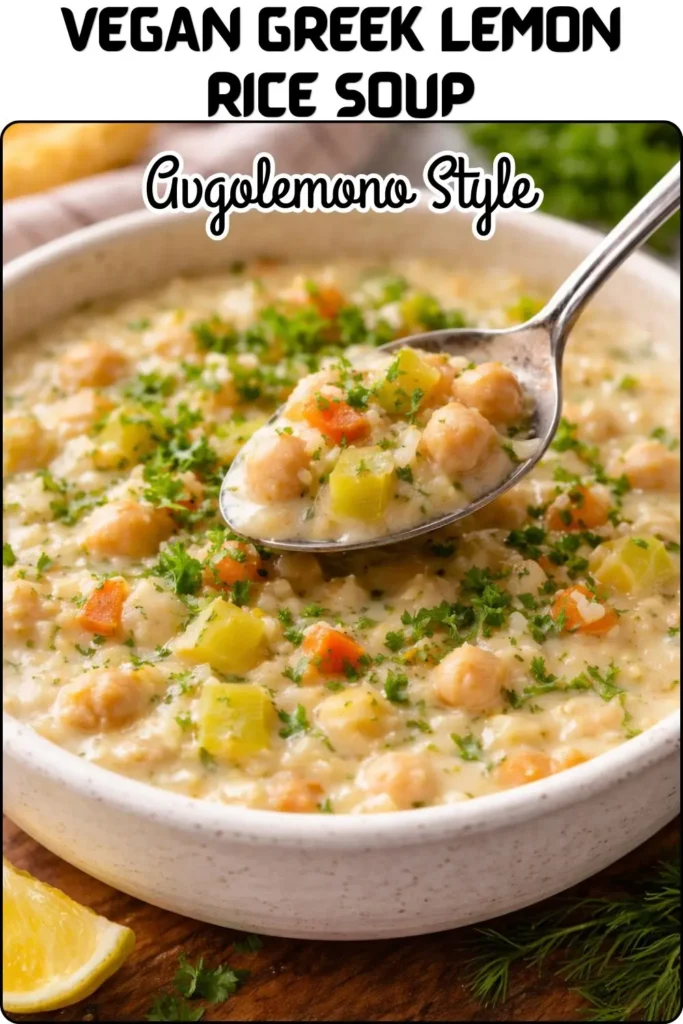
Ever had one of those meals that just transports you? You know, the kind where you close your eyes for a second and suddenly you’re sitting on a Greek island with the sun warming your face and fresh sea breezes all around? That’s exactly what Easy Vegan Greek Lemon Rice Soup does. The classic avgolemono (that creamy, lemony, rice-filled masterpiece) gets a plant-based makeover, and honestly?
It’s absolutely magnificent. I’m talking about that perfect balance of bright lemon, fluffy rice, savory broth, and a cashew cream that mimics the egg richness so well you’ll do a double-take. Let me walk you through how to make this magic happen in your own kitchen .
Why This Easy Vegan Greek Lemon Rice Soup Deserves Your Attention
Listen, traditional avgolemono gets all the hype, and rightfully so—it’s incredible. But here’s the thing: when you make a vegan Greek lemon rice soup, you’re not compromising. You’re actually creating something that respects both plant-based eating and authentic Mediterranean flavors. The genius move here? Soaked cashew cream replaces the eggs, creating that silky, luxurious texture that makes this soup feel restaurant-quality.
The beauty of this soup lies in its simplicity. You’re working with humble ingredients—rice, vegetables, broth, and lemon—but when you put them together intentionally, something magical happens. The lemon juice brightens everything, the rice absorbs all those savory flavors, and the cashew cream ties it all together into one harmonious bowl. IMO, this is the kind of soup that makes people forget they’re eating vegan. It’s just delicious, full stop.
What I love most about this recipe? It takes only about 45 minutes total, including the 4-8 hour cashew soak (which you can do ahead of time anyway). You’re looking at actual hands-on time of maybe 25-30 minutes. That’s efficiency without sacrificing flavor.
Understanding the Avgolemono Magic: What Makes It Special
What Exactly Is Avgolemono?
Avgolemono is a Greek soup that literally means “egg-lemon.” Traditionally, it combines chicken broth, rice, and a mixture of eggs and lemon juice to create that creamy, slightly tart, incredibly satisfying dish. The eggs emulsify with the hot broth, creating a silky texture that coats your mouth in the best possible way.
Here’s where it gets interesting: you can absolutely capture that same vibe without eggs. Cashew cream does the heavy lifting here. When you blend soaked cashews with broth, you create a luxurious, creamy element that behaves similarly to the egg emulsion. Add the bright acidity of lemon juice, and you’ve got yourself an authentic-tasting avgolemono that happens to be completely 100% vegan.
Why Cashew Cream Over Other Options?
I tested this with coconut milk, oat cream, and a few other options. Cashew cream won every single time. It’s neutral enough that it doesn’t compete with the delicate lemon-broth flavors, it creates that silky mouthfeel without being heavy, and it honestly tastes closest to the original egg-based version. Coconut milk overpowers the delicate Mediterranean profile, and oat cream just doesn’t give you that same richness.
The Easy Vegan Greek Lemon Rice Soup Recipe: Step-by-Step
Recipe Info
- Servings: 6 people
- Prep Time: 15 minutes
- Cook Time: 25 minutes
- Soak Time: 4-8 hours (cashews, done ahead)
- Total Active Time: About 40 minutes
- Calories per serving: ~290 calories
- Perfect for: Summer dinners, light lunches, Mediterranean-inspired gatherings
What You’ll Need
- 2 tablespoons olive oil (extra virgin is ideal)
- 2 medium carrots, diced (about 1 cup)
- 2 medium celery stalks, diced (about 1 cup)
- 1 medium onion, diced (about ¾ cup)
- 3 garlic cloves, minced
- 7 cups vegetable broth, divided (6 cups for the soup, 1 cup for the cashew cream)
- 1 cup medium grain white rice (arborio or sushi rice work beautifully)
- 1 (15-ounce) can chickpeas, drained and rinsed (adds protein and heartiness)
- ½ cup raw cashews, soaked 4-8 hours, drained and rinsed (the secret ingredient)
- ¼ cup fresh lemon juice (about 2 lemons—use fresh, not bottled)
- Kala namak, to taste (optional, but highly recommended for that eggy flavor)
- Pinch of turmeric (optional, for color)
- ¼ cup fresh dill, finely chopped (the finishing touch)
- Salt and pepper to taste
The Step-by-Step Process Easy Vegan Greek Lemon Rice Soup (Avgolemono Style)

Step 1: Build Your Flavor Base
Coat the bottom of a large pot with olive oil and place it over medium heat. Once the oil is hot (you’ll see it shimmer), add the diced carrots, celery, and onion. This is called “sweating” the vegetables, and it’s absolutely crucial. Cook them for about 10 minutes, stirring occasionally, until they start to soften and become slightly translucent at the edges.
Why does this matter? When you sweat vegetables, you’re releasing their natural sugars and creating a flavor foundation. Raw vegetables would taste harsh and vegetal. Sweated vegetables? They taste rich and developed. Trust the process here.
Step 2: Add Garlic (The Secret Weapon)
Once your vegetables are softened, stir in the minced garlic and cook for about 1 minute. You’ll know it’s ready when your kitchen smells absolutely incredible—that’s your signal that the garlic is fragrant and ready. Don’t let it cook too long or it’ll burn and turn bitter. One minute is the sweet spot.
Step 3: Build the Soup Base
Pour in 6 cups of vegetable broth along with the rice and chickpeas. Stir everything together, then raise the heat and bring it to a boil. Once you see those bubbles breaking at the surface, lower the heat and let it simmer uncovered for about 20 minutes. The rice needs this time to become tender and absorb all those savory flavors.
Step 4: Prepare the Cashew Cream (While the Soup Simmers)
While the soup is doing its thing, blend the remaining 1 cup of vegetable broth with your soaked and drained cashews. Blend on high until the mixture is completely smooth—you’re looking for a cream-like consistency, not chunky at all. This takes about 2-3 minutes in a high-powered blender. If you don’t have a fancy blender, a regular one works fine; just blend longer.
Step 5: Combine Everything
When the rice is fully cooked (taste a grain to make sure it’s tender), stir the cashew cream directly into the pot. Continue simmering for another minute or two, just to heat through the cream you just added. Don’t boil aggressively—you want a gentle simmer.
Step 6: The Final Magic
Remove the pot from heat. Now comes the part that transforms this from “nice soup” to “holy cow, this is incredible”—stir in the lemon juice. You’ll immediately notice the soup brightens up. The acidity from the lemon cuts through the richness and creates that signature avgolemono tang.
Add kala namak if you’re using it (start with ¼ teaspoon—it’s potent), the pinch of turmeric for color, and the fresh dill. Season with salt and pepper to taste. Give everything a good stir.
Step 7: Serve and Enjoy
Ladle into bowls and serve immediately. You can add a final drizzle of olive oil, an extra sprinkle of fresh dill, and maybe a crack of black pepper if you’re feeling fancy. FYI, this soup is best enjoyed fresh, but it keeps in the fridge for 3-4 days.
Equipment You’ll Actually Use
Here’s the beautiful part: this recipe doesn’t require any specialty equipment. You probably have everything already.
Essential Equipment:
- Large pot (at least 4-quart capacity)
- Chef’s knife and cutting board
- Blender (for the cashew cream—immersion blenders work too)
- Wooden spoon or spatula (for stirring)
- Measuring cups and spoons
Nice-to-Have Items:
- Lemon juicer (makes extracting juice easier, but not required)
- Soup bowls (beautiful ones make the experience better, not gonna lie)
- Ladle (for serving elegantly)
That’s literally it. No fancy equipment required.
Nutritional Breakdown: What You’re Eating
Let’s talk about what’s actually in this bowl. Per serving (based on 6 servings):
- Calories: 290 kcal
- Carbohydrates: 44g (mostly from rice)
- Protein: 7g (from chickpeas and cashews)
- Fat: 10g (mostly healthy fats from olive oil and cashews)
- Fiber: 4g
- Sodium: 1128mg
- Vitamin A: 4200 IU
- Iron: 2mg
Here’s the real talk: this soup is genuinely nutritious. You’ve got complex carbs from the rice, plant-based protein from the chickpeas and cashews, tons of vegetables loaded with vitamins, and healthy fats that help your body absorb fat-soluble vitamins. It’s filling but not heavy—perfect for summer eating.
How Many People Does This Feed? (And Why It Matters)
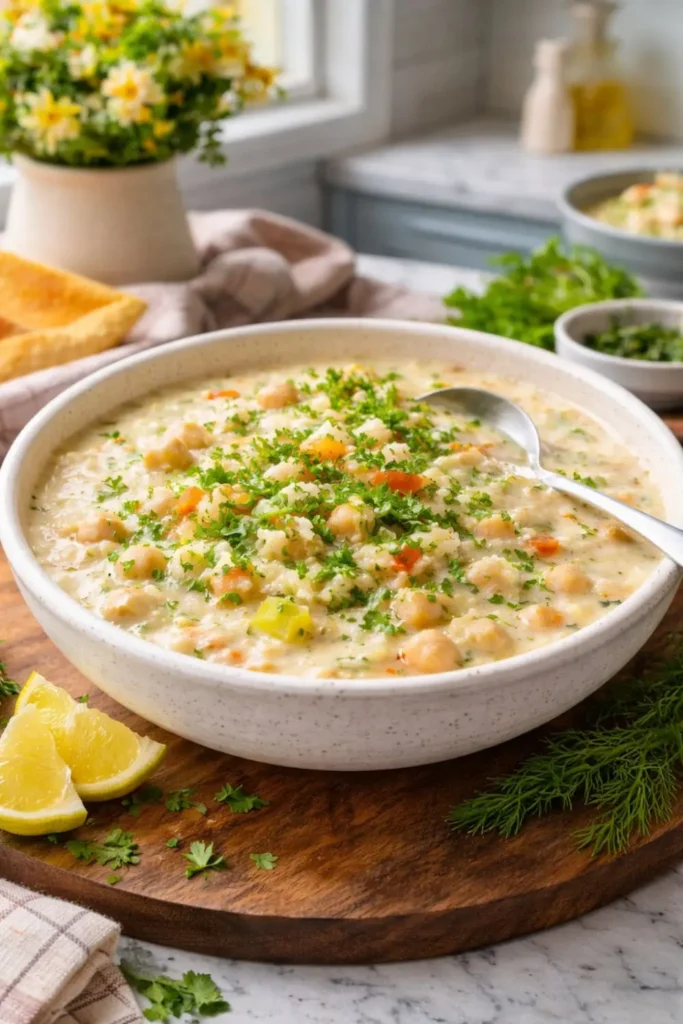
This recipe makes 6 servings of about 1.5 cups each. Here’s how to think about portions:
- Light lunch for 6 people: 1.5 cups each (what the recipe yields)
- More substantial dinner for 4 people: 2.25 cups each (just increase portions)
- Appetizer for 8-10 people: About ¾ cup each
- Meal prep for yourself: Make the full batch and freeze half for later
The beauty of soup is that it’s incredibly flexible with portions. Make the full recipe and freeze half if you want, or cut everything in half if you’re cooking for fewer people.
Pro Tips for Nailing This Recipe
1. Soak Your Cashews Ahead of Time
Don’t try to use unsoaked cashews. They won’t blend smoothly, and you’ll end up with a gritty cream instead of silky goodness. I learned this the hard way. Soak them for at least 4 hours, though overnight is even better. You can prep them the morning before, drain them, and they’re ready to go when you need them.
2. Use Fresh Lemon Juice, Not Bottled
Bottled lemon juice tastes flat and chemical-y. Fresh lemon juice is bright, alive, and makes all the difference. Take 30 seconds to squeeze fresh lemons. Your taste buds will thank you.
3. Don’t Skip the Dill
Dill is THE classic Greek herb, and it’s essential here. It adds a bright, slightly anise-like note that makes this soup taste authentically Mediterranean. Without it, you lose something special.
4. Kala Namak Is Optional But Highly Recommended
Kala namak (black salt) has a sulfurous, egg-like quality that genuinely makes this taste more like the traditional version. You can find it online or at specialty stores. Start with ¼ teaspoon—it’s potent. But if you can’t find it, the soup is still delicious without it.
5. Taste and Adjust
Everyone’s palate is different. After adding the lemon juice, taste the soup. Do you want more lemon brightness? Add another tablespoon. Want it saltier? Add salt gradually. This is your soup—make it exactly how you like it.
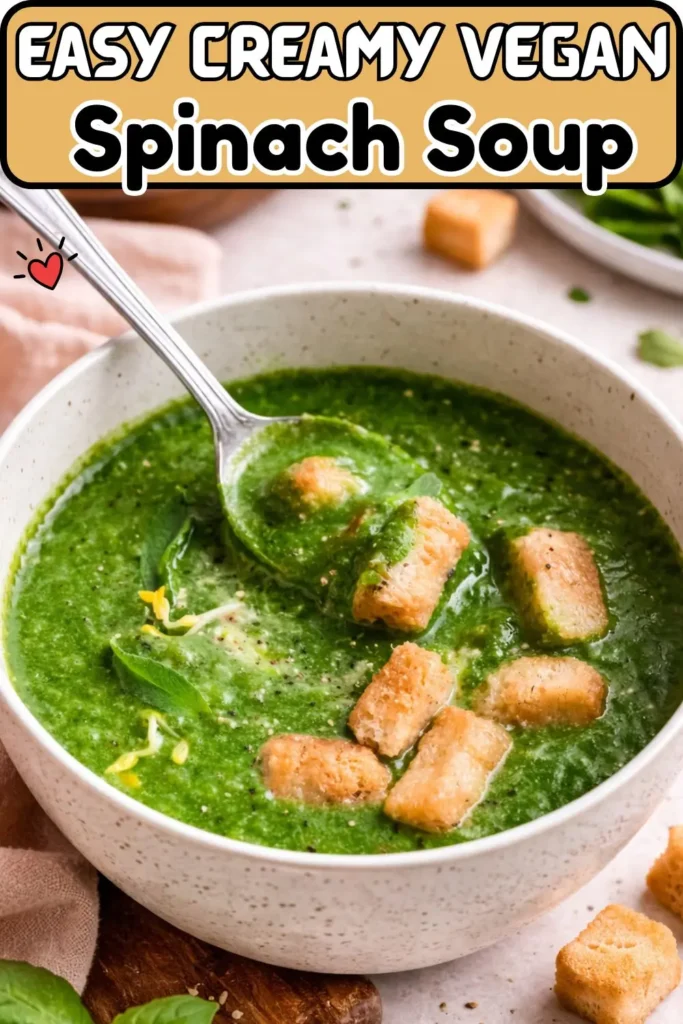
Still Hungry, Try It Next recipe :-
Easy Vegan Creamy Spinach Soup
Variations and Flavor Tweaks
For Extra Richness: Replace 1 cup of vegetable broth with unsweetened coconut milk. This creates a richer, slightly creamier soup.
For More Protein: Add 1 cup of cooked white beans or extra chickpeas. This bumps the protein to around 10g per serving.
Herb Variations: Swap the dill for fresh parsley or a combination of both. Mint also works beautifully if you want a slightly different Mediterranean vibe.
Citrus Alternatives: Some people use half lemon and half lime for a different brightness. Others add a touch of orange zest at the end. Experiment and see what speaks to you.
Storage and Make-Ahead Strategy
Refrigerator Storage: This soup keeps for 3-4 days in an airtight container. The flavors actually meld beautifully as it sits, so it’s even better the next day.
Freezing: You can freeze this soup for up to 3 months. Let it cool completely, then freeze in portion-sized containers. Thaw overnight in the fridge, then reheat gently on the stovetop over medium heat.
Make-Ahead Tips: Prep all your vegetables the day before and store them in airtight containers. Soak your cashews ahead of time. On the day you’re making soup, you’ve got maybe 30 minutes of actual cooking.
Why This Soup Is 100% Vegan Gold

Let me be crystal clear: every single ingredient in this Easy Vegan Greek Lemon Rice Soup is plant-based. No hidden animal products, no compromises. The cashew cream replaces eggs beautifully, the chickpeas add plant-based protein, and the vegetable broth anchors everything. This is authentic avgolemono reimagined for plant-based eating.
You’re not eating a “vegan version” of something. You’re eating a soup that stands on its own merits and happens to align with plant-based principles. People won’t taste “vegan soup”—they’ll taste delicious soup, period.
My Final Thoughts: Make This Soup This Week
Here’s the thing about Easy Vegan Greek Lemon Rice Soup (Avgolemono Style)—it’s proof that plant-based cooking can be simple, authentic, and absolutely delicious. You’re not using weird substitutes or complicated techniques. You’re just cooking real food with intention.
This soup takes less than an hour from start to finish (after the cashew soak). It serves six people. It costs maybe $8-10 to make. And it tastes like you’ve been cooking Greek food your entire life. That’s a win in every dimension.
Grab your pot, chop your vegetables, and make this happen. Your taste buds—and your future self who’s reheating leftovers—will be incredibly grateful.

Easy Vegan Greek Lemon Rice Soup (Avgolemono Style!)
Ingredients
Equipment
Method
- Step 1: Build Your Flavor Base
- Coat the bottom of a large pot with olive oil and place it over medium heat. Once the oil is hot (you’ll see it shimmer), add the diced carrots, celery, and onion. This is called “sweating” the vegetables, and it’s absolutely crucial. Cook them for about 10 minutes, stirring occasionally, until they start to soften and become slightly translucent at the edges.
- Why does this matter? When you sweat vegetables, you’re releasing their natural sugars and creating a flavor foundation. Raw vegetables would taste harsh and vegetal. Sweated vegetables? They taste rich and developed. Trust the process here.
- Step 2: Add Garlic (The Secret Weapon)
- Once your vegetables are softened, stir in the minced garlic and cook for about 1 minute. You’ll know it’s ready when your kitchen smells absolutely incredible—that’s your signal that the garlic is fragrant and ready. Don’t let it cook too long or it’ll burn and turn bitter. One minute is the sweet spot.
- Step 3: Build the Soup Base
- Pour in 6 cups of vegetable broth along with the rice and chickpeas. Stir everything together, then raise the heat and bring it to a boil. Once you see those bubbles breaking at the surface, lower the heat and let it simmer uncovered for about 20 minutes. The rice needs this time to become tender and absorb all those savory flavors.
- Step 4: Prepare the Cashew Cream (While the Soup Simmers)
- While the soup is doing its thing, blend the remaining 1 cup of vegetable broth with your soaked and drained cashews. Blend on high until the mixture is completely smooth—you’re looking for a cream-like consistency, not chunky at all. This takes about 2-3 minutes in a high-powered blender. If you don’t have a fancy blender, a regular one works fine; just blend longer.
- Step 5: Combine Everything
- When the rice is fully cooked (taste a grain to make sure it’s tender), stir the cashew cream directly into the pot. Continue simmering for another minute or two, just to heat through the cream you just added. Don’t boil aggressively—you want a gentle simmer.
- Step 6: The Final Magic
- Remove the pot from heat. Now comes the part that transforms this from “nice soup” to “holy cow, this is incredible”—stir in the lemon juice. You’ll immediately notice the soup brightens up. The acidity from the lemon cuts through the richness and creates that signature avgolemono tang.
- Add kala namak if you’re using it (start with ¼ teaspoon—it’s potent), the pinch of turmeric for color, and a fresh dill. Season with salt and pepper to taste. Give everything a good stir.
- Step 7: Serve and Enjoy
- Ladle into bowls and serve immediately. You can add a final drizzle of olive oil, an extra sprinkle of fresh dill, and maybe a crack of black pepper if you’re feeling fancy. FYI, this soup is best enjoyed fresh, but it keeps in the fridge for 3-4 days.
Notes
Nutritional Breakdown: What You’re Eating
Let’s talk about what’s actually in this bowl. Per serving (based on 6 servings):- Calories: 290 kcal
- Carbohydrates: 44g (mostly from rice)
- Protein: 7g (from chickpeas and cashews)
- Fat: 10g (mostly healthy fats from olive oil and cashews)
- Fiber: 4g
- Sodium: 1128mg
- Vitamin A: 4200 IU
- Iron: 2mg

Hi — I’m Rachel. I’m a wife, a mom, and a home cook who believes that food should bring comfort, joy, and compassion to the table. I live with my family — two hungry little foodies who are my most honest recipe testers — and together we’ve built a kitchen culture that’s all about good food that happens to be 100% vegan. I started this blog because I wanted a place to share the recipes that keep our days moving, the dishes that make weeknights feel a little easier, and the meals that become our little family traditions.