

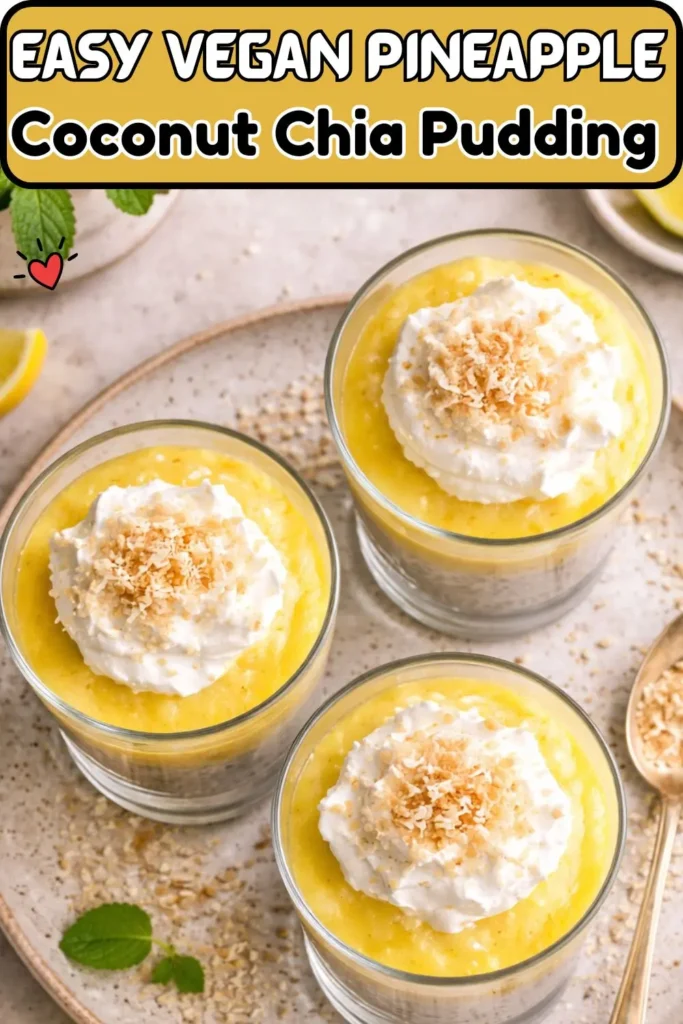
What if your breakfast was already made when you woke up? Not reheated, not assembled in a bleary-eyed rush — actually ready, sitting in the fridge, cold and creamy and tasting like a tropical holiday. That’s exactly what this Easy Vegan Pineapple Coconut Chia Pudding delivers. Ten minutes of work the night before, a few hours in the fridge, and you wake up to four servings of thick, coconutty, pineapple-topped chia pudding that looks like it came from a brunch café and tastes even better than it looks.
I started making chia pudding during a particularly hectic period when I kept skipping breakfast entirely — not because I wasn’t hungry, but because mornings felt impossible. This recipe solved that completely. Make it Sunday evening and you’ve got breakfast ready for multiple days. It’s fully plant-based, genuinely nutritious, and the pineapple-coconut combination is one of those flavour pairings that makes you stop and properly appreciate what you’re eating. Let’s walk through everything.
Quick Stats
- Prep Time: 10 minutes
- Chill Time: 4 hours (or overnight)
- Total Time: 4 hours 10 minutes
- Servings: 4
- Calories: 373 kcal per serving
- Diet: 100% Vegan
The Full Ingredient List
For the chia pudding base:
- 1½ cups unsweetened coconut milk — carton, not canned (this matters a lot — more on this below)
- ⅓ cup chia seeds
- ⅓ cup unsweetened toasted coconut
- 2 tablespoons maple syrup
For the pineapple topping:
- 2 cups chopped fresh pineapple
Optional toppings:
- 1 can (400ml) full-fat coconut milk, refrigerated for 24 hours (for coconut whipped cream)
- 2 tablespoons toasted coconut
How to Make It – Step by Step Easy Vegan Pineapple Coconut Chia Pudding
Step 1: In a small bowl, whisk together the carton coconut milk, chia seeds, toasted coconut, and maple syrup until fully combined. Make sure the chia seeds are evenly distributed throughout — clumps of seeds sitting at the bottom won’t absorb the liquid properly. Cover the bowl and refrigerate for at least 3–4 hours, or overnight for best results.
Step 2: When the pudding has set and you’re ready to serve, add your chopped fresh pineapple to a blender and pulse gently until it forms a rough purée. The key word here is pulse — a few short bursts rather than continuous blending. Over-blend it and the pineapple becomes watery and loose rather than the thick, scoopable topping you want.
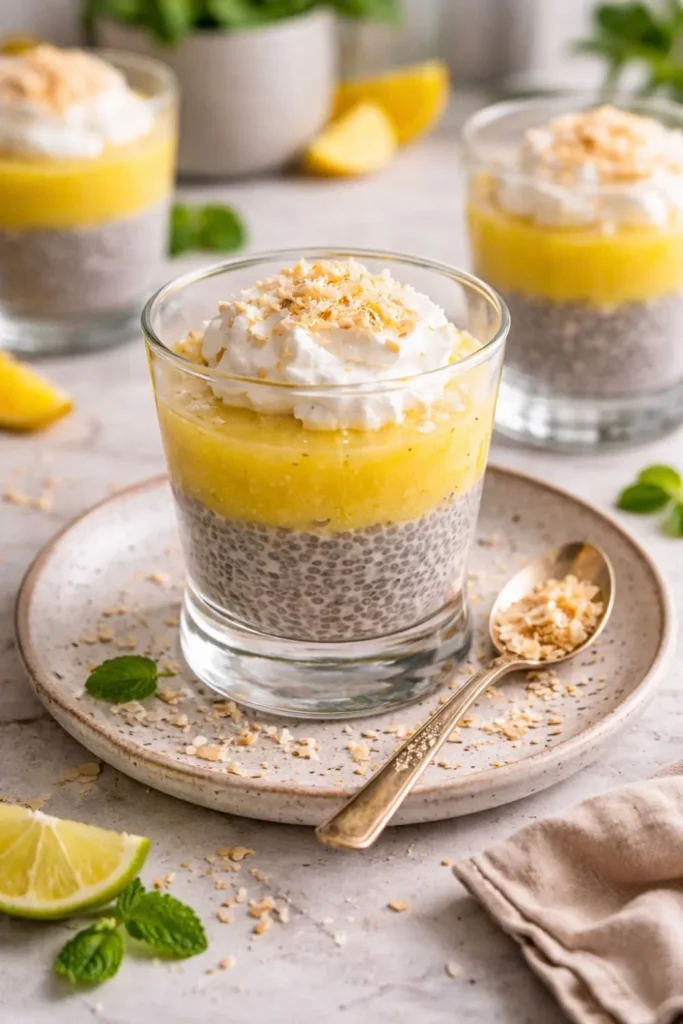
Step 3: Divide the set chia pudding between four glasses or mason jars. Top each one with the pineapple purée and any other toppings you’re using.
Step 4: Serve immediately, or cover and refrigerate for up to 1–2 days.
That’s ten minutes of actual work. Everything else is just the fridge doing its thing.
Equipment You’ll Need
- A mixing bowl — medium or large, for whisking the pudding base together
- A whisk — to properly distribute the chia seeds throughout the coconut milk. A spoon technically works but a whisk does a noticeably better job.
- A blender or small food processor — for pulsing the pineapple. A NutriBullet or mini food processor works perfectly for this small quantity.
- Measuring cups and measuring spoons — for accurate proportions. The chia-to-liquid ratio matters for getting the right pudding consistency.
- Four glasses, mason jars, or ramekins — for setting and serving the pudding. Mason jars are ideal — they’re easy to cover, easy to transport, and they look genuinely attractive on the table.
- A baking sheet — only if you’re toasting your own coconut (which takes 5–6 minutes and is absolutely worth the effort)
- An electric hand mixer — only if you’re making the optional coconut whipped cream topping
The jars are probably the only item here that’s worth thinking about carefully. Wide-mouth mason jars in a pint or half-pint size are perfect for this recipe — the wide opening makes layering and topping the pudding easy, and the lid means you can seal and stack multiple jars in the fridge for the week ahead.
Calorie & Nutrition Breakdown (Per Serving — Without Optional Toppings)
| Nutrient | Per Serving |
| Calories | 373 kcal |
| Carbohydrates | 30g |
| Protein | 5g |
| Total Fat | 29g |
| Saturated Fat | 22g |
| Fibre | 9g |
| Sugar | 18g |
| Vitamin C | 43mg (48% DV) |
| Calcium | 128mg |
| Iron | 3mg |
| Potassium | 437mg |
The calorie count here is higher than the other recipes in this series — and that’s because coconut milk and chia seeds are genuinely calorie-dense foods. The fat in this recipe is predominantly saturated fat from coconut, which is a plant-based fat that behaves differently from saturated fat in animal products. The 9g of fibre per serving is excellent — roughly a third of the recommended daily intake in one breakfast.
FYI: Chia seeds are a complete protein and one of the richest plant sources of omega-3 fatty acids on the planet. The 373 calories in this breakfast are doing serious nutritional work — this isn’t empty calories, it’s sustained energy and genuine nourishment packed into a jar.
The Most Important Rule: Carton Coconut Milk, Not Canned
This is the single most critical instruction in the entire recipe and it’s worth emphasising strongly: use coconut milk from a carton, not a can.
Canned coconut milk is thick, rich, and high in fat — it’s the kind used for curries and sauces. When you add chia seeds to canned coconut milk, the pudding sets so thick and dense that the texture becomes almost rubbery. It’s too much fat and too little liquid for chia pudding to work properly.
Carton coconut milk — the kind sold as a dairy-free milk alternative alongside almond milk and oat milk — is much thinner and lighter. It’s specifically formulated to have a consistency similar to regular milk. This is the one that gives your chia pudding that perfect, creamy-but-scoopable texture that makes you want to eat the whole jar in one sitting.
If you accidentally buy the wrong one, you can dilute canned coconut milk with water to approximate the carton version — roughly 1 part canned coconut milk to 2 parts water — but buying the right thing from the start is far simpler.
Why Chia Seeds Work So Well in This Recipe
Ever wondered how tiny seeds turn liquid into pudding overnight without any cooking? It’s genuinely fascinating and the science behind it is why chia pudding is such a reliable recipe.
Chia seeds are hydrophilic — they absorb water and expand to many times their original size. Each seed develops a gel-like coating as it absorbs liquid, and collectively these gelled seeds transform the surrounding liquid into a thick, pudding-like consistency. The process takes time — which is why you need at least 3–4 hours, and why overnight gives you the best result.
This gel-forming quality also means chia seeds are incredibly filling for their size. The expanded seeds slow digestion and keep you full for longer than most breakfast foods, which is why a jar of chia pudding holds you through a whole morning much more effectively than something like toast or a bowl of cornflakes.
Getting the Right Consistency
The chia-to-liquid ratio in this recipe is carefully calibrated — ⅓ cup of chia seeds to 1½ cups of coconut milk. If your pudding is too thick after setting, stir in a splash of more carton coconut milk. If it’s too loose, it either needed more time in the fridge or the ratio was slightly off — add an extra tablespoon of chia seeds, stir well, and refrigerate for another hour.
One important step: After you first mix everything together, stir it again after about 15 minutes. This second stir redistributes any seeds that have started to clump together, ensuring even distribution throughout the pudding.

The Pineapple Topping — Fresh Is Best
The pineapple topping is what makes this chia pudding distinctively tropical rather than just a generic chia pudding. And fresh pineapple is strongly preferred over canned or frozen — here’s why.
Why Fresh Pineapple
Fresh, ripe pineapple has a bright, intensely fruity flavour with a natural acidity that cuts through the richness of the coconut chia base beautifully. It also contains bromelain — a natural enzyme that gives fresh pineapple that slightly tingly, almost zingy sensation on the tongue. Bromelain doesn’t survive heat treatment, which is why canned pineapple (which is cooked during processing) doesn’t have that same lively quality. The freshness is part of what makes the topping work so well against the cool, rich pudding underneath.
The Pulsing Technique Matters
When you blend the pineapple for the topping, the goal is a rough, thick purée — not a smooth juice. A few pulses in the blender break the pineapple down into a thick, chunky-smooth consistency that sits on top of the pudding rather than soaking into it. If you blend it continuously, the cell walls break down completely and the pineapple becomes watery, which makes the topping loose and the overall presentation much less attractive. Three to five pulses is usually exactly right.
Using Frozen Pineapple as a Backup
If fresh pineapple isn’t available, frozen works perfectly well — just make sure you thaw it completely first and drain off any excess liquid before blending. Frozen pineapple that goes straight into the blender from frozen will be too cold, too icy, and too watery. Thawed and drained frozen pineapple produces a topping that’s almost as good as fresh.
Toasted Coconut — And Why You Should Toast Your Own
The recipe uses unsweetened toasted coconut in both the pudding base and as a topping. You can buy pre-toasted coconut, but toasting it yourself takes five minutes and produces a dramatically better result — fresher, more fragrant, and with a deeper caramel-like flavour that pre-toasted coconut simply can’t match.
How to Toast Coconut
Spread shredded or desiccated coconut in a single even layer on a baking sheet. Place it in a preheated oven at 350°F (175°C) for 5–6 minutes. Watch it carefully from the 4-minute mark — coconut goes from perfectly golden to burnt extremely quickly, and there’s very little middle ground. Stir it halfway through baking to help it brown evenly. Remove it as soon as it’s lightly golden and fragrant. Let it cool completely before using — it crisps up further as it cools.
You can also toast coconut in a dry pan on the hob over medium heat, stirring constantly. It takes about 3–4 minutes and gives you more control. Either method works — the oven is easier for larger quantities, the hob is faster for small amounts.
The Optional Coconut Whipped Cream Topping
This is optional, but I’d argue it takes the Easy Vegan Pineapple Coconut Chia Pudding from excellent to genuinely extraordinary. Light, fluffy, cold coconut cream on top of pineapple and coconut chia pudding is a combination that makes people do a double-take when they taste it for the first time.
How to Make It
You need to refrigerate a can of full-fat coconut milk for at least 24 hours before using it. This causes the thick coconut cream to separate from the watery liquid and solidify at the top of the can. When you open the can, scoop out just the solidified cream and discard (or save for another use) the thin liquid underneath.
Add the solidified cream to a mixing bowl and beat on high with an electric hand mixer for 2–3 minutes until it becomes light, fluffy, and whipped. It won’t whip as stiffly as dairy cream, but it produces a soft, billowy texture that’s genuinely lovely. Don’t use light coconut milk for this — only full-fat works. The higher the fat content, the better it whips.
Spoon or pipe a dollop onto each jar just before serving. Add the extra toasted coconut on top and the whole thing looks spectacular.
Still Hungry, Try It Next recipe :-
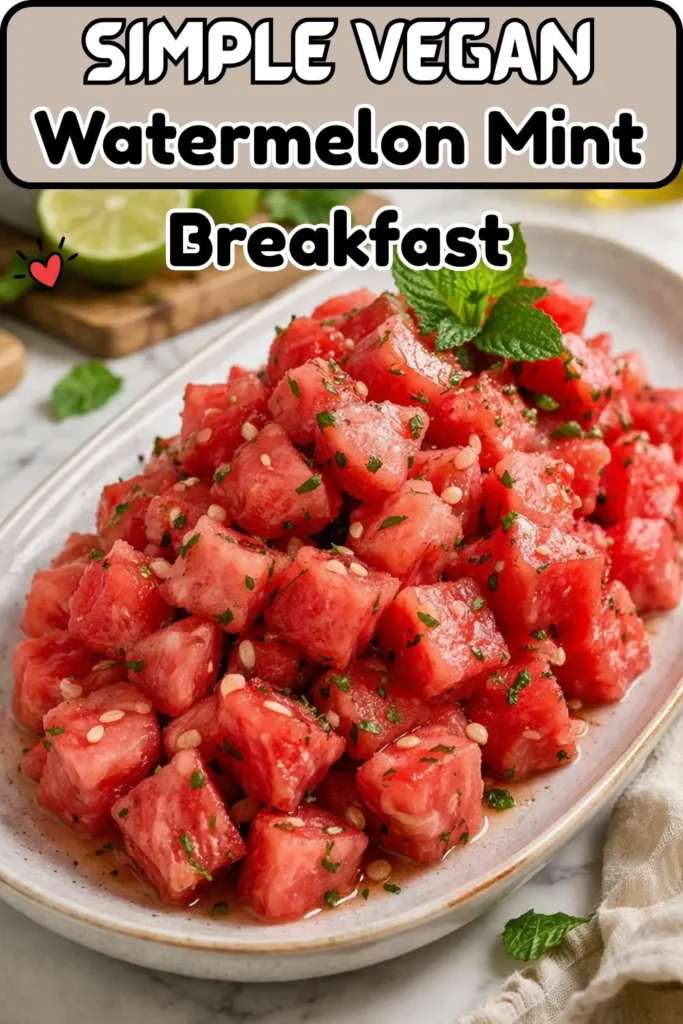
Simple Vegan Watermelon Mint Breakfast
Tips for Making This Pudding Absolutely Perfect
- Whisk properly, then whisk again. The first mix distributes everything evenly. The second stir at the 15-minute mark prevents clumping as the seeds start to gel. These two steps are the difference between smooth, even pudding and a jar with a solid block of seeds at the bottom.
- Make it the night before. Three to four hours gets you there, but overnight produces the creamiest, most fully set result. Overnight chia pudding is noticeably better than a rushed 3-hour version.
- Use ripe pineapple. A ripe pineapple smells intensely tropical at the base, has leaves that pull out easily, and yields slightly to pressure. An unripe pineapple is bland and overly tart — it won’t give you the sweetness and vibrancy the topping needs.
- Seal your jars properly. If you’re making multiple jars for the week, make sure each lid is secure. Chia pudding absorbs any nearby fridge odours if left uncovered, which is not ideal.
- Add toppings fresh. The pineapple purée is best added right before eating rather than stored on top of the pudding overnight. The pineapple releases liquid and can make the top layer of pudding watery if it sits for too long.
Variations to Make This Recipe Your Own
Once you’ve nailed the base recipe, here are some great ways to take it in different directions:
- Mango and coconut: Replace the pineapple with blended fresh mango. The combination of mango, coconut, and chia is spectacular and slightly more gentle in flavour than the pineapple version.
- Pineapple and lime: Add the zest and juice of one lime to the pineapple purée before topping. The citrus lifts the pineapple flavour significantly and adds a beautiful brightness.
- Spiced coconut version: Add ¼ teaspoon of ground cardamom and a pinch of ground ginger to the chia base. The warm spices pair beautifully with both coconut and pineapple.
- Chocolate coconut base: Add 2 tablespoons of raw cacao powder to the chia base before refrigerating. Chocolate and pineapple together sounds surprising, but it’s genuinely excellent.
- Extra protein version: Stir a scoop of vanilla vegan protein powder into the chia base before refrigerating. The texture stays smooth and you add 20g+ of protein per serving.
- Layered parfait version: Layer the chia pudding with the pineapple purée and coconut granola in alternating layers in a tall glass. Visually stunning and adds textural contrast.
- Raspberry and coconut: Replace the pineapple with fresh raspberry purée for a completely different but equally vivid result — deep pink against the white coconut chia base looks absolutely beautiful.
How to Meal Prep This for the Whole Week
This is where Easy Vegan Pineapple Coconut Chia Pudding really earns its place in a busy routine. The base pudding scales up effortlessly — just multiply every ingredient by however many servings you need and use a larger bowl for mixing.
The practical approach: Make a batch of four jars on Sunday evening. Store them in the fridge with lids on. Each morning, scoop out your jar, add fresh pineapple purée (which takes 60 seconds to make in the blender), add any other toppings, and eat. Tuesday, Wednesday, Thursday mornings sorted in under two minutes each.
Storage: The chia pudding base keeps in the fridge for up to 4–5 days in sealed jars — which means a Sunday batch genuinely covers the working week. The pineapple purée is kept separately in a sealed container for 2–3 days. Make a double batch of pineapple purée on Sunday and you’ve got that covered too.
This is meal prep at its most practical — minimal effort, maximum payoff, zero morning stress.
Why This Recipe Works So Well for Summer
Chia pudding is a particularly good summer breakfast because it’s served cold straight from the fridge. On a warm morning when you don’t want anything hot, something cold and creamy that’s already waiting for you is genuinely ideal. It cools you down, it hydrates you (chia seeds hold moisture well and release it slowly during digestion), and it gives you sustained energy from the healthy fats and fibre without the heaviness of a cooked breakfast.
The tropical flavour profile — pineapple, coconut, toasted coconut — is unmistakably summery. It puts you in a holiday mindset even on an ordinary Tuesday morning, which, IMO, is genuinely underrated as a quality in a breakfast recipe. Start the day feeling like you’re somewhere warm and sunny. Why not?
Still Hungry, Try It Next recipe :-
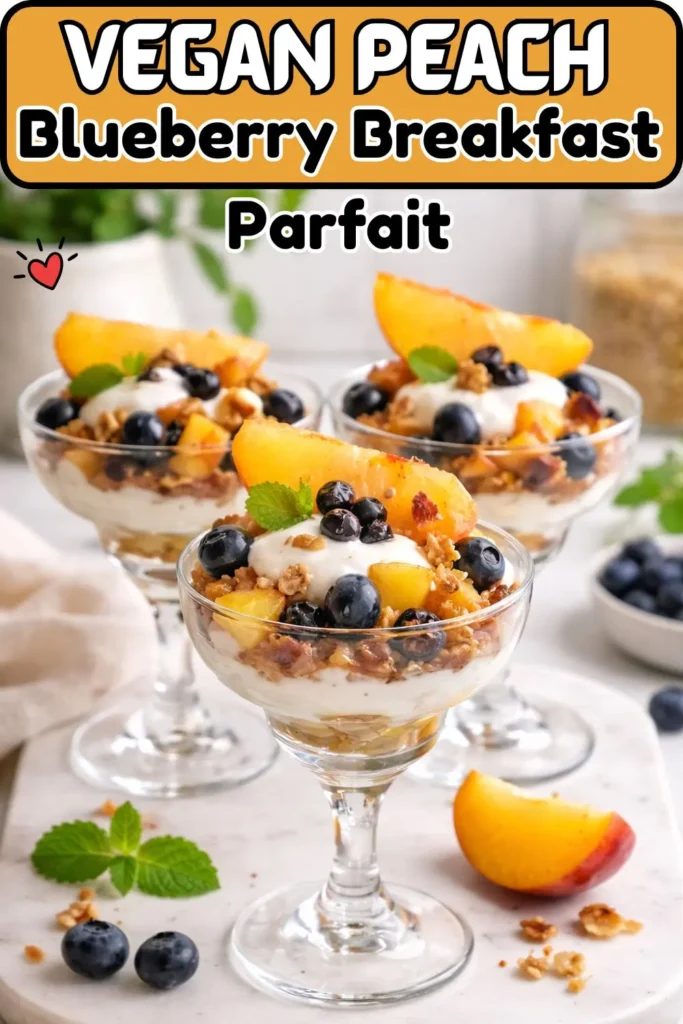
Vegan Peach and Blueberry Breakfast Parfait
Frequently Asked Questions
Why did my chia pudding not set properly? The most likely cause is the chia-to-liquid ratio being off. Make sure you used the correct amount of chia seeds (⅓ cup) and that you used carton coconut milk, not canned. Also check that you stirred it well after the first 15 minutes — clumped seeds don’t absorb liquid properly. If it’s still loose after 4 hours, add another tablespoon of chia seeds, stir thoroughly, and refrigerate for another 2 hours.
Can I use canned coconut milk if that’s all I have? Dilute it first — mix 1 part canned coconut milk with 2 parts water to approximate the consistency of carton coconut milk. The flavour will be slightly richer but the pudding should still set correctly.
How long does chia pudding keep in the fridge? The base pudding keeps for up to 4–5 days in sealed jars. The pineapple topping is kept separately for 2–3 days. Don’t store them combined for more than a day.
Can I use a different sweetener instead of maple syrup? Yes — agave nectar, date syrup, coconut sugar (dissolved in a little warm milk first), or just a pinch of sugar all work. Adjust the amount based on your preference and the sweetness of your pineapple.
Can children eat this? Absolutely — this is a kid-friendly recipe with no unusual ingredients. The natural sweetness of the pineapple and maple syrup tends to go down very well. Just check for any coconut allergies first.
Is coconut whipped cream difficult to make? Not at all — the key is making sure the coconut milk has been refrigerated for a full 24 hours first. Cold, solidified coconut cream whips easily with an electric mixer in 2–3 minutes. Room-temperature or partially chilled coconut milk won’t work.
Set This Up Tonight
Here’s the full picture: ten minutes of mixing tonight, four jars of tropical coconut chia pudding waiting in the fridge tomorrow morning. At 373 calories per serving, with 9g of fibre, 43mg of vitamin C, and the kind of flavour that makes Monday morning feel significantly less grim — this recipe delivers on every front.
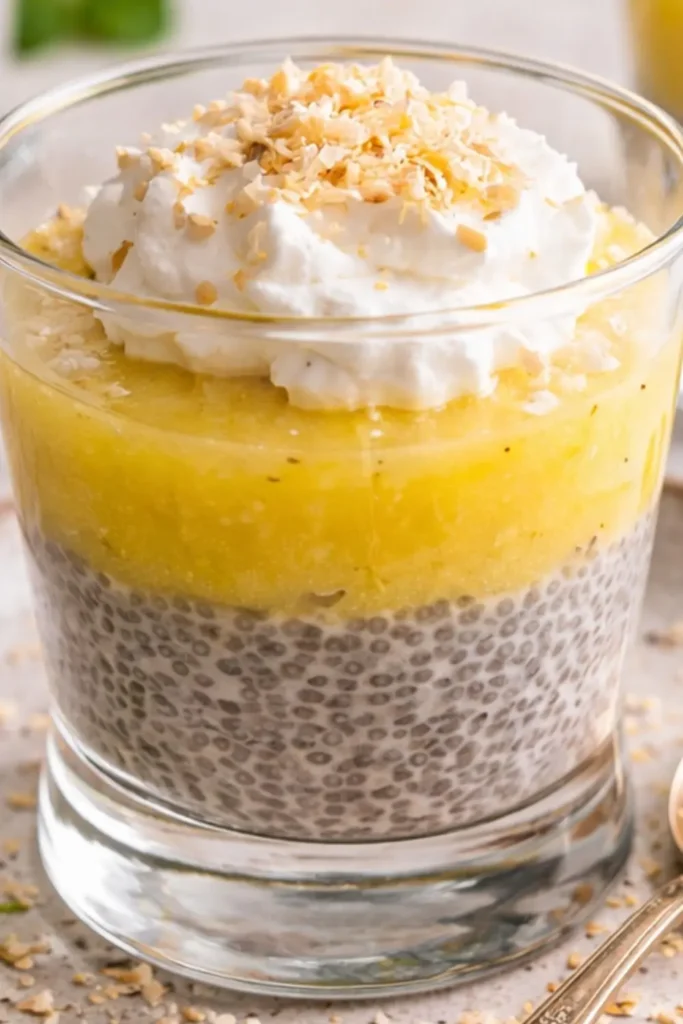
Whisk your coconut milk, chia seeds, toasted coconut, and maple syrup together tonight. Put the jars in the fridge. Tomorrow morning, pulse your pineapple, top your jars, and eat something that tastes like a tropical holiday before you’ve even had your first coffee.
Your future self — the one who woke up to a ready-made breakfast and didn’t have to make any decisions before 8am — will be very, very grateful.
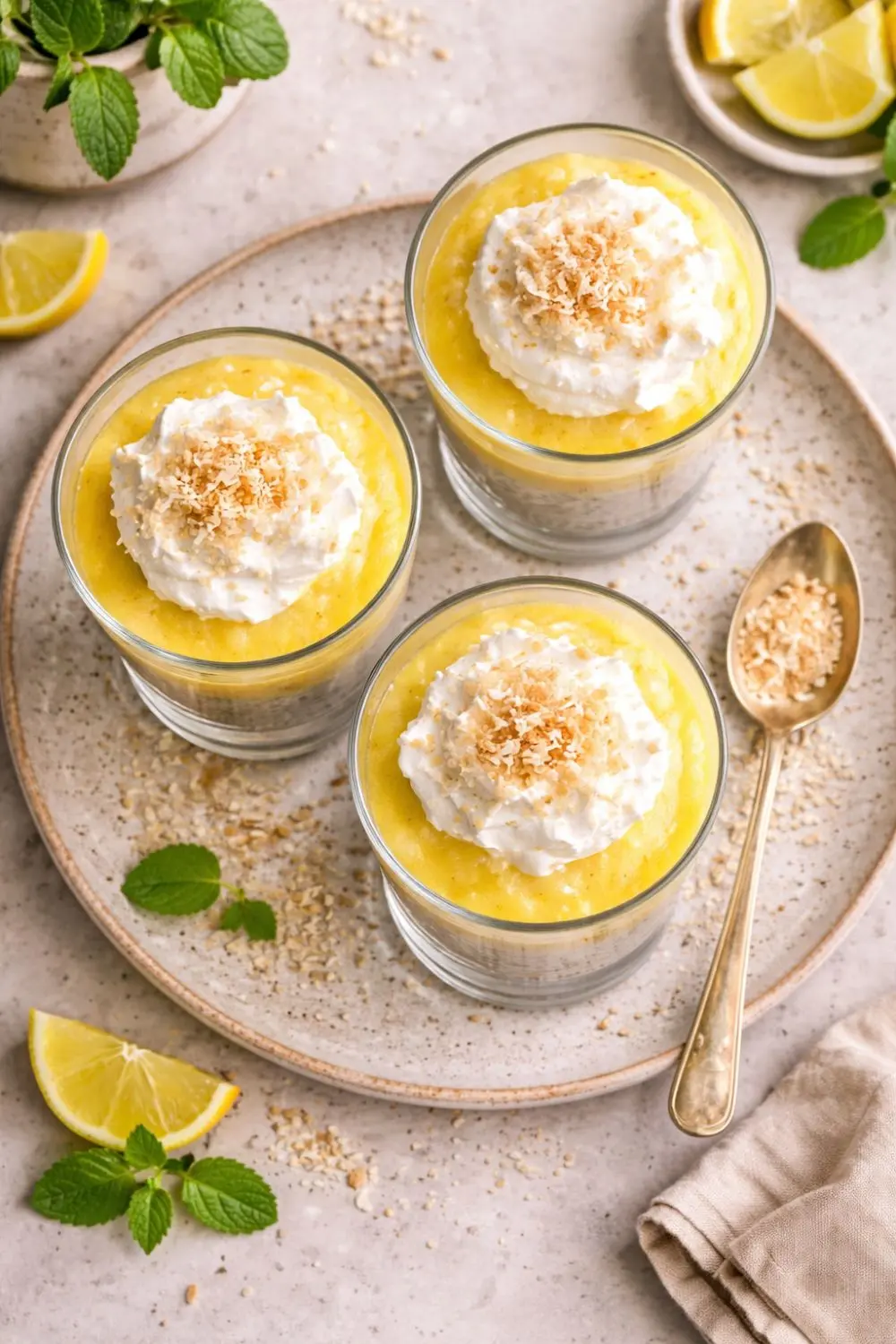
Easy Vegan Pineapple Coconut Chia Pudding Tropical Summer Breakfast
Ingredients
Equipment
Method
- Step 1: In a small bowl, whisk together the carton coconut milk, chia seeds, toasted coconut, and maple syrup until fully combined. Make sure the chia seeds are evenly distributed throughout — clumps of seeds sitting at the bottom won’t absorb the liquid properly. Cover the bowl and refrigerate for at least 3–4 hours, or overnight for best results.
- Step 2: When the pudding has set and you’re ready to serve, add your chopped fresh pineapple to a blender and pulse gently until it forms a rough purée. The key word here is pulse — a few short bursts rather than continuous blending. Over-blend it and the pineapple becomes watery and loose rather than the thick, scoopable topping you want.
- Step 3: Divide the set chia pudding between four glasses or mason jars. Top each one with the pineapple purée and any other toppings you’re using.
- Step 4: Serve immediately, or cover and refrigerate for up to 1–2 days.
- That’s ten minutes of actual work. Everything else is just the fridge doing its thing.
Notes
Calorie & Nutrition Breakdown (Per Serving — Without Optional Toppings)
| Nutrient | Per Serving |
| Calories | 373 kcal |
| Carbohydrates | 30g |
| Protein | 5g |
| Total Fat | 29g |
| Saturated Fat | 22g |
| Fibre | 9g |
| Sugar | 18g |
| Vitamin C | 43mg (48% DV) |
| Calcium | 128mg |
| Iron | 3mg |
| Potassium | 437mg |

Hi — I’m Rachel. I’m a wife, a mom, and a home cook who believes that food should bring comfort, joy, and compassion to the table. I live with my family — two hungry little foodies who are my most honest recipe testers — and together we’ve built a kitchen culture that’s all about good food that happens to be 100% vegan. I started this blog because I wanted a place to share the recipes that keep our days moving, the dishes that make weeknights feel a little easier, and the meals that become our little family traditions.