

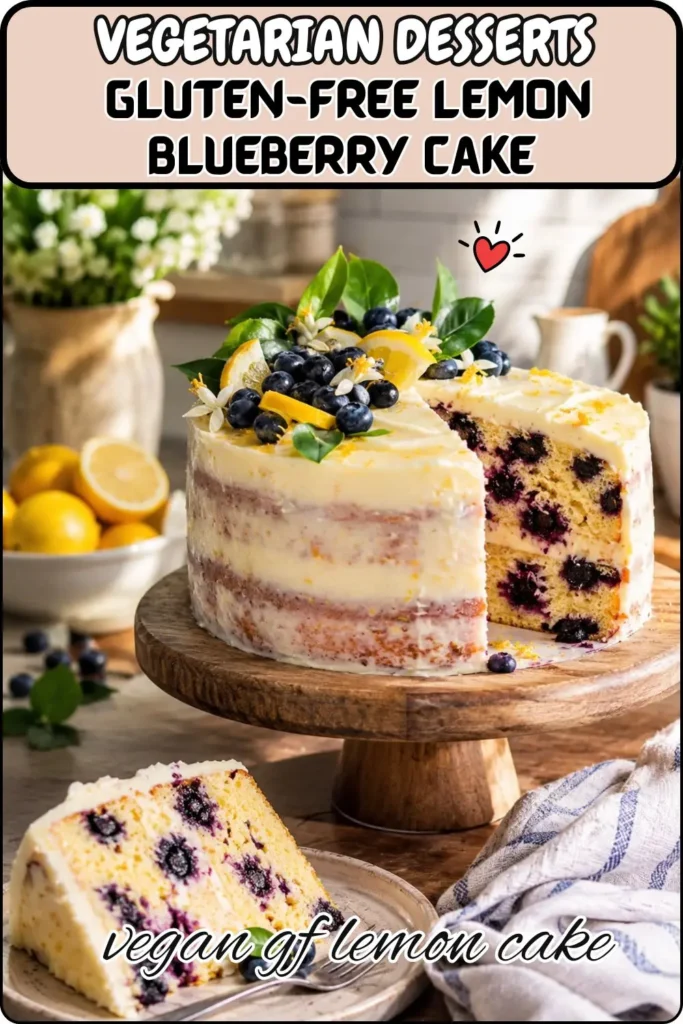
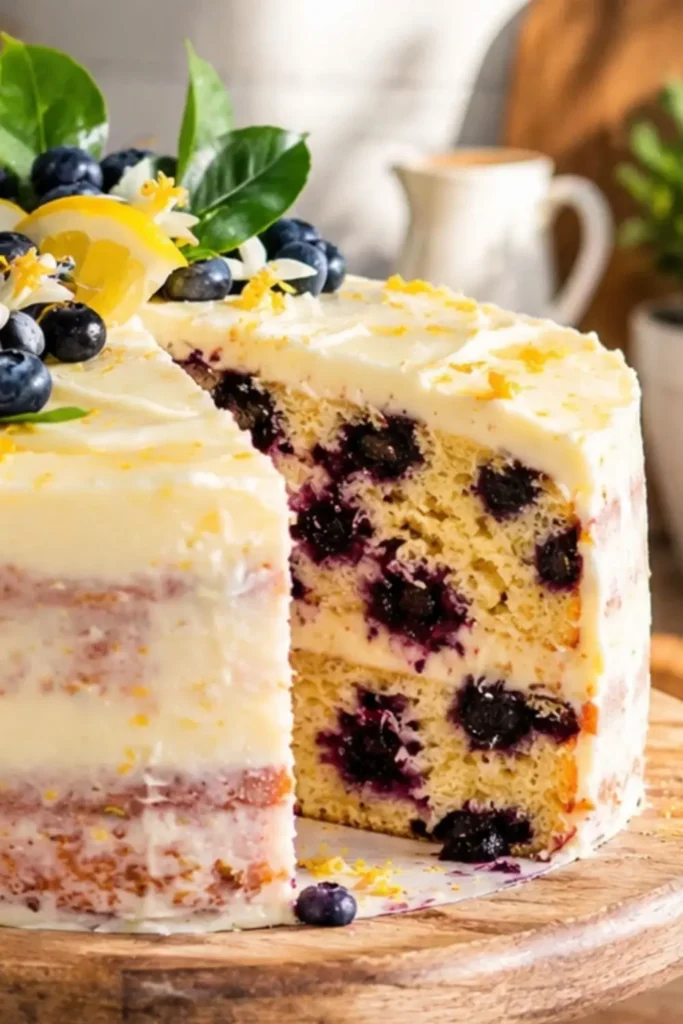
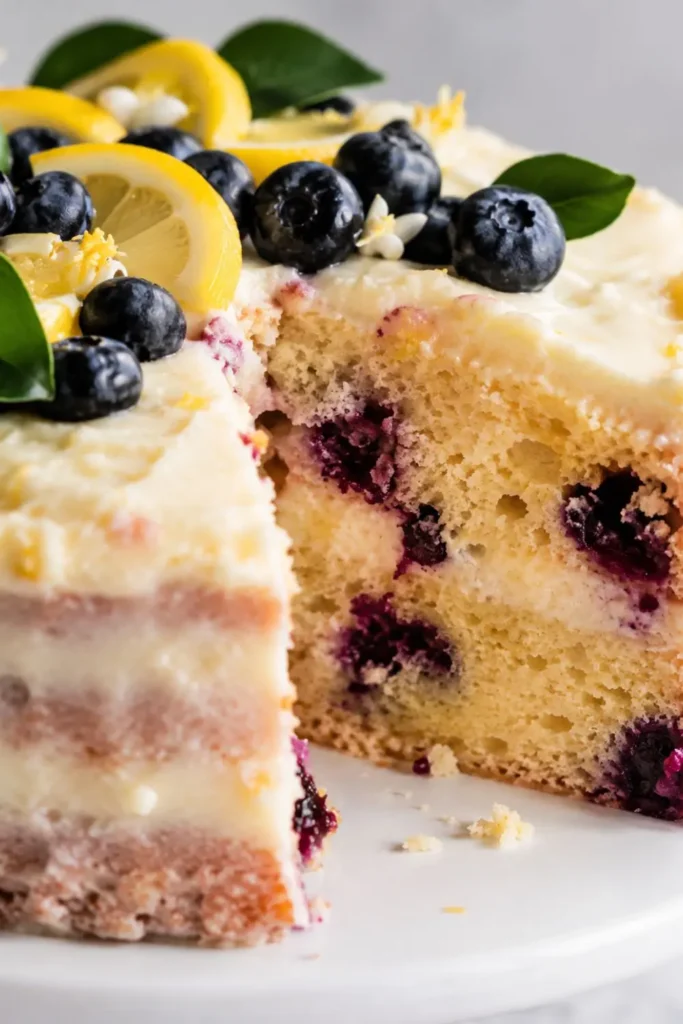
Finding a cake that’s simultaneously gluten-free, vegan, genuinely moist, and actually tastes great rather than just technically existing that’s the challenge, and gluten-free lemon blueberry cake is the answer. This round cake uses a one-bowl method, minimal technique, and a straightforward gluten-free flour substitution to produce a lemon-bright, blueberry-bursting cake at 338 calories per slice that serves 10 people. No separate bowls for wet and dry. No complicated technique. Just real, beautiful lemon blueberry cake recipe results that everyone at the table gluten-free or not genuinely wants to eat.
I developed this specifically for gatherings where dietary restrictions create that awkward moment where the gluten-free guests politely decline cake because the available options don’t actually work for them. This blueberry cake gluten free recipe eliminates that problem entirely it’s the cake everyone eats and nobody treats as a consolation prize. The lemon and blueberry combination is doing genuinely heavy lifting here, and the simple powdered sugar finish makes it look elegant without any frosting complexity.
My Recipe Timing and Serving Details
Here’s your complete planning overview:
| Detail | Info |
| Prep Time | 15 minutes |
| Bake Time | 50–60 minutes |
| Cooling Time | 10 minutes in pan + wire rack |
| Total Time | ~1 hour 15 minutes |
| Servings | 10 slices |
| Serving Size | 1 slice |
| Calories Per Slice | 338 kcal |
| Course | Dessert / Cake |
| Diet | 100% Vegan, Gluten-Free |
This gluten free lemon blueberry cake serves 10 people from a single 8-inch round cake pan. At 338 calories per slice with 4 grams of protein and 2 grams of fiber, it’s a satisfying, complete dessert portion. The gluten-free version specifically bakes for the full 60 minutes the almond flour and GF flour combination absorbs liquid differently than wheat flour and needs the additional time to set properly.
The Gluten-Free Flour Substitution The Most Important Decision
The recipe’s gluten-free conversion is specific and thoroughly tested, and understanding the flour choices helps you make good decisions:
The Recommended GF Flour Combination
Replace the 2½ cups of all-purpose flour with:
- 1⅔ cups (165g) almond flour (blanched almond meal)
- 1 cup (160g) gluten-free all-purpose flour
This combination works because almond flour contributes fat, moisture retention, and binding properties that compensate for gluten’s structural role. Almond flour alone produces a cake that’s too dense and fragile it needs the GF all-purpose flour’s starch structure to hold together as a proper cake. Together, they produce a gluten free lemon blueberry cake with excellent crumb texture and moisture retention.
King Arthur Measure for Measure flour works as a 1:1 replacement for the regular flour without splitting into almond flour and GF blend. This is the most convenient option if you have it available same quantity, same method.
What the Recipe Warns Against
The notes are explicit: other gluten-free flour blends may produce different results. Bob’s Red Mill 1:1 Baking Flour is generally reported to work well. Cassava flour, rice flour alone, or chickpea flour behave significantly differently and are not recommended without recipe testing.
FYI the difference in bake time for the gluten-free version is real and important. The standard version bakes in 50 minutes; the GF version needs 60 minutes. Don’t pull it early just because the top looks done.
Full Ingredient List
Eleven ingredients for a genuinely beautiful vegan gf lemon cake:
The Cake:
- 2½ cups (315g) all-purpose flour , OR the GF substitution above
- 1¼ cups (250g) granulated sugar
- 3 teaspoons baking powder
- ⅛ teaspoon salt (optional)
- ¾ cup (190g) dairy-free milk
- ½ cup (125g) neutral-flavored oil
- ⅓ cup (80g) lemon juice plus zest from those same lemons
- 1 teaspoon vanilla extract (optional)
- 1¼ cups (190g) blueberries , fresh or frozen
For Serving:
- Powdered sugar / icing sugar , for dusting
The lemon juice and zest from the same lemons is specifically how the recipe works you need approximately 2 large lemons or 3 medium lemons to produce both the ⅓ cup of juice and the zest the recipe uses. The zest is where the lemon flavor primarily lives; the juice provides acidity that activates the baking powder and creates lift.
The recipe’s critical warning about lemon juice quantity deserves emphasis, Do not add more lemon juice than specified. Excess lemon juice makes the cake gooey and prevents it from baking through the acidity interferes with the baking powder’s leavening chemistry. If you want more lemon flavor, add additional lemon zest it intensifies lemon character without affecting baking chemistry.
The neutral-flavored oil keeps this blueberry cake gluten free version moist for longer than butter would. Sunflower oil, rapeseed, or avocado oil all work well. The oil’s liquid fat stays liquid at room temperature (unlike solid butter), which means the cake retains moisture in the crumb for the full storage period.
Equipment You’ll Need For
This cake’s equipment requirements are straightforward and deliberately minimal:
Primary Equipment
- 20cm (8-inch) round cake pan – the specific size produces the correct height and bake time. A smaller pan creates a taller cake that risks underbaking in the center; a larger pan creates a thinner cake that overbakes. Line the pan with parchment paper on the bottom and grease the sides, or use baking spray.
- Oven preheated to 180°C/355°F – for both conventional and convection ovens. This recipe uses the same temperature regardless of oven type less common than some recipes that differentiate, but the recipe is tested at this setting for both.
- Wire cooling rack – for cooling after the initial 10 minutes in the pan. The rack’s airflow prevents the bottom from becoming soggy during cooling.
Mixing Equipment
- Large mixing bowl -the entire cake batter comes together in one bowl. The one-bowl method is specifically what makes this recipe accessible and fast no separate wet and dry bowls to clean.
- Whisk – for combining ingredients. The recipe uses a mixing and folding approach rather than electric mixer no special equipment required.
- Spatula – for gently folding in the blueberries without crushing them
Measuring Equipment
- Kitchen scale – the gram measurements are more accurate than cup measurements for gluten-free baking specifically. Cup measurements of almond flour and GF flour can vary significantly depending on how densely you pack them. Grams eliminate this variable.
- Measuring cups and spoons – for liquids if not using a scale
- Citrus juicer – for extracting the ⅓ cup of lemon juice efficiently from 2–3 lemons
- Microplane or fine grater – for zesting the lemons before cutting them for juice (always zest before juicing)
Serving Equipment
- Fine-mesh sieve -for dusting powdered sugar evenly over the cooled cake surface. A sieve creates the delicate, professional-looking even dusting that makes the finished cake look genuinely elegant.
Step-by-Step Instructions For Gluten-Free Lemon Blueberry Cake
Step 1 – Preheat and Prepare the Pan
Preheat the oven to 180°C/355°F. Line or grease your 8-inch round cake pan. If lining, cut a circle of parchment for the bottom and grease the sides.
Step 2 – Combine Dry Ingredients First
Add the flour (regular or GF substitution), sugar, baking powder, and salt to your large mixing bowl. Whisk together until completely combined and no lumps of baking powder remain. This dry pre-mixing ensures even distribution of leavening before any liquid causes it to activate.
For the gluten-free flour combination: Add the almond flour and GF all-purpose flour together with the sugar, baking powder, and salt. Whisk thoroughly almond flour can clump slightly and needs more thorough mixing than wheat flour.
Step 3 – Add Wet Ingredients
Add the dairy-free milk, neutral oil, lemon juice, lemon zest, and vanilla extract directly to the bowl with the dry ingredients. Mix with a whisk until just before fully combined — stop while a few small streaks of flour are still visible.
The recipe notes that the batter starts thick and loosens after a few minutes of mixing. Don’t panic if it looks too dense initially keep mixing and it will come together to a proper pourable-but-thick batter consistency.
For the gluten-free version, The batter may appear slightly wetter or have a different texture than the regular version. This is normal almond flour absorbs liquid differently than wheat flour and the batter reaches its proper consistency at a different point.
Step 4 – Fold in Blueberries
Add half of the blueberries (approximately ⅔ cup) to the batter and gently fold with a spatula. Gentle folding rather than stirring preserves the blueberries’ structure you want whole berries distributed through the batter, not burst berries that turn the entire batter purple.
Pour the batter into the prepared cake pan. Scatter the remaining blueberries across the surface of the batter and gently press some of them partially into the batter. These surface blueberries caramelize and become slightly jammy during baking, creating the beautiful blueberry-dotted top that makes this cake so visually appealing.
Step 5 – Bake
Place in the preheated oven and bake:
- Regular flour version- 50–60 minutes
- Gluten-free version- approximately 60 minutes
Test for doneness by inserting a toothpick into the center. No wet batter should appear on the toothpick. The recipe explicitly notes this is a moist cake some moist crumbs on the toothpick are completely fine and expected. Only wet, unbaked batter indicates the cake needs more time.
If the top browns before the center is done, tent loosely with aluminum foil during the final 10–15 minutes of baking.
Step 6 – Cool and Serve
Allow the cake to cool in the pan for 10 minutes, then lift or invert onto a wire rack to cool completely.
Once completely cooled, dust with powdered sugar immediately before serving dusting too early and the powdered sugar absorbs into the cake surface and becomes invisible. Dust just before it goes to the table.
Try It Next recipe
The One-Bowl Method Why It Works for Both Regular and GF Versions
Most cake recipes separate wet and dry ingredients, combine them carefully, and emphasize not over-mixing. This recipe’s one-bowl approach sounds like it should produce inferior results but for this specific recipe, it works beautifully for several reasons:
The leavening is forgiving. With 3 full teaspoons of baking powder, this lemon blueberry cake recipe has significant leavening power that provides lift even if the batter is mixed slightly more than ideal. The acid from the lemon juice also activates the baking powder, providing additional lift.
Oil rather than creamed butter. Traditional cakes cream butter and sugar to incorporate air that’s why they require the separate wet and dry approach. Oil-based cakes incorporate differently; they don’t need the separate-bowl method because they’re not relying on creamed air for structure.
For GF baking specifically- Over-mixing is actually less problematic with gluten-free flours because there’s no gluten network to over-develop. The main concern with GF baking is undermixing ensuring ingredients are fully combined without pockets of dry flour or lumps of almond flour.
The Lemon Equation Getting the Right Citrus Balance
This recipe uses both lemon juice and lemon zest from the same lemons, and the balance between them is specifically calculated:
Lemon zest provides the bright, intensely lemony aromatic character the floral, essential oil component that makes a lemon cake taste genuinely lemony rather than vaguely citrusy. The zest contains no water and doesn’t affect the cake’s liquid balance.
Lemon juice (⅓ cup) provides acidity that activates the baking powder and adds a tartness that prevents the cake from tasting one-dimensionally sweet. Too little produces a flat cake with insufficient lift. Too much as the recipe specifically warns interferes with the leavening chemistry and creates a gooey, underbaked center.
The practical lemon guide:
- 2 large lemons produce approximately ⅓ cup juice and ample zest
- 3 medium lemons produce the same
- Roll each lemon firmly on the counter before cutting to maximize juice yield
- Zest first, then juice , you can’t easily zest a cut lemon
IMO, the lemon zest is the ingredient doing the heavy flavor lifting here. If your lemons feel less fragrant than expected, add an extra teaspoon of zest beyond what the 2–3 lemons produce rather than adding any extra juice.
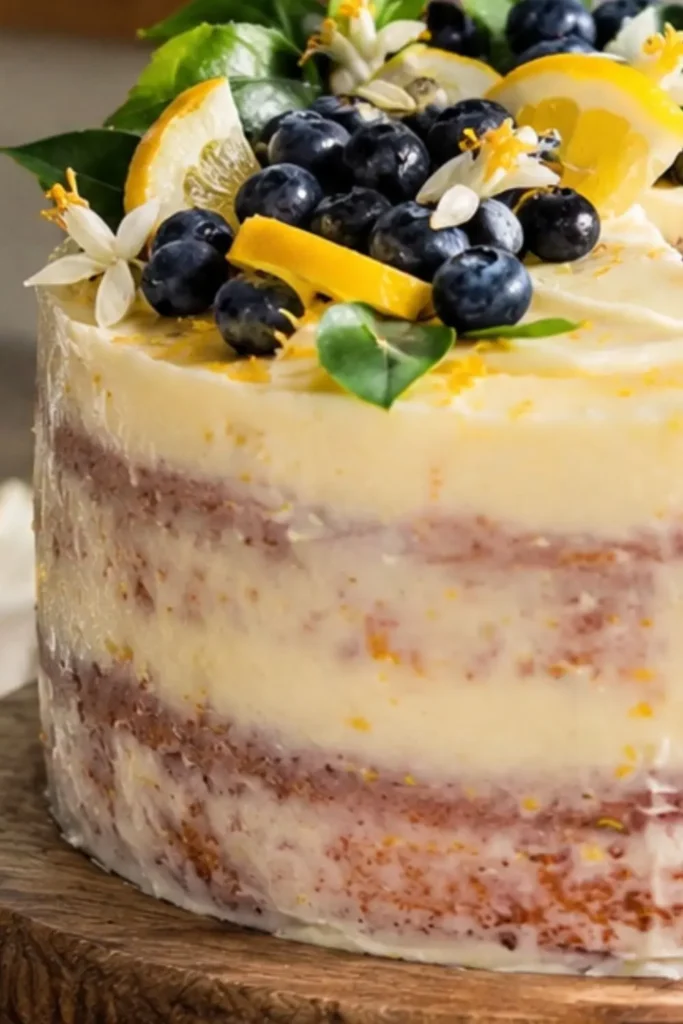
Fresh vs. Frozen Blueberries What the GF Version Needs
The recipe works with both fresh and frozen blueberries, but the gluten-free version has slightly different considerations:
Fresh blueberries are the better choice for the gluten-free version specifically. Fresh berries don’t release significant liquid during baking, which matters more in GF baking where liquid balance affects texture more significantly than in wheat-flour versions.
Frozen blueberries work but release moisture during baking. For the GF version, use frozen blueberries straight from frozen without thawing thawed frozen blueberries release too much liquid too quickly. Add them directly frozen to the batter and they’ll thaw during baking while releasing moisture more slowly.
One technique for frozen blueberries in any version- Toss them in 1 tablespoon of the recipe’s measured flour before adding to the batter. The flour coating absorbs some of the released liquid and helps the berries stay distributed rather than sinking. This also prevents excessive color bleed into the surrounding batter.
Dairy-Free Milk Options for This Recipe
The ¾ cup of dairy-free milk affects the cake’s flavor and texture subtly:
Oat milk – the most neutral, slightly sweet option that works seamlessly. Produces consistent, reliable results and is widely available.
Soy milk – slightly higher protein content that helps the cake structure. Good all-around choice with neutral flavor.
Almond milk – lighter, slightly nutty flavor that works beautifully with the lemon. Slightly thinner consistency than oat or soy milk.
Coconut milk (carton) – adds a subtle tropical sweetness that complements blueberries particularly well for a summer cake.
Avoid canned coconut milk – too thick and high-fat for this recipe’s balance.
Nutrition Information Per Slice
At 338 calories per slice for 10 slices:
| Nutrient | Per Slice |
| Calories | 338 kcal |
| Carbohydrates | 54g |
| Protein | 4g |
| Fat | 12g |
| Fiber | 2g |
| Sugar | 28g |
| Sodium | 153mg |
| Calcium | 102mg |
| Vitamin C | 7mg |
| Iron | 2mg |
102mg of calcium per slice comes from the fortified dairy-free milk and, in the GF version, from the almond flour (almonds are a good plant-based calcium source). 7mg of Vitamin C comes from the fresh lemon juice and zest. The fat at 12 grams per slice reflects the neutral oil providing the moistness that keeps this cake excellent through its storage window.
Storage
- Room temperature- Up to 1 day in an airtight container
- Refrigerator- Up to 3 days the GF version benefits from refrigeration since almond flour-based cakes remain moist longer when kept cool
- Freezer- Up to 1 month the recipe specifically notes that freezing changes the blueberry texture. Freeze without the powdered sugar dusting; add fresh dusting after thawing
- Thawing- Leave at room temperature for 2–3 hours before serving
My Final Thoughts
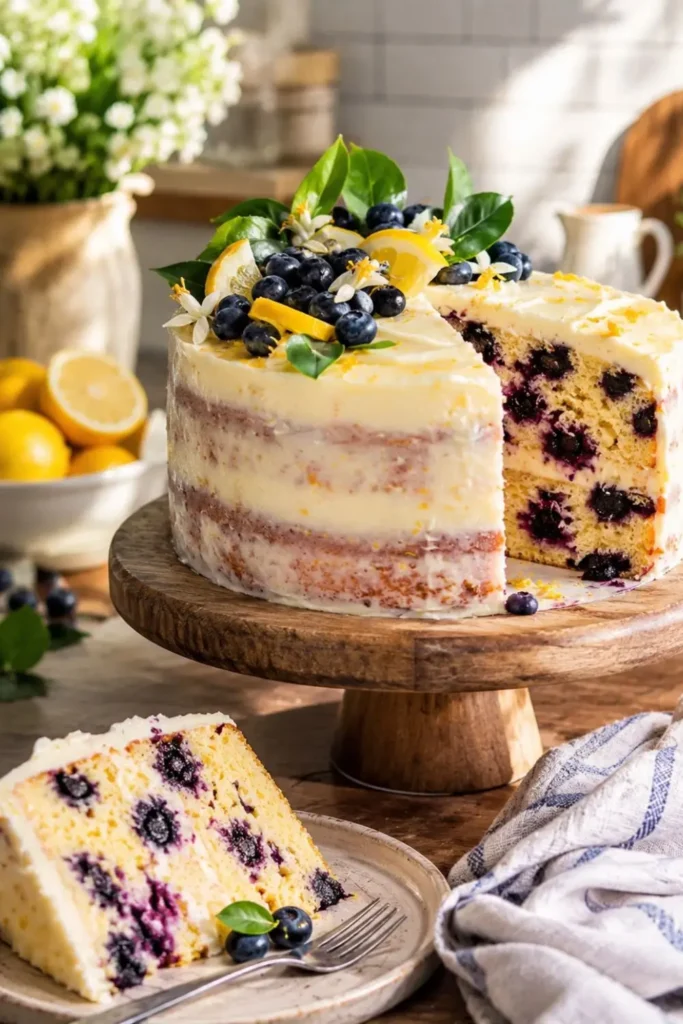
Gluten-free lemon blueberry cake is genuinely one of the most useful recipes in this summer collection completely plant-based, adaptable for gluten-free needs, one-bowl method, 10 people served, and 338 calories per slice of something that looks and tastes like a proper celebration cake.
The powdered sugar dusting on top does more work visually than most people expect from such a simple finish. The lemon and blueberry combination does the rest.
Make it for the gathering where someone mentions they’re gluten-free. Watch their face when the dessert actually works for them. That moment is worth every minute the oven runs.

Hi — I’m Rachel. I’m a wife, a mom, and a home cook who believes that food should bring comfort, joy, and compassion to the table. I live with my family — two hungry little foodies who are my most honest recipe testers — and together we’ve built a kitchen culture that’s all about good food that happens to be 100% vegan. I started this blog because I wanted a place to share the recipes that keep our days moving, the dishes that make weeknights feel a little easier, and the meals that become our little family traditions.