
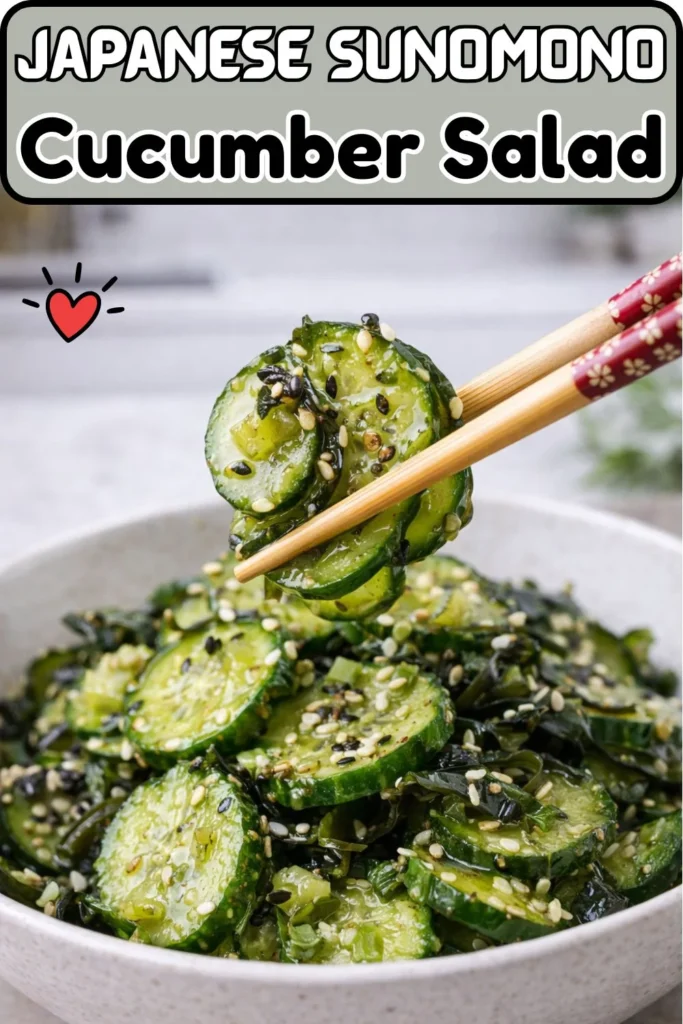
Crisp, lightly vinegary cucumber rounds meet toasted sesame and a whisper of seaweed — Japanese Sunomono Cucumber Salad sings bright, clean flavors in under 15 minutes. Perfect as a chilled starter, a bento side, or the thing you bring to dinner to look like you tried really hard (when you didn’t). 🙂
I fell in love with sunomono the first time I ordered it out of curiosity and got hooked on that salty-sweet snap. I now make it when I want a cooling salad that actually behaves itself next to spicy mains. Want the recipe and all the practical details? Let’s get to it.
What this recipe delivers
- Prep time: 4 minutes
- Brining time: 10 minutes
- Total time: 14 minutes
- Servings / Yield: About 2.5 cups (serves 2–3 as a side)
- Calories: ~62 kcal per serving (as provided)
- Diet: Gluten-free, 100% vegan, vegetarian-friendly
Why you’ll love this Japanese Sunomono Cucumber salad
- Bright and refreshing. This salad wakes up your palate without stealing the spotlight.
- Fast and fuss-free. You get big flavor with tiny effort.
- Versatile. It pairs with sushi, grilled tofu, rice bowls, or just your lunch.
- Totally vegan. Swap honey? No need — this recipe uses agave/sugar and tamari.
Ever wondered how something so simple tastes so refined? It’s all about balance: acid, salt, sesame, and a little texture from wakame or scallions.
Equipment for Japanese Sunomono Cucumber Salad
- Medium bowl (for brining cucumbers)
- Small bowl (for dressing)
- Wire mesh strainer (to rinse & drain)
- Whisk (or fork)
- Knife / mandoline / vegetable peeler (for thin slicing)
FYI: A mandoline gives perfect thin rounds, but a sharp knife or peeler works just fine — just slice evenly.
Ingredients for Japanese Sunomono Cucumber Salad
Cucumber Prep
- 12 oz Persian cucumbers (about 4 medium)
- 1½ tsp kosher salt
Optional Sea Vegetables
- 1 tbsp dried wakame
- ½ cup boiling water (120 ml)
Dressing
- ½ tsp white sesame seeds, toasted
- ½ tsp black sesame seeds, toasted
- ½ tsp garlic, minced
- 4 tsp rice vinegar
- 2 tsp tamari (gluten-free soy sauce)
- 2 tsp sugar or agave nectar (I use agave to keep it vegan)
- 1 tsp lemon or yuzu zest
- 1 tsp sesame oil (optional)
- ½ tsp shichimi togarashi (optional, for heat)
Garnishes (optional)
- 2 scallions, thinly sliced
- 2 tsp furikake (for umami & crunch)
Step-by-step: for Japanese Sunomono Cucumber Salad
1. Slice the cucumbers
Use a mandoline, vegetable peeler, or a sharp knife to cut the cucumbers into very thin rounds. Put the slices into the medium bowl.
2. Salt and brine
Sprinkle 1½ tsp kosher salt over the cucumbers and toss to coat. Let them sit 10 minutes so the salt draws out excess water. This step keeps your salad crisp, not soggy.
3. Rehydrate wakame (optional)
If you use wakame, place it in a heatproof bowl and pour ½ cup boiling water over it. Let it soak 5 minutes, then drain and squeeze out the water. Chop roughly if the pieces look large.
4. Rinse & drain
Rinse the salted cucumbers thoroughly under cold water in the wire mesh strainer. Gently squeeze out moisture and pat dry on a clean towel. Return cucumbers to the bowl.
5. Whisk the dressing
In the small bowl, whisk together toasted white & black sesame seeds, minced garlic, rice vinegar, tamari, sugar or agave, lemon/yuzu zest, and sesame oil (if using). Add shichimi for a slight kick.
6. Combine & chill
Add the drained wakame (if using) to the cucumbers. Pour dressing over the salad and toss gently to coat. Transfer to a serving dish and garnish with scallions and furikake. Serve immediately or chill briefly.
Tips for a crisp, not-watery sunomono
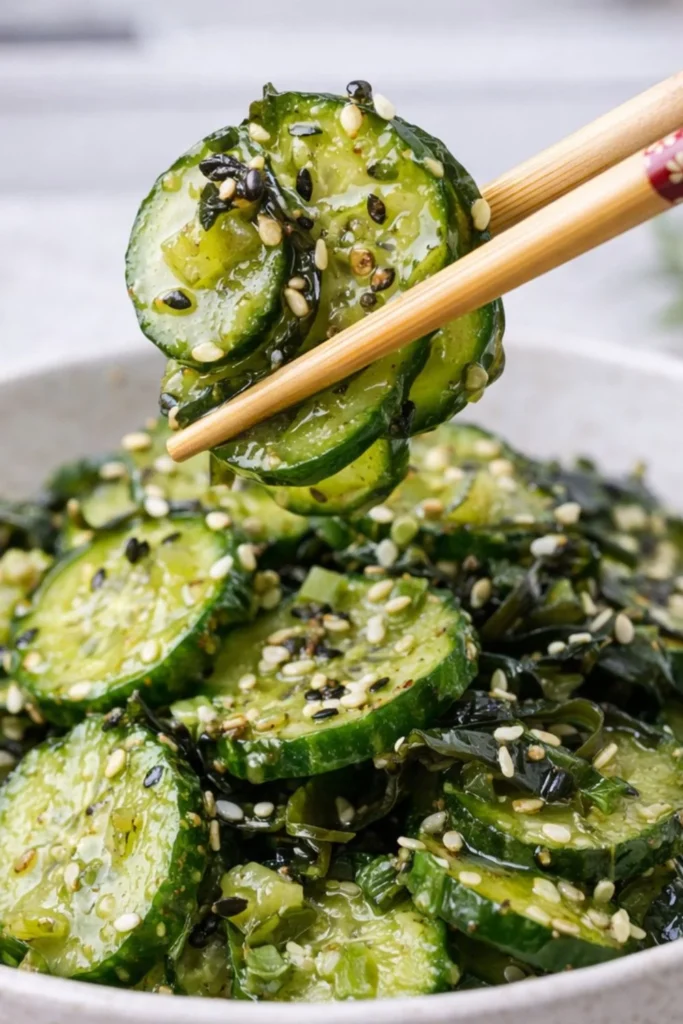
- Salt then rinse. Salt draws out water and helps the dressing stay flavorful.
- Pat dry. After rinsing, press the cucumber slices between towels to remove moisture.
- Dress just before serving. Add dressing shortly before serving to avoid sogginess.
- Use Persian cucumbers. They have fewer seeds and a firmer texture than giant slicing cukes.
- Skip the cucumber seeds if you’re using a large English cucumber — use a spoon to scoop them out.
Storage & make-ahead
- Refrigerate in an airtight container for up to 24 hours. The salad stays best on day one.
- If it gets watery, drain excess liquid before serving and toss with a touch more vinegar or a fresh pinch of salt.
- Make wakame ahead: Rehydrate and store separately in the fridge for up to 2 days.
Pro tip: I sometimes prepare cucumbers and dressing separately the night before, then toss just before serving. Saves time and keeps everything crisp.
Flavor variations & garnishes
- Add crunch: Thinly sliced radish or toasted sesame seeds.
- Make it spicy: Sprinkle shichimi togarashi or a few drops of chili oil.
- Add umami: Finish with a pinch of furikake or a few drops of ponzu.
- No wakame? Use thin strips of nori or skip the seaweed — still delicious.
IMO, the citrus zest (yuzu or lemon) takes this from “nice” to “restaurant-grade” — don’t skip it if you have it.
Quick comparison: Sunomono vs. other cucumber salads
- Sunomono vs. Greek cucumber salad: Sunomono focuses on rice vinegar, sesame, and subtle sweetness, while Greek salads use olive oil, lemon, and feta. Different mood, both valid.
- Sunomono vs. Korean oi muchim: Korean cucumber salads pack garlic, chili, and gochugaru; sunomono stays lighter and more citrusy.
- Sunomono vs. Western pickles: Sunomono emphasizes freshness and a delicate balance, not heavy pickling.
Want a light palate cleanser? Choose sunomono. Want heat and boldness? Try Korean oi muchim instead.
Nutritional Info
- Calories: ~62 kcal per serving
- Carbs: ~10 g | Protein: ~2 g | Fat: ~2 g
- Sodium: ~1692 mg (note: salt & tamari contribute here — adjust if you watch sodium)
- Fiber & micronutrients: Modest fiber and vitamin C from cucumbers; wakame adds iodine and minerals.
Heads up: Sodium looks high because tamari and the initial salting add salt. Reduce the salt and use low-sodium tamari if you need lower sodium.
Still Hungry, Try It Next recipe :-
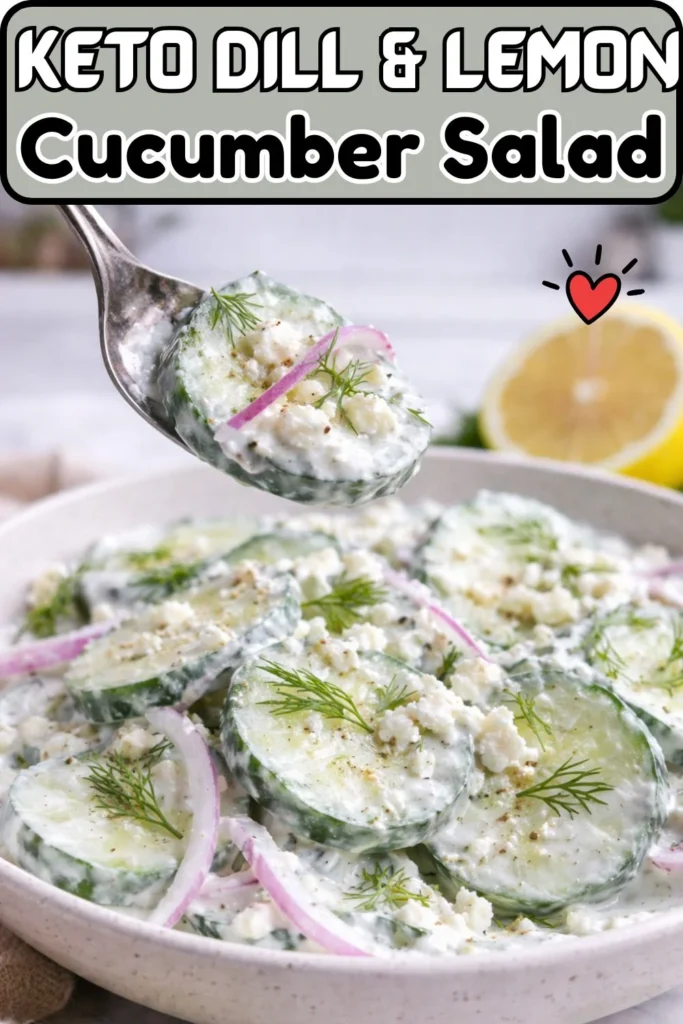
Keto Dill & Lemon Cucumber Salad (Low-Carb, No Sugar)
Common questions
Q: Can I use regular rice vinegar?
Yes — use unseasoned rice vinegar for the best clean flavor.
Q: Can I make it sweeter?
Yes — add a little more agave or sugar, but taste first. The goal stays balanced.
Q: Is wakame necessary?
Nope. Wakame adds oceanic umami and texture, but the salad tastes great without it.
My Final thoughts
This Japanese Sunomono Cucumber recipe proves you don’t need a long ingredient list to wow people. It fits bento boxes, weeknight dinners, and dinner parties where you want to appear effortless. Quick question: can you resist a second helping? I can’t.
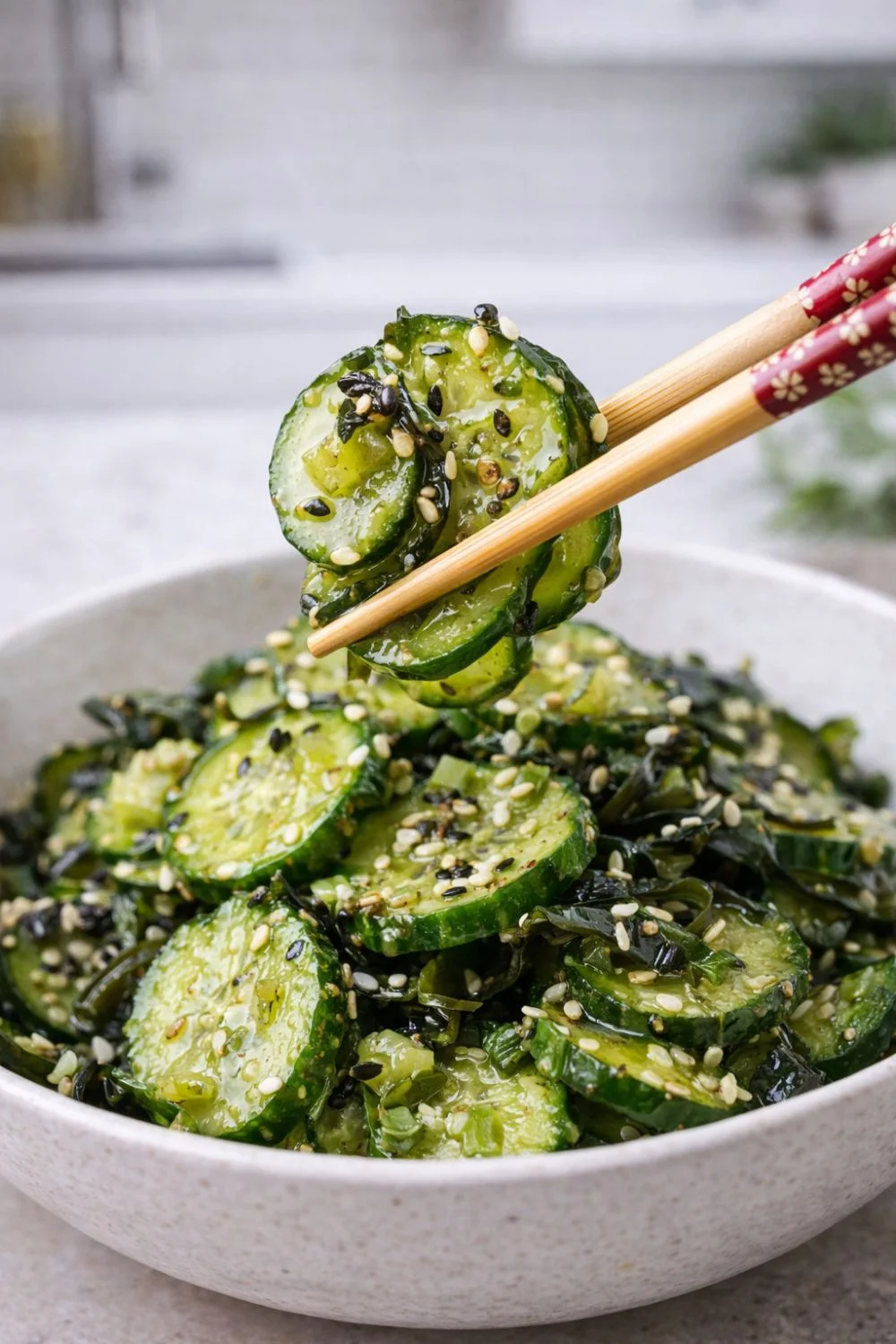
Japanese Sunomono Cucumber Salad (Rice Vinegar + Sesame Seeds)
Ingredients
Equipment
Method
- Slice the cucumbers
- Use a mandoline, vegetable peeler, or a sharp knife to cut the cucumbers into very thin rounds. Put the slices into the medium bowl.
- Salt and brine
- Sprinkle 1½ tsp kosher salt over the cucumbers and toss to coat. Let them sit 10 minutes so the salt draws out excess water. This step keeps your salad crisp, not soggy.
- Rehydrate wakame (optional)
- If you use wakame, place it in a heatproof bowl and pour ½ cup boiling water over it. Let it soak 5 minutes, then drain and squeeze out the water. Chop roughly if the pieces look large.
- Rinse & drain
- Rinse the salted cucumbers thoroughly under cold water in the wire mesh strainer. Gently squeeze out moisture and pat dry on a clean towel. Return cucumbers to the bowl.
- Whisk the dressing
- In the small bowl, whisk together toasted white & black sesame seeds, minced garlic, rice vinegar, tamari, sugar or agave, lemon/yuzu zest, and sesame oil (if using). Add shichimi for a slight kick.
- Combine & chill
- Add the drained wakame (if using) to the cucumbers. Pour dressing over the salad and toss gently to coat. Transfer to a serving dish and garnish with scallions and furikake. Serve immediately or chill briefly.
Notes
Tips for a crisp, not-watery sunomono
- Salt then rinse. Salt draws out water and helps the dressing stay flavorful.
- Pat dry. After rinsing, press the cucumber slices between towels to remove moisture.
- Dress just before serving. Add dressing shortly before serving to avoid sogginess.
- Use Persian cucumbers. They have fewer seeds and a firmer texture than giant slicing cukes.
- Skip the cucumber seeds if you’re using a large English cucumber — use a spoon to scoop them out.
Nutritional Info
- Calories: ~62 kcal per serving
- Carbs: ~10 g | Protein: ~2 g | Fat: ~2 g
- Sodium: ~1692 mg (note: salt & tamari contribute here — adjust if you watch sodium)
- Fiber & micronutrients: Modest fiber and vitamin C from cucumbers; wakame adds iodine and minerals.

Hi — I’m Rachel. I’m a wife, a mom, and a home cook who believes that food should bring comfort, joy, and compassion to the table. I live with my family — two hungry little foodies who are my most honest recipe testers — and together we’ve built a kitchen culture that’s all about good food that happens to be 100% vegan. I started this blog because I wanted a place to share the recipes that keep our days moving, the dishes that make weeknights feel a little easier, and the meals that become our little family traditions.