
Most smoothies are basically fruit juice with extra steps loaded with natural sugar that spikes your blood sugar and leaves you hungry an hour later. This Low Carb Vegan Smoothie skips that entirely. Avocado, spinach, unsweetened coconut milk, sugar-free vanilla protein powder, and a touch of peanut butter powder come together into something genuinely creamy and satisfying at just 7g of net carbs per serving keto friendly, completely plant-based, and ready in five minutes.
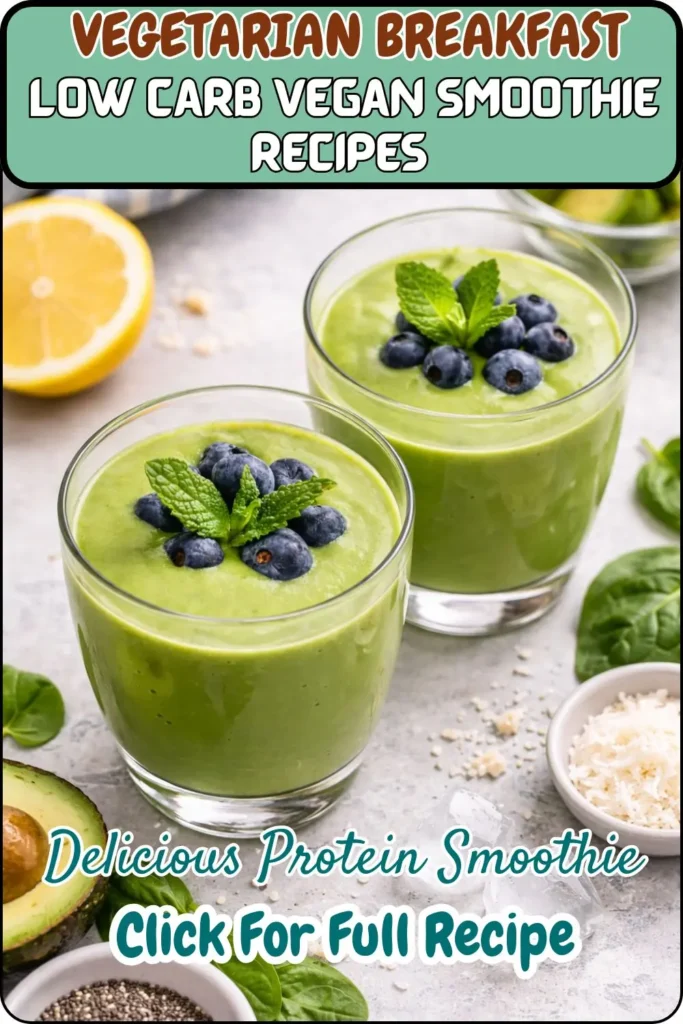
I started building low-carb smoothies after realizing most “healthy” smoothie recipes I’d been making were secretly carb bombs disguised as health food. This one isn’t. It’s rich, green, slightly nutty, and doesn’t leave you crashing by 10am.
Why This Low Carb Vegan Smoothie Actually Works for Keto
Most smoothies rely on bananas, mangoes, or a pile of berries for sweetness and texture — all genuinely healthy foods, but none of them remotely low-carb. This Low Carb Vegan Smoothie Recipe takes a completely different approach by building creaminess and satisfaction from fat and protein instead of fruit sugar.
- Avocado replaces banana as the creamy base, contributing healthy monounsaturated fat instead of natural sugar.
- Spinach adds volume and nutrients without contributing meaningful carbs or changing the flavor much once blended.
- Unsweetened coconut milk keeps the liquid base rich and creamy without any added sugar.
- Sugar-free vanilla protein powder provides the protein backbone that keeps this filling, without the carb load that flavored or sweetened versions carry.
- Peanut butter powder adds a nutty flavor dimension with a fraction of the fat and calories of regular peanut butter, which matters if you’re tracking macros closely.
My Recipe At a Glance
| Detail | Info |
| Prep Time | 5 minutes |
| Cook Time | 0 minutes |
| Total Time | 5 minutes |
| Servings | 2 people |
| Calories per Serving | 168 kcal |
| Net Carbs per Serving | ~0g (7g total carbs − 7g fiber) |
| Course | Breakfast / Drinks |
| Cuisine | American / Vegan / Keto-Friendly |
Five minutes for two servings at 168 calories each and here’s the genuinely impressive part: with 7g of total carbs and 7g of fiber, this smoothie comes in at essentially zero net carbs per serving. That’s about as keto-friendly as a smoothie gets.
Equipment You’ll Need For Low Carb Vegan Smoothie Recipes
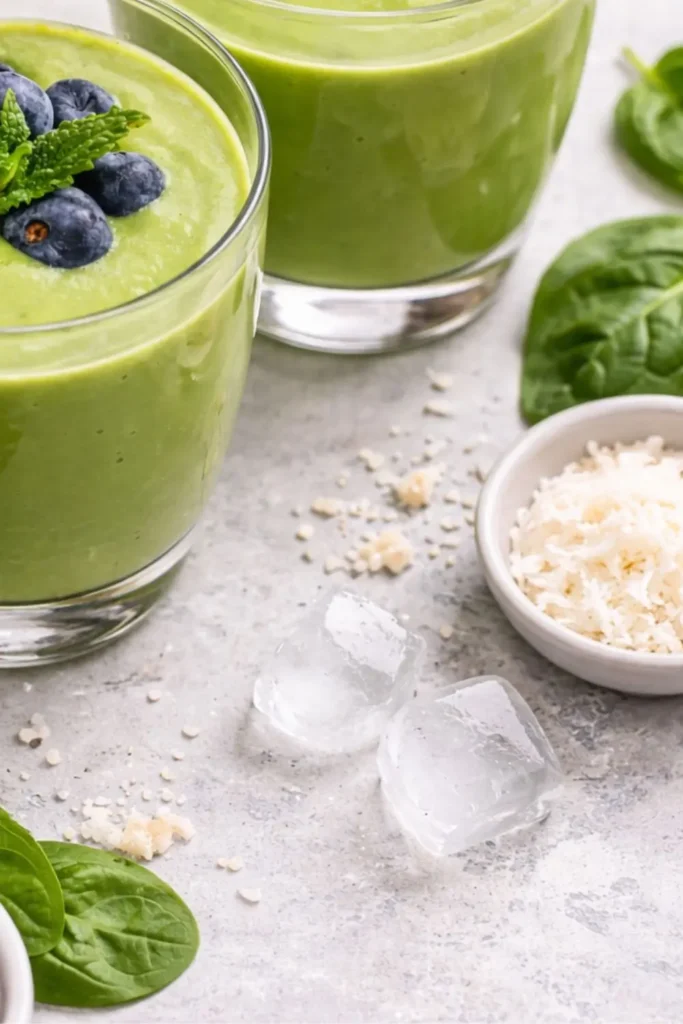
A minimal setup:
- Blender – a high-speed blender gives you the smoothest result with the spinach and avocado, but any reasonably powerful blender handles this recipe without issue.
- Measuring cups and spoons – for the coconut milk, protein powder, peanut butter powder, and lemon juice.
- Knife – for halving and pitting the avocado.
That’s the complete equipment list. This is a genuinely low-effort recipe equipment-wise.
Ingredients (Serves 2)
Every ingredient here is chosen specifically to keep carbs low while keeping flavor and creaminess high:
- 1 medium avocado– peeled and pitted the creamy backbone of this smoothie. Avocado contributes healthy fat and a rich, neutral texture without adding the carbs that banana would.
- 1 cup spinach – adds volume, fiber, and a genuine nutrient boost. Once blended with the avocado and coconut milk, the flavor is barely detectable.
- 1½ cups unsweetened coconut milk -the liquid base. Make sure it’s specifically unsweetened; sweetened coconut milk adds carbs you don’t need here. Canned or carton-style both work, though carton coconut milk is generally thinner and easier to blend evenly.
- 1 scoop sugar-free vanilla protein powder – this is the ingredient worth being most careful about. Confirm your protein powder is specifically vegan (pea, brown rice, or soy-based) and sugar-free, since not all sugar-free protein powders are plant-based by default. The original recipe references a specific favorite brand; just make sure whatever you choose checks both boxes.
- 1 tablespoon peanut butter powder – adds a nutty flavor with significantly fewer carbs and calories than regular peanut butter, since most of the fat has been pressed out during processing. This is the ingredient that makes low-carb smoothies feel indulgent rather than restrictive.
- 1 tablespoon freshly squeezed lemon juice -brightens the whole smoothie and cuts through the richness of the avocado and coconut milk.
- 4 ice cubes– optional – for a colder, thicker texture if you prefer your smoothie extra chilled.
- Some mint leaves – adds a fresh, aromatic note that pairs beautifully with the lemon and complements the green color from the spinach and avocado.
FYI on protein powder cholesterol- You might notice this recipe lists 1mg of cholesterol in the nutrition data, which is a little unusual for an entirely plant-based ingredient list. This typically comes down to trace amounts from manufacturing processes in certain protein powder brands rather than any actual animal product in the recipe but it’s worth double-checking your specific protein powder’s full ingredient list if zero cholesterol matters to you personally.
Step-by-Step Instructions For Low Carb Vegan Smoothie Recipes
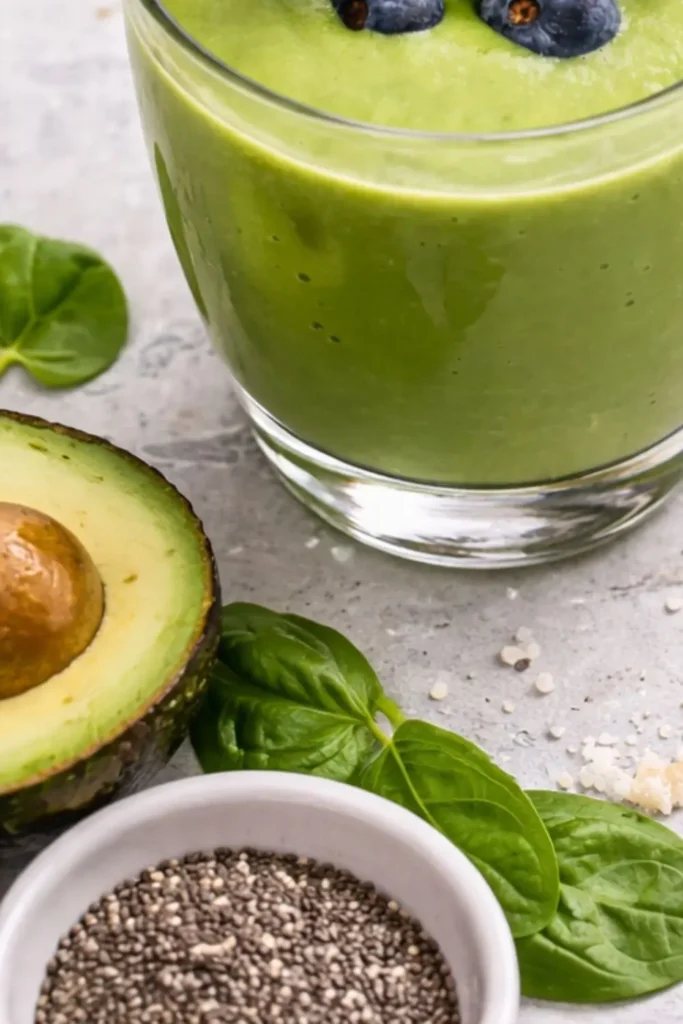
One step. Five minutes. Here’s exactly how simple this is.
Step 1 – Blend Everything
Add all the ingredients to your blender -avocado, spinach, coconut milk, protein powder, peanut butter powder, lemon juice, ice cubes if using, and mint leaves. Puree for about 30 seconds, or until completely smooth with no remaining spinach flecks or avocado chunks.
Taste and adjust – a little more lemon if it needs brightness, a touch more peanut butter powder if you want more nutty flavor, more mint if you want a stronger herbal note. Serve immediately while it’s cold and fresh.
Full Nutrition Breakdown (Per Serving)
| Nutrient | Amount |
| Calories | 168 kcal |
| Carbohydrates | 7g |
| Fiber | 7g |
| Net Carbs | ~0g |
| Protein | 6g |
| Total Fat | 14g |
| Cholesterol | 1mg* |
| Sodium | 84mg |
| Potassium | 480mg |
| Sugar | 1g |
See note above regarding trace cholesterol in certain protein powder brands.
Essentially zero net carbs and only 1g of sugar per serving – for a smoothie this creamy and satisfying, that’s a genuinely impressive nutritional profile for anyone following a low-carb or keto approach. The 480mg of potassium from the avocado and spinach is also a meaningful contribution, since electrolyte balance matters a lot on a low-carb diet.
Why Net Carbs Matter More Than Total Carbs Here
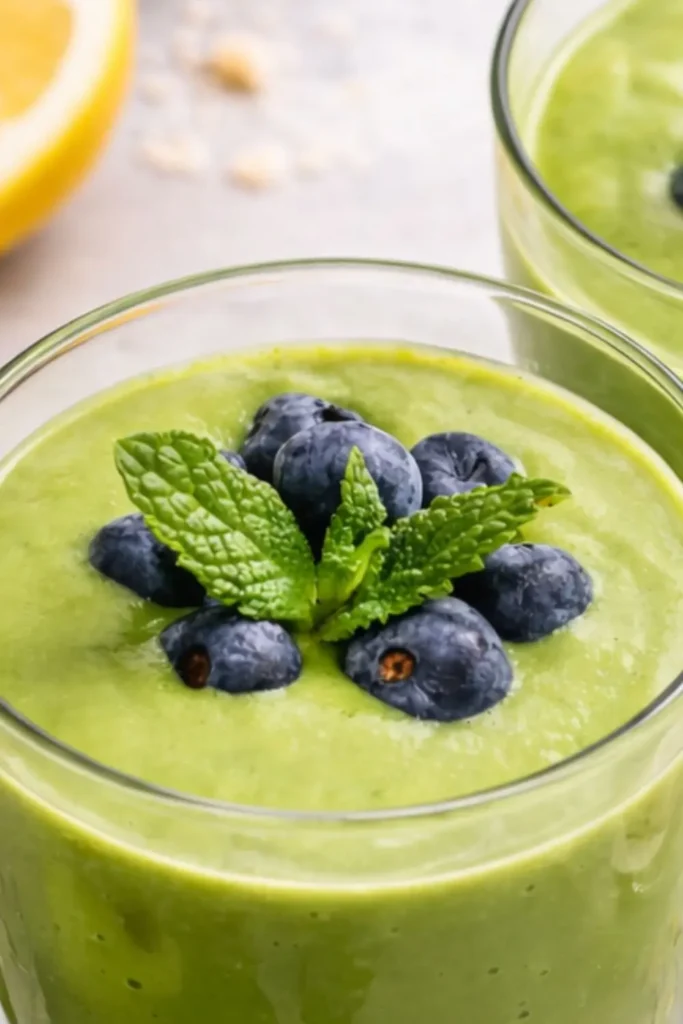
If you’re new to low-carb or keto eating, here’s the quick explanation of why this smoothie’s numbers look so good:
- Total carbohydrates- include both digestible carbs (which raise blood sugar) and fiber (which your body doesn’t digest the same way).
- Net carbs are calculated by subtracting fiber from total carbs, since fiber doesn’t impact blood sugar the way other carbohydrates do.
- This smoothie has 7g of total carbs and 7g of fiber– which means the net carb impact is effectively zero.
This matters specifically because the spinach and avocado contribute genuine fiber alongside their nutrients, rather than empty carbs the way fruit-heavy smoothies typically do.
Tips for the Best Low Carb Vegan Smoothie Every Time
These details make a real difference:
- Use a ripe avocado. An underripe avocado blends into a stiff, slightly bitter paste rather than the smooth, creamy texture you’re after. It should yield to gentle pressure when ripe.
- Confirm your protein powder is genuinely vegan and sugar-free. This is the ingredient most likely to accidentally derail both the carb count and the plant-based status of the recipe if you’re not checking labels carefully.
- Don’t skip the lemon juice. Without it, the avocado and coconut milk combination can taste a little flat and heavy. The acid genuinely lifts the whole smoothie.
- Add mint generously if you like it. It pairs particularly well with the lemon and adds a fresh quality that keeps this from tasting purely like a fat-and-protein shake.
- Adjust thickness with extra coconut milk, not fruit. If the smoothie seems too thick, add more unsweetened coconut milk rather than reaching for fruit to loosen it, which would undo the low-carb profile entirely.
- Taste before serving every time. Avocado ripeness and protein powder sweetness both vary, so a quick taste and adjustment keeps the result consistent.
Tips for Keeping Any Smoothie Genuinely Low-Carb
Beyond this specific recipe, here’s what generally keeps a smoothie keto-friendly:
- Skip the banana, mango, and most tropical fruits – they’re nutritious, but carb-dense.
- Use avocado for creaminess instead of fruit.
- Choose unsweetened plant milks specifically – coconut, almond, and unsweetened soy are all reasonable bases.
- Add leafy greens for volume rather than fruit – spinach and kale contribute very few net carbs.
- Check protein powder labels carefully – many flavored protein powders contain more added sugar than people expect.
IMO, avocado is genuinely the unsung hero of low-carb smoothies. It does everything banana does texturally without the carb cost, and once it’s blended with other strong flavors, you’d never guess it’s the base.
Still Hungry, Try It Next recipe
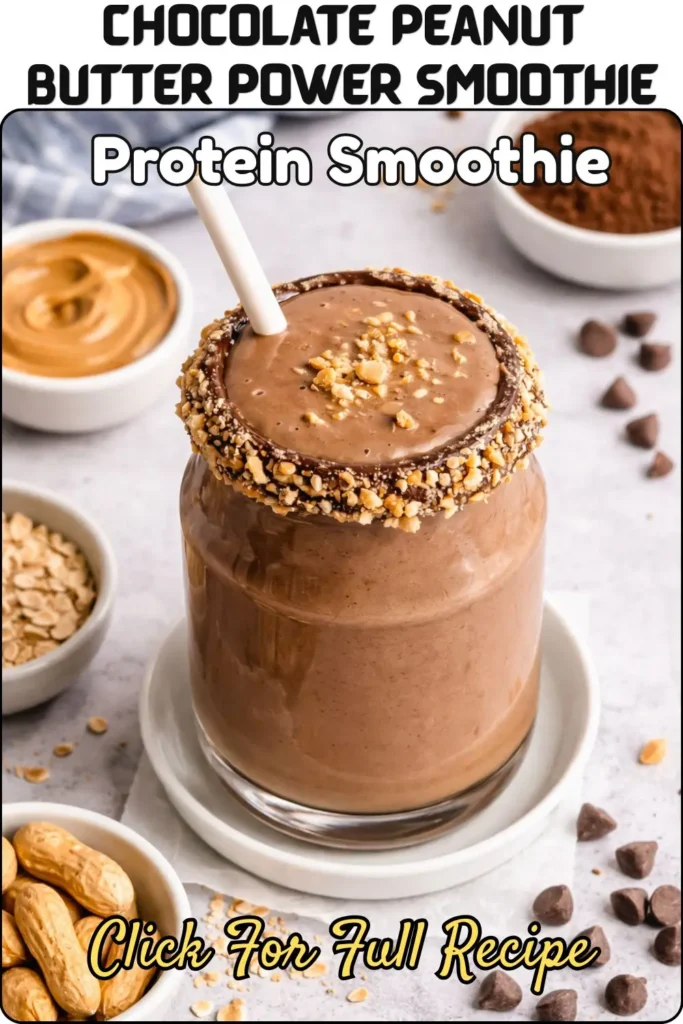
Chocolate Peanut Butter Power Smoothie
Variations Worth Trying
This recipe is a strong base for a few directions:
Chocolate Version
Add 1 tablespoon of unsweetened cocoa powder for a chocolate-avocado direction that tastes considerably more indulgent while keeping the carb count nearly identical.
Matcha Version
Add 1 teaspoon of matcha powder in place of some of the spinach for a green tea-forward flavor with a caffeine boost alongside the same low-carb profile.
Extra Creamy Version
Add 1 extra tablespoon of unsweetened coconut cream for a richer, more indulgent texture if you have more room in your fat macros for the day.
Make-Ahead and Storage Tips
This smoothie is best fresh, but a few habits help:
- Pre-portion your protein powder and peanut butter powder into small containers if you make this often.
- Keep avocados on hand at varying ripeness stages so you always have one ready when you want this smoothie.
- Drink immediately after blending for the best texture avocado-based smoothies can oxidize and change color slightly if left sitting.
- Don’t store overnight. The texture changes significantly, and this is a recipe meant to be made and consumed the same day.
How to Serve for Breakfast
This smoothie works as a complete, satisfying breakfast or snack:
- Pour into a glass and drink immediately while cold
- Garnish with an extra mint leaf for visual appeal if serving to guests
- Pair with nothing else if you’re keeping the meal genuinely low-carb this smoothie is satisfying enough to stand entirely on its own
My Final Thoughts
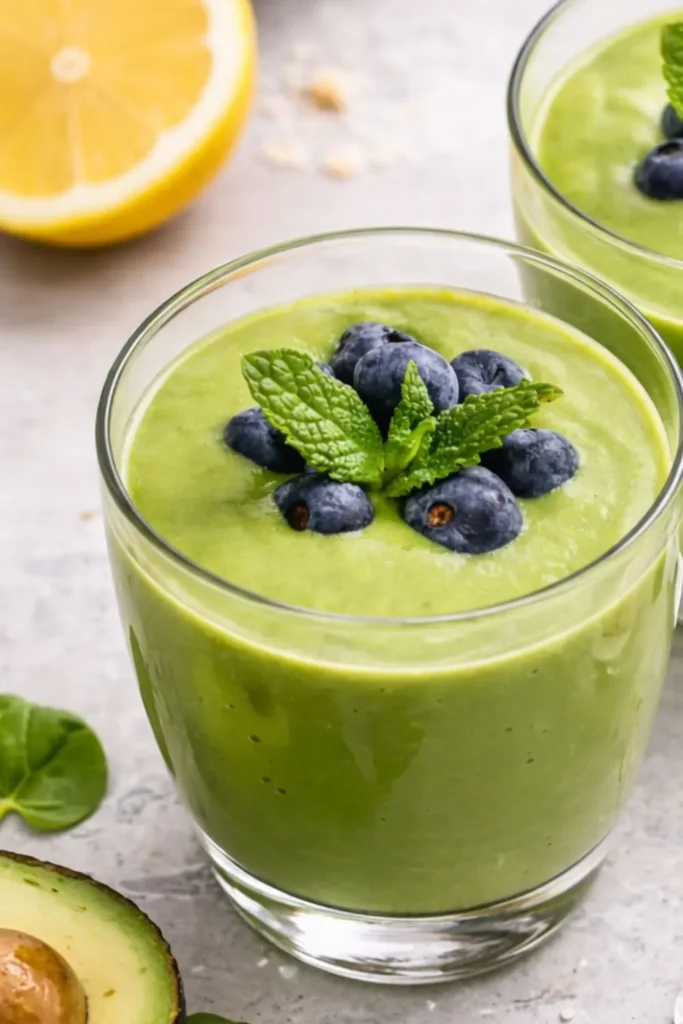
Low Carb Vegan Smoothie Recipes (Keto Friendly) prove that going plant-based and staying low-carb aren’t mutually exclusive. Avocado, spinach, unsweetened coconut milk, and a careful protein powder choice combine into something creamy, nutty, and genuinely satisfying at essentially zero net carbs per serving.
Choose a ripe avocado. Confirm your protein powder is both vegan and sugar-free. Blend it up in five minutes flat. And enjoy a smoothie that keeps you full without derailing your carb count for the day.
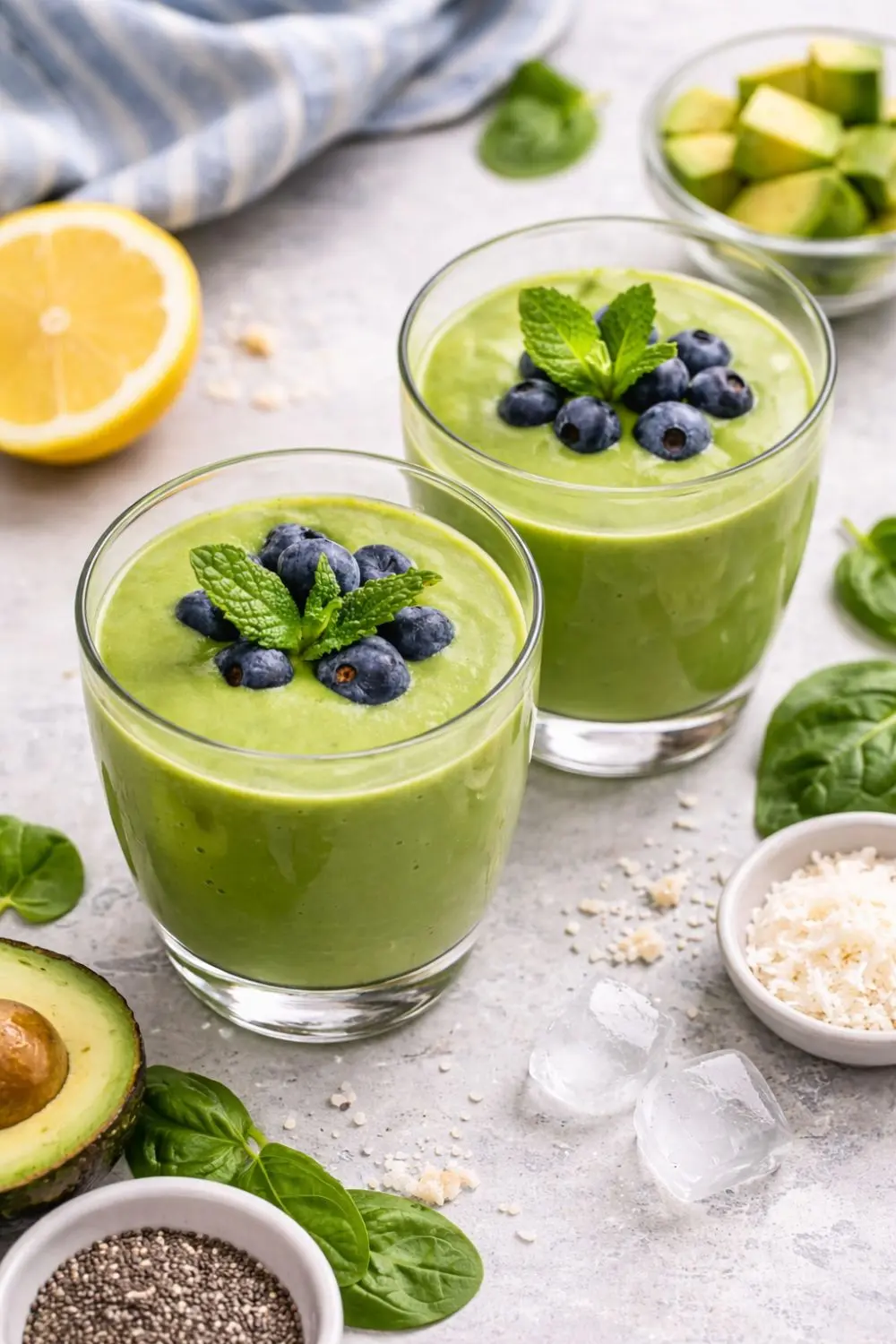
Low Carb Vegan Smoothie Recipes (Keto Friendly) Breakfast Smoothies
Ingredients
Equipment
Method
- Step 1 – Blend Everything
- Add all the ingredients to your blender -avocado, spinach, coconut milk, protein powder, peanut butter powder, lemon juice, ice cubes if using, and mint leaves. Puree for about 30 seconds, or until completely smooth with no remaining spinach flecks or avocado chunks.
- Taste and adjust – a little more lemon if it needs brightness, a touch more peanut butter powder if you want more nutty flavor, more mint if you want a stronger herbal note. Serve immediately while it’s cold and fresh.
Notes
Full Nutrition Breakdown (Per Serving)
| Nutrient | Amount |
| Calories | 168 kcal |
| Carbohydrates | 7g |
| Fiber | 7g |
| Net Carbs | ~0g |
| Protein | 6g |
| Total Fat | 14g |
| Cholesterol | 1mg* |
| Sodium | 84mg |
| Potassium | 480mg |
| Sugar | 1g |

Hi — I’m Rachel. I’m a wife, a mom, and a home cook who believes that food should bring comfort, joy, and compassion to the table. I live with my family — two hungry little foodies who are my most honest recipe testers — and together we’ve built a kitchen culture that’s all about good food that happens to be 100% vegan. I started this blog because I wanted a place to share the recipes that keep our days moving, the dishes that make weeknights feel a little easier, and the meals that become our little family traditions.