

Smoky? Nope. Floral? Maybe. Bright, tart, and utterly refreshing? Yes. This Non-Alcoholic Vegan Garden Sour Cocktail — spring cocktail tastes like a walk through an awakening garden: cucumber, lime, a touch of sweetness, and that magical aquafaba froth that keeps it 100% vegan and delightfully silky.
I make this when I want something grown-up and pretty without the booze. It looks like effort, but it takes five minutes. Curious? Good. Let’s make you the fanciest mocktail on the block.
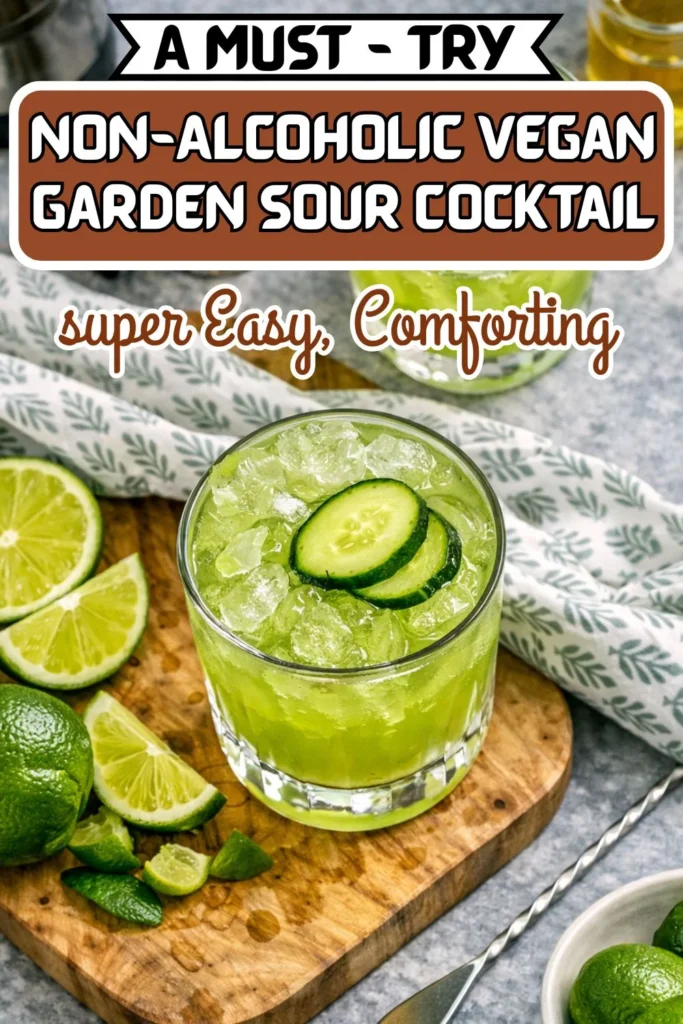
Why you’ll actually want this (and not just for the ‘gram)
This drink balances sour, sweet, and herbal notes while staying totally plant-based. You get cucumber freshness, lime snap, the subtle sweetness of agave, and aquafaba (aka chickpea brine) foam that behaves like egg white without any animal products. Bold fact: aquafaba whips into a silky froth that rivals cocktails with egg white — no compromise.
Ever wondered how mocktails can taste this refined? The trick lies in technique: shake hard, chill the glass, and choose fresh ingredients. FYI, a good non-alcoholic gin helps, but it’s optional if you want zero-spirit flavor.
Recipe Info — Single Serving (Super easy)
Course: Aperitif
Cuisine: Mocktails
Difficulty: Super easy
Servings: 1
Prep time: 5 minutes
Ingredients
- 3 cl non-alcoholic gin
- 3 cl cucumber juice (fresh pressed)
- 1 lime, juiced (about 2 cl)
- 1 tsp agave or maple syrup (adjust to taste)
- 2 cl chickpea brine (aquafaba)
- Ice
- Garnish: cucumber ribbon, basil leaf, or edible flower
How to Make
- Add all ingredients to a cocktail shaker.
- Dry-shake (no ice) 10 seconds to activate the aquafaba.
- Add ice and shake vigorously 15–20 seconds until chilled and frothy.
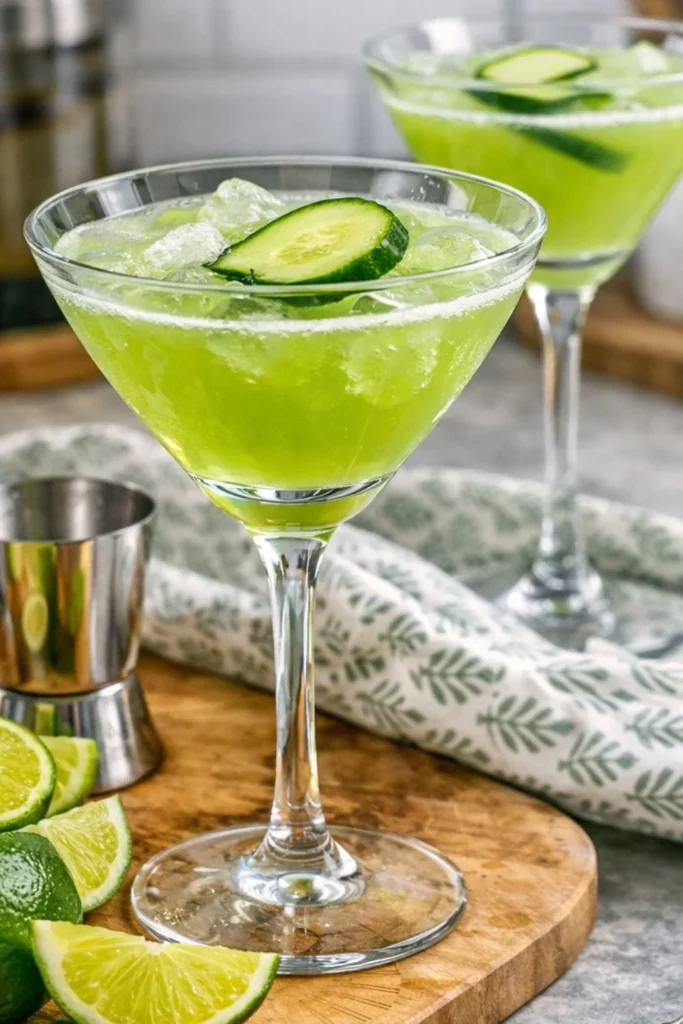
- Strain into a chilled coupe or rocks glass over fresh ice.
- Garnish with a cucumber ribbon or basil leaf and enjoy.
Bold tip: Dry-shaking before ice makes the foam richer and longer-lasting. Try it — you’ll see the difference.
Equipment you’ll actually use
- Cocktail shaker (Boston or cobbler)
- Jigger or measuring spoons (3 cl ≈ 1 oz)
- Citrus juicer (handheld works fine)
- Fine strainer (optional, for extra smoothness)
- Muddler or small blender (only if you make cucumber juice at home)
- Glassware: coupe or rocks glass
You don’t need a home bar setup to nail this. A jar with a tight lid works as a shaker in a pinch. IMO, that’s part of the charm.
Calorie count & nutrition (estimate per serving)
I like to be practical: here’s an approximate breakdown.
- Non-alcoholic gin (3 cl): ~5–15 kcal (varies by brand)
- Cucumber juice (3 cl): ~3–5 kcal
- Lime juice (1 lime): ~8–12 kcal
- Agave (1 tsp): ~21 kcal
- Aquafaba (2 cl): ~2–4 kcal
Estimated total: ~40–55 kcal per cocktail.
Bold note: If you add a sugary syrup or sweet garnish, your calories will rise. This mocktail stays light and refreshing.
How to make perfect cucumber juice (so it doesn’t water down everything)
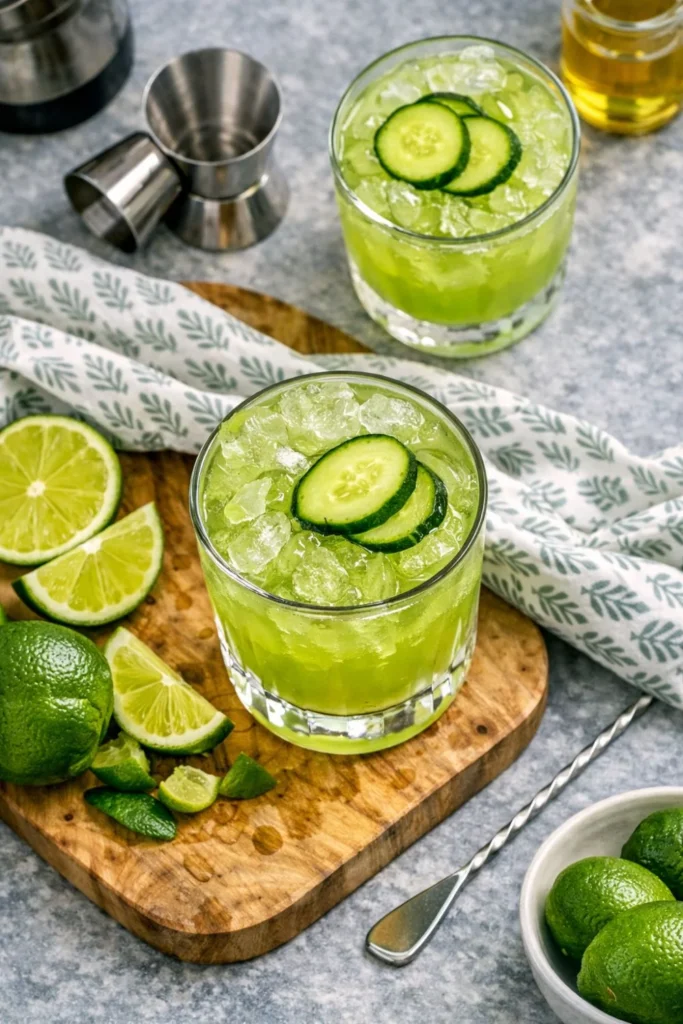
- Use firm cucumbers. English or Persian cucumbers give less bitterness.
- Blend then strain: Rough-chop cucumber, blitz in a blender, then strain through a fine sieve or cheesecloth. Press firmly to extract juice.
- Don’t overdo the water: Add no extra water — you want concentrated flavor.
Want less prep? Buy cold-pressed cucumber juice, but fresh always tastes brighter.
Why aquafaba = vegan cocktail magic
Aquafaba comes from canned chickpeas or the liquid from cooked chickpeas. You can whisk it raw. It foams, stabilizes, and gives that classic sour-cocktail head without eggs. Pro tip: Use liquid from unsalted canned chickpeas for easiest results.
Dry-shaking the aquafaba with the other ingredients emulsifies it before chilling. Then the final shake with ice gives a glossy microfoam that sits on top like the real deal. No one needs to know it’s vegan unless you want to flex.
Still Hungry, Try It Next recipe :-
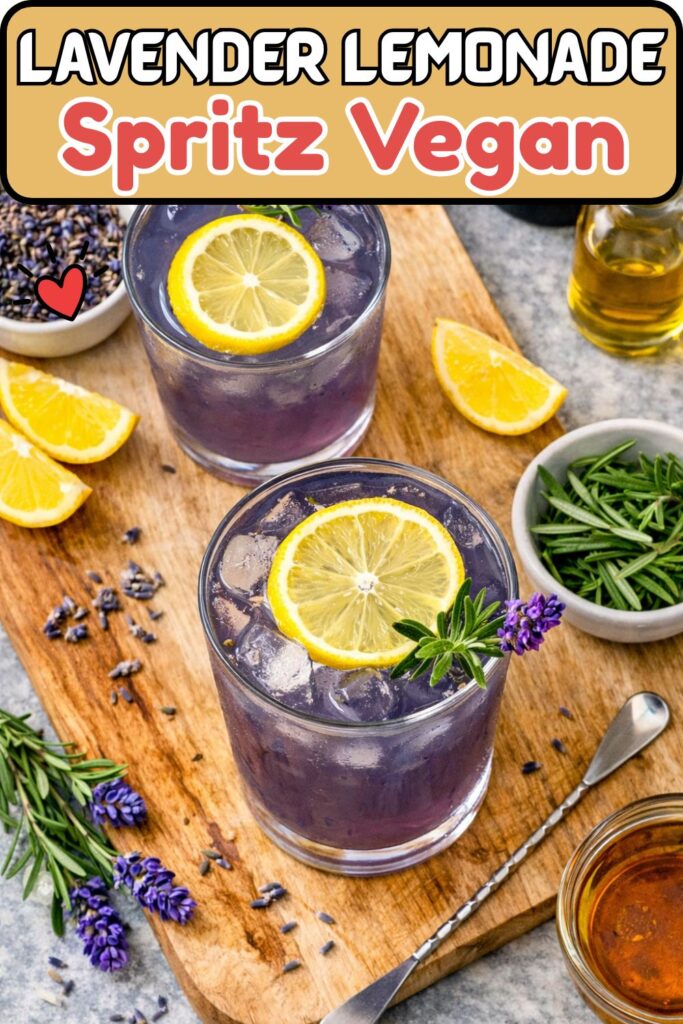
Lavender Lemonade Spritz Vegan
Variations & creative twists
Want to riff on this Non-Alcoholic Vegan Garden Sour Cocktail — spring cocktail? Try one of these:
- Strawberry Basil Smash (Vegan) spring cocktail twist: Add 3 chopped strawberries and a few basil leaves, muddle gently, then follow the same steps. Bold shout-out: this variation doubles as a crowd pleaser.
- Herbal: Swap basil for mint or tarragon for a different herbaceous note.
- Floral: Add 1 tsp elderflower cordial for subtle floral sweetness.
- Ginger kick: Add 5 ml fresh ginger juice or a slice muddled in for warmth.
- Lower sugar: Replace agave with a zero-calorie syrup or skip entirely for a tarter sour.
Which one sounds like your garden mood today?
Pairings & when to serve
Serve this as a pre-dinner aperitif, at a spring brunch, or as a non-alcoholic option at a garden party. It pairs nicely with:
- Light tapas (marinated olives, roasted almonds)
- Fresh salads with citrus dressing
- Cucumber sandwiches or herb-scented canapés
- Strawberry Basil Smash (Vegan) spring cocktail if you want a matching fruity option for guests
Bold suggestion: Offer both this Garden Sour and a Strawberry Basil Smash for variety — guests will love the contrast.
Storage & make-ahead (what actually works)
This drink tastes best fresh. However, you can:
- Prep cucumber juice up to 24 hours ahead and refrigerate.
- Mix the lime + agave + gin in a jar and refrigerate for up to 6 hours. Add aquafaba and shake when ready.
- Do not pre-mix aquafaba with ice ahead of time; the foam only forms with immediate shaking.
If you must make a pitcher for a party, keep aquafaba separate and whip in small batches when serving. Yes, it takes a minute — but the foam makes it worth it.
Comparisons: Why choose this over other mocktails?
- Vs. shrub-based mocktails: This Garden Sour stays brighter and less vinegary.
- Vs. soda-based drinks: Those can feel childish; this cocktail feels adult and thoughtful.
- Vs. a Strawberry Basil Smash (Vegan) spring cocktail: The Smash leans fruity and herbaceous; the Garden Sour stays crisp, citrusy, and more savory. Mix both for options.
My take: If you want something light and herbaceous that still reads as sophisticated, the Garden Sour wins. If you want fruity comfort, pick the Smash. Easy call.
Common Problems & pro tips (so you don’t panic)
- No foam? Use fresher aquafaba or increase the dry-shake time.
- Too tart? Add another ¼–½ tsp agave.
- Too flat? Add a tiny splash of sparkling water after straining to brighten it.
- Too vegetal? Add a pinch of salt to balance cucumber bitterness.
Keep experimenting. Mocktails reward curiosity.
You may also like Next recipe
Spring Berry Mojito (Vegan) Cocktail Recipe
Vegan Elderflower Grapefruit Gin & Tonic
Vegan Guava Mezcal Mule (Vegan)
Final thoughts (friendly push to try it)
This Non-Alcoholic Vegan Garden Sour Cocktail — spring cocktail proves that you don’t need alcohol to make something elegant, interesting, and seriously tasty. It’s light, low-cal, and photo-worthy, and it shows that vegan cocktails can stand shoulder-to-shoulder with any classic. Serve it to friends, sip it on your own, and revel in the fact that a jar of chickpea brine just upgraded your hosting game. Cheers to soft mornings, green gardens, and mocktails that actually impress.
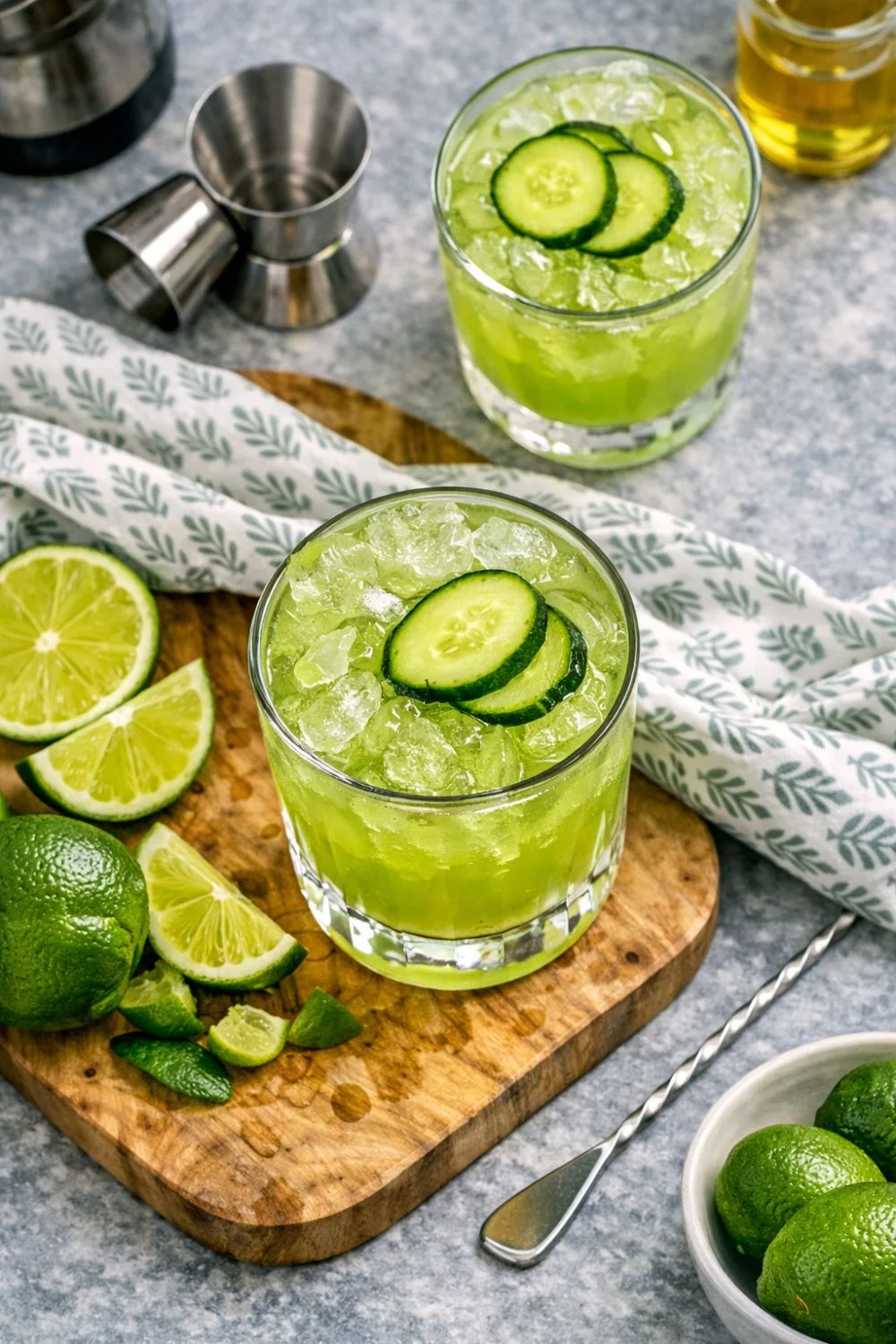
Non-Alcoholic Vegan Garden Sour Cocktail — Spring Cocktail
Ingredients
Equipment
Method
- How to
- Add all ingredients to a cocktail shaker.
- Dry-shake (no ice) 10 seconds to activate the aquafaba.
- Add ice and shake vigorously 15–20 seconds until chilled and frothy.
- Strain into a chilled coupe or rocks glass over fresh ice.
- Garnish with a cucumber ribbon or basil leaf and enjoy.
- Bold tip: Dry-shaking before ice makes the foam richer and longer-lasting. Try it — you’ll see the difference.
Notes
How to make perfect cucumber juice (so it doesn’t water down everything)
- Use firm cucumbers. English or Persian cucumbers give less bitterness.
- Blend then strain: Rough-chop cucumber, blitz in a blender, then strain through a fine sieve or cheesecloth. Press firmly to extract juice.
- Don’t overdo the water: Add no extra water — you want concentrated flavor.

Hi — I’m Rachel. I’m a wife, a mom, and a home cook who believes that food should bring comfort, joy, and compassion to the table. I live with my family — two hungry little foodies who are my most honest recipe testers — and together we’ve built a kitchen culture that’s all about good food that happens to be 100% vegan. I started this blog because I wanted a place to share the recipes that keep our days moving, the dishes that make weeknights feel a little easier, and the meals that become our little family traditions.