
Macaroni salad has a reputation problem. For decades it’s been the pale, overdressed, slightly sad side dish that sits next to the coleslaw at every backyard cookout, getting eaten more out of obligation than genuine desire. This vegan macaroni salad is the complete opposite of that bright, fresh, herb-forward, dressed in a light vinaigrette rather than a mayonnaise-heavy coating, and genuinely the kind of side dish people seek out at a cookout rather than politely add to their plate.
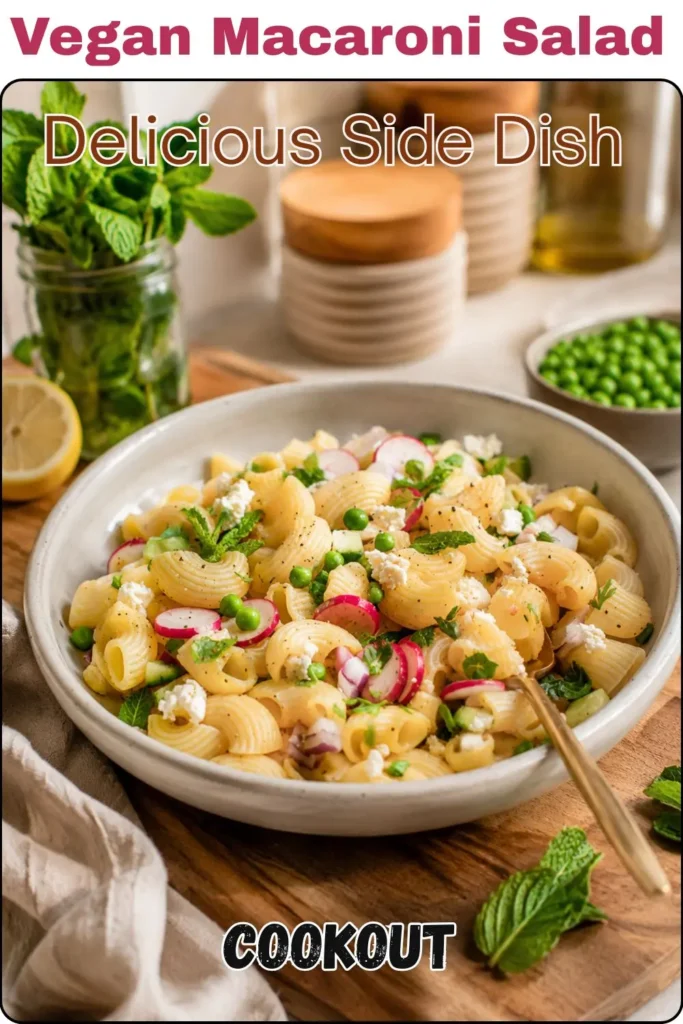
I’ve made this for summer gatherings where people who “don’t really like macaroni salad” went back for seconds. The fresh mint and cilantro are what make it feel alive, the lime and rice vinegar dressing keeps it light, and the crisp radishes and cucumber give it texture that the standard version never has. This is macaroni salad reimagined and it’s significantly better.
My Recipe Details at a Glance
Full overview before we start boiling water:
- Course- Side Dish, Cookout Side
- Prep Time- 15 minutes
- Cook Time- 8 minutes
- Total Time- 23 minutes
- Servings- 3 (scales up easily for larger gatherings see the scaling section)
- Calories per Serving- 202 kcal
- Diet- 100% Vegan, Dairy-Free, Egg-Free
At 202 calories per serving with 7.3g of protein and 2.9g of fiber, this vegan macaroni salad is remarkably light for a pasta-based cookout side a direct result of the vinaigrette dressing rather than a mayo base. The base recipe serves 3, but this is designed to scale; the notes at the end show exactly how to multiply it for a crowd.
Equipment You’ll Need For Vegan Macaroni Salad
Simple and straightforward:
- A large pot – For cooking the macaroni. Use a big pot with plenty of salted water pasta needs room to move around during cooking for even texture. Under-watered, crowded pasta sticks together and cooks unevenly.
- A colander – For draining the pasta and rinsing it under cold water immediately after cooking. The cold rinse is essential it stops the cooking process instantly and prevents the pasta from continuing to soften in its own residual heat, which would give you mushy macaroni by the time you dress it.
- A large mixing bowl – Generous enough to hold the pasta, all the vegetables, herbs, and dressing with room to toss everything without the bowl becoming a hazard.
- A small bowl or jar – For whisking together the vinaigrette. A jar with a lid works particularly well seal it and shake for 20 seconds to emulsify the dressing instead of whisking.
- A sharp knife and cutting board – For slicing the radishes, dicing the cucumber and red onion. Thin, even radish slices and consistent vegetable dice make the salad look polished and ensure even flavor distribution in every spoonful.
- Measuring spoons and cups – For the dressing ingredients, which need to be balanced precisely for the right flavor.
FYI this entire recipe uses one pot and one bowl. Cleanup takes about three minutes.
Ingredients Why This Version Works
The Pasta
- 1½ cups (150g) dry large elbow macaroni – Large elbow macaroni holds up better than small elbows in a dressed salad. The bigger surface area and slightly thicker walls mean each piece stays distinct in the bowl rather than clumping together, and the hollow center traps dressing so you get flavor in every bite. Cook it al dente one minute less than the package minimum. The pasta continues softening slightly as it chills in the fridge, and al dente going in means perfectly tender when you serve it.
The Vegetables The Part That Makes This Different
This is where this vegan macaroni salad diverges from the standard version and gets genuinely interesting:
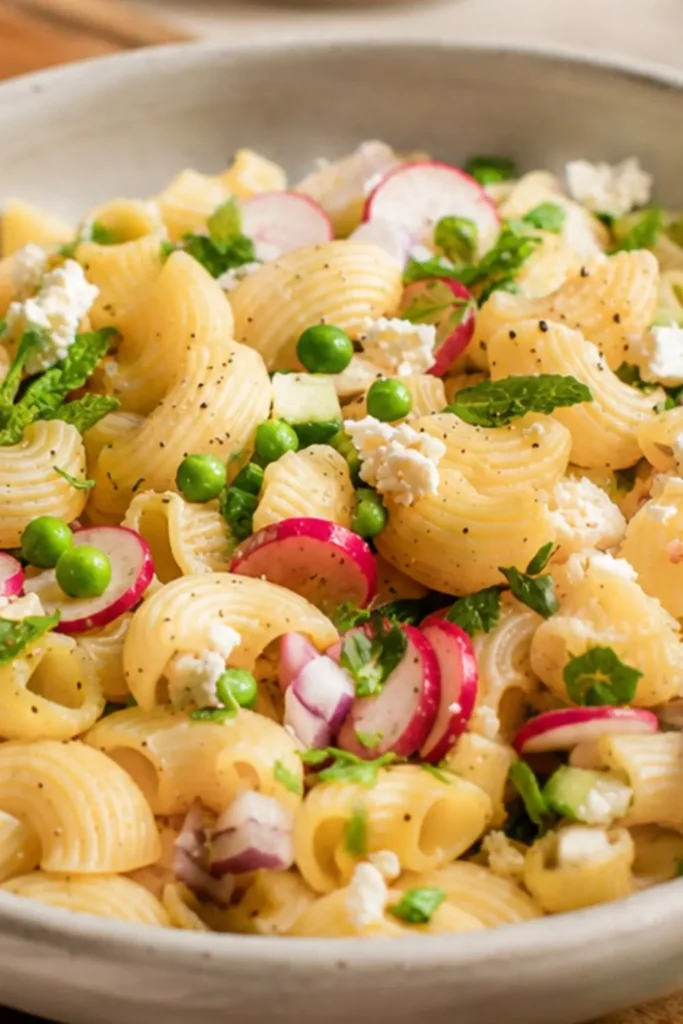
- ⅓ cup (45g) frozen green peas – Add the peas to the colander and pour the hot pasta water over them when you drain the pasta. The residual heat thaws them perfectly without cooking them into mush. They add natural sweetness and a pop of bright green color that makes the salad look vibrant.
- 4 small radishes, thinly sliced – This is the unexpected star ingredient. Radishes add a peppery bite, a satisfying crunch, and gorgeous pink-and-white color that makes the salad look beautiful without any effort. They also hold their crunch better than most vegetables in a dressed pasta salad, so they stay crispy even after a few hours in the fridge.
- ⅓ cup (46g) diced cucumber – Cool, refreshing, and high in water content which keeps the salad tasting fresh. Use English cucumber for the thinnest skin and fewest seeds.
- ¼ cup diced red onion – Adds a sharp, colorful element. If raw red onion is too intense for your preference, soak the diced pieces in cold water for 10 minutes, drain, and pat dry this removes most of the sharpness while keeping the flavor and color.
The Fresh Herbs The Secret Weapon
Most macaroni salad recipes use zero fresh herbs, which is honestly why most macaroni salad tastes like pasta and dressing and not much else. This recipe uses:
- ¼ cup loosely packed fresh mint – Mint in a pasta salad sounds unexpected until you taste it. It adds a bright, cooling quality that makes the whole bowl feel refreshing in a way that’s genuinely unique for a cookout side dish. Don’t substitute dried mint the fresh herb’s aromatic oils are the entire point.
- ¼ cup loosely packed fresh cilantro – Adds bold herbaceous flavor and pairs with the lime juice in the dressing to create a Latin-inspired freshness. If you’re in the camp that cilantro tastes like soap (a legitimate genetic sensitivity, not a character flaw), substitute flat-leaf parsley for a similar fresh-herb quality without the controversy.
The Optional Enhancement
- ¼ cup vegan ricotta – This is optional but genuinely worth trying. A dollop or two folded through the salad adds a creamy, slightly lactic quality that makes the whole dish feel more substantial. Kite Hill Almond Milk Ricotta is widely available and works beautifully here.
The Vinaigrette Dressing Where All the Flavor Lives
This dressing is what separates this vegan macaroni salad from every other version you’ve had. It’s light, bright, complex, and genuinely flavorful in a way that a mayo-based dressing isn’t. Here’s every element and why it’s here:
- 3 tablespoons oil – The fat base of the dressing. A neutral oil like sunflower or avocado oil lets the other flavors come through. Use olive oil only if you want its flavor to be part of the profile it’s a deliberate choice, not a default.
- 1 tablespoon white rice vinegar – Gentler and slightly sweeter than white wine vinegar or apple cider vinegar. It adds acidity without sharpness.
- 1 tablespoon fresh lime juice – The citrus element that ties the dressing to the cilantro and mint in the salad. Always use fresh lime juice bottled lime juice has a flat, slightly bitter quality that undermines the freshness this salad is built on.
- 1 teaspoon yellow mustard – Adds gentle heat and helps emulsify the oil and vinegar so the dressing stays cohesive rather than separating.
- 1 teaspoon maple syrup – Balances the acidity of the vinegar and lime without making the dressing taste sweet. It dissolves instantly into the other liquids.
- 1 teaspoon white miso (optional) – This is my favorite addition to this dressing. White miso adds a savory, umami depth that makes the dressing taste more complex and layered. It’s subtle but noticeable in its absence. Dissolve it into the lime juice before adding other ingredients for the most even distribution.
- ¼ teaspoon ground black pepper – Provides gentle warmth.
- Salt – The recipe calls for ¼ teaspoon plus ⅛ teaspoon, which sounds oddly specific but is actually well-calibrated. Taste and adjust after dressing the salad, especially if your pasta water was well-salted.
How to Make Vegan Macaroni Salad
Step 1 – Cook and Cool the Pasta
Bring a large pot of well-salted water to a rolling boil. Add the elbow macaroni and cook for one minute less than the package minimum for al dente the pasta continues cooking slightly in its own heat after draining. When done, drain through the colander with the peas sitting in it the hot water thaws the peas in seconds.
Immediately rinse the pasta and peas under cold running water for about 30 seconds, moving them around to cool evenly. Transfer to your large mixing bowl. The cold rinse step is not optional hot pasta will wilt your herbs, cook your vegetables slightly, and make your cucumber release moisture into the dressing before you’ve even finished assembly.
Step 2 – Make the Vinaigrette
Combine all dressing ingredients in your small bowl or jar. If using miso, dissolve it in the lime juice first this prevents lumps. Whisk vigorously or seal the jar and shake until the dressing is fully emulsified and uniform. Taste it before adding it to the salad. It should taste bright, tangy, slightly savory, and balanced not too sharp, not too sweet. Adjust with more lime for brightness or more maple syrup for balance.
Step 3 – Assemble the Salad
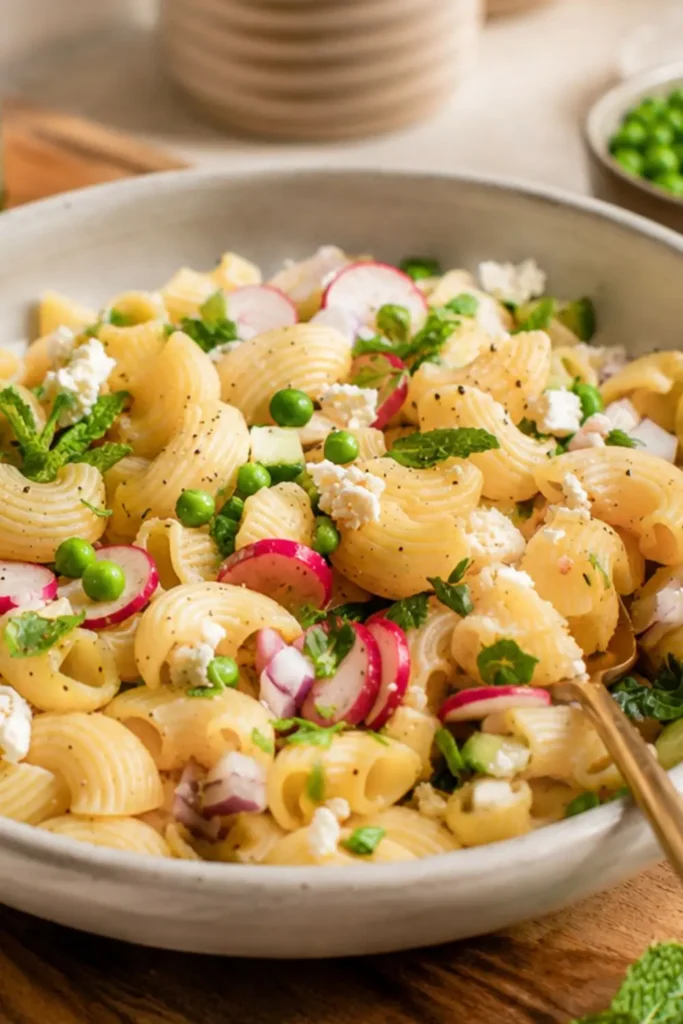
Add the sliced radishes, diced cucumber, red onion, mint, and cilantro to the bowl with the pasta and peas. Pour the vinaigrette over everything and toss well to coat use a gentle tossing motion so the pasta doesn’t break and the herbs distribute evenly rather than clumping in one area.
If using vegan ricotta, fold it in last with 2–3 gentle strokes so it creates pockets of creaminess throughout the salad rather than fully incorporating into the dressing.
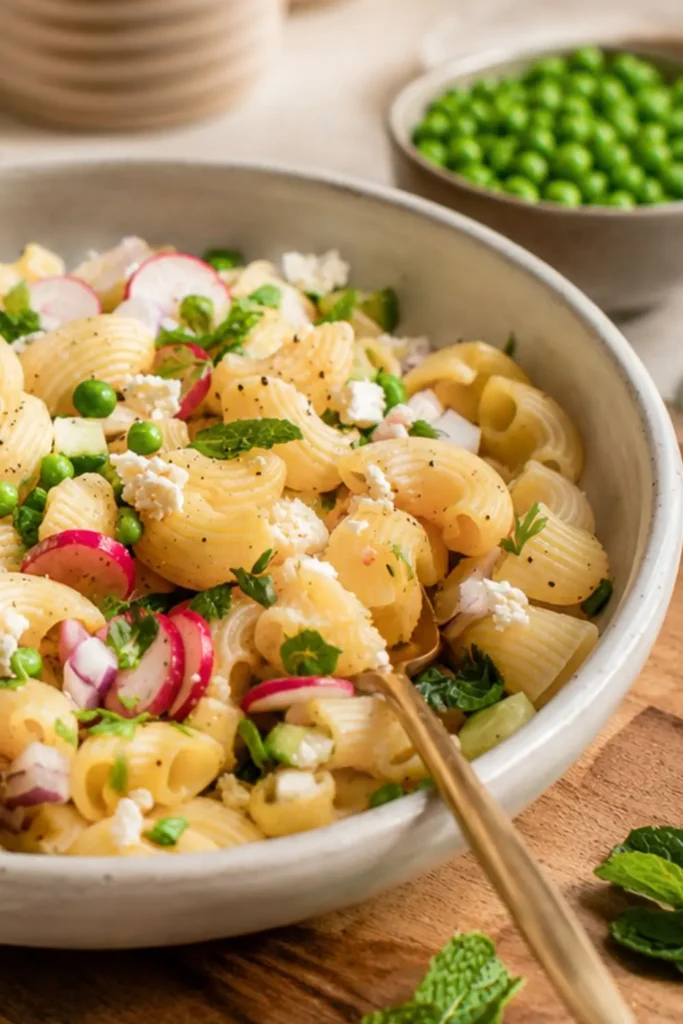
Taste and adjust salt, then serve immediately for the brightest herb flavor or chill for 30–60 minutes for a more developed, settled flavor profile.
Full Nutritional Breakdown (Per Serving 1 of 3)
| Nutrient | Amount |
| Calories | 202 kcal |
| Carbohydrates | 42.1g |
| Protein | 7.3g |
| Fat | 1.1g |
| Fiber | 2.9g |
| Sugar | 4.6g |
| Sodium | 22mg |
| Potassium | 87mg |
| Calcium | 12mg |
| Iron | 2mg |
A few numbers worth calling out:
- 202 calories per serving – Significantly lighter than conventional mayo-based macaroni salad, which typically runs 300–400 calories per serving due to the heavy mayonnaise dressing.
- Only 22mg of sodium – Remarkably low for a pasta salad, especially one that tastes this flavorful. This number assumes moderately salted pasta water — it will be slightly higher if you salt aggressively.
- 7.3g of protein – Good for a plant-based side dish, coming from the pasta and the optional vegan ricotta.
- 1.1g of fat – Almost negligible, making this one of the leanest pasta salads in existence. The vinaigrette adds fat when included, but the base salad itself is extremely low-fat.
Scaling Up for a Cookout Crowd
The base recipe serves 3 ideal for a small dinner, but a cookout usually needs more. Here’s how to scale:
| Servings | Dry Pasta | Radishes | Cucumber | Red Onion | Each Herb | Oil | Vinegar | Lime |
| 6 | 3 cups | 8 small | ⅔ cup | ½ cup | ½ cup | 6 tbsp | 2 tbsp each | 2 tbsp |
| 12 | 6 cups | 16 small | 1⅓ cup | 1 cup | 1 cup | ¾ cup | 4 tbsp each | 4 tbsp |
For larger batches, make the dressing separately and add it in stages taste after each addition so you don’t over-dress the salad. IMO, slightly under-dressed is better than over-dressed, especially if the salad needs to travel and sit before serving.
Try It Next recipe
Why a Vinaigrette Beats Mayo for Macaroni Salad
Ever wonder why this style of macaroni salad holds up so much better at outdoor cookouts than the traditional version? The answer is practical and straightforward.
Mayo-based dressings break down in heat. The emulsion in mayonnaise destabilizes at warm temperatures, causing the dressing to separate into an oily, watery mess after sitting outside for more than an hour. Vinaigrette doesn’t have this problem oil and acid hold their quality at outdoor temperatures far better.
Vinaigrette also keeps the pasta from clumping. Mayo coats each piece of pasta and as the salad sits, those coated pieces stick together. A vinaigrette keeps everything separate and distinct, which means each spoonful has the same quality whether you serve it fresh or three hours later.
The flavor stays brighter longer. Fresh herbs in a vinaigrette-dressed salad retain their flavor and color better than in a mayo base, which tends to mute delicate herb flavors.
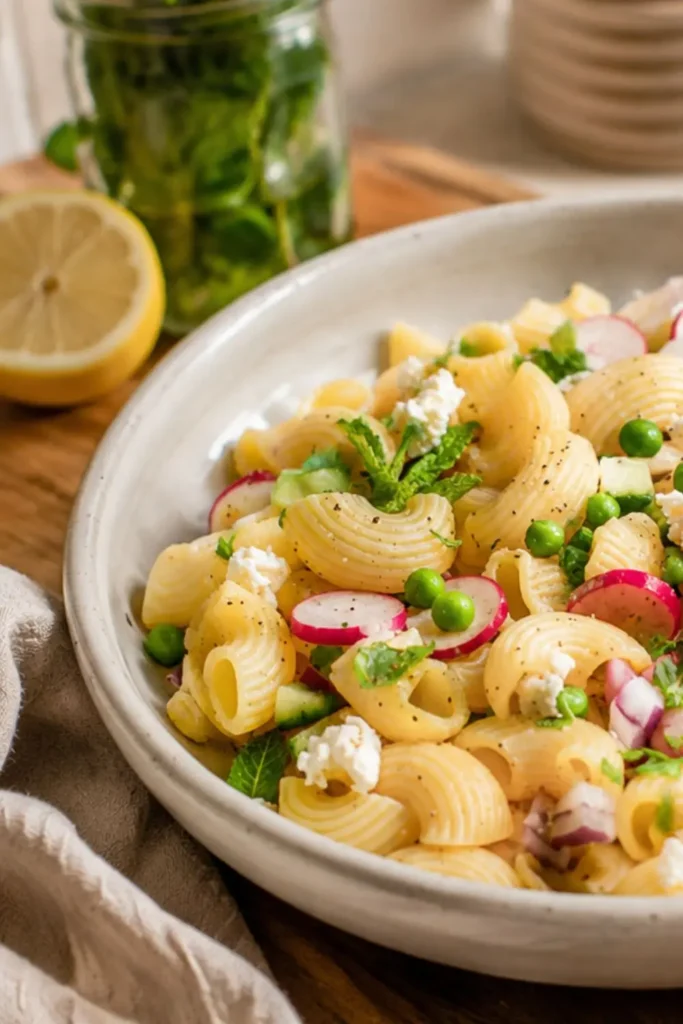
Make-Ahead and Storage
This vegan macaroni salad works beautifully as a make-ahead dish with one caveat:
- Make the salad and dressing up to 24 hours ahead- Store them separately and combine 30 minutes before serving for the freshest herb flavor and crispest vegetable texture.
- If storing assembled- Keep covered in the fridge for up to 2 days. The herbs will lose some brightness by day 2 but the flavor remains excellent. Add a squeeze of fresh lime and a few fresh herb leaves before serving to revive it.
- For outdoor transport- Pack in an airtight container with a few ice packs. The vinaigrette holds safely at room temperature for up to 3 hours significantly safer than mayo-based versions.
Variation Ideas Customize for Your Crowd
The base recipe is excellent as written. Here are a few variations worth exploring:
- Mediterranean version- Swap the mint and cilantro for fresh basil and flat-leaf parsley. Replace the lime-rice vinegar dressing with lemon juice and white wine vinegar. Add Kalamata olives, diced roasted red peppers, and vegan feta.
- Asian-inspired version- Add shredded purple cabbage, edamame, sliced snap peas, and sesame seeds. Swap the lime dressing for a sesame-ginger vinaigrette with rice vinegar, soy sauce, toasted sesame oil, and fresh ginger.
- Protein-boosted version- Add ½ cup of chickpeas or edamame for extra substance. These make the salad substantial enough to serve as a light main course rather than strictly a side dish.
- Smoky version- Add a pinch of smoked paprika to the dressing and toss in ¼ cup of diced sun-dried tomatoes for a deeper, more complex flavor profile.
My Final Bottom Line
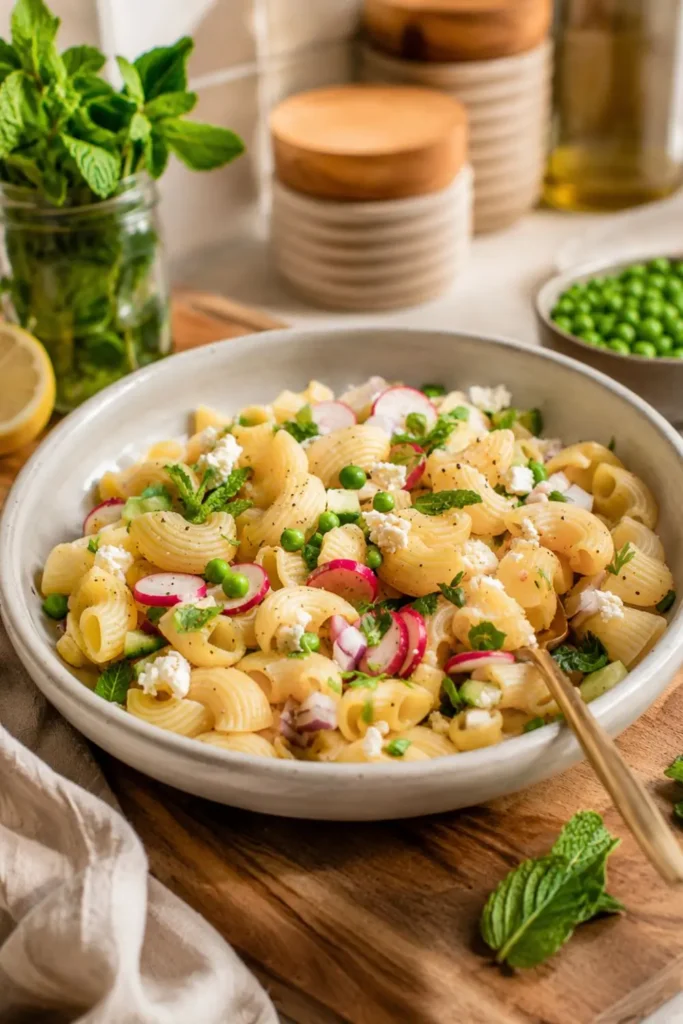
This Vegan Macaroni Salad is exactly what cookout side dishes should be bright, flavorful, practical for outdoor service, and genuinely appealing to every person at the table. The light vinaigrette dressing keeps it fresh and clean where mayo-based versions feel heavy. The mint, cilantro, and radishes make it taste alive in a way that traditional macaroni salad never manages.
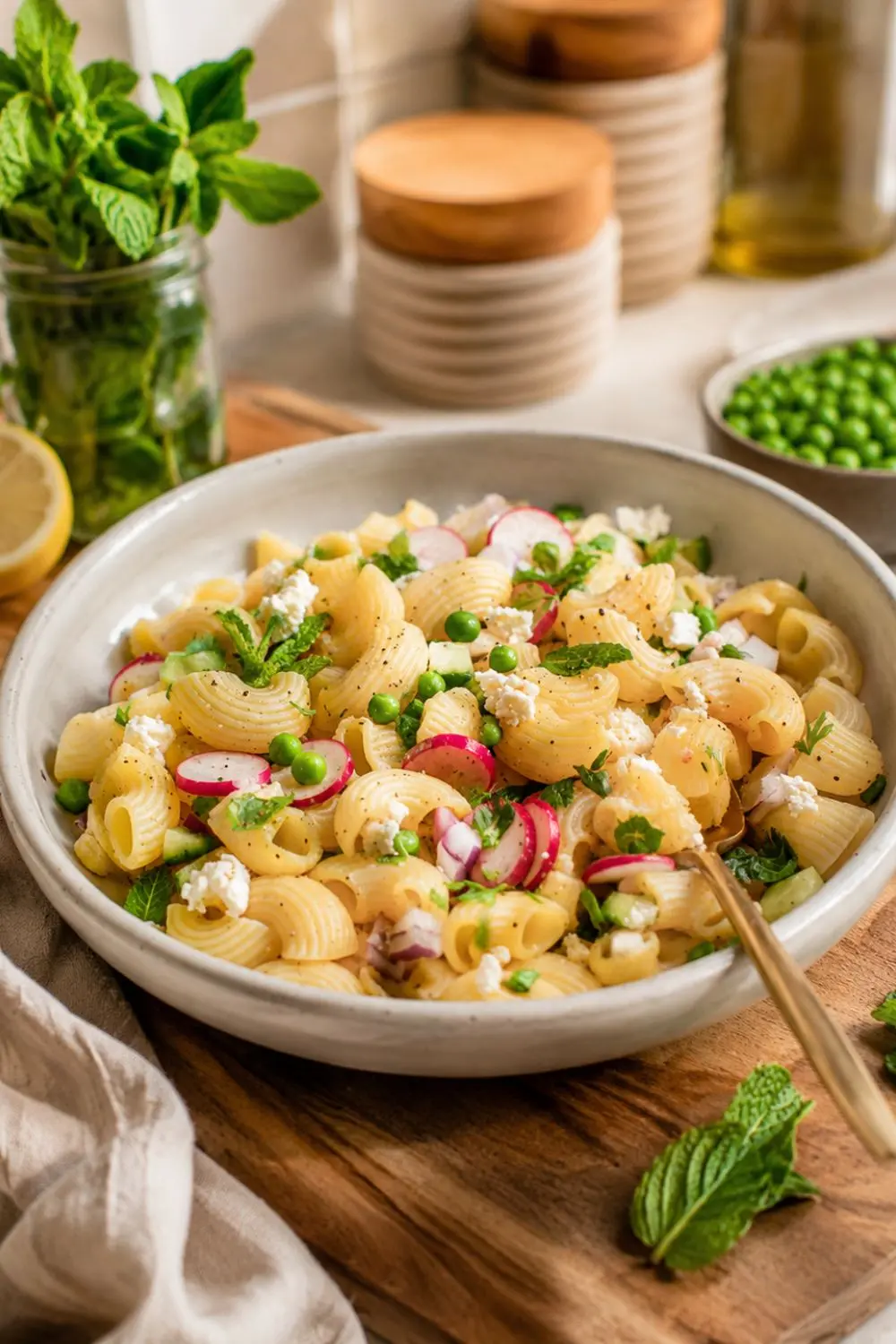
Vegan Macaroni Salad
Ingredients
Equipment
Method
- Step 1 – Cook and Cool the Pasta
- Bring a large pot of well-salted water to a rolling boil. Add the elbow macaroni and cook for one minute less than the package minimum for al dente the pasta continues cooking slightly in its own heat after draining. When done, drain through the colander with the peas sitting in it the hot water thaws the peas in seconds.
- Immediately rinse the pasta and peas under cold running water for about 30 seconds, moving them around to cool evenly. Transfer to your large mixing bowl. The cold rinse step is not optional hot pasta will wilt your herbs, cook your vegetables slightly, and make your cucumber release moisture into the dressing before you’ve even finished assembly.
- Step 2 – Make the Vinaigrette
- Combine all dressing ingredients in your small bowl or jar. If using miso, dissolve it in the lime juice first this prevents lumps. Whisk vigorously or seal the jar and shake until the dressing is fully emulsified and uniform. Taste it before adding it to the salad. It should taste bright, tangy, slightly savory, and balanced not too sharp, not too sweet. Adjust with more lime for brightness or more maple syrup for balance.
- Step 3 – Assemble the Salad
- Add the sliced radishes, diced cucumber, red onion, mint, and cilantro to the bowl with the pasta and peas. Pour the vinaigrette over everything and toss well to coat use a gentle tossing motion so the pasta doesn’t break and the herbs distribute evenly rather than clumping in one area.
- If using vegan ricotta, fold it in last with 2–3 gentle strokes so it creates pockets of creaminess throughout the salad rather than fully incorporating into the dressing.
- Taste and adjust salt, then serve immediately for the brightest herb flavor or chill for 30–60 minutes for a more developed, settled flavor profile.
Notes
Full Nutritional Breakdown (Per Serving 1 of 3)
| Nutrient | Amount |
| Calories | 202 kcal |
| Carbohydrates | 42.1g |
| Protein | 7.3g |
| Fat | 1.1g |
| Fiber | 2.9g |
| Sugar | 4.6g |
| Sodium | 22mg |
| Potassium | 87mg |
| Calcium | 12mg |
| Iron | 2mg |

Hi — I’m Rachel. I’m a wife, a mom, and a home cook who believes that food should bring comfort, joy, and compassion to the table. I live with my family — two hungry little foodies who are my most honest recipe testers — and together we’ve built a kitchen culture that’s all about good food that happens to be 100% vegan. I started this blog because I wanted a place to share the recipes that keep our days moving, the dishes that make weeknights feel a little easier, and the meals that become our little family traditions.