
Some breakfasts are genuinely worth waking up early for. Vegan Stuffed French Toast Brunch Platter is firmly in that category thick, crusty slices soaked in a silky tofu-based custard, cooked until deeply golden with that satisfying caramelized crust, and served as a beautiful brunch platter loaded with summer toppings that makes the whole table go quiet for the first few minutes of eating. This is the vegan breakfast that ends the conversation about whether plant-based cooking requires compromise.
The secret is the blended silken tofu custard and I understand if that sentence made you pause. Blended extra firm tofu with dairy-free milk, vanilla, sugar, and cinnamon creates a custard so smooth, so rich, and so genuinely custardy that multiple people who’ve eaten this at my table have asked me for the recipe before checking whether it was vegan. That’s the standard this recipe reaches. Let’s make it happen.
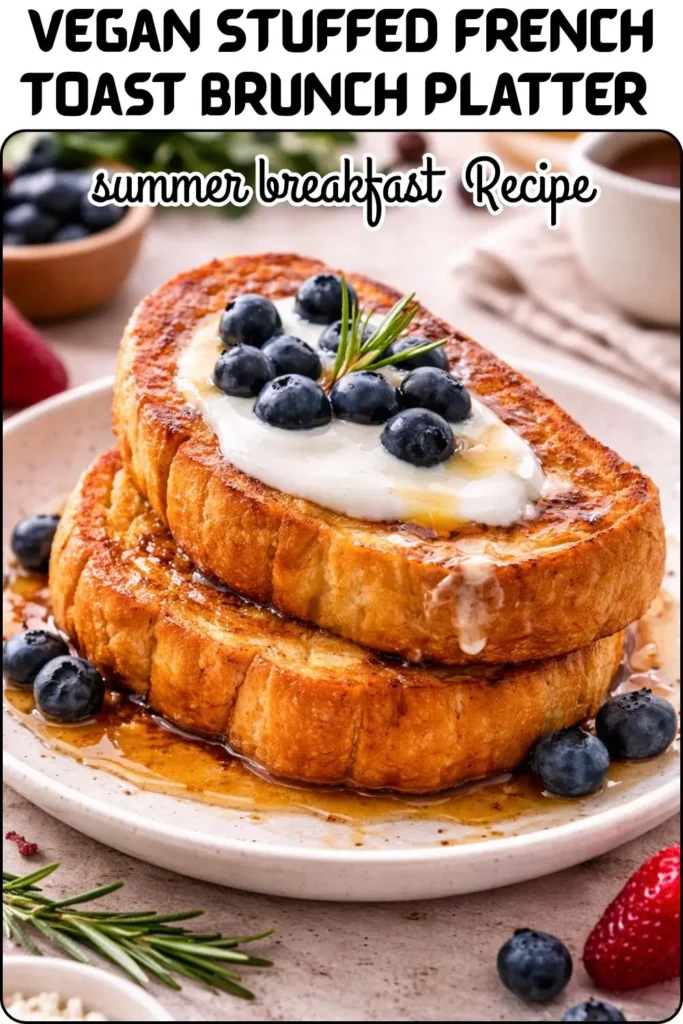
My Recipe Timing and Serving Details
Here’s your complete planning overview:
| Detail | Info |
| Prep Time | 5 minutes |
| Cook Time | 10 minutes |
| Total Time | 15 minutes |
| Servings | 6 thick slices |
| Serving Size | 1 thick slice |
| Calories Per Slice | 238 kcal |
| Course | Breakfast / Brunch |
| Diet | 100% Vegan |
15 minutes total for 6 thick slices of deeply golden, genuinely impressive vegan French toast. This recipe serves 6 people as part of a brunch platter or 2–3 people generously if everyone gets multiple slices. At 238 calories per thick slice with 10 grams of plant-based protein and 5 grams of fat, this is a nutritionally substantial breakfast that satisfies properly without going overboard. A brunch plate of 2 slices with fresh fruit and maple syrup lands at approximately 550 calories perfect for a leisurely summer brunch occasion.
The Tofu Custard The Game-Changing Technique
Before everything else, let’s address the tofu directly because this is where most people’s eyebrows go up. Extra firm tofu blended with plant-based milk creates a custard that isn’t just a passable substitute for egg-based custard it’s actually superior in several specific ways.
Egg-based French toast custard relies on egg proteins that set when heated. The eggs provide richness from their fat content and structure from their proteins. The result is good classic, familiar, well-loved.
Blended tofu custard creates a smoother, more uniform coating because the blending process creates a genuinely emulsified, liquid-smooth custard that coats bread more evenly than hand-whisked eggs. It also produces a slightly more neutral canvas that lets the vanilla and cinnamon dominate completely rather than competing with egg flavor.
The 10 grams of protein per slice exceeds what most egg-based French toast recipes deliver per serving because tofu is genuinely protein-rich and it’s the primary custard ingredient. You’re getting a protein-forward breakfast that tastes indulgent. That combination is rare and genuinely worth celebrating. FYI once you make French toast this way, the egg version starts to seem unnecessarily complicated.
Full Ingredient List
A short, brilliant ingredient list that creates something genuinely impressive:
The Tofu Custard:
- 1 cup (240ml) dairy-free milk – any variety works
- 4½ oz (130g) extra firm tofu – approximately ½ cup packed; extra firm specifically
- 2 teaspoons vanilla extract – a generous, deliberate quantity
- 2 tablespoons sugar – cane, turbinado, or white sugar (not brown or coconut sugar)
- ¼ teaspoon ground cinnamon
- ⅛ teaspoon fine sea salt
- 1 tablespoon vegan butter (optional)- adds richness to the custard
The Bread:
- 6 thick slices crusty, sturdy white bread – a couple of days old is specifically better
For Cooking:
- Additional vegan butter for brushing the griddle “butter tastes better than oil” is the recipe’s own note, and it’s correct
For the Brunch Platter:
- Fresh summer fruit sliced peaches, strawberries, blueberries, raspberries
- Maple syrup
- Vegan whipped cream or coconut cream
- Powdered sugar for dusting
- Fresh mint for garnish
The specific sugar instruction – cane, turbinado, or white only exists because brown sugar and coconut sugar add moisture and different sweetness profiles that affect the custard’s texture and cooking behavior. White or cane sugar dissolves completely and produces a clean, consistent custard. Use the right sugar.
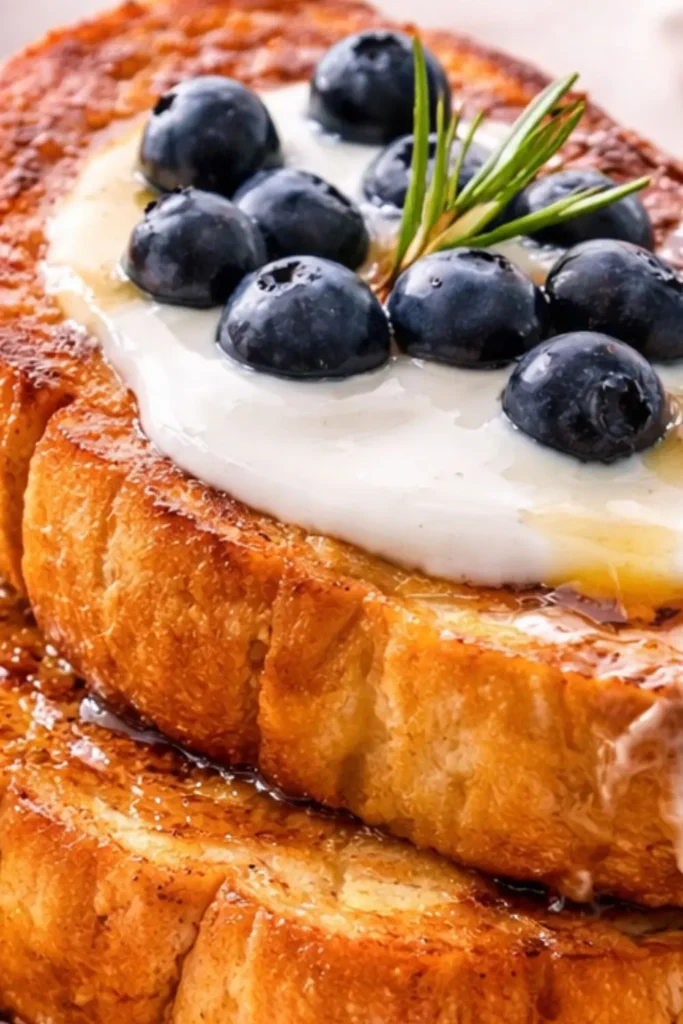
Equipment You’ll Need For
This recipe uses simple equipment but the right choices matter:
The Blender Non-Negotiable
- Countertop blender – this is the most important equipment decision in the recipe. You absolutely need a blender for the tofu custard. A blender produces a completely smooth, emulsified custard that coats bread evenly and creates a uniform crust during cooking. A food processor works adequately. Whisking by hand does not tofu simply doesn’t break down to the required smoothness with a fork or whisk.
A high-powered blender (Vitamix, Blendtec, Ninja) produces the smoothest result in the shortest time. A standard blender requires an extra 30–60 seconds of blending to reach full smoothness. Both produce good results just blend until absolutely no tofu texture remains.
The Cooking Surface
- Griddle (ideal) – a flat griddle accommodates all 6 slices simultaneously or in a single large batch and maintains consistent heat across the entire surface. The flat, uninterrupted surface makes flipping thick slices significantly easier than navigating the curved sides of a skillet.
- Large non-stick skillet – the practical alternative if you don’t own a griddle. A 12-inch skillet fits 2 thick slices at a time plan to work in 3 batches. Keep finished slices in a 200°F oven on a baking sheet to stay warm while you complete the batches.
The heat level matters enormously. The recipe specifies medium-low heat this allows the deep golden color to develop gradually without the exterior burning before the interior cooks through. Too high and the custard coating burns before caramelizing properly.
Supporting Equipment For
- Wide, shallow bowl – for the blended custard. Wide enough to lay a thick bread slice flat for soaking.
- Pastry brush – for buttering the griddle between batches
- Spatula – wide and thin for flipping thick slices without tearing
- Baking sheet + oven at 200°F – for keeping finished slices warm during subsequent batches
The Bread Choice Why Day-Old Crusty Bread Is Specifically Correct
The recipe calls for thick slices of crusty, sturdy white bread that’s a couple of days old and all three of these specifications matter:
Thick Slices
Thick slices approximately ¾ to 1 inch create the French toast experience you actually want. Thin slices cook through too quickly and don’t develop the contrast between the golden, slightly caramelized exterior and the tender, custardy interior. Thick slices give you that contrast crispy outside, tender inside that makes French toast genuinely special.
Crusty and Sturdy
Soft sandwich bread collapses during soaking and produces French toast that falls apart in the pan. Crusty, sturdy white bread sourdough, a French baguette cut into thick slices, Italian bread, or a quality white artisan loaf maintains its structure through the 40-second soak and the 8–10 minutes of pan cooking. It arrives at the plate with integrity.
Excellent bread choices:
- Day-old sourdough – the slight tang complements the vanilla-cinnamon custard and the sturdy structure handles soaking beautifully
- French batard or baguette – sliced into thick rounds, these produce individual French toast pieces that look visually impressive on a brunch platter
- Italian bread – neutral flavor, sturdy crumb, excellent structure
- Brioche-style vegan bread – slightly richer, slightly softer, produces a more tender result if you prefer that texture
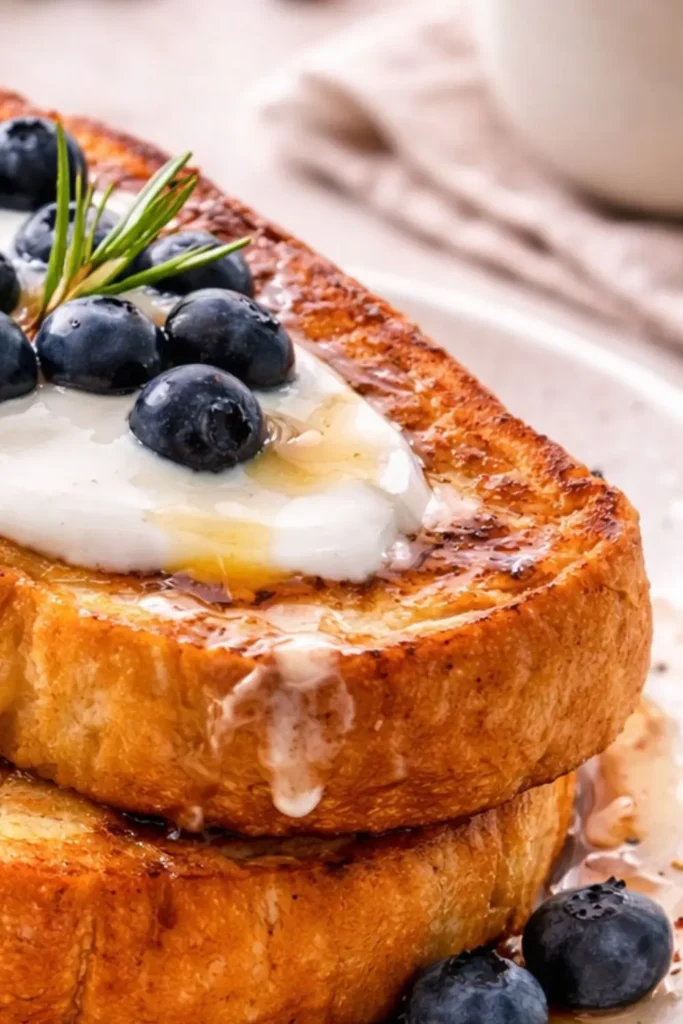
Day-Old Specifically
Fresh bread contains more moisture than bread that’s been sitting for a day or two. When you soak fresh bread in custard, it becomes waterlogged rather than custardy — too much liquid absorbed too quickly, which leads to soggy, falling-apart French toast in the pan. Day-old bread has dried out slightly at the surface, which allows it to absorb the custard gradually rather than immediately. The result is French toast that holds together, develops a proper crust, and has the right custardy interior texture.
If you only have fresh bread Slice it and leave the slices out on a wire rack for 30 minutes before soaking, or lightly toast them in a toaster before proceeding. Both approaches remove enough surface moisture for proper custard absorption.
Step-by-Step Instructions
Step 1- Make the Tofu Custard
Add the dairy-free milk, extra firm tofu, vanilla extract, sugar, cinnamon, salt, and optional vegan butter to a blender. Blend on high for 60 seconds until completely smooth no visible tofu texture should remain. The finished custard should look and feel like a thin, creamy, pourable liquid. If any graininess remains from the tofu, blend for another 30 seconds.
Pour the custard into a wide, shallow bowl large enough to accommodate a bread slice laying flat.
Step 2 – Preheat the Griddle or Pan
Place your griddle or large skillet over medium-low heat and allow it to preheat fully approximately 3–5 minutes. Use a pastry brush to coat the surface with vegan butter. The butter should melt and spread immediately when it contacts the preheated surface.
Testing the temperatur- A small drop of custard should sizzle gently when it hits the surface. If it sits quietly, the surface needs more time. If it splatters aggressively, reduce the heat.
Step 3 – Soak the Bread
Place one slice of bread flat in the custard bowl. Allow it to sit for 20 seconds, then turn it over and leave for another 20 seconds. Make sure every part of the bread surface contacts the custard including the crusts around the edges. Tilt the bread slice and briefly dip all four edges into the custard.
Lift the soaked bread carefully it will feel heavier and more fragile than dry bread. Move it directly to the hot griddle.
Step 4 – Cook to Deeply Golden
Place the custard-soaked bread on the preheated surface. Do not move it. Leave it completely undisturbed for 4–5 minutes. Resist the urge to peek every lift interrupts the crust formation that creates the beautiful golden exterior.
After 4–5 minutes, check the bottom edge it should be deeply golden with visible caramelization. Flip carefully with your wide spatula and cook the second side for another 4–5 minutes until equally golden.
The color you want- Deep amber-gold, not pale yellow. The caramelization of the sugar in the custard creates both the color and the slightly sweet, crispy crust character. If the slices are taking longer than 5 minutes to reach the right color, resist turning up the heat just add another minute.
Step 5 – Keep Warm and Serve
Transfer finished slices to a baking sheet in a 200°F oven to stay warm while you complete subsequent batches. Re-butter the griddle between batches.
Once all slices are cooked, arrange them on a large serving platter for the brunch presentation.

Building the Vegan Stuffed French Toast Brunch Platter
The brunch platter format is what elevates this from a simple breakfast to a proper occasion. Here’s how to build it beautifully:
The Toast Foundation
Arrange the 6 thick golden slices overlapping slightly on a large serving board or platter. A wooden cutting board works particularly well for the rustic-meets-elegant aesthetic that brunch demands.
The Summer Fruit Layer
Arrange fresh summer fruit generously around and between the French toast slices:
- Sliced fresh peaches – the quintessential summer fruit alongside French toast
- Fresh strawberries – halved for visual appeal
- Fresh blueberries – scattered loosely for color
- Fresh raspberries– add a tartness that contrasts the sweet French toast
The Cream Element
Add vegan whipped coconut cream in generous dollops between the toast slices. Coconut cream whipped with a small amount of powdered sugar creates something genuinely luxurious. Alternatively, a can of full-fat coconut milk refrigerated overnight separates into whippable cream whip it with 1 tablespoon of powdered sugar for a perfect vegan whipped cream.
The Finishing Touches
- Dust with powdered sugar– the visual that says “this is a proper brunch”
- Maple syrup on the side – in a small pitcher or ramekin for pouring
- Fresh mint leaves– scattered across the platter for color and freshness
- Edible flowers (optional) – genuinely beautiful on a summer brunch platter
The “Stuffed” Element Options for Filling
The recipe as written produces excellent French toast on its own. To make it literally stuffed, here are options that work well with this custard:
You may also like Next recipe
Dairy-Free Gluten-Free Vegan French Toast
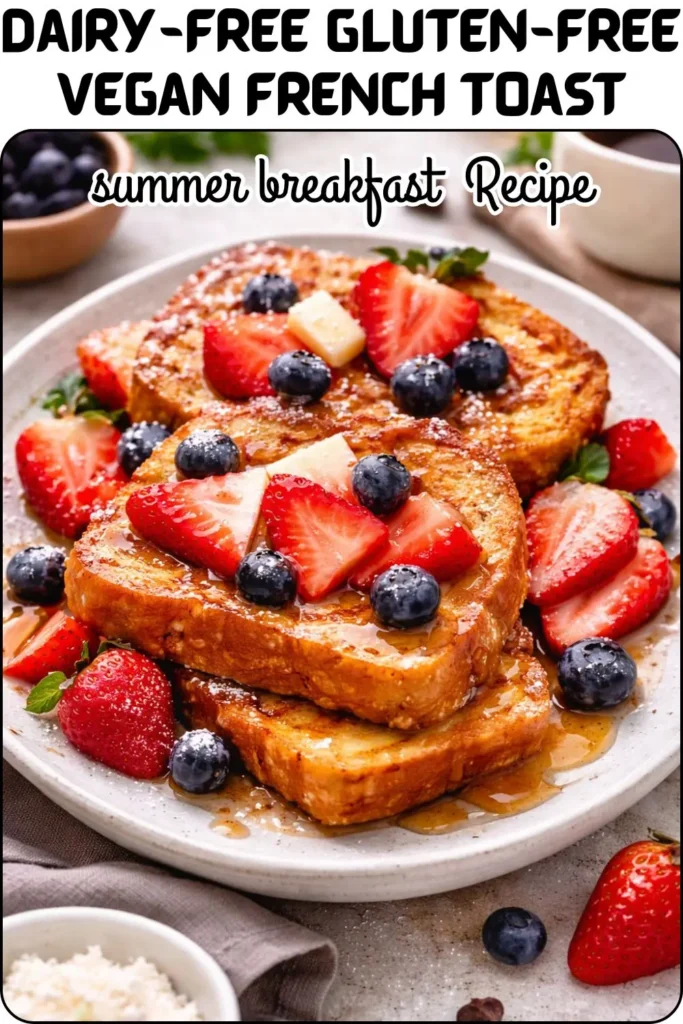
Vegan Cream Cheese Stuffing
Mix 4 oz of vegan cream cheese with 2 tablespoons of powdered sugar and 1 teaspoon of vanilla. Spread generously between two slices, press together, soak, and cook as a sandwich. The cream cheese melts slightly during cooking and creates a rich, creamy filling.
Berry Compote Stuffing
Spread a thick berry compote or jam between two slices before soaking. The jam provides a jammy, fruit-forward filling that pairs perfectly with the vanilla custard exterior.
Almond Butter and Banana
Spread almond butter on one slice, layer sliced banana on top, press two slices together, then soak and cook. The banana caramelizes slightly during cooking genuinely excellent.
Nutrition Information Per Slice
At 238 calories per thick slice, this French toast is impressively nutritious:
| Nutrient | Per Slice |
| Calories | 238 kcal |
| Carbohydrates | 38g |
| Protein | 10g |
| Fat | 5g |
| Fiber | 1.5g |
| Sugar | 7g |
| Sodium | 420mg |
| Calcium | 120mg |
| Iron | 2.9mg |
10 grams of plant-based protein per slice from the tofu custard extraordinary for a French toast recipe. The iron at 2.9mg per slice represents approximately 16% of the daily recommended intake. At just 5 grams of fat per slice, this is a lean, protein-forward breakfast that tastes genuinely indulgent. IMO, these nutrition numbers are one of the most compelling arguments for the tofu custard method.
Storage and Reheating
- Refrigerator- Store leftover French toast slices in an airtight container for up to 3 days.
- Leftover custard- Store sealed in a jar or container for 2–3 days make another batch later in the week.
- Reheating- Reheat slices in a dry hot pan over medium heat for 2–3 minutes per side to restore the crispy crust. Toaster reheating works well for thinner slices. Avoid the microwave it makes the bread soft throughout.
My Final Thoughts Make This Platter and Host the Best Summer Brunch
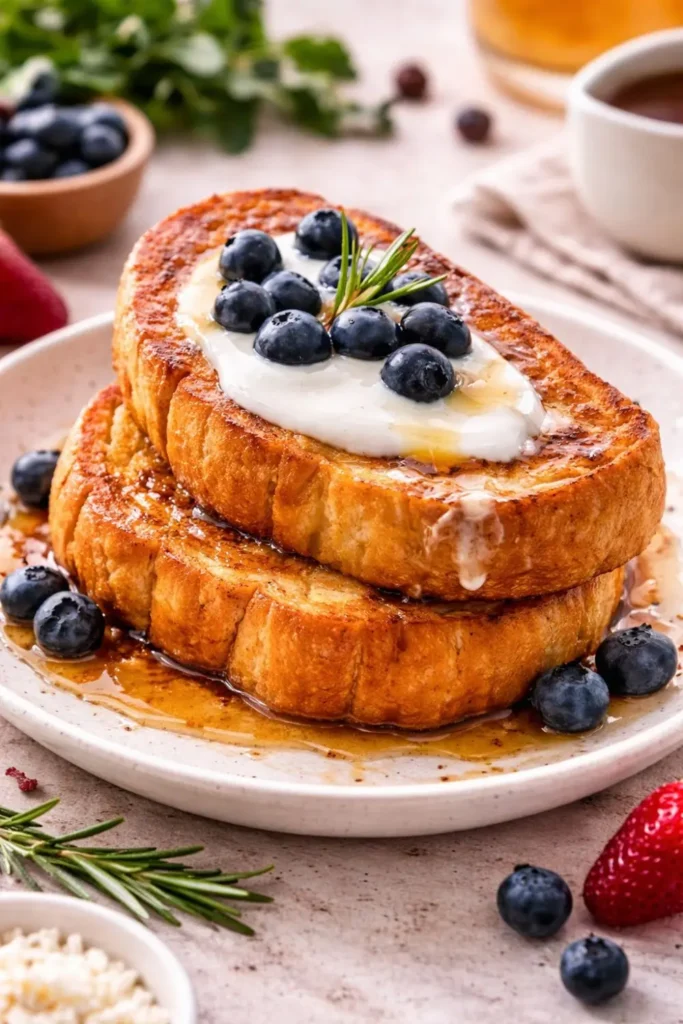
Vegan Stuffed French Toast Brunch Platter is the breakfast that changes people’s understanding of what plant-based cooking can achieve. Tofu custard, thick crusty bread, deeply golden crust, 10 grams of protein per slice, and a platter presentation that genuinely impresses all in 15 minutes of cooking.
The brunch platter format makes this appropriate for any summer occasion from casual weekend mornings to proper hosted brunches where you want to impress without spending all morning in the kitchen.
Make the custard, toast the bread, build the platter. Summer brunch just got a serious upgrade.
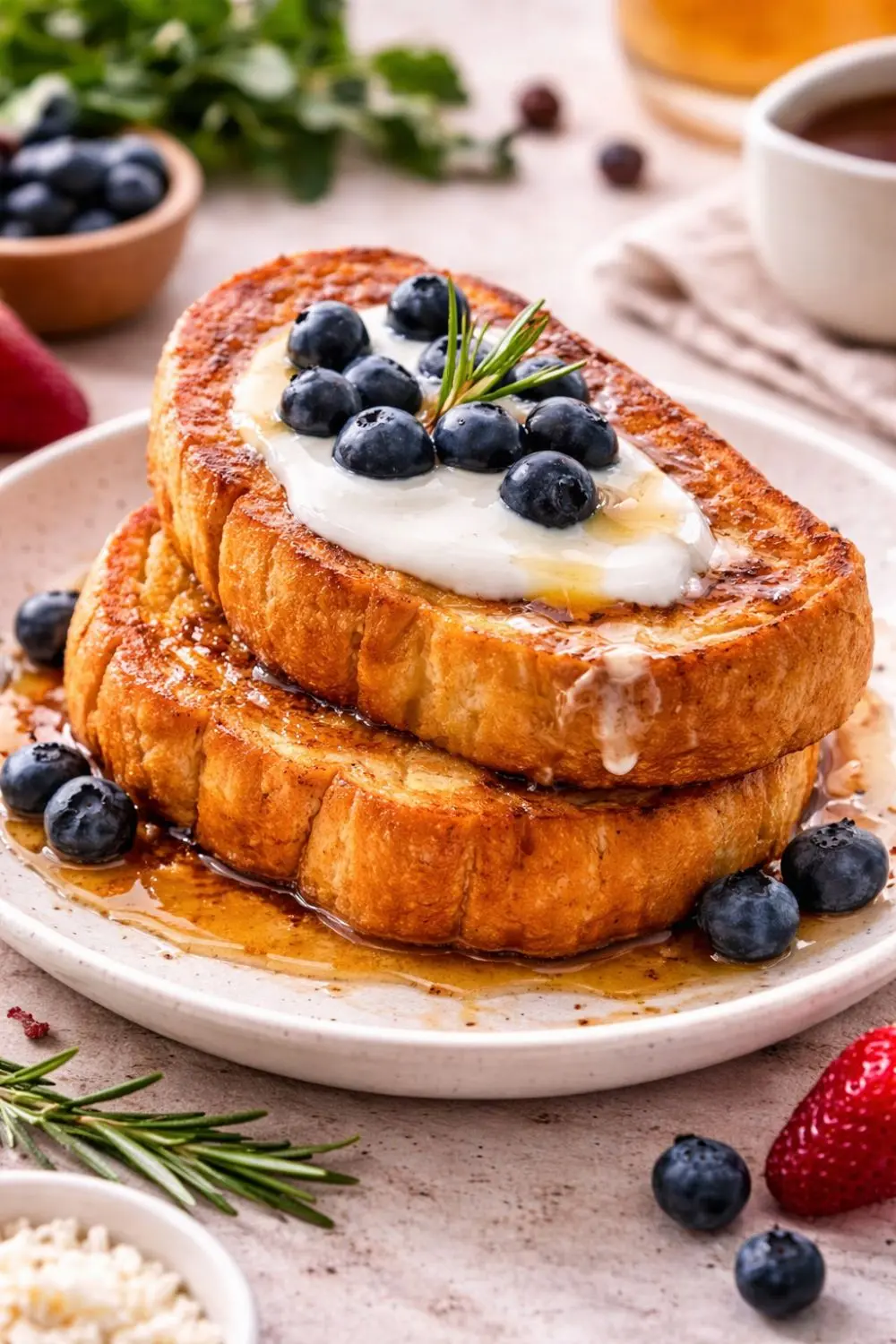
Vegan Stuffed French Toast Brunch Platter
Ingredients
Equipment
Method
- Step 1- Make the Tofu Custard
- Add the dairy-free milk, extra firm tofu, vanilla extract, sugar, cinnamon, salt, and optional vegan butter to a blender. Blend on high for 60 seconds until completely smooth no visible tofu texture should remain. The finished custard should look and feel like a thin, creamy, pourable liquid. If any graininess remains from the tofu, blend for another 30 seconds.
- Pour the custard into a wide, shallow bowl large enough to accommodate a bread slice laying flat.
- Step 2 – Preheat the Griddle or Pan
- Place your griddle or large skillet over medium-low heat and allow it to preheat fully approximately 3–5 minutes. Use a pastry brush to coat the surface with vegan butter. The butter should melt and spread immediately when it contacts the preheated surface.
- Testing the temperatur- A small drop of custard should sizzle gently when it hits the surface. If it sits quietly, the surface needs more time. If it splatters aggressively, reduce the heat.
- Step 3 – Soak the Bread
- Place one slice of bread flat in the custard bowl. Allow it to sit for 20 seconds, then turn it over and leave for another 20 seconds. Make sure every part of the bread surface contacts the custard including the crusts around the edges. Tilt the bread slice and briefly dip all four edges into the custard.
- Lift the soaked bread carefully it will feel heavier and more fragile than dry bread. Move it directly to the hot griddle.
- Step 4 – Cook to Deeply Golden
- Place the custard-soaked bread on the preheated surface. Do not move it. Leave it completely undisturbed for 4–5 minutes. Resist the urge to peek every lift interrupts the crust formation that creates the beautiful golden exterior.
- After 4–5 minutes, check the bottom edge it should be deeply golden with visible caramelization. Flip carefully with your wide spatula and cook the second side for another 4–5 minutes until equally golden.
- The color you want- Deep amber-gold, not pale yellow. The caramelization of the sugar in the custard creates both the color and the slightly sweet, crispy crust character. If the slices are taking longer than 5 minutes to reach the right color, resist turning up the heat just add another minute.
- Step 5 – Keep Warm and Serve
- Transfer finished slices to a baking sheet in a 200°F oven to stay warm while you complete subsequent batches. Re-butter the griddle between batches.
- Once all slices are cooked, arrange them on a large serving platter for the brunch presentation
Notes
Nutrition Information Per Slice
At 238 calories per thick slice, this French toast is impressively nutritious:| Nutrient | Per Slice |
| Calories | 238 kcal |
| Carbohydrates | 38g |
| Protein | 10g |
| Fat | 5g |
| Fiber | 1.5g |
| Sugar | 7g |
| Sodium | 420mg |
| Calcium | 120mg |
| Iron | 2.9mg |

Hi — I’m Rachel. I’m a wife, a mom, and a home cook who believes that food should bring comfort, joy, and compassion to the table. I live with my family — two hungry little foodies who are my most honest recipe testers — and together we’ve built a kitchen culture that’s all about good food that happens to be 100% vegan. I started this blog because I wanted a place to share the recipes that keep our days moving, the dishes that make weeknights feel a little easier, and the meals that become our little family traditions.