

Roasting tomatoes is one of those cooking moves that feels almost unfairly simple for how dramatic the results are. You take a pile of ripe summer tomatoes, slide them into a hot oven, and 30–40 minutes later they come out caramelized, jammy, and concentrated in flavor in a way that no stovetop method can replicate. This Easy Vegan Roasted Tomato Soup builds everything on that foundation — and it all happens with one pan, one pot, and about 45 minutes of your time.
“This post contains affiliate links. If you purchase through my links, I may earn a small commission at no extra cost to you.”
No cream. No butter. No compromise on flavor. Just ripe tomatoes doing exactly what they’re best at.
Why Roasting Changes Everything
Here’s the question worth asking before we even get to the recipe: why roast the tomatoes instead of just simmering them on the stovetop like most recipes do?
The answer is caramelization. When tomatoes roast at high heat, their natural sugars concentrate and brown at the edges. Their water content evaporates significantly, which means the flavor intensifies. The result tastes sweeter, smokier, and more complex than a stovetop tomato soup — with zero extra effort. You’re just using your oven and letting time do the work.
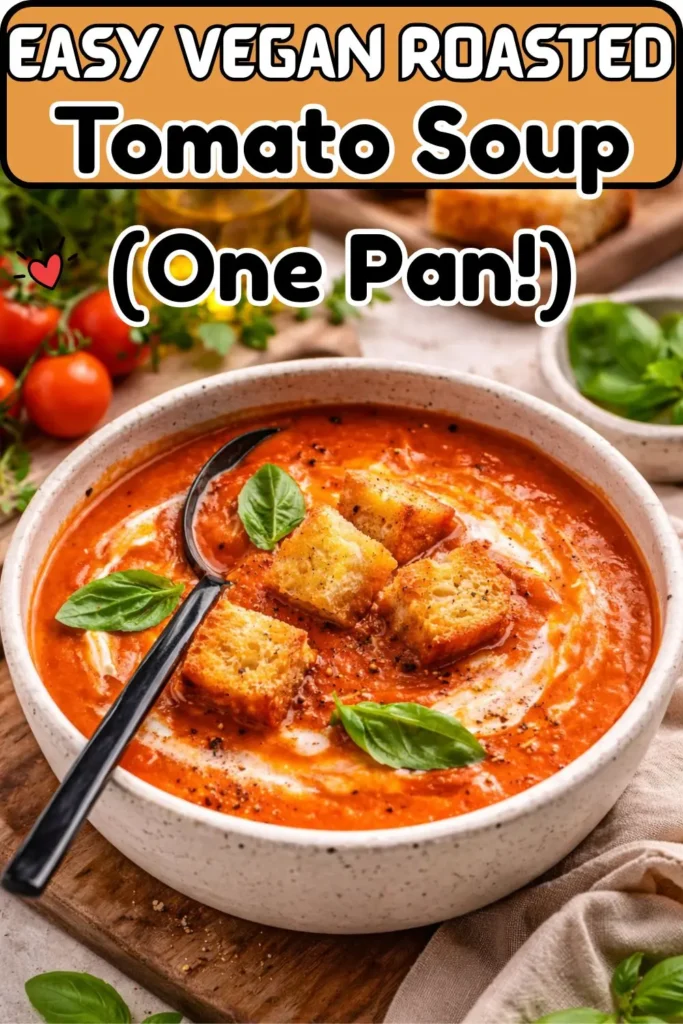
Prep: 15 min | Cook: 30 min | Total: 45 min | Servings: 4–6 | 100% Vegan
Roasted vs. Stovetop Tomato Soup — A Straight Comparison
| Method | Flavor Depth | Effort | Time | Best For |
| Roasted tomatoes | Deep, caramelized, complex | Low | 45 min total | Maximum flavor with minimal technique |
| Stovetop simmered | Fresh, bright, lighter | Low | 30 min total | Quicker weeknight version |
| Canned tomatoes stovetop | Consistent, slightly flat | Very low | 25 min total | Year-round convenience |
Roasting wins on flavor every single time. And since the oven does the hard work while you handle the onion and garlic on the stovetop, the active effort stays low. That’s a deal worth taking.
Equipment You’ll Need
This recipe lives up to its “one pan” name — here’s everything you need:
- Large rimmed baking sheet — for roasting the tomatoes. Rimmed is essential so the tomato juices don’t run off into your oven (speaking from experience :/).
- Large stockpot or Dutch oven — for sautéing the onion and garlic and bringing the soup together
- Immersion blender — the easiest tool for blending the soup right in the pot with zero mess and full texture control
- Regular blender — works too; just blend in batches and vent the lid carefully
- Wire rack — for resting the baking sheet after roasting
- Sharp knife and chopping board — for quartering tomatoes and dicing onion
- Measuring spoons and cups — for the oil and spices
Dutch oven vs. regular stockpot: Either works fine here. A Dutch oven holds heat more evenly and gives you better sautéing results for the onion and garlic, but any large heavy-bottomed pot does the job.
Ingredients for Easy Vegan Roasted Tomato Soup (One Pan!)
For the Soup:
- 3½ lbs. ripe tomatoes (any small to medium variety — more on this below)
- 3 Tbsp. olive oil, divided (2 Tbsp. for roasting, 1 Tbsp. for sautéing)
- Fine sea salt and freshly cracked black pepper
- 1 large white or yellow onion, diced
- 5 cloves garlic, minced
- ¾ tsp. smoked paprika
- ¼ tsp. crushed red pepper flakes
- 2½ cups vegetable broth
- ½ cup loosely packed fresh basil leaves
Vegan Topping Options:
- Drizzle of good olive oil
- Vegan croutons
- Fresh basil leaves
- Vegan sour cream (cashew-based)
- Chili oil
- Crusty sourdough on the side
Note: The original recipe lists Parmesan and heavy cream as optional toppings — skip those and use the vegan alternatives above instead.
Step-by-Step Instructions for Easy Vegan Roasted Tomato Soup (One Pan!)
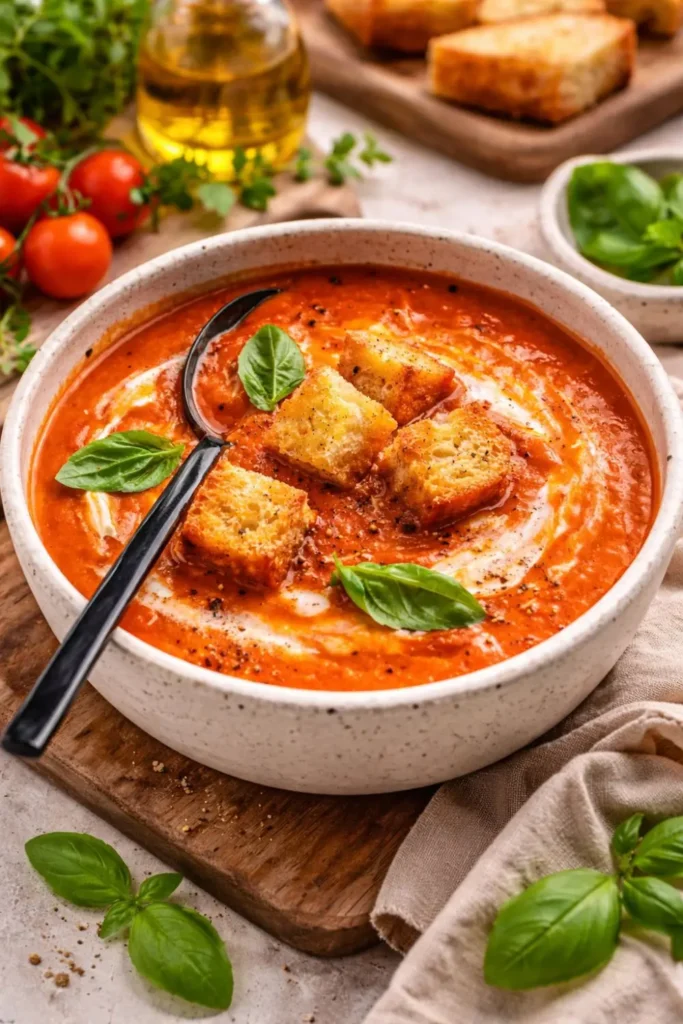
1. Roast the tomatoes. Preheat your oven to 450°F (230°C). Quarter your tomatoes — or halve them if they’re small — and arrange them cut-side-up on your rimmed baking sheet. Drizzle with 2 Tbsp. of olive oil and season generously with salt and cracked black pepper. Roast for 30–40 minutes until they’re softened, slightly collapsed, and caramelized at the edges. Transfer the baking sheet to a wire rack and let them rest.
2. Sauté the onion and garlic. While the tomatoes roast, heat the remaining 1 Tbsp. of olive oil in your stockpot over medium-high heat. Add the diced onion and sauté for 5 minutes, stirring occasionally, until soft and starting to turn golden. Add the minced garlic, smoked paprika, and red pepper flakes. Sauté for 2 more minutes, stirring frequently, until the garlic smells fragrant and the paprika darkens slightly.
3. Bring it all together. Add the vegetable broth, fresh basil leaves, and the roasted tomatoes — including every drop of juice from the baking sheet — to the pot. Stir to combine.
4. Blend. Use your immersion blender to purée the soup directly in the pot until it reaches your preferred texture. Want it completely smooth? Blend for a full minute. Prefer a slightly rustic texture with small tomato pieces? Blend for 30 seconds and stop. Both are correct answers.
5. Season and serve. Taste the soup and adjust with extra salt, pepper, or smoked paprika as needed. Ladle into bowls, add your chosen toppings, and serve hot.
The Blending Step — Immersion vs. Regular Blender
This comes up every time someone makes a hot soup for the first time, so let’s settle it properly.
Immersion Blender — The Easier Choice
An immersion blender lets you blend directly in the pot with zero transfer, zero mess, and full control over texture. You blend for longer if you want it smoother, stop sooner if you want chunks. Cleanup takes about 30 seconds. IMO, if you make soup more than twice a month, an immersion blender is one of the most worthwhile kitchen purchases you can make.
Regular Blender — Works Perfectly, Handle With Care
Transfer the soup in batches — never fill the blender more than two-thirds full with hot liquid. Vent the lid by leaving the cap slightly open and holding a folded kitchen towel firmly over the top to catch any splatter. Start at a low speed and increase gradually. Hot liquid expands when it hits the blender blades, and a full, sealed blender of hot tomato soup is not something you want to discover the hard way.
Choosing Your Tomatoes
You have 3½ pounds of tomatoes to work with — this is the main ingredient, so quality matters. Here’s how to pick:
Best Fresh Tomato Options
- Roma tomatoes — meaty, low moisture, intensely flavored when roasted. The top choice for this recipe.
- Heirloom tomatoes — complex, sweet, slightly acidic. Stunning flavor. Use whatever variety looks best at the market.
- Cherry or grape tomatoes — naturally sweeter and roast beautifully. Halve them instead of quartering. Excellent option.
- Vine-ripened tomatoes — reliable and widely available. Solid choice.
- Beefsteak tomatoes — work fine but their high water content means you’ll need to roast longer to concentrate the flavor.
The One Rule: They Must Be Ripe
Pale, hard, out-of-season tomatoes produce pale, flat-tasting soup. If fresh tomatoes aren’t great where you are, good canned tomatoes actually outperform bad fresh ones — use two 28-oz cans of whole peeled tomatoes, spread on the baking sheet, and roast as directed (they’ll need slightly less time, around 25–30 minutes).
The Smoked Paprika — Don’t Underestimate It
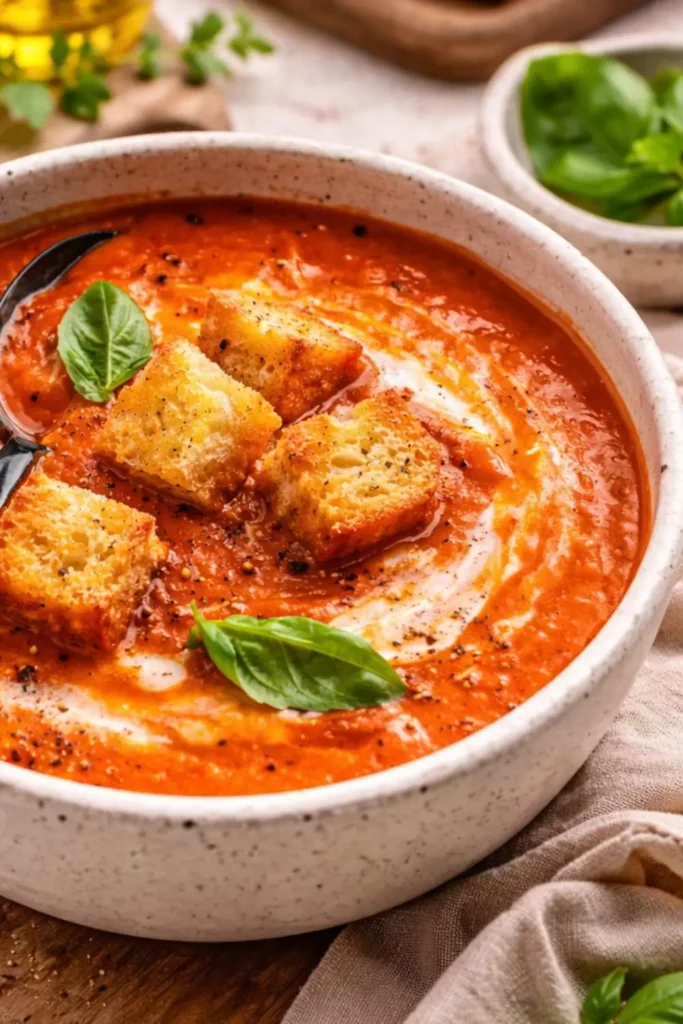
Three-quarters of a teaspoon of smoked paprika sounds modest. It isn’t. That small amount adds a warm, smoky depth to the soup that makes people taste it and immediately ask what’s in it. It works alongside the natural caramelization from roasting to give the soup a complexity that’s hard to pin down but impossible to miss.
If you only have regular sweet paprika, the soup still tastes good — but you lose that smoky layer. Smoked paprika is inexpensive and lasts forever in a cool cupboard. It’s worth having for this recipe alone.
Fresh Basil — Add It at the Right Moment
The recipe adds basil when the roasted tomatoes and broth go in, just before blending. This timing matters. Adding basil at the end rather than early in the cooking process preserves its bright, fresh flavor — cooking basil for too long destroys its aromatic oils and turns it bitter.
Half a cup of loosely packed basil sounds like a lot, but it blends completely into the soup and you taste it as a background note rather than an overwhelming herb flavor. Think of it as the fresh counterpoint to the deep roasted tomato flavor — they balance each other perfectly.
What Makes This Truly Vegan — Topping Swaps
The original recipe lists Parmesan cheese, heavy cream, and sour cream as optional toppings. Here’s how to get the same results without any dairy:
| Original Topping | Vegan Alternative |
| Parmesan | Nutritional yeast sprinkled on top, or vegan Parmesan (Violife, Follow Your Heart) |
| Heavy cream drizzle | Full-fat coconut cream or cashew cream, drizzled |
| Sour cream | Vegan sour cream (Kite Hill or homemade cashew-based) |
| Croutons | Already vegan — use olive oil and your favorite bread |
FYI — a drizzle of really good olive oil over the finished bowl does more work than you’d expect. It adds richness, a slight fruitiness, and makes the soup look genuinely beautiful. Don’t skip it.
Nutrition Per Serving (Serves 4–6)
Note: The original recipe doesn’t include full nutrition data. The following are estimates based on the ingredients listed.
| Nutrient | Estimated Per Serving (serves 4) |
| Calories | ~180–220 kcal |
| Carbohydrates | ~22g |
| Fat | ~10g (mostly from olive oil) |
| Protein | ~4g |
| Fiber | ~5g |
| Sodium | ~480mg (with low-sodium broth) |
| Vitamin C | High (fresh tomatoes are excellent source) |
| Vitamin A | High (from tomatoes and paprika) |
This is a genuinely light soup — lower in calories than most creamy vegan soups because it doesn’t rely on coconut milk or cashews for richness. The olive oil provides the fat content, and it’s the heart-healthy kind. If you want more calories and protein, add a generous drizzle of olive oil and serve with thick crusty bread.
Variations Worth Trying
Spicy Roasted Tomato Soup
Double the red pepper flakes to ½ tsp and add a pinch of cayenne alongside the smoked paprika. Finish with chili oil instead of plain olive oil. Excellent with vegan cornbread.
Roasted Tomato and Red Pepper Soup
Add 2 large red bell peppers to the baking sheet alongside the tomatoes. Roast together, blend everything together. The peppers add sweetness and a gorgeous deep red color.
Creamy Roasted Tomato Soup
After blending, stir in ¼ cup of full-fat coconut cream or cashew cream. Swirl a little extra on top when serving. Richer, more indulgent — perfect for when you want something that really fills you up.
Roasted Tomato Soup with White Beans
Add one drained can of cannellini beans to the pot when you add the broth. Blend partially — leaving some whole beans — for a heartier, protein-rich version. Serve with lemon and fresh thyme.
Still Hungry, Try It Next recipe :-
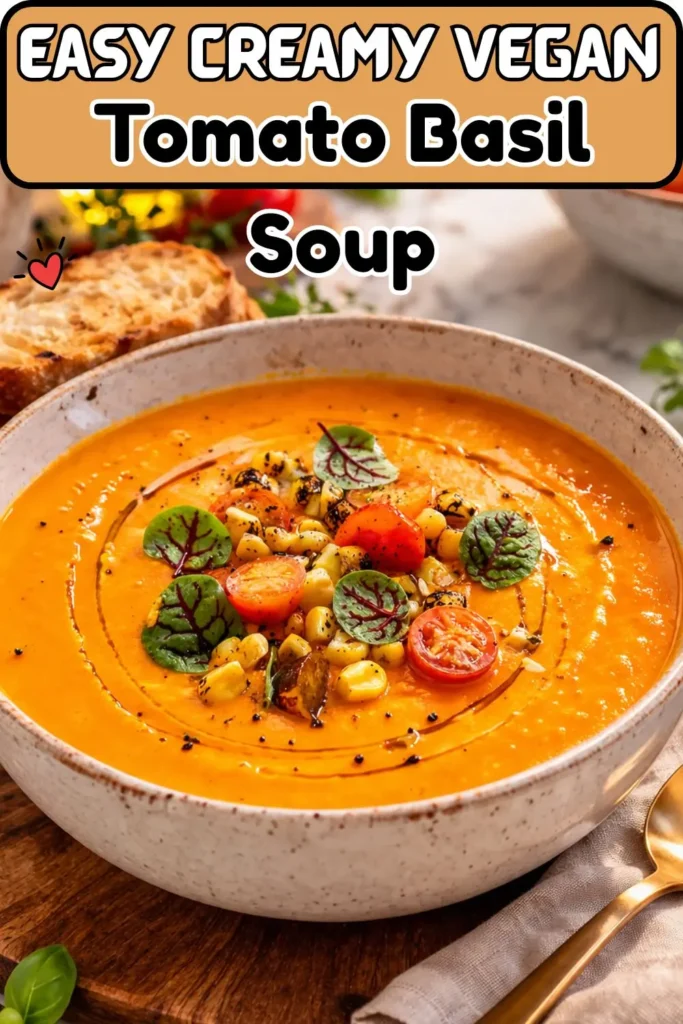
Creamy Vegan Tomato Basil Soup
Serving Suggestions
This soup serves 4–6 people as a starter or 4 as a light main course. Here’s what works alongside it:
- Thick sourdough or crusty baguette — mandatory for dunking
- Vegan grilled cheese — the classic pairing, now dairy-free
- Simple green salad with a sharp vinaigrette
- Vegan garlic bread — roasted tomato soup and garlic bread is a combination that should never be questioned
- A scoop of cooked white beans stirred into individual bowls for extra protein
Storage and Reheating
Fridge: Store in an airtight container for up to 5 days. The flavor actually deepens overnight as the roasted tomato and smoked paprika notes develop further.
Freezer: Freeze in a freezer-safe container for up to 3 months. This soup freezes exceptionally well — no potatoes, no tofu, nothing that changes texture badly when frozen. Let it thaw overnight in the fridge before reheating.
Reheating: Warm in a saucepan over medium-low heat, stirring occasionally. Microwave works too — use 90-second intervals and stir between each one. Add a splash of vegetable broth if it’s thickened too much in the fridge.
FAQs
Can I make this with cherry tomatoes? Absolutely — cherry tomatoes roast beautifully and have a natural sweetness that works perfectly here. Halve them and roast cut-side-up as directed. You may need to reduce the roasting time slightly to around 25–30 minutes.
Can I skip the roasting and just make it on the stovetop? Yes — add raw quartered tomatoes directly to the pot after sautéing the onion and garlic. Simmer for 20–25 minutes until very soft, then blend. The flavor will be lighter and brighter rather than deep and caramelized. Still good — just a different soup.
What if my soup tastes too acidic? Stir in a small pinch of sugar or a drizzle of maple syrup. Alternatively, add an extra ½ tsp of smoked paprika — its warmth rounds out sharp acidity well. A splash of oat cream also mellows acidity while keeping it vegan.
Can I use canned tomatoes instead of fresh? Yes. Use two 28-oz cans of whole peeled tomatoes. Drain most of the liquid, spread on the baking sheet, and roast at 450°F for 25–30 minutes. The result won’t be quite as vibrant as peak-season fresh tomatoes, but it’s a solid year-round option.
How do I make this oil-free? Roast the tomatoes without oil (they’ll be slightly less caramelized but still good). Sauté the onion and garlic with a splash of vegetable broth instead of oil. The soup naturally has a good body from the tomatoes themselves.
Why This Works as a Summer Recipe
Tomato soup has an unearned reputation as winter food — the kind of thing you make in January when it’s cold and you need something warming. But the best tomato soup you will ever make uses summer tomatoes, full stop. Peak-season tomatoes (July through September) are sweeter, juicier, more aromatic, and more flavorful than anything available the rest of the year.
This recipe was built for summer produce. You roast the tomatoes at high heat while it’s warm outside and your kitchen fills with that sweet, caramelized smell. You blend it smooth and serve it with crusty bread and a drizzle of olive oil. It’s comfort food that feels completely appropriate in July — which is a genuinely rare achievement for soup.
My Thinking
This Easy Vegan Roasted Tomato Soup is one of those recipes that rewards minimal effort with maximum flavor. Roasting concentrates the tomatoes into something far beyond what you get from a stovetop method. The smoked paprika and fresh basil add layers that build on each other. And the whole thing comes together in 45 minutes with one baking sheet and one pot.
Make it while summer tomatoes are at their peak. Use the best ones you can find. Don’t skip those tomato juices from the baking sheet — pour every drop into the pot. And serve it with something good to dunk. That last part isn’t optional.
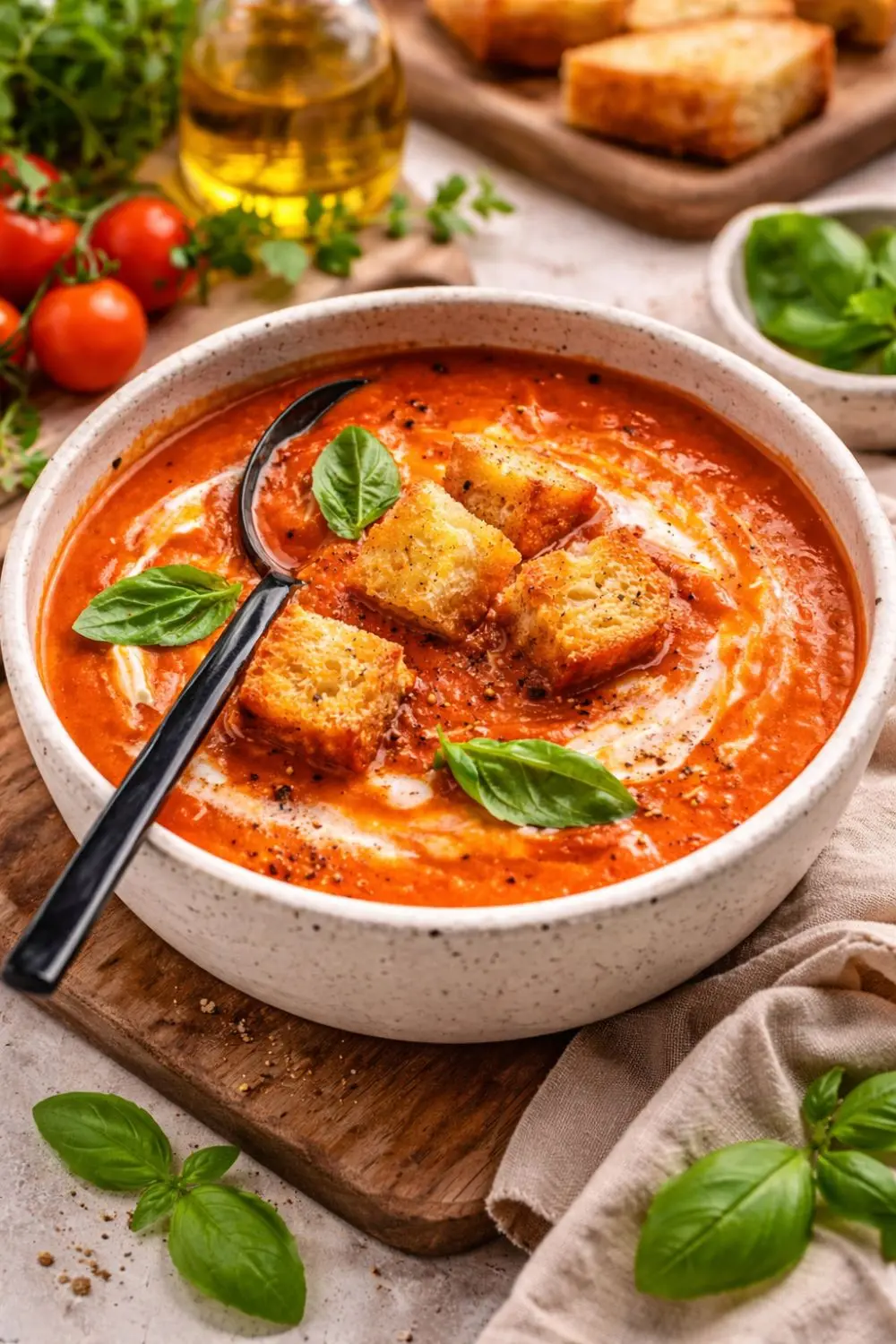
Easy Vegan Roasted Tomato Soup (One Pan!)
Ingredients
Equipment
Method
- Roast the tomatoes. Preheat your oven to 450°F (230°C). Quarter your tomatoes — or halve them if they’re small — and arrange them cut-side-up on your rimmed baking sheet. Drizzle with 2 Tbsp. of olive oil and season generously with salt and cracked black pepper. Roast for 30–40 minutes until they’re softened, slightly collapsed, and caramelized at the edges. Transfer the baking sheet to a wire rack and let them rest.
- Sauté the onion and garlic. While the tomatoes roast, heat the remaining 1 Tbsp. of olive oil in your stockpot over medium-high heat. Add the diced onion and sauté for 5 minutes, stirring occasionally, until soft and starting to turn golden. Add the minced garlic, smoked paprika, and red pepper flakes. Sauté for 2 more minutes, stirring frequently, until the garlic smells fragrant and the paprika darkens slightly.
- Bring it all together. Add the vegetable broth, fresh basil leaves, and the roasted tomatoes — including every drop of juice from the baking sheet — to the pot. Stir to combine.
- Blend. Use your immersion blender to purée the soup directly in the pot until it reaches your preferred texture. Want it completely smooth? Blend for a full minute. Prefer a slightly rustic texture with small tomato pieces? Blend for 30 seconds and stop. Both are correct answers.
- Season and serve. Taste the soup and adjust with extra salt, pepper, or smoked paprika as needed. Ladle into bowls, add your chosen toppings, and serve hot.
- The Blending Step — Immersion vs. Regular Blender
- This comes up every time someone makes a hot soup for the first time, so let’s settle it properly.
- Immersion Blender — The Easier Choice
- An immersion blender lets you blend directly in the pot with zero transfer, zero mess, and full control over texture. You blend for longer if you want it smoother, stop sooner if you want chunks. Cleanup takes about 30 seconds. IMO, if you make soup more than twice a month, an immersion blender is one of the most worthwhile kitchen purchases you can make.
- Regular Blender — Works Perfectly, Handle With Care
- Transfer the soup in batches — never fill the blender more than two-thirds full with hot liquid. Vent the lid by leaving the cap slightly open and holding a folded kitchen towel firmly over the top to catch any splatter. Start at a low speed and increase gradually. Hot liquid expands when it hits the blender blades, and a full, sealed blender of hot tomato soup is not something you want to discover the hard way.
- Choosing Your Tomatoes
- You have 3½ pounds of tomatoes to work with — this is the main ingredient, so quality matters. Here’s how to pick:
- Best Fresh Tomato Options
- Roma tomatoes — meaty, low moisture, intensely flavored when roasted. The top choice for this recipe.
- Heirloom tomatoes — complex, sweet, slightly acidic. Stunning flavor. Use whatever variety looks best at the market.
- Cherry or grape tomatoes — naturally sweeter and roast beautifully. Halve them instead of quartering. Excellent option.
- Vine-ripened tomatoes — reliable and widely available. Solid choice.
- Beefsteak tomatoes — work fine but their high water content means you’ll need to roast longer to concentrate the flavor.
- The One Rule: They Must Be Ripe
- Pale, hard, out-of-season tomatoes produce pale, flat-tasting soup. If fresh tomatoes aren’t great where you are, good canned tomatoes actually outperform bad fresh ones — use two 28-oz cans of whole peeled tomatoes, spread on the baking sheet, and roast as directed (they’ll need slightly less time, around 25–30 minutes).
- The Smoked Paprika — Don’t Underestimate It
- Three-quarters of a teaspoon of smoked paprika sounds modest. It isn’t. That small amount adds a warm, smoky depth to the soup that makes people taste it and immediately ask what’s in it. It works alongside the natural caramelization from roasting to give the soup a complexity that’s hard to pin down but impossible to miss.
- If you only have regular sweet paprika, the soup still tastes good — but you lose that smoky layer. Smoked paprika is inexpensive and lasts forever in a cool cupboard. It’s worth having for this recipe alone.
- Fresh Basil — Add It at the Right Moment
- The recipe adds basil when the roasted tomatoes and broth go in, just before blending. This timing matters. Adding basil at the end rather than early in the cooking process preserves its bright, fresh flavor — cooking basil for too long destroys its aromatic oils and turns it bitter.
- Half a cup of loosely packed basil sounds like a lot, but it blends completely into the soup and you taste it as a background note rather than an overwhelming herb flavor. Think of it as the fresh counterpoint to the deep roasted tomato flavor — they balance each other perfectly.
Notes
Nutrition Per Serving (Serves 4–6)
Note: The original recipe doesn’t include full nutrition data. The following are estimates based on the ingredients listed.| Nutrient | Estimated Per Serving (serves 4) |
| Calories | ~180–220 kcal |
| Carbohydrates | ~22g |
| Fat | ~10g (mostly from olive oil) |
| Protein | ~4g |
| Fiber | ~5g |
| Sodium | ~480mg (with low-sodium broth) |
| Vitamin C | High (fresh tomatoes are excellent source) |
| Vitamin A | High (from tomatoes and paprika) |

Hi — I’m Rachel. I’m a wife, a mom, and a home cook who believes that food should bring comfort, joy, and compassion to the table. I live with my family — two hungry little foodies who are my most honest recipe testers — and together we’ve built a kitchen culture that’s all about good food that happens to be 100% vegan. I started this blog because I wanted a place to share the recipes that keep our days moving, the dishes that make weeknights feel a little easier, and the meals that become our little family traditions.