Roast the tomatoes. Preheat your oven to 450°F (230°C). Quarter your tomatoes — or halve them if they're small — and arrange them cut-side-up on your rimmed baking sheet. Drizzle with 2 Tbsp. of olive oil and season generously with salt and cracked black pepper. Roast for 30–40 minutes until they're softened, slightly collapsed, and caramelized at the edges. Transfer the baking sheet to a wire rack and let them rest.
Sauté the onion and garlic. While the tomatoes roast, heat the remaining 1 Tbsp. of olive oil in your stockpot over medium-high heat. Add the diced onion and sauté for 5 minutes, stirring occasionally, until soft and starting to turn golden. Add the minced garlic, smoked paprika, and red pepper flakes. Sauté for 2 more minutes, stirring frequently, until the garlic smells fragrant and the paprika darkens slightly.
Bring it all together. Add the vegetable broth, fresh basil leaves, and the roasted tomatoes — including every drop of juice from the baking sheet — to the pot. Stir to combine.
Blend. Use your immersion blender to purée the soup directly in the pot until it reaches your preferred texture. Want it completely smooth? Blend for a full minute. Prefer a slightly rustic texture with small tomato pieces? Blend for 30 seconds and stop. Both are correct answers.
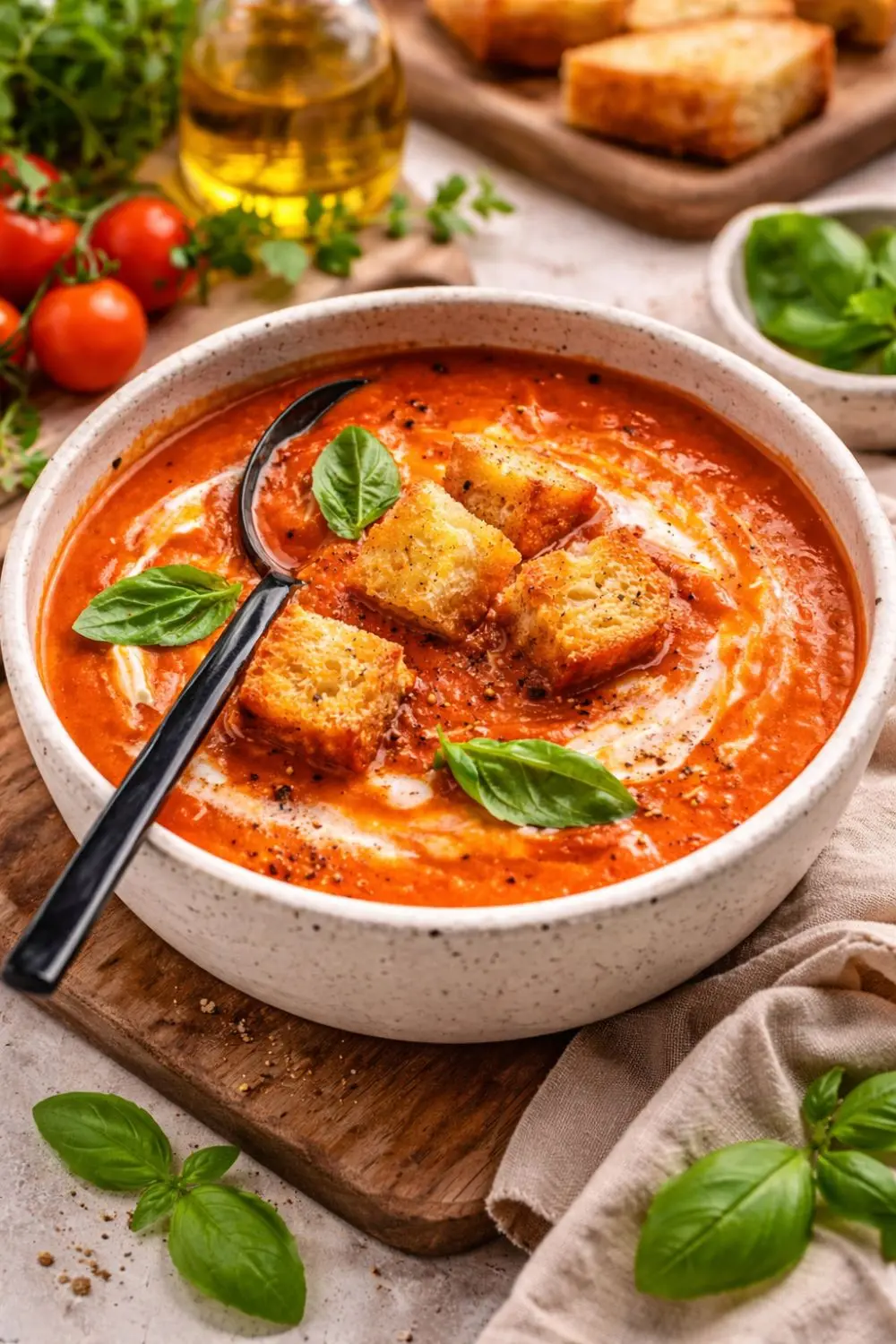
Season and serve. Taste the soup and adjust with extra salt, pepper, or smoked paprika as needed. Ladle into bowls, add your chosen toppings, and serve hot.
The Blending Step — Immersion vs. Regular Blender
This comes up every time someone makes a hot soup for the first time, so let's settle it properly.
Immersion Blender — The Easier Choice
An immersion blender lets you blend directly in the pot with zero transfer, zero mess, and full control over texture. You blend for longer if you want it smoother, stop sooner if you want chunks. Cleanup takes about 30 seconds. IMO, if you make soup more than twice a month, an immersion blender is one of the most worthwhile kitchen purchases you can make.
Regular Blender — Works Perfectly, Handle With Care
Transfer the soup in batches — never fill the blender more than two-thirds full with hot liquid. Vent the lid by leaving the cap slightly open and holding a folded kitchen towel firmly over the top to catch any splatter. Start at a low speed and increase gradually. Hot liquid expands when it hits the blender blades, and a full, sealed blender of hot tomato soup is not something you want to discover the hard way.
Choosing Your Tomatoes
You have 3½ pounds of tomatoes to work with — this is the main ingredient, so quality matters. Here's how to pick:
Best Fresh Tomato Options
Roma tomatoes — meaty, low moisture, intensely flavored when roasted. The top choice for this recipe.
Heirloom tomatoes — complex, sweet, slightly acidic. Stunning flavor. Use whatever variety looks best at the market.
Cherry or grape tomatoes — naturally sweeter and roast beautifully. Halve them instead of quartering. Excellent option.
Vine-ripened tomatoes — reliable and widely available. Solid choice.
Beefsteak tomatoes — work fine but their high water content means you'll need to roast longer to concentrate the flavor.
The One Rule: They Must Be Ripe
Pale, hard, out-of-season tomatoes produce pale, flat-tasting soup. If fresh tomatoes aren't great where you are, good canned tomatoes actually outperform bad fresh ones — use two 28-oz cans of whole peeled tomatoes, spread on the baking sheet, and roast as directed (they'll need slightly less time, around 25–30 minutes).
The Smoked Paprika — Don't Underestimate It
Three-quarters of a teaspoon of smoked paprika sounds modest. It isn't. That small amount adds a warm, smoky depth to the soup that makes people taste it and immediately ask what's in it. It works alongside the natural caramelization from roasting to give the soup a complexity that's hard to pin down but impossible to miss.
If you only have regular sweet paprika, the soup still tastes good — but you lose that smoky layer. Smoked paprika is inexpensive and lasts forever in a cool cupboard. It's worth having for this recipe alone.
Fresh Basil — Add It at the Right Moment
The recipe adds basil when the roasted tomatoes and broth go in, just before blending. This timing matters. Adding basil at the end rather than early in the cooking process preserves its bright, fresh flavor — cooking basil for too long destroys its aromatic oils and turns it bitter.
Half a cup of loosely packed basil sounds like a lot, but it blends completely into the soup and you taste it as a background note rather than an overwhelming herb flavor. Think of it as the fresh counterpoint to the deep roasted tomato flavor — they balance each other perfectly.