
Pasta primavera is supposed to be a celebration of fresh summer vegetables. Somehow it often ends up drowning in a heavy cream sauce that completely buries everything it should be highlighting. Slow Cooker Vegan Pasta Primavera fixes that completely — tender vegetables, perfectly cooked pasta, and a silky cashew cream sauce that clings to every piece without weighing the whole dish down. Fresh, bright, satisfying, and completely dairy-free.
I started making this when I wanted a pasta dish that genuinely felt like summer rather than just a carb delivery vehicle with some token vegetables thrown in. The cashew cream sauce was the discovery that changed everything — it has the same richness as a traditional cream sauce but with a cleaner flavor that actually lets the vegetables taste like themselves. Once you make cashew cream, going back to dairy-based pasta sauce feels like settling.
Recipe Timing and Serving Details
Here’s your complete planning overview:
| Detail | Info |
| Cashew Soak Time | 2 hours (or 30 minutes with the quick-soak method) |
| Prep Time | 2 hours (mostly hands-off soaking) |
| Cook Time | 20 minutes |
| Total Time | 2 hours 20 minutes |
| Servings | 4 servings |
| Serving Size | 1 serving (without crostini) |
| Calories Per Serving | 581 kcal |
| Course | Main Course |
| Cuisine | Italian-American |
| Diet | 100% Vegan |
This recipe serves 4 people as a generous main course. At 581 calories per serving with 19.1 grams of plant-based protein, it’s a complete, satisfying meal that genuinely fills you up without relying on anything but whole plant-based ingredients. The two-hour soaking time is almost entirely hands-off — set the cashews soaking and walk away. The actual active cooking takes just 20 minutes.
Why Cashew Cream Is the Perfect Dairy-Free Pasta Sauce
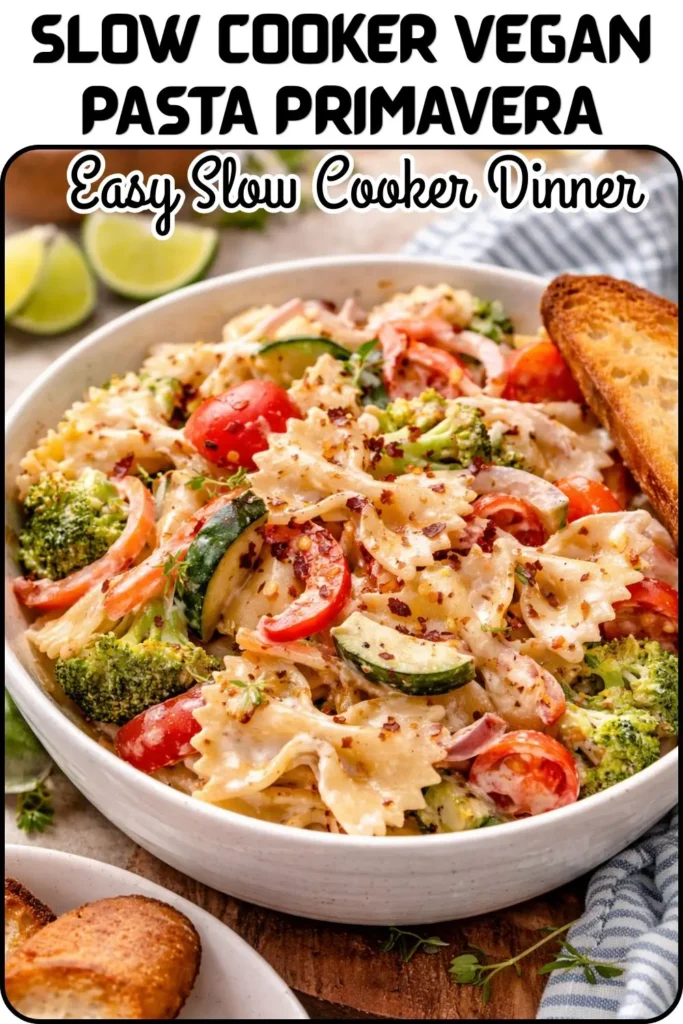
Traditional pasta primavera uses heavy cream or butter as its sauce base. Both work beautifully — and both are completely replaceable with cashew cream in a way that most people genuinely can’t distinguish.
Raw cashews, when soaked and blended with water, lemon juice, garlic, and a few seasonings, produce a sauce that’s naturally thick, smooth, and creamy with a neutral, slightly buttery flavor. It clings to pasta exactly the way cream sauce does. It doesn’t separate or break during cooking. And it adds actual nutritional value — healthy fats, protein, and minerals — rather than just empty richness.
The lemon juice in the cashew cream does something important beyond adding flavor. It mimics the slight tanginess of Parmesan cheese, which is why cashew-based pasta sauces so often taste vaguely cheesy without any actual cheese involved. FYI — this is the same principle behind most vegan “Parmesan” recipes, and it works because bright acidity triggers the same taste receptors as fermented dairy.
Ingredients You’ll Need
For the Pasta and Vegetables
- 12 oz penne or bowtie pasta — or any pasta you prefer, including gluten-free
- 2 tablespoons extra-virgin olive oil
- ½ medium red onion, sliced
- 1 large carrot, peeled and cut into matchsticks
- 1 medium red bell pepper, sliced into thin strips
- 2 cups small broccoli florets
- 1½ cups cherry tomatoes, halved
- 2 medium zucchini, cut into matchsticks or sliced and quartered
- ½ teaspoon Italian seasoning
- 1 teaspoon kosher salt
- Freshly ground black pepper
For the Cashew Cream Sauce
- ¾ cup raw cashews — raw, not roasted
- ½ cup fresh filtered water
- 2 tablespoons fresh lemon juice
- 1 clove garlic — or 1 teaspoon garlic powder
- 1 teaspoon kosher salt
- ¼ teaspoon onion powder
- Freshly ground black pepper
For Serving
- Red pepper flakes — for heat and color
- Garlic crostini or garlic bread — highly recommended
- Reserved pasta water — 1 cup, used to adjust sauce consistency
- Extra salt and black pepper to taste
The vegetable lineup in this recipe is specifically chosen for color variety, texture contrast, and peak summer availability — broccoli, cherry tomatoes, zucchini, carrots, bell pepper, and red onion. Every vegetable cooks at a slightly different rate, which is why they go into the pan in a specific order. More on that in the instructions.
Equipment You’ll Need
This recipe uses stovetop cooking for both the pasta and vegetables — the “slow cooker” in this summer series context refers to the relaxed, flexible approach rather than a specific appliance:
Primary Cooking Equipment
- Large pot for pasta — a 6–8 quart pot with plenty of water for cooking the pasta to al dente. Pasta needs room to move while cooking — a cramped pot produces unevenly cooked, sticky pasta.
- Large skillet or wide sauté pan — for cooking the vegetables simultaneously while the pasta boils. A 12-inch skillet gives you enough surface area to sauté the vegetables without crowding, which is critical for getting them tender-crisp rather than steamed and soft.
For the Cashew Cream
- High-powered blender — this is the most important piece of equipment for the sauce. A standard blender works but produces a slightly grainier texture. A high-powered blender (Vitamix, Blendtec, or Ninja with a high-speed setting) produces a completely smooth, silky sauce that’s genuinely superior. If you only have a standard blender, extend the blending time and add slightly more water.
- Small bowl or pot — for soaking the cashews before blending
Supporting Equipment
- Colander — for draining the pasta and the soaked cashews
- Sharp knife and cutting board — significant vegetable prep happens here. Matching cut sizes ensures even cooking.
- Measuring cups and spoons
- Wooden spoon or silicone spatula — for stirring the vegetables and combining the final dish
- Liquid measuring cup — for reserving the pasta water before draining
The reserved pasta water deserves a specific mention because it’s one of the most underutilized tools in pasta cooking. Pasta water is starchy, slightly salted water that acts as a natural sauce thinner and binder. Adding it to the finished dish helps the cashew cream sauce coat every piece of pasta evenly without diluting the flavor. Always reserve a cup before draining.
How to Soak Cashews — Two Methods
The cashew soaking step is the longest part of this recipe by time, but it’s almost entirely passive. Here are both methods:
Standard Soak (Best Texture — 2 Hours)
Add the raw cashews to a bowl and cover with 2 cups of warm water. Let them soak for at least 2 hours at room temperature. The cashews will plump up slightly and soften throughout. Drain completely before blending.
Longer soaking — up to overnight in the refrigerator — produces an even smoother final sauce. If you plan ahead and soak overnight, you can reduce total recipe time to just 20 minutes of active cooking.
Quick Soak (Good Texture — 30 Minutes)
Add the raw cashews to a small pot with enough water to cover. Place over high heat and bring to a boil. Turn off the heat immediately once boiling — don’t let them continue boiling. Let the cashews sit in the hot water for 30 minutes, then drain.
The quick soak produces a slightly less smooth result than the extended soak, but the difference is minimal in a high-powered blender. For weeknight cooking when you haven’t planned ahead, the quick soak works perfectly well.
One critical note: Always use raw cashews, not roasted or salted. Roasted cashews have a toasted flavor that completely changes the sauce profile — it becomes nutty and slightly bitter rather than creamy and neutral. Raw cashews produce that clean, buttery flavor that makes the sauce so effective.
Step-by-Step Instructions for Slow Cooker Vegan Pasta Primavera
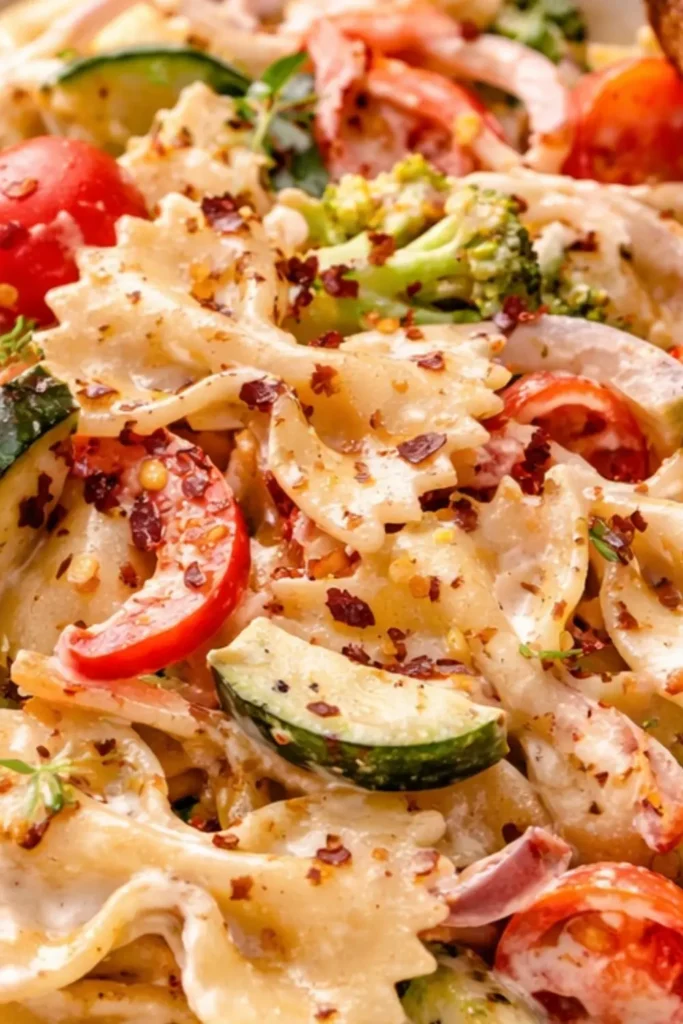
Step 1 — Make the Cashew Cream Sauce
Once your cashews have finished soaking and are fully drained, add them to your blender along with the ½ cup of fresh filtered water, lemon juice, garlic, salt, onion powder, and black pepper. Blend on high speed until the sauce reaches a completely smooth, creamy consistency with no cashew texture remaining — this takes 1–2 minutes in a high-powered blender, or up to 3–4 minutes in a standard blender.
Taste the sauce and adjust seasoning. Want more tang? Add another teaspoon of lemon juice. Want more garlic? Add another clove. If the sauce is thicker than you’d like, add 1–2 tablespoons more water and blend again. Set the finished sauce aside until ready to use.
The sauce can be made up to 3 days ahead and stored in an airtight container in the refrigerator. Having the sauce pre-made reduces the recipe’s active cooking time to about 20 minutes flat.
Step 2 — Cook the Pasta
Bring a large pot of generously salted water to a boil. Cook the pasta according to package directions until just al dente — slightly firm at the center, not fully soft. Pasta that’s al dente before combining with the sauce will finish cooking perfectly once tossed with the warm vegetables and sauce.
Before draining, scoop out 1 full cup of pasta water and set it aside. Drain the pasta and set aside while you finish the vegetables.
Step 3 — Sauté the Vegetables
While the pasta cooks, heat the 2 tablespoons of olive oil in your large skillet over medium heat. Add the sliced red onion, carrot matchsticks, sliced bell pepper, and broccoli florets. Sauté for 4–5 minutes, stirring occasionally, until the vegetables begin to soften but still retain some crispness.
Add the zucchini and cook for another 2–4 minutes until all the vegetables are tender but still have a slight bite. This sequential addition matters — zucchini cooks faster than carrots and broccoli. Adding everything simultaneously would leave you with mushy zucchini and undercooked carrots. The order keeps every vegetable at the right texture.
Stir in the halved cherry tomatoes, Italian seasoning, salt, and pepper and cook for 2 more minutes. The tomatoes soften just enough to release some of their juice into the pan, which becomes part of the sauce.
Step 4 — Combine and Finish
Add the cooked pasta directly to the skillet with the vegetables. Pour the cashew cream sauce over everything and toss to combine thoroughly. Add splashes of reserved pasta water — typically 2–4 tablespoons — and toss as you go until the sauce reaches your preferred consistency. More pasta water produces a lighter, more flowing sauce. Less keeps it thick and rich.
Taste and adjust seasoning with salt, pepper, and additional lemon juice as needed.
Step 5 — Serve
Divide into four bowls and top each with a pinch of red pepper flakes for heat and color. Serve alongside garlic crostini or garlic bread for the full experience. The crunch of the garlic bread against the creamy pasta is genuinely one of the great simple pleasures in Italian-American cooking.
Vegetable Substitutions and Additions
The recipe encourages mixing and matching based on what you have available, and it genuinely means it. Slow Cooker Vegan Pasta Primavera handles substitutions gracefully because the cashew cream sauce works with almost any vegetable combination.
Excellent Additions to Try
- Mushrooms — cremini or shiitake, added with the first round of vegetables. They release great umami-rich juices that enrich the sauce.
- Fresh corn kernels — cut directly from the cob during summer peak. Add with the zucchini for 2 minutes of cooking. The sweetness pairs beautifully with the cashew cream.
- Asparagus — cut into 1-inch pieces, added with the zucchini. Bright green, slightly tender, and quintessentially spring-to-summer.
- Baby spinach or arugula — stir in right before combining with the pasta. The residual heat wilts them perfectly in about 1 minute.
- Sun-dried tomatoes — a few tablespoons added with the cherry tomatoes intensify the tomato flavor significantly.
- Artichoke hearts — canned or jarred, quartered, add with the first round of vegetables.
The One Rule for Substitutions
Cut everything to similar sizes so cooking times stay consistent across the different vegetables. Uneven cuts mean some pieces overcook while others stay raw. Matchstick cuts and similarly-sized florets keep everything in the same time window.
Pasta Choice — Does It Matter?
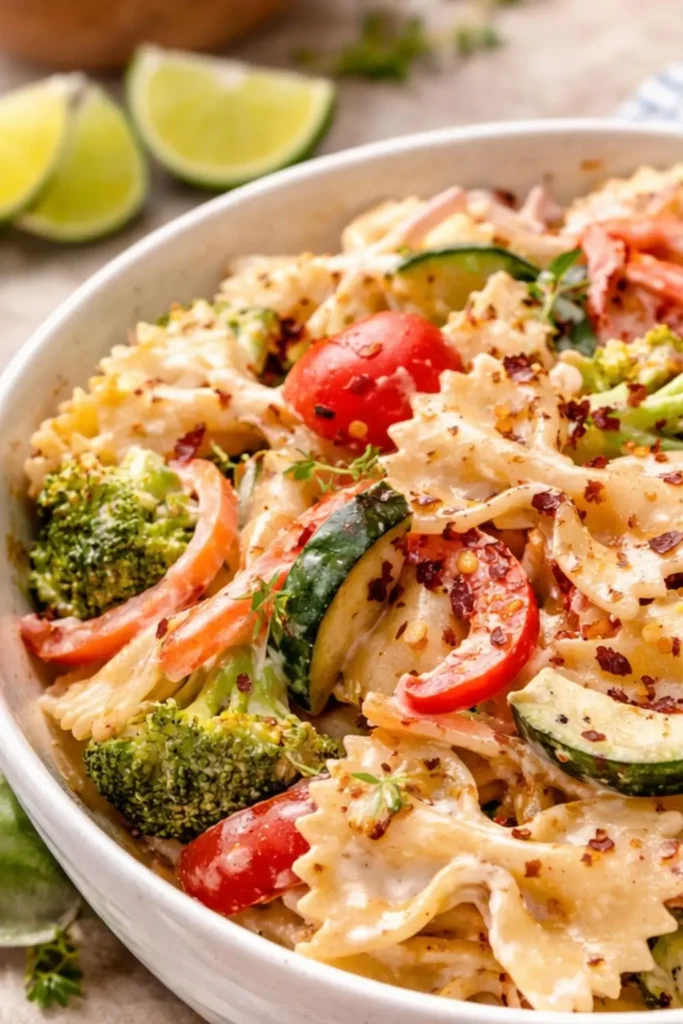
Short answer: yes, somewhat. Here’s the breakdown:
Penne — the recipe’s primary recommendation. The tube shape holds cashew cream sauce inside and out, giving you maximum sauce per bite. Works exceptionally well with chunky vegetable pieces that catch in and around the tubes.
Bowtie (farfalle) — visually gorgeous with the colorful vegetables, and the folds hold sauce well. Slightly more surface area for sauce adhesion than smooth pasta shapes.
Rigatoni — larger tubes that hold even more sauce. A great choice if you want a heartier, more substantial portion feel.
Gluten-free pasta — works fine in this recipe. Cook it according to package directions and watch it slightly more closely — gluten-free pasta has a narrower window between al dente and overcooked. Pull it out when it still has a slight firmness at the center.
What to avoid: Very thin pasta like angel hair or linguine — the chunky vegetables overwhelm delicate pasta shapes and make the dish difficult to eat cohesively
You may also like Next recipe
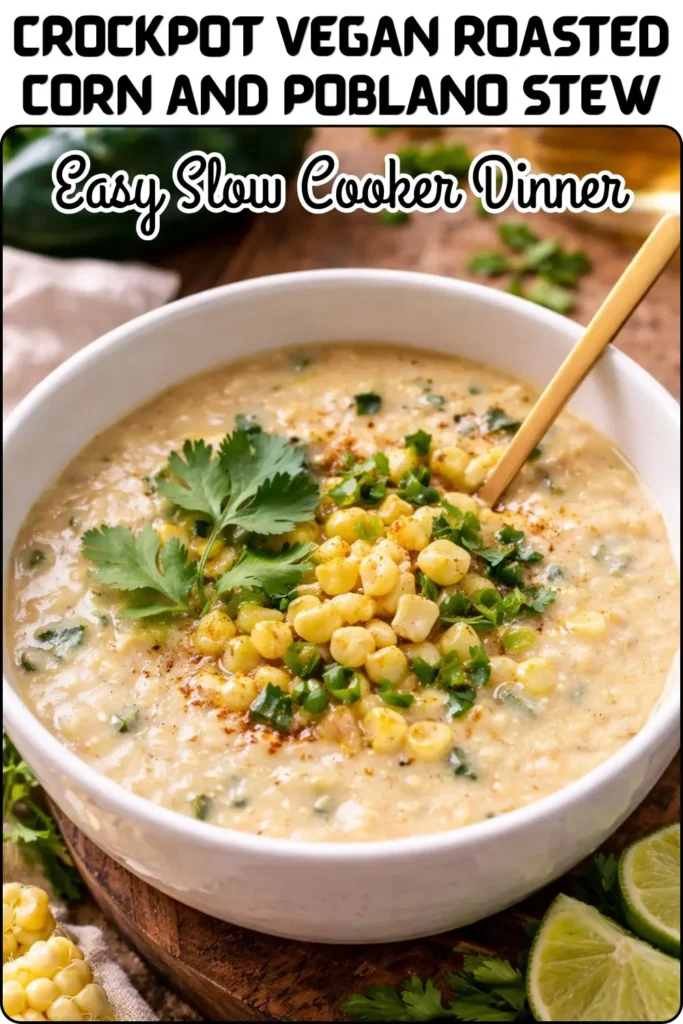
Crockpot Vegan Roasted Corn and Poblano Stew
Nutrition Information Per Serving
Slow Cooker Vegan Pasta Primavera is a genuinely complete, calorie-appropriate main course:
| Nutrient | Per Serving (without crostini) |
| Calories | 581 kcal |
| Carbohydrates | 84.1g |
| Protein | 19.1g |
| Fat | 20.4g |
| Saturated Fat | 3.4g |
| Fiber | 7.4g |
| Sugar | 10.8g |
19.1 grams of plant-based protein per serving comes from the combination of pasta, cashews, broccoli, and zucchini. The fat content reflects the cashews and olive oil — both healthy, whole-food fat sources. At 581 calories per serving, this is a nutritionally complete dinner that fuels you properly without the empty calories of a cream-and-butter-based version. IMO, this is the pasta primavera version that genuinely earns its reputation as a celebration of vegetables.
Storage and Reheating
- Refrigerator: Store in an airtight container for up to 3–4 days. The cashew cream sauce thickens considerably as it cools — add a splash of water or vegetable broth when reheating.
- Freezer: The pasta itself freezes adequately, though the texture changes slightly. Freeze the cashew cream sauce separately for best results — it freezes well for up to 2 months.
- Reheating: Warm in a skillet over medium-low heat with added liquid, stirring frequently. Or microwave in 90-second intervals with a splash of water, stirring between each.
- Make-ahead tip: Prepare the cashew cream sauce up to 3 days ahead. This reduces night-of cooking to a very manageable 20-minute sprint.
Final Thoughts Make This Pasta and Retire Your Jarred Sauce
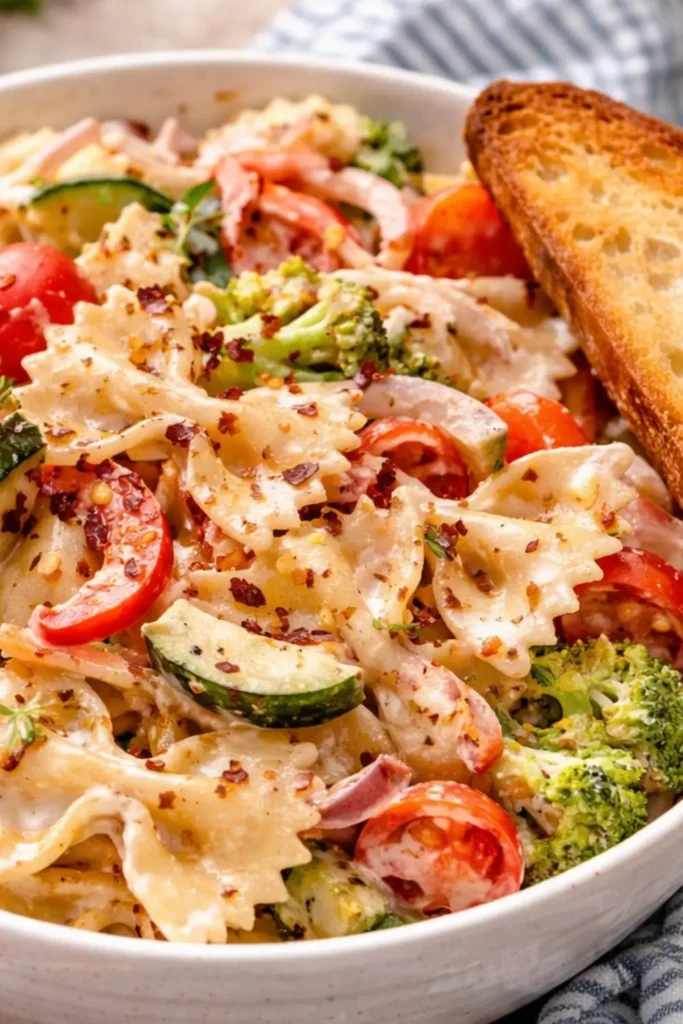
Slow Cooker Vegan Pasta Primavera is summer pasta the way it should be — fresh, colorful, vegetable-forward, and dressed in a sauce that enhances rather than overwhelms. The cashew cream changes everything. It’s richer than tomato sauce, lighter than heavy cream, and genuinely addictive once you taste it properly integrated with pasta and seasonal vegetables.
Soak the cashews this afternoon. Make the sauce while the pasta boils tonight. Toss everything together in one pan and serve four people a genuinely impressive, completely plant-based dinner in 20 active minutes.
Garlic bread is non-negotiable. You’ve been warned.
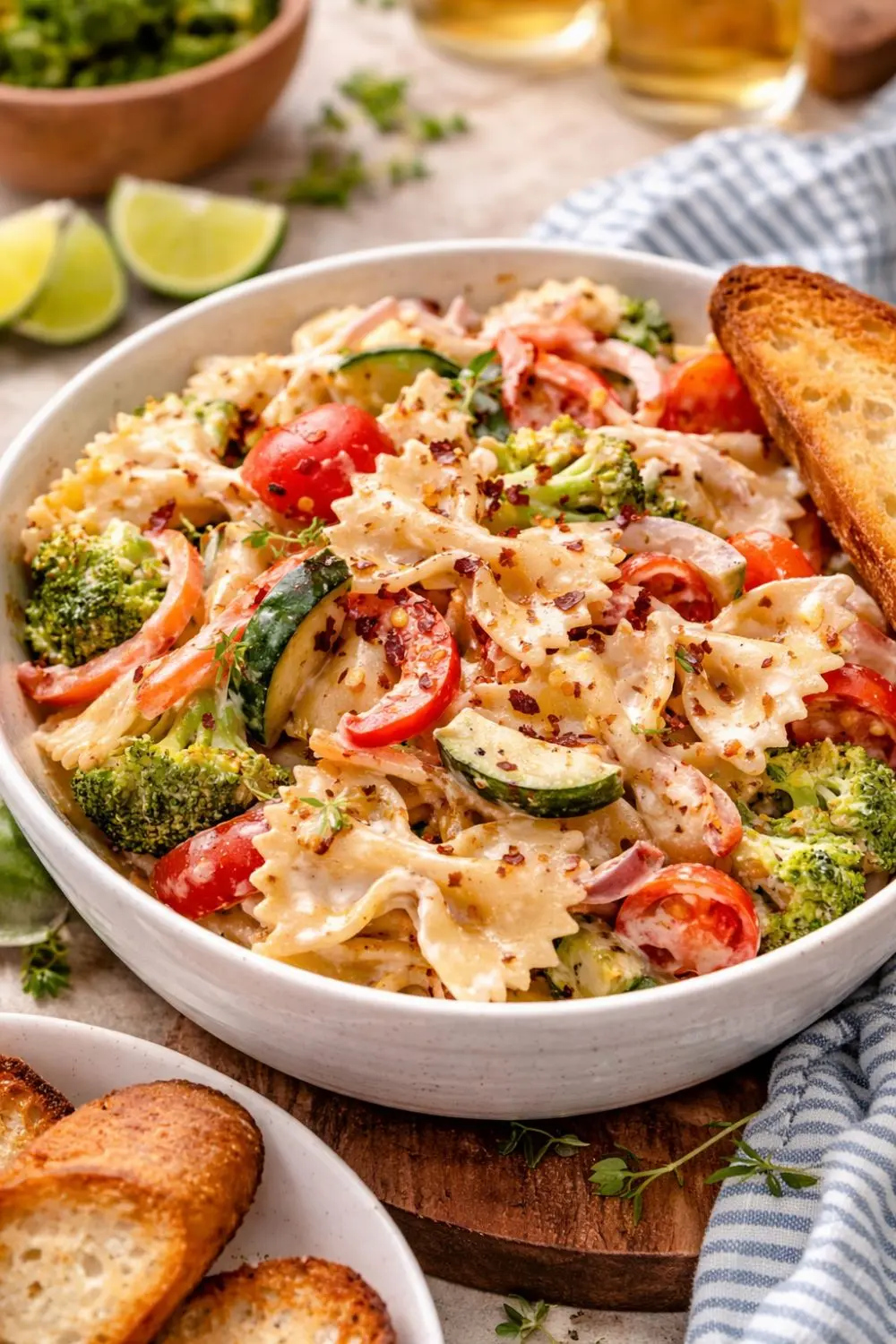
Slow Cooker Vegan Pasta Primavera
Ingredients
Equipment
Method
- Step 1 — Make the Cashew Cream Sauce
- Once your cashews have finished soaking and are fully drained, add them to your blender along with the ½ cup of fresh filtered water, lemon juice, garlic, salt, onion powder, and black pepper. Blend on high speed until the sauce reaches a completely smooth, creamy consistency with no cashew texture remaining — this takes 1–2 minutes in a high-powered blender, or up to 3–4 minutes in a standard blender.
- Taste the sauce and adjust seasoning. Want more tang? Add another teaspoon of lemon juice. Want more garlic? Add another clove. If the sauce is thicker than you’d like, add 1–2 tablespoons more water and blend again. Set the finished sauce aside until ready to use.
- The sauce can be made up to 3 days ahead and stored in an airtight container in the refrigerator. Having the sauce pre-made reduces the recipe’s active cooking time to about 20 minutes flat.
- Step 2 — Cook the Pasta
- Bring a large pot of generously salted water to a boil. Cook the pasta according to package directions until just al dente — slightly firm at the center, not fully soft. Pasta that’s al dente before combining with the sauce will finish cooking perfectly once tossed with the warm vegetables and sauce.
- Before draining, scoop out 1 full cup of pasta water and set it aside. Drain the pasta and set aside while you finish the vegetables.
- Step 3 — Sauté the Vegetables
- While the pasta cooks, heat the 2 tablespoons of olive oil in your large skillet over medium heat. Add the sliced red onion, carrot matchsticks, sliced bell pepper, and broccoli florets. Sauté for 4–5 minutes, stirring occasionally, until the vegetables begin to soften but still retain some crispness.
- Add the zucchini and cook for another 2–4 minutes until all the vegetables are tender but still have a slight bite. This sequential addition matters — zucchini cooks faster than carrots and broccoli. Adding everything simultaneously would leave you with mushy zucchini and undercooked carrots. The order keeps every vegetable at the right texture.
- Stir in the halved cherry tomatoes, Italian seasoning, salt, and pepper and cook for 2 more minutes. The tomatoes soften just enough to release some of their juice into the pan, which becomes part of the sauce.
- Step 4 — Combine and Finish
- Add the cooked pasta directly to the skillet with the vegetables. Pour the cashew cream sauce over everything and toss to combine thoroughly. Add splashes of reserved pasta water — typically 2–4 tablespoons — and toss as you go until the sauce reaches your preferred consistency. More pasta water produces a lighter, more flowing sauce. Less keeps it thick and rich.
- Taste and adjust seasoning with salt, pepper, and additional lemon juice as needed.
- Step 5 — Serve
- Divide into four bowls and top each with a pinch of red pepper flakes for heat and color. Serve alongside garlic crostini or garlic bread for the full experience. The crunch of the garlic bread against the creamy pasta is genuinely one of the great simple pleasures in Italian-American cooking.
Notes
Nutrition Information Per Serving
Slow Cooker Vegan Pasta Primavera is a genuinely complete, calorie-appropriate main course:| Nutrient | Per Serving (without crostini) |
| Calories | 581 kcal |
| Carbohydrates | 84.1g |
| Protein | 19.1g |
| Fat | 20.4g |
| Saturated Fat | 3.4g |
| Fiber | 7.4g |
| Sugar | 10.8g |

Hi — I’m Rachel. I’m a wife, a mom, and a home cook who believes that food should bring comfort, joy, and compassion to the table. I live with my family — two hungry little foodies who are my most honest recipe testers — and together we’ve built a kitchen culture that’s all about good food that happens to be 100% vegan. I started this blog because I wanted a place to share the recipes that keep our days moving, the dishes that make weeknights feel a little easier, and the meals that become our little family traditions.