
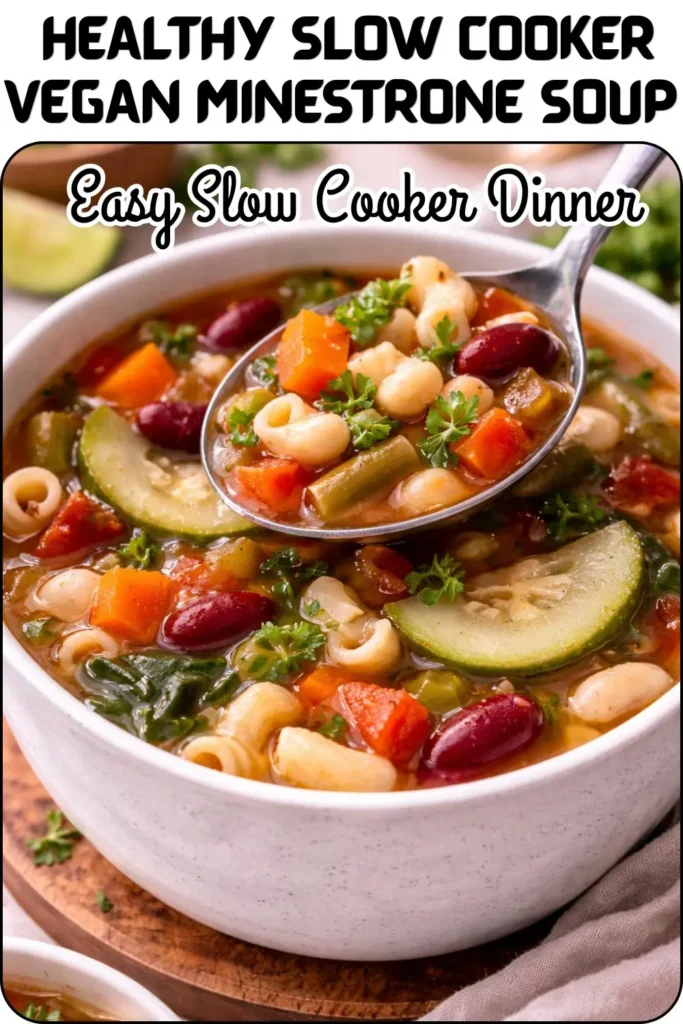
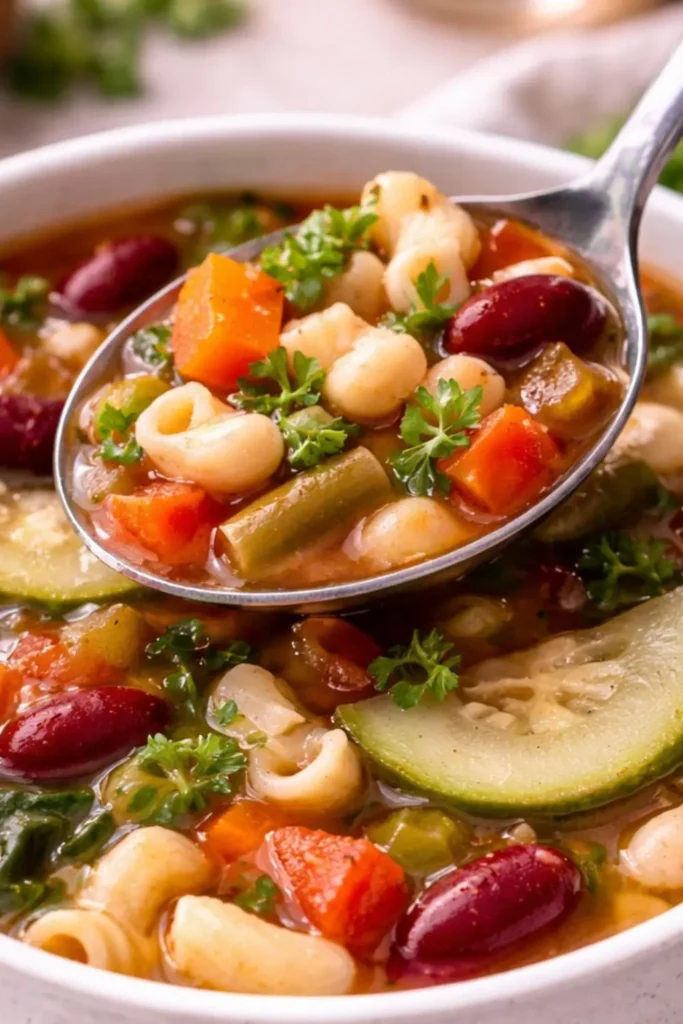
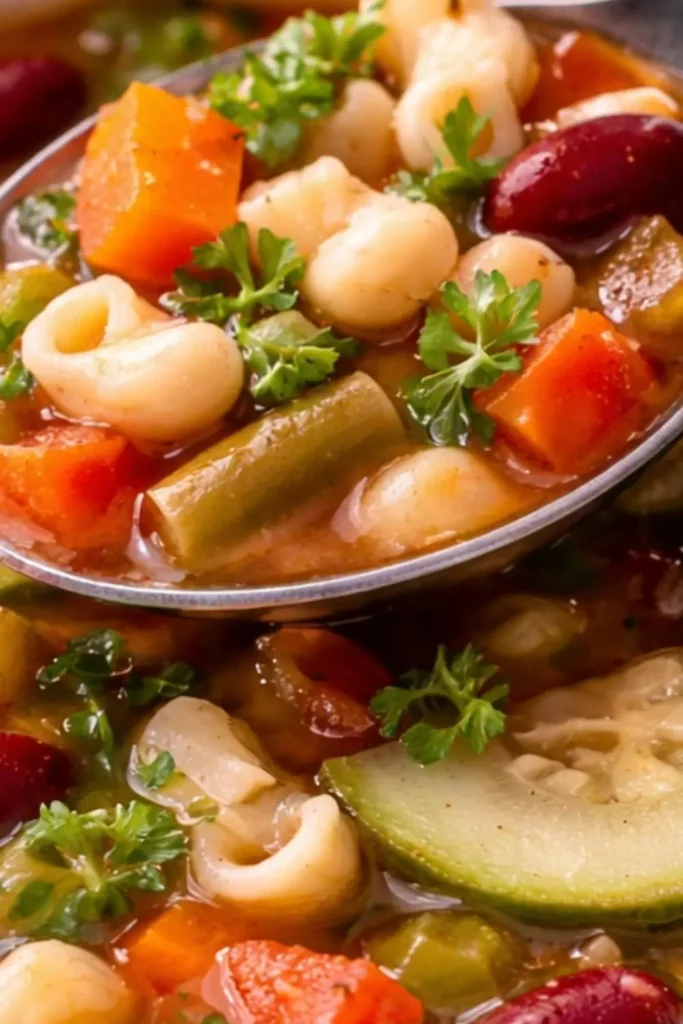
Minestrone is one of those soups that has been feeding people well for centuries and with good reason. Healthy Slow Cooker Vegan Minestrone Soup is hearty without being heavy, deeply flavored without requiring elaborate technique, and nutritionally so impressive that eating a bowl feels like a genuinely good decision. Two kinds of beans, seven different vegetables, pasta, fresh spinach, and classic Italian herbs slow-cook together into a thick, satisfying soup that tastes like genuine Italian home cooking. All from a slow cooker you set up in 10 minutes.
I keep this in heavy summer rotation specifically because it uses peak-season zucchini and green beans beautifully the slow cooker concentrates their natural sweetness over the long cook in a way that quick stovetop cooking never quite achieves. It’s the soup that makes your kitchen smell like an Italian grandmother lives there. That’s the highest possible compliment and this recipe earns it every time.
My Recipe Timing and Serving Details
Here’s your complete planning overview:
| Detail | Info |
| Prep Time | 10 minutes |
| Cook Time (HIGH) | 4–5 hours |
| Cook Time (LOW) | 7–8 hours |
| Total Time | 5 hours 10 minutes |
| Servings | 4–6 servings |
| Serving Size | 1 of 6 portions |
| Calories Per Serving | 238 kcal |
| Course | Entrée / Soup |
| Cuisine | Italian / Vegan |
| Diet | 100% Vegan |
This recipe serves 4 people generously as a substantial main course or 6 people as a hearty soup course. At just 238 calories per serving with 12.1 grams of plant-based protein and 11.9 grams of fiber, it’s one of the most nutritionally complete, calorie-efficient soups you can make. The 10-minute prep covers all the vegetable dicing after that, the slow cooker handles everything independently.
Why Minestrone Belongs in the Slow Cooker
Traditional Italian minestrone is a long-cooked, evolving soup something that simmers for hours on the stovetop as different vegetables are added at different stages. The slow cooker honors that tradition while completely eliminating the monitoring and timing that stovetop minestrone requires.
The extended cook time develops flavors that quick-cooked minestrone never achieves. The carrots and celery soften into the broth, releasing their sweetness gradually. The canned tomatoes break down completely and meld with the vegetable broth. The herbs basil, oregano, bay leaves infuse deeply into every component rather than just sitting on the surface. After 4–5 hours on HIGH, the soup tastes developed and layered in a way that genuinely earns its Italian credentials.
The slow cooker handles the timing problem that makes minestrone difficult on the stovetop. Different vegetables soften at different rates but in a slow cooker running at 190–200°F, the gentler heat gives you a wider window where everything reaches perfect tenderness without the faster-cooking vegetables turning to mush.
The spinach and pasta both go in separately at the end this is the one timing consideration the recipe requires, and it’s important enough to address directly before the instructions. FYI adding pasta at the start of a 5-hour slow cook produces sad, disintegrated pasta mush. Cook it separately according to package directions and add it to the finished soup. Spinach goes in during the last 30 minutes so it wilts perfectly without overcooking.
Ingredients You’ll Need
A classic Italian ingredient lineup that’s entirely plant-based:
The Vegetables:
- 1 medium onion, diced
- 2 medium carrots, diced
- 2 stalks celery, diced
- 1 zucchini, cut into half moons
- ⅓ lb. green beans (about 1½ cups), cut into 1-inch pieces
- 3–4 cloves garlic, minced
The Beans:
- 1 can (14 oz) kidney beans, drained and rinsed
- 1 can (14 oz) cannellini or northern beans, drained and rinsed
The Tomato Base:
- 1 can (28 oz) diced tomatoes with all their juices
The Herbs and Seasoning:
- 1 teaspoon dried basil
- 1 teaspoon dried oregano
- 2–3 bay leaves
- Generous pinch of red pepper flakes (optional)
- Mineral salt and pepper to taste
The Liquid:
- 4–5 cups vegetable broth or water (or a combination)
Added During/After Cooking:
- Big handful of fresh spinach – added 30 minutes before end
- 1 cup small pasta – elbow, shells, mini penne, or rotini cooked separately
For Serving:
- Fresh lemon juice
- Fresh chopped parsley
- Crusty artisan bread alongside
The two-bean combination of kidney beans and cannellini beans is a deliberate and well-considered choice. Kidney beans are firm, substantial, and slightly earthy they hold their shape throughout the long cook and provide textural anchors in every bowl. Cannellini beans are creamy and mild they soften slightly at the edges during the extended cook and their starch contributes to the broth’s natural thickening. Together they create the characteristic minestrone heartiness that makes a bowl genuinely filling.
Equipment You’ll Need For
This recipe runs with the slow cooker as its primary tool and minimal supporting equipment:
Primary Equipment
- Large slow cooker (6-quart) – this recipe’s vegetable volume is substantial: onion, two carrots, two celery stalks, a full zucchini, 1½ cups of green beans, two cans of beans, a 28-oz can of tomatoes, and 4–5 cups of broth. A 6-quart slow cooker handles all of it comfortably with room for the spinach added at the end. A 4-quart manages a half batch; the full recipe needs 6 quarts.
- Separate pot for the pasta – a medium saucepan for cooking the 1 cup of small pasta according to package directions. This runs concurrently with the final 10–15 minutes of the slow cooker cook, so timing works out neatly.
Supporting Equipment
- Sharp knife and cutting board – for dicing the onion, carrots, celery, zucchini, and cutting the green beans. The 10-minute prep time is achievable if you work efficiently through the vegetables in sequence.
- Can opener– for the kidney beans, cannellini beans, and diced tomatoes
- Colander – for draining and rinsing both bean cans
- Measuring cups and spoons
- Wooden spoon or silicone spatula – for the initial stir and for adding the spinach and pasta
- Ladle – for serving
- Citrus juicer – for the finishing lemon squeeze
Step-by-Step Instructions
Step 1 – Prep and Load the Slow Cooker
Dice the onion, carrots, and celery. Cut the zucchini into half-moon pieces slice the zucchini in half lengthwise, then slice each half into ¼-inch pieces. Cut the green beans into 1-inch pieces. Mince the garlic. Drain and rinse both cans of beans.
Add all the vegetables, beans, diced tomatoes with juices, garlic, dried basil, dried oregano, bay leaves, and red pepper flakes to the slow cooker. Pour in the vegetable broth last the recipe uses 4–5 cups, and you choose based on your preferred final consistency. Start with 4 cups for a thicker, heartier soup; use 5 cups for a more brothy result.
Stir everything well to distribute the herbs and garlic evenly throughout. The broth goes in last specifically so it settles through all the vegetables and beans as it pours.
Do not add salt yet. The sodium content of different vegetable broth brands varies significantly taste and season at the end with full information about the soup’s saltiness.
Step 2 -Slow Cook
Cover and cook on HIGH for 4–5 hours or LOW for 7–8 hours.
At the HIGH setting, check the soup at the 4-hour mark. The carrots should be completely tender, the tomatoes should have broken down fully into the broth, and the soup should have a rich, deep red-orange color throughout. The zucchini and green beans will be soft and flavorful.
Step 3 – Add Spinach During the Final 30 Minutes
When the slow cooker has 30 minutes remaining, add a big handful of fresh spinach directly to the pot. Stir it gently into the hot soup. The heat wilts the spinach beautifully within the remaining cook time it becomes soft, deeply green, and fully integrated without overcooking into gray, mushy leaves.
This timing matters. Spinach added at the start of a 5-hour slow cook loses its color, nutrients, and texture completely. Added 30 minutes from the end, it wilts into the soup perfectly and retains far more of its nutritional value.
Step 4 – Cook the Pasta Separately
While the final 30 minutes tick down on the slow cooker, cook the 1 cup of small pasta in a separate pot according to package directions until al dente. Drain it and set aside.
Why cook pasta separately? Pasta cooked directly in the slow cooker for any extended time absorbs enormous quantities of liquid, becomes bloated and mushy, and turns the broth starchy and thick in an unpleasant way. Cooking it separately and adding it at the end gives you pasta that’s perfectly textured and doesn’t compromise the soup’s broth consistency.
If you’re making this for meal prep and plan to store the soup for several days, consider keeping the pasta completely separate and adding it to individual bowls at serving. Pasta in stored soup continues absorbing broth and becomes unpleasantly soft by day two.
Step 5 – Finish, Season, and Serve
Remove and discard all bay leaves. Add the cooked, drained pasta to the slow cooker and stir gently to combine. Taste the soup and season with mineral salt and pepper start with ½ teaspoon of salt and build from there.
Ladle into bowls. Squeeze fresh lemon juice over each bowl this brightening step is genuinely important and not merely decorative. The acid lifts every flavor in the soup and makes the whole bowl taste more vibrant and alive. Scatter fresh chopped parsley over the top for color and herbal freshness.
Serve alongside crusty artisan bread. This pairing is genuinely non-negotiable.
The Herb and Seasoning Flexibility
One of minestrone’s greatest qualities is its adaptability, and the seasoning blend in this recipe welcomes variation:
Classic Italian Approach (Recipe Standard)
- 1 teaspoon dried basil + 1 teaspoon dried oregano the quintessential Italian herb combination that defines traditional minestrone’s flavor profile
Italian Seasoning Blend
- Replace the individual herbs with 1–2 teaspoons of Italian seasoning a pre-mixed blend of basil, oregano, rosemary, marjoram, and thyme that produces a slightly more complex, rounded flavor
Herbes de Provence
- A French-Mediterranean alternative that includes lavender alongside the classic herbs. Produces a more aromatic, floral minestrone that’s genuinely excellent and different enough to feel like a new recipe.
Additional Herb Options
- Fresh thyme (1 teaspoon) – adds a delicate, slightly lemony herb note
- Fresh rosemary (1 teaspoon chopped) -brings warm, piney depth
- Fresh basil at serving – scatter torn fresh basil over each bowl for a brightness that dried basil can’t deliver
Pasta Shape Selection
The recipe calls for small pasta shapes specifically and this recommendation matters for the eating experience:
Best shapes for minestrone:
- Elbow macaroni – the classic, most traditional choice. Small enough to fit on a spoon with beans and vegetables. Cooks quickly and holds its shape.
- Small shells – the curved shape catches soup inside each piece. Every spoonful has pasta filled with broth.
- Mini penne – slightly larger than elbows, provides more satisfying bite.
- Rotini – the spirals hold chunks of vegetable and bean in the twists. IMO the most satisfying textural experience in minestrone.
What to avoid: Long pasta shapes (spaghetti, linguine, fettuccine) that are impossible to eat gracefully from a soup bowl, and large pasta shapes (rigatoni, penne rigate) that overwhelm the soup’s other components.
For gluten-free minestrone: Brown rice pasta holds up the best among gluten-free options. Rice-corn pasta also works. Chickpea pasta is an excellent high-protein alternative that adds to the soup’s already impressive nutrition profile.
You may also like Next recipe
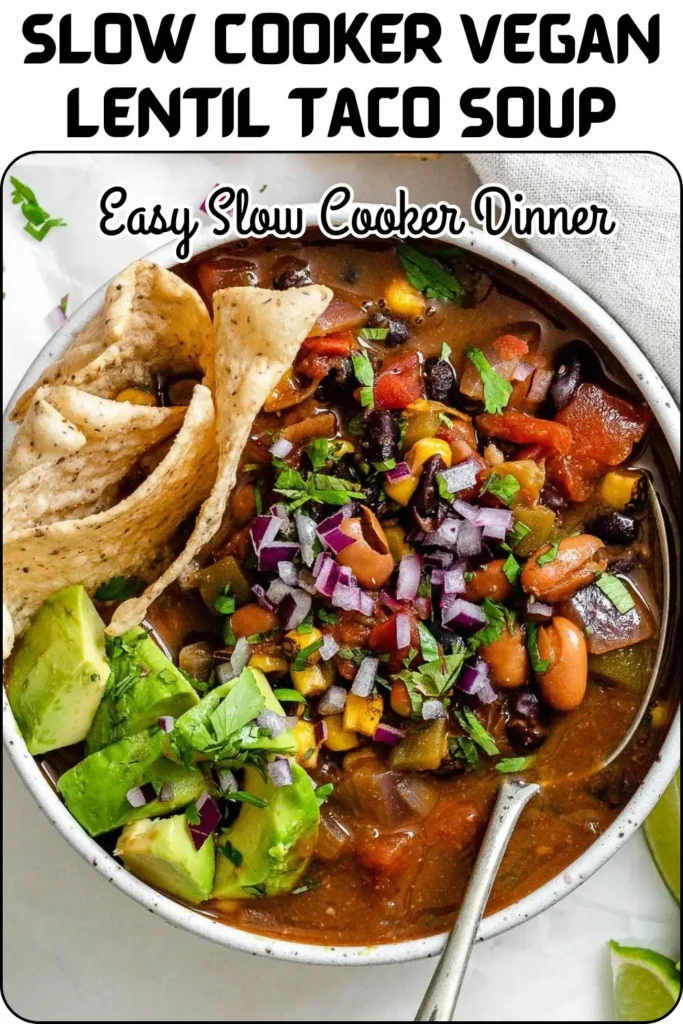
Slow Cooker Vegan Lentil Taco Soup
Vegetable Substitutions That Work
Healthy Slow Cooker Vegan Minestrone Soup is famously flexible traditional Italian cooks make minestrone from whatever vegetables are available. Here are the best swaps and additions for this version:
Instead of or in addition to zucchini:
- Yellow squash – similar texture and mild flavor, adds color variety
- Eggplant – diced small, becomes silky and absorbs surrounding flavors beautifully
Instead of or in addition to green beans:
- Peas – add during the final 30 minutes with the spinach
- Asparagus pieces – summer-appropriate and excellent
Additional vegetables that work beautifully:
- Diced potato – adds heartiness, naturally thickens the broth
- Corn kernels – sweet, summery, works beautifully with the tomato base
- Kale – add during the final 45 minutes instead of or alongside the spinach
Nutrition Information Per Serving
Healthy Slow Cooker Vegan Minestrone Soup earns its “healthy” descriptor with impressive numbers:
| Nutrient | Per Serving (1 of 6) |
| Calories | 238 kcal |
| Carbohydrates | 46g |
| Protein | 12.1g |
| Fat | 2.1g |
| Fiber | 11.9g |
| Sugar | 7.7g |
| Sodium | 398mg |
| Cholesterol | 0mg |
| Vitamin A | 37% DV |
| Folic Acid | 40% DV |
| Iron | 23% DV |
| Vitamin K | 78% DV |
78% of daily Vitamin K per serving largely from the spinach is genuinely extraordinary. The 40% of daily Folic Acid comes from the bean and vegetable combination. The sodium at 398mg per serving is remarkably low for a seasoned soup, reflecting the mineral salt used judiciously rather than processed sodium-heavy seasonings. At 238 calories with 12.1 grams of protein and 11.9 grams of fiber, this soup genuinely earns its place as a nutritional powerhouse.
Storage and Reheating
- Refrigerator: Store the soup (ideally without pasta mixed in) for up to 4–5 days in an airtight container. Store cooked pasta separately and add to bowls at serving.
- Freezer: Freeze without pasta for up to 3 months. Add freshly cooked pasta when reheating the thawed soup.
- Reheating: Warm on the stovetop over medium heat, stirring and adding a splash of broth. Microwave in 90-second intervals. Always squeeze fresh lemon over reheated bowls it restores the brightness that fades during storage.
My Final Thoughts Make This Minestrone and Let Italy Visit Your Kitchen
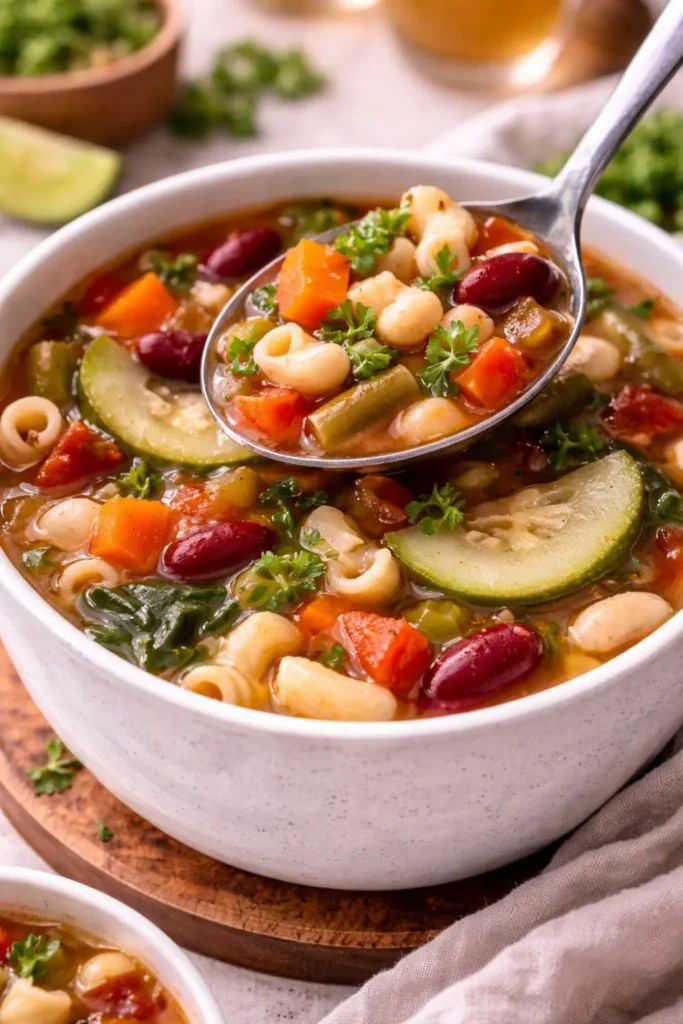
Healthy Slow Cooker Vegan Minestrone Soup is the rare recipe that delivers everything simultaneously: genuinely Italian flavors, impressive nutrition, complete plant-based goodness, and the slow cooker’s signature set-it-and-forget-it convenience. 238 calories per bowl, 12 grams of protein, 12 grams of fiber, serves 4–6 people from 10 minutes of prep.
Add the bread, squeeze the lemon, scatter the parsley. That’s minestrone. That’s Italy. That’s dinner sorted for the week.
The slow cooker asked for 10 minutes of your morning. It returned a pot of something genuinely special by evening. That’s a trade worth making every time.
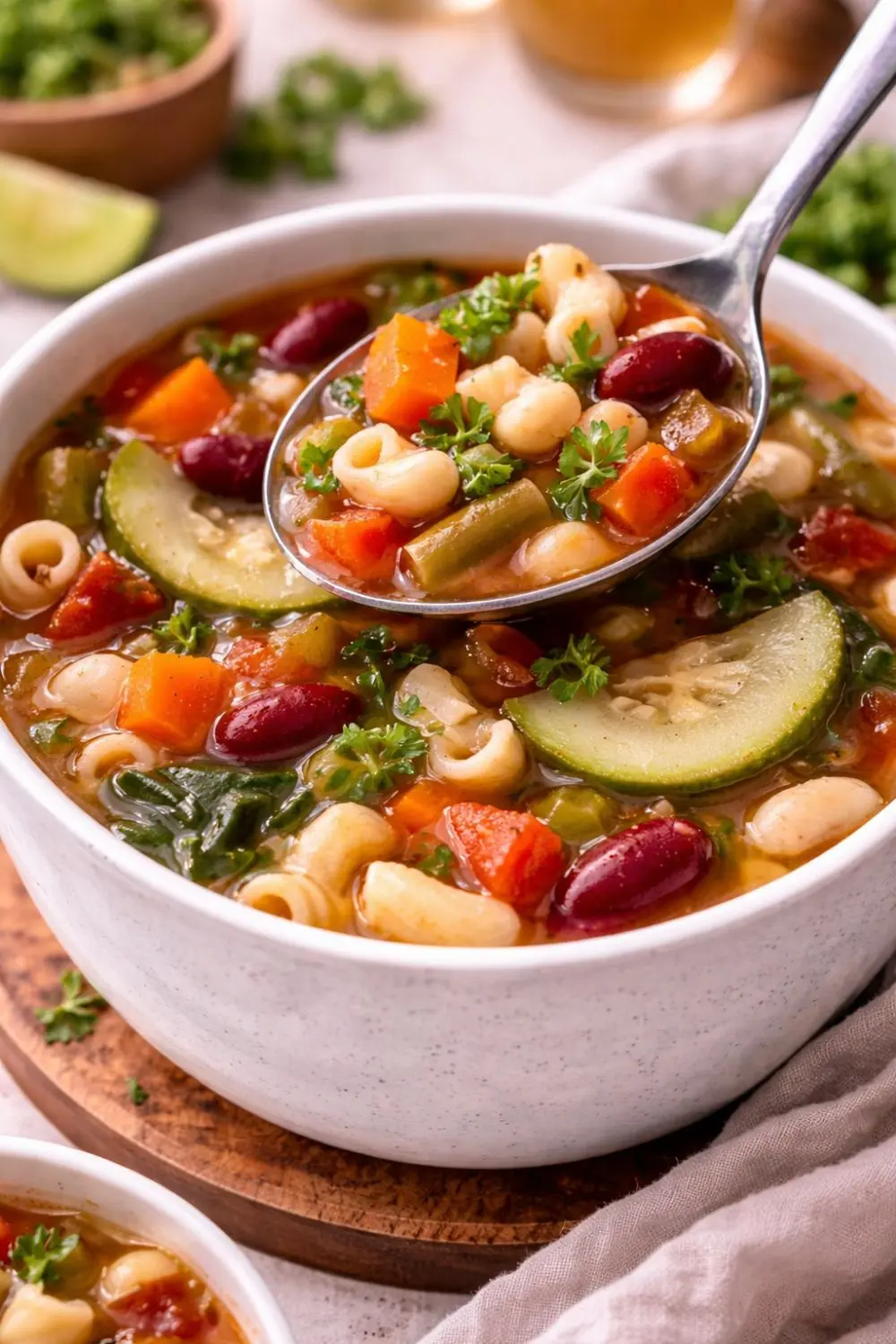
Healthy Slow Cooker Vegan Minestrone Soup
Ingredients
Equipment
Method
- Step 1 – Prep and Load the Slow Cooker
- Dice the onion, carrots, and celery. Cut the zucchini into half-moon pieces slice the zucchini in half lengthwise, then slice each half into ¼-inch pieces. Cut the green beans into 1-inch pieces. Mince the garlic. Drain and rinse both cans of beans.
- Add all the vegetables, beans, diced tomatoes with juices, garlic, dried basil, dried oregano, bay leaves, and red pepper flakes to the slow cooker. Pour in the vegetable broth last the recipe uses 4–5 cups, and you choose based on your preferred final consistency. Start with 4 cups for a thicker, heartier soup; use 5 cups for a more brothy result.
- Stir everything well to distribute the herbs and garlic evenly throughout. The broth goes in last specifically so it settles through all the vegetables and beans as it pours.
- Do not add salt yet. The sodium content of different vegetable broth brands varies significantly taste and season at the end with full information about the soup’s saltiness.
- Step 2 -Slow Cook
- Cover and cook on HIGH for 4–5 hours or LOW for 7–8 hours.
- At the HIGH setting, check the soup at the 4-hour mark. The carrots should be completely tender, the tomatoes should have broken down fully into the broth, and the soup should have a rich, deep red-orange color throughout. The zucchini and green beans will be soft and flavorful.
- Step 3 – Add Spinach During the Final 30 Minutes
- When the slow cooker has 30 minutes remaining, add a big handful of fresh spinach directly to the pot. Stir it gently into the hot soup. The heat wilts the spinach beautifully within the remaining cook time it becomes soft, deeply green, and fully integrated without overcooking into gray, mushy leaves.
- This timing matters. Spinach added at the start of a 5-hour slow cook loses its color, nutrients, and texture completely. Added 30 minutes from the end, it wilts into the soup perfectly and retains far more of its nutritional value.
- Step 4 – Cook the Pasta Separately
- While the final 30 minutes tick down on the slow cooker, cook the 1 cup of small pasta in a separate pot according to package directions until al dente. Drain it and set aside.
- Why cook pasta separately? Pasta cooked directly in the slow cooker for any extended time absorbs enormous quantities of liquid, becomes bloated and mushy, and turns the broth starchy and thick in an unpleasant way. Cooking it separately and adding it at the end gives you pasta that’s perfectly textured and doesn’t compromise the soup’s broth consistency.
- If you’re making this for meal prep and plan to store the soup for several days, consider keeping the pasta completely separate and adding it to individual bowls at serving. Pasta in stored soup continues absorbing broth and becomes unpleasantly soft by day two.
- Step 5 – Finish, Season, and Serve
- Remove and discard all bay leaves. Add the cooked, drained pasta to the slow cooker and stir gently to combine. Taste the soup and season with mineral salt and pepper start with ½ teaspoon of salt and build from there.
Notes
Nutrition Information Per Serving
Healthy Slow Cooker Vegan Minestrone Soup earns its “healthy” descriptor with impressive numbers:| Nutrient | Per Serving (1 of 6) |
| Calories | 238 kcal |
| Carbohydrates | 46g |
| Protein | 12.1g |
| Fat | 2.1g |
| Fiber | 11.9g |
| Sugar | 7.7g |
| Sodium | 398mg |
| Cholesterol | 0mg |
| Vitamin A | 37% DV |
| Folic Acid | 40% DV |
| Iron | 23% DV |
| Vitamin K | 78% DV |

Hi — I’m Rachel. I’m a wife, a mom, and a home cook who believes that food should bring comfort, joy, and compassion to the table. I live with my family — two hungry little foodies who are my most honest recipe testers — and together we’ve built a kitchen culture that’s all about good food that happens to be 100% vegan. I started this blog because I wanted a place to share the recipes that keep our days moving, the dishes that make weeknights feel a little easier, and the meals that become our little family traditions.