
One pot. Twenty minutes. Zero pasta-boiling water to drain, zero separate sauce pan to wash, zero complicated technique to master. Crockpot Vegan One-Pot Pasta with Zucchini and Tomatoes is the summer pasta recipe that makes every other weeknight dinner approach feel unnecessarily complicated by comparison. You add everything to a single pot — uncooked pasta, fresh vegetables, pasta sauce, water, and seasoning — bring it to a boil, stir occasionally, and dinner is done.
I discovered one-pot pasta during a summer when I genuinely couldn’t face the idea of boiling a separate pot of water, making a separate sauce, draining pasta, and combining everything. The cleanup alone felt like too much. This method was the answer — the pasta cooks directly in the sauce and vegetable liquid, absorbing all those flavors as it softens rather than cooking in plain water and getting sauced afterward. The result is pasta that tastes more integrated, more flavorful, and genuinely better than the traditional two-pot approach.
Recipe Timing and Serving Details
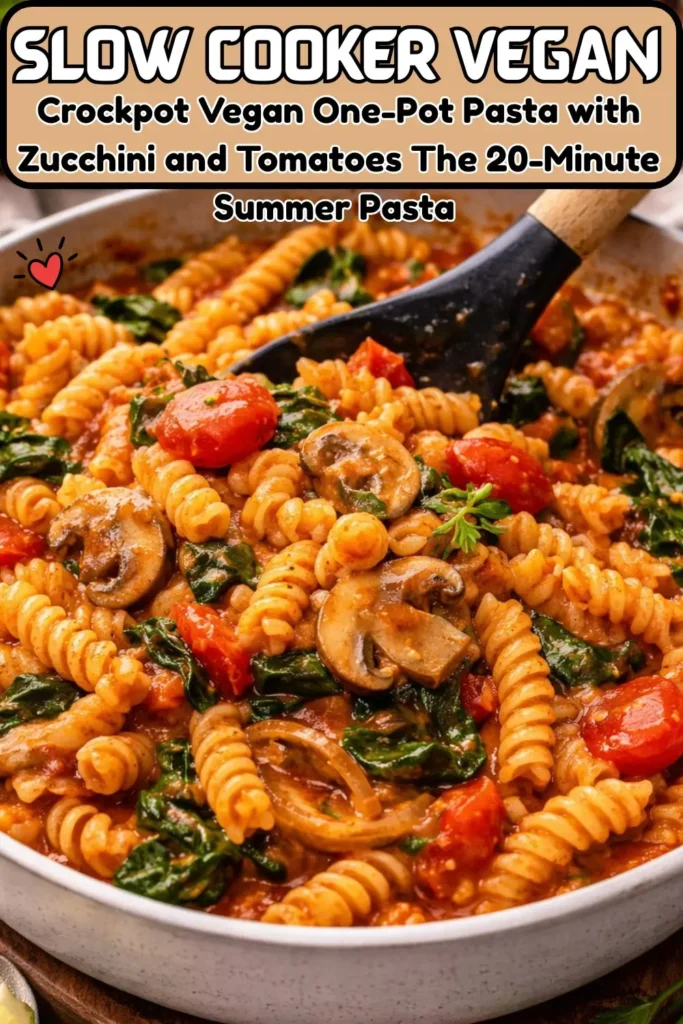
Here’s your complete planning overview:
| Detail | Info |
| Prep Time | 5 minutes |
| Cook Time | 15 minutes |
| Total Time | 20 minutes |
| Servings | 4 servings |
| Serving Size | 1 serving |
| Calories Per Serving | 265 kcal |
| Course | Main Course |
| Cuisine | American / Italian-Inspired |
| Diet | 100% Vegan, Gluten-Free Option Available |
20 minutes from start to finish for a complete, vegetable-loaded, flavor-packed pasta dinner that serves 4 people. At just 265 calories per serving, this is one of the lightest pasta dishes in this entire summer crockpot series — genuinely impressive for how satisfying and filling it actually is. The five-minute prep includes cutting the tomatoes, slicing the zucchini, and mincing the garlic. The rest is simply waiting and stirring.
Why the One-Pot Method Produces Better Pasta
The one-pot pasta technique sounds like a shortcut, but it actually produces a superior result to the traditional boil-then-sauce approach for one key reason: the pasta cooks in starchy, seasoned liquid rather than plain water.
As the pasta cooks, it releases starch into the surrounding liquid. That starch naturally thickens the sauce and creates the kind of creamy, coating consistency that professional pasta chefs work hard to achieve by adding pasta water to their sauces. In the one-pot method, this happens automatically the pasta and sauce develop together rather than being combined after the fact.
The vegetables soften directly in the same liquid, releasing their juices into the sauce as they cook. The cherry tomatoes burst and melt into the base. The zucchini softens and contributes its natural sweetness. The mushrooms release their earthy, savory juices. Everything in the pot becomes part of the sauce, and the final result tastes cohesive and unified in a way that tossed pasta simply doesn’t.
Ingredients You’ll Need
Everything here celebrates summer produce with a pantry-staple base:
The Pasta and Sauce:
- 24 oz dry pasta — shorter shapes work best (penne, rotini, shells, macaroni)
- 3¾ cups pasta sauce of choice — store-bought or homemade
- 7½ cups water
The Fresh Vegetables:
- 24 oz grape or cherry tomatoes, cut in half
- 3 small zucchini, ends trimmed and quartered
- 9 oz cremini mushrooms, sliced
- 1½ yellow onions, thinly sliced
- 9 oz fresh spinach — added at the very end
The Aromatics and Seasoning:
- 6 cloves garlic, minced
- 3 teaspoons salt-free Italian seasoning
- 1½ teaspoons red pepper flakes — optional for heat
- 1½ teaspoons kosher salt
This ingredient list serves 4 people generously. The recipe scales well — halve everything for 2 people, or use the full amounts for meal prep and enjoy leftovers throughout the week.
The pasta sauce choice matters more than you might expect. Since it contributes directly to the cooking liquid and final flavor, use a sauce you genuinely enjoy eating on its own. A bold, garlicky marinara works beautifully. A tomato-basil sauce adds brightness. An arrabbiata adds heat that complements the red pepper flakes. FYI — this is one of those recipes where using a sauce you love produces a dinner you love, and using a mediocre sauce produces a mediocre dinner. Invest wisely.
Equipment You’ll Need
The beauty of this recipe is how minimal the equipment requirements are:
- Large pot or pan with deep sides — the only cooking vessel you need. A 6–8 quart pot works perfectly and gives you room to stir without sauce splashing over the sides. A Dutch oven is ideal because its heavy bottom prevents scorching during the simmer stage. A large deep skillet (at least 3 inches deep) also works if you don’t have a large pot.
- Sharp knife and cutting board — for halving the cherry tomatoes, quartering the zucchini, slicing the mushrooms and onion, and mincing the garlic. Five minutes of prep work covers all of it.
- Wooden spoon or silicone spatula — for stirring every 2 minutes during cooking. This is the one ongoing task the recipe asks of you — and it genuinely matters for preventing sticking.
- Measuring cups — for the pasta sauce and water
- Colander — not needed for draining pasta (one-pot method eliminates this) but useful for rinsing vegetables
- Ladle — for serving
That’s your complete equipment list. One pot, one cutting board, one spoon. The total cleanup time after this meal takes longer to describe than to actually do.
Step-by-Step Instructions for Crockpot Vegan One-Pot Pasta
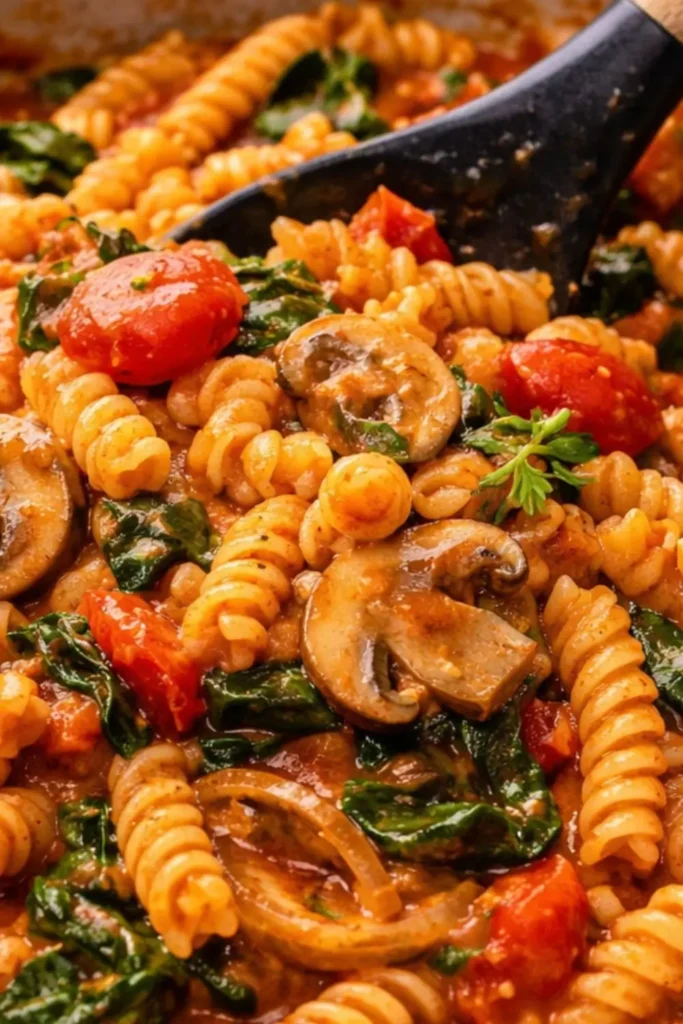
Step 1 — Load Everything Into the Pot (Except Spinach)
Add the uncooked dry pasta directly to your large pot. Add the halved cherry tomatoes, sliced mushrooms, thinly sliced onion, quartered zucchini, minced garlic, Italian seasoning, red pepper flakes (if using), and kosher salt. Pour in the 3¾ cups of pasta sauce and 7½ cups of water.
Stir everything together well so the pasta, vegetables, and sauce distribute evenly throughout the liquid. Place the pot over high heat and bring the entire mixture to a full boil.
The liquid-to-pasta ratio might look alarming at first glance — that’s a lot of liquid. Trust it. The pasta absorbs a significant portion during cooking, and the excess liquid reduces into a thickened sauce with the pasta starch. By the time the pasta reaches al dente, the liquid level drops considerably and what remains has transformed into a clingy, flavorful sauce.
Step 2 — Cook and Stir Consistently
Once boiling, reduce the heat to medium-low and cook for 10–14 minutes, stirring the mixture every 2 minutes. The frequent stirring is the one non-negotiable requirement of this recipe — pasta sitting undisturbed in the starchy liquid will stick to the bottom of the pot and potentially burn.
Two minutes feels like a short interval but it goes quickly when you’re doing other things nearby. Set a timer if needed. Each stir only takes about 30 seconds and prevents the bottom layer of pasta from overcooking while the top cooks properly.
Check for doneness based on the minimum cook time listed on your pasta package. Start checking at that minimum time — one-pot pasta often finishes slightly faster than traditionally boiled pasta because it cooks in hot sauce rather than plain water.
The pasta is ready when it’s al dente — slightly firm at the center when you bite into a piece. It should not be fully soft at this stage because the residual heat continues cooking it slightly after you remove the pot from the heat.
Step 3 — Add the Spinach and Serve
Turn the heat off. Add the 9 oz of fresh spinach directly to the pot and fold it into the hot pasta. The residual heat wilts the spinach in 1–2 minutes — stir gently and consistently until every leaf wilts into the sauce.
Adding the spinach at the very end rather than during cooking preserves its color, nutritional value, and slight texture. Spinach cooked for 10+ minutes in boiling liquid turns gray, slimy, and nutritionally diminished. Added off-heat at the end, it stays bright green, tender, and full of its natural Vitamin A, Vitamin C, and iron content.
Divide into four bowls and add your preferred toppings. Serve immediately while hot.
The “Fancy” Upgrade — Two Extra Minutes for More Flavor
The recipe includes an optional sauté step for when you have a few extra minutes and want maximum flavor development. Here’s exactly what to do:
Warm 1 tablespoon of olive oil in the pot over medium heat before adding anything else. Add the sliced onion and sauté for 3–5 minutes until translucent and slightly golden. Add the minced garlic, Italian seasoning, and red pepper flakes and sauté for 1 more minute until extremely fragrant. Then proceed with the recipe as normal — add the remaining vegetables, pasta, sauce, and water.
This brief sauté step does two things that the dump-everything method doesn’t. First, it caramelizes the onion slightly, which adds natural sweetness and depth that raw onion cooked in liquid never achieves. Second, it blooms the dried spices in hot oil, which intensifies their flavor dramatically compared to adding them to cold water.
IMO, the sauté version produces a noticeably more complex, restaurant-quality result that’s worth the extra five minutes whenever time allows. The standard method is excellent. The sauté version is exceptional.
Pasta Choice — Why Shape Matters More Than You Think
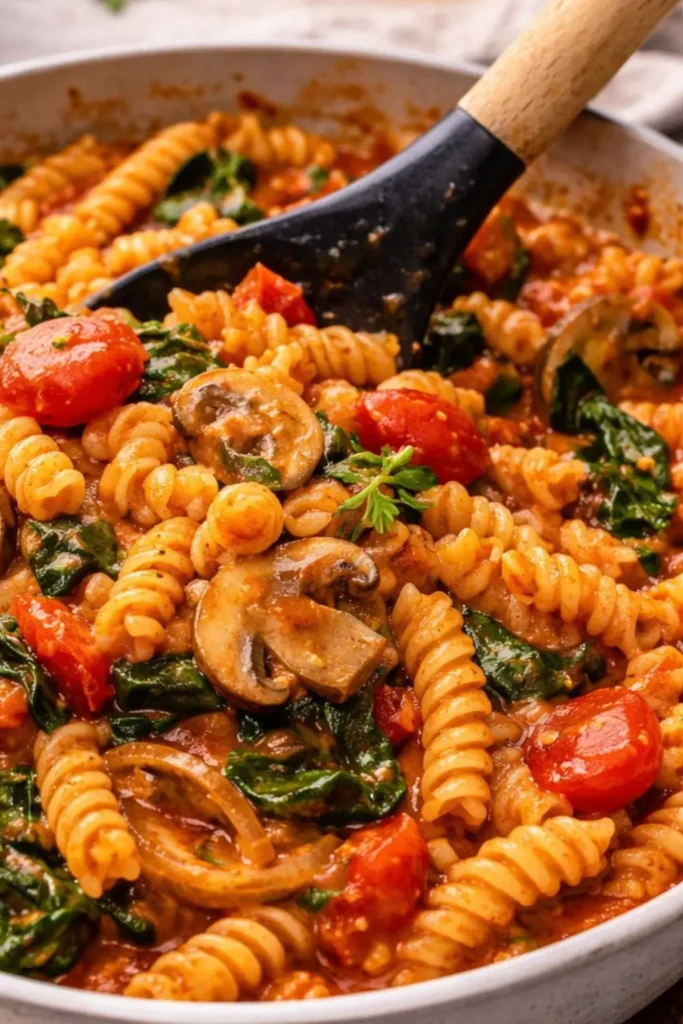
The recipe recommends shorter pasta shapes, and this recommendation carries real practical importance:
Why Shorter Shapes Work Better
Penne, rotini, shells, and macaroni cook more evenly in the one-pot method than long noodles. Shorter shapes stay submerged under the liquid throughout cooking, ensuring each piece cooks at the same rate. Long noodles tend to bunch and stick above the liquid surface, cooking unevenly and requiring constant repositioning.
Shorter shapes also stir more easily without breaking, which matters when you’re stirring every 2 minutes during a 15-minute cook.
The Best Shape for Each Situation
- Penne — the most reliable choice. Hollow tubes fill with sauce and create an exceptional eating experience.
- Rotini — the spirals catch and hold chunky vegetable pieces. Excellent for this vegetable-heavy recipe.
- Shells — cup-shaped, they scoop up vegetables and sauce together in each bite.
- Macaroni — fastest cooking time, most forgiving shape, great for getting dinner on the table quickly.
Gluten-Free Options
The recipe works with gluten-free pasta, and brown rice pasta produces the best results among gluten-free varieties. It holds its shape better during the stirring process and doesn’t become gummy the way some rice or corn-based pastas do. Check your brown rice pasta package for the minimum cook time and start checking at that point.
Vegetable Substitutions and Additions
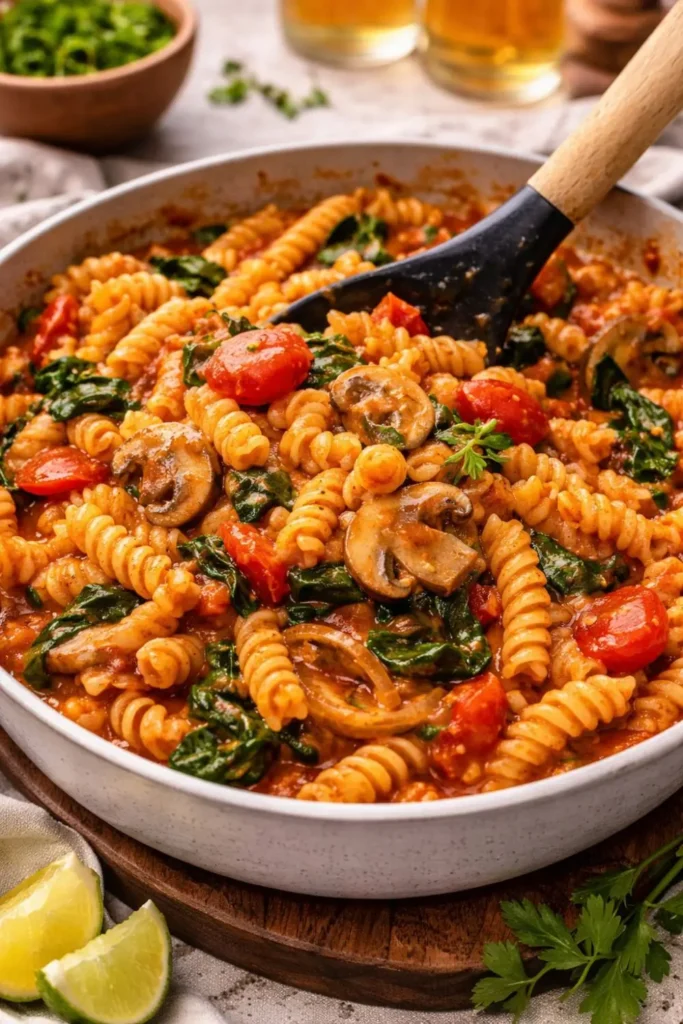
Crockpot Vegan One-Pot Pasta with Zucchini and Tomatoes is built for flexibility. The recipe explicitly encourages adding, subtracting, or substituting any of the vegetables based on what’s available. Here are the best options:
Excellent Additions
- Corn kernels — fresh summer corn adds sweetness and texture. Add with the other vegetables at the start.
- Asparagus — cut into 1-inch pieces, added at the start. Tender and seasonal.
- Bell peppers — any color, sliced thin. Red bell peppers add sweetness; green add a slightly more savory note.
- Kalamata olives — stir in during the last 2 minutes. Adds a briny, Mediterranean depth.
- Sun-dried tomatoes — a few tablespoons intensify the tomato flavor significantly.
- White beans or chickpeas — stir in during the last 5 minutes for added protein and fiber.
What to Remove Without Issue
- Mushrooms — if you’re not a mushroom person, skip them completely. The recipe works well without them.
- Red pepper flakes — listed as optional and easily omitted for a milder dish.
- Onion — reduce to 1 onion if the quantity feels like too much.
Still Hungry, Try It Next recipe
Crockpot Vegan Korean Gochujang Tofu Stew
Nutrition Information Per Serving
At just 265 calories per generous serving, this pasta delivers outstanding nutritional value:
| Nutrient | Per Serving |
| Calories | 265 kcal |
| Carbohydrates | 54g |
| Protein | 11g |
| Fat | 1g |
| Fiber | 5g |
| Sugar | 8g |
| Sodium | 698mg |
| Potassium | 850mg |
| Vitamin A | 2,775 IU |
| Vitamin C | 35mg |
| Iron | 3mg |
Just 1 gram of fat per serving — this is remarkable for a pasta dish and reflects the fact that the recipe uses no oil in the standard version (the optional sauté step adds minimal oil if you use it). The 2,775 IU of Vitamin A comes primarily from the spinach and zucchini. The 11 grams of protein comes from the pasta, mushrooms, and spinach working together.
For a more protein-rich version, stir in a can of white beans during the last 5 minutes of cooking. This adds approximately 7 additional grams of protein per serving without changing the flavor profile meaningfully.
Storage and Reheating
This pasta is best enjoyed immediately, but leftovers keep well:
- Refrigerator: Store in an airtight container for up to 5 days. The pasta absorbs the remaining sauce as it sits and becomes thicker and more intensely flavored over time some people actually prefer day-two leftovers.
- Reheating: Add a splash of water or vegetable broth before reheating to loosen the pasta, which will have tightened up as it absorbed more liquid. Microwave in 90-second intervals, stirring between each. Or warm in a small pan over medium-low heat with added liquid.
- Freezer: One-pot pasta freezes adequately but the texture changes slightly the pasta softens further after thawing. If you plan to freeze, slightly undercook the pasta in the first place.
Final Thoughts — Make This Pasta Tonight and Wash One Pot
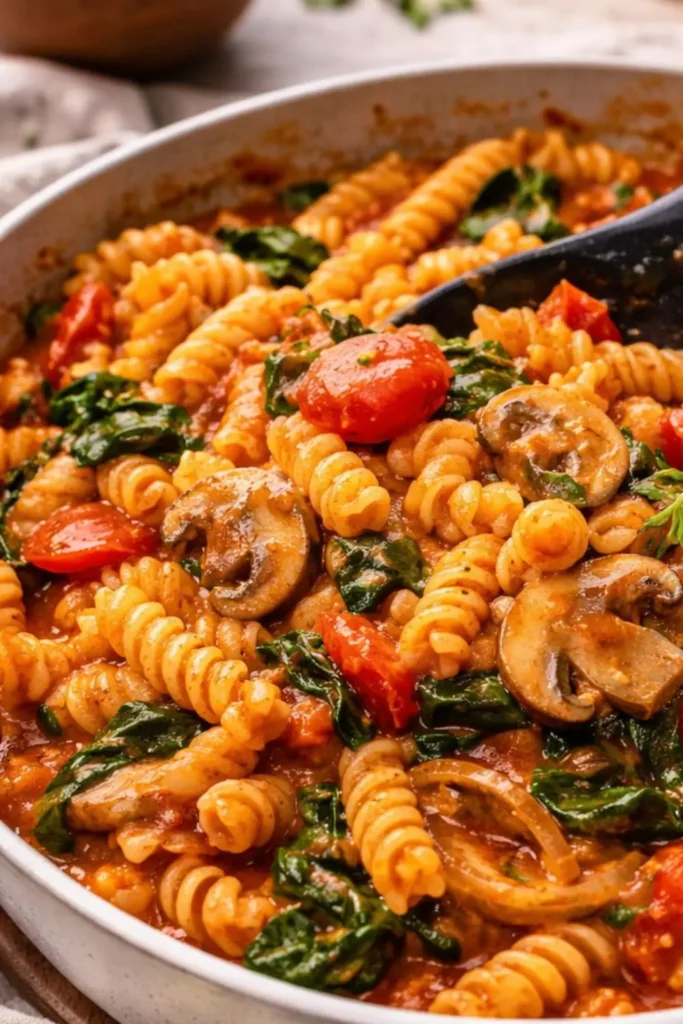
Crockpot Vegan One-Pot Pasta with Zucchini and Tomatoes is the 20-minute summer dinner that genuinely requires no compromise — no compromising on flavor, no compromising on nutrition, and absolutely no compromising on the minimal cleanup you deserve after a full summer day.
Fresh zucchini and tomatoes at their peak, earthy mushrooms, wilted spinach, and pasta cooked directly in seasoned sauce — all of it in one pot that you wash once and put away. At 265 calories per serving with 11 grams of plant-based protein, this dish earns its place as a regular weeknight staple.
Five minutes of chopping. Fifteen minutes of stirring every couple of minutes. Dinner for four that tastes like you actually tried. The one-pot method wins every time.
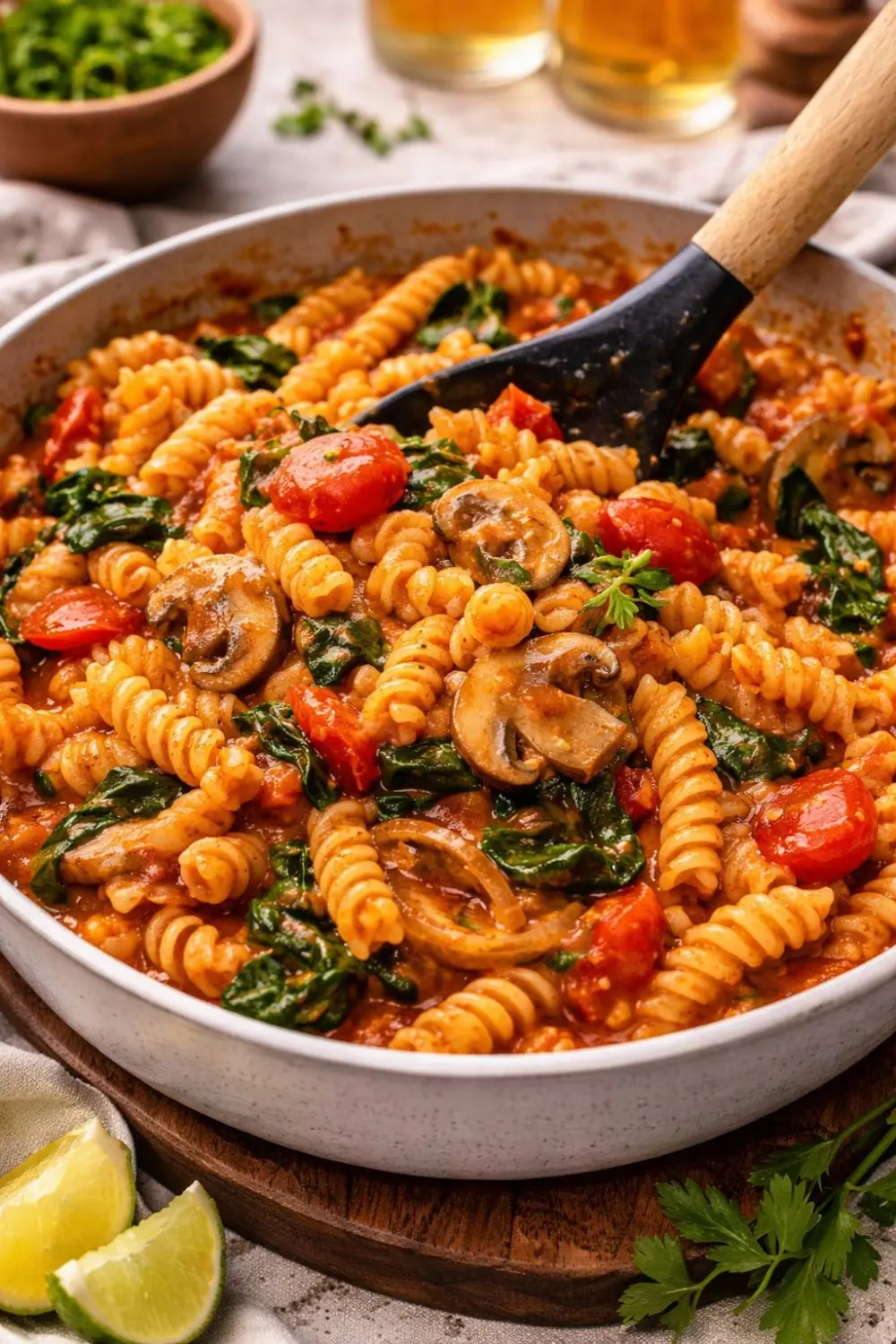
Crockpot Vegan One-Pot Pasta
Ingredients
Equipment
Method
- Step-by-Step Instructions
- Step 1 — Load Everything Into the Pot (Except Spinach)
- Add the uncooked dry pasta directly to your large pot. Add the halved cherry tomatoes, sliced mushrooms, thinly sliced onion, quartered zucchini, minced garlic, Italian seasoning, red pepper flakes (if using), and kosher salt. Pour in the 3¾ cups of pasta sauce and 7½ cups of water.
- Stir everything together well so the pasta, vegetables, and sauce distribute evenly throughout the liquid. Place the pot over high heat and bring the entire mixture to a full boil.
- The liquid-to-pasta ratio might look alarming at first glance — that’s a lot of liquid. Trust it. The pasta absorbs a significant portion during cooking, and the excess liquid reduces into a thickened sauce with the pasta starch. By the time the pasta reaches al dente, the liquid level drops considerably and what remains has transformed into a clingy, flavorful sauce.
- Step 2 — Cook and Stir Consistently
- Once boiling, reduce the heat to medium-low and cook for 10–14 minutes, stirring the mixture every 2 minutes. The frequent stirring is the one non-negotiable requirement of this recipe — pasta sitting undisturbed in the starchy liquid will stick to the bottom of the pot and potentially burn.
- Two minutes feels like a short interval but it goes quickly when you’re doing other things nearby. Set a timer if needed. Each stir only takes about 30 seconds and prevents the bottom layer of pasta from overcooking while the top cooks properly.
- Check for doneness based on the minimum cook time listed on your pasta package. Start checking at that minimum time — one-pot pasta often finishes slightly faster than traditionally boiled pasta because it cooks in hot sauce rather than plain water.
- The pasta is ready when it’s al dente — slightly firm at the center when you bite into a piece. It should not be fully soft at this stage because the residual heat continues cooking it slightly after you remove the pot from the heat.
- Step 3 — Add the Spinach and Serve
- Turn the heat off. Add the 9 oz of fresh spinach directly to the pot and fold it into the hot pasta. The residual heat wilts the spinach in 1–2 minutes — stir gently and consistently until every leaf wilts into the sauce.
- Adding the spinach at the very end rather than during cooking preserves its color, nutritional value, and slight texture. Spinach cooked for 10+ minutes in boiling liquid turns gray, slimy, and nutritionally diminished. Added off-heat at the end, it stays bright green, tender, and full of its natural Vitamin A, Vitamin C, and iron content.
- Divide into four bowls and add your preferred toppings. Serve immediately while hot.
Notes
Nutrition Information Per Serving
At just 265 calories per generous serving, this pasta delivers outstanding nutritional value:| Nutrient | Per Serving |
| Calories | 265 kcal |
| Carbohydrates | 54g |
| Protein | 11g |
| Fat | 1g |
| Fiber | 5g |
| Sugar | 8g |
| Sodium | 698mg |
| Potassium | 850mg |
| Vitamin A | 2,775 IU |
| Vitamin C | 35mg |
| Iron | 3mg |

Hi — I’m Rachel. I’m a wife, a mom, and a home cook who believes that food should bring comfort, joy, and compassion to the table. I live with my family — two hungry little foodies who are my most honest recipe testers — and together we’ve built a kitchen culture that’s all about good food that happens to be 100% vegan. I started this blog because I wanted a place to share the recipes that keep our days moving, the dishes that make weeknights feel a little easier, and the meals that become our little family traditions.