
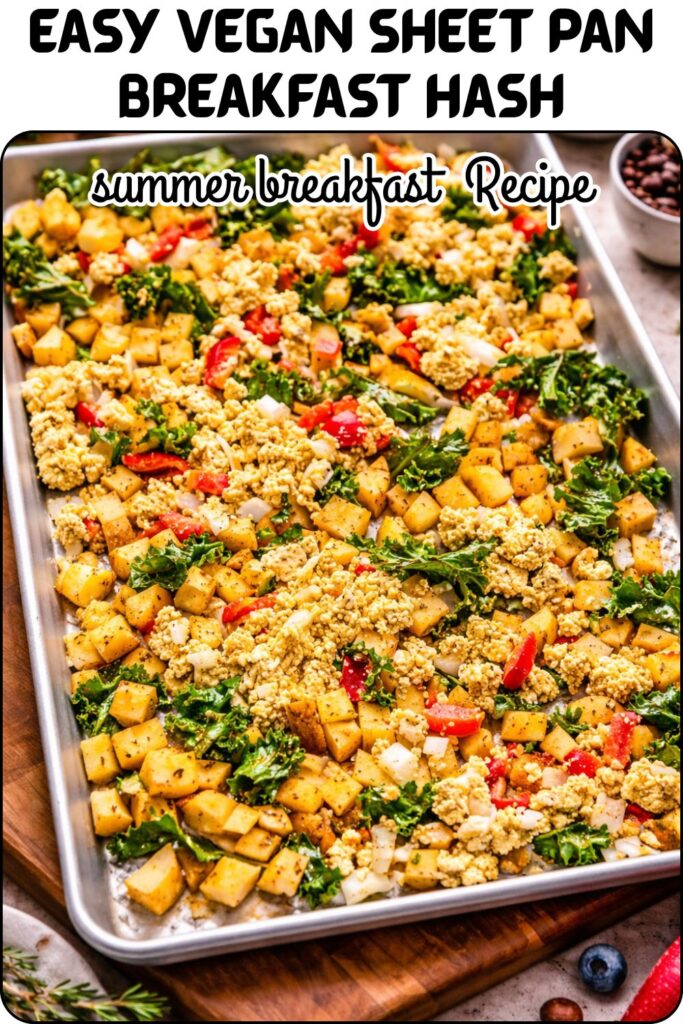
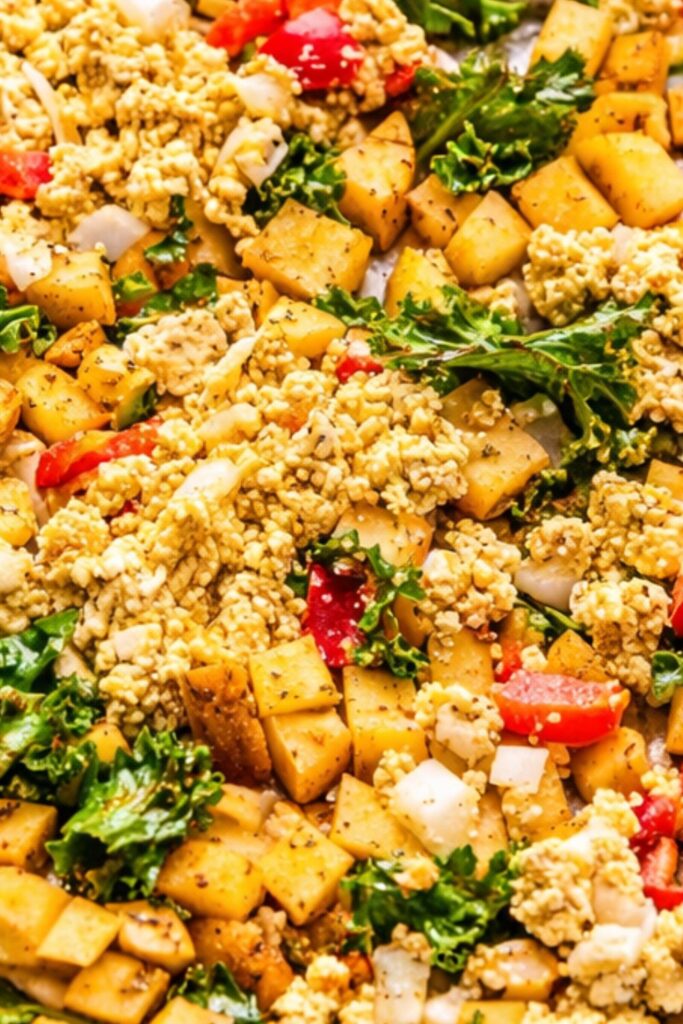
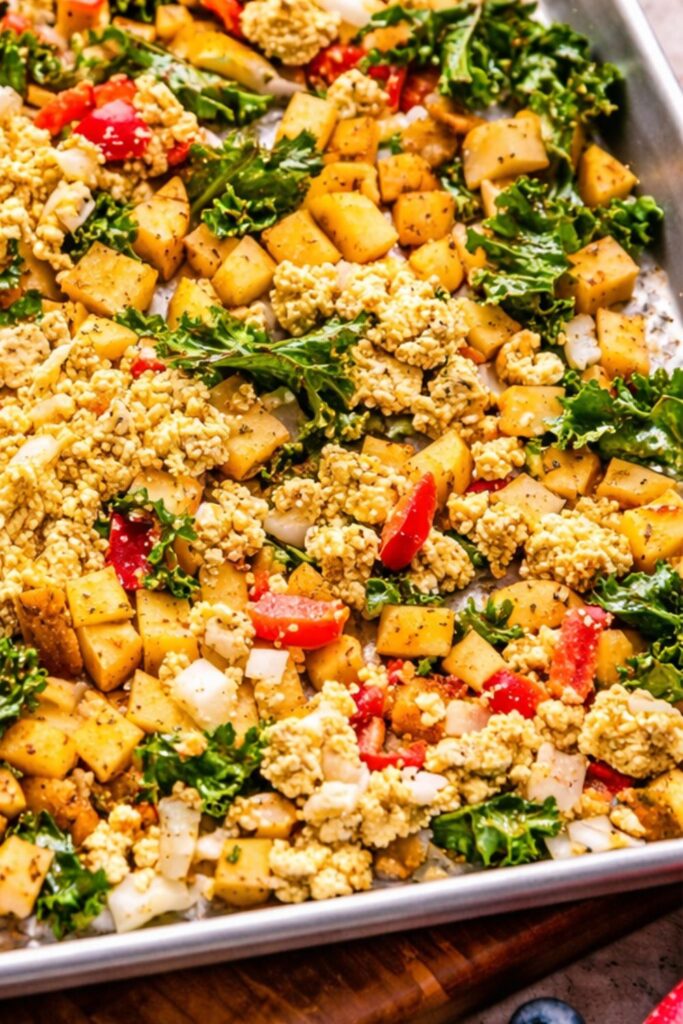
Most breakfast hash recipes have you standing at a hot skillet for 30 minutes, stirring constantly, managing heat levels, and babysitting multiple vegetable cook times simultaneously. Easy Vegan Sheet Pan Breakfast Hash throws all of that out and replaces it with one pan, one oven, and 10 minutes of prep before you walk away and let high heat do the actual work. Sweet potatoes, two colors of bell pepper, onion, and chickpeas roast together at progressively higher temperatures until everything is caramelized, slightly crispy, and deeply satisfying. The sriracha tahini sauce on top is the finishing move that makes the whole bowl genuinely extraordinary.
I started making this specifically for summer weekends when I wanted a real, substantial breakfast without sweating over a stovetop. The sheet pan method works better than skillet hash for one key reason: the oven’s dry heat caramelizes everything evenly across the entire pan rather than the inconsistent results you get from stovetop cooking. Every bite has that slightly charred edge and tender interior that makes roasted vegetables so irresistible. This is breakfast that makes you feel accomplished before 10am.
My Recipe Timing and Serving Details
Here’s your complete planning overview:
| Detail | Info |
| Prep Time | 10 minutes |
| Cook Time | 40 minutes |
| Total Time | 50 minutes |
| Servings | 3 servings |
| Serving Size | 1 of 3 portions |
| Calories Per Serving | 391 kcal (without tahini dressing) |
| Calories with Tahini Dressing | ~516 kcal |
| Course | Breakfast / Brunch |
| Diet | 100% Vegan |
This recipe serves 3 people as a complete, satisfying breakfast. At 391 calories per serving without the tahini dressing rising to approximately 516 with it this is a genuinely substantial breakfast that keeps you fueled through a full active summer morning. The dressing adds 125 calories and additional protein and calcium, making the complete bowl even more nutritionally impressive.
Why the Two-Temperature Roasting Method Is Brilliant
The recipe uses a specific two-stage roasting technique that most sheet pan recipes don’t bother with and the difference it makes to the finished hash is significant enough to explain.
Stage 1 at 425°F for 20 minutes gently cooks the sweet potato through, softening it from its raw state to tender throughout. The lower temperature prevents the exterior from burning before the interior is done sweet potato cubes need time to cook all the way through, and rushing it with excessive heat produces charred exteriors over raw centers.
Stage 2 at 500°F for 20 minutes takes everything that’s been cooked through in Stage 1 and applies high heat to caramelize the surfaces aggressively. At 500°F, the natural sugars in the sweet potato and bell peppers caramelize rapidly, creating the golden-brown, slightly crispy edges that make roasted vegetables dramatically more flavorful than simply cooked ones.
The result: sweet potato that’s cooked perfectly through with caramelized, slightly crispy edges. Chickpeas that have gone from soft and bean-like to firm, slightly crunchy, and deeply savory. Bell peppers with char marks and concentrated sweetness. This progressive temperature approach is IMO one of the smartest techniques in plant-based cooking. FYI it works on any sheet pan vegetable dish you make.
Ingredients You’ll Need For
A focused, colorful lineup of whole plant foods:
The Hash:
- 1½ lbs. sweet potatoes, cut into ¾–1 inch cubes
- ½ large onion, chopped
- 1 red bell pepper, cored and diced
- 1 green bell pepper, cored and diced
- 1 can (15 oz) chickpeas, drained and rinsed
- 1–2 tablespoons olive oil
- 1 teaspoon garlic powder
- Mineral salt and fresh cracked pepper to taste
The Sriracha Tahini Sauce:
- 4 tablespoons tahini
- 4 tablespoons water
- Juice of ½ small lemon
- Pinch of mineral salt
- Sriracha to taste
For Serving:
- Sliced avocado
- Additional sriracha if desired
The red and green bell pepper combination creates both visual appeal and flavor variety. Red bell peppers are sweeter and more mature they caramelize more readily and add a beautiful color contrast. Green bell peppers are slightly bitter and less sweet they provide a counterpoint that prevents the hash from tasting one-dimensionally sweet. Together they create a more interesting flavor profile than using only one color. That said, use whatever combination you have orange and yellow work just as well.
The chickpeas are genuinely the surprise element here. Most people think of chickpeas as a soft, bean-textured ingredient. Roasted at 500°F with the hash, they partially crisp on the outside and become firm and slightly crunchy reminiscent of croutons but more substantial. They provide protein, texture contrast, and a satisfying bite that makes this hash genuinely filling.
Equipment You’ll Need For
This recipe lives up to its “sheet pan” name one pan, minimal tools:
Primary Equipment
- Large rimmed sheet pan (half-sheet, 18×13 inches) – the most important equipment decision. A large sheet pan gives the vegetables and chickpeas adequate space to roast rather than steam. Crowding is the enemy of caramelization when vegetables sit too close together, they release steam that builds up between them and essentially steams them in their own moisture rather than roasting them to crispness. The 18×13 half-sheet size handles 1½ lbs of sweet potato plus the other vegetables in a single layer without crowding.
If you only have a smaller pan, divide everything across two pans rather than crowding a single pan. Two pans of properly roasted vegetables produce dramatically better results than one crowded pan.
- Parchment paper or silpat – for lining the sheet pan. Parchment paper makes cleanup nearly effortless and prevents sticking. A silpat (silicone baking mat) is reusable and works equally well. Lightly greasing the pan directly with oil also works but makes cleanup harder.
For the Sauce
- Small bowl – for whisking the tahini sauce
- Whisk or fork – for combining and smoothing the tahini with water
Supporting Equipment
- Sharp knife and cutting board – for cutting the sweet potatoes into consistent ¾–1 inch cubes and dicing the bell peppers and onion
- Large mixing bowl – for tossing the vegetables and chickpeas with oil and seasoning before spreading on the pan. Tossing in a bowl rather than directly on the pan ensures even oil and seasoning coating on every piece.
- Wooden spoon or spatula – for stirring the hash during both roasting stages
- Measuring spoons
- Oven mitts – the pan gets genuinely very hot at 500°F
Step-by-Step Instructions
Step 1- Preheat and Prep
Preheat your oven to 425°F. While it heats, line your large rimmed sheet pan with parchment paper.
Peel and cut the sweet potatoes into consistent ¾–1 inch cubes. Uniformity matters here inconsistent sizes produce some pieces that are overcooked while others are still firm in the center. A sharp knife and some patience with the cutting produces dramatically more even results.
Drain and rinse the chickpeas in a colander. Pat them dry with a paper towel this is a small step that makes a meaningful difference. Wet chickpeas steam rather than roast in the oven. Dry chickpeas caramelize and crisp. Take 30 seconds to pat them dry.
Step 2 – Toss and Arrange
Add the sweet potato cubes, chopped onion, diced red and green bell peppers, and dried chickpeas to a large mixing bowl. Drizzle with 1–2 tablespoons of olive oil and sprinkle with the garlic powder, salt, and fresh cracked pepper. Toss everything together thoroughly every piece should have a light, even coating of oil and seasoning.
Transfer the seasoned mixture to the lined sheet pan and arrange in a single even layer. Every piece should have direct contact with the pan surface rather than sitting on top of other pieces. If the pan looks too full for a single layer, divide between two pans.
Step 3 – First Roast at 425°F
Place the pan on the center rack of the preheated 425°F oven. Roast for 20 minutes, stirring once at the 10-minute mark. After the stir, rearrange the pieces back into a single layer before returning to the oven.
At the 20-minute mark, the sweet potatoes should be mostly cooked through and showing some color at their edges. The bell peppers will have softened and started to char at the tips.
Step 4 – Second Roast at 500°F
Increase the oven temperature to 500°F. Stir the hash a second time, rearranging to a single layer. Return to the oven and roast for another 20 minutes, stirring once at the 10-minute mark.
At 500°F, the caramelization happens quickly check at the 10-minute stir to assess browning progress. The finished hash should have deep golden-brown edges on the sweet potato, slightly charred bell pepper pieces, and chickpeas that are firm and slightly crunchy.
Allow the finished hash to cool on the pan for 3–5 minutes before serving the carry-over cooking from the extremely hot pan continues briefly after removal from the oven.
Step 5 – Make the Sriracha Tahini Sauce
While the hash roasts during either stage, whisk together the tahini, water, lemon juice, salt, and sriracha in a small bowl. Start with 1 teaspoon of sriracha and add more to taste different sriracha brands vary in heat intensity.
Tahini initially seizes when liquid is added to it the mixture will look thick and pasty at first. Keep whisking and adding water gradually until it smooths out into a pourable, creamy consistency. Let the sauce rest for 5 minutes before tasting the flavors develop and balance as it sits.
Step 6 – Assemble and Serve
Divide the roasted hash between 3 bowls. Add sliced avocado alongside each portion. Drizzle the sriracha tahini sauce generously over each bowl. Add additional sriracha if desired and a final crack of black pepper.
The Sriracha Tahini Sauce Why It Makes the Whole Bowl
The hash is excellent on its own. The sriracha tahini sauce makes it memorable. Here’s what each element of the sauce contributes:
Tahini – sesame paste that’s rich, slightly bitter, nutty, and genuinely creamy. It’s the base that makes the sauce feel substantial rather than thin and watery. Tahini also adds protein and calcium the recipe notes specifically that the dressing adds more protein and calcium to the nutritional totals.
Lemon juice – the essential brightening acid that cuts through tahini’s richness. Without it, tahini sauce tastes heavy and flat. With it, the entire sauce tastes alive and vibrant.
Sriracha – adds heat and a slightly garlic-forward, slightly sweet heat that complements both the tahini’s nuttiness and the sweet potato’s natural sweetness. The amount is adjustable ½ teaspoon for mild, 2 full teaspoons for genuinely hot.
Water – for consistency. Tahini needs water to loosen to a drizzling consistency. Add gradually and stop when you reach the texture you want pourable but not thin.
You may also like Next recipe
Easy Vegan Lemon Curd Chia Parfait
Customization Options Making It Your Own
The base hash is deliberately flexible. Here are modifications that work well:
Swapping the Sweet Potato
- Regular potatoes (Yukon gold) – less sweet, more neutral, equally satisfying
- Butternut squash – similar sweetness and texture to sweet potato
- A combination of both – creates texture and flavor variety
Adding More Protein
- Extra chickpeas (2 cans instead of 1) – doubles the protein easily
- Cubed firm tofu -press and dry thoroughly before adding, then roast alongside the vegetables
- Hemp seeds – sprinkle over the finished hash before serving
Different Spice Profiles
- Add smoked paprika and cumin for a Southwestern character
- Add curry powder for an Indian-inspired direction that pairs particularly well with the tahini sauce
- Add za’atar for a Middle Eastern profile that’s genuinely outstanding
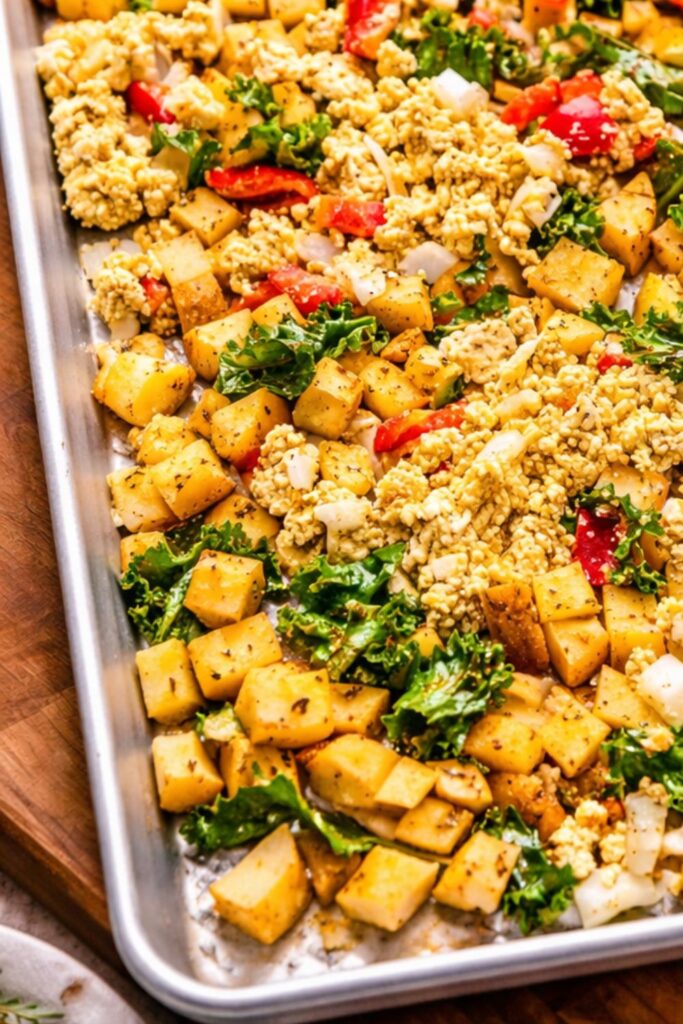
Nutrition Information Per Serving
At 391 calories per serving (without tahini dressing):
| Nutrient | Per Serving |
| Calories | 391 kcal |
| Total Carbohydrates | 73g |
| Protein | 10.8g |
| Fat | 7.1g |
| Fiber | 14.4g |
| Sugar | 17.4g |
| Sodium | 502.9mg |
| Vitamin A | 193% DV |
| Vitamin C | 121% DV |
| Vitamin B6 | 50% DV |
| Folic Acid | 25% DV |
193% of daily Vitamin A and 121% of daily Vitamin C per serving largely from the sweet potato and bell peppers working together at peak summer ripeness. The 14.4 grams of fiber per serving represents approximately 51% of the daily recommended intake from a single breakfast bowl. With the tahini dressing added, protein increases and total calories rise to approximately 516 still a completely reasonable, nutritionally complete breakfast.
Storage and Meal Prep
Easy Vegan Sheet Pan Breakfast Hash stores and reheats beautifully:
- Refrigerator- Store leftovers in an airtight container for up to 4–5 days. The hash reheats well and tastes great through the week.
- Reheating- Spread on a sheet pan and reheat at 400°F for 8–10 minutes to restore crispiness. Or microwave in 60-second intervals faster but produces a softer texture.
- Store the tahini sauce separately – it keeps in a sealed jar in the refrigerator for up to 5 days and can be used on other dishes throughout the week (grain bowls, roasted vegetables, wraps).
- Meal prep strategy- Make a double batch on Sunday and portion into individual containers. Each morning, reheat in the oven for 10 minutes while you make coffee. Three days of effortless, satisfying breakfasts handled.
My Final Thoughts Make This Hash and Reconsider Everything You Thought About Breakfast
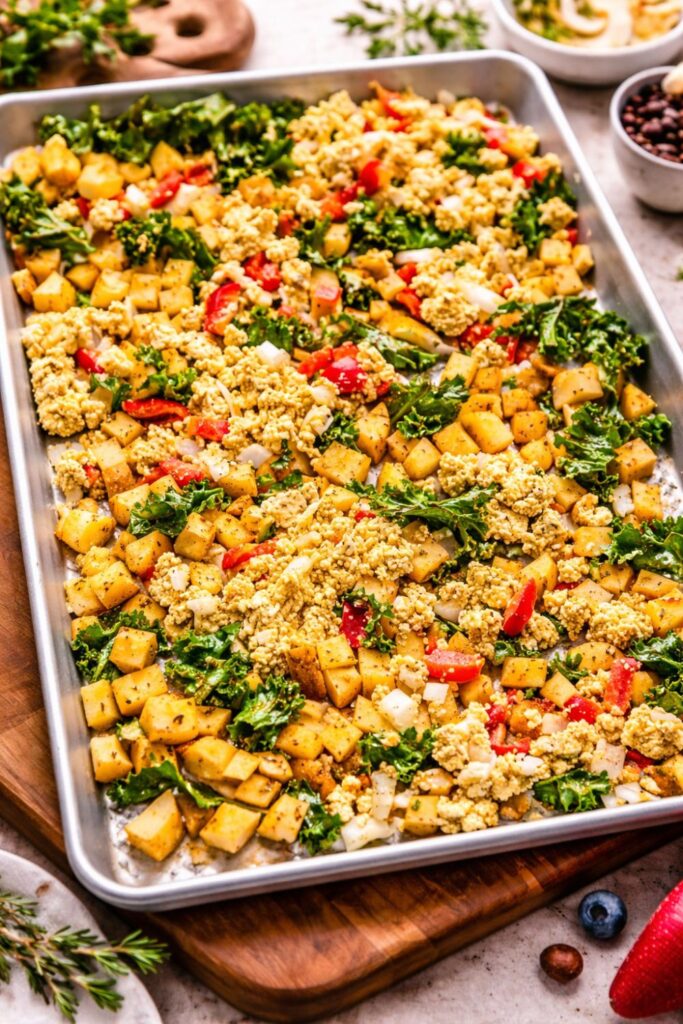
Easy Vegan Sheet Pan Breakfast Hash is the breakfast recipe that proves oven-roasting beats stovetop scrambling for hash every single time. Caramelized sweet potatoes, crispy chickpeas, vibrant bell peppers, and a sriracha tahini sauce that makes every bowl something worth eating slowly and deliberately all from 10 minutes of prep and 40 minutes of hands-off roasting.
391 calories, 193% Vitamin A, 121% Vitamin C, 10.8 grams of protein, 14.4 grams of fiber, serves 3 people, keeps for 5 days. The numbers make a compelling case. The taste makes a permanent one.
Heat the oven. Cut the sweet potatoes. Walk away. Come back to the best breakfast hash you’ve ever made.
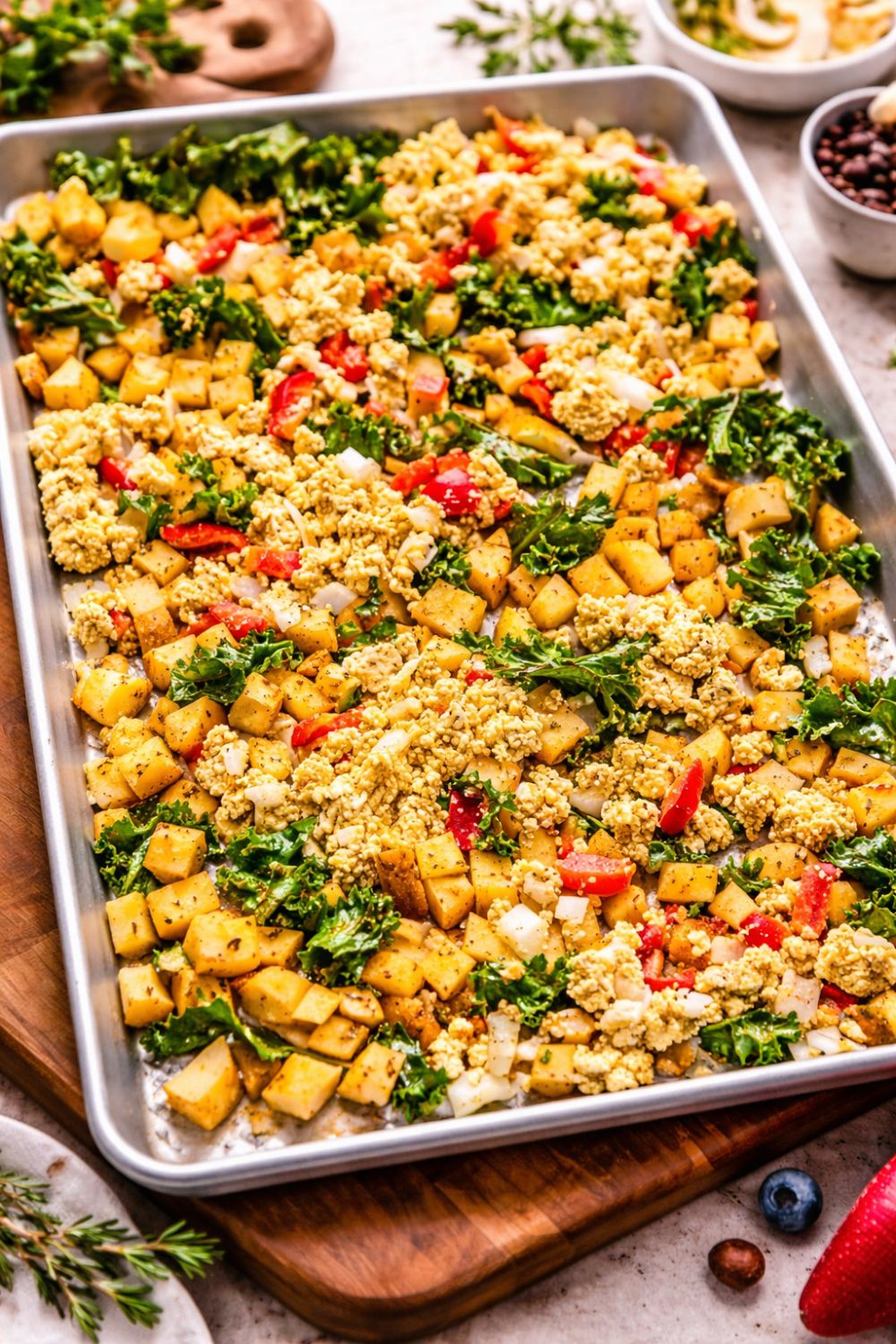
Easy Vegan Sheet Pan Breakfast Hash
Ingredients
Equipment
Method
- Step 1- Preheat and Prep
- Preheat your oven to 425°F. While it heats, line your large rimmed sheet pan with parchment paper.
- Peel and cut the sweet potatoes into consistent ¾–1 inch cubes. Uniformity matters here inconsistent sizes produce some pieces that are overcooked while others are still firm in the center. A sharp knife and some patience with the cutting produces dramatically more even results.
- Drain and rinse the chickpeas in a colander. Pat them dry with a paper towel this is a small step that makes a meaningful difference. Wet chickpeas steam rather than roast in the oven. Dry chickpeas caramelize and crisp. Take 30 seconds to pat them dry.
- Step 2 – Toss and Arrange
- Add the sweet potato cubes, chopped onion, diced red and green bell peppers, and dried chickpeas to a large mixing bowl. Drizzle with 1–2 tablespoons of olive oil and sprinkle with the garlic powder, salt, and fresh cracked pepper. Toss everything together thoroughly every piece should have a light, even coating of oil and seasoning.
- Transfer the seasoned mixture to the lined sheet pan and arrange in a single even layer. Every piece should have direct contact with the pan surface rather than sitting on top of other pieces. If the pan looks too full for a single layer, divide between two pans.
- Step 3 – First Roast at 425°F
- Place the pan on the center rack of the preheated 425°F oven. Roast for 20 minutes, stirring once at the 10-minute mark. After the stir, rearrange the pieces back into a single layer before returning to the oven.
- At the 20-minute mark, the sweet potatoes should be mostly cooked through and showing some color at their edges. The bell peppers will have softened and started to char at the tips.
- Step 4 – Second Roast at 500°F
- Increase the oven temperature to 500°F. Stir the hash a second time, rearranging to a single layer. Return to the oven and roast for another 20 minutes, stirring once at the 10-minute mark.
- At 500°F, the caramelization happens quickly check at the 10-minute stir to assess browning progress. The finished hash should have deep golden-brown edges on the sweet potato, slightly charred bell pepper pieces, and chickpeas that are firm and slightly crunchy.
- Allow the finished hash to cool on the pan for 3–5 minutes before serving the carry-over cooking from the extremely hot pan continues briefly after removal from the oven.
- Step 5 – Make the Sriracha Tahini Sauce
- While the hash roasts during either stage, whisk together the tahini, water, lemon juice, salt, and sriracha in a small bowl. Start with 1 teaspoon of sriracha and add more to taste different sriracha brands vary in heat intensity.
- Tahini initially seizes when liquid is added to it the mixture will look thick and pasty at first. Keep whisking and adding water gradually until it smooths out into a pourable, creamy consistency. Let the sauce rest for 5 minutes before tasting the flavors develop and balance as it sits.
- Step 6 – Assemble and Serve
- Divide the roasted hash between 3 bowls. Add sliced avocado alongside each portion. Drizzle the sriracha tahini sauce generously over each bowl. Add additional sriracha if desired and a final crack of black pepper.
Notes
Nutrition Information Per Serving
At 391 calories per serving (without tahini dressing):| Nutrient | Per Serving |
| Calories | 391 kcal |
| Total Carbohydrates | 73g |
| Protein | 10.8g |
| Fat | 7.1g |
| Fiber | 14.4g |
| Sugar | 17.4g |
| Sodium | 502.9mg |
| Vitamin A | 193% DV |
| Vitamin C | 121% DV |
| Vitamin B6 | 50% DV |
| Folic Acid | 25% DV |

Hi — I’m Rachel. I’m a wife, a mom, and a home cook who believes that food should bring comfort, joy, and compassion to the table. I live with my family — two hungry little foodies who are my most honest recipe testers — and together we’ve built a kitchen culture that’s all about good food that happens to be 100% vegan. I started this blog because I wanted a place to share the recipes that keep our days moving, the dishes that make weeknights feel a little easier, and the meals that become our little family traditions.