
Most breakfasts ask something of your digestive system without giving much in return. This Mango Coconut Chia Seed Pudding for Vegan Gut Health is the rare exception a genuinely indulgent-tasting tropical breakfast that also happens to deliver an extraordinary 19 grams of fiber per serving, real probiotic-supporting nutrients, and a texture so creamy you’ll forget you’re eating something this good for you.
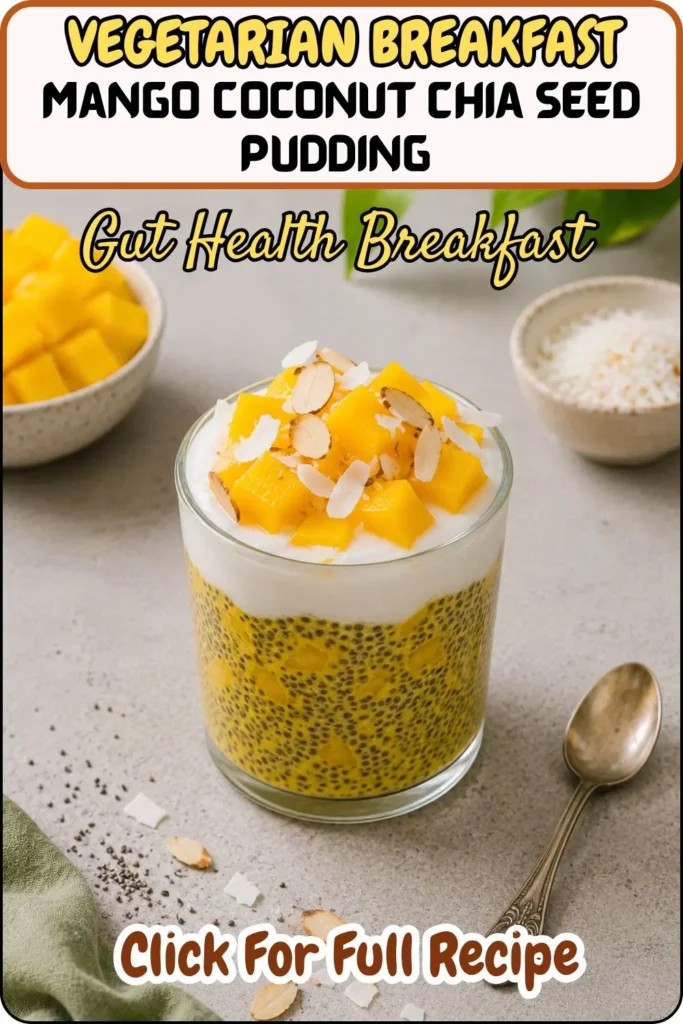
I started making this specifically during a stretch when my digestion needed real support, and I expected to choke down something virtuous-tasting and bland. Instead, I got something that tastes like a tropical dessert and happens to be one of the most genuinely beneficial things I eat all week. Let me walk you through exactly how to make it.
Your Recipe Details at a Glance
Everything upfront before you reach for a mango:
- Course- Breakfast or Snack
- Primary Keyword- Mango Coconut Chia Seed Pudding for Vegan Gut Health
- Prep Time- 10 minutes
- Setting Time- 2 hours minimum (overnight recommended)
- Total Time- 2 hours 5 minutes
- Servings- 2
- Calories per Serving- 409 kcal
- Diet- 100% Vegan, Gluten-Free, Dairy-Free
This recipe makes two generous, 1-cup servings a genuinely substantial breakfast portion rather than a small snack-sized pudding.
Equipment You’ll Need For
Genuinely minimal this is a blend-and-wait recipe:
- A blender or food processor – For pureeing one of the mangoes into a smooth liquid base. Either works perfectly; you’re just breaking down soft fruit, which doesn’t require serious blending power. A personal-sized blender or even an immersion blender handles this easily.
- A large mixing bowl – For combining the pureed mango, coconut milk, chia seeds, maple syrup, and salt. Use something with enough room to stir thoroughly without spilling chia seeds everywhere they have a habit of escaping the bowl if you’re not careful.
- A spoon or whisk – For stirring the mixture, particularly that crucial second stir at the 5-minute mark that prevents chia clumping.
- An airtight container or two jars -For setting and storing the pudding. Wide-mouth mason jars work beautifully for individual servings and make the pudding easy to transport if you’re taking breakfast on the go.
- A sharp knife and cutting board – For chopping the second mango into chunks for topping.
FYI there’s no cooking involved in this recipe whatsoever. Blend, stir, wait. That’s the entire process.
Why This Recipe Is Genuinely Good for Gut Health
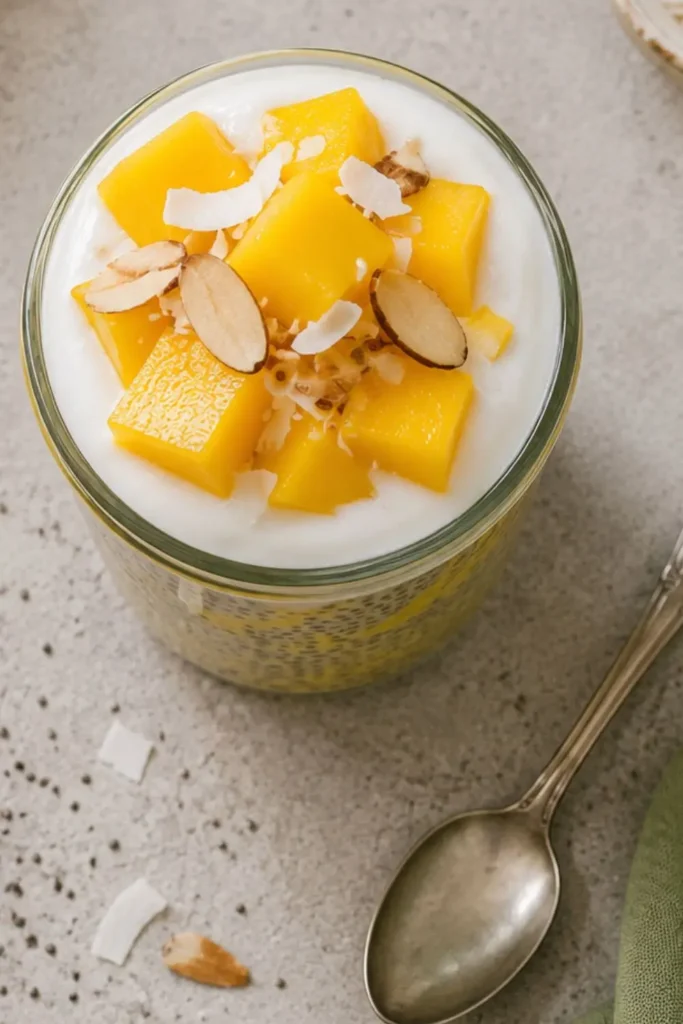
This isn’t a recipe that just claims to support gut health for marketing purposes the ingredients here are doing real, specific work. Let’s break down exactly why.
Chia Seeds The Fiber Powerhouse
Chia seeds are one of the most fiber-dense foods available, delivering both soluble and insoluble fiber in a single small seed. Soluble fiber forms a gel when it absorbs liquid (which is literally what creates the pudding texture you’re making here) and feeds the beneficial bacteria in your gut microbiome. Insoluble fiber adds bulk and supports regular digestive movement. Getting both types in one ingredient is genuinely valuable most foods lean heavily toward one type or the other.
Coconut Milk More Than Just Creamy
Beyond contributing to the pudding’s luxurious texture, coconut milk contains medium-chain triglycerides (MCTs), a type of fat that’s metabolized differently than most other fats and has been studied for potential anti-inflammatory properties in the gut. The fat content also helps your body absorb fat-soluble vitamins from the mango more effectively.
Mango Natural Digestive Enzymes
Mango contains digestive enzymes, including amylases that help break down complex carbohydrates. It’s also rich in prebiotic fiber the kind of fiber that specifically feeds beneficial gut bacteria rather than just adding bulk. Prebiotic fiber and probiotics work together, and while this recipe doesn’t contain live probiotics itself, the prebiotic fiber from both the mango and chia seeds creates an environment where beneficial bacteria can thrive if you’re also consuming fermented foods elsewhere in your diet.
Ingredients Every Element Explained
The Fruit
- 2 large fresh mangoes (or frozen, thawed) – Used in two different ways in this recipe, which is part of what makes it interesting. One mango gets blended into a smooth puree that becomes the flavor base of the entire pudding. The second gets chopped into chunks and folded in or used as a topping, providing textural contrast against the smooth, creamy chia pudding base. Choose ripe, fragrant mangoes they should give slightly when pressed and smell sweet at the stem end. Underripe mango is fibrous and lacks the sweetness that makes this recipe work without needing much added sugar.
Try It Next recipe
Freezer-Friendly Vegan Sausage & Cheese Breakfast Muffin

The Creamy Base
- 2 cups coconut milk (carton, not canned) – This distinction matters significantly. Carton coconut milk is a thinner, more pourable beverage-style product designed for drinking and using in recipes like this one. Canned coconut milk is much thicker and more concentrated, designed primarily for cooking. Using canned coconut milk here would produce an overly dense, almost solid pudding rather than the creamy, scoopable texture you’re after. Choose unsweetened carton coconut milk for the best flavor balance sweetened varieties throw off the recipe’s sugar content.
The Thickener
- ½ cup chia seeds – The ingredient that transforms liquid coconut milk and mango puree into an actual pudding. Chia seeds absorb roughly 10–12 times their weight in liquid as they soak, creating that signature thick, slightly gelatinous texture. Use whole chia seeds, not ground – ground chia seeds (sometimes called chia meal) thicken differently and produce a less distinctly textured pudding. The slight “pop” of whole chia seeds against the smooth mango-coconut base is part of the appeal.
The Finishing Touches
- 1 teaspoon maple syrup, to taste – Adjust based on how sweet your mangoes are. Ripe, in-season mango is often sweet enough on its own that you barely need this; less ripe or out-of-season mango benefits from the full amount or slightly more.
- ⅛ teaspoon salt – A small amount that makes a genuinely noticeable difference. Salt in a sweet recipe amplifies the other flavors and keeps the pudding from tasting flat or one-dimensional.
Toppings of Choice
- Fresh berries or additional fruit
- Granola for crunch
- Chopped nuts (almonds, cashews, pistachios all work beautifully)
- A spoonful of nut butter
- Toasted coconut flakes
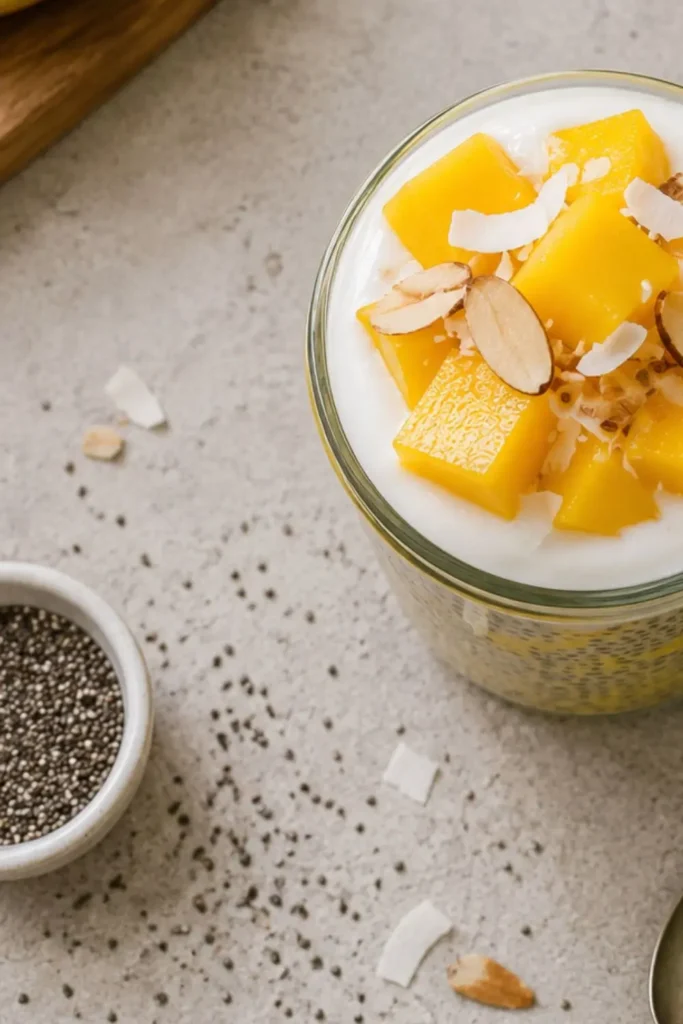
- A dollop of coconut yogurt for extra creaminess and probiotic content
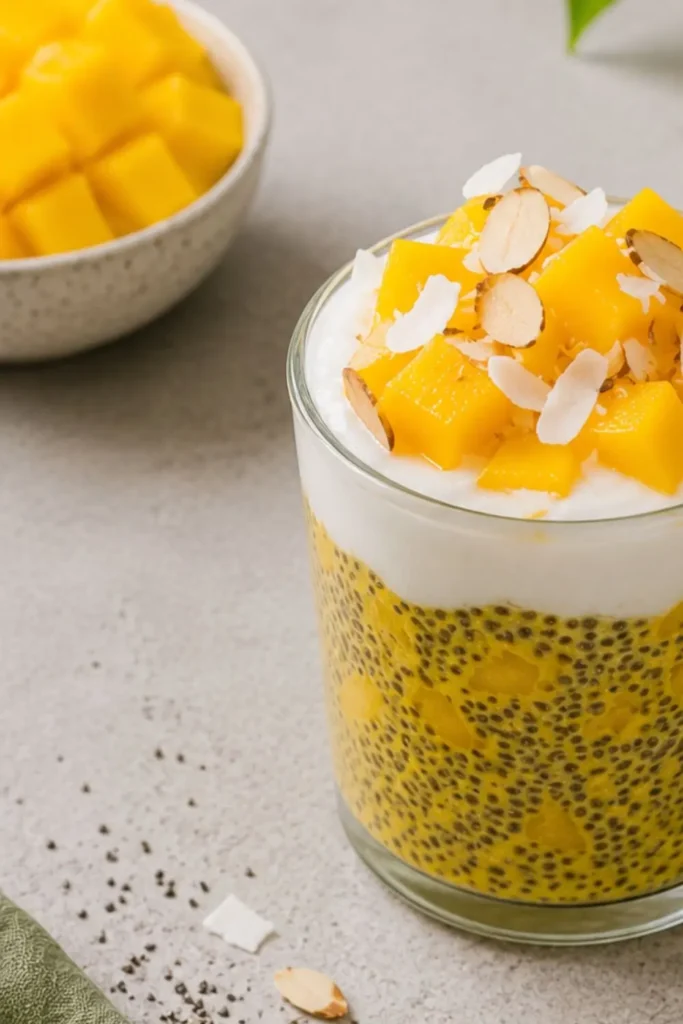
How to Make Mango Coconut Chia Seed Pudding
Step 1 – Puree One Mango
Add the flesh of one mango to your blender or food processor. Process until completely smooth. If the mixture struggles to blend (mangoes vary in juiciness), add 1–2 tablespoons of the coconut milk to help it move. You want a completely smooth, lump-free puree before moving forward.
Chop the second mango into bite-sized chunks and set aside for topping or folding in later.
Step 2 – Combine Everything
In your large mixing bowl, combine the mango puree, coconut milk, chia seeds, maple syrup, and salt. Stir thoroughly until everything is well combined and there are no dry pockets of chia seeds sitting on the surface unmixed.
Step 3 – The Critical Second Stir
Let the mixture sit for 5 minutes. This brief rest allows the chia seeds to begin absorbing liquid and start their initial swelling. After 5 minutes, stir again to break up any clumps of chia seeds that have started forming. This second stir is the single most important technique step in the entire recipe skip it, and you risk ending up with dense clusters of gelled chia seeds throughout the pudding instead of an evenly thick, uniform texture.
Step 4 – Set in the Refrigerator
Cover the bowl or transfer to your jars, then refrigerate for 1–2 hours minimum, though overnight is genuinely better. The pudding should be thick not liquidy, not watery when it’s ready. If you check at the 2-hour mark and it still seems too loose, two things can help:
- Let it sit longer. Chia seeds continue absorbing liquid over time, and a few more hours often solves the problem entirely.
- Add more chia seeds. If you need the pudding ready sooner, stir in an additional tablespoon of chia seeds and refrigerate for another 30 minutes. This speeds up the thickening process without compromising the final texture.
Step 5 – Add Toppings and Serve
Once thickened, fold in the reserved mango chunks or use them as a topping along with whatever else you’re adding fresh berries, granola, nuts, nut butter, or coconut yogurt. Serve cold, straight from the fridge.
Full Nutritional Breakdown (Per Serving 1 Cup, 1 of 2)
| Nutrient | Amount |
| Calories | 409 kcal |
| Carbohydrates | 59g |
| Protein | 9g |
| Fat | 18g |
| Saturated Fat | 6g |
| Fiber | 19g |
| Sugar | 37g |
| Sodium | 155mg |
| Potassium | 529mg |
| Vitamin A | 2,263 IU |
| Vitamin C | 76mg |
| Calcium | 393mg |
| Iron | 4mg |
A few numbers genuinely worth highlighting:
- 19g of fiber per serving – This is extraordinary. That’s nearly 70% of most people’s daily recommended fiber intake in a single breakfast serving. Few foods deliver this much fiber in such an enjoyable format.
- Vitamin C at 76mg per serving – Coming primarily from the mango. That’s well over 80% of the daily recommended intake for most adults, and vitamin C plays a meaningful role in gut lining health and immune function.
- Calcium at 393mg per serving – Coming from fortified coconut milk and the chia seeds themselves, which are naturally calcium-rich. Nearly 40% of the daily recommended intake.
- 37g of sugar – This number looks high at first glance, but it’s almost entirely natural fruit sugar from the mango, not added refined sugar. The 1 teaspoon of maple syrup contributes minimally to this total.
Carton vs Canned Coconut Milk Why This Choice Matters So Much
Ever made chia pudding that turned out either too watery or like a solid brick? The coconut milk type is usually the culprit, and this distinction deserves its own dedicated explanation.
| Carton Coconut Milk | Canned Coconut Milk | |
| Consistency | Thin, pourable, like dairy milk | Thick, concentrated, often separates |
| Fat content | Lower (typically 4-5%) | Much higher (often 17-24%) |
| Best for | Drinking, cereal, chia pudding, smoothies | Curries, sauces, whipped coconut cream |
| Result in this recipe | Creamy, scoopable pudding texture | Overly thick, almost solid, heavy texture |
For this specific recipe, carton coconut milk is the correct and necessary choice. Using canned coconut milk would create a pudding so thick and rich it borders on inedible more like a coconut fat block than a pleasant breakfast. If carton coconut milk isn’t available, other plant milks like oat or almond work as substitutes, though you’ll lose some of the distinctive coconut flavor that defines this recipe.
Make-Ahead and Storage Built for Real Life
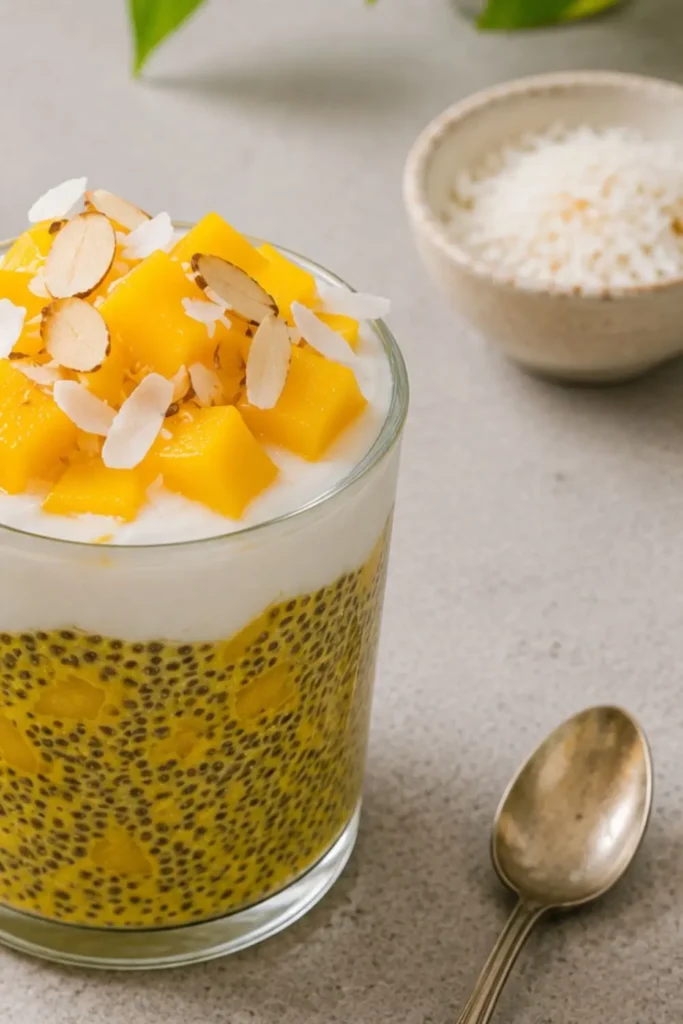
This pudding is genuinely one of the best make-ahead breakfasts you can prepare:
- Make a batch on Sunday. Store in an airtight container in the refrigerator for up to 5 days. The texture stays consistent and the flavor actually deepens slightly as the mango and coconut flavors meld further.
- Portion into individual jars at the time of making for genuinely effortless grab-and-go breakfasts throughout the week.
- Keep toppings separate. Add fresh fruit, granola, and nuts right before eating rather than when storing this keeps granola crunchy and prevents fresh fruit from going soft.
- If it thickens too much over time, stir in a splash of additional coconut milk to loosen it back to your preferred consistency.
Flavor Variations Worth Trying
Once you’ve mastered the base technique, here are seasonal and flavor variations that work beautifully:
- Mango passion fruit- Add the pulp of 2 passion fruits for extra tang and tropical complexity.
- Mango turmeric- Add ¼ teaspoon turmeric and a pinch of black pepper (which helps turmeric absorption) for an anti-inflammatory boost.
- Mango lime- A squeeze of fresh lime juice brightens the whole pudding and cuts through the richness of the coconut milk.
- Mango ginger- Add ½ teaspoon grated fresh ginger for warmth and additional digestive support ginger has its own long history of supporting healthy digestion.
My Final Bottom Line
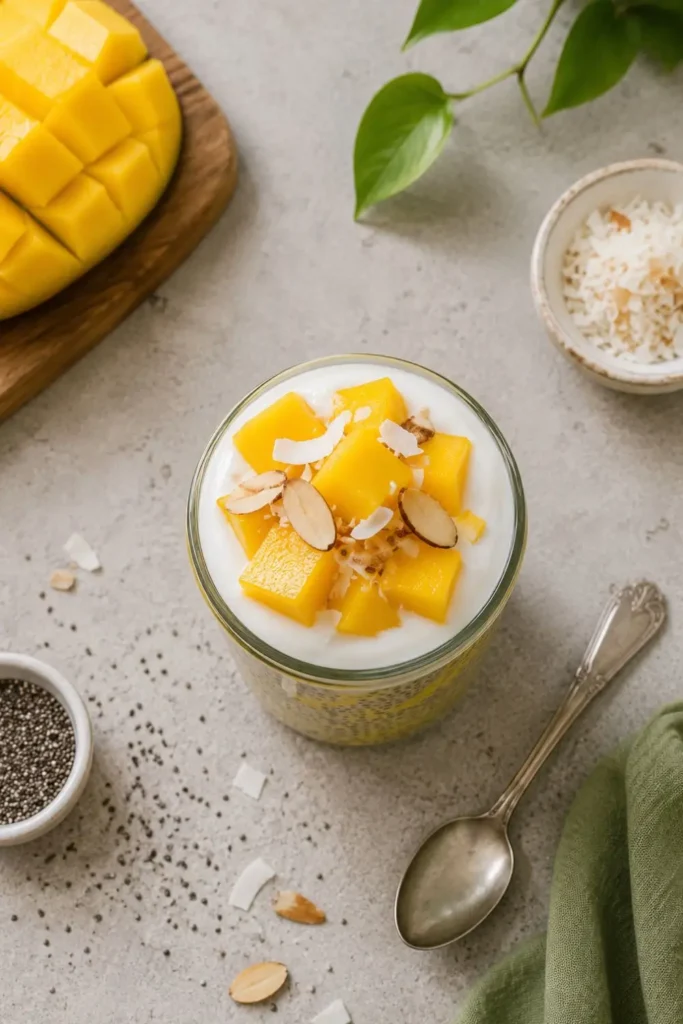
This Mango Coconut Chia Seed Pudding for Vegan Gut Health proves that a breakfast genuinely built for digestive wellness doesn’t have to taste like a compromise. Ten minutes of active effort, a couple of hours of hands-off setting time, and what you get is a creamy, tropical, deeply satisfying pudding that delivers 19 grams of fiber, real prebiotic support, and a flavor that tastes like dessert.
Make a batch tonight, portion it into jars, and breakfast for the rest of the week is genuinely handled both in terms of effort and in terms of actually doing something good for your gut. That’s a rare combination worth holding onto.
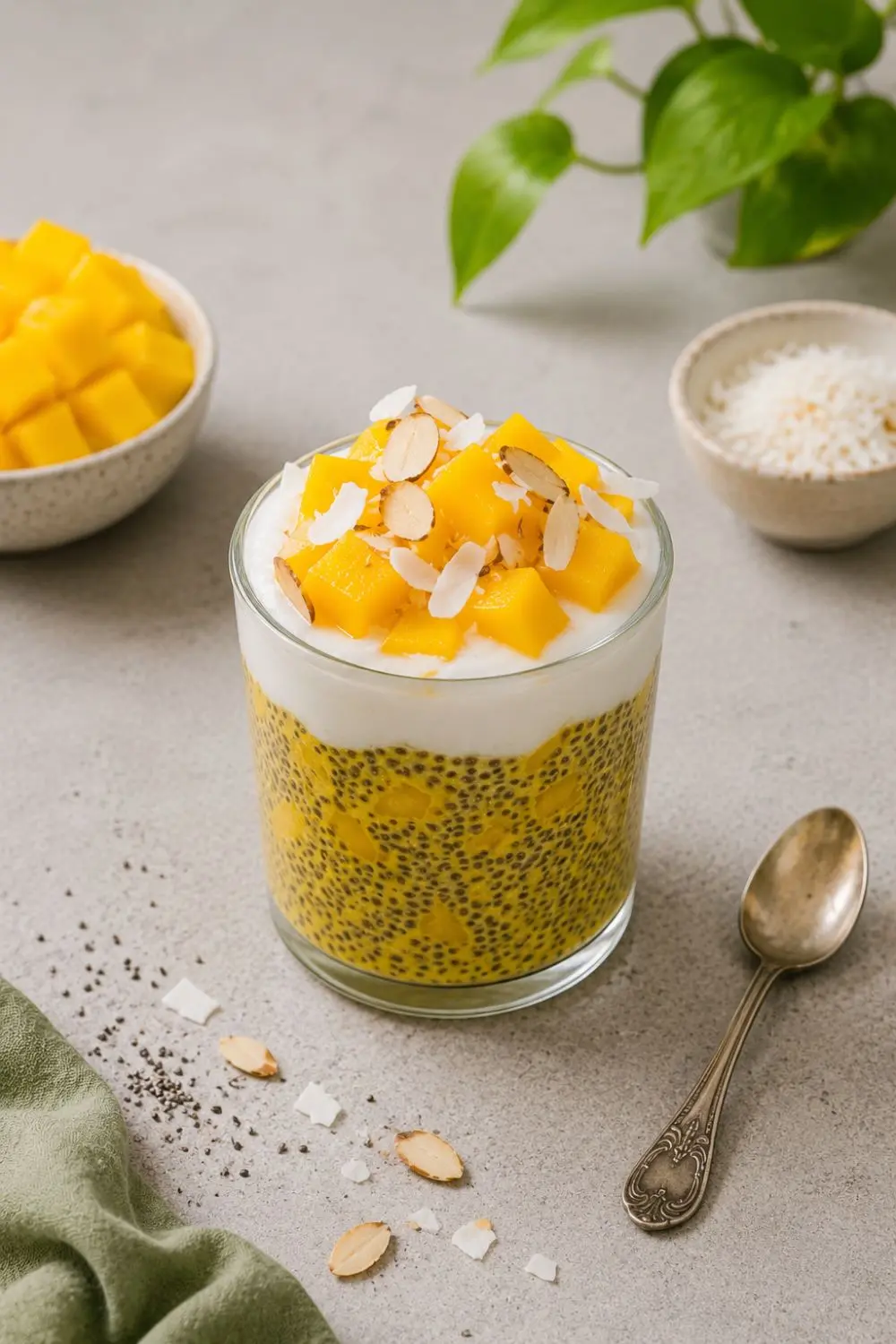
Mango Coconut Chia Seed Pudding for Vegan Gut Health Breakfast
Ingredients
Equipment
Method
- Step 1 – Puree One Mango
- Add the flesh of one mango to your blender or food processor. Process until completely smooth. If the mixture struggles to blend (mangoes vary in juiciness), add 1–2 tablespoons of the coconut milk to help it move. You want a completely smooth, lump-free puree before moving forward.
- Chop the second mango into bite-sized chunks and set aside for topping or folding in later.
- Step 2 – Combine Everything
- In your large mixing bowl, combine the mango puree, coconut milk, chia seeds, maple syrup, and salt. Stir thoroughly until everything is well combined and there are no dry pockets of chia seeds sitting on the surface unmixed.
- Step 3 – The Critical Second Stir
- Let the mixture sit for 5 minutes. This brief rest allows the chia seeds to begin absorbing liquid and start their initial swelling. After 5 minutes, stir again to break up any clumps of chia seeds that have started forming. This second stir is the single most important technique step in the entire recipe skip it, and you risk ending up with dense clusters of gelled chia seeds throughout the pudding instead of an evenly thick, uniform texture.
- Step 4 – Set in the Refrigerator
- Cover the bowl or transfer to your jars, then refrigerate for 1–2 hours minimum, though overnight is genuinely better. The pudding should be thick not liquidy, not watery when it’s ready. If you check at the 2-hour mark and it still seems too loose, two things can help:
- Let it sit longer. Chia seeds continue absorbing liquid over time, and a few more hours often solves the problem entirely.
- Add more chia seeds. If you need the pudding ready sooner, stir in an additional tablespoon of chia seeds and refrigerate for another 30 minutes. This speeds up the thickening process without compromising the final texture.
- Step 5 – Add Toppings and Serve
- Once thickened, fold in the reserved mango chunks or use them as a topping along with whatever else you’re adding fresh berries, granola, nuts, nut butter, or coconut yogurt. Serve cold, straight from the fridge.
Notes
Full Nutritional Breakdown (Per Serving 1 Cup, 1 of 2)
| Nutrient | Amount |
| Calories | 409 kcal |
| Carbohydrates | 59g |
| Protein | 9g |
| Fat | 18g |
| Saturated Fat | 6g |
| Fiber | 19g |
| Sugar | 37g |
| Sodium | 155mg |
| Potassium | 529mg |
| Vitamin A | 2,263 IU |
| Vitamin C | 76mg |
| Calcium | 393mg |
| Iron | 4mg |

Hi — I’m Rachel. I’m a wife, a mom, and a home cook who believes that food should bring comfort, joy, and compassion to the table. I live with my family — two hungry little foodies who are my most honest recipe testers — and together we’ve built a kitchen culture that’s all about good food that happens to be 100% vegan. I started this blog because I wanted a place to share the recipes that keep our days moving, the dishes that make weeknights feel a little easier, and the meals that become our little family traditions.