
Creamy potato soup is one of those recipes that has absolutely no business being as comforting as it is. It’s just potatoes. In broth. With toppings. And yet somehow it produces a bowl that makes everything feel significantly more manageable.
This Creamy Vegan Potato Soup takes that already-perfect concept and makes it even better — because you can make it on the stovetop in 30 minutes, in an Instant Pot in under 20, or throw everything in a Crockpot in the morning and come home to a kitchen that smells incredible and a soup that’s completely ready. Completely dairy-free, completely plant-based, and completely excellent.
I first made this on a Sunday when I needed something that required minimal brain activity and maximum comfort return. Threw everything in the Crockpot at 9am, forgot about it entirely, and came back at 5pm to the best-smelling kitchen and a soup that only needed 5 minutes of blending before dinner was done. Eight servings of creamy, potato-loaded, coconut-milk-rich soup from basically zero effort. Let’s walk through every detail.

Quick Stats
- Prep Time: 15 minutes
- Cook Time: 15 minutes (stovetop) / 4 hours on high or 8 hours on low (Crockpot) / 9 minutes (Instant Pot)
- Servings: 8
- Calories: 279 kcal per serving
- Course: Soup
- Cuisine: American
- Diet: 100% Vegan, Gluten-Free
The Full Ingredient List
For the soup:
- 2 tablespoons olive oil
- 1 large onion, chopped
- 4 cloves garlic, minced
- 3 medium carrots, peeled and sliced
- 3 pounds russet potatoes, peeled and cut into small chunks
- ½ teaspoon dried thyme
- 4 cups vegetable broth
- 1 can (13.5 oz) full-fat coconut milk
- ¼ teaspoon black pepper
- Salt to taste (½–1 teaspoon depending on your broth’s saltiness)
Recommended toppings:
- Vegan sour cream
- Vegan shredded cheese (Violife shreds work brilliantly)
- Vegan “bacon” bits or crumbled tofu/tempeh bacon
- Chopped green onions
Three Ways to Make This Soup — Choose Your Adventure

Method 1: Stovetop (30 Minutes)
Step 1: Heat the olive oil in a large pot over medium heat. Add the chopped onion and minced garlic and sauté for 2–3 minutes until fragrant and beginning to soften.
Step 2: Add the sliced carrots, potato chunks, dried thyme, and vegetable broth. Bring to a boil, then reduce to a simmer. Cook for about 15 minutes until the potatoes are completely fork-tender.
Step 3: Pour in the coconut milk and add the black pepper. Use a potato masher, immersion blender, or regular blender to achieve your preferred texture — partially smooth with chunks, or fully blended and silky.
Step 4: Taste and add salt as needed. Serve immediately with your chosen toppings.
Method 2: Crockpot (4–8 Hours, Hands-Off)
Step 1: Add all ingredients except the coconut milk to the Crockpot. Cook on HIGH for 4 hours or LOW for 8 hours until the potatoes are completely fork-tender.
Step 2: Blend to your preferred texture using an immersion blender directly in the Crockpot.
Step 3: Stir in the coconut milk. Season with salt and pepper to taste. Serve with toppings.
Method 3: Instant Pot (Under 20 Minutes)
Step 1: Use the sauté function. Add olive oil, onion, and garlic, stirring frequently for 2–3 minutes until translucent.
Step 2: Turn off the sauté function. Add carrots, potatoes, thyme, and broth. Stir briefly, seal the lid, and cook on high pressure for 9 minutes. Release pressure manually using a towel.
Step 3: Blend or mash to desired texture. Add coconut milk, pepper, and salt to taste.
Equipment You’ll Need
The equipment depends on your chosen method, but here’s the full picture:
For the Crockpot method (the featured approach):
- A Crockpot or slow cooker — 6-quart capacity minimum for 8 servings. This is the star of the show for this recipe. A quality slow cooker with a proper seal and consistent temperature is what produces the silky, perfectly cooked potatoes without any monitoring or attention.
- An immersion blender — for blending directly in the Crockpot. The most convenient and safest option. Cuisinart, Braun, and KitchenAid all make reliable models.
- A standard blender — if you don’t have an immersion blender. Ladle the soup in batches, fill no more than halfway, and blend carefully.
- A sharp knife and large chopping board — for the potatoes, carrots, and onion. A sharp knife makes potato prep considerably less annoying.
- A vegetable peeler for the potatoes and carrots
- Measuring cups and spoons
For the stovetop method:
- A large heavy-bottomed pot — 6-quart or larger
- Same blending equipment as above
- A potato masher if you prefer a chunkier result without a blender
For the Instant Pot method:
- A 6-quart or 8-quart Instant Pot
- Same blending equipment
The Crockpot method genuinely earns its place as the featured approach here. Eight servings of proper potato soup from 15 minutes of morning prep — you assemble the ingredients, set the temperature, and the soup is completely ready whenever you want it. That’s the kind of cooking that actually fits into real life.

Calorie & Nutrition Breakdown (Per Serving — 1 of 8)
| Nutrient | Per Serving |
| Calories | 279 kcal |
| Carbohydrates | 37g |
| Protein | 5g |
| Total Fat | 14g |
| Saturated Fat | 10g |
| Fibre | 5g |
| Sugar | 4g |
| Sodium | 503mg |
| Potassium | 921mg |
| Vitamin A | 4,072 IU (81% DV) |
| Vitamin C | 37mg (41% DV) |
| Iron | 3mg (17% DV) |
| Calcium | 42mg |
At 279 calories per serving with 5g of fibre and 921mg of potassium, this soup delivers genuine nutritional substance alongside its comfort-food credentials. The high potassium content from the potatoes supports muscle function and blood pressure regulation. The vitamin A from the carrots is particularly impressive — 81% of your daily value in a single bowl of soup.
FYI: The saturated fat (10g) comes entirely from the coconut milk — plant-based saturated fat that behaves differently in the body from animal-based saturated fat. If you want a lower-fat version, the recipe notes offer a brilliant alternative: blend a cup of raw cashews with some of the broth instead. The result is just as creamy with a different fat profile.
Why Russet Potatoes Are the Right Choice
The recipe specifically uses russet potatoes, and this choice matters for the final texture of the soup.
Why Russets Over Other Varieties
Russet potatoes are high-starch, low-moisture potatoes — the floury type. When cooked and blended or mashed, they create a naturally thick, creamy consistency that lower-starch varieties like red potatoes or Yukon golds don’t replicate. The starch dissolves into the broth during cooking and acts as a natural thickener, which is why this soup gets so rich and creamy without needing heavy additions.
Yukon golds are a good secondary choice — they’re slightly more waxy than russets but still produce a creamy result and have a naturally buttery flavour. Red potatoes are the least suitable choice for this recipe — they stay firm and don’t break down enough to create the thick, creamy base you’re after.
Cutting for Even Cooking
Cut the potatoes into small, roughly equal chunks — about 1-inch pieces. Consistent sizing means every piece becomes tender at the same time, whether you’re using the stovetop, Crockpot, or Instant Pot. Large irregular chunks produce a soup where some pieces are perfectly tender while others are still undercooked.
Coconut Milk — And Why Full-Fat Is Non-Negotiable
The recipe calls for full-fat canned coconut milk, and substituting light coconut milk or carton coconut milk will produce a noticeably different result.
Full-fat canned coconut milk contains approximately 17–20% fat, which is what gives it the body and richness to transform a vegetable broth into something genuinely creamy. Light coconut milk has had much of that fat removed — it’s thinner, less rich, and doesn’t produce the same silky texture in the finished soup.
The Cashew Cream Alternative
If you’d rather avoid coconut milk entirely — either because of dietary preference or because you’re not a coconut fan — the recipe offers an excellent alternative: blend 1 cup of raw cashews with a couple of cups of the cooked soup until completely smooth, then return to the pot. The cashews provide fat and a neutral creaminess that mimics dairy cream convincingly. Soak the cashews in water for 2–4 hours first for the smoothest result.
The Toppings Where the Soup Goes from Good to Great

This soup is excellent on its own. With the right toppings, it becomes genuinely spectacular. The toppings aren’t decoration — they add texture, flavour contrast, and protein that make the bowl complete.
Vegan Sour Cream
A dollop of thick vegan sour cream adds a cooling tang that cuts through the richness of the potato base. Cashew-based vegan sour cream is the best option — it has the right consistency and a flavour profile that’s very close to dairy sour cream.
Vegan Shredded Cheese
Violife shreds are specifically recommended and genuinely deliver here. They melt slightly into the hot soup and add a savoury, cheesy note that makes the whole bowl taste considerably more indulgent. Other shredded vegan cheese options work too — look for one that melts rather than just sitting on top as solid pieces.
Vegan “Bacon” Bits
This is the topping that most non-vegans are surprised by. Tofu bacon or tempeh bacon — sliced thin, marinated in smoked paprika, tamari, and maple syrup, then cooked until crispy — adds a salty, smoky, genuinely bacon-like crunch that elevates this soup from “nice vegan option” to something everyone at the table wants more of. Store-bought vegan bacon bits also work and take zero effort.
Chopped Green Onions
These add freshness, a mild peppery bite, and a pop of colour that makes the bowl look intentional and finished. Add them at the last second so they stay crisp and bright.
Tips for Making This Soup Absolutely Perfect
- Cut your potatoes small and consistently. This is the single most important prep step. Small, consistent chunks cook evenly and blend smoothly.
- For the Crockpot, add coconut milk AFTER cooking, not before. Coconut milk can break and become grainy when subjected to prolonged heat in a slow cooker. Always stir it in at the end, off the heat or after you’ve turned the cooker off.
- Taste before serving and adjust salt. Vegetable broths vary enormously in saltiness. Some are quite salty, some are very mild. Taste after blending and season accordingly.
- Leave some texture. Don’t blend the soup to a completely smooth purée — some potato chunks in the mix make the eating experience much more satisfying. Mash or blend about two-thirds and leave the rest chunky.
- Warm your bowls. Hot soup in a cold bowl cools down too fast. Rinse your bowls with hot water before ladling the soup in.
- Prep the toppings while the soup is in the Crockpot. If you’re making tofu or tempeh bacon, set it up so it’s ready when the soup is done. The toppings genuinely complete this meal.
Storage and Reheating
Refrigerator
The soup keeps for about 3 days in a sealed container in the fridge. It thickens considerably as it cools — the potato starch continues to absorb liquid. When reheating, add a splash of vegetable broth or plant milk to restore the right consistency and stir well.
Freezer
This soup freezes well for up to 3 months. Potato soups can sometimes have a slightly different texture after freezing (the potato can become slightly grainy) — stirring vigorously after reheating and adding a small amount of liquid usually restores it to near-original quality. Cool completely before freezing and portion into individual servings for easy weeknight dinners.
Important: Add toppings fresh after reheating — never freeze the assembled bowl with toppings on it.
Variations Worth Trying
Loaded Vegan Baked Potato Soup
Go heavy on the toppings — vegan sour cream, vegan cheese, tempeh bacon, green onions, and even a few diced chives. This version leans fully into the “loaded baked potato” concept and is genuinely one of the most satisfying vegan soups you can put in front of someone who “doesn’t think vegan food is filling.”
Smoky Version
Add 1 teaspoon of smoked paprika alongside the thyme. The smokiness transforms the flavour profile significantly — warmer, more complex, and pairs exceptionally well with the tofu or tempeh bacon topping.
Leek Addition
Replace half the onion with sliced leeks. Leeks add a sweeter, more delicate onion flavour that works beautifully in potato soup — it’s a more refined version of the standard recipe.
Broccoli and Potato Version
Add 2 cups of small broccoli florets in the last 5 minutes of cooking on the stovetop (or in the last 30 minutes in the Crockpot). The broccoli adds colour, texture, and meaningful iron and vitamin C. Broccoli-cheddar vibes, completely vegan.
Frequently Asked Questions

Can I use a different type of potato? Russets are the best choice, as explained above. Yukon golds are a good second option with a slightly more buttery flavour. Avoid waxy potatoes like red or fingerling varieties — they don’t break down into the creamy texture this recipe needs.
The soup seems too thin — what do I do? Blend more of it. The more you blend, the thicker the soup becomes as the potato starch releases into the broth. Alternatively, add a tablespoon of cornstarch dissolved in cold water and simmer for 2–3 minutes.
The soup seems too thick — what do I do? Add vegetable broth a splash at a time until it reaches your preferred consistency. This is particularly common the next day when the soup has been refrigerated.
Can I add other vegetables? Absolutely — diced celery, parsnip, or turnip all work well added with the potatoes and carrots. Keep the total volume of vegetables roughly the same to maintain the right soup-to-broth ratio.
Is this suitable for freezing? Yes, though the texture after freezing is slightly different from fresh. Reheat gently, stir well, and add a splash of plant milk if needed to restore creaminess. IMO the flavour is actually slightly better after freezing as everything deepens and melds.
Make This Today
Here’s the complete picture: 3 pounds of russet potatoes, carrots, onion, garlic, coconut milk, vegetable broth, and thyme. Choose your method — 30 minutes on the stovetop, 20 minutes in the Instant Pot, or 8 hours in the Crockpot without any supervision. Eight generous, properly creamy, 279-calorie servings with enough potassium to keep your body very happy.
Still Hungry, Try It Next recipe :-
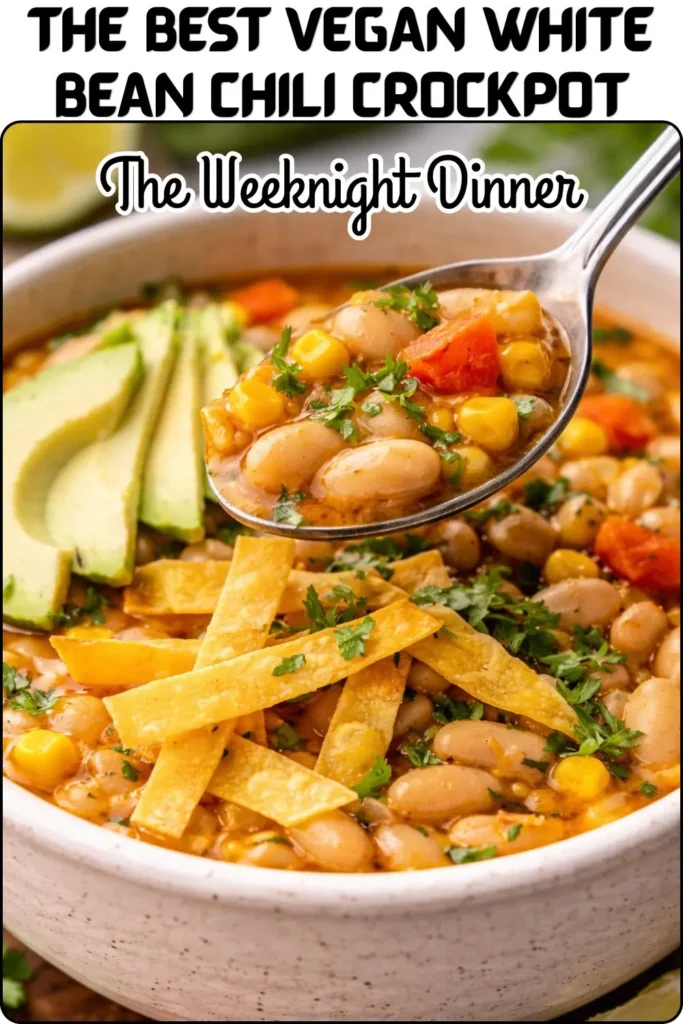
The BEST Vegan White Bean Chili Crockpot
Load the toppings generously. Don’t skip the vegan bacon bits. And make enough for leftovers because this soup is even better the next day when everything has had time to settle and deepen.
Creamy vegan potato soup is genuinely one of those recipes that makes plant-based cooking feel like complete abundance rather than restriction.

Creamy Vegan Potato Soup (Easy Crockpot Recipe!)
Ingredients
Equipment
Method
- Step 1: Heat the olive oil in a large pot over medium heat. Add the chopped onion and minced garlic and sauté for 2–3 minutes until fragrant and beginning to soften.
- Step 2: Add the sliced carrots, potato chunks, dried thyme, and vegetable broth. Bring to a boil, then reduce to a simmer. Cook for about 15 minutes until the potatoes are completely fork-tender.
- Step 3: Pour in the coconut milk and add the black pepper. Use a potato masher, immersion blender, or regular blender to achieve your preferred texture — partially smooth with chunks, or fully blended and silky.
- Step 4: Taste and add salt as needed. Serve immediately with your chosen toppings.
- Method 2: Crockpot (4–8 Hours, Hands-Off)
- Step 1: Add all ingredients except the coconut milk to the Crockpot. Cook on HIGH for 4 hours or LOW for 8 hours until the potatoes are completely fork-tender.
- Step 2: Blend to your preferred texture using an immersion blender directly in the Crockpot.
- Step 3: Stir in the coconut milk. Season with salt and pepper to taste. Serve with toppings.
- Method 3: Instant Pot (Under 20 Minutes)
- Step 1: Use the sauté function. Add olive oil, onion, and garlic, stirring frequently for 2–3 minutes until translucent.
- Step 2: Turn off the sauté function. Add carrots, potatoes, thyme, and broth. Stir briefly, seal the lid, and cook on high pressure for 9 minutes. Release pressure manually using a towel.
- Step 3: Blend or mash to desired texture. Add coconut milk, pepper, and salt to taste.
Notes
Calorie & Nutrition Breakdown (Per Serving — 1 of 8)
| Nutrient | Per Serving |
| Calories | 279 kcal |
| Carbohydrates | 37g |
| Protein | 5g |
| Total Fat | 14g |
| Saturated Fat | 10g |
| Fibre | 5g |
| Sugar | 4g |
| Sodium | 503mg |
| Potassium | 921mg |
| Vitamin A | 4,072 IU (81% DV) |
| Vitamin C | 37mg (41% DV) |
| Iron | 3mg (17% DV) |
| Calcium | 42mg |

Hi — I’m Rachel. I’m a wife, a mom, and a home cook who believes that food should bring comfort, joy, and compassion to the table. I live with my family — two hungry little foodies who are my most honest recipe testers — and together we’ve built a kitchen culture that’s all about good food that happens to be 100% vegan. I started this blog because I wanted a place to share the recipes that keep our days moving, the dishes that make weeknights feel a little easier, and the meals that become our little family traditions.