
Tikka masala is one of those dishes that sounds like it requires either a professional chef or a very patient Sunday afternoon. The sauce needs depth, the spices need to bloom, the vegetables need to cook through without going to mush — it feels like a lot. And then someone invented the slow cooker, and all of that became: add everything to a pot, turn it on, go about your day.
“This post contains affiliate links. If you purchase through my links, I may earn a small commission at no extra cost to you.”
This Easy Slow Cooker Vegan Chickpea Tikka Masala is exactly that — a rich, warmly spiced, tomato-coconut curry with tofu, cauliflower, potatoes, and carrots that cooks itself while you do literally anything else.
I started making this on Sunday mornings when I wanted a proper dinner without the Sunday-afternoon-cooking commitment. By the time I actually sat down to eat, the kitchen smelled extraordinary and the sauce had developed into something genuinely restaurant-quality. 303 calories per serving, nearly 15g of protein, and it serves four to six people. Let’s walk through everything.
Quick Stats
- Prep Time: 30 minutes
- Cook Time: 3–4 hours on HIGH or 6–7 hours on LOW
- Total Time: 3 hours 30 minutes (on HIGH)
- Servings: 4–6
- Calories: 303 kcal per serving
- Diet: 100% Vegan, Gluten-Free
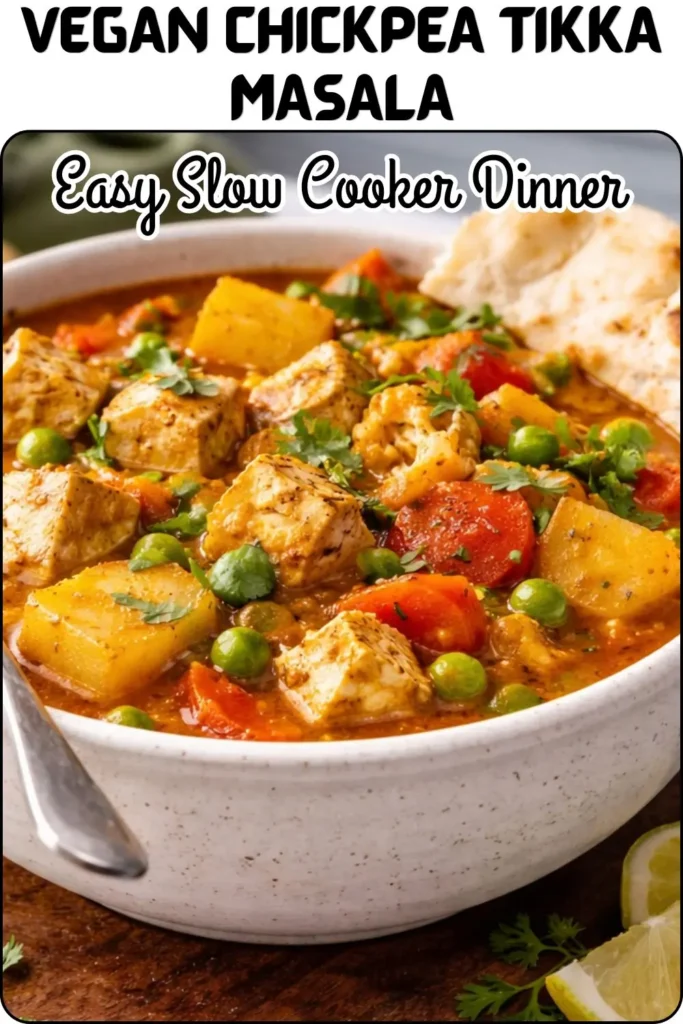
The Full Ingredient List
- 1 package (16 oz) extra-firm tofu, drained, pressed, and cubed into ½-inch pieces
- 3 cloves garlic, minced
- 1 white onion, diced
- 1 red bell pepper, cut into chunks
- 2 medium carrots, sliced
- 1½ cups diced gold potatoes (from 2–3 medium potatoes)
- 2 cups cauliflower florets
- 1 can (15 oz) tomato sauce
- 1 can (15 oz) lite coconut milk (full-fat also works)
- ½ tablespoon pure maple syrup
- ½ tablespoon freshly grated ginger
- 1 tablespoon garam masala
- 1½ teaspoons cumin
- 1 teaspoon coriander
- ½ teaspoon ground turmeric
- ¼ teaspoon paprika
- ¼ teaspoon cayenne pepper (plus more if you like heat)
- ½ teaspoon salt
- Freshly ground black pepper
- ¾ cup frozen peas (added at the end)
- Fresh cilantro for garnish
How to Make It – Step by Step for Easy Slow Cooker Vegan Chickpea Tikka Masala
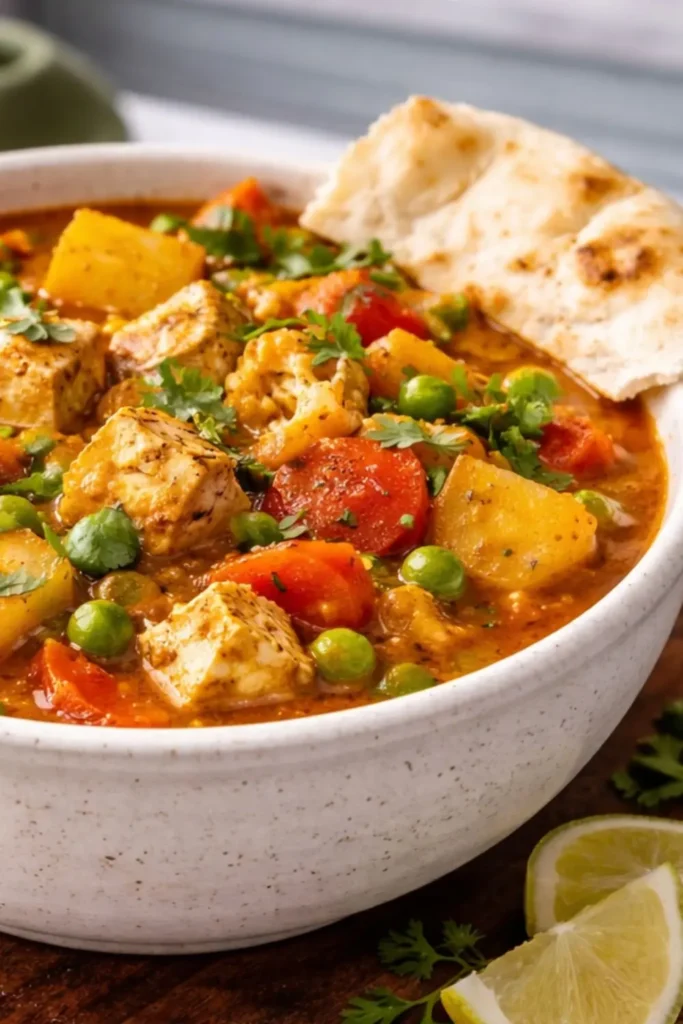
Step 1: Add the minced garlic, diced onion, bell pepper chunks, sliced carrots, cauliflower florets, diced potatoes, tomato sauce, coconut milk, maple syrup, fresh ginger, and all the spices (garam masala, cumin, coriander, turmeric, paprika, cayenne, salt, and black pepper) directly to your slow cooker. Stir everything together until well combined.
Step 2: Add the pressed, cubed tofu and give everything a gentle stir to incorporate the tofu without breaking the pieces up.
Step 3: Cook on HIGH for 3–4 hours or LOW for 6–7 hours. The sauce will deepen in colour and flavour as it cooks and the vegetables will become tender throughout.
Step 4: About 5–10 minutes before serving, stir in the frozen peas and leave the slow cooker uncovered. The peas warm through quickly and retain their bright green colour.
Step 5: Garnish generously with fresh cilantro and serve with naan bread, brown rice, or quinoa.
Equipment You’ll Need
- A large slow cooker — 6-quart capacity minimum for this recipe. You’re fitting a significant volume of vegetables, tofu, and sauce, and you need room to stir without overflow. A quality slow cooker with a tight-fitting lid and consistent temperature settings is what produces the deeply developed sauce this recipe is known for. Brands like Crock-Pot, Hamilton Beach, and Instant Pot’s slow cooker function all perform reliably.
- A tofu press or clean kitchen towels — pressing the tofu before adding it is one of the most important prep steps. Properly pressed tofu holds its shape better during the long cooking time and doesn’t release excess water into the sauce.
- A sharp knife and large chopping board — you’re prepping a significant quantity of vegetables, so a sharp knife makes a real difference to how enjoyable the prep is
- A grater or microplane — for the fresh ginger
- Measuring spoons — for the seven spices, which need to be proportioned correctly for the right flavour balance
- Serving bowls — this is a hearty, generous curry — wide, deep bowls work best
The slow cooker is the only specialised piece of equipment here. Everything else is standard kitchen kit. A 6-quart slow cooker is the sweet spot for this recipe — large enough for the full batch, small enough that the sauce cooks down properly without too much evaporation.
Calorie & Nutrition Breakdown (Per Serving — 1 of 4 Generous Servings)
| Nutrient | Per Serving |
| Calories | 303 kcal |
| Carbohydrates | 35.7g |
| Protein | 14.8g |
| Total Fat | 11.5g |
| Saturated Fat | 5.7g |
| Fibre | 8.7g |
| Sugar | 13.1g |
At 303 calories with 14.8g of protein and 8.7g of fibre, this is one of the most nutritionally complete vegan dinners in this series. The protein comes from the tofu, and the fibre comes from the cauliflower, carrots, peas, and potatoes. The 13.1g of sugar is entirely natural — from the tomato sauce, carrots, coconut milk, and the small amount of maple syrup.
FYI: The combination of turmeric, ginger, and cumin in this recipe provides a meaningful anti-inflammatory effect alongside the flavour. These three spices together have been studied extensively for their role in reducing oxidative stress. You’re essentially making a delicious dinner that’s also quietly doing good things for your body. That’s the kind of multitasking I can get behind.
Why the Slow Cooker Is Perfect for Tikka Masala
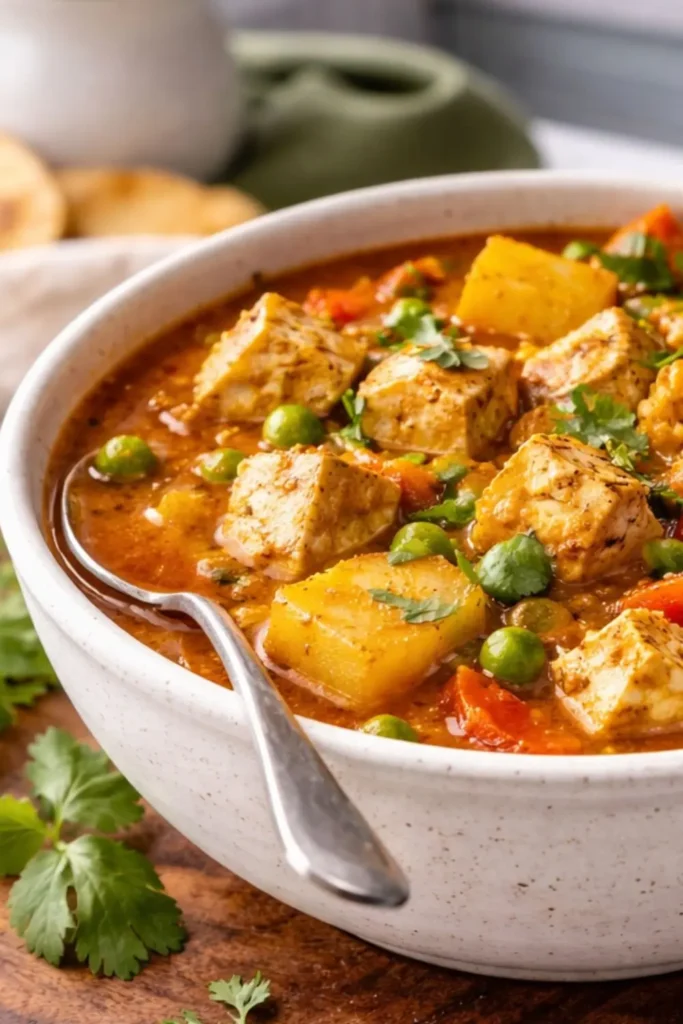
Tikka masala typically requires careful attention on the stovetop — building the sauce in stages, managing the heat, reducing at the right time. The slow cooker bypasses all of that by doing the same thing over a much longer period.
Low and Slow Develops the Sauce
Three to four hours on HIGH (or six to seven on LOW) gives the spices time to fully bloom and infuse into the tomato-coconut base in a way that 30 minutes on the stovetop simply can’t replicate. The sauce develops a depth and roundness that tastes like it came from a restaurant kitchen that’s been simmering a base sauce all day. Because, in a way, it has.
The Vegetables Cook to Perfect Tenderness
Cauliflower, carrots, and potatoes all need time to cook through properly without going mushy. The slow cooker’s even, gentle heat produces vegetables that are fork-tender but still holding their shape — none of the uneven cooking that can happen on a hob when one side of the pot gets hotter than the other.
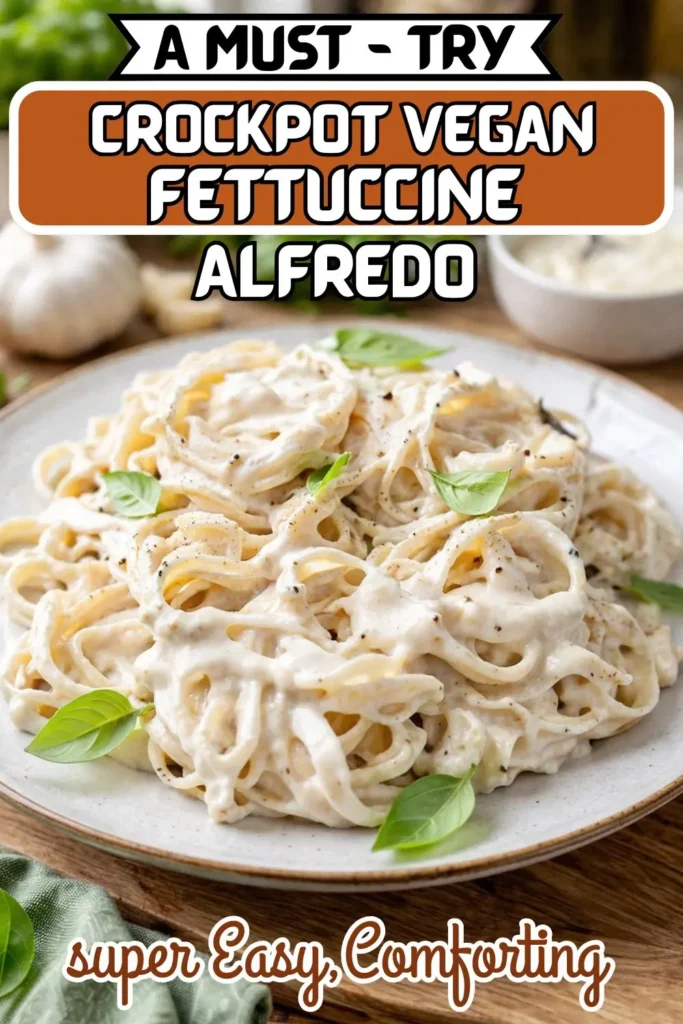
Still Hungry, Try It Next recipe :-
Crockpot Vegan Fettuccine Alfredo
The Tofu Absorbs the Sauce
Extra-firm tofu placed in the sauce for several hours absorbs the tikka masala flavours in a way that pan-fried tofu added at the end doesn’t. By the time the curry is done, the tofu cubes are deeply flavoured throughout rather than being sauce-coated on the outside and bland in the middle. This is one of those cases where the slow cooking method produces a genuinely better result than faster methods.
The Tofu Prep Step — Why Pressing Matters
The recipe calls for drained, pressed, and cubed extra-firm tofu, and the pressing step is worth doing properly.
Why You Need to Press Tofu
Extra-firm tofu straight from the package contains significant moisture. If you add unpressed tofu to the slow cooker, that water releases into the sauce and dilutes it — you’ll end up with a thinner, less flavourful curry. Pressing removes the excess moisture, which means the tofu holds its shape better during the long cooking time and doesn’t water down the sauce.
How to Press Tofu Quickly
Wrap the tofu block in a clean kitchen towel or several layers of paper towel. Place it on a plate and put something heavy on top — a cast iron pan, a heavy pot, a stack of books. Leave it for 15–30 minutes. The towel absorbs the released moisture and the tofu becomes significantly firmer and drier.
A dedicated tofu press (available inexpensively online) does this more efficiently — just set it and leave it — but the towel-and-weight method works perfectly well.
The Spice Blend — What Each Spice Is Doing
Seven spices sounds like a lot. But each one plays a specific role in the final flavour profile, and understanding what they contribute helps you appreciate why the combination works so well.
- Garam masala (1 tbsp): The warm, aromatic foundation — a blend of cinnamon, cardamom, cloves, and black pepper. This is the dominant spice that defines tikka masala’s characteristic warmth.
- Cumin (1½ tsp): Earthy and slightly smoky, cumin adds depth and anchors the other spices.
- Coriander (1 tsp): Citrusy and slightly floral, coriander adds brightness that lifts the heavier spices.
- Turmeric (½ tsp): Anti-inflammatory, slightly bitter, and responsible for the golden colour of the sauce.
- Paprika (¼ tsp): Mild sweetness and a warm red colour that deepens the sauce’s visual richness.
- Cayenne (¼ tsp): The heat element. Start with the recipe amount and add more at the end if you want more spice.
- Fresh ginger (½ tbsp): Bright, aromatic heat that ties all the other spices together and adds freshness to what is otherwise a deeply warm flavour profile.
The maple syrup (½ tbsp) balances the acidity of the tomato sauce without making the curry taste sweet. It’s the detail that stops the sauce from tasting sharp or acidic.
Lite vs Full-Fat Coconut Milk — Which Should You Use?
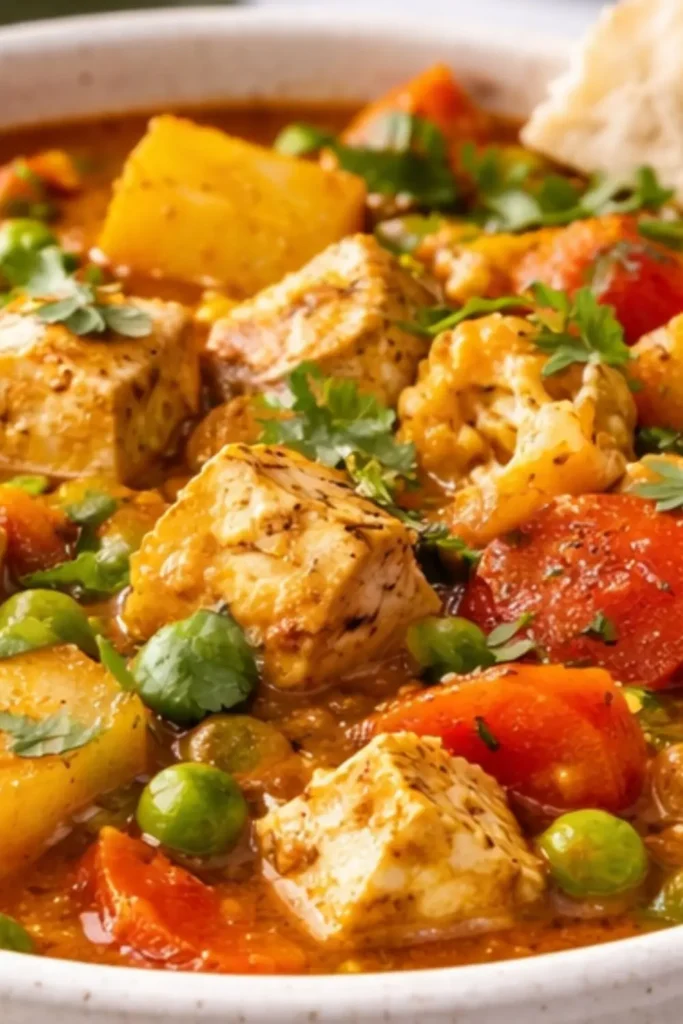
The recipe gives you the choice, and both are genuinely valid depending on what you want from the final dish.
Lite coconut milk produces a lighter, less rich sauce with fewer calories. The curry will still have good coconut flavour and body, just a slightly thinner consistency. Good choice if you’re watching your calorie intake or prefer a lighter curry.
Full-fat coconut milk produces a richer, more indulgent sauce with a deeper coconut flavour and a thicker, more restaurant-quality consistency. The extra fat also helps carry the spice flavours more effectively. IMO full-fat is the better choice when you want a proper, satisfying curry — the calorie difference per serving is modest and the flavour payoff is significant.
Serving Suggestions — What Goes Best with This Curry
Brown Rice
The most common pairing and genuinely the best one for a filling, balanced meal. Brown rice adds whole grain carbohydrates, additional fibre, and a nutty flavour that complements the spiced sauce.
Quinoa
A higher-protein alternative to rice that pairs beautifully with the curry’s sauce. Quinoa is lighter in texture than brown rice and absorbs the sauce readily.
Naan Bread
Essential for scooping. A warm, soft naan bread alongside this curry is one of the most satisfying simple pleasures in vegan eating. Look for a vegan naan (many contain dairy) or make your own.
Cauliflower Rice
For a lower-carb option, cauliflower rice absorbs the sauce beautifully and keeps the meal light without sacrificing satisfaction.
Variations Worth Trying
Use Chickpeas Instead of (or Alongside) Tofu
Drain and rinse a can of chickpeas and add them with the vegetables. Chickpeas hold up brilliantly in a slow cooker and add extra protein and a different textural element. This is the most popular variation and genuinely excellent.
Sweet Potato Instead of Gold Potato
The recipe specifically suggests this substitution and it’s a good one. Sweet potatoes add a natural sweetness that plays beautifully against the warm spices and create a slightly different character — more complex, more autumnal, but still outstanding.
Add Spinach at the End
Stir in two large handfuls of baby spinach at the same time as the frozen peas. The residual heat wilts the spinach in about 2 minutes, adding iron, folate, and a deep green colour to the finished curry.
Butternut Squash Version
Replace the gold potatoes with cubed butternut squash. It becomes very tender in the slow cooker and adds a natural sweetness that’s different from the potato version but equally delicious.
Storage and Reheating
Refrigerator
Store leftovers in a sealed container for up to 4 days in the fridge. This curry actually improves on days 2 and 3 as the spices continue to meld. Reheat in a pot over medium heat with a small splash of water or vegetable broth to prevent sticking.
Freezer
This curry freezes excellently for up to 3 months. The tofu’s texture changes slightly after freezing (it becomes slightly more spongy) but the flavour remains completely intact. Portion into individual servings before freezing for convenient weeknight dinners. Thaw overnight in the fridge and reheat as above.
Still Hungry, Try It Next recipe :-
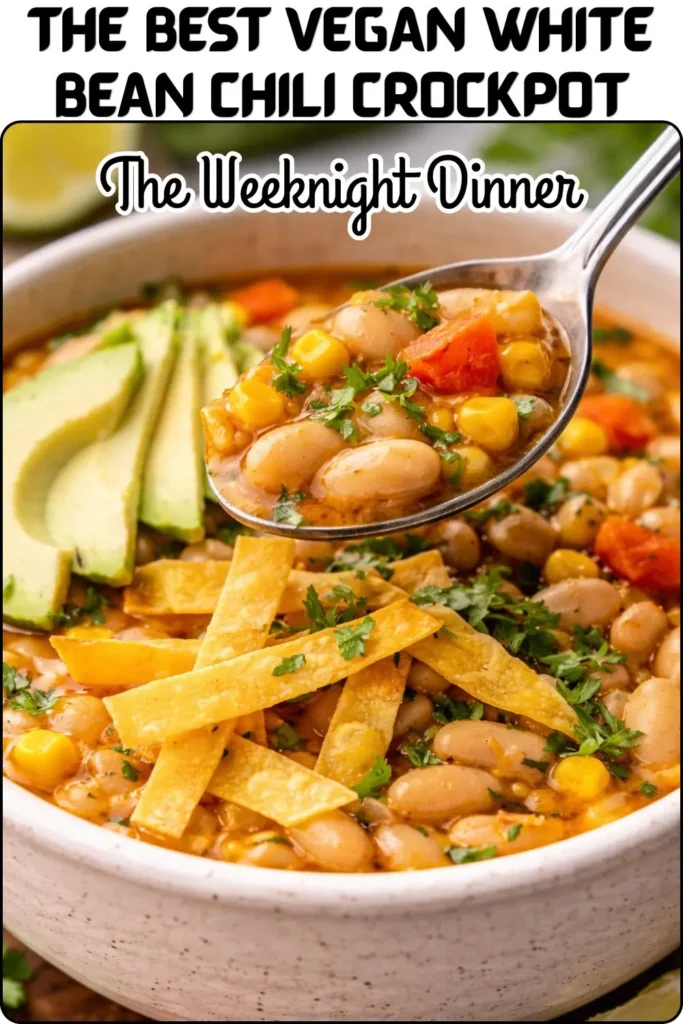
The BEST Vegan White Bean Chili Crockpot
Frequently Asked Questions
Can I add the tofu frozen directly from the freezer? Freezing and thawing tofu before pressing it actually produces a chewier texture — some people prefer this in curries. If you want chewier tofu, freeze the whole block, thaw, press, and cube as normal.
What if I don’t have all seven spices? At minimum, use garam masala and cumin — they’re the essential flavour pair. If you’re missing any of the others, the soup will still taste good, just slightly less complex.
Can I make this on the stovetop instead? Yes — sauté the onion and garlic in oil, add spices and cook for 1 minute, then add everything else and simmer for 25–30 minutes until the vegetables are tender. Add peas in the last 5 minutes.
Is this recipe spicy? At the recipe quantities, it’s mild-to-medium. The cayenne adds warmth without being genuinely hot. Add more cayenne or a minced fresh chilli if you want more heat.
Set It Up Tomorrow Morning
Here’s the full picture: 30 minutes of prep, everything goes in the slow cooker, and 3–4 hours later you have a deeply spiced, 303-calorie, 14.8g-protein vegan tikka masala that serves four to six people. Rich tomato-coconut sauce, tender tofu and vegetables, fresh peas, and cilantro on top.
This is the recipe for busy days when dinner feels like too much — when you want something genuinely satisfying at the end of a long day without having to think about it when you’re already tired. Prep it in the morning, come home to an incredible smell, and serve it with rice and warm naan to anyone lucky enough to be at your table.
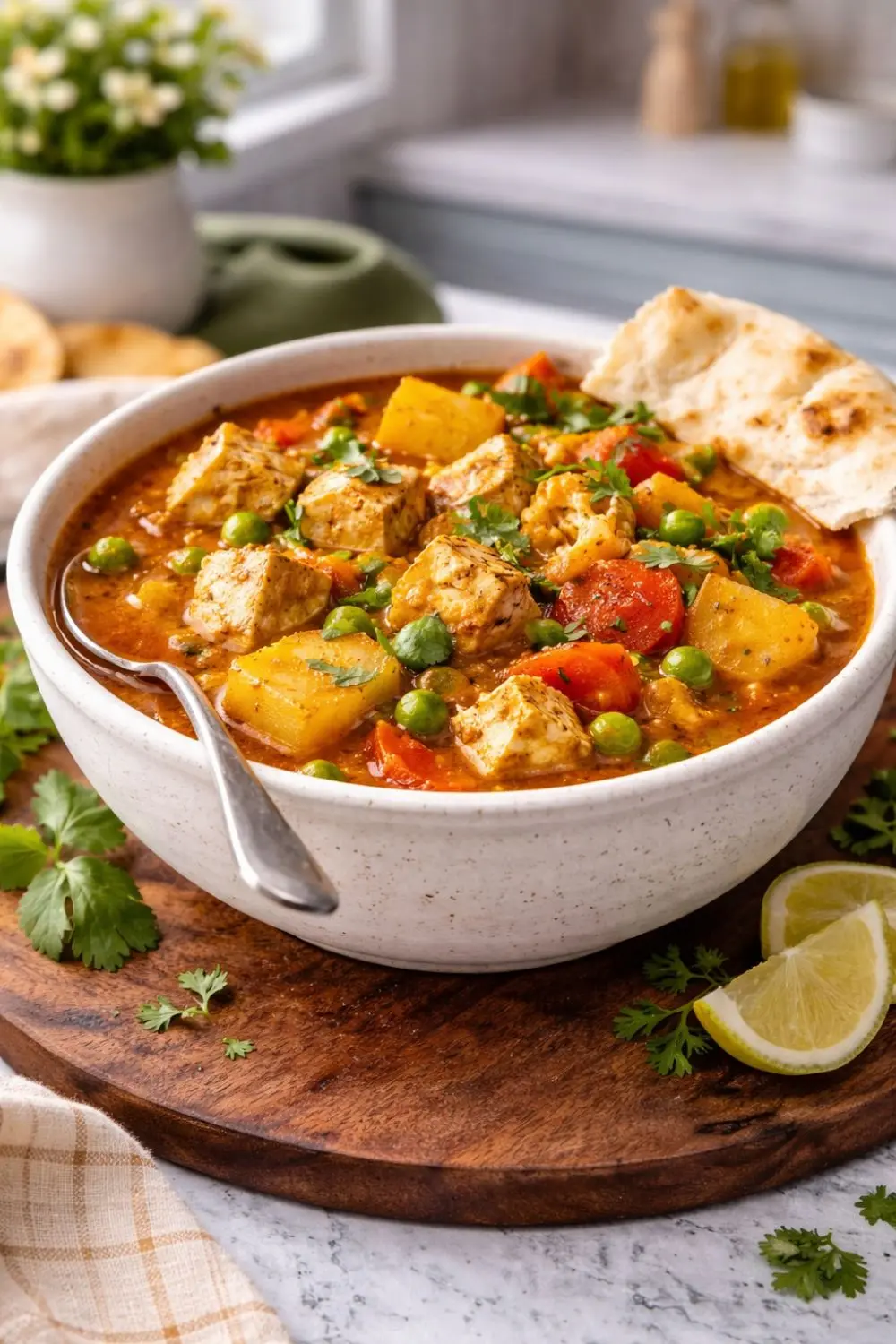
Easy Slow Cooker Vegan Chickpea Tikka Masala
Ingredients
Equipment
Method
- Step 1: Add the minced garlic, diced onion, bell pepper chunks, sliced carrots, cauliflower florets, diced potatoes, tomato sauce, coconut milk, maple syrup, fresh ginger, and all the spices (garam masala, cumin, coriander, turmeric, paprika, cayenne, salt, and black pepper) directly to your slow cooker. Stir everything together until well combined.
- Step 2: Add the pressed, cubed tofu and give everything a gentle stir to incorporate the tofu without breaking the pieces up.
- Step 3: Cook on HIGH for 3–4 hours or LOW for 6–7 hours. The sauce will deepen in colour and flavour as it cooks and the vegetables will become tender throughout.
- Step 4: About 5–10 minutes before serving, stir in the frozen peas and leave the slow cooker uncovered. The peas warm through quickly and retain their bright green colour.
- Step 5: Garnish generously with fresh cilantro and serve with naan bread, brown rice, or quinoa.
Notes
Calorie & Nutrition Breakdown (Per Serving — 1 of 4 Generous Servings)
| Nutrient | Per Serving |
| Calories | 303 kcal |
| Carbohydrates | 35.7g |
| Protein | 14.8g |
| Total Fat | 11.5g |
| Saturated Fat | 5.7g |
| Fibre | 8.7g |
| Sugar | 13.1g |

Hi — I’m Rachel. I’m a wife, a mom, and a home cook who believes that food should bring comfort, joy, and compassion to the table. I live with my family — two hungry little foodies who are my most honest recipe testers — and together we’ve built a kitchen culture that’s all about good food that happens to be 100% vegan. I started this blog because I wanted a place to share the recipes that keep our days moving, the dishes that make weeknights feel a little easier, and the meals that become our little family traditions.