

Red lentils might be the most underestimated ingredient in plant-based cooking. They require no soaking, cook in under 20 minutes, dissolve into a naturally creamy texture without any blending tricks, and absorb spices better than almost any other legume. This Easy Creamy Vegan Red Lentil Soup uses all of that to its full advantage — and the result is a bowl of soup that tastes like it came from a proper restaurant kitchen, not a 40-minute weeknight scramble.
“This post contains affiliate links. If you purchase through my links, I may earn a small commission at no extra cost to you.”
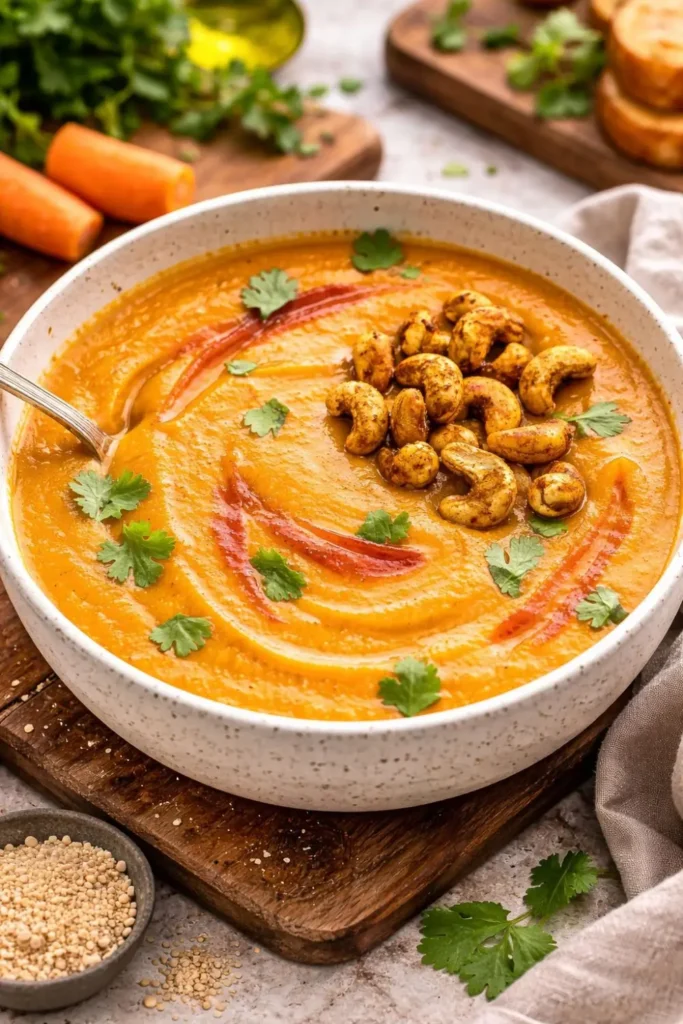
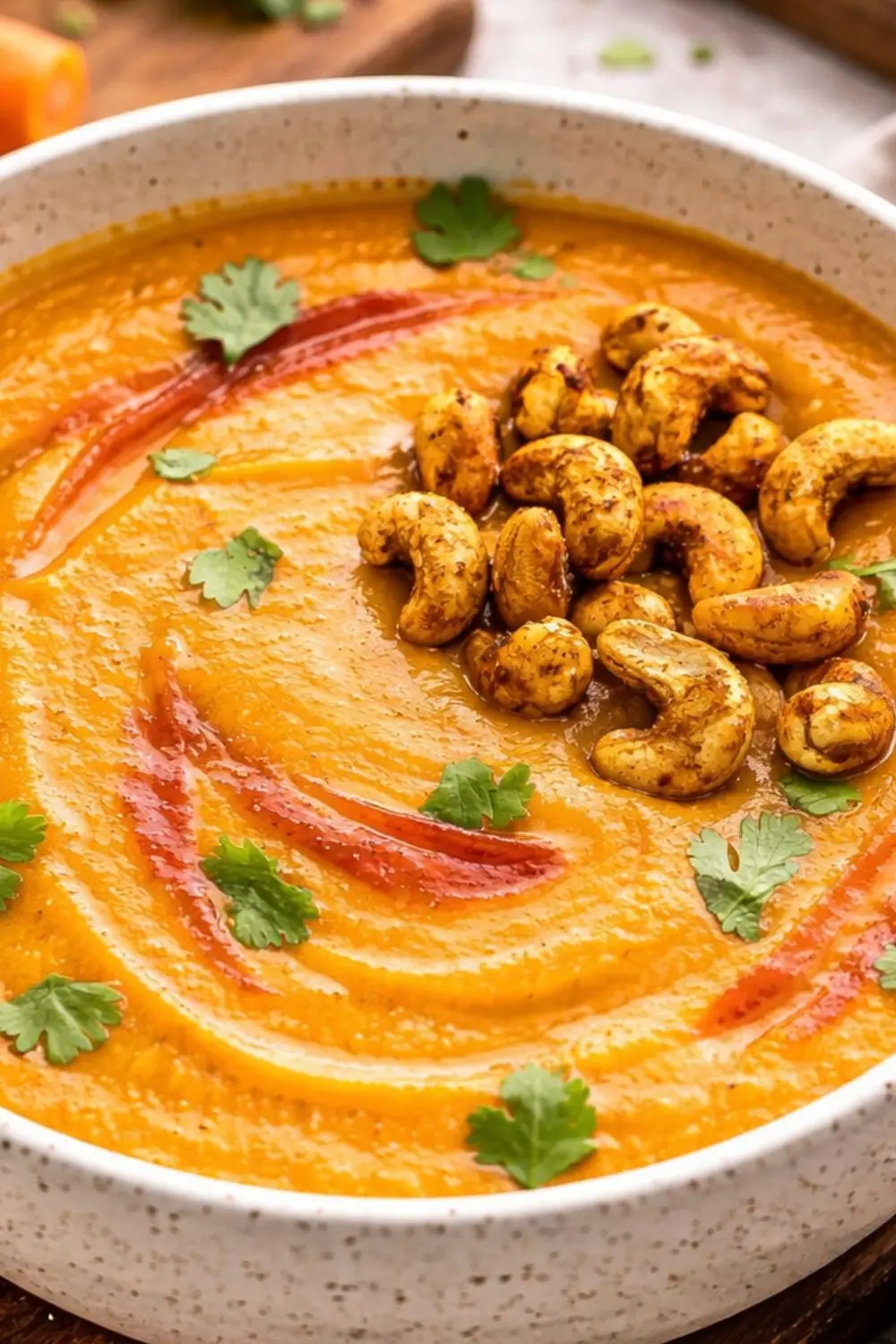
The spice blend here is the real story. Smoked paprika, cumin, turmeric, cinnamon, and ginger work together in a way that is complex without being complicated. And the curry cashews on top — optional in theory, non-negotiable in practice — add a crunch that makes the whole bowl.
Why This Is the Best Vegan Red Lentil Soup Recipe
Most red lentil soups land in one of two camps: thin and underseasoned, or aggressively spiced with no nuance. This recipe sits in better territory than either. The spice blend is warm and layered, the coconut milk adds richness without making the soup taste like a curry, and a generous squeeze of lemon at the end lifts every other flavour in the bowl.
The soup serves 5 to 6 people generously as a main course. It costs very little to make. It reheats perfectly. And it takes 40 minutes from the cold pan to the finished bowl. There are very few recipes that deliver this much flavour for this little effort and cost — and that combination is worth paying attention to.

Prep: 15 min | Cook: 25 min | Total: 40 min | Servings: 5–6 | Calories: 352 kcal | 100% Vegan
What Makes This Different from Other Lentil Soups
The distinguishing moves here are specific and intentional. First, tomato paste gets sauteed with the aromatics rather than added to liquid — a step that caramelises it slightly and deepens its flavour substantially. Second, the soup gets partially blended after cooking, which creates a creamy base while leaving some texture intact. Third, the coconut milk and lemon juice go in after blending and off the heat, which preserves their brightness rather than cooking it away.
Each of those choices is purposeful, and each one contributes to the finished result being noticeably better than a basic lentil soup.
Equipment You Will Need
Nothing specialist required here:
- Large pot — heavy-bottomed for even heat distribution; a Dutch oven works excellently
- Immersion blender — for partially pureeing the soup to your preferred texture after cooking
- Stand blender — an alternative to the immersion blender; blend in batches if using, and vent the lid carefully with hot liquid
- Small skillet — for toasting the curry cashews
- Sharp knife and chopping board — for the onion, carrots, and celery
- Grater or microplane — for the garlic (grated garlic incorporates more evenly than minced)
- Measuring spoons and cups — for the spice blend; precision matters more here than in simpler recipes
- Ladle — for serving
The immersion blender earns its spot in this recipe more than in most. You blend directly in the pot, control exactly how smooth the soup gets, and avoid transferring scalding hot liquid to a stand blender. If you cook soups regularly, it is genuinely one of the better small appliance investments available.
Ingredients
For the Soup:
- 1 Tbsp. olive oil
- 1 cup diced yellow onion
- 1 cup diced carrots
- 1 cup diced celery
- Salt and freshly ground black pepper, to taste
- 2 cloves garlic, grated
- 1 Tbsp. tomato paste
- 1 Tbsp. smoked paprika
- 1 tsp. ground cumin
- 0.5 tsp. ground ginger
- 0.5 tsp. ground turmeric
- 0.25 tsp. ground cinnamon
- 1.5 tsp. sriracha (optional, for heat)
- 1.5 cups red lentils, rinsed
- 3 Tbsp. chopped fresh cilantro
- 4 cups low-sodium vegetable broth
- 1.5 cups water
- 0.5 cup canned coconut milk (optional — sub with water or extra broth)
- 2 to 4 Tbsp. fresh lemon juice
For the Curry Cashews (Optional but Recommended):
- 0.5 cup raw cashews
- 0.5 tsp. olive oil
- 0.25 tsp. curry powder
- 0.25 tsp. smoked paprika
- Kosher salt and black pepper to taste
Step-by-Step Instructions for Easy Creamy Vegan Red Lentil Soup

Making the Curry Cashews
1. Combine the olive oil, curry powder, smoked paprika, salt, and pepper in a small bowl. Add the cashews and stir until every cashew is evenly coated in the spice mixture.
2. Heat a small skillet over medium-low heat. Add the spiced cashews and toast for 3 to 5 minutes, stirring occasionally, until they turn golden brown and fragrant. Watch them closely — cashews go from golden to burned faster than seems reasonable.
3. Remove from the heat immediately and set aside. They will crisp up further as they cool.
Making the Red Lentil Soup
1. Saute the vegetables. Heat the olive oil in a large pot over medium-high heat. Once hot, add the diced onion, celery, and carrots. Season with salt and pepper. Saute for 3 to 4 minutes until the onion begins to soften and turns slightly translucent at the edges.
2. Build the spice base. Add the grated garlic, tomato paste, sriracha (if using), smoked paprika, cumin, ginger, turmeric, and cinnamon. Saute everything together for 1 minute, stirring constantly. This step blooms the spices in the hot oil and caramelises the tomato paste slightly, which deepens both flavour and colour. Do not skip it and do not rush it.
3. Add the lentils and liquid. Add the rinsed red lentils and fresh cilantro. Pour in the vegetable broth and water. Stir to combine thoroughly, scraping any spices from the bottom of the pot. Bring to a boil over high heat, then reduce to medium-low, cover with a lid, and simmer for 15 to 20 minutes until the lentils are completely tender and beginning to dissolve into the broth.
4. Blend to your preferred consistency. Turn off the heat. Use your immersion blender to puree the soup to your desired texture. For a smooth, creamy soup, blend until fully uniform. For a slightly chunky result with more body, blend about two-thirds of the pot and leave the rest intact. Both versions work well — texture preference is personal.
5. Finish with coconut milk and lemon. Pour in the coconut milk and fresh lemon juice. Stir until fully incorporated. Taste for seasoning and adjust with salt, pepper, or extra lemon as needed. The lemon is not decoration — it balances the richness of the coconut milk and lifts the earthiness of the spices significantly.
6. Serve. Ladle into bowls and top with curry cashews, extra fresh cilantro, and additional sriracha if you want more heat.
The Spice Blend — Understanding What Each One Does
Six spices in one soup sounds like a lot. It is not, once you understand the role each one plays. They do not compete with each other; they build on each other.
Smoked Paprika (1 Tablespoon)
The largest single spice quantity in the recipe for good reason. Smoked paprika adds a warm, slightly smoky depth that is the primary flavour note of the finished soup. It also gives the soup its deep, rusty-orange colour. Use a good-quality smoked paprika — the difference between a fresh, vibrant jar and a stale one is genuinely noticeable here.
Ground Cumin (1 Teaspoon)
Cumin adds an earthy, slightly bitter warmth that anchors the other spices. It is the note that makes the soup taste grounded rather than sweet or sharp. Without it, the spice blend feels unfinished.
Ground Ginger (0.5 Teaspoon)
Ground ginger adds a clean, mild heat and brightness that lifts the heavier, earthier spices. It is distinctly different from fresh ginger — drier and more concentrated, with less sharpness.
Ground Turmeric (0.5 Teaspoon)
Turmeric adds colour, a faint bitterness, and its well-documented anti-inflammatory properties. At half a teaspoon, it contributes to the flavour profile without dominating it. It also deepens the golden colour of the finished soup.
Ground Cinnamon (0.25 Teaspoon)
Quarter teaspoon sounds insignificant. It is not. Cinnamon adds a subtle sweetness and warmth that rounds the entire spice blend and stops it from tasting purely savoury and one-dimensional. You will not taste “cinnamon” in the finished soup, but you would notice its absence.
Blooming the Spices — Why the Sequence Matters
Adding all six spices directly to liquid produces a flat, slightly powdery result. Sauteing them in oil with the tomato paste and garlic for a full minute activates the fat-soluble flavour compounds in each spice and makes them significantly more aromatic and flavourful. This one step is responsible for a meaningful difference in the finished soup’s depth. It is non-negotiable.
Red Lentils — Why They Work So Well Here
Red lentils are uniquely suited to this recipe for one specific reason: they do not need soaking and they self-thicken. Unlike green or brown lentils, which hold their shape after cooking, red lentils break down and partially dissolve into the broth as they simmer. This creates a naturally creamy texture that makes the soup feel substantial and rich without any additional thickeners.
Rinsing the Lentils — Do Not Skip This Step
Rinse red lentils thoroughly under cold running water until the water runs clear. Unrinsed lentils carry surface starch and occasionally small debris. The rinsing takes 30 seconds and prevents the soup from developing a slightly gummy or cloudy quality that skipping produces. It also removes some of the compounds that cause digestive discomfort for people sensitive to legumes.
How Much Will the Lentils Expand?
Red lentils roughly double in volume as they absorb liquid during cooking. 1.5 cups of dry lentils produces approximately 3 cups of cooked lentils. This is why the recipe uses 4 cups of broth and 1.5 cups of water — the lentils need sufficient liquid to cook through and begin dissolving without the pot running dry.
The Coconut Milk Question — Use It or Skip It

The recipe marks coconut milk as optional, and that honesty is appreciated. Here is the actual answer: the coconut milk makes the soup noticeably better, and you should use it. It adds richness, rounds out the spice blend, and gives the finished bowl a restaurant-quality creaminess that broth alone does not produce.
Which Coconut Milk to Use
Full-fat canned coconut milk is the right choice. It has the fat content needed to add genuine richness. Light coconut milk is mostly water and adds relatively little. Carton coconut milk (the kind sold as a dairy alternative) is far too thin for this application.
Shake the can well before opening, or stir thoroughly if the cream has separated. Add it off the heat after blending — heating coconut milk for extended periods can cause it to split and produce a grainy texture in the soup.
Coconut Milk Alternatives
If you genuinely do not want coconut milk or do not have it:
- Replace with 0.5 cup of full-fat oat milk for a lighter creaminess
- Use 0.5 cup of cashew cream (blended soaked cashews with water) for a richer result
- Simply use extra vegetable broth for a thinner, brothier soup that still tastes excellent
The Curry Cashews — Optional in Name, Essential in Spirit
Yes, they are listed as optional. No, you should not skip them. Here is why they matter beyond just being a topping.
The soup itself is smooth, creamy, and soft in texture. The curry cashews provide the textural contrast that makes each spoonful interesting. Without them, the bowl is one-note in texture even if the flavour is layered. With them, you get crunch, nutty richness, and extra spiced flavour in every few bites.
The toasting step is important. Raw cashews have a soft, slightly waxy texture. Toasting them in a dry pan for 3 to 5 minutes develops their natural oils, deepens their nuttiness, and gives them a proper crunch. Watch the heat carefully — medium-low is the right temperature. High heat produces burned cashews very quickly, and burned cashews are genuinely unpleasant.
IMO, the curry cashews alone are reason enough to make this recipe. They also work as a snack straight from the pan, which is a fact worth knowing before you make them.
Lemon Juice — The Step That Finishes the Soup
Two to four tablespoons of fresh lemon juice goes into the soup after blending, off the heat, alongside the coconut milk. This is not a garnish quantity — it is a meaningful flavour addition that changes the character of the finished bowl.
The lemon juice does two things simultaneously. It cuts through the richness of the coconut milk and prevents the soup from tasting heavy. And it brightens the entire spice blend, making the smoked paprika taste more vibrant and the cinnamon taste more alive. A bowl of this soup without lemon juice tastes noticeably flatter and heavier than one with it.
Start with 2 tablespoons, stir, taste, and add more if the soup needs it. The right amount depends on the acidity of your specific lemon and your personal preference. Some days a soup needs 4 tablespoons; some days 2 is enough. Taste and adjust rather than adding a fixed amount without checking.
Nutrition Per Serving (Serves 5–6)
| Nutrient | Per Serving |
| Calories | 352 kcal |
| Carbohydrates | 52g |
| Protein | 17g |
| Fat | 10g |
| Saturated Fat | 5g |
| Fiber | 9g |
| Sugar | 6g (natural) |
| Sodium | 243mg |
The protein figure — 17 grams per serving from entirely plant sources — is one of the strongest nutrition stats in this series of soup recipes. Red lentils contain roughly 18g of protein per 100g dry weight, making them one of the most protein-dense plant foods available. Combined with the cashews and coconut milk, this soup functions as a genuinely complete meal rather than a light starter.
The fiber content of 9g per serving is also notable — more than a third of the daily recommended intake in a single bowl. The sodium at 243mg is very low for a flavoured soup, made possible by using low-sodium broth and building flavour through spices rather than salt.
Still Hungry, Try It Next recipe :-
Vegan Peach Crumble Muffins Perfect Summer Recipe

Serving This Soup — How Many People and What to Serve Alongside
This recipe serves 5 to 6 people as a generous main course, or 8 people as a starter. The portions are substantial — the lentils make this a filling soup that does not need much alongside it to constitute a complete meal.
What works alongside it:
- Thick naan bread or flatbread — for dunking and scooping
- Steamed basmati rice — turns the soup into something closer to a dal-style meal
- Simple cucumber and tomato salad with lemon and olive oil — the freshness contrasts nicely with the warm spices
- Extra fresh cilantro and a wedge of lemon on the side — lets each person adjust brightness to taste
- A dollop of vegan yogurt (coconut or soy-based) — adds coolness and a slight tang against the spiced broth
Variations Worth Trying
Extra Creamy Red Lentil Soup
Fully blend the entire pot rather than partially. Increase coconut milk to 1 full cup. The result is a smooth, velvety soup that resembles a bisque in texture — very elegant, very rich.
Red Lentil Soup with Spinach
Add 2 large handfuls of fresh spinach in the final 2 minutes before serving. Stir until just wilted. The spinach adds colour, nutrition, and a fresh note that lightens the richness of the coconut milk.
Harissa Red Lentil Soup
Replace the sriracha with 1 to 2 tablespoons of harissa paste. Harissa adds a more complex heat with floral and roasted pepper notes that push the soup in a North African direction. Excellent served with crusty bread and preserved lemon.
Red Lentil and Sweet Potato Soup
Add 1.5 cups of diced sweet potato with the lentils. Increase broth by 0.5 cup to account for the extra volume. The sweet potato adds natural sweetness that works beautifully against the smoked paprika and cumin.
Slow Cooker Version
Saute the aromatics and bloom the spices on the stovetop first — this step cannot be skipped without losing significant flavour. Transfer everything to a slow cooker, add the lentils and liquid, and cook on low for 6 to 8 hours or high for 3 to 4 hours. Blend and finish with coconut milk and lemon as directed.
Storage, Freezing, and Reheating
Fridge: Store in an airtight container for up to 5 days. The soup thickens considerably as the lentils continue absorbing liquid overnight. Add a splash of vegetable broth or water when reheating and stir to bring it back to the right consistency.
Freezer: This soup freezes exceptionally well. Store in a freezer-safe container for up to 3 months. The texture after freezing and thawing is essentially identical to fresh — lentil-based soups are among the best candidates for batch cooking and freezing. Thaw overnight in the refrigerator before reheating.
Reheating: Warm in a saucepan over medium-low heat, stirring regularly and adding liquid as needed. Microwave in 90-second intervals, stirring between each, until hot throughout. Taste and readjust seasoning after reheating — salt levels can shift slightly after refrigeration.
Store the curry cashews separately in an airtight container at room temperature for up to 5 days. Do not store them in the soup — they will absorb moisture and lose their crunch. Add them fresh to each bowl at serving time.
FAQs
Do I need to soak the red lentils beforehand? No. Red lentils are the one common lentil variety that does not require soaking. They cook through in 15 to 20 minutes straight from dry. Rinse them well, but do not soak.
Can I use green or brown lentils instead? You can, but the recipe changes significantly. Green and brown lentils do not break down the same way red lentils do, so the natural creaminess will not develop. You will need to blend the entire pot to achieve a similar texture, and the cooking time increases to 30 to 40 minutes. The spice blend works with both, but red lentils produce a noticeably better result for this specific recipe.
My soup turned out too thick. What should I do? Add warm vegetable broth or water in quarter-cup increments, stirring between each addition, until the soup reaches your preferred consistency. This is very common, particularly when reheating leftovers.
Can I make this without any oil? Yes. Use 3 tablespoons of vegetable broth to saute the vegetables and bloom the spices instead of olive oil. The spice blooming step still works, though less dramatically than with oil. Stir more frequently to prevent sticking.
Is this recipe gluten-free? Every ingredient in the base recipe is naturally gluten-free. Check your sriracha label if using, as some brands contain small amounts of wheat-based thickener. Confirm your vegetable broth is gluten-free as well.
What if I do not have fresh cilantro? Fresh flat-leaf parsley makes a reasonable substitute in the garnish. The fresh cilantro cooked into the soup contributes relatively mild flavour — the spice blend carries the main flavour load. Skip it entirely in the cooked soup if needed and garnish with parsley at the end.
Why This Works as a Summer Soup
Warm, spiced soups belong to every season — not just winter. This Creamy Vegan Red Lentil Soup works in summer for a straightforward reason: it is ready in 40 minutes, produces minimal lingering heat in the kitchen, and eats lightly despite its apparent richness. A bowl of this with flatbread and a fresh salad on a warm evening is entirely appropriate eating.
The lemon finish also makes it feel brighter and more summery than a typical winter lentil soup. Warm spices and bright acid together create a flavour profile that works in any season — which is exactly what a truly versatile recipe should do.
Still Hungry, Try It Next recipe :-
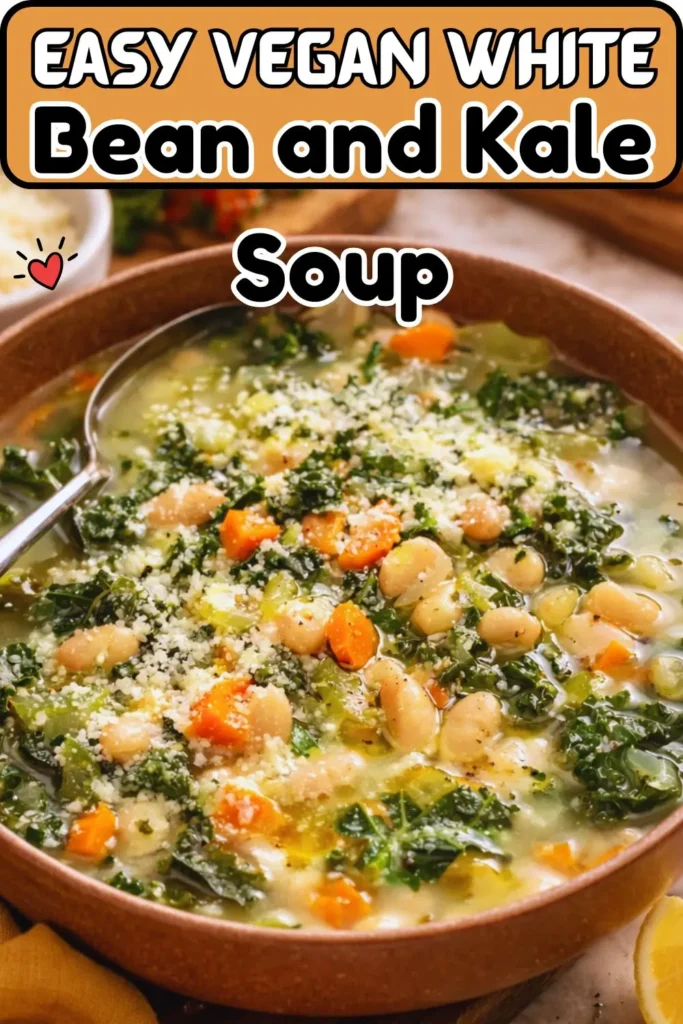
Vegan White Bean and Kale Soup
My Thinking
This Easy Creamy Vegan Red Lentil Soup earns its 30-minute headline through smart technique and well-chosen ingredients. The spice-blooming step builds depth that most soups take hours to develop. The red lentils do the thickening work without any additional effort on your part. The coconut milk and lemon juice finish the bowl in a way that feels complete and considered.
Make it on a weeknight when you want something genuinely good without significant effort. Make a double batch and freeze half for a future evening when cooking feels like too much to ask. Add the curry cashews without hesitation. And remember that lemon juice at the end is not optional — it is the step that makes everything else taste the way it should. FYI, this soup reheated the next day with fresh cashews on top is not a consolation meal. It might actually be better than the first serving.
Easy Creamy Vegan Red Lentil Soup
Ingredients
Equipment
Method
- Making the Curry Cashews
- Combine the olive oil, curry powder, smoked paprika, salt, and pepper in a small bowl. Add the cashews and stir until every cashew is evenly coated in the spice mixture.
- Heat a small skillet over medium-low heat. Add the spiced cashews and toast for 3 to 5 minutes, stirring occasionally, until they turn golden brown and fragrant. Watch them closely — cashews go from golden to burned faster than seems reasonable.
- Remove from the heat immediately and set aside. They will crisp up further as they cool.
- Making the Red Lentil Soup
- Saute the vegetables. Heat the olive oil in a large pot over medium-high heat. Once hot, add the diced onion, celery, and carrots. Season with salt and pepper. Saute for 3 to 4 minutes until the onion begins to soften and turns slightly translucent at the edges.
- Build the spice base. Add the grated garlic, tomato paste, sriracha (if using), smoked paprika, cumin, ginger, turmeric, and cinnamon. Saute everything together for 1 minute, stirring constantly. This step blooms the spices in the hot oil and caramelises the tomato paste slightly, which deepens both flavour and colour. Do not skip it and do not rush it.
- Add the lentils and liquid. Add the rinsed red lentils and fresh cilantro. Pour in the vegetable broth and water. Stir to combine thoroughly, scraping any spices from the bottom of the pot. Bring to a boil over high heat, then reduce to medium-low, cover with a lid, and simmer for 15 to 20 minutes until the lentils are completely tender and beginning to dissolve into the broth.
- Blend to your preferred consistency. Turn off the heat. Use your immersion blender to puree the soup to your desired texture. For a smooth, creamy soup, blend until fully uniform. For a slightly chunky result with more body, blend about two-thirds of the pot and leave the rest intact. Both versions work well — texture preference is personal.
- Finish with coconut milk and lemon. Pour in the coconut milk and fresh lemon juice. Stir until fully incorporated. Taste for seasoning and adjust with salt, pepper, or extra lemon as needed. The lemon is not decoration — it balances the richness of the coconut milk and lifts the earthiness of the spices significantly.
- Serve. Ladle into bowls and top with curry cashews, extra fresh cilantro, and additional sriracha if you want more heat.
Notes
Nutrition Per Serving (Serves 5–6)
| Nutrient | Per Serving |
| Calories | 352 kcal |
| Carbohydrates | 52g |
| Protein | 17g |
| Fat | 10g |
| Saturated Fat | 5g |
| Fiber | 9g |
| Sugar | 6g (natural) |
| Sodium | 243mg |

Hi — I’m Rachel. I’m a wife, a mom, and a home cook who believes that food should bring comfort, joy, and compassion to the table. I live with my family — two hungry little foodies who are my most honest recipe testers — and together we’ve built a kitchen culture that’s all about good food that happens to be 100% vegan. I started this blog because I wanted a place to share the recipes that keep our days moving, the dishes that make weeknights feel a little easier, and the meals that become our little family traditions.