
Shakshuka is one of those dishes that looks like it took serious effort and actually takes thirty minutes on a weeknight. The deeply spiced tomato sauce, the “eggs” nestled into the bubbling base, the fresh herbs scattered on top it’s a full sensory experience from a single pan. This Easy Vegan Shakshuka with Summer Tomatoes replaces the eggs with silken tofu, uses peak-season summer tomatoes, and delivers every bit of the warmth, depth, and visual drama of the original.
I first made this version when peak tomato season overlapped with a weekend where I genuinely couldn’t face another sweet breakfast. One pan, about 30 minutes, and a result that smelled so good my neighbors probably wondered what was happening in my kitchen. Serve it with crusty sourdough or warm flatbread and you have a breakfast that feels like a genuine occasion. Here’s how to make it.
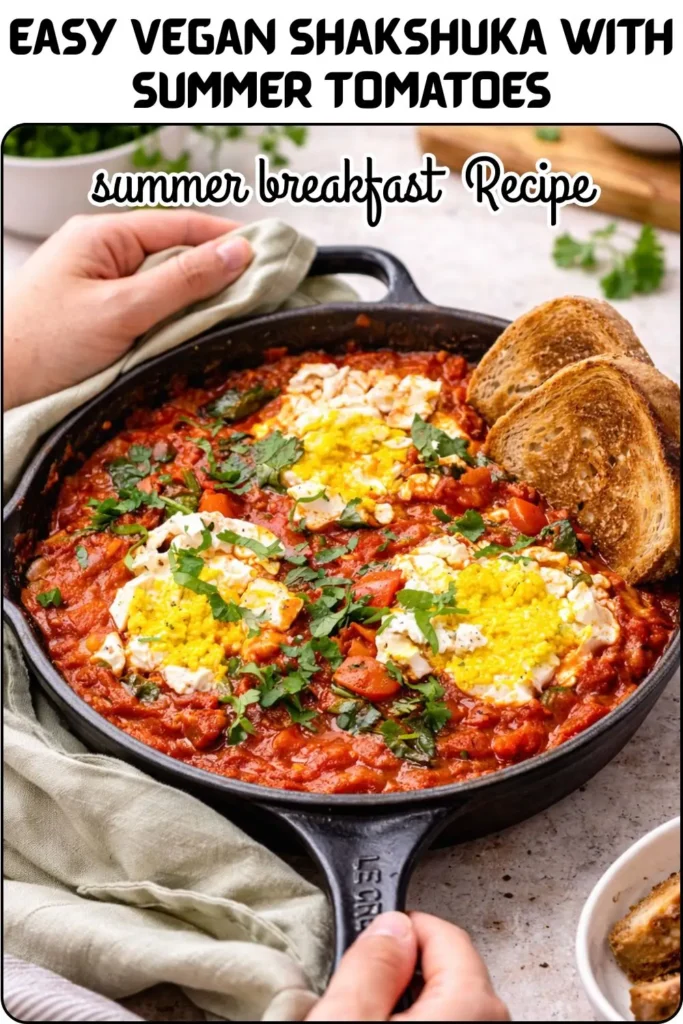
My Recipe Details at a Glance
Everything you need before you fire up the pan:
- Course- Breakfast, Brunch, or Light Dinner
- Cuisine- Middle Eastern / North African-inspired
- Prep Time- 10 minutes
- Cook Time- 20 minutes
- Total Time- 30 minutes
- Servings- 4 people
- Calories per Serving- 66 kcal
- Diet- 100% Vegan, Gluten-Free, Dairy-Free
At 66 calories per serving, this is one of the lightest breakfast recipes in existence which makes complete sense given the ingredient list is almost entirely vegetables, legumes, and spices. Add crusty bread for dipping and you’re building toward a more complete calorie count, but the shakshuka base itself is remarkably light and nourishing.
Equipment You’ll Need For
One pan. That’s the honest answer, but here are the specifics:
- A large, deep skillet or sauté pan with a lid– At least 10–12 inches wide. You need enough surface area to place 3–4 tofu “eggs” in the sauce without crowding, and enough depth to hold the tomato sauce without it splattering across your stovetop when it simmers. A cast iron skillet is the best option it retains heat evenly, creates a slightly more concentrated sauce, and goes straight from stove to table beautifully. A stainless steel or non-stick pan both work fine.
- A lid for the pan – Essential for the final step where you steam-heat the silken tofu. Without a lid, the tofu heats unevenly and takes twice as long.
- A sharp knife and cutting board – For dicing the onion, mincing the garlic, chopping the red pepper, and roughly chopping the spinach and cilantro.
- A wooden spoon or silicone spatula – For stirring the sauce without scratching your pan.
- A small bowl – For mixing the turmeric with a tablespoon or two of silken tofu to create the “yolk” mixture.
- Measuring spoons – For the paprika and cumin. These spices are doing the heavy flavor lifting, so measure rather than approximate the first time.
FYI one pan, one cutting board, one small bowl. The cleanup for this recipe takes approximately four minutes.
Ingredients The Full Breakdown
The Shakshuka Sauce Base
- 1 yellow onion, diced – The flavor foundation of the entire sauce. Yellow onion sweetens and softens as it cooks, creating a mellow base that lets the spices shine. Don’t rush the onion-cooking stage — 3–4 minutes of proper softening makes a real difference.
- 3 garlic cloves, minced – Added after the onion softens. Garlic added too early (before the onion is softened) burns and turns bitter; added at the right time, it becomes sweet and fragrant.
- 1 small red pepper, chopped -Adds sweetness, color, and body to the sauce. Red peppers also contribute a significant amount of vitamin C this recipe delivers 52mg per serving, which is over half the recommended daily intake.
- 1 teaspoon sweet smoked paprika – The spice that gives shakshuka its characteristic deep red color and subtle smokiness. Smoked paprika (not regular sweet paprika) is what creates that complexity. If you only have regular paprika, add a tiny pinch of chipotle or smoked chili powder to compensate.
- 1½ teaspoons cumin – Earthy, warm, and deeply aromatic. Cumin is the backbone spice in this dish it ties the tomato and paprika together and gives the sauce its distinctly North African character.
- 14 oz (400g) canned chopped tomatoes – The liquid base of the sauce. Use the best quality canned tomatoes you can access San Marzano or similar varieties produce a sweeter, less acidic sauce that needs minimal adjusting. If your sauce tastes acidic after reducing, add a small pinch of sugar or a few drops of maple syrup to balance it.
- 1 cup fresh spinach, washed and roughly chopped – Added toward the end of cooking. Spinach wilts down dramatically one cup of fresh spinach becomes a modest amount cooked, but it adds iron, vitamin A, and nutritional substance to every serving.
- Salt and pepper to taste – Season progressively as the sauce develops rather than all at once at the end.
- Olive oil – For cooking the onion and vegetables. Use a generous pour shakshuka is not a recipe that benefits from being stingy with oil.
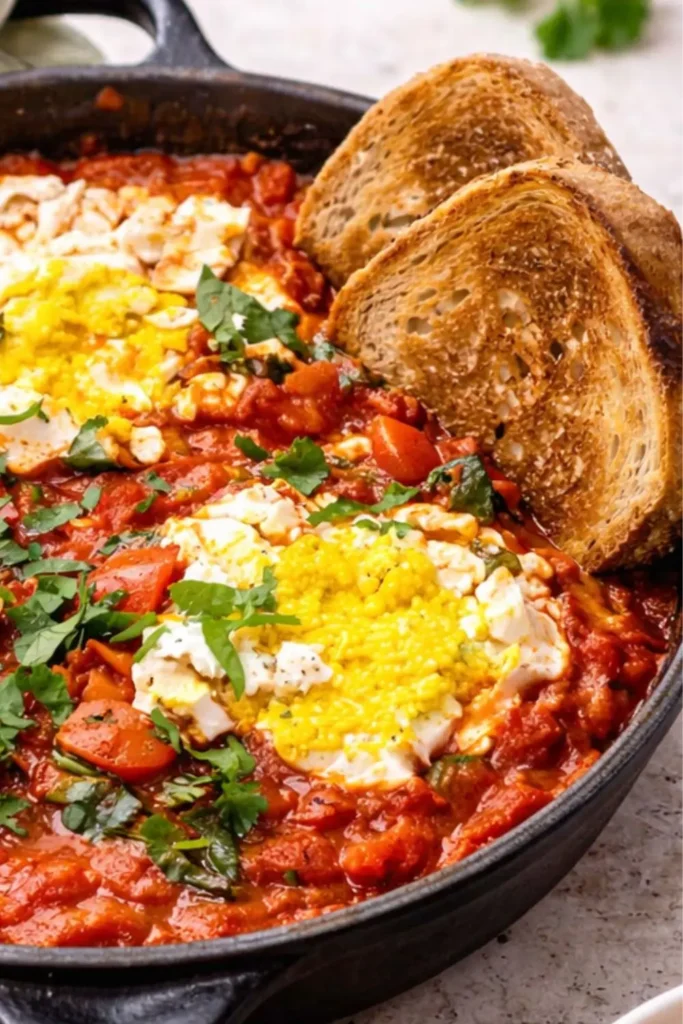
The Vegan “Egg” System
- 5 oz silken tofu – Silken tofu is the only type of tofu that works here. Its soft, custard-like texture mimics the gentle wobble of a poached egg white when placed on the warm sauce and steamed gently under a lid. Firm or extra-firm tofu lacks this quality it cooks up too dense and doesn’t absorb the surrounding sauce flavor the same way. Break the silken tofu into 3–4 roughly egg-sized chunks directly over the sauce.
- ¼ teaspoon turmeric – Mixed with 2 tablespoons of silken tofu to create a deep golden “yolk.” Spoon a small amount of this turmeric-tofu mixture into the center of each tofu piece to create the visual impression of an egg yolk. It’s a simple touch that transforms the presentation completely.
For Finishing
- Fresh cilantro, roughly chopped – Scattered generously over the finished shakshuka. Cilantro adds a bright, herbal freshness that cuts through the rich, spiced tomato base beautifully. If you’re in the “cilantro tastes like soap” camp, flat-leaf parsley works as a substitute with a slightly different but equally good result.
How to Make Easy Vegan Shakshuka with Summer Tomatoes
Step 1 – Build the Aromatic Base
Heat a generous glug of olive oil in your large skillet over medium heat. Add the diced yellow onion and stir-fry for 2–3 minutes until it softens and turns slightly translucent. Add the minced garlic and chopped red pepper. Cook for 4–5 minutes, stirring regularly, until the pepper softens and the garlic turns fragrant and golden not brown.
Don’t rush this stage. Properly cooked aromatics create a sweeter, more complex sauce. A pale, barely-cooked onion produces a sharper, more raw-tasting base that no amount of spice fixes.
Step 2 – Toast the Spices
Add the smoked paprika and cumin directly to the pan. Stir constantly for about one minute until the spices become fragrant and coat the vegetables evenly. Toasting the spices in the oil with the vegetables rather than adding them directly to liquid extracts the fat-soluble flavor compounds and creates a deeper, more rounded spice flavor.
You’ll know the spices are ready when the kitchen smells significantly better than it did 60 seconds ago.
Step 3 – Add the Tomatoes and Simmer
Pour in the canned chopped tomatoes and add a pinch of salt. Stir well to combine everything. Let the sauce simmer over medium-low heat for 8–10 minutes, stirring occasionally, until the red pepper fully softens and the sauce reduces and thickens into a richer, deeper-colored base.
Taste at this point and adjust. If the sauce still tastes sharp or acidic, add a small pinch of sugar or a tiny drizzle of maple syrup. The sauce should taste sweet, smoky, deeply savory, and bright.
Step 4 – Add the Spinach
Add the roughly chopped fresh spinach to the sauce and stir it through. Cook for 2–3 minutes until the spinach wilts completely and integrates into the sauce. The sauce will look slightly greener that’s fine. The spinach essentially disappears into the base but adds significant nutritional value to every serving.
Step 5 – Create the Vegan Eggs
In your small bowl, take 2 tablespoons of silken tofu and mix it thoroughly with the ¼ teaspoon of turmeric. This creates your golden “yolk” paste.
Break the remaining silken tofu into 3–4 roughly egg-sized chunks. Place them directly onto the surface of the sauce, spacing them evenly. Spoon a small amount of the yellow turmeric-tofu onto the center of each piece to create a yolk-like impression. Work gently silken tofu is very fragile and breaks easily if handled roughly.
Step 6 – Steam and Finish
Put the lid on the pan and let everything cook together for 3–4 minutes over medium-low heat. The steam heats the silken tofu gently through without making it rubbery. The tofu should feel warm and slightly firm on the outside but still soft when you break into it.
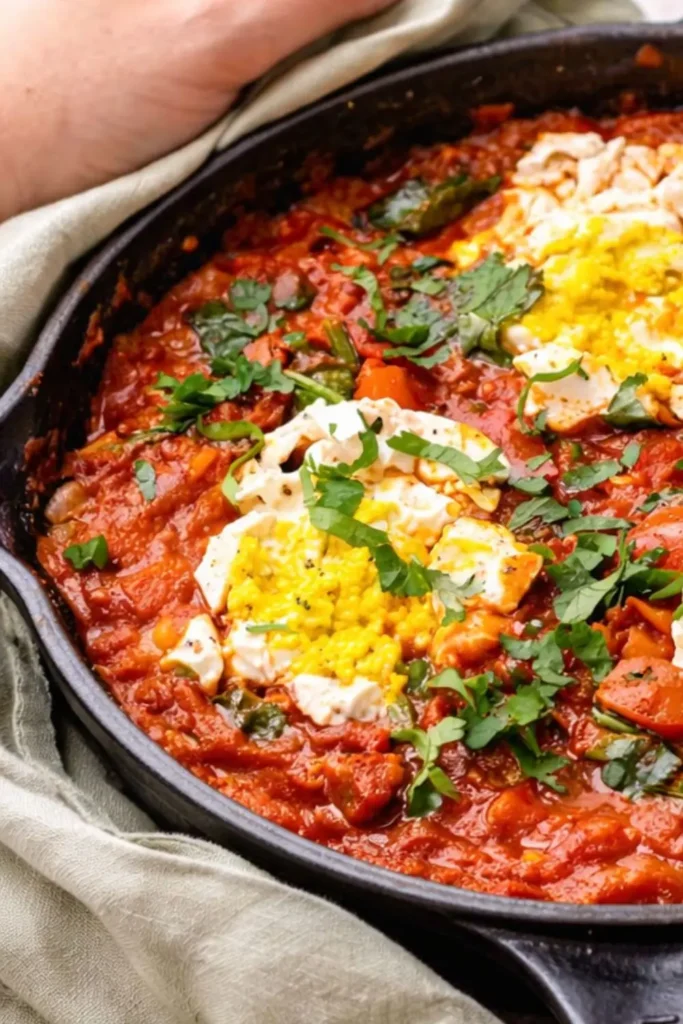
Remove the lid, scatter fresh cilantro generously across the top, add a final crack of black pepper, and serve immediately directly from the pan if you’re eating family-style, or spooned into individual shallow bowls.
Full Nutritional Breakdown (Per Serving 1 of 4)
| Nutrient | Amount |
| Calories | 66 kcal |
| Carbohydrates | 11g |
| Protein | 4g |
| Fat | 2g |
| Saturated Fat | 0.2g |
| Fiber | 3g |
| Sugar | 5g |
| Sodium | 155mg |
| Potassium | 437mg |
| Vitamin A | 2,008 IU |
| Vitamin C | 52mg |
| Calcium | 71mg |
| Iron | 2mg |
A few standout numbers:
- 66 calories per serving – Extraordinarily low for a hot, savory, satisfying breakfast. This is almost entirely from vegetables and tofu. Add flatbread and you’re building a more substantial meal; the base itself is very light.
- Vitamin A at 2,008 IU – Coming primarily from the spinach and red pepper. That’s roughly 40% of the daily recommended intake in one serving.
- Vitamin C at 52mg – Red pepper and tomatoes both contribute heavily. Well over half the daily recommended intake per serving.
- Only 0.2g of saturated fat – Essentially none. This dish is about as lean as a hot breakfast gets.
The Silken Tofu Deep Dive Why It Works as an Egg Substitute
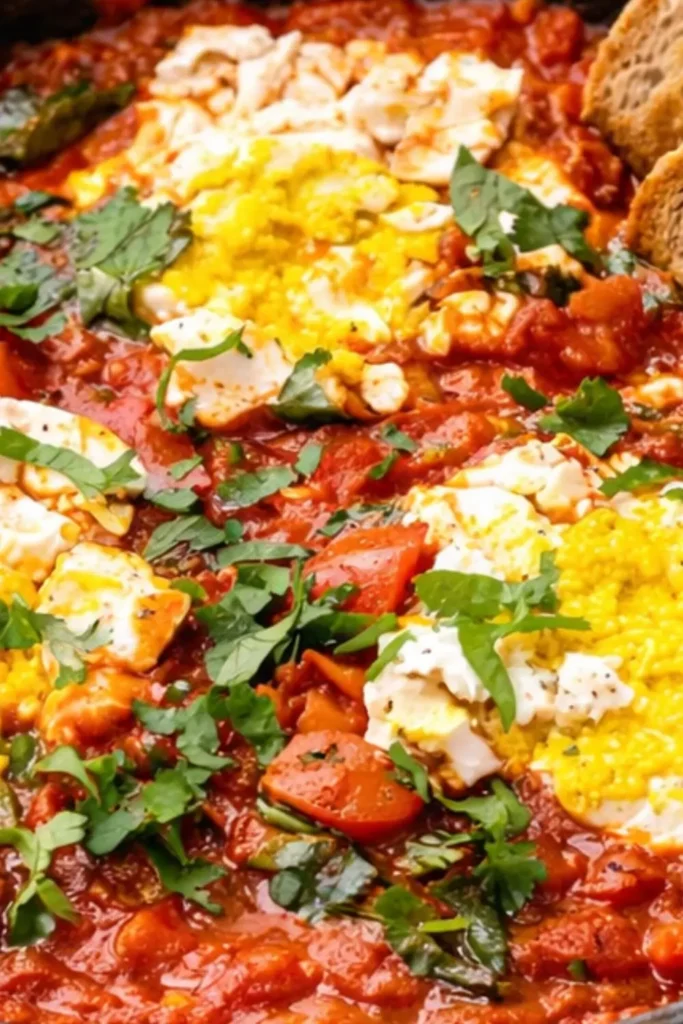
Ever wonder what makes silken tofu behave so differently from firm tofu? The answer is water content and production method. Silken tofu is coagulated at much higher moisture levels than firm varieties, producing an extremely soft, pudding-like texture that ranges from barely-set to slightly firmer depending on the brand and variety.
When you place chunks of silken tofu on a warm tomato sauce and cover it with a lid, the steam creates a gentle, even heat that warms the tofu without toughening it. The soft exterior takes on flavors from the surrounding sauce, while the interior stays pale and cream-colored just like an egg white around a yolk.
The turmeric “yolk” is the visual flourish that makes this recipe genuinely convincing. Use the soft variety of silken tofu for the most authentic texture the firm silken variety works but produces slightly less delicate results. IMO, the presentation alone makes this dish worth making even if you’ve never cared about egg-free cooking before.
What to Serve with Vegan Shakshuka
Shakshuka needs something to scoop and soak with. Here are the best options:
- Sourdough bread – Toasted and rubbed with olive oil. The acidity in sourdough matches the tomato sauce perfectly.
- Warm flatbread or pita – Ideal for scooping. Warm it directly in a dry pan for 30 seconds per side.
- Crusty baguette – Classic. Slice thick, don’t toast, dip directly.
- Brown rice or quinoa – For a more substantial, grain-based meal that turns the shakshuka into a complete protein bowl.
- Simple green salad – A lightly dressed salad of cucumber, tomatoes, and fresh herbs alongside keeps the meal light and summery.
You may also like Next recipe
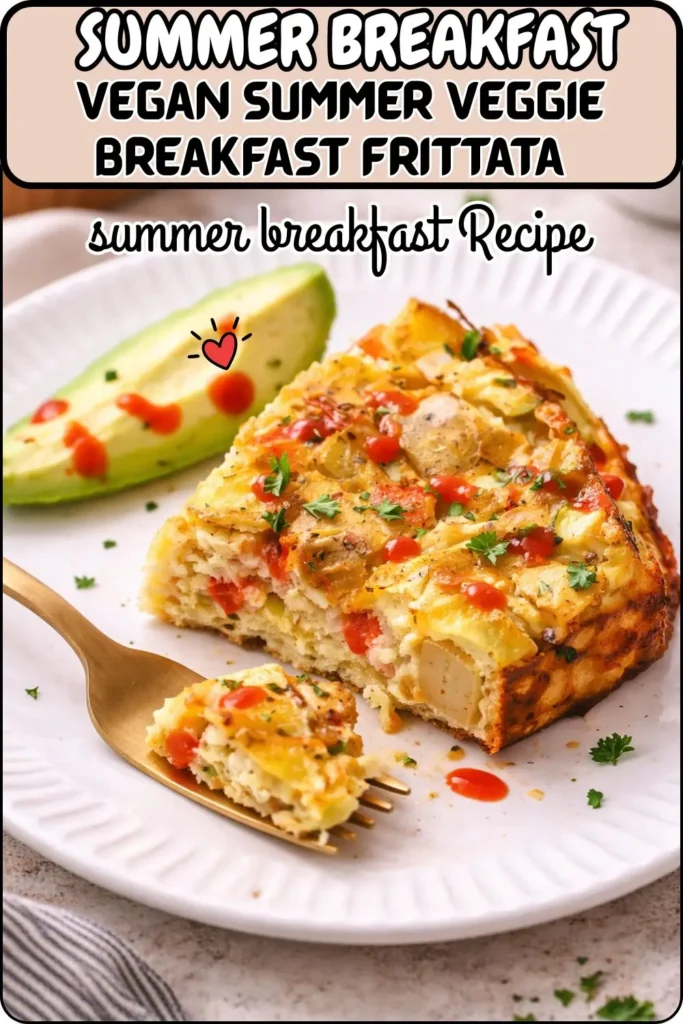
Vegan Summer Veggie Breakfast Frittata
Flavor Variations Beyond the Classic Version
The base recipe is delicious as written. These variations push it into new territory:
- Harissa shakshuka- Add 1–2 tablespoons of harissa paste with the tomatoes for more heat and a deeper, more complex spice profile.
- White shakshuka- Replace the canned tomatoes with a base of white beans, vegetable stock, and a squeeze of lemon for an entirely different, creamy, pale version.
- Green shakshuka- Swap the tomato base for a sauce of blended spinach, herbs, and green chili striking visually and bright in flavor.
- Mushroom shakshuka- Add 1 cup of sliced mushrooms with the red pepper for a meatier, earthier base.
Storage and Reheating
- Refrigerator- Store leftover shakshuka (sauce only, without the tofu) for up to 3 days in an airtight container. The sauce actually improves overnight as the spices deepen. Reheat the sauce in the pan over medium heat, then add fresh silken tofu and steam as directed.
- The tofu- Don’t store leftover shakshuka with the tofu in it silken tofu doesn’t reheat well once it’s been cooked. Make the tofu fresh each time you reheat the sauce. It only takes 5 minutes.
My Final Troughts
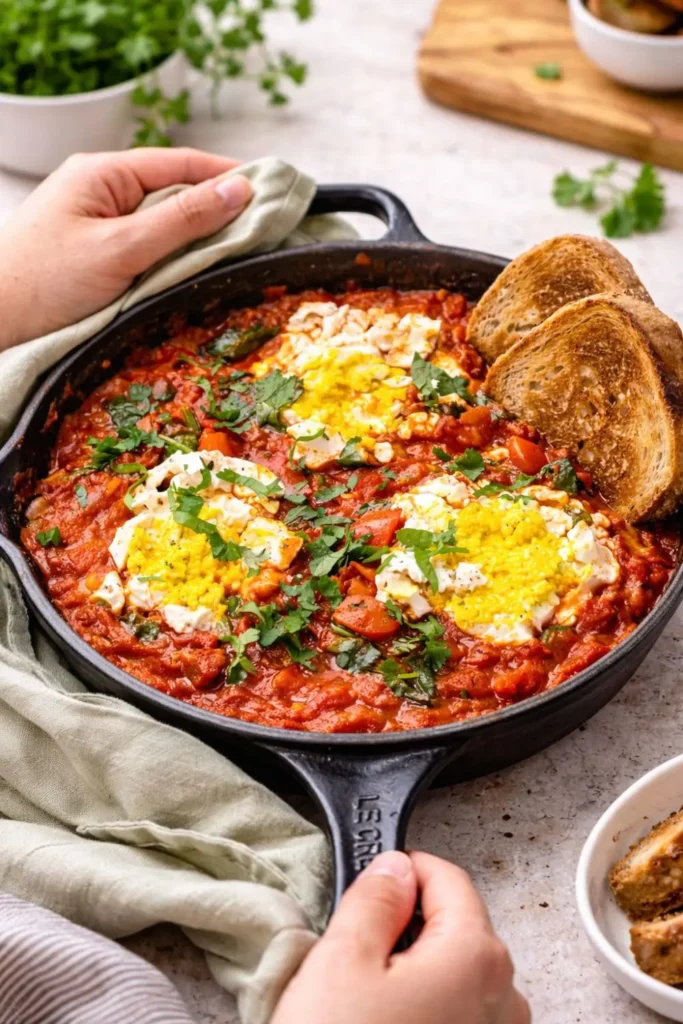
This Easy Vegan Shakshuka with Summer Tomatoes is thirty minutes, one pan, and one of the most visually striking breakfasts you can put on a table. The spiced tomato sauce is deeply flavored, the silken tofu “eggs” are gentle and convincing, and the whole dish comes in at 66 calories per serving before bread which means you can eat it with as much sourdough as you want and still feel good about your morning.
Make it at the height of summer tomato season when the produce is at its peak. Eat it straight from the pan. Serve it with people you like. That’s the whole philosophy behind shakshuka, and this vegan version honors it completely.
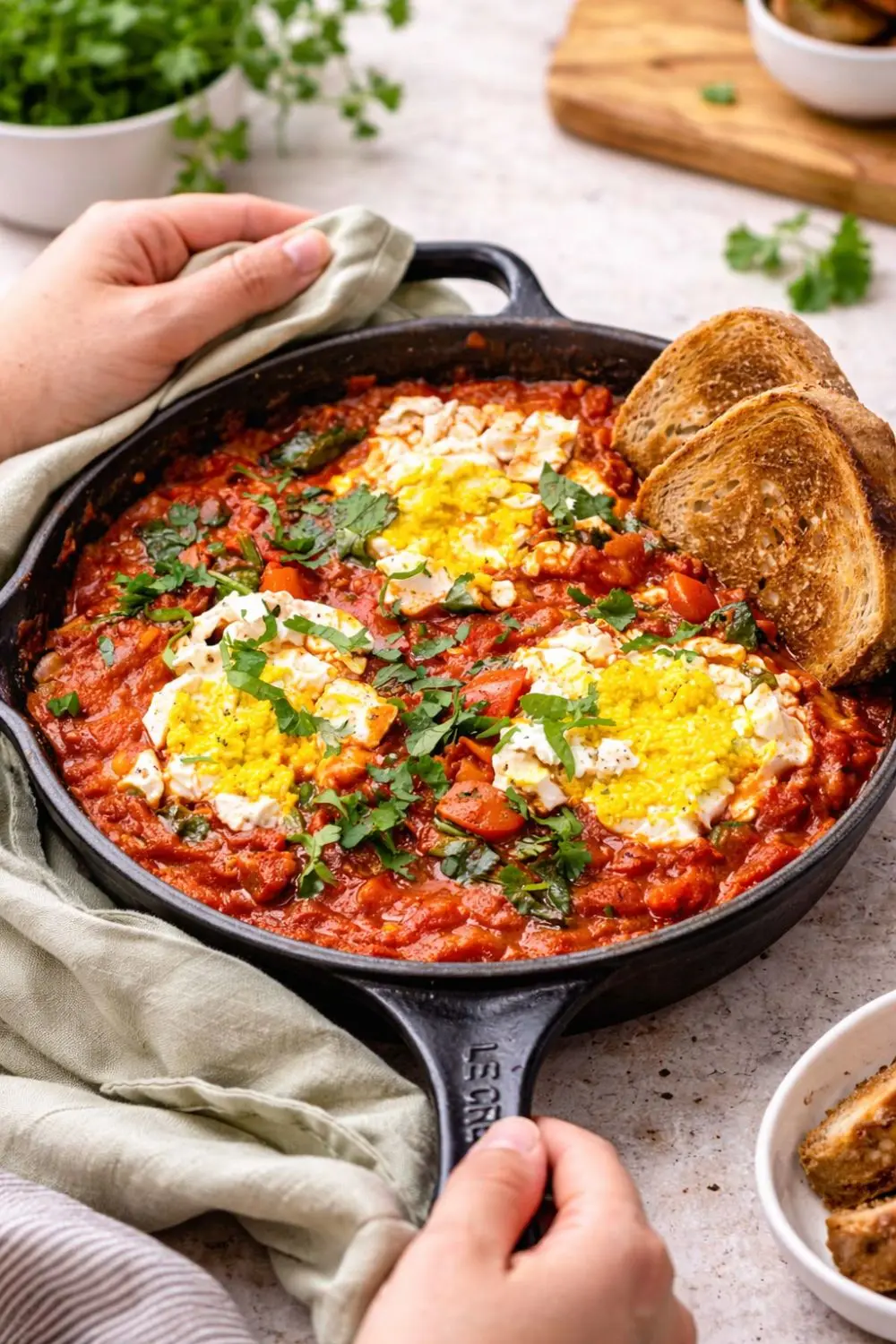
Easy Vegan Shakshuka with Summer Tomatoes
Ingredients
Equipment
Method
- Step 1 – Build the Aromatic Base
- Heat a generous glug of olive oil in your large skillet over medium heat. Add the diced yellow onion and stir-fry for 2–3 minutes until it softens and turns slightly translucent. Add the minced garlic and chopped red pepper. Cook for 4–5 minutes, stirring regularly, until the pepper softens and the garlic turns fragrant and golden not brown.
- Don’t rush this stage. Properly cooked aromatics create a sweeter, more complex sauce. A pale, barely-cooked onion produces a sharper, more raw-tasting base that no amount of spice fixes.
- Step 2 – Toast the Spices
- Add the smoked paprika and cumin directly to the pan. Stir constantly for about one minute until the spices become fragrant and coat the vegetables evenly. Toasting the spices in the oil with the vegetables rather than adding them directly to liquid extracts the fat-soluble flavor compounds and creates a deeper, more rounded spice flavor.
- You’ll know the spices are ready when the kitchen smells significantly better than it did 60 seconds ago.
- Step 3 – Add the Tomatoes and Simmer
- Pour in the canned chopped tomatoes and add a pinch of salt. Stir well to combine everything. Let the sauce simmer over medium-low heat for 8–10 minutes, stirring occasionally, until the red pepper fully softens and the sauce reduces and thickens into a richer, deeper-colored base.
- Taste at this point and adjust. If the sauce still tastes sharp or acidic, add a small pinch of sugar or a tiny drizzle of maple syrup. The sauce should taste sweet, smoky, deeply savory, and bright.
- Step 4 – Add the Spinach
- Add the roughly chopped fresh spinach to the sauce and stir it through. Cook for 2–3 minutes until the spinach wilts completely and integrates into the sauce. The sauce will look slightly greener that’s fine. The spinach essentially disappears into the base but adds significant nutritional value to every serving.
- Step 5 – Create the Vegan Eggs
- In your small bowl, take 2 tablespoons of silken tofu and mix it thoroughly with the ¼ teaspoon of turmeric. This creates your golden “yolk” paste.
- Break the remaining silken tofu into 3–4 roughly egg-sized chunks. Place them directly onto the surface of the sauce, spacing them evenly. Spoon a small amount of the yellow turmeric-tofu onto the center of each piece to create a yolk-like impression. Work gently silken tofu is very fragile and breaks easily if handled roughly.
- Step 6 – Steam and Finish
- Put the lid on the pan and let everything cook together for 3–4 minutes over medium-low heat. The steam heats the silken tofu gently through without making it rubbery. The tofu should feel warm and slightly firm on the outside but still soft when you break into it.
- Remove the lid, scatter fresh cilantro generously across the top, add a final crack of black pepper, and serve immediately directly from the pan if you’re eating family-style, or spooned into individual shallow bowls.
Notes
Full Nutritional Breakdown (Per Serving 1 of 4)
| Nutrient | Amount |
| Calories | 66 kcal |
| Carbohydrates | 11g |
| Protein | 4g |
| Fat | 2g |
| Saturated Fat | 0.2g |
| Fiber | 3g |
| Sugar | 5g |
| Sodium | 155mg |
| Potassium | 437mg |
| Vitamin A | 2,008 IU |
| Vitamin C | 52mg |
| Calcium | 71mg |
| Iron | 2mg |

Hi — I’m Rachel. I’m a wife, a mom, and a home cook who believes that food should bring comfort, joy, and compassion to the table. I live with my family — two hungry little foodies who are my most honest recipe testers — and together we’ve built a kitchen culture that’s all about good food that happens to be 100% vegan. I started this blog because I wanted a place to share the recipes that keep our days moving, the dishes that make weeknights feel a little easier, and the meals that become our little family traditions.