
Breakfast flatbread sounds like a restaurant menu item that takes an hour and requires specialist skills. It’s not. This Plant-Based Summer Breakfast Flatbread with Pesto uses a two-ingredient coconut yoghurt dough, roasted vine tomatoes, vegan garlic and herb cream cheese, drizzled pesto, balsamic glaze, and a handful of fresh greens and the whole thing comes together in 25 minutes. It’s the kind of breakfast that makes a Tuesday morning feel like a weekend brunch in the south of France.
I made this the first time I found myself staring at vine tomatoes on a summer market stall and having absolutely no plan for them. Thirty minutes later I had something so good I photographed it before eating it which is not something I do often. Let me walk you through every step.
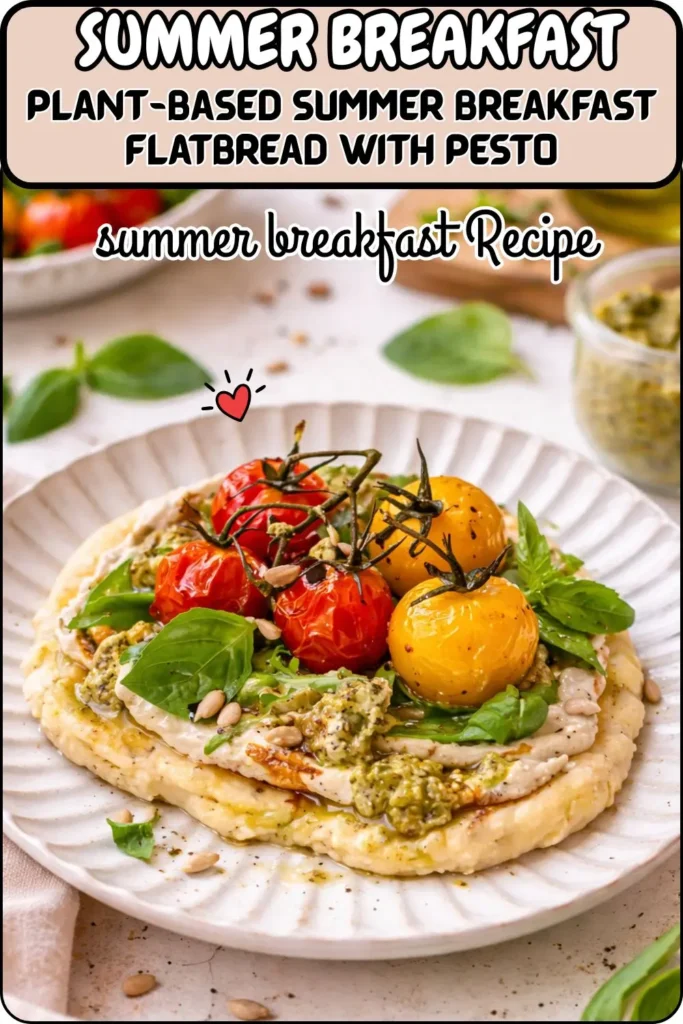
My Recipe Details at a Glance
Everything you need before you preheat the oven:
- Course- Breakfast or Brunch
- Cuisine- Mediterranean-Inspired
- Prep Time- 5 minutes
- Cook Time- 20 minutes
- Total Time- 25 minutes
- Servings- 1 (makes 3 small flatbreads — a full single-person serving)
- Calories per Serving- approximately 259 kcal (for the flatbreads with toppings)
- Diet- 100% Plant-Based, Vegan, Dairy-Free
This recipe makes one generous serving of three flatbreads enough for a satisfying breakfast. Scale up proportionally for two or more people: double everything for two servings, triple for three. The dough and toppings all scale cleanly.
Equipment You’ll Need For
Two cooking vessels and a few basics:
- A baking dish or roasting tray- For the oven-roasted tomatoes. A small baking dish (20cm/8-inch) works perfectly for 2–3 vines of tomatoes. You want the tomatoes relatively snug in the dish so they roast and caramelize rather than spread out and dry. Line it with parchment paper for easy cleanup.
- A mixing bowl – For making the flatbread dough. Medium-sized works fine the dough portions are small.
- A non-stick frying pan – For cooking the flatbreads on the stovetop. Non-stick is important here the coconut yoghurt dough is slightly sticky and the olive oil brushing technique works much better on a non-stick surface. A well-seasoned cast iron pan also works. Stainless steel will stick and tear the flatbread.
- A rolling pin – For rolling the flatbread portions into ovals. A wine bottle works in a pinch, which I say from experience and mild embarrassment.
- Parchment paper – For rolling the dough on. The dough is soft enough that it tends to stick to a bare counter without some help. Parchment prevents tearing and makes transfer to the pan much cleaner.
- A pastry brush – For brushing olive oil onto the flatbreads before and during cooking. This is what creates that beautiful golden color and slight puff.
- A wire cooling rack – For resting cooked flatbreads while you cook the remaining portions.
- Measuring spoons – For the pesto, balsamic glaze, and olive oil.
FYI the oven and stovetop run simultaneously in this recipe. The tomatoes go into the oven first, and you cook the flatbreads on the stovetop while the tomatoes roast. Time it right and everything finishes at roughly the same moment.
Ingredients The Full Breakdown
For the Roasted Vine Tomatoes
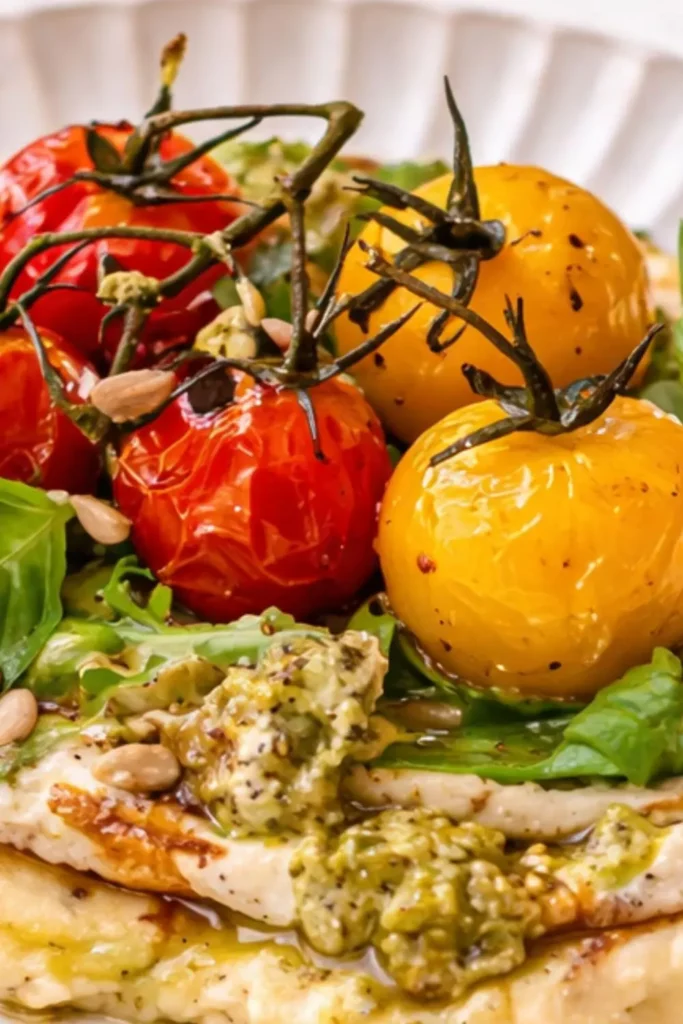
- 2–3 vines of tomatoes (about 15–18 cherry tomatoes total) – Roasting tomatoes on the vine is one of the best things you can do with a summer tomato. The oven concentrates the flavor, softens the skin, releases the natural sugars, and creates sticky, jammy, intensely sweet tomatoes that taste nothing like their raw counterparts. Keep them on the vine they look more stunning when serving, and the vine itself releases aromatic flavor as it roasts.
- 1 tablespoon olive oil – Just enough to coat. Drizzle it over the tomatoes before roasting.
- Salt and pepper – Season generously. Properly seasoned tomatoes caramelize better and taste far more complex.
For the Two-Ingredient Flatbreads
- 120g thick coconut yoghurt – The base of the dough. Thick coconut yoghurt is essential the watery, drinkable kind makes a dough that’s too wet to work with. Greek-style coconut yoghurt or full-fat coconut yoghurt that’s been refrigerated works perfectly. The coconut yoghurt acts as both the liquid and the leavening acid in the dough, which reacts with the self-raising flour to give you a slight puff during cooking.
- 125g self-raising flour, plus extra for dusting – Self-raising flour already contains baking powder, which is what makes these flatbreads puff slightly and bubble up beautifully when they hit the hot pan. Plain all-purpose flour doesn’t produce the same result without adding baking powder separately. If you only have all-purpose flour, add 1½ teaspoons of baking powder per 125g of flour.
- Olive oil for brushing – Applied to both sides of the flatbread during pan cooking. The oil is what gives you that golden, slightly crispy exterior.
For the Toppings
- 3 large tablespoons vegan garlic and herb cream cheese spread – The creamy base layer that everything else sits on. Look for a vegan cream cheese variety that specifically includes garlic and herbs brands like Violife, Kite Hill, or Oatly Creamy make excellent spreads that are completely plant-based. The cream cheese provides richness and a cool, savory backdrop against the warm roasted tomatoes.
- 2 tablespoons vegan pesto – Thinned with 1 tablespoon of water before drizzling, which makes it pourable rather than clumpy. Use a good quality store-bought vegan pesto (check that it doesn’t contain Parmesan some “vegetarian” pestos still use it) or make your own by blending basil, pine nuts, garlic, lemon juice, olive oil, and nutritional yeast.
- 3 teaspoons balsamic glaze – The finishing drizzle that ties everything together. Balsamic glaze (reduced balsamic vinegar) is sweet, tangy, and slightly syrupy. It provides the acidic brightness that balances the richness of the cream cheese and pesto. FYI balsamic glaze and balsamic vinegar are not interchangeable here. The glaze is thick and sweet; the vinegar is too sharp and liquid for this purpose.
- 3 handfuls of mixed greens – Rocket (arugula), watercress, baby spinach, or a combination. These go on top of the cream cheese before the roasted tomatoes, adding freshness, pepperiness, and color. Rocket’s bitter notes work particularly well against the sweet roasted tomato and balsamic combination. IMO, the greens are what elevate this from “flatbread with toppings” to something genuinely special.
- Sunflower seeds – Scattered over the top for crunch and a mild, nutty flavor. Toast them briefly in a dry pan first for extra depth just 2–3 minutes until they turn golden.
- Fresh basil – Torn and scattered across the finished flatbread. Fresh basil is what makes this dish smell as good as it looks. Don’t skip it.
You may also like Next recipe
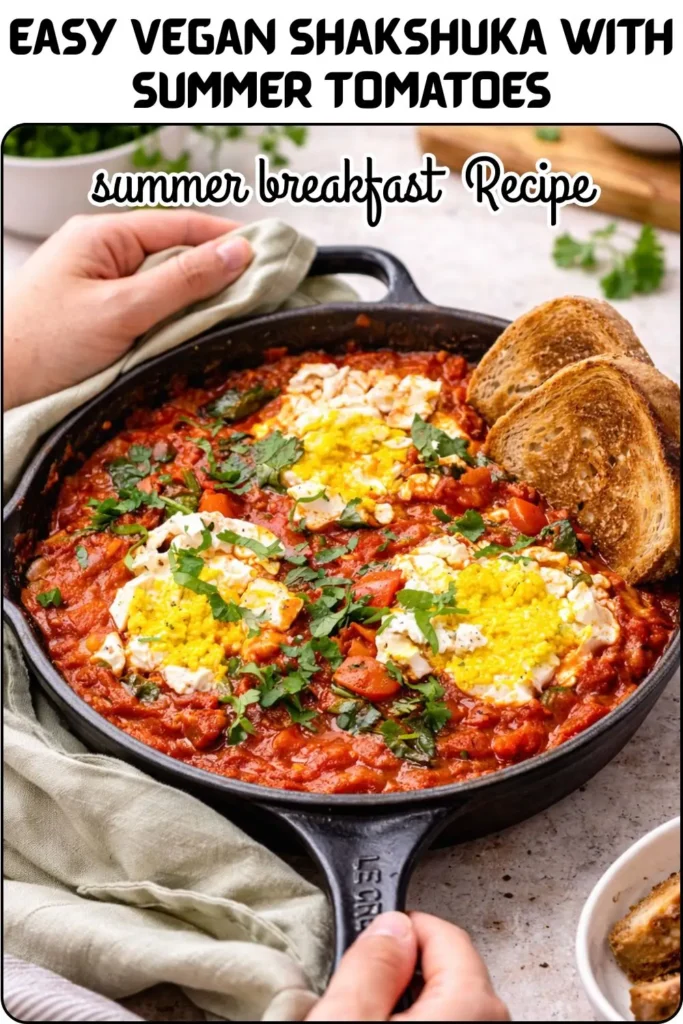
Easy Vegan Shakshuka with Summer Tomatoes
How to Make Plant-Based Summer Breakfast Flatbread with Pesto
Step 1 – Roast the Tomatoes First
Preheat your oven to 160°C fan / 180°C conventional (320°F fan / 355°F conventional). Place the tomato vines in your baking dish, drizzle with olive oil, and season with salt and pepper. Roast for 20 minutes until the tomatoes are sticky, slightly collapsed, and deeply fragrant.
Start the flatbreads while the tomatoes roast the timing works out so both elements finish at about the same moment.
Step 2 – Make the Flatbread Dough
Add the coconut yoghurt and self-raising flour to your mixing bowl with a pinch of salt and pepper. Stir together until a rough, shaggy dough forms. It will look too dry at first keep stirring and then use your hands to bring it together. The dough hydrates as you work it and should come together into a smooth, soft ball within 1–2 minutes.
Don’t add extra liquid if it looks dry initially give it time. Adding too much liquid creates a slack, sticky dough that’s difficult to roll.
Divide the dough into 3 equal pieces. On a piece of parchment paper, roll each piece into an oval roughly the size of your hand, about 3–4mm thick. Thin enough to cook through quickly, thick enough to hold the toppings without bending.
Step 3 – Cook the Flatbreads
Heat your non-stick pan over high heat no oil in the pan at this stage. Brush the top of one flatbread with olive oil, then place it oil-side down into the hot dry pan. Immediately brush the top (now facing up) with more olive oil.
Cook for 2–3 minutes over high heat without moving the flatbread, until the underside turns golden and the top starts to bubble up with air pockets. The bubbling is exactly what you want it creates the texture that makes these flatbreads so satisfying. Flip carefully and cook the second side for another 1–2 minutes until golden. Transfer to a wire rack and repeat for the remaining two flatbreads.
The pan stays dry – all the oil goes directly onto the dough via brushing. This gives you more control over browning and prevents the oil from pooling and making the flatbreads greasy.
Step 4 – Assemble and Serve
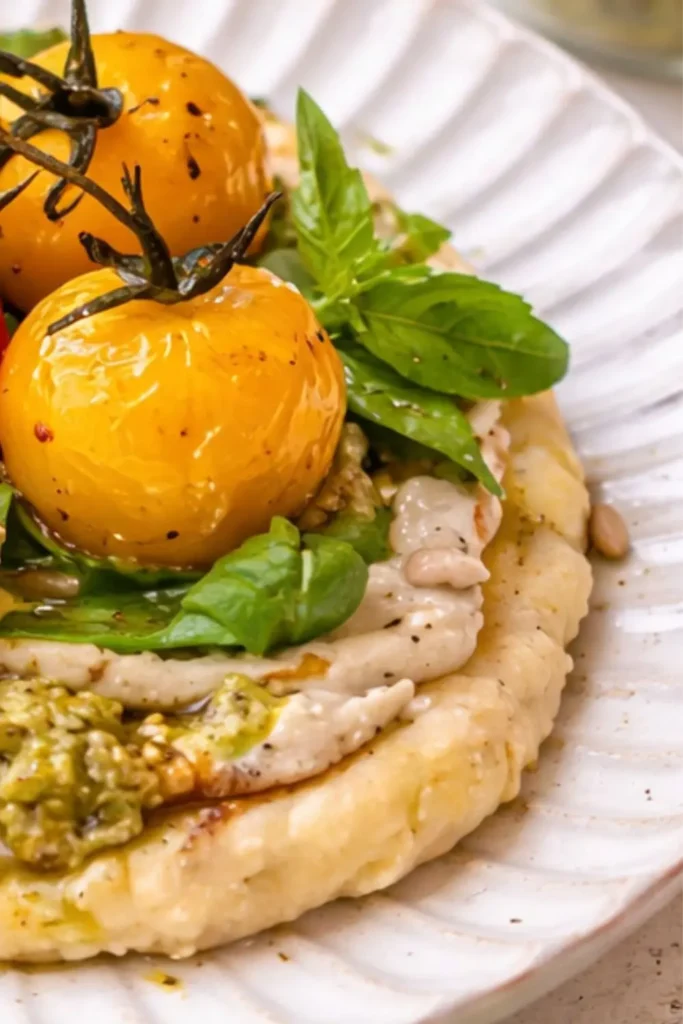
Spread each warm flatbread generously with one tablespoon of vegan garlic and herb cream cheese go right to the edges. Layer a handful of mixed greens on top of the cream cheese. Add the roasted vine tomatoes, pulling them gently from the vine if you prefer bite-sized pieces or leaving them on for visual drama.
Mix the pesto with 1 tablespoon of water to thin it, then drizzle it across the flatbreads. Add a teaspoon of balsamic glaze to each. Scatter sunflower seeds and torn fresh basil generously. Serve immediately while the flatbreads are still warm.
Nutritional Overview (Per Full Serving All 3 Flatbreads)
| Nutrient | Approximate Amount |
| Calories | ~259 kcal |
| Carbohydrates | 14g |
| Fat | 20g |
| Saturated Fat | 4g |
| Unsaturated Fat | 14g |
| Fiber | 2g |
| Sugar | 4g |
| Sodium | 390mg |
The fat content (20g total, 14g unsaturated) comes primarily from olive oil, pesto, and sunflower seeds all sources of heart-healthy unsaturated fats. The vegan cream cheese contributes some saturated fat, but the overall saturated fat number (4g) stays modest. At 259 kcal for a full three-flatbread serving, this is a reasonable and satisfying breakfast.
The Coconut Yoghurt Dough Why Two Ingredients Actually Work
Ever wonder how a dough with only two ingredients produces something with proper texture and a slight puff? The answer is in the chemistry of self-raising flour and the acidity of coconut yoghurt.
Self-raising flour contains baking powder – a leavening agent made of baking soda and a dry acid. When it contacts the moisture and mild acid in the coconut yoghurt, it begins producing carbon dioxide bubbles in the dough. Those bubbles expand when the dough hits the hot pan, creating the air pockets and bubble-up effect you see during cooking.
The coconut yoghurt also adds fat content from the coconut cream base, which makes the cooked flatbread tender rather than tough. It’s a genuinely elegant bit of kitchen chemistry in what looks like a very simple recipe.
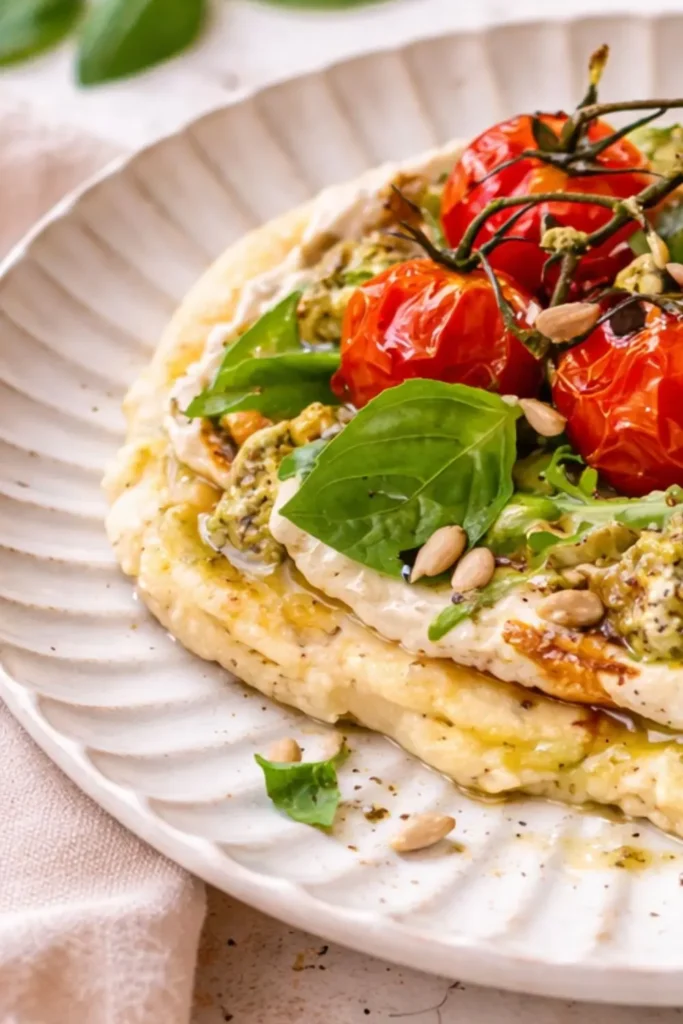
Thick yoghurt is essential. Thin or watery coconut yoghurt disrupts the dough hydration completely and makes the batter too wet to roll. Stick to Greek-style or full-fat chilled coconut yoghurt.
Make-Ahead Tips Flatbreads for the Week
The flatbreads store beautifully, which makes this recipe practical beyond a one-off breakfast:
- Store cooked flatbreads- in an airtight container at room temperature for up to 2–3 days. They stay soft and pliable.
- Reheat options- Warm in a dry pan over medium heat for 1 minute per side. This revives the slight crispiness beautifully. Alternatively, wrap in foil and heat in a 160°C oven for 5 minutes.
- Eat cold- The flatbreads work surprisingly well at room temperature for a packed lunch add the cream cheese and toppings just before eating to prevent sogginess.
- Freeze- Cook and cool completely, then freeze in a stack with parchment between each flatbread. Reheat from frozen in the oven at 180°C for 8 minutes.
Variations Worth Trying All Summer
The base flatbread + cream cheese + roasted tomato combination is close to perfect. Here are riffs that push it in new directions:
- Avocado and dukkah- Swap the cream cheese for mashed avocado and sprinkle Egyptian dukkah (a nut and spice blend) over the top instead of sunflower seeds.
- Hummus base- Replace the cream cheese with a thick layer of hummus, add roasted red peppers instead of tomatoes, and finish with za’atar.
- Sweet breakfast version- Use coconut cream cheese, sliced fresh peaches, a drizzle of maple syrup, and toasted chopped pistachios instead of the savory toppings.
- Fig and walnut- Sliced fresh figs, crushed walnuts, and a drizzle of balsamic glaze on the cream cheese base extraordinary in late summer fig season.
My Final Troughts
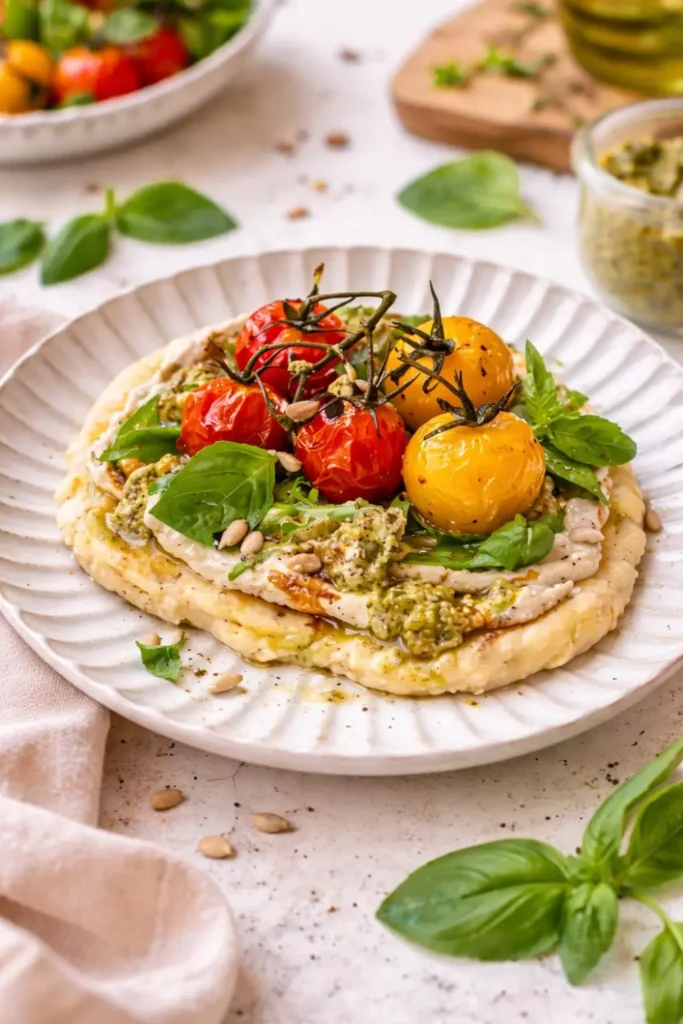
This Plant-Based Summer Breakfast Flatbread with Pesto is the recipe that makes plant-based cooking look effortless. Homemade two-ingredient flatbreads, sticky roasted vine tomatoes, vegan cream cheese, pesto, balsamic glaze, and fresh herbs all on the table in 25 minutes. It’s impressive, it’s seasonal, and it tastes like considerably more effort than it actually requires.
Make the flatbreads ahead on Sunday and your weekday mornings get a serious upgrade. Or make them fresh on a Saturday and eat them slowly with a good coffee. Either way, this is the breakfast that makes you remember why summer ingredients deserve better than just being eaten raw. Give it a go the vine tomatoes won’t wait forever.
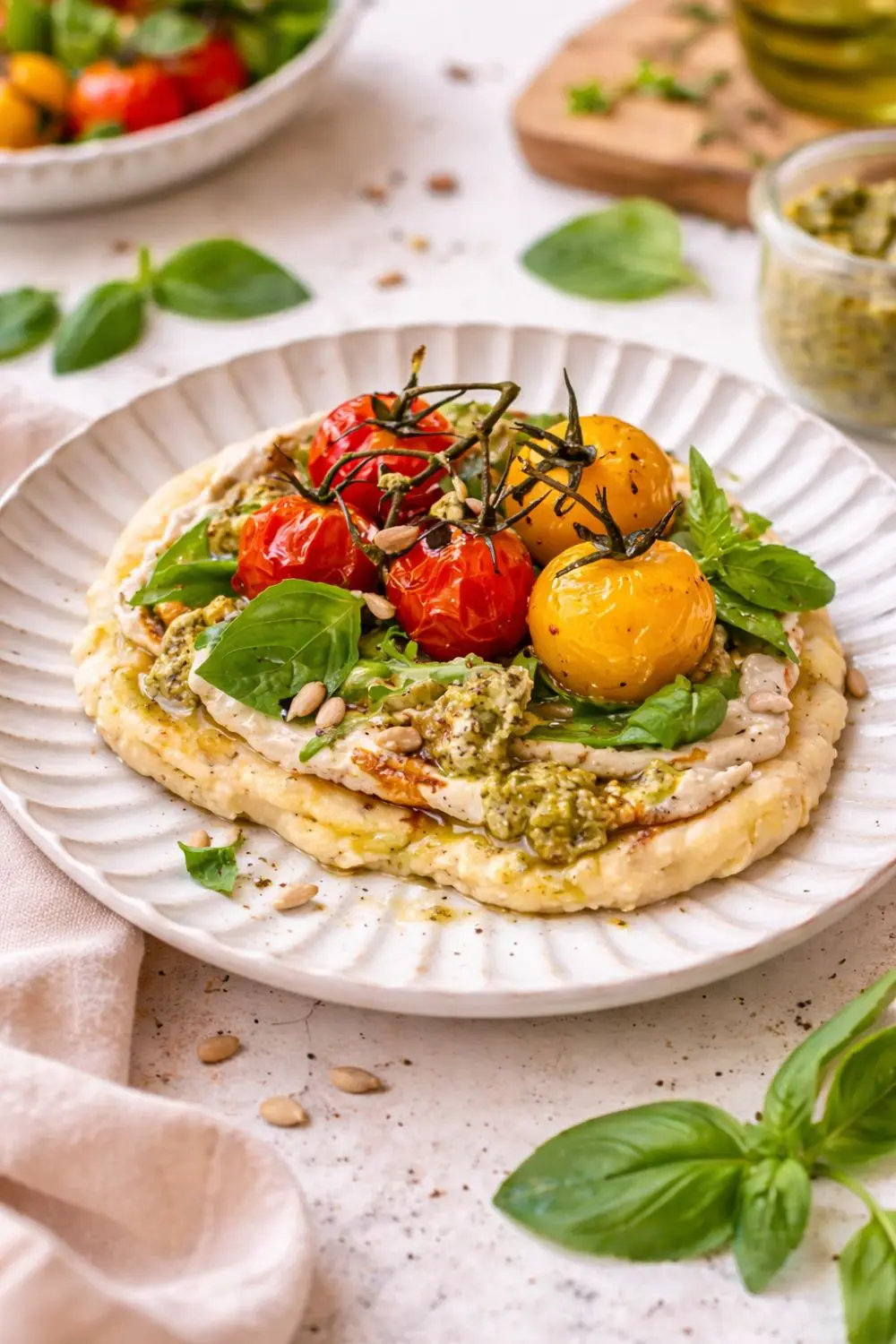
Plant-Based Summer Breakfast Flatbread with Pesto
Ingredients
Equipment
Method
- Step 1 – Roast the Tomatoes First
- Preheat your oven to 160°C fan / 180°C conventional (320°F fan / 355°F conventional). Place the tomato vines in your baking dish, drizzle with olive oil, and season with salt and pepper. Roast for 20 minutes until the tomatoes are sticky, slightly collapsed, and deeply fragrant.
- Start the flatbreads while the tomatoes roast the timing works out so both elements finish at about the same moment.
- Step 2 – Make the Flatbread Dough
- Add the coconut yoghurt and self-raising flour to your mixing bowl with a pinch of salt and pepper. Stir together until a rough, shaggy dough forms. It will look too dry at first keep stirring and then use your hands to bring it together. The dough hydrates as you work it and should come together into a smooth, soft ball within 1–2 minutes.
- Don’t add extra liquid if it looks dry initially give it time. Adding too much liquid creates a slack, sticky dough that’s difficult to roll.
- Divide the dough into 3 equal pieces. On a piece of parchment paper, roll each piece into an oval roughly the size of your hand, about 3–4mm thick. Thin enough to cook through quickly, thick enough to hold the toppings without bending.
- Step 3 – Cook the Flatbreads
- Heat your non-stick pan over high heat no oil in the pan at this stage. Brush the top of one flatbread with olive oil, then place it oil-side down into the hot dry pan. Immediately brush the top (now facing up) with more olive oil.
- Cook for 2–3 minutes over high heat without moving the flatbread, until the underside turns golden and the top starts to bubble up with air pockets. The bubbling is exactly what you want it creates the texture that makes these flatbreads so satisfying. Flip carefully and cook the second side for another 1–2 minutes until golden. Transfer to a wire rack and repeat for the remaining two flatbreads.
- The pan stays dry – all the oil goes directly onto the dough via brushing. This gives you more control over browning and prevents the oil from pooling and making the flatbreads greasy.
- Step 4 – Assemble and Serve
- Spread each warm flatbread generously with one tablespoon of vegan garlic and herb cream cheese go right to the edges. Layer a handful of mixed greens on top of the cream cheese. Add the roasted vine tomatoes, pulling them gently from the vine if you prefer bite-sized pieces or leaving them on for visual drama.
- Mix the pesto with 1 tablespoon of water to thin it, then drizzle it across the flatbreads. Add a teaspoon of balsamic glaze to each. Scatter sunflower seeds and torn fresh basil generously. Serve immediately while the flatbreads are still warm.
Notes
Nutritional Overview (Per Full Serving All 3 Flatbreads)
| Nutrient | Approximate Amount |
| Calories | ~259 kcal |
| Carbohydrates | 14g |
| Fat | 20g |
| Saturated Fat | 4g |
| Unsaturated Fat | 14g |
| Fiber | 2g |
| Sugar | 4g |
| Sodium | 390mg |

Hi — I’m Rachel. I’m a wife, a mom, and a home cook who believes that food should bring comfort, joy, and compassion to the table. I live with my family — two hungry little foodies who are my most honest recipe testers — and together we’ve built a kitchen culture that’s all about good food that happens to be 100% vegan. I started this blog because I wanted a place to share the recipes that keep our days moving, the dishes that make weeknights feel a little easier, and the meals that become our little family traditions.