
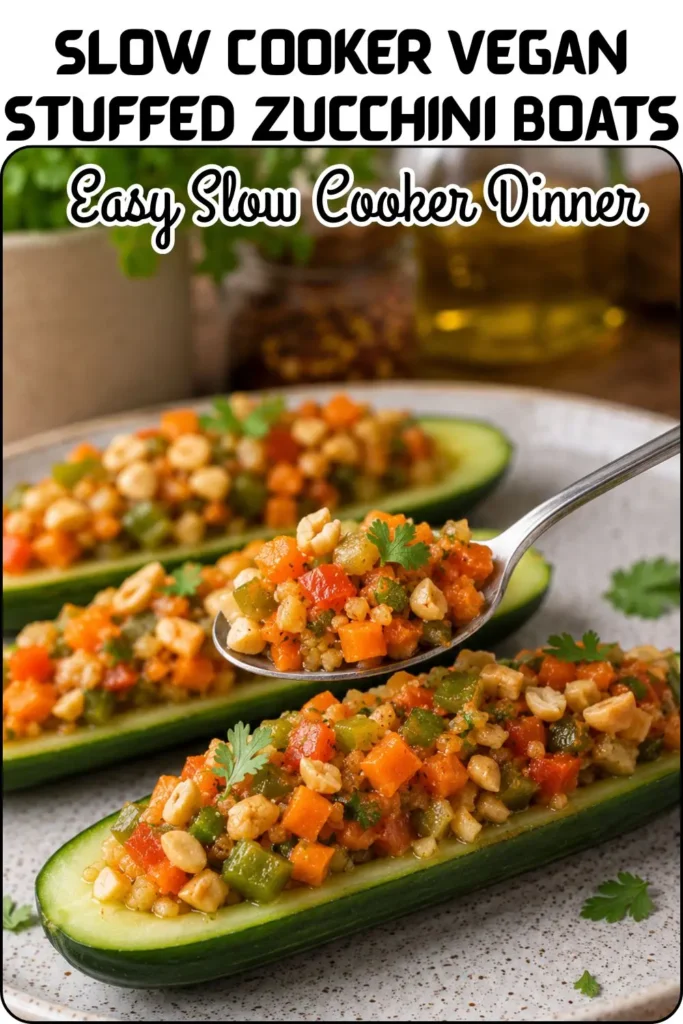
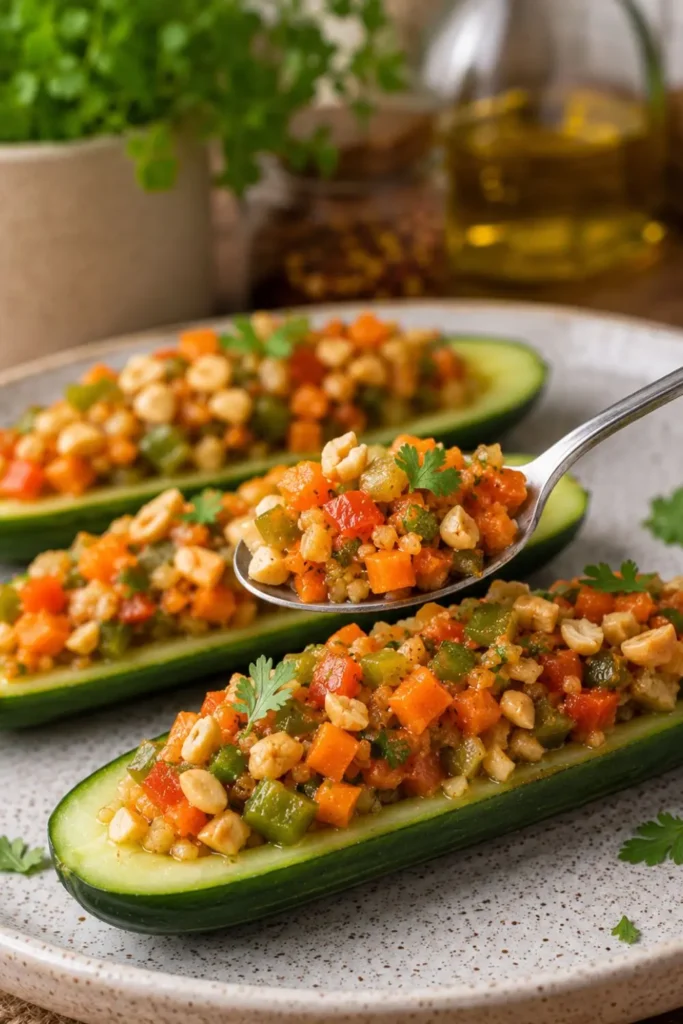
Every summer, zucchini goes from a vegetable you enjoy to a vegetable you have in quantities that challenge your creativity. Slow Cooker Vegan Stuffed Zucchini Boats solve that problem with genuine elegance tender oven-roasted zucchini halves filled with a rich marinara-quinoa-chickpea mixture that’s savory, protein-packed, and completely plant-based. The combination of the slightly caramelized zucchini flesh and the hearty Italian-inspired filling is one of those genuinely satisfying dinners that looks impressive and tastes better than it looks.
I started making this version when I wanted something that felt restaurant-worthy without requiring professional cooking skills. Hollowed-out zucchini boats always look more elaborate than they are the technique is simple, the filling comes together in 20 minutes, and the result is a dinner that makes everyone at the table reach for their phones to photograph it before eating. That’s a good sign.
Recipe Timing and Serving Details
Here’s your complete planning overview:
| Detail | Info |
| Prep Time | 15 minutes |
| Cook Time | 25 minutes |
| Total Time | 40 minutes |
| Servings | 4 servings |
| Serving Size | 2 zucchini halves |
| Calories Per Serving | 305 kcal |
| Course | Entrée |
| Cuisine | American / Italian-Inspired |
| Diet | 100% Vegan |
40 minutes total for a genuinely impressive, protein-rich stuffed zucchini dinner that serves 4 people as a complete main course. At 305 calories per serving of 2 zucchini halves with 10.9 grams of plant-based protein and 9.6 grams of fiber, this recipe delivers a nutritionally complete, satisfying meal that looks significantly more elaborate than the time invested would suggest.
Why This Filling Works So Well
The filling in Slow Cooker Vegan Stuffed Zucchini Boats succeeds because it treats each ingredient as a specific contributor rather than just bulk:
Quinoa acts as the structural base it absorbs the marinara sauce completely during the simmer, becoming deeply flavored throughout every grain rather than just coated on the surface. It also provides the filling’s cohesion, holding everything together so the boats stay filled rather than falling apart when you eat them.
Chickpeas add protein, texture, and that satisfying chew that makes a plant-based filling feel substantial. They’re hearty enough that each forkful carries both the creamy quinoa-sauce mixture and a distinct chickpea piece that textural variation is what makes the filling interesting bite after bite.
Marinara sauce is the flavor carrier that ties everything together. Its acidity brightens the quinoa, its tomato depth makes the chickpeas more savory, and its Italian herb profile pairs naturally with the fresh basil stirred in at the end.
Fresh basil added off-heat is the finishing move that elevates the filling from good to genuinely restaurant-quality. Basil wilts and loses its bright, herbal character when cooked stirred in at the very end with the heat off, it stays vibrant and adds a freshness that contrasts beautifully against the rich marinara.
Ingredients You’ll Need For
A clean, Italian-pantry lineup that’s entirely plant-based:
The Zucchini:
- 4 medium zucchini (about 9–10 ounces each) , medium size is specifically important for proper boat formation
The Filling:
- 1 tablespoon olive oil , for rubbing the zucchini halves before roasting
- ½ cup uncooked quinoa
- ¾ cup water , for cooking the quinoa
- 1½ cups marinara sauce , homemade or a quality jarred variety
- 1 cup canned or cooked chickpeas, drained and rinsed
- 2 tablespoons fresh basil, chopped
- Salt and pepper to taste
Optional:
- Vegan Parmesan cheese – sprinkled over the filled boats before serving
The zucchini size matters more than people typically consider. Medium zucchini (9–10 ounces each) have the right wall thickness to create a proper boat thick enough to hold the filling without collapsing, small enough that the flesh-to-filling ratio creates a satisfying eating experience. Very large zucchini have thick walls that become woody during roasting. Very small zucchini don’t create enough cavity for a meaningful amount of filling. Medium is the sweet spot.
FYI if you grow your own zucchini or shop at farmers markets, this is the perfect recipe for those zucchini that got slightly bigger than you wanted before you noticed them. Just remove more of the flesh to create a larger cavity and adjust the filling quantity accordingly.
Equipment You’ll Need For
This recipe uses both an oven and a stovetop simultaneously plan both workspaces before starting:
For the Zucchini
- Oven preheated to 400°F the high temperature caramelizes the zucchini’s natural sugars and develops a slightly golden color on the exposed flesh that adds flavor the lower temperatures can’t produce
- Large baking sheet – for roasting the 8 zucchini halves. A standard half-sheet pan (18×13 inches) fits all 8 halves in a single layer comfortably.
- Spoon – for scooping the flesh from each zucchini half to create the boat cavity
- Paper towels – for blotting moisture from the roasted zucchini halves before filling. Zucchini releases significant water during roasting blotting prevents the filling from becoming watery.
For the Filling
- Small saucepan with lid – for cooking the quinoa. A 1.5-quart saucepan handles ½ cup quinoa and ¾ cup water comfortably.
- Colander or fine mesh strainer – for rinsing the quinoa before cooking (removes saponin coating that tastes slightly bitter) and draining the chickpeas
- Can opener -for the chickpeas
- Wooden spoon or silicone spatula- for stirring the filling as it simmers
Supporting Equipment
- Sharp knife and cutting board for halving the zucchini lengthwise, chopping fresh basil, and any other prep
- Measuring cups and spoons
Step-by-Step Instructions
Step 1 -Prep and Roast the Zucchini
Preheat your oven to 400°F. While it heats, cut each zucchini in half lengthwise you’ll have 8 halves total. Use a spoon to scoop out the inside of each half, creating a cavity for the filling. The size of the cavity is personal preference a small cavity leaves more zucchini flesh and produces a heartier, more zucchini-forward result. A larger cavity leaves more room for filling and produces a more filling-dominant result. IMO, scooping out about ⅓ of the flesh creates the best balance.
Rub each zucchini half with the 1 tablespoon of olive oil distribute it evenly across all 8 halves. Arrange them cut-side up on the baking sheet.
Place the baking sheet in the preheated oven and roast for 20–25 minutes until the zucchini is tender when pierced with a fork and the edges have turned slightly golden. The bottom of each boat should be firm enough to hold its shape but completely soft inside.
Step 2 – Cook the Quinoa
While the zucchini roasts, rinse the ½ cup of quinoa under cool running water in a fine mesh strainer until the water runs clear. This removes the natural saponin coating that creates a slightly soapy, bitter taste in unrinsed quinoa.
Add the rinsed quinoa and ¾ cup of water to your small saucepan and place over high heat. Bring to a full boil, then immediately reduce to the lowest possible simmer. Cover and cook for 15–20 minutes until all the water absorbs and the quinoa is tender with visible white rings appearing around each grain.
Remove the lid and proceed immediately to the next step don’t let the cooked quinoa sit covered, as steam buildup can make it mushy.
Step 3 – Make the Marinara-Chickpea Filling
Stir the 1½ cups of marinara sauce and 1 cup of drained, rinsed chickpeas directly into the pot with the cooked quinoa. Bring the mixture to a gentle simmer over medium heat.
Let it simmer, stirring occasionally, for about 5 minutes until the sauce thickens slightly and the quinoa absorbs some of the marinara. The filling should look like a thick, coating consistency not runny, not dry. It should hold its shape when you spoon it into the zucchini halves.
Remove from heat. Stir in the 2 tablespoons of chopped fresh basil. Season with salt and pepper to taste.
Step 4 -lot and Fill the Zucchini
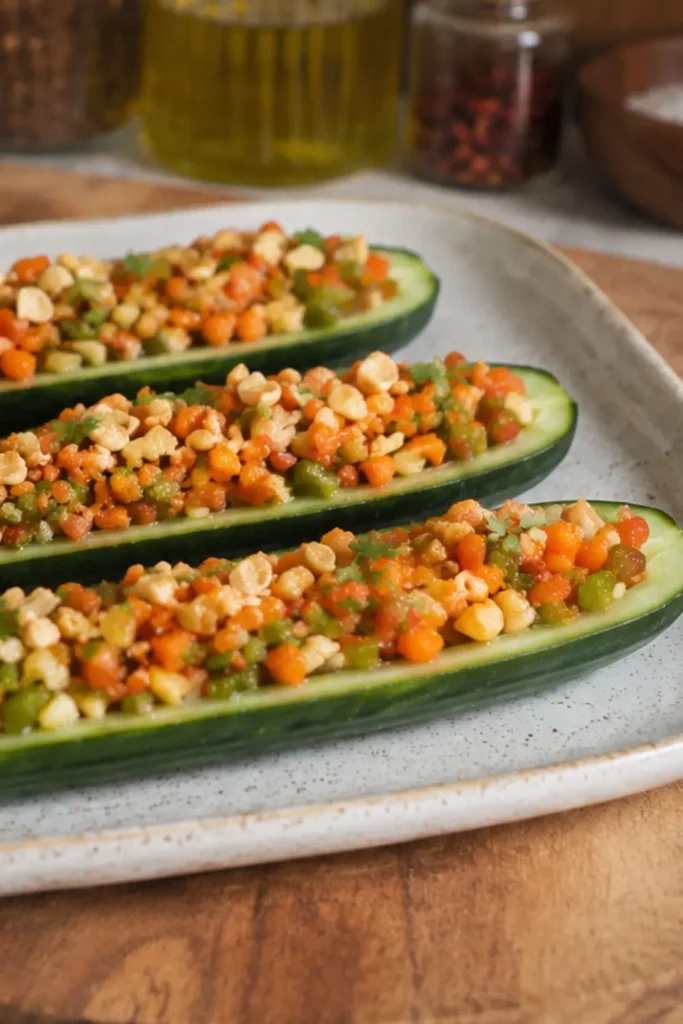
When the zucchini finishes roasting, remove the baking sheet from the oven. Use paper towels to blot up any excess moisture that has accumulated in and around the zucchini halves this is an important step that prevents the filling from becoming watery. Sprinkle the zucchini halves with salt and pepper.
Spoon the filling generously into each zucchini boat, mounding it slightly above the edges if you have extra filling. If using vegan Parmesan, sprinkle it over the filled boats now.
Serve immediately while both the zucchini and filling are hot.
Choosing the Right Marinara Sauce
The marinara sauce carries a significant portion of the filling’s flavor, and choosing a quality one makes a real difference. Here’s how to think about it:
Homemade Marinara (Best Option)
A simple homemade marinara canned tomatoes, garlic, olive oil, basil, oregano, and salt simmered for 20 minutes produces noticeably better results than any jarred version. The freshness and brightness of a homemade sauce elevates the entire filling. If you have 20 extra minutes before starting this recipe, make a quick sauce from scratch.
Jarred Marinara (Excellent Convenience Option)
When convenience matters which is most weeknights a quality jarred marinara works perfectly. Look for these qualities:
- Tomatoes and olive oil as primary ingredients – not tomato paste and water
- Short ingredient list – fewer additives means better flavor
- No added sugar – good tomatoes don’t need it
- Fresh herb notes – basil and oregano should be detectable
Reliable vegan-friendly brands: Rao’s Homemade, Mezzetta, and Muir Glen all produce consistently excellent marinara sauces that make this filling genuinely impressive.
You may also like Next recipe
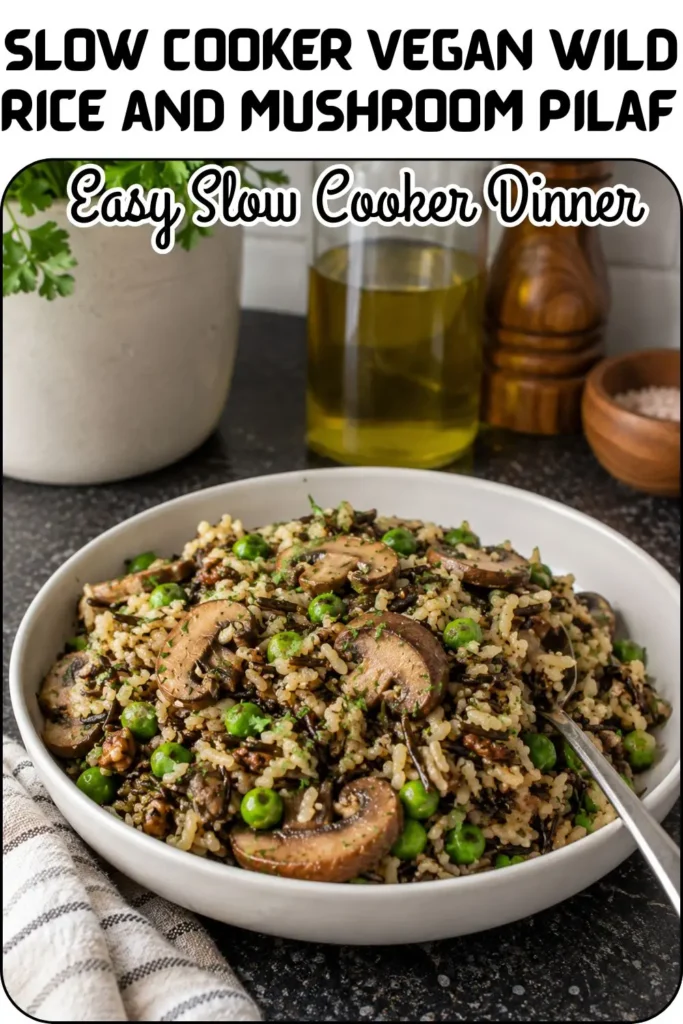
Slow Cooker Vegan Wild Rice and Mushroom Pilaf
How Much Zucchini to Scoop Out A Guide
The cavity size significantly affects the boat’s character, and the recipe acknowledges this is a preference decision. Here’s how different cavity sizes affect the finished result:
Small Cavity (Minimal Scooping)
Result: The zucchini provides substantial bulk and the filling sits in a shallow depression. Each bite is more zucchini than filling. Best for people who love zucchini and want it to be the primary experience.
Medium Cavity (Moderate Scooping Recommended)
Result: A proper boat shape that holds filling generously. The zucchini walls are thick enough to maintain structure throughout eating. Each bite has a balanced ratio of zucchini to filling. This is the sweet spot.
Large Cavity (Generous Scooping)
Result: The zucchini becomes primarily a vessel for the filling. Thinner walls may need a slightly shorter roasting time to prevent over-softening. Best for filling enthusiasts.
What to do with the scooped flesh: Don’t discard it it’s perfectly good zucchini. Dice it finely and add it to the filling when you stir in the marinara sauce. It cooks down quickly during the 5-minute simmer and contributes additional zucchini flavor to the filling.
Marinara Sauce Quantity Guide
The recipe calls for 1½ cups, but this should scale based on your cavity size:
- Small cavities: 1 cup of marinara is sufficient less filling needed for shallower boats
- Medium cavities: 1½ cups as written correct for proper boat-filling
- Large cavities: Increase to 2 cups and scale chickpeas and quinoa proportionally
You can also make more filling than needed and refrigerate the extrait reheats beautifully over pasta for lunch the next day.
Vegan Parmesan Options
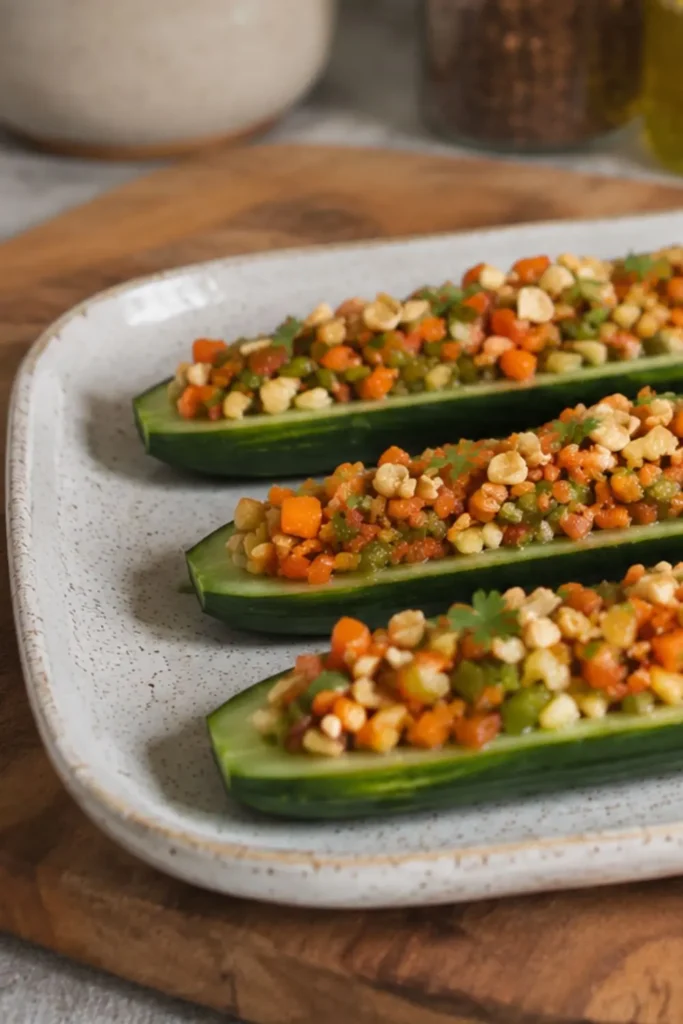
The optional vegan Parmesan sprinkled over the finished boats adds a savory, slightly salty, umami-rich finishing touch that mirrors the traditional Italian preparation. Several excellent options:
Store-bought vegan Parmesan:
- Violife Prosociano – the most widely available, melts and browns slightly when broiled
- Follow Your Heart Parmesan -nutty, savory, good shred
- Nooch-based Parmesan – many brands use nutritional yeast as the primary ingredient
Homemade cashew Parmesan (easiest and most versatile): Blend ¼ cup raw cashews, 2 tablespoons nutritional yeast, ½ teaspoon garlic powder, and ¼ teaspoon salt in a food processor until the texture resembles fine Parmesan. Store in the refrigerator for up to 2 weeks. Sprinkle generously over the filled boats immediately before serving.
Nutrition Information Per Serving
At 305 calories per serving of 2 zucchini halves, this recipe delivers excellent nutritional value:
| Nutrient | Per Serving (2 halves) |
| Calories | 305 kcal |
| Protein | 10.9g |
| Fat | 8.5g |
| Saturated Fat | 1.5g |
| Fiber | 9.6g |
| Sugar | 13g |
| Sodium | 667mg |
| Potassium | 1,229mg |
| Calcium | 94mg |
| Iron | 3mg |
10.9 grams of plant-based protein per serving comes from the combination of quinoa (complete protein) and chickpeas working together both excellent protein sources that complement each other’s amino acid profiles. The 1,229mg of potassium per serving approximately 26% of the daily recommended intake comes largely from the zucchini and chickpeas. The 9.6 grams of fiber reflects the chickpeas and quinoa delivering their full fiber contribution.
Storage and Reheating
Slow Cooker Vegan Stuffed Zucchini Boats store adequately, though they’re genuinely best served fresh:
- Refrigerator: Store filled zucchini boats in an airtight container for up to 3 days. The zucchini softens further during storage and the filling absorbs more of the surrounding moisture still delicious, just different in texture.
- Reheating: Warm in a 350°F oven for 10–12 minutes until heated through. Or microwave individual portions for 2 minutes at medium power.
- Storing the filling separately: If you plan to make this ahead, store the filling and roasted zucchini halves separately and fill just before serving. This produces the best texture contrast when reheated.
- Extra filling: Refrigerate for up to 4 days and use as pasta sauce, grain bowl topping, or bruschetta.
My Final Thoughts Make These Boats and Show Zucchini Some Respect
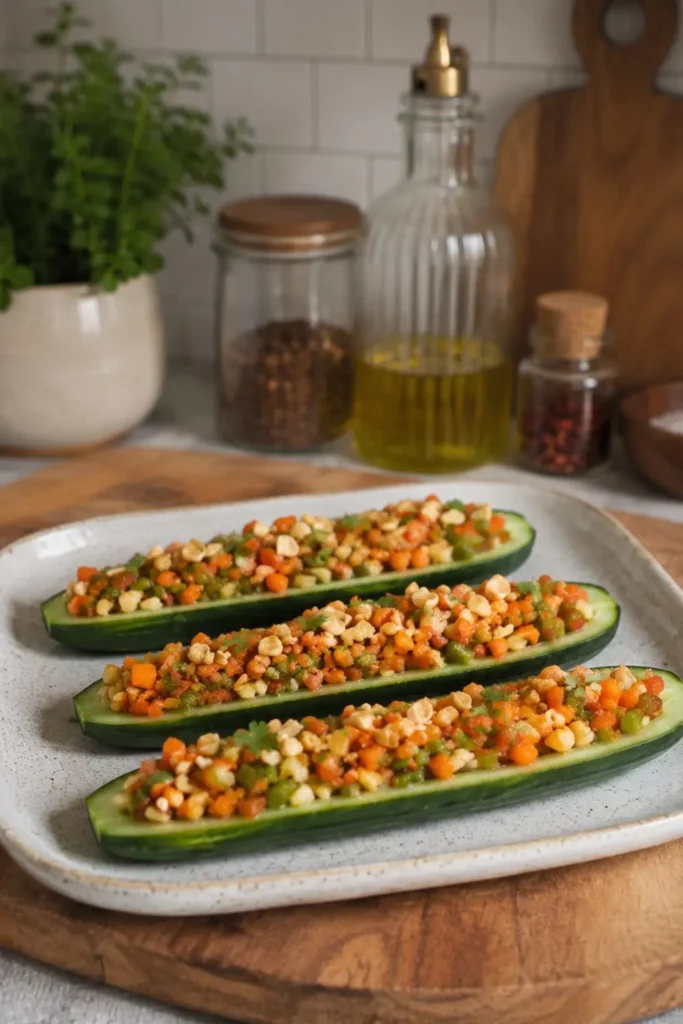
Slow Cooker Vegan Stuffed Zucchini Boats are the recipe that transforms summer’s most abundant vegetable from “fine, I’ll use it somehow” to “please, do we have more?” The marinara-quinoa-chickpea filling is genuinely satisfying, the roasted zucchini boats provide the perfect vehicle, and the whole production takes 40 minutes from start to beautiful plate.
305 calories, 11 grams of protein, 10 grams of fiber, serves 4, looks impressive, tastes better this is summer cooking that genuinely delivers on every level.
Go buy the medium-sized zucchini. Make the filling. Roast the boats. Sprinkle the vegan Parm. Then take the photo before anyone grabs a fork, because this one genuinely deserves documentation.
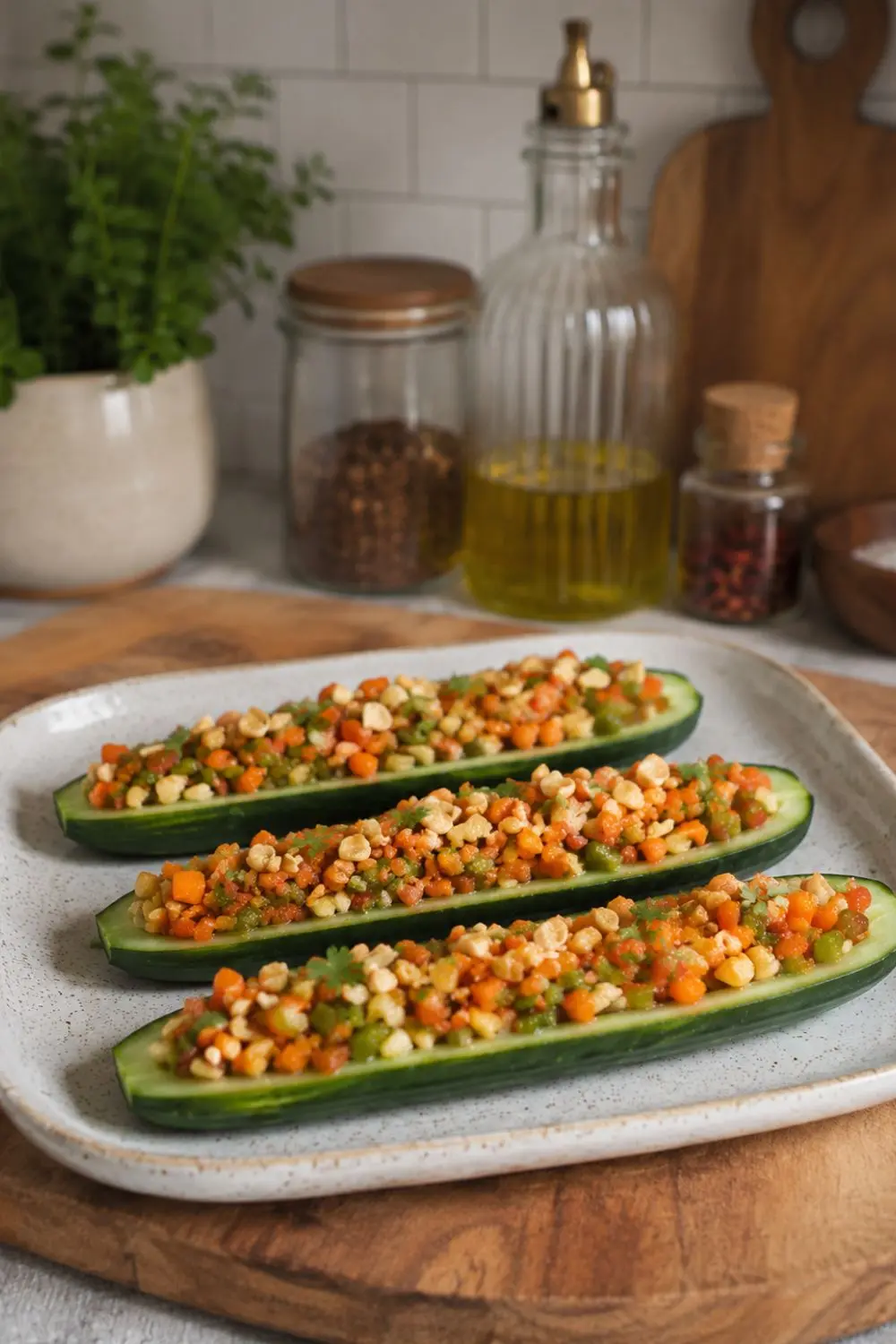
Slow Cooker Vegan Stuffed Zucchini Boats
Ingredients
Equipment
Method
- Step 1 -Prep and Roast the Zucchini
- Preheat your oven to 400°F. While it heats, cut each zucchini in half lengthwise you’ll have 8 halves total. Use a spoon to scoop out the inside of each half, creating a cavity for the filling. The size of the cavity is personal preference a small cavity leaves more zucchini flesh and produces a heartier, more zucchini-forward result. A larger cavity leaves more room for filling and produces a more filling-dominant result. IMO, scooping out about ⅓ of the flesh creates the best balance.
- Rub each zucchini half with the 1 tablespoon of olive oil distribute it evenly across all 8 halves. Arrange them cut-side up on the baking sheet.
- Place the baking sheet in the preheated oven and roast for 20–25 minutes until the zucchini is tender when pierced with a fork and the edges have turned slightly golden. The bottom of each boat should be firm enough to hold its shape but completely soft inside.
- Step 2 – Cook the Quinoa
- While the zucchini roasts, rinse the ½ cup of quinoa under cool running water in a fine mesh strainer until the water runs clear. This removes the natural saponin coating that creates a slightly soapy, bitter taste in unrinsed quinoa.
- Add the rinsed quinoa and ¾ cup of water to your small saucepan and place over high heat. Bring to a full boil, then immediately reduce to the lowest possible simmer. Cover and cook for 15–20 minutes until all the water absorbs and the quinoa is tender with visible white rings appearing around each grain.
- Remove the lid and proceed immediately to the next step don’t let the cooked quinoa sit covered, as steam buildup can make it mushy.
- Step 3 – Make the Marinara-Chickpea Filling
- Stir the 1½ cups of marinara sauce and 1 cup of drained, rinsed chickpeas directly into the pot with the cooked quinoa. Bring the mixture to a gentle simmer over medium heat.
- Let it simmer, stirring occasionally, for about 5 minutes until the sauce thickens slightly and the quinoa absorbs some of the marinara. The filling should look like a thick, coating consistency not runny, not dry. It should hold its shape when you spoon it into the zucchini halves.
- Remove from heat. Stir in the 2 tablespoons of chopped fresh basil. Season with salt and pepper to taste.
- Step 4 -lot and Fill the Zucchini
- When the zucchini finishes roasting, remove the baking sheet from the oven. Use paper towels to blot up any excess moisture that has accumulated in and around the zucchini halves this is an important step that prevents the filling from becoming watery. Sprinkle the zucchini halves with salt and pepper.
- Spoon the filling generously into each zucchini boat, mounding it slightly above the edges if you have extra filling. If using vegan Parmesan, sprinkle it over the filled boats now.
- Serve immediately while both the zucchini and filling are hot.
Notes
Nutrition Information Per Serving
At 305 calories per serving of 2 zucchini halves, this recipe delivers excellent nutritional value:| Nutrient | Per Serving (2 halves) |
| Calories | 305 kcal |
| Protein | 10.9g |
| Fat | 8.5g |
| Saturated Fat | 1.5g |
| Fiber | 9.6g |
| Sugar | 13g |
| Sodium | 667mg |
| Potassium | 1,229mg |
| Calcium | 94mg |
| Iron | 3mg |

Hi — I’m Rachel. I’m a wife, a mom, and a home cook who believes that food should bring comfort, joy, and compassion to the table. I live with my family — two hungry little foodies who are my most honest recipe testers — and together we’ve built a kitchen culture that’s all about good food that happens to be 100% vegan. I started this blog because I wanted a place to share the recipes that keep our days moving, the dishes that make weeknights feel a little easier, and the meals that become our little family traditions.