
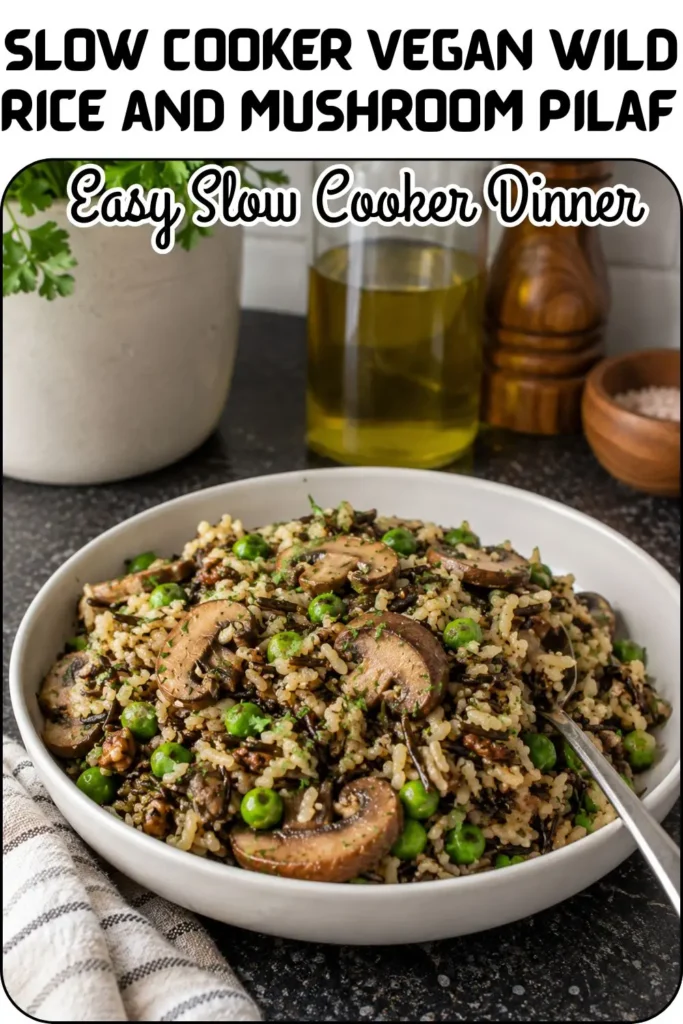
Some side dishes exist to support the main course. And then there’s Slow Cooker Vegan Wild Rice and Mushroom Pilaf which shows up and immediately becomes the most interesting thing on the table. Wild rice and brown rice cooked together with fresh thyme and rosemary, finished with wine-braised cremini mushrooms, toasted pecans, bright peas, and fresh parsley. This is the side dish that makes people stop mid-conversation to ask what’s in it. The answer vegan butter, two kinds of rice, mushrooms, and some patience never quite seems sufficient for how good it tastes.
I make this when I want something that feels genuinely special without requiring elaborate technique or exotic ingredients. The combination of wild rice’s nutty chewiness, cremini mushrooms cooked in white wine, and crunchy toasted pecans creates a texture landscape that makes every forkful different from the last. It’s the kind of recipe that gets requested specifically people remember it and ask you to bring “that rice thing” again. FYI there’s no higher compliment than being the person who brought “that rice thing.”
Recipe Timing and Serving Details
Here’s your complete planning overview:
| Detail | Info |
| Prep Time | 15 minutes |
| Cook Time | 1 hour |
| Total Time | 1 hour 15 minutes |
| Servings | 8 servings |
| Serving Size | 1 cup |
| Calories Per Serving | 261 kcal |
| Course | Side Dish |
| Cuisine | American |
| Diet | 100% Vegan |
This recipe yields 8 generous 1-cup servings making it perfect for dinner parties, summer gatherings, holiday meals, or a week’s worth of exceptional meal prep. At 261 calories per cup with 8.7 grams of plant-based protein and nearly 4 grams of fiber, this pilaf is a nutritionally complete side dish that satisfies far beyond what a typical side dish delivers.
What Makes This Pilaf Worth the Extra Effort
Let’s be real this recipe has more steps than most of the other recipes in this summer series. It involves sautéing onions, simmering rice in stages, toasting pecans, and braising mushrooms separately. So why is it worth the extra work compared to a simpler rice dish?
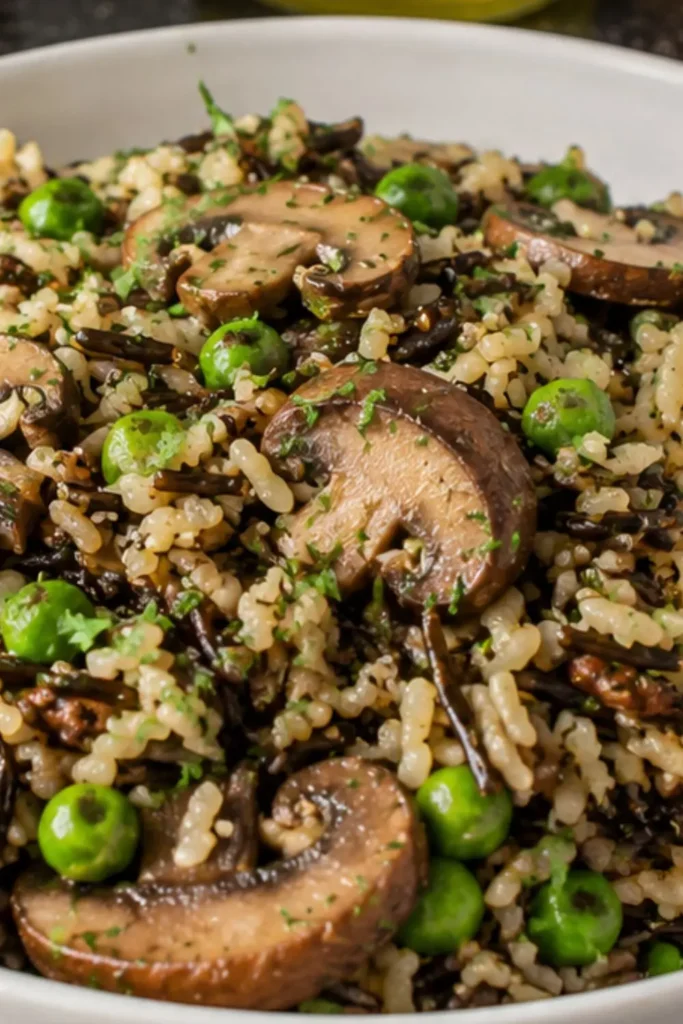
The textures. Wild rice maintains a distinct, slightly chewy bite even after cooking that brown rice doesn’t have. Brown rice fills in with a softer, more yielding texture. Together they create a pilaf where each grain behaves slightly differently wild rice pops between your teeth, brown rice absorbs the surrounding herb-infused broth. Toasted pecans add crunch. Peas add soft sweetness. Mushrooms add meaty, wine-kissed depth. Every forkful is genuinely interesting.
The wine-braised mushrooms. This is the step that elevates the pilaf from good to extraordinary. Cremini mushrooms cooked until golden on each side, then finished with white wine until the liquid evaporates they become deeply savory, slightly caramelized, and intensely flavorful in a way that raw or simply sautéed mushrooms never achieve. IMO, this single technique browning mushrooms properly then deglazing with wine is one of the most valuable skills in vegan cooking. Use it constantly.
The toasted pecans. Two minutes in butter transforms pecans from pleasant to deeply nutty, fragrant, and slightly caramelized. These get stirred in at the very end so they retain their crunch throughout the dish. The textural contrast they provide against the soft rice and tender mushrooms is what makes the pilaf feel genuinely elegant.
Ingredients You’ll Need For
A focused list where every element earns its place:
The Rice Base:
- 4 tablespoons vegan butter, divided used across multiple stages
- 1 medium onion, diced
- 3 garlic cloves, minced
- 3½ cups vegetable broth
- ¾ cup wild rice
- ¾ cup brown rice
The Herbs:
- 2 tablespoons fresh thyme leaves (or 2 teaspoons dried)
- 2 teaspoons finely chopped fresh rosemary (or ¾ teaspoon dried)
The Add-Ins:
- ¾ cup finely chopped pecans
- 10 ounces cremini mushrooms, sliced
- ¼ cup dry white wine
- 1 cup frozen peas, thawed
- ¼ cup fresh parsley, chopped
- Salt and pepper to taste
The vegan butter is used in three separate stages and each use serves a different purpose. The first tablespoon builds the aromatic base for the rice. The second tablespoon toasts the pecans. The final two tablespoons brown and braise the mushrooms. Don’t combine these stages each butter application produces a distinct result that the pilaf depends on.
The fresh herbs make a meaningful difference here. Fresh thyme and rosemary release their essential oils gradually during the rice’s cooking time, infusing every grain with herb flavor that permeates the finished pilaf. Dried herbs work acceptably as substitutes but produce a noticeably flatter herbal presence.
Equipment You’ll Need For
This recipe uses two primary cooking vessels simultaneously plan accordingly:
Primary Equipment
- Medium pot with lid– for cooking the rice. A 3-quart heavy-bottomed pot handles the full recipe comfortably. The heavy bottom prevents the rice from scorching during the 45-minute covered simmer thin-bottomed pots create hot spots that burn the bottom layer while the top remains undercooked.
- Large skillet – for the mushrooms and pecans. A 12-inch skillet gives you enough surface area to cook the cremini mushrooms in a single layer without crowding. Crowding mushrooms is the enemy of proper browning crowded mushrooms steam rather than sear, producing pale, soft, watery mushrooms instead of golden, flavor-concentrated ones. Use a large skillet and cook in batches if needed.
Supporting Equipment
- Sharp knife and cutting board – for dicing the onion, mincing the garlic, chopping the pecans, and slicing the mushrooms
- Wooden spoon or silicone spatula – for stirring the rice at each stage and managing the mushrooms
- Fine mesh strainer (optional) – for draining any excess liquid from the finished rice before resting
- Measuring cups and spoons
- Plate or bowl – for holding the toasted pecans and mushrooms separately while the rice finishes
Step-by-Step Instructions
Stage 1 – Build the Herb-Infused Rice Base
Melt 1 tablespoon of vegan butter in your medium pot over medium heat. Add the diced onion and cook for about 5 minutes, stirring occasionally, until soft and translucent. Add the minced garlic and cook for 1 more minute until very fragrant.
Stir in the vegetable broth, wild rice, fresh thyme, and fresh rosemary. Raise the heat and bring the liquid to a boil. Once boiling, reduce to a simmer and cook for 10 minutes. This initial simmer gives the wild rice which takes longer to cook than brown rice a head start that ensures both rices finish cooking at approximately the same time.
Stage 2 – Add Brown Rice and Simmer
Stir in the brown rice and bring the liquid back to a boil. Once boiling again, lower the heat, cover the pot, and let the mixture simmer for 45 minutes. The combination of wild rice’s 55 minutes total and brown rice’s 45 minutes produces perfectly cooked grains of both varieties simultaneously.
During this 45-minute window, run the mushroom and pecan stages in parallel the pilaf practically demands that you use this time productively.
Stage 3 – Toast the Pecans
Melt 1 tablespoon of vegan butter in your large skillet over medium heat. Add the ¾ cup of finely chopped pecans and cook, stirring frequently, for about 2 minutes until they darken slightly and become intensely fragrant. Watch them closely pecans toast quickly and the difference between perfectly toasted and burned is about 30 seconds of inattention.
Remove the toasted pecans from the skillet immediately and transfer them to a plate. They’ll continue very slightly toasting from residual heat if left in the pan. Set aside until the very end.
Stage 4 – Brown and Braise the Mushrooms
This is the most important and most satisfying stage of the recipe. Melt the remaining 2 tablespoons of vegan butter in the same skillet over medium heat. Add the sliced cremini mushrooms in an even, single layer. If 10 ounces won’t fit in a single layer, cook in two batches this is not optional. Crowded mushrooms produce poor results.
Cook the mushrooms for about 5 minutes per side without moving them this undisturbed contact with the hot pan surface is what creates the golden-brown sear that concentrates their flavor. Flip once and cook the second side for another 5 minutes.
Pour the ¼ cup of dry white wine over the browned mushrooms. The wine immediately sizzles and creates steam use your spoon to scrape any browned bits from the pan bottom into the liquid. Cook until most of the wine evaporates, about 5 minutes more. Season with salt and pepper, remove from heat, and set aside.
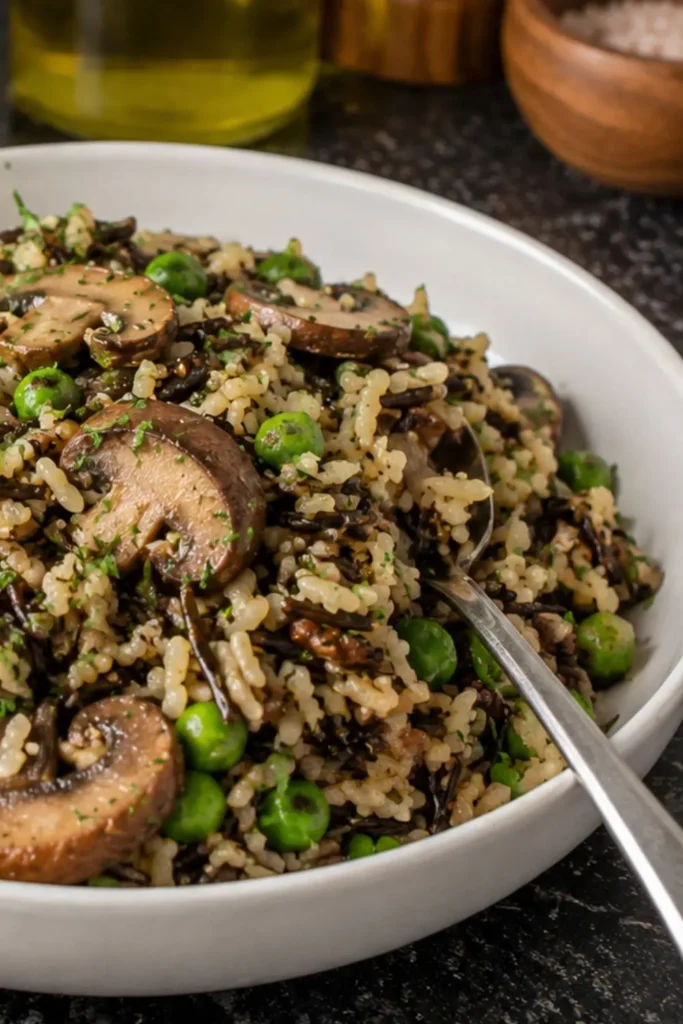
The finished mushrooms should be golden, slightly caramelized at the edges, and deeply savory with a subtle wine character. They should smell extraordinary.
Stage 5 – Rest and Finish the Rice
After 45 minutes, check the rice. The brown rice should be tender and the wild rice should be slightly chewy this is the correct texture; wild rice never fully softens the way white or brown rice does. If any excess liquid remains in the pot, drain it quickly through a fine mesh strainer and return the rice to the pot. Replace the lid and let the pot sit off-heat for 5 minutes this resting step allows any remaining steam to finish cooking the rice through and firms the texture slightly.
Stage 6 – Combine Everything
Remove the lid and stir in the toasted pecans, wine-braised mushrooms, thawed peas, and fresh parsley all at once. Stir gently but thoroughly to distribute everything evenly throughout the rice. Season with additional salt and pepper to taste. Serve immediately.
The Wild Rice vs. Brown Rice Balance
Have you ever wondered why this recipe uses both wild rice and brown rice rather than just one or the other? The combination is intentional and each grain contributes something the other doesn’t:
Wild rice is technically a grass rather than true rice it grows in North American lakes and rivers and has a uniquely nutty, slightly smoky flavor with a distinctive chewy texture that doesn’t soften fully even with extended cooking. It takes longer to cook, has more protein than most grains, and adds visual interest with its dark color against the lighter brown rice.
Brown rice is the workhouse it cooks to a tender, more yielding texture that fills in between the distinct wild rice grains and absorbs the herb-infused broth more completely. It provides the bulk and substance while wild rice provides the character.
Together they create a pilaf that’s more interesting than either alone. The ratio ¾ cup each produces a balanced result where neither grain dominates. Increase the wild rice ratio for more chewiness and nuttiness; increase the brown rice ratio for a softer, more unified texture.
Mushroom Tips Getting the Best Results
The mushroom stage determines whether this pilaf is good or genuinely great. Here’s how to execute it perfectly:
Choosing the Right Mushrooms
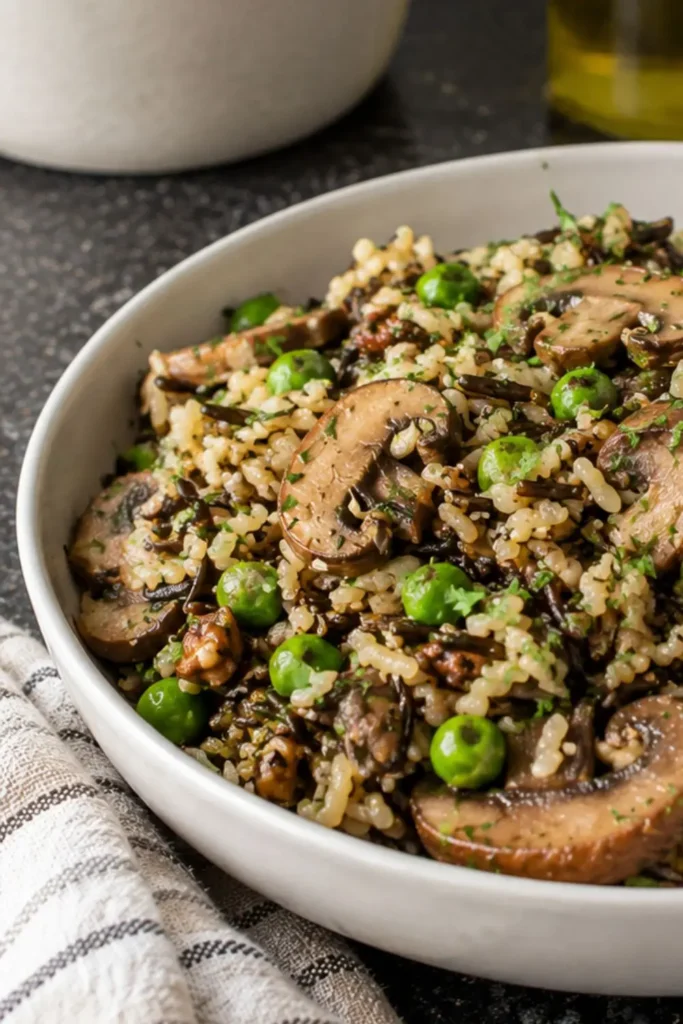
Cremini mushrooms (also called baby bella or brown mushrooms) are specifically right for this recipe. They have more flavor than white button mushrooms and a firmer texture that holds up through browning without becoming soft immediately. Their earthy, slightly savory character pairs perfectly with the herbed wild rice and toasted pecans.
Can you use other mushrooms? Yes shiitake mushrooms work beautifully and add an even more intense umami character. Oyster mushrooms provide a more delicate flavor. A mix of cremini and shiitake is IMO the best possible upgrade if you want to invest slightly more.
The One Rule You Cannot Break
Never crowd the mushrooms in the pan. This instruction appears in the recipe and deserves emphasis because breaking it consistently ruins what should be the best component of the dish. Crowded mushrooms release their moisture into the pan, which drops the temperature and causes them to steam rather than sear. The result is watery, pale, soft mushrooms rather than golden, concentrated, deeply flavored ones. Cook in batches with a hot pan and adequate space for each piece to contact the surface directly.
The White Wine What It Adds and How to Substitute
The ¼ cup of dry white wine added to the mushrooms does specific, important work:
It deglazes the pan – picking up all the concentrated, caramelized mushroom flavor from the pan bottom and incorporating it back into the mushrooms.
It adds acidity – the tartness of white wine brightens the mushrooms’ savory, earthy character and prevents them from tasting flat or one-dimensional.
It adds complexity – wine’s compound flavor profile adds a subtle depth that vegetable broth or water simply doesn’t deliver in this application.
Substitutions if needed:
- Vegetable broth + 1 tablespoon white wine vinegar – approximates the acidity and deglazing effect
- Apple juice + 1 teaspoon white wine vinegar – adds sweetness alongside acidity
- Dry sherry- more intense, works well if you enjoy stronger wine notes
Nutrition Information Per Serving
You may also like Next recipe
Slow Cooker Vegan Moroccan Chickpea Stew
At 261 calories per cup, this pilaf is a nutritionally substantial side dish:
| Nutrient | Per Serving (1 cup) |
| Calories | 261 kcal |
| Carbohydrates | 32g |
| Protein | 8.7g |
| Fat | 11.1g |
| Saturated Fat | 2.4g |
| Fiber | 3.9g |
| Sugar | 3.1g |
| Sodium | 414mg |
| Iron | 14mg |
8.7 grams of plant-based protein per cup from the combination of wild rice (unusually high in protein for a grain), brown rice, peas, pecans, and mushrooms. The 14mg of iron per serving is genuinely remarkable reflecting the wild rice and mushrooms contributing significant iron content. At 261 calories with this protein content, it functions as more than a typical side dish it’s a genuinely complete nutritional contribution to any meal.
What to Serve Alongside
Slow Cooker Vegan Wild Rice and Mushroom Pilaf works as:
- A centerpiece side alongside simple roasted vegetables and a green salad for a complete plant-based dinner
- A Thanksgiving or holiday side – the combination of wild rice, mushrooms, pecans, and herbs reads as a celebratory dish
- A stuffing alternative – serve alongside roasted portobello mushrooms or vegan roast
- A grain bowl base– serve the pilaf as the grain base in a bowl with roasted vegetables and tahini dressing
- A standalone lunch – a cup of this pilaf with a simple green salad makes a genuinely satisfying midday meal
Storage and Reheating
- Refrigerator: Store in an airtight container for up to 4 days. The pecans soften slightly during storage if texture matters, toast fresh pecans and stir them in when reheating.
- Reheating: Warm in a skillet over medium heat with a splash of vegetable broth, stirring frequently. Or microwave in 60-second intervals, stirring between each.
- Freezer: Freeze portions for up to 2 months. The rice and mushrooms freeze well; the peas and pecans change texture slightly after thawing.
My Final Thoughts Make This Pilaf and Become the Person Who Brings “That Rice Thing”
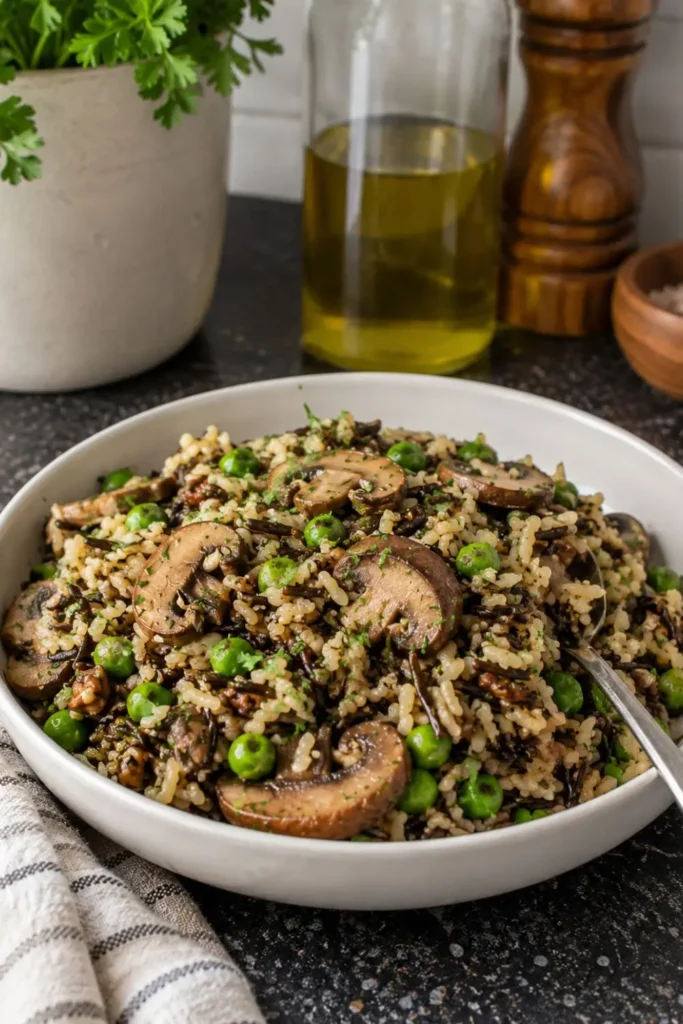
Slow Cooker Vegan Wild Rice and Mushroom Pilaf is the side dish that makes the main course work harder to compete. Wine-braised cremini mushrooms, toasted pecans, two kinds of slow-cooked herb-infused rice, sweet peas, and fresh parsley all at 261 calories per cup with nearly 9 grams of protein.
Yes, it requires more active cooking than most recipes in this series. The mushrooms need attention, the pecans need watching, and the rice needs its stages respected. But the result is something that genuinely earns every minute you spend on it.
Make it once and you’ll make it forever. The table will never let you stop.
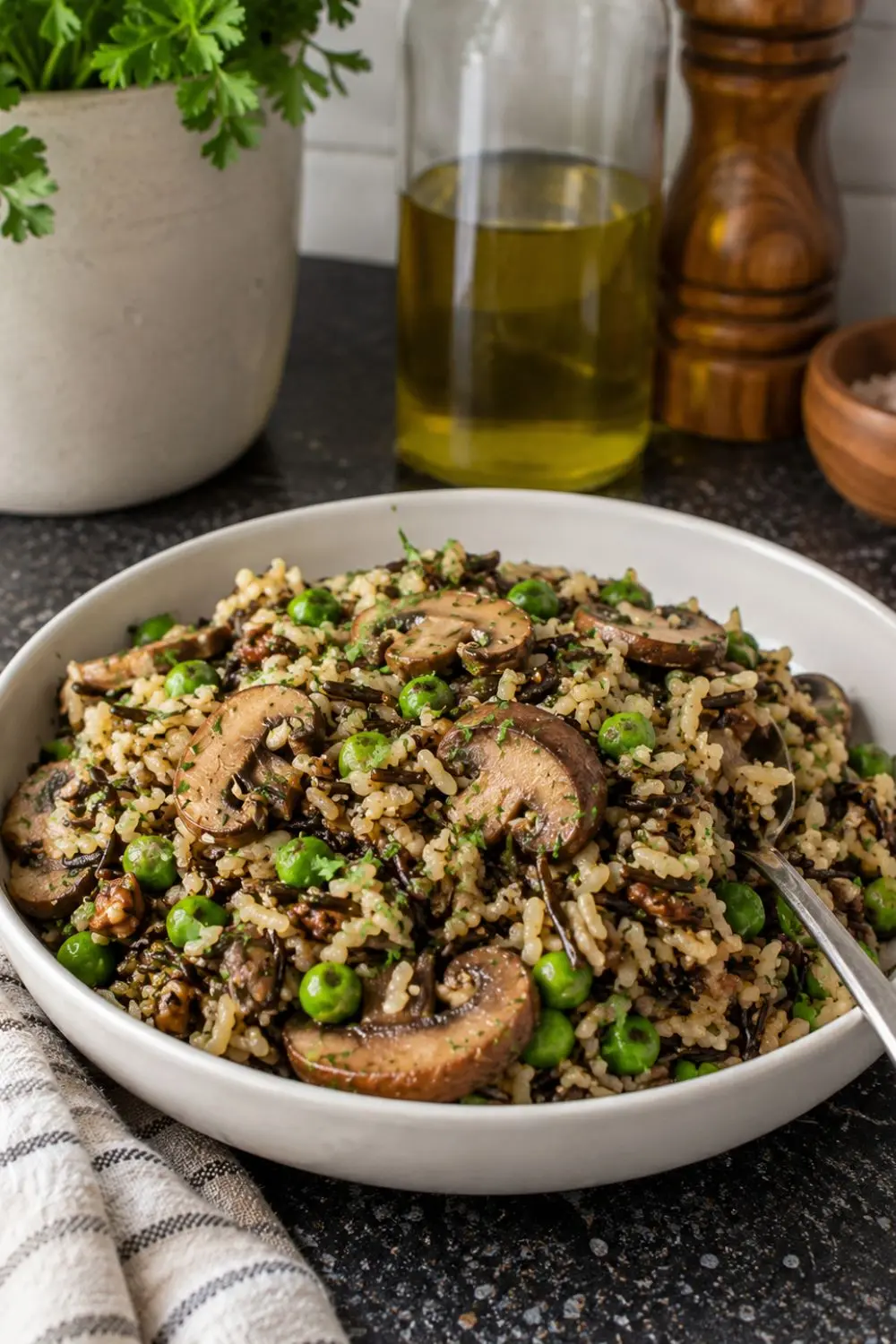
Slow Cooker Vegan Wild Rice and Mushroom Pilaf
Ingredients
Equipment
Method
- Stage 1 – Build the Herb-Infused Rice Base
- Melt 1 tablespoon of vegan butter in your medium pot over medium heat. Add the diced onion and cook for about 5 minutes, stirring occasionally, until soft and translucent. Add the minced garlic and cook for 1 more minute until very fragrant.
- Stir in the vegetable broth, wild rice, fresh thyme, and fresh rosemary. Raise the heat and bring the liquid to a boil. Once boiling, reduce to a simmer and cook for 10 minutes. This initial simmer gives the wild rice which takes longer to cook than brown rice a head start that ensures both rices finish cooking at approximately the same time.
- Stage 2 – Add Brown Rice and Simmer
- Stir in the brown rice and bring the liquid back to a boil. Once boiling again, lower the heat, cover the pot, and let the mixture simmer for 45 minutes. The combination of wild rice’s 55 minutes total and brown rice’s 45 minutes produces perfectly cooked grains of both varieties simultaneously.
- During this 45-minute window, run the mushroom and pecan stages in parallel the pilaf practically demands that you use this time productively.
- Stage 3 – Toast the Pecans
- Melt 1 tablespoon of vegan butter in your large skillet over medium heat. Add the ¾ cup of finely chopped pecans and cook, stirring frequently, for about 2 minutes until they darken slightly and become intensely fragrant. Watch them closely pecans toast quickly and the difference between perfectly toasted and burned is about 30 seconds of inattention.
- Remove the toasted pecans from the skillet immediately and transfer them to a plate. They’ll continue very slightly toasting from residual heat if left in the pan. Set aside until the very end.
- Stage 4 – Brown and Braise the Mushrooms
- This is the most important and most satisfying stage of the recipe. Melt the remaining 2 tablespoons of vegan butter in the same skillet over medium heat. Add the sliced cremini mushrooms in an even, single layer. If 10 ounces won’t fit in a single layer, cook in two batches this is not optional. Crowded mushrooms produce poor results.
- Cook the mushrooms for about 5 minutes per side without moving them this undisturbed contact with the hot pan surface is what creates the golden-brown sear that concentrates their flavor. Flip once and cook the second side for another 5 minutes.
- Pour the ¼ cup of dry white wine over the browned mushrooms. The wine immediately sizzles and creates steam use your spoon to scrape any browned bits from the pan bottom into the liquid. Cook until most of the wine evaporates, about 5 minutes more. Season with salt and pepper, remove from heat, and set aside.
- The finished mushrooms should be golden, slightly caramelized at the edges, and deeply savory with a subtle wine character. They should smell extraordinary.
- Stage 5 – Rest and Finish the Rice
- After 45 minutes, check the rice. The brown rice should be tender and the wild rice should be slightly chewy this is the correct texture; wild rice never fully softens the way white or brown rice does. If any excess liquid remains in the pot, drain it quickly through a fine mesh strainer and return the rice to the pot. Replace the lid and let the pot sit off-heat for 5 minutes this resting step allows any remaining steam to finish cooking the rice through and firms the texture slightly.
- Stage 6 – Combine Everything
- Remove the lid and stir in the toasted pecans, wine-braised mushrooms, thawed peas, and fresh parsley all at once. Stir gently but thoroughly to distribute everything evenly throughout the rice. Season with additional salt and pepper to taste. Serve immediately.
Notes
Nutrition Information Per Serving
At 261 calories per cup, this pilaf is a nutritionally substantial side dish:| Nutrient | Per Serving (1 cup) |
| Calories | 261 kcal |
| Carbohydrates | 32g |
| Protein | 8.7g |
| Fat | 11.1g |
| Saturated Fat | 2.4g |
| Fiber | 3.9g |
| Sugar | 3.1g |
| Sodium | 414mg |
| Iron | 14mg |

Hi — I’m Rachel. I’m a wife, a mom, and a home cook who believes that food should bring comfort, joy, and compassion to the table. I live with my family — two hungry little foodies who are my most honest recipe testers — and together we’ve built a kitchen culture that’s all about good food that happens to be 100% vegan. I started this blog because I wanted a place to share the recipes that keep our days moving, the dishes that make weeknights feel a little easier, and the meals that become our little family traditions.