
Tikka masala is one of those dishes that sounds like it requires a professional chef, a tandoor oven, and three hours of active cooking. Here’s the reality: Slow Cooker Vegan Tofu Tikka Masala needs 30 minutes of prep, a crockpot, and the patience to walk away while your kitchen fills with one of the most incredible aromas imaginable. By the time you come back, you have a rich, spiced, creamy tomato-coconut curry that genuinely rivals your favorite Indian restaurant — and it’s completely plant-based.
I started making this when I got tired of spending serious money on takeout tikka masala and then feeling vaguely guilty about the ingredients. This version uses extra firm tofu, a lineup of fresh vegetables, and a spice blend that does all the heavy lifting. The slow cooker handles the long, patient simmer that makes tikka masala taste so deeply developed. The result is extraordinary every single time.
Recipe Timing and Serving Details
Here’s your complete planning overview:
| Detail | Info |
| Prep Time | 30 minutes |
| Cook Time (HIGH) | 3–4 hours |
| Cook Time (LOW) | 6–7 hours |
| Additional Time | 5–10 minutes (for peas at the end) |
| Total Time | 3 hours 15 minutes – 7 hours 40 minutes |
| Servings | 4–6 servings |
| Serving Size | 1 serving |
| Calories Per Serving | 303 kcal |
| Course | Main Course |
| Cuisine | Indian-Inspired / American |
| Diet | 100% Vegan |
This recipe serves 4 people generously as a main course or 6 people with rice, quinoa, or naan alongside. At 303 calories per serving, it delivers a complete, nutritionally balanced meal that satisfies deeply without being excessive. The slow cooker does virtually all the work — your 30 minutes of prep is the most demanding part of the entire process.
Why Tofu Works Perfectly in Tikka Masala
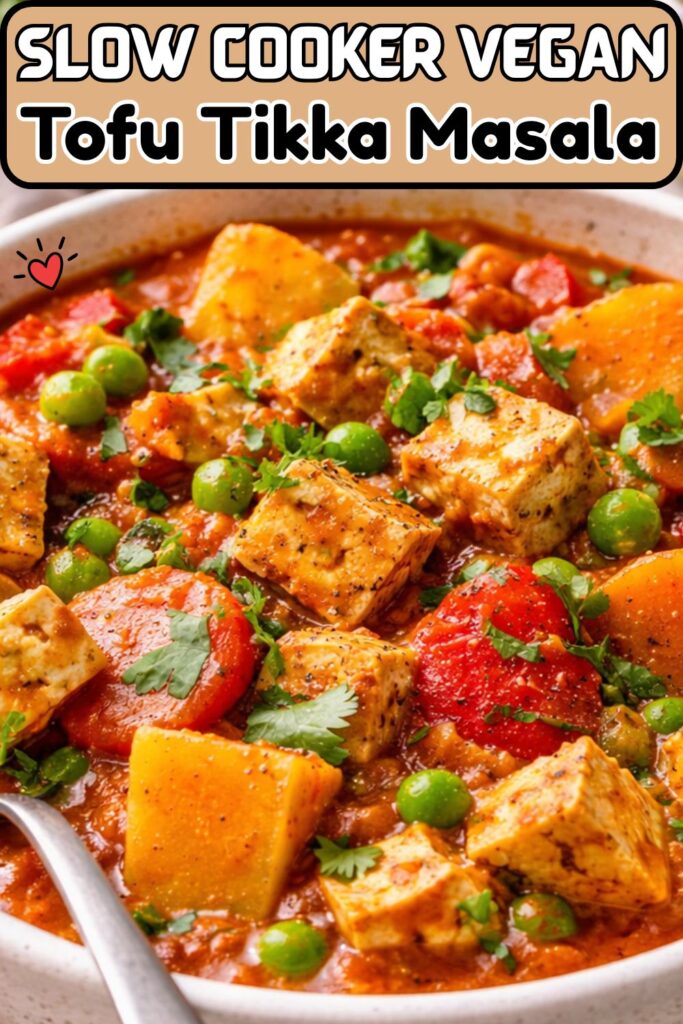
Traditional tikka masala uses chicken — pieces marinated in yogurt and spices, charred in a tandoor, then finished in the creamy tomato sauce. The vegan version replaces the chicken with extra firm tofu, and the swap works better than most people expect.
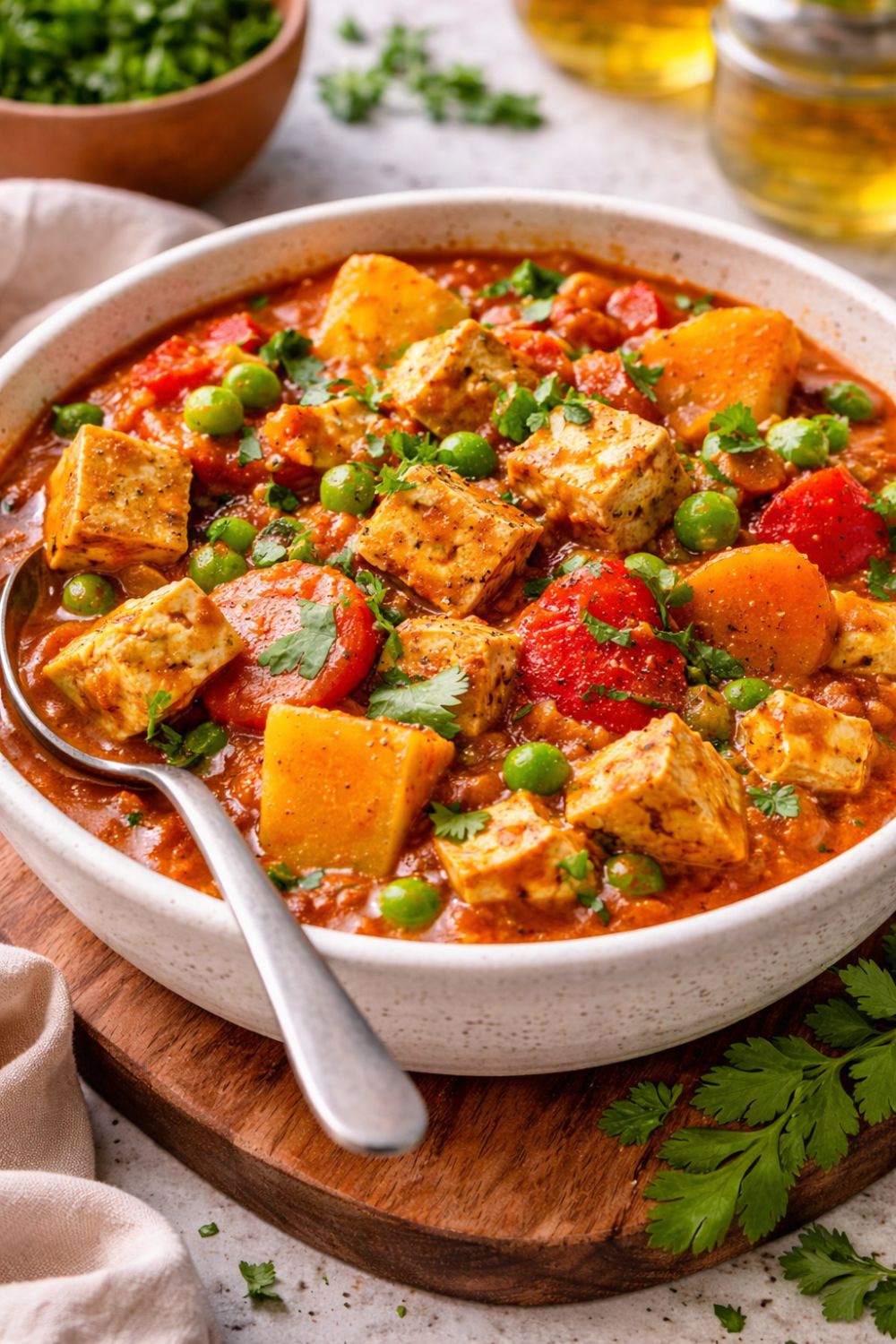
Extra firm tofu holds its shape through 3–4 hours of slow cooking without disintegrating into the sauce. It absorbs the surrounding spices and coconut-tomato broth as it cooks, taking on the flavors of the tikka masala sauce completely. By the time the dish finishes cooking, the tofu cubes taste genuinely savory and spiced rather than bland.
The vegetables in this recipe — bell pepper, carrots, cauliflower, potatoes, and peas — add texture, nutrition, and substance that make this far more interesting than a simple protein-in-sauce dish. Every bite contains something different, which makes the whole bowl more engaging to eat.
FYI — pressing the tofu before cutting it into cubes is the single most important prep step. Pressed tofu holds its shape better during the long slow cook and absorbs the surrounding flavors more effectively than unpressed tofu.
Ingredients You’ll Need
The Protein and Vegetables
- 1 package (16 oz) extra firm tofu, drained, pressed, and cut into ½-inch cubes
- 3 cloves garlic, minced
- 1 white onion, diced
- 1 red bell pepper, cut into chunks
- 2 medium carrots, sliced
- 1½ cups diced gold potatoes (from 2–3 medium potatoes)
- 2 cups cauliflower florets
- ¾ cup frozen peas — added at the very end
The Sauce
- 1 can (15 oz) tomato sauce
- 1 can (15 oz) lite coconut milk — or full-fat for extra richness
- ½ tablespoon pure maple syrup
- ½ tablespoon freshly grated ginger
The Spice Blend
- 1 tablespoon garam masala — the backbone of the entire flavor profile
- 1½ teaspoons ground cumin
- 1 teaspoon ground coriander
- ½ teaspoon ground turmeric
- ¼ teaspoon paprika
- ¼ teaspoon cayenne pepper — adjust based on your heat tolerance
- ½ teaspoon salt
- Freshly ground black pepper to taste
For Serving and Garnish
- Fresh cilantro, chopped
- Naan bread, brown rice, or quinoa on the side
The spice list looks long but every single ingredient contributes to the layered, complex flavor that makes tikka masala so distinctive. Garam masala carries the warm, aromatic base. Turmeric adds color and earthiness. Cumin and coriander deepen the profile. Cayenne adds controlled heat. Together they create something genuinely greater than any single spice could deliver alone.
Equipment You’ll Need
This recipe runs primarily in the slow cooker with minimal supporting equipment:
The Essential Equipment
- Large slow cooker (6-quart) — the size matters here. This recipe generates a substantial volume of ingredients — tofu, multiple vegetables, sauce, and coconut milk. A 6-quart slow cooker gives you comfortable room for everything with space to stir without overflow. A smaller cooker risks crowding, which affects how evenly the vegetables and tofu cook through the long simmer.
If your slow cooker has a HIGH and LOW setting, both work — HIGH for a 3–4 hour cook when you need dinner relatively quickly, LOW for a 6–7 hour cook when you set it up in the morning and want it ready by evening.
Supporting Equipment
- Tofu press or heavy books + plates — for pressing the tofu before cutting. This takes 20–30 minutes and runs concurrently with your other prep. A dedicated tofu press is a worthwhile investment if you cook with tofu regularly.
- Paper towels or clean tea towel — for wrapping the tofu during pressing
- Sharp knife and cutting board — significant vegetable prep happens here. Cut everything to roughly similar sizes so the cooking time stays uniform across all the vegetables.
- Microplane or fine grater — for freshly grating the ginger. Fresh ginger makes a noticeably better tikka masala than ground ginger from a jar.
- Measuring spoons and cups
- Large spoon or silicone spatula — for stirring everything together in the slow cooker
- Can opener — for the tomato sauce and coconut milk
- Ladle — for serving
The prep is the most time-intensive part of this recipe. Once everything goes into the slow cooker, your involvement essentially ends until the final pea-stirring step.
Step-by-Step Instructions for Slow Cooker Vegan Tofu Tikka Masala The Summer Crockpot Recipe
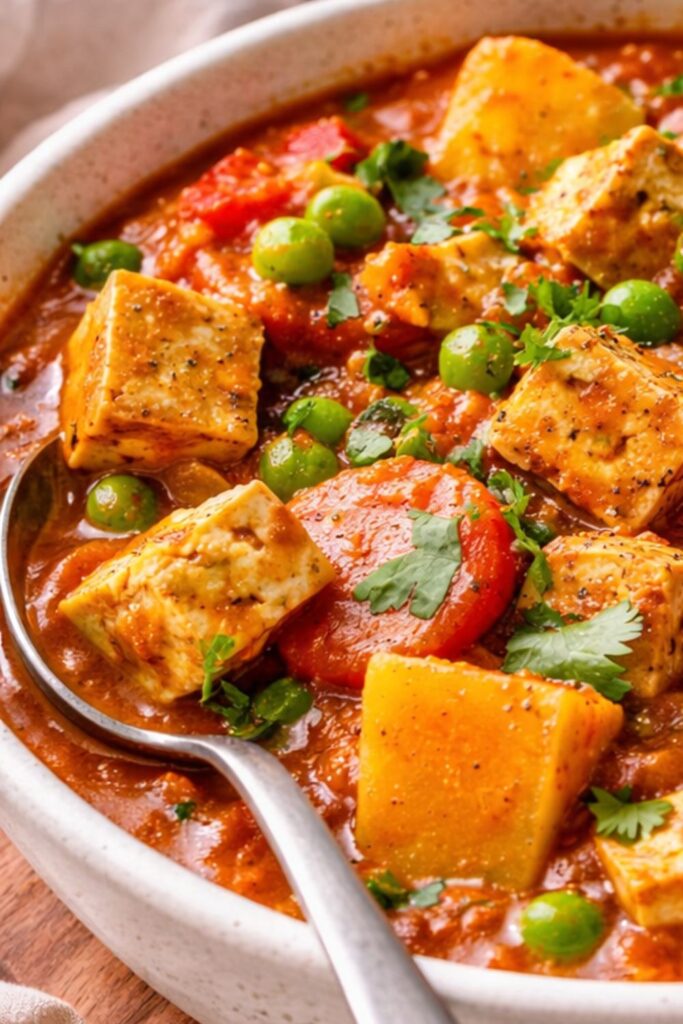
Step 1 — Press the Tofu
Start by pressing your tofu because this runs concurrently with all your other prep and the timing works out perfectly. Wrap the tofu block in paper towels or a clean tea towel, place a flat board or plate on top, and stack something heavy on that. Let it press for at least 20–30 minutes while you prep the vegetables and measure the spices.
Pressing removes excess moisture from the tofu, which improves how well it holds its shape during the long slow cook and how effectively it absorbs the surrounding flavors. Unpressed tofu goes soft and slightly mushy after hours in liquid. Pressed tofu stays structured and satisfying. The difference is significant and the effort is minimal — don’t skip this step.
Step 2 — Prep All the Vegetables
While the tofu presses, dice the onion, mince the garlic, cut the bell pepper into chunks, slice the carrots, dice the potatoes, and break the cauliflower into florets. Aim for similar-sized pieces across all the vegetables so everything finishes cooking at roughly the same time.
The gold potatoes deserve a special mention — their waxy texture holds up beautifully through the long slow cook without falling apart into the sauce. Russet potatoes would turn mushy and disintegrate. Gold potatoes stay structured and absorb the spiced sauce perfectly. If you want to switch things up, sweet potatoes or cubed butternut squash work as excellent alternatives that add a gentle sweetness against the spiced tomato sauce.
Step 3 — Load the Slow Cooker
Add the minced garlic, diced onion, bell pepper chunks, sliced carrots, cauliflower florets, and diced potatoes to the slow cooker. Pour in the tomato sauce and coconut milk. Add the maple syrup, fresh grated ginger, and all the spices — garam masala, cumin, coriander, turmeric, paprika, cayenne, salt, and black pepper. Stir everything together until the spices distribute evenly throughout the sauce and vegetables.
Cut the pressed tofu into ½-inch cubes and add them to the slow cooker. Give the whole pot a gentle stir to incorporate the tofu without breaking the cubes. The tofu is more fragile before cooking than after, so stir with care at this stage.
Step 4 — Cook Low and Slow
Cover the slow cooker and cook on HIGH for 3–4 hours or LOW for 6–7 hours. The dish is ready when the potatoes and carrots are fully tender, the cauliflower has softened, and the sauce has thickened and deepened in color.
Resist the urge to lift the lid during cooking — every peek releases steam and extends the cook time by 15–20 minutes. The slow cooker builds up internal heat and moisture that drives the cooking process. Interrupting it repeatedly slows everything down unnecessarily. 🙂
Step 5 — Add the Peas and Finish
When the cooking time ends, stir in the ¾ cup of frozen peas and leave the slow cooker uncovered for 5–10 minutes. The residual heat thaws and cooks the peas through without making them mushy. Frozen peas added at this stage stay bright green and tender — adding them at the start would produce gray, overcooked peas after hours of slow cooking.
Taste the tikka masala and adjust seasoning — more salt, more cayenne for heat, a squeeze of lemon juice if you want brightness. Make it exactly the way you like it.
Step 6 — Serve and Garnish
Ladle the tikka masala into bowls and scatter fresh cilantro generously over each serving. Serve alongside vegan naan, brown rice, or quinoa for a complete meal.
Spice Level Management
Slow Cooker Vegan Tofu Tikka Masala sits at a mild-to-moderate heat level with the recipe’s standard cayenne amount. Here’s how to adjust it:
For a Milder Version
- Reduce cayenne to ⅛ teaspoon or eliminate it entirely
- Use lite coconut milk — the additional creaminess helps tone down spice perception
- Serve with a cooling side like sliced cucumber or vegan yogurt
For Maximum Heat
- Double the cayenne to ½ teaspoon
- Add ½ teaspoon of red chili flakes at the start of cooking
- Finish with a drizzle of chili oil over each serving
For Smoky Depth Without Extra Heat
- Add ½ teaspoon of smoked paprika alongside the regular paprika
- This adds a smoky, almost grilled dimension that references the traditional tandoor-cooked chicken version
Still Hungry, Try It Next recipe :-
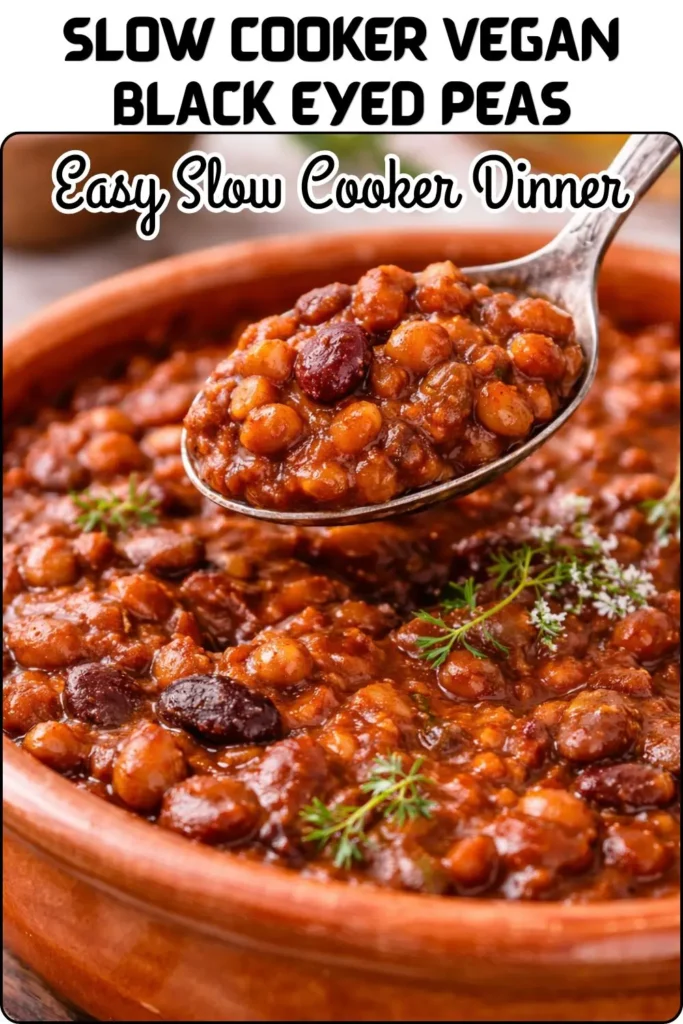
Slow Cooker Vegan Black Eyed Peas
Coconut Milk — Lite vs. Full Fat
The recipe gives you a choice between lite and full-fat coconut milk, and the difference is meaningful:
Lite coconut milk produces a lighter, more broth-like sauce with less richness. It reduces the overall fat and calorie content per serving and lets the spices shine more prominently. IMO, this is the better choice if you’re serving this over rice where the grains absorb the sauce — more sauce, lighter consistency.
Full-fat coconut milk creates a thicker, richer, more indulgent sauce with a creaminess that’s genuinely luxurious. The fat content increases but so does the satisfaction factor. This is the better choice if you want a restaurant-style tikka masala where the sauce coats everything heavily.
Both work. Neither is wrong. Your preference decides.
Potato Substitutions Worth Trying
The recipe calls for gold potatoes, but two excellent alternatives change the character of the dish in interesting ways:
Sweet potatoes add a gentle sweetness that plays beautifully against the spiced, slightly acidic tomato base. The contrast creates a more complex flavor profile and adds natural color variation to the bowl.
Butternut squash brings a silky texture and mild sweetness similar to sweet potato. It softens more readily than potato during the slow cook, which means it contributes to a slightly thicker sauce as some of it breaks down into the surrounding liquid.
Both substitutions add a slightly sweeter dimension that works really well with the garam masala and coconut milk combination.
Nutrition Information Per Serving
At 303 calories per serving, this tikka masala delivers an impressive nutritional profile:
| Nutrient | Per Serving |
| Calories | 303 kcal |
| Carbohydrates | 35.7g |
| Protein | 14.8g |
| Fat | 11.5g |
| Saturated Fat | 5.7g |
| Fiber | 8.7g |
| Sugar | 13.1g |
14.8 grams of plant-based protein per serving comes from the tofu, peas, and vegetables working together. The 8.7 grams of fiber keeps you genuinely full well beyond the meal. The saturated fat reflects the coconut milk — switching to lite coconut milk reduces this number meaningfully if that matters to you.
Served over ½ cup of brown rice, the complete meal lands at approximately 450–480 calories with additional protein and fiber from the rice — a nutritionally complete, deeply satisfying dinner.
Storage and Reheating
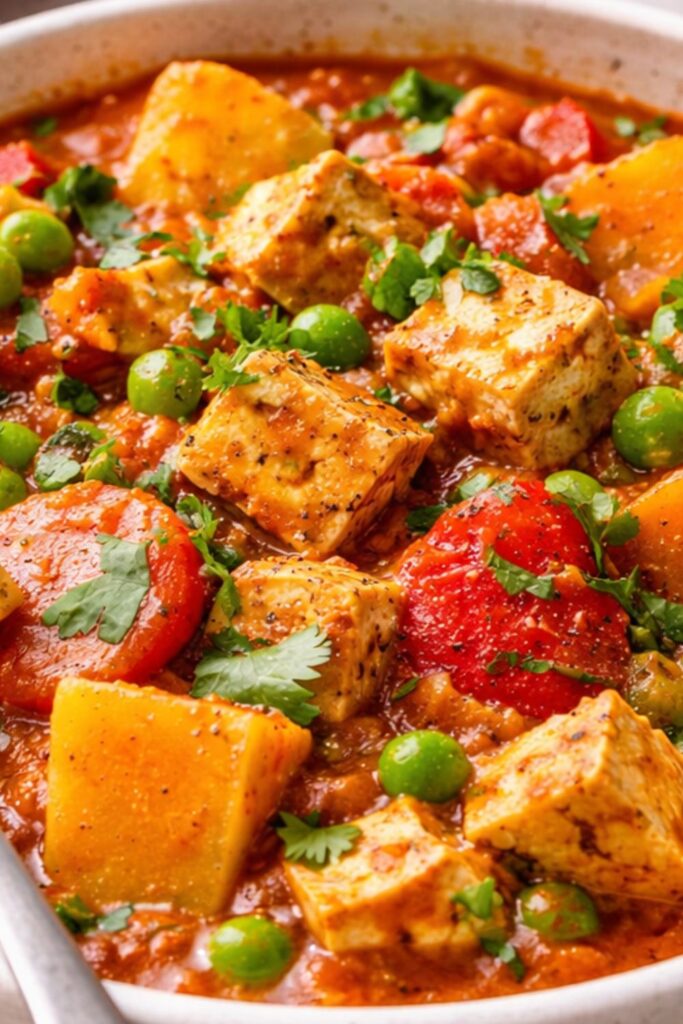
Slow Cooker Vegan Tofu Tikka Masala stores beautifully and actually improves overnight:
- Refrigerator: Store in an airtight container for up to 4–5 days. The flavors develop and deepen significantly after the first day — this is genuinely one of those dishes where leftovers taste better than the original.
- Freezer: Freeze in individual portions for up to 3 months. Tofu texture changes slightly after freezing — it becomes slightly more porous and chewier, which some people actually prefer.
- Reheating: Warm on the stovetop over medium-low heat, stirring occasionally and adding a splash of water or coconut milk if the sauce has thickened too much. Microwave in 90-second intervals, stirring between each.
Final Thoughts Make This Tikka Masala and Retire Your Takeout App
Slow Cooker Vegan Tofu Tikka Masala gives you everything you love about restaurant tikka masala — the creamy tomato-coconut sauce, the aromatic spice profile, the deeply satisfying warmth — in a completely plant-based, slow cooker format that serves 4–6 people at 303 calories per bowl.
Still Hungry, Try It Next recipe :-
Crockpot Vegan BBQ Baked Beans
The prep takes 30 minutes. The slow cooker handles the next 3–7 hours. You come back to something that smells and tastes extraordinary. That’s the whole promise of this recipe, and it delivers every single time.
So press that tofu, load the crockpot, and let the tikka masala work its magic. Your kitchen is about to smell better than any restaurant.
Slow Cooker Vegan Tofu Tikka Masala
Ingredients
Equipment
Method
- Step 1 — Press the Tofu
- Start by pressing your tofu because this runs concurrently with all your other prep and the timing works out perfectly. Wrap the tofu block in paper towels or a clean tea towel, place a flat board or plate on top, and stack something heavy on that. Let it press for at least 20–30 minutes while you prep the vegetables and measure the spices.
- Pressing removes excess moisture from the tofu, which improves how well it holds its shape during the long slow cook and how effectively it absorbs the surrounding flavors. Unpressed tofu goes soft and slightly mushy after hours in liquid. Pressed tofu stays structured and satisfying. The difference is significant and the effort is minimal — don’t skip this step.
- Step 2 — Prep All the Vegetables
- While the tofu presses, dice the onion, mince the garlic, cut the bell pepper into chunks, slice the carrots, dice the potatoes, and break the cauliflower into florets. Aim for similar-sized pieces across all the vegetables so everything finishes cooking at roughly the same time.
- The gold potatoes deserve a special mention — their waxy texture holds up beautifully through the long slow cook without falling apart into the sauce. Russet potatoes would turn mushy and disintegrate. Gold potatoes stay structured and absorb the spiced sauce perfectly. If you want to switch things up, sweet potatoes or cubed butternut squash work as excellent alternatives that add a gentle sweetness against the spiced tomato sauce.
- Step 3 — Load the Slow Cooker
- Add the minced garlic, diced onion, bell pepper chunks, sliced carrots, cauliflower florets, and diced potatoes to the slow cooker. Pour in the tomato sauce and coconut milk. Add the maple syrup, fresh grated ginger, and all the spices — garam masala, cumin, coriander, turmeric, paprika, cayenne, salt, and black pepper. Stir everything together until the spices distribute evenly throughout the sauce and vegetables.
- Cut the pressed tofu into ½-inch cubes and add them to the slow cooker. Give the whole pot a gentle stir to incorporate the tofu without breaking the cubes. The tofu is more fragile before cooking than after, so stir with care at this stage.
- Step 4 — Cook Low and Slow
- Cover the slow cooker and cook on HIGH for 3–4 hours or LOW for 6–7 hours. The dish is ready when the potatoes and carrots are fully tender, the cauliflower has softened, and the sauce has thickened and deepened in color.
- Resist the urge to lift the lid during cooking — every peek releases steam and extends the cook time by 15–20 minutes. The slow cooker builds up internal heat and moisture that drives the cooking process. Interrupting it repeatedly slows everything down unnecessarily. 🙂
- Step 5 — Add the Peas and Finish
- When the cooking time ends, stir in the ¾ cup of frozen peas and leave the slow cooker uncovered for 5–10 minutes. The residual heat thaws and cooks the peas through without making them mushy. Frozen peas added at this stage stay bright green and tender — adding them at the start would produce gray, overcooked peas after hours of slow cooking.
- Taste the tikka masala and adjust seasoning — more salt, more cayenne for heat, a squeeze of lemon juice if you want brightness. Make it exactly the way you like it.
- Step 6 — Serve and Garnish
- Ladle the tikka masala into bowls and scatter fresh cilantro generously over each serving. Serve alongside vegan naan, brown rice, or quinoa for a complete meal.
Notes
Nutrition Information Per Serving
At 303 calories per serving, this tikka masala delivers an impressive nutritional profile:| Nutrient | Per Serving |
| Calories | 303 kcal |
| Carbohydrates | 35.7g |
| Protein | 14.8g |
| Fat | 11.5g |
| Saturated Fat | 5.7g |
| Fiber | 8.7g |
| Sugar | 13.1g |

Hi — I’m Rachel. I’m a wife, a mom, and a home cook who believes that food should bring comfort, joy, and compassion to the table. I live with my family — two hungry little foodies who are my most honest recipe testers — and together we’ve built a kitchen culture that’s all about good food that happens to be 100% vegan. I started this blog because I wanted a place to share the recipes that keep our days moving, the dishes that make weeknights feel a little easier, and the meals that become our little family traditions.