
Prep Time: 10 minutes
Cook Time: 4 hours 5 minutes
Total Time: 4 hours 15 minutes
Servings: 4 people
Calories: 525 kcal per serving
Hot noodle soup in summer? Absolutely. Especially when your slow cooker does 99% of the work and you just show up for the bowl.
These summer vegan slow cooker peanut noodles are the kind of meal that makes you look like you spent all day in the kitchen rich, deeply savory broth, tender tofu, earthy mushrooms, and perfectly cooked noodles when really you just dumped everything in a crockpot and went about your day. I’ve made this on repeat since the first time it came together, and every single person I’ve served it to has asked for the recipe immediately. That kind of track record earns a permanent spot in the rotation.
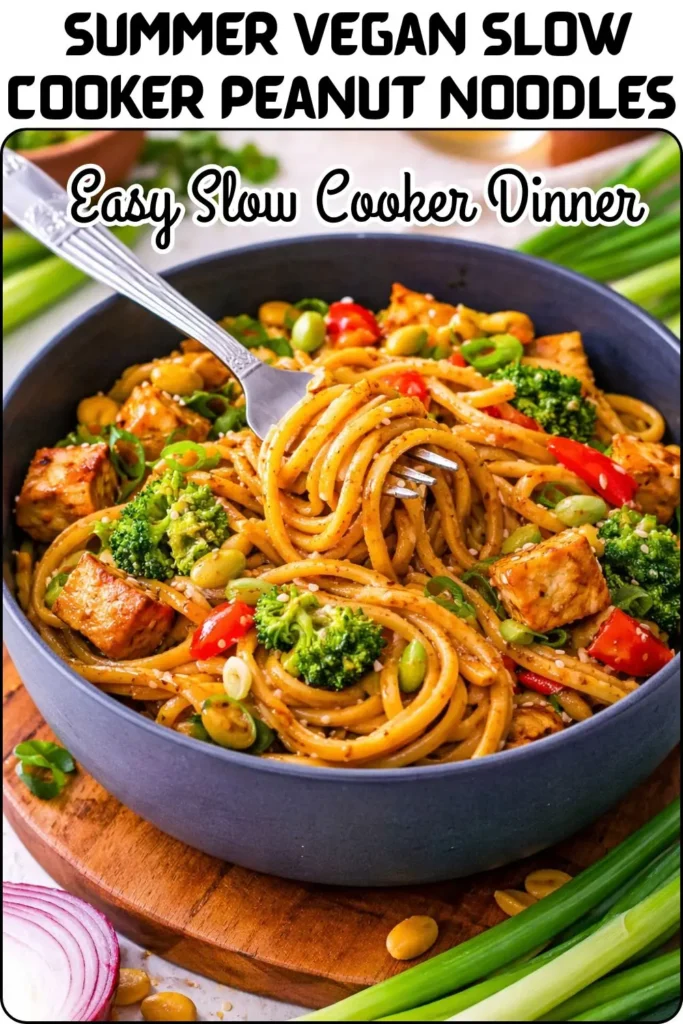
Why This Vegan Slow Cooker Noodle Soup Works So Well
Most vegan noodle soups taste flat unless you really know what you’re doing with the broth. This recipe sidesteps that entire problem by starting with a flavorful base mushrooms, garlic, soy sauce, sesame oil, and rice vinegar that builds depth over four hours of slow cooking.
The mushroom combination is genuinely the key here. Shiitake mushrooms and hon-shimeji (brown beech) mushrooms together create an umami-rich broth that tastes like it simmered for days. They release their flavor slowly and completely, turning an ordinary vegetable broth into something that tastes complex and restaurant-worthy.
Who This Recipe Is Perfect For
This vegan slow cooker peanut noodle soup works brilliantly for:
- Busy weeknight cooks- who want a hands-off dinner that delivers serious flavor.
- Meal prepper-s who want something substantial that feeds four generously.
- Anyone new to tofu – cubed super firm tofu holds its shape beautifully in the slow cooker and soaks up the broth without turning mushy.
- Ramen and noodle lovers- who want a fully plant-based version that doesn’t compromise on taste.
- Families or friend groups – four full servings at 525 calories each means nobody leaves the table hungry.
Equipment You’ll Need For
Short list, nothing complicated:
- Slow cooker / crockpot a 5–6 quart model works perfectly for this volume
- Knife and cutting board for prepping the vegetables and tofu
- Measuring spoons and cups
- Ladle for serving
- Separate pot (optional but recommended for cooking noodles independently more on that below)
- Deep serving bowls this is a generous, broth-heavy dish and you want room for toppings
The slow cooker size actually matters here. A 4-quart model is the minimum 5 or 6 quarts is ideal because you’re working with 8 cups of broth plus all the solid ingredients. Cramming everything into an undersized crockpot means uneven cooking and a lot of broth overflow risk.
Ingredients
- 3 shiitake mushrooms, sliced
- 3.5 oz hon-shimeji mushrooms (brown beech mushrooms)
- 1 small yellow onion, cut in half and sliced
- 4 cloves garlic, minced
- 2 carrots, peeled and chopped
- 1 (16 oz) package super firm tofu, drained and cubed
- 8 cups broth (see notes below)
- 2 tbsp low-sodium soy sauce
- 1 tbsp rice vinegar
- 1 tbsp sesame oil
- 1 tsp ground ginger
- 3–4 bundles bok choy, cut in half lengthwise
- 6–8 oz noodles of choice (see notes below)
For serving (optional but highly recommended):
- Sliced green onion
- Sesame seeds
- Chili oil
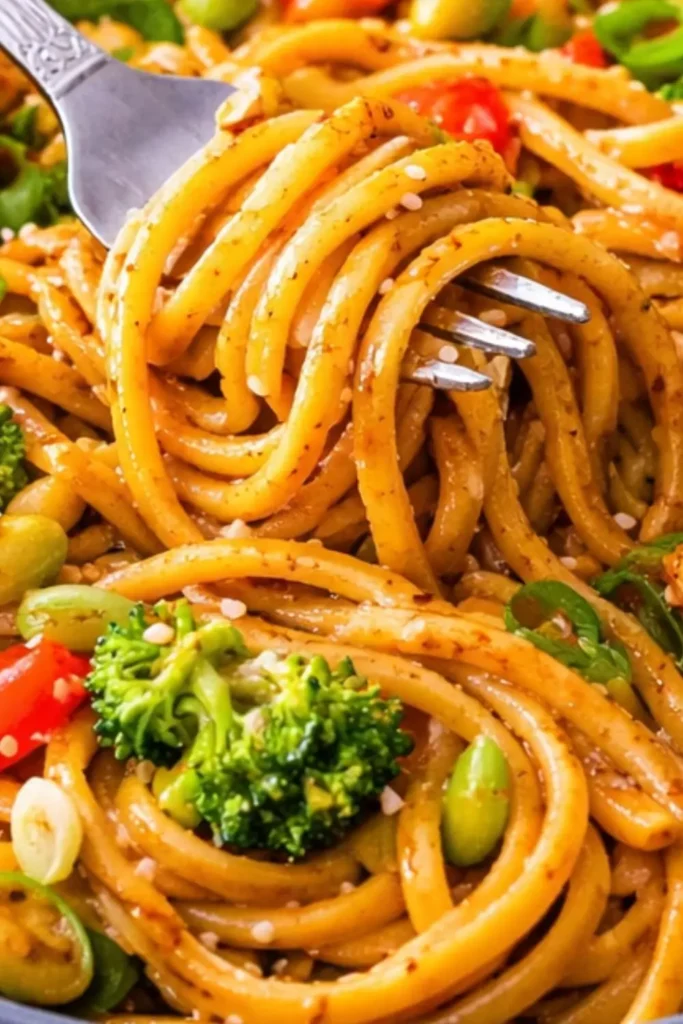
Instructions
- Load the slow cooker. Add all ingredients from the mushrooms through the ground ginger into the slow cooker. Give everything a good stir to combine.
- Cook. Cover and cook on high for 4 hours or low for 8 hours.
- Add bok choy and noodles. In the final 3–5 minutes of cook time, add the bok choy and noodles directly to the slow cooker. Cook on low until the noodles are just cooked through.
- Taste and adjust. Stir everything together and taste the broth. Add more soy sauce for saltiness, a splash more rice vinegar for brightness, or extra ginger for warmth.
- Serve immediately. Ladle into deep bowls and top with sliced green onion, sesame seeds, and chili oil.
The Broth The Most Important Decision You’ll Make
Let’s talk about broth for a moment, because this is where a lot of vegan noodle soups fall flat and this one doesn’t.
Use Vegan Chicken-Style Broth If You Can Find It
Standard vegetable broth is fine, but it often tastes thin and slightly sweet in a way that doesn’t hold up to four hours of slow cooking. Vegan chicken-style broth has significantly more depth and a savory, rounded flavor that makes the finished soup taste genuinely rich and complex. If you can find it at your local store or online, use it. The difference is noticeable.
Working With Regular Vegetable Broth
If vegan chicken broth isn’t available, regular vegetable broth works you just need to compensate for its milder flavor:
- Add an extra tablespoon of soy sauce to deepen the saltiness and umami.
- Stir in a tablespoon of white or yellow miso paste near the end of cooking for extra depth.
- Use 6 cups of broth and 2 cups of water if you’re sensitive to salt this balances the sodium without sacrificing too much flavor.
FYI, the mushrooms do a lot of the heavy lifting here regardless of which broth you use. Four hours of slow cooking with shiitake and hon-shimeji mushrooms will enrich almost any liquid.
The Noodle Situation This Matters More Than You Think
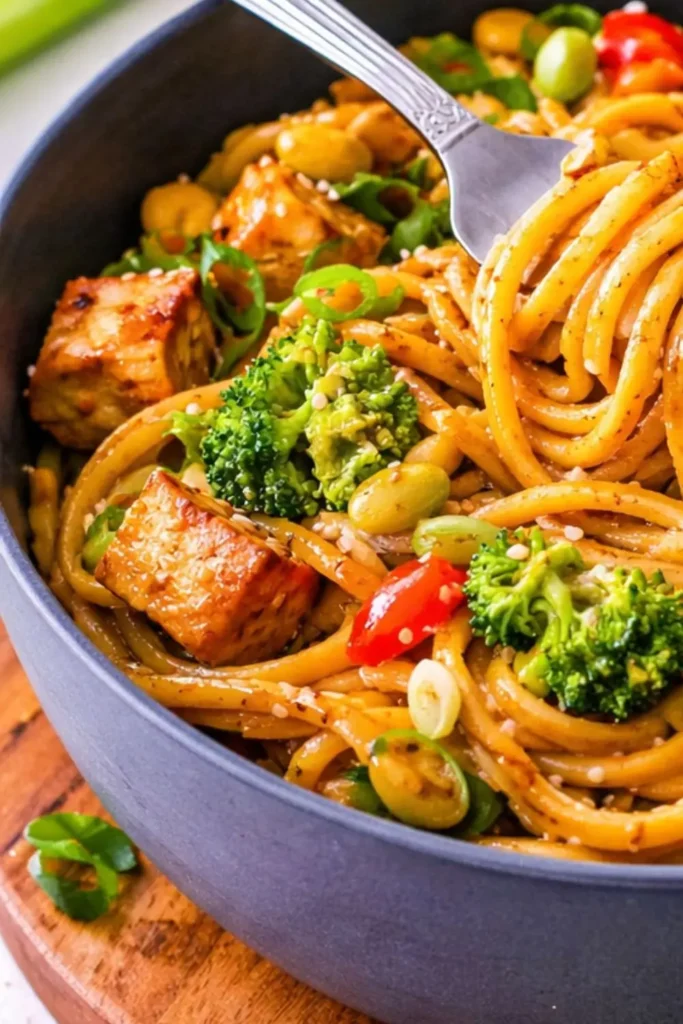
Ever added noodles to a slow cooker too early and ended up with a bowl of paste? Yeah, we’re not doing that. Noodles go in during the last 3–5 minutes only, and even then you need to think about whether you’re eating all four servings at once or saving some for later.
If You’re Eating Everything Right Now
Add the noodles directly to the slow cooker in the last few minutes and let them cook in the broth. Chuka soba noodles (Japanese soba-style noodles) work brilliantly here they cook quickly, have a satisfying chew, and absorb the broth beautifully without falling apart.
If You’re Meal Prepping or Saving Leftovers
Cook the noodles separately in a pot of boiling water and add them directly to individual bowls at serving time. This is the move for meal prep. Noodles left sitting in hot broth even in the fridge continue absorbing liquid and turn soft and gummy. Keeping them separate means your leftover portions taste just as good on day three as they did on day one.
Which Noodles Work Best
- Chuka soba – the top recommendation; quick-cooking and ideal texture
- Rice noodles – great gluten-free option, cook even faster
- Udon – thicker, chewier, and holds up well to the bold broth
- Instant ramen noodles – grab a pack, ditch the seasoning packet, and use just the noodles. Works perfectly and nobody needs to know.
- Soba noodles – hearty and slightly nutty; rinse well after cooking to prevent sticking
Breaking Down the Key Ingredients
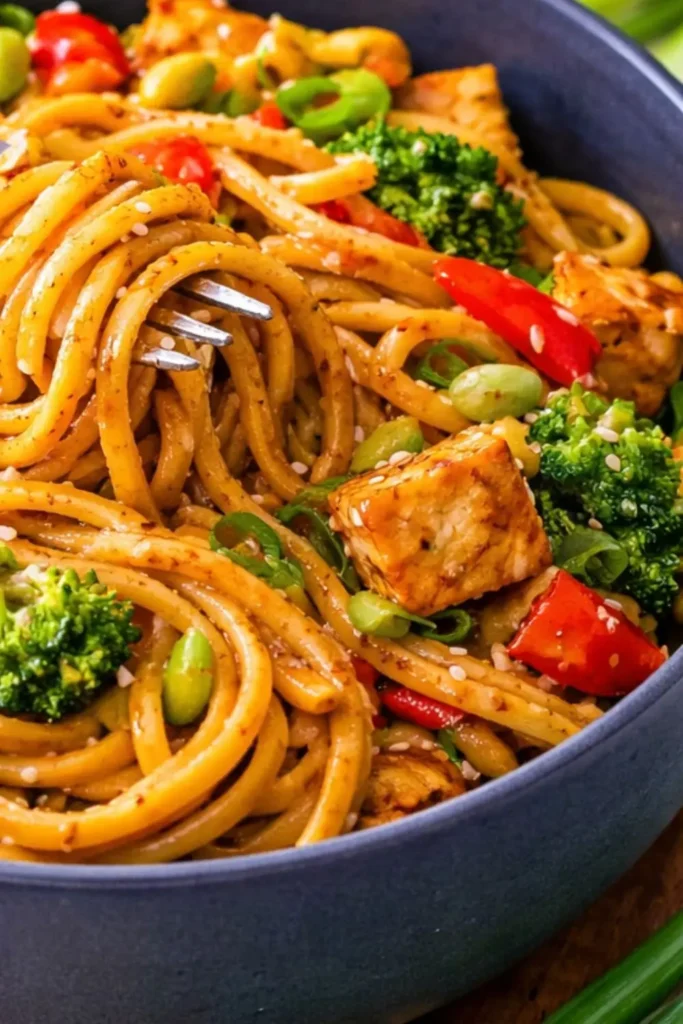
Super Firm Tofu Not Regular, Not Silken
Super firm tofu is the only tofu that belongs in this recipe. Regular or soft tofu will break apart during four hours of slow cooking and dissolve into the broth in a way that’s not what anyone wants. Super firm tofu holds its cube shape through the entire cook time, develops a slightly firmer exterior from the broth, and delivers a genuinely satisfying bite.
No pressing required with super firm tofu either it comes with most of the moisture already removed. Just drain, cube, and add it straight to the slow cooker.
The Mushroom Combination
You could use just one type of mushroom. You’d be leaving flavor on the table, but you could. Shiitake mushrooms bring deep, woody umami. Hon-shimeji mushrooms add a mild, slightly nutty sweetness. Together, they create a broth complexity that a single mushroom variety can’t match. Both are widely available in Asian grocery stores and increasingly in larger supermarkets.
Sesame Oil Add It, Don’t Cook It
One tablespoon of sesame oil goes into the slow cooker from the start here, which is slightly unconventional since sesame oil is often added at the end of cooking to preserve its aroma. In a slow cooker, the low-and-slow heat is gentle enough that the sesame flavor survives the full cook time and infuses the entire broth rather than just sitting on top.
Nutrition Per Serving
One of four servings delivers:
- Calories: 525 kcal
- Protein: 42g
- Carbohydrates: 59g
- Fat: 17g
That 42g of plant-based protein per serving is remarkable for a noodle soup it comes from the combination of super firm tofu and the protein naturally present in the mushrooms and bok choy. This is a genuinely complete, high-protein meal that keeps you full for hours. For a vegan crockpot dish, those numbers are seriously impressive.
Topping Ideas That Elevate the Bowl
The base soup is fantastic on its own, but the right toppings take it somewhere special:
- Sliced green onion – adds freshness and a mild sharp bite that cuts through the richness of the broth.
- Sesame seeds -a small sprinkle adds nuttiness and a subtle crunch.
- Chili oil – this is the one I never skip. A drizzle of good chili oil adds heat, smokiness, and an extra layer of complexity that makes the whole bowl sing.
- Nori sheets – tear a sheet over the top for an extra hit of umami and that classic ramen-shop aesthetic.
- Crispy shallots– if you have them around, they add incredible texture contrast.
- Extra lime or lemon – a squeeze of citrus brightens everything at the last second.
IMO, the chili oil is non-negotiable. Even if you’re not a huge spice fan, just a small amount transforms the flavor profile of the whole bowl.
Try It Next recipe
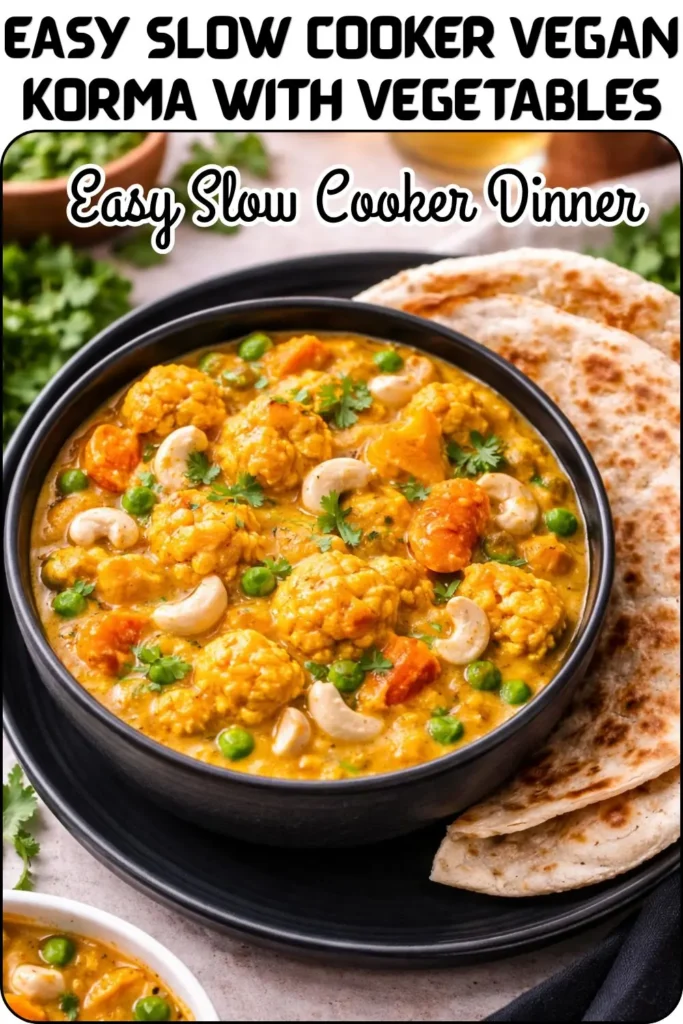
Easy Slow Cooker Vegan Korma with Vegetables
Meal Prep and Storage Tips
This vegan slow cooker noodle soup stores and reheats extremely well with one important caveat:
- Store the broth and solids separately from the noodles whenever possible. Noodles absorb broth aggressively overnight and turn soft.
- Refrigerator: The broth and tofu/vegetable mixture keeps for up to 4 days in an airtight container.
- Freezer: Freeze the broth and solids (without noodles) for up to 2 months. Thaw overnight in the fridge and reheat on the stovetop.
- Reheating: Warm on the stovetop over medium heat. The broth may thicken slightly in the fridge add a splash of water or extra broth to loosen it back up.
Cook a fresh batch of noodles when you reheat each portion and you’ve got a meal-prep lunch that feels freshly made every single day.
Common Mistakes to Avoid
- Adding noodles too early. They’ll overcook and turn to mush. Last 3–5 minutes only or cook them separately entirely.
- Using the wrong tofu. Soft or regular tofu disintegrates. Super firm only.
- Using bland broth and not compensating. If your broth is weak, add miso or extra soy sauce. Don’t just hope the mushrooms will fix it they help, but you still need a solid base.
- Not tasting before serving. Slow cooking can mellow flavors. Always adjust salt, acidity, and seasoning right before you ladle into bowls.
- Skipping the sesame oil. It adds an aromatic, toasty depth to the broth that nothing else replicates. Don’t leave it out.
My Final Thoughts
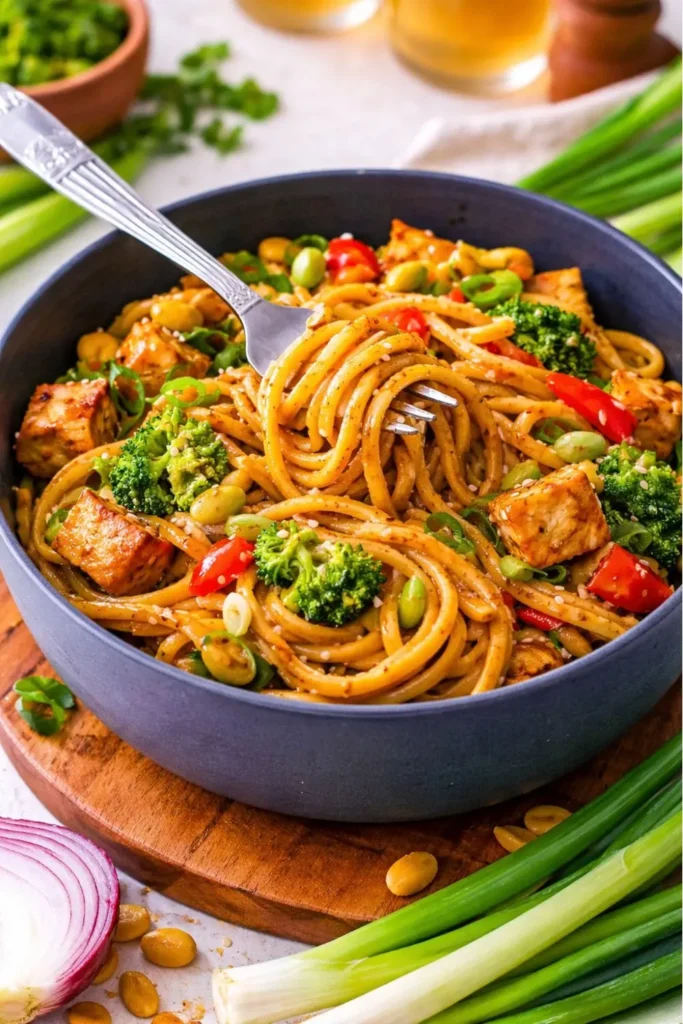
The summer vegan slow cooker peanut noodles prove that a genuinely satisfying, restaurant-quality noodle bowl doesn’t require hours of active cooking or complicated technique. Load the crockpot in the morning, add noodles and bok choy at the end, and dinner is done.
With 42g of protein per serving, bold umami-rich broth, and toppings that let everyone customize their bowl, this is the kind of recipe that works equally well for a solo weeknight dinner or feeding a group of friends who still think vegan food “isn’t filling.” Make it once and watch them change their minds.
Now set that slow cooker and go enjoy your summer dinner is already handled.
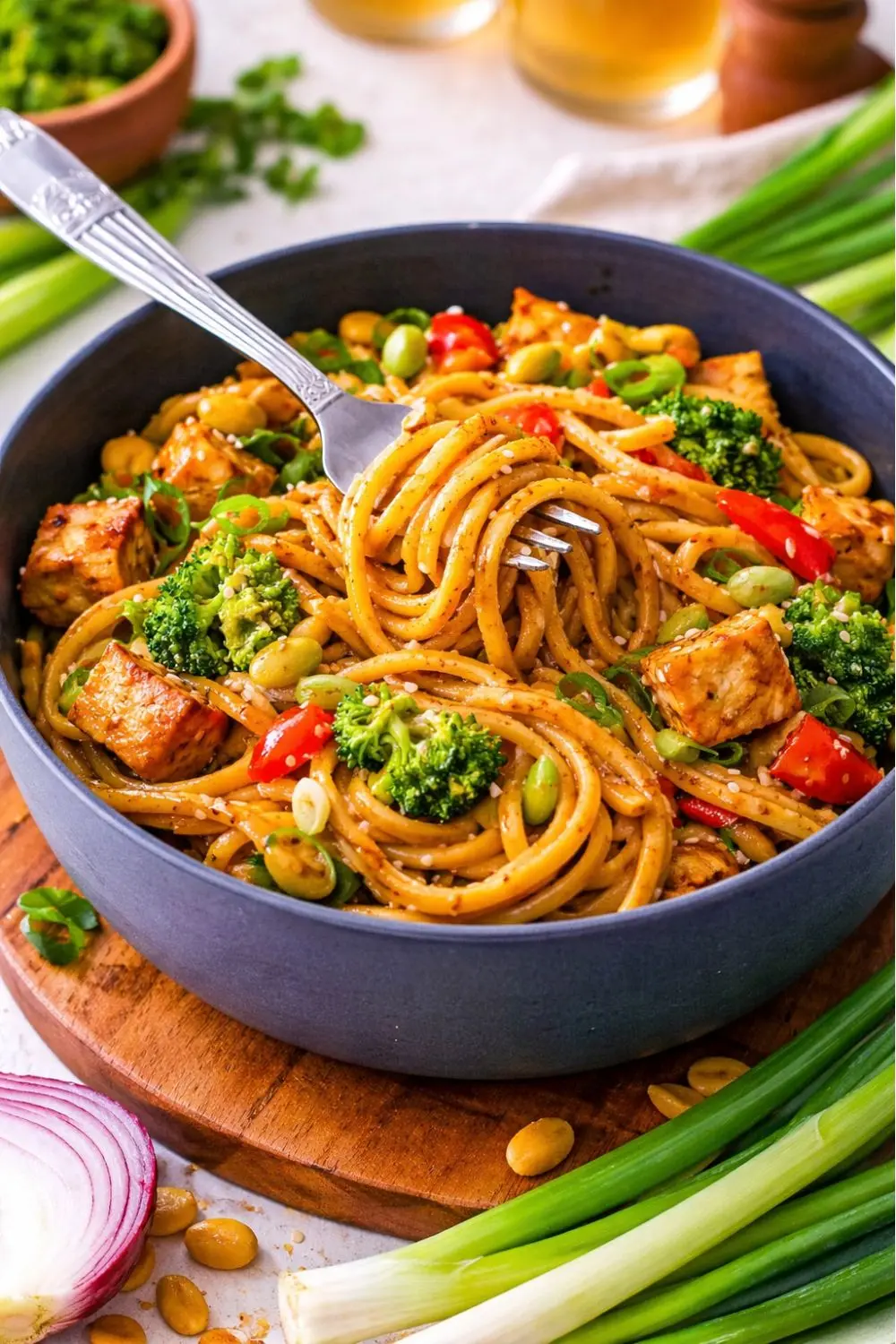
Summer Vegan Slow Cooker Peanut Noodles
Ingredients
Equipment
Method
- Load the slow cooker. Add all ingredients from the mushrooms through the ground ginger into the slow cooker. Give everything a good stir to combine.
- Cook. Cover and cook on high for 4 hours or low for 8 hours.
- Add bok choy and noodles. In the final 3–5 minutes of cook time, add the bok choy and noodles directly to the slow cooker. Cook on low until the noodles are just cooked through.
- Taste and adjust. Stir everything together and taste the broth. Add more soy sauce for saltiness, a splash more rice vinegar for brightness, or extra ginger for warmth.
- Serve immediately. Ladle into deep bowls and top with sliced green onion, sesame seeds, and chili oil.
- The Broth The Most Important Decision You’ll Make
- Let’s talk about broth for a moment, because this is where a lot of vegan noodle soups fall flat and this one doesn’t.
- Use Vegan Chicken-Style Broth If You Can Find It
- Standard vegetable broth is fine, but it often tastes thin and slightly sweet in a way that doesn’t hold up to four hours of slow cooking. Vegan chicken-style broth has significantly more depth and a savory, rounded flavor that makes the finished soup taste genuinely rich and complex. If you can find it at your local store or online, use it. The difference is noticeable.
- Working With Regular Vegetable Broth
- If vegan chicken broth isn’t available, regular vegetable broth works you just need to compensate for its milder flavor:
- Add an extra tablespoon of soy sauce to deepen the saltiness and umami.
- Stir in a tablespoon of white or yellow miso paste near the end of cooking for extra depth.
- Use 6 cups of broth and 2 cups of water if you’re sensitive to salt this balances the sodium without sacrificing too much flavor.
- FYI, the mushrooms do a lot of the heavy lifting here regardless of which broth you use. Four hours of slow cooking with shiitake and hon-shimeji mushrooms will enrich almost any liquid.
- The Noodle Situation This Matters More Than You Think
- Ever added noodles to a slow cooker too early and ended up with a bowl of paste? Yeah, we’re not doing that. Noodles go in during the last 3–5 minutes only, and even then you need to think about whether you’re eating all four servings at once or saving some for later.
- If You’re Eating Everything Right Now
- Add the noodles directly to the slow cooker in the last few minutes and let them cook in the broth. Chuka soba noodles (Japanese soba-style noodles) work brilliantly here they cook quickly, have a satisfying chew, and absorb the broth beautifully without falling apart.
- If You’re Meal Prepping or Saving Leftovers
- Cook the noodles separately in a pot of boiling water and add them directly to individual bowls at serving time. This is the move for meal prep. Noodles left sitting in hot broth even in the fridge continue absorbing liquid and turn soft and gummy. Keeping them separate means your leftover portions taste just as good on day three as they did on day one.
- Which Noodles Work Best
- Chuka soba – the top recommendation; quick-cooking and ideal texture
- Rice noodles – great gluten-free option, cook even faster
- Udon – thicker, chewier, and holds up well to the bold broth
- Instant ramen noodles – grab a pack, ditch the seasoning packet, and use just the noodles. Works perfectly and nobody needs to know.
- Soba noodles – hearty and slightly nutty; rinse well after cooking to prevent sticking
Notes
Nutrition Per Serving
One of four servings delivers:- Calories: 525 kcal
- Protein: 42g
- Carbohydrates: 59g
- Fat: 17g

Hi — I’m Rachel. I’m a wife, a mom, and a home cook who believes that food should bring comfort, joy, and compassion to the table. I live with my family — two hungry little foodies who are my most honest recipe testers — and together we’ve built a kitchen culture that’s all about good food that happens to be 100% vegan. I started this blog because I wanted a place to share the recipes that keep our days moving, the dishes that make weeknights feel a little easier, and the meals that become our little family traditions.