
Korma is Indian cooking’s answer to the question “what if comfort food were also genuinely elegant?” It’s mild, warmly spiced, creamy, and deeply satisfying without any of the sharp heat that makes other curries intimidating. Easy Slow Cooker Vegan Korma with Vegetables takes that beautiful flavor profile and builds it into one of the most hands-off slow cooker recipes in this entire summer series five minutes of prep, six hours of completely unsupervised cooking, and you come back to a creamy, fragrant vegetable korma that tastes like something from a good Indian restaurant. The slow cooker does everything. You do almost nothing.
I started making this when I wanted Indian food on a weeknight without the 45-minute stovetop commitment that most curry recipes require. Five minutes of chopping and measuring, one slow cooker, and six hours later korma. The effortlessness of it still surprises me every time, which is a genuinely nice feeling to have about dinner.
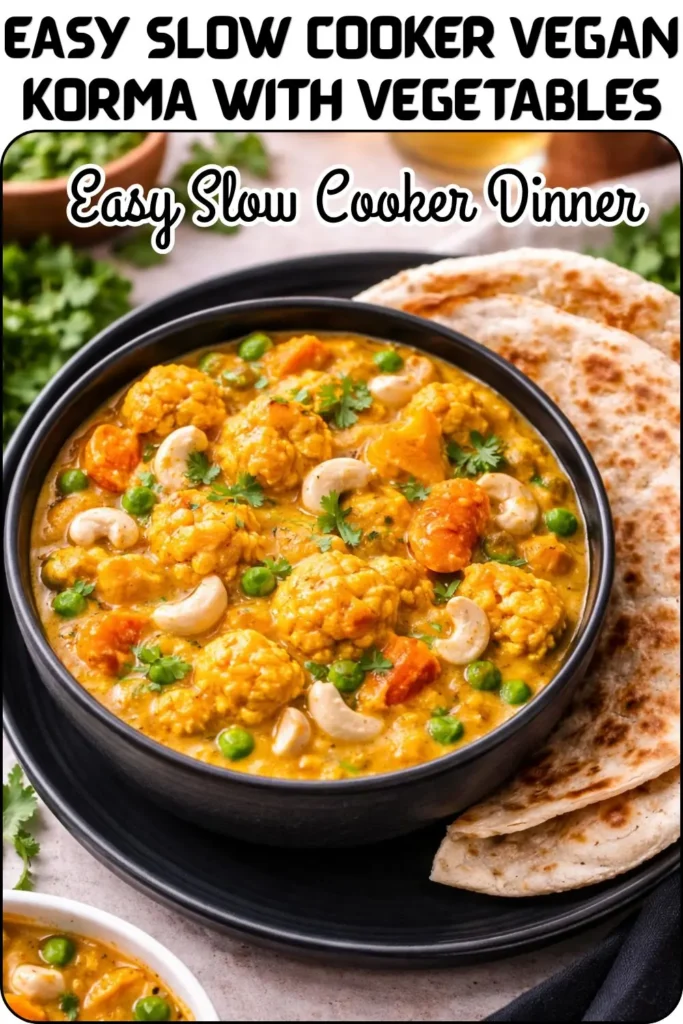
MY Recipe Timing and Serving Details
Here’s your complete planning overview:
| Detail | Info |
| Prep Time | 5 minutes |
| Cook Time (Slow Cooker LOW) | 6 hours |
| Instant Pot Cook Time | 10 minutes (high pressure) |
| Total Time | 6 hours 5 minutes |
| Servings | 4 servings |
| Serving Size | 1 of 4 portions |
| Calories Per Serving | 364 kcal |
| Course | Main Course |
| Cuisine | American inspired |
| Diet | 100% Vegan |
This recipe serves 4 people as a generous main course. At 364 calories per serving with 8 grams of plant-based protein, 9 grams of fiber, and an extraordinary 114mg of Vitamin C, it delivers impressive nutrition alongside genuinely luxurious flavor. The Instant Pot option cuts the cook time to approximately 15 minutes total an excellent weeknight alternative when you haven’t planned ahead.
What Makes Korma Different from Other Curries
If you’ve avoided Indian curries because you find heat overwhelming, korma is specifically the curry designed for you and this is not a compromise statement. Korma is authentically mild by design, and its flavor comes from an entirely different place than heat-forward curries.
Traditional korma builds its character from nuts or cream, aromatic spices like cardamom and coriander, and a slow cooking process that allows those flavors to meld into a rich, gentle sauce. The heat is minimal but the flavor is deep, complex, and warming in a completely different way from chili-forward curries.
This vegan version uses full-fat coconut milk as the korma base it delivers the same richness and creaminess that dairy cream would provide, with a subtle tropical sweetness that works beautifully alongside the curry paste and warming spices. The result is a sauce that’s indulgent-tasting while being completely plant-based. FYI full-fat coconut milk is specifically the right choice here. Light coconut milk produces a thinner, less satisfying sauce that loses the korma’s characteristic luxurious quality. Don’t compromise on this one.
Ingredients You’ll Need For
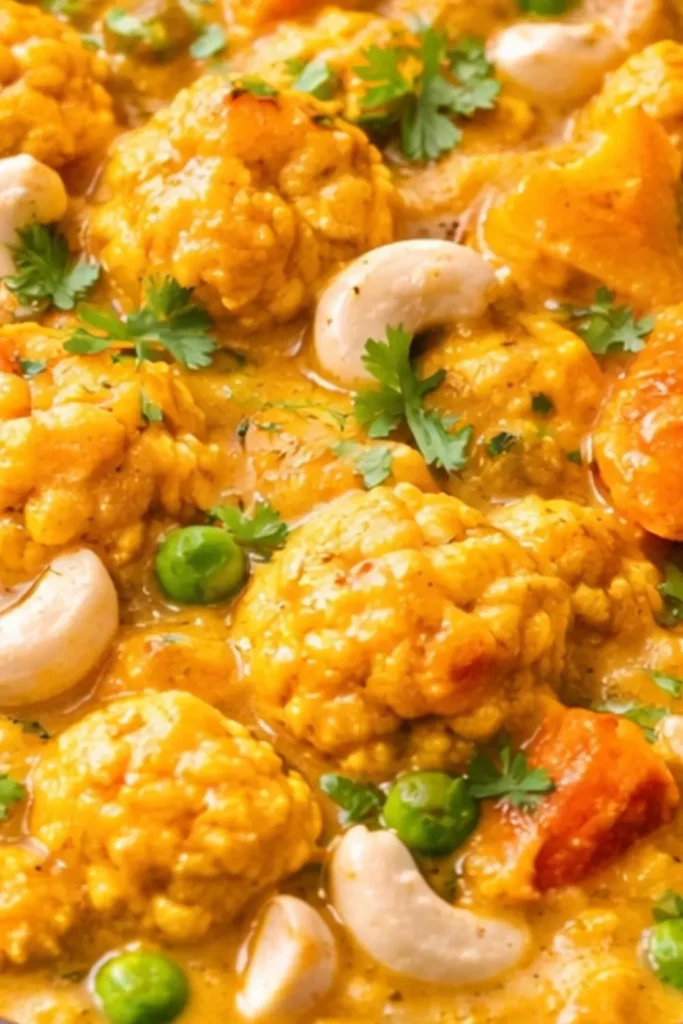
Remarkably short for a curry this flavorful:
The Sauce Base:
- 1 can (13.5 oz) full-fat coconut milk
- 3 tablespoons curry paste , mild korma paste specifically, or mild yellow curry paste
The Aromatics:
- 1 tablespoon fresh ginger, chopped
- 1 chili, deseeded adds gentle warmth without significant heat
- 3 cloves garlic, minced
The Vegetables:
- ½ small cauliflower, chopped into florets
- 1 large bell pepper, sliced
- 2 small potatoes, chopped
- 2 cups frozen peas , added at the very end
The Finish:
- 1 tablespoon fresh coriander (cilantro), chopped
That’s the complete ingredient list. Nine items total, and five of them are whole vegetables. The curry paste carries significant flavor complexity it contains ground spices, aromatics, and seasonings that would normally require a lengthy preparation step in traditional curry making. Using a quality paste concentrates that work into a single ingredient addition.
The deseeded chili is worth noting removing the seeds removes the majority of the heat while preserving the chili’s fruity, slightly bright flavor contribution. This keeps the korma genuinely mild and accessible. If you enjoy a little more warmth, leave a few seeds in. If you want completely no heat, skip the chili entirely and increase the curry paste slightly.
Choosing the Right Curry Paste
The curry paste carries enormous responsibility in this recipe since it’s the primary source of spice complexity. Choosing the right one makes a significant difference:
Korma Paste (Best Option)
Patak’s Korma Paste is the most widely available option and specifically designed for this style of curry. It contains almonds, coconut, and a mild spice blend that produces authentic korma flavor. Available in most supermarkets. IMO, this is the paste to use when you want the most traditional korma result.
Maya Kaimal Tikka Masala – slightly bolder but mild and creamy. Works well as an alternative if korma paste isn’t available.
Mild Yellow Curry Paste (Good Alternative)
Thai Kitchen Yellow Curry Paste is mild, widely available, and produces a slightly more Thai-influenced korma that’s still excellent. The flavor differs from traditional Indian korma but works beautifully with the coconut milk base.
Maesri Yellow Curry Paste – more authentic, more complex, still mild. Available in Asian grocery stores.
What to Avoid
Red or green Thai curry paste – too heat-forward and the wrong flavor profile for korma. These produce excellent curries but not korma.
Pre-made curry powder (not paste) – the texture and fat content of paste helps the sauce develop differently than powder. If you only have curry powder, bloom it in a small amount of oil first before adding to the slow cooker.
Equipment You’ll Need
Slow Cooker Method
- Large slow cooker (4–6 quart) – the essential equipment. This recipe’s volume a full can of coconut milk plus all the vegetables fits comfortably in a 4-quart slow cooker. A 6-quart gives you more room to stir and slightly better cooking conditions for the vegetables.
LOW setting for 6 hours is specifically recommended over HIGH for korma. The gentler heat prevents the coconut milk from separating a problem that can occur when coconut milk cooks at temperatures too high for too long. LOW keeps everything creamy and smooth throughout the full cook.
Instant Pot Method (Fast Alternative)
- 6-quart Instant Pot – for the high-pressure 10-minute method that produces excellent results in a fraction of the time. Add all ingredients (including peas and coriander from the start in this method), seal the lid, cook on high pressure for 10 minutes, quick release, and serve.
Supporting Equipment
- Sharp knife and cutting board – for chopping the cauliflower, slicing the bell pepper, chopping the potatoes, and mincing the garlic and ginger. The 5-minute prep time is genuinely achievable here the vegetable list is short and none of the prep requires precision cutting.
- Measuring spoons – for the curry paste and ginger
- Can opener – for the coconut milk
- Wooden spoon or silicone spatula – for the initial stir and for adding the peas and coriander at the end
- Ladle – for serving
Step-by-Step Instructions

Step 1 – Load the Slow Cooker
Add the full-fat coconut milk, curry paste, chopped ginger, deseeded chili, and minced garlic to the slow cooker. Stir these together first to dissolve the curry paste evenly into the coconut milk undissolved paste can create concentrated spice pockets in the finished korma.
Add the chopped cauliflower florets, sliced bell pepper, and chopped potatoes. Stir everything together thoroughly until all the vegetables are coated in the coconut curry sauce.
That’s the entire active prep stage. Five minutes, one pot, everything combined. The slow cooker takes it from here.
Step 2 – Cook on Low for Six Hours
Cover the slow cooker and cook on LOW for 6 hours until all the vegetables are completely tender. The cauliflower should be soft throughout, the potatoes should pierce easily with a fork, and the bell pepper should have softened into the sauce.
During the long cook, the curry paste and coconut milk merge completely the separate elements transform into a unified, deeply fragrant sauce. The vegetables release their natural juices into the surrounding coconut sauce, which concentrates and intensifies the korma’s flavor gradually over the six hours.
Resist opening the lid unnecessarily. Each lid lift drops the internal temperature by 15–20°F and adds approximately 20 minutes to the effective cook time. Set it and genuinely leave it.
You may also like Next recipe
Healthy Slow Cooker Vegan Minestrone Soup
Step 3 – Add Peas and Coriander for the Final 5 Minutes
When the 6 hours end, remove the lid and stir in the 2 cups of frozen peas and 1 tablespoon of fresh coriander. Replace the lid and allow to cook for an additional 5 minutes the residual heat thaws and heats the peas through while the coriander wilts slightly into the sauce.
The peas go in at the end rather than the start because 6 hours of slow cooking would turn them gray, mushy, and nutritionally depleted. Added at the end, they stay bright green, slightly sweet, and texturally distinct a beautiful contrast to the soft, slow-cooked main vegetables.
Step 4 – Serve Immediately
Give the korma a final stir to redistribute the sauce evenly. Serve immediately over steamed basmati rice, alongside vegan naan, or over cauliflower rice for a lower-carb option.
Vegetable Variation What Works Best in Korma
The recipe invites experimentation with different vegetables, and specifically calls out root vegetables as the best options. Here’s the guidance:
The Best Vegetables for Slow Cooker Korma
Root vegetables and firm vegetables hold up best through the 6-hour low cook without disintegrating:
- Sweet potato – natural sweetness pairs beautifully with the coconut milk and mild curry flavors. Cut into ½-inch cubes to ensure they cook through completely.
- Butternut squash – similar sweetness and texture to sweet potato, becomes silky and absorbs the coconut sauce beautifully
- Rutabaga or swede– earthy, slightly sweet, holds its shape well through long cooking
- Parsnips – mild, slightly sweet, cooks to a beautiful tenderness
- Carrots – become sweet and soft, excellent in korma
Vegetables to Add Later
- Spinach or kale – add during the final 30 minutes with the peas
- Broccoli – add during the final 45 minutes to prevent complete disintegration
- Zucchini – add during the final hour
Protein Additions
- Chickpeas – a can of drained chickpeas added at the start significantly boosts protein and creates a more substantial korma
- Cubed firm tofu – add with the main vegetables for additional plant-based protein
- Red lentils – ¼ cup added at the start thickens the korma and adds both protein and fiber
How to Thicken the Korma
Sometimes slow cooker kormas come out slightly thinner than expected this depends on the moisture content of your vegetables and the specific coconut milk used. Here’s how to fix it:
Method 1 -Cornstarch slurry: Mix 1 teaspoon of cornstarch with 1 tablespoon of cold water until smooth. Stir this into the korma during the final 15 minutes of cooking (before adding the peas). The cornstarch activates at low simmering heat and thickens the sauce noticeably.
Method 2 – Simmer uncovered: Remove the lid during the final 30 minutes of cooking. The open slow cooker allows steam to escape and the sauce reduces and concentrates.
Method 3- Add more curry paste: 1 additional tablespoon of curry paste stirred in during the final 30 minutes adds body and concentrates the sauce’s thickness.
Method 4 – Blend a portion: Use an immersion blender to blend approximately ¼ of the korma directly in the slow cooker. The blended vegetable starch thickens the surrounding sauce naturally.
What to Serve Alongside
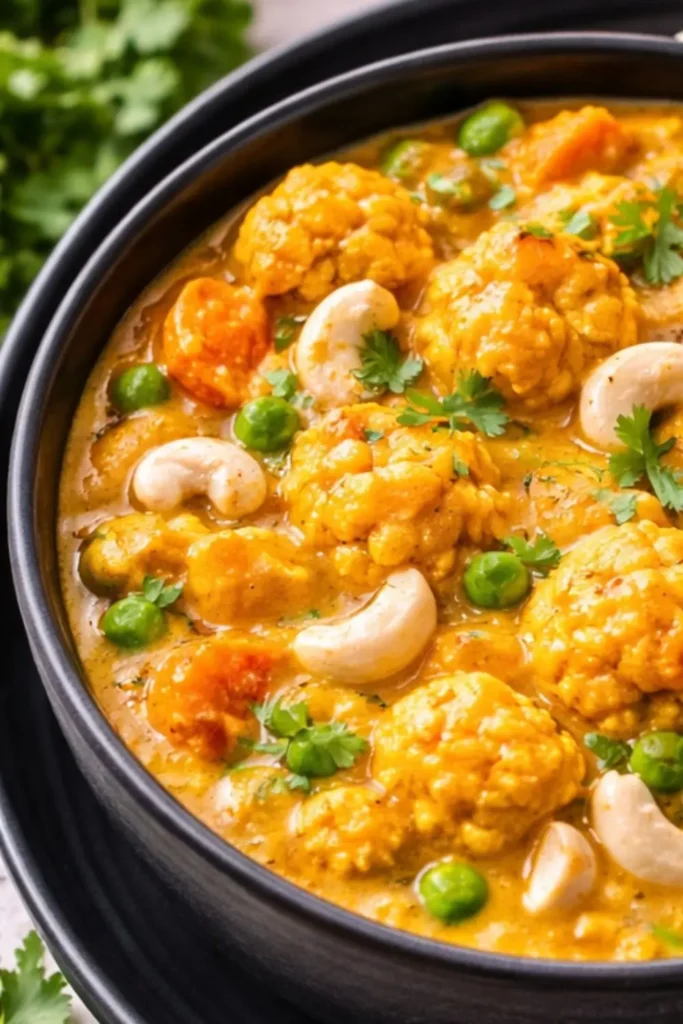
Easy Slow Cooker Vegan Korma with Vegetables is a complete main course that pairs beautifully with several accompaniments:
- Basmati rice – the classic and best pairing. Fragrant, long-grain basmati absorbs the coconut korma sauce perfectly.
- Vegan naan – for scooping the korma directly. Genuinely the most satisfying eating experience.
- Cauliflower rice – for a lower-carbohydrate option that keeps the meal very light
- Quinoa – higher protein base that complements the korma’s mild flavors without competing
- Flatbread – warmed pita or any flatbread for scooping
- Simple cucumber raita – make a vegan version with coconut yogurt, grated cucumber, and fresh mint. The cool, slightly tangy raita against the warm, creamy korma is genuinely outstanding.
Nutrition Information Per Serving
At 364 calories per serving, this korma delivers impressive nutritional value:
| Nutrient | Per Serving |
| Calories | 364 kcal |
| Carbohydrates | 35g |
| Protein | 8g |
| Fat | 24g |
| Fiber | 9g |
| Sodium | 88mg |
| Potassium | 984mg |
| Vitamin A | 9,819 IU |
| Vitamin C | 114mg |
| Iron | 4mg |
The 114mg of Vitamin C per serving approximately 127% of the daily recommended intake — comes from the combination of bell pepper, cauliflower, and peas working together. The 9,819 IU of Vitamin A reflects the bell pepper and peas contributing significantly. The fat content reflects the full-fat coconut milk plant-based fat that’s primarily medium-chain triglycerides, metabolized differently from animal saturated fat. The remarkably low sodium at 88mg makes this one of the lowest-sodium curries possible.
Storage and Reheating
Easy Slow Cooker Vegan Korma with Vegetables stores and reheats beautifully:
- Refrigerator: Refrigerate as soon as the korma cools. Store in an airtight container for 3–4 days. The flavors deepen overnight the korma genuinely tastes better on day two.
- Reheating: Warm gently on the stovetop over medium-low heat, stirring occasionally. Coconut milk-based sauces can separate at high heat keep the temperature low and stir continuously. Microwave at 70% power in 90-second intervals, stirring between each.
- Freezer: Freeze in individual portions for up to 2 months. Thaw overnight in the refrigerator. The coconut milk may separate slightly after freezing stir vigorously while reheating to recombine.
My Final Thoughts Set the Slow Cooker and Let Korma Come to You
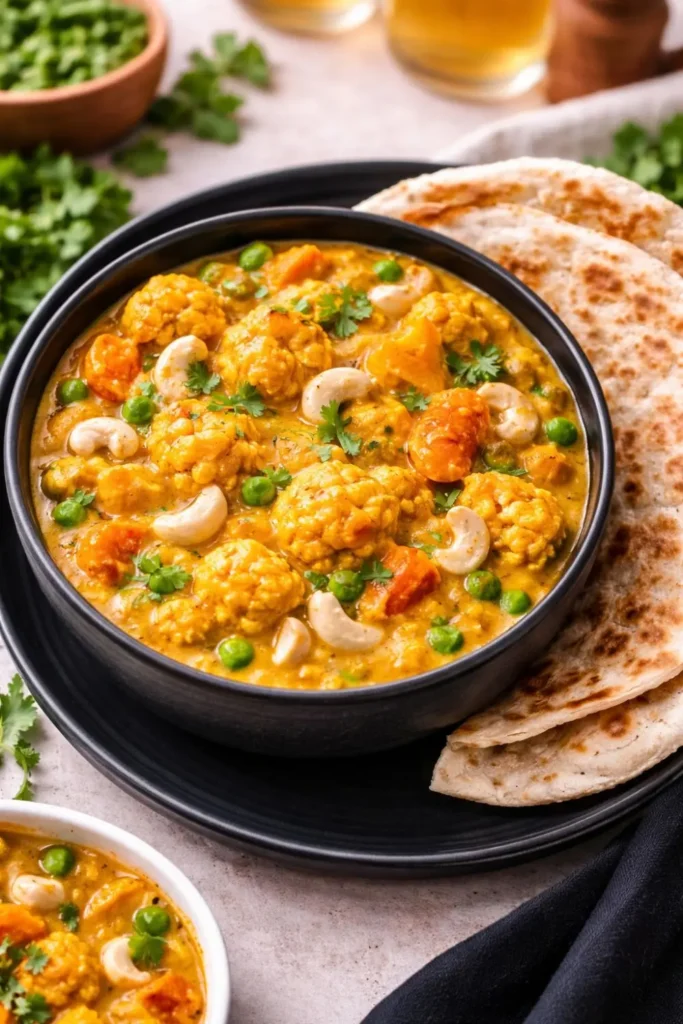
Easy Slow Cooker Vegan Korma with Vegetables is proof that genuinely impressive, restaurant-quality Indian cooking doesn’t require specialized skills, elaborate technique, or an hour of active stovetop time. Five minutes of prep, six hours of completely hands-off slow cooking, and you come back to a creamy, fragrant, deeply satisfying korma at 364 calories per bowl with Vitamin C through the roof and sodium that won’t make anyone nervous.
The slow cooker handles the patience that good curry requires. You handle the five minutes of chopping.
Make it this morning. Come back this evening. Let korma win the dinner conversation tonight it usually does.
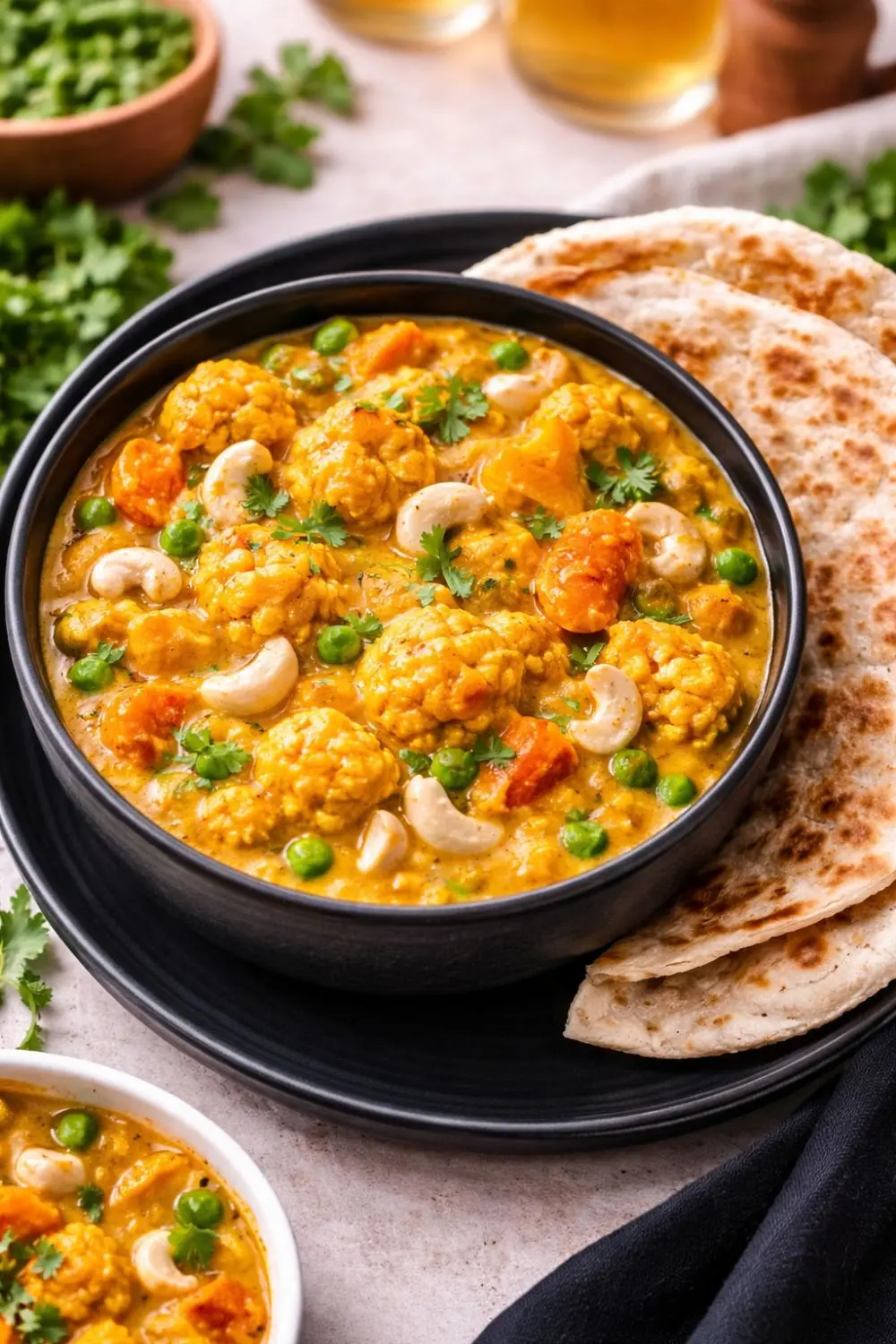
Easy Slow Cooker Vegan Korma with Vegetables
Ingredients
Equipment
Method
- Step 1 – Load the Slow Cooker
- Add the full-fat coconut milk, curry paste, chopped ginger, deseeded chili, and minced garlic to the slow cooker. Stir these together first to dissolve the curry paste evenly into the coconut milk undissolved paste can create concentrated spice pockets in the finished korma.
- Add the chopped cauliflower florets, sliced bell pepper, and chopped potatoes. Stir everything together thoroughly until all the vegetables are coated in the coconut curry sauce.
- That’s the entire active prep stage. Five minutes, one pot, everything combined. The slow cooker takes it from here.
- Step 2 – Cook on Low for Six Hours
- Cover the slow cooker and cook on LOW for 6 hours until all the vegetables are completely tender. The cauliflower should be soft throughout, the potatoes should pierce easily with a fork, and the bell pepper should have softened into the sauce.
- During the long cook, the curry paste and coconut milk merge completely the separate elements transform into a unified, deeply fragrant sauce. The vegetables release their natural juices into the surrounding coconut sauce, which concentrates and intensifies the korma’s flavor gradually over the six hours.
- Resist opening the lid unnecessarily. Each lid lift drops the internal temperature by 15–20°F and adds approximately 20 minutes to the effective cook time. Set it and genuinely leave it.
- Step 3 – Add Peas and Coriander for the Final 5 Minutes
- When the 6 hours end, remove the lid and stir in the 2 cups of frozen peas and 1 tablespoon of fresh coriander. Replace the lid and allow to cook for an additional 5 minutes the residual heat thaws and heats the peas through while the coriander wilts slightly into the sauce.
- The peas go in at the end rather than the start because 6 hours of slow cooking would turn them gray, mushy, and nutritionally depleted. Added at the end, they stay bright green, slightly sweet, and texturally distinct a beautiful contrast to the soft, slow-cooked main vegetables.
- Step 4 – Serve Immediately
- Give the korma a final stir to redistribute the sauce evenly. Serve immediately over steamed basmati rice, alongside vegan naan, or over cauliflower rice for a lower-carb option.
Notes
Nutrition Information Per Serving
At 364 calories per serving, this korma delivers impressive nutritional value:| Nutrient | Per Serving |
| Calories | 364 kcal |
| Carbohydrates | 35g |
| Protein | 8g |
| Fat | 24g |
| Fiber | 9g |
| Sodium | 88mg |
| Potassium | 984mg |
| Vitamin A | 9,819 IU |
| Vitamin C | 114mg |
| Iron | 4mg |

Hi — I’m Rachel. I’m a wife, a mom, and a home cook who believes that food should bring comfort, joy, and compassion to the table. I live with my family — two hungry little foodies who are my most honest recipe testers — and together we’ve built a kitchen culture that’s all about good food that happens to be 100% vegan. I started this blog because I wanted a place to share the recipes that keep our days moving, the dishes that make weeknights feel a little easier, and the meals that become our little family traditions.