
A lunch that looks as good as it tastes AND holds up perfectly in a container for several hours is genuinely one of the more difficult things to achieve in meal prep. Teriyaki Chickpea & Jasmine Rice Bento Box solves this completely pan-fried chickpeas glazed in a homemade teriyaki sauce made from pantry staples, served over jasmine rice with steamed broccoli, edamame, fresh pineapple, and sesame seeds, all packed into compartmentalized bento boxes that make opening your lunch feel specifically like an event rather than a midday obligation. Two servings, 334 calories each, 20 minutes from start to packed.
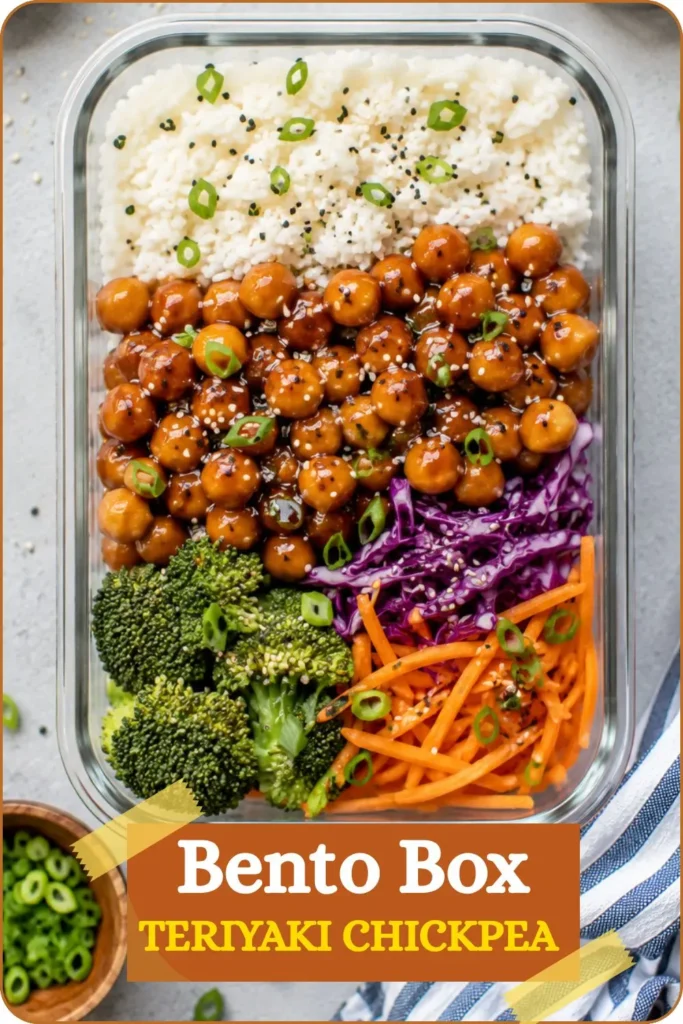
I started making bento box meals specifically when I got tired of lunch being the meal that never got the same attention as breakfast and dinner. The bento format forces you to think about variety, color, and compartmentalization which means you end up with something that’s genuinely beautiful and genuinely satisfying rather than a container of leftovers. The teriyaki chickpeas specifically are the component that makes this bento box meal feel like restaurant-quality food rather than packed lunch.
Your Recipe Timing and Serving Details
| Detail | Info |
| Prep Time | 5 minutes |
| Cook Time | 15 minutes |
| Total Time | 20 minutes |
| Servings | 2 |
| Calories Per Serving | 334 kcal |
| Course | Lunch / Meal Prep |
| Diet | 100% Vegan (GF option available) |
This Teriyaki Chickpea & Jasmine Rice Bento Box serves 2 people as a complete, satisfying lunch. At 334 calories per serving with 14 grams of protein and 10 grams of fiber, this is a nutritionally complete meal that keeps you genuinely satisfied rather than looking for a snack at 2pm.
Why Chickpeas Work Beautifully as Teriyaki Protein
Most people think of teriyaki as exclusively a meat-based sauce, which is a significant underestimation of what teriyaki sauce actually does. Teriyaki sauce doesn’t complement protein — it transforms it. And chickpeas specifically respond to teriyaki treatment in a way that makes them genuinely exceptional.
Their surface area absorbs sauce efficiently. Pan-fried chickpeas develop a slightly rough, golden surface during the initial frying stage. This textured surface absorbs the teriyaki sauce more completely than a smooth protein surface would every crevice picks up sauce and holds it through cooling and packing.
They crisp before saucing. The 5-7 minutes of pan-frying before any sauce is added creates a slightly golden exterior that provides textural contrast slightly crispy outside, soft inside that makes the chickpea experience genuinely interesting rather than uniformly soft.
Their neutral base flavor works with any sauce. Chickpeas taste mildly nutty and slightly earthy — they don’t have the assertive flavor of tofu or tempeh that can clash with strong sauces. Teriyaki’s sweet-savory-umami character takes over completely, and the chickpeas become the vehicle for that flavor rather than competing with it.
They hold up perfectly in a lunch box. Unlike delicate tofu that can crumble during transport, chickpeas maintain their structure completely. They also reheat well or taste excellent at room temperature both critical bento box qualities.
The Homemade Teriyaki Sauce Why Pantry-Made Beats Store-Bought
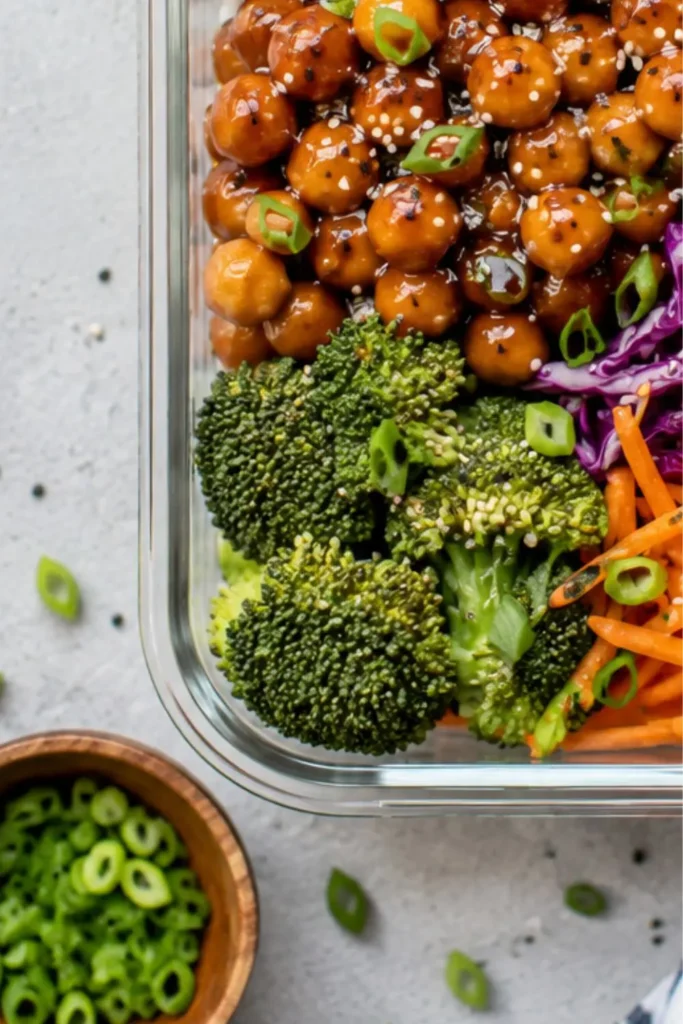
The recipe’s teriyaki sauce uses only pantry ingredients, and IMO it produces a result that clearly outperforms any bottled teriyaki sauce I’ve used. Here’s what each component contributes:
Low-sodium soy sauce or tamari (¼ cup) – the salt and umami foundation. Low-sodium is specifically recommended because the sauce reduces during cooking, concentrating the salt. Full-sodium soy sauce in this recipe produces a noticeably too-salty final result. Tamari is the gluten-free substitute that works identically in flavor.
Brown sugar or maple syrup (¼ cup) – the sweetness component. Brown sugar produces a more molasses-rich, slightly caramel-adjacent sweetness. Maple syrup produces a cleaner, more naturally sweet result. Either works well choose based on preference and what you have.
Seasoned rice vinegar (1 tablespoon) – the acid that brightens and prevents the sauce from tasting flat or one-dimensional. Seasoned rice vinegar already contains salt and sugar, making it slightly more complex than plain rice vinegar.
Fresh ginger (2 teaspoons grated) – the aromatic warmth that makes teriyaki taste specifically like teriyaki. Fresh or frozen grated ginger both work frozen grated ginger (available in many Asian grocery stores in convenient cube portions) is a useful pantry staple.
Garlic (3 cloves minced) – the savory depth alongside the ginger.
Cornstarch slurry (2 teaspoons cornstarch + 1 tablespoon water) – the thickener that transforms the cooking liquid into a glossy, coating sauce rather than a thin marinade.
FYI mix the cornstarch and water together in a small separate container before it goes in the pan. Adding raw cornstarch directly to a hot liquid creates lumps that don’t fully dissolve. The pre-mixed slurry disperses instantly and thickens uniformly.
Full Ingredient List
Teriyaki Sauce:
- ¼ cup low-sodium soy sauce or tamari (GF)
- ¼ cup water
- ¼ cup packed brown sugar or maple syrup
- 1 tablespoon seasoned rice vinegar
- 2 teaspoons grated ginger (fresh or frozen)
- 3 cloves garlic, minced
- 2 teaspoons cornstarch + 1 tablespoon water (slurry)
Pan-Fried Chickpeas:
- 1 tablespoon vegetable oil (omit for oil-free)
- 15 oz can chickpeas, drained and rinsed
- 1 teaspoon onion powder
- 1 teaspoon garlic powder
- ¼ teaspoon salt
Bento Box Components (customize as desired):
- 1-2 cups jasmine rice, cooked
- 2 cups steamed broccoli (or other vegetables)
- ½ cup cooked shelled edamame
- 1 cup chopped pineapple or mango
- Chopped green onions and sesame seeds for garnish
Equipment You’ll Need For Teriyaki Chickpea & Jasmine Rice Bento Box
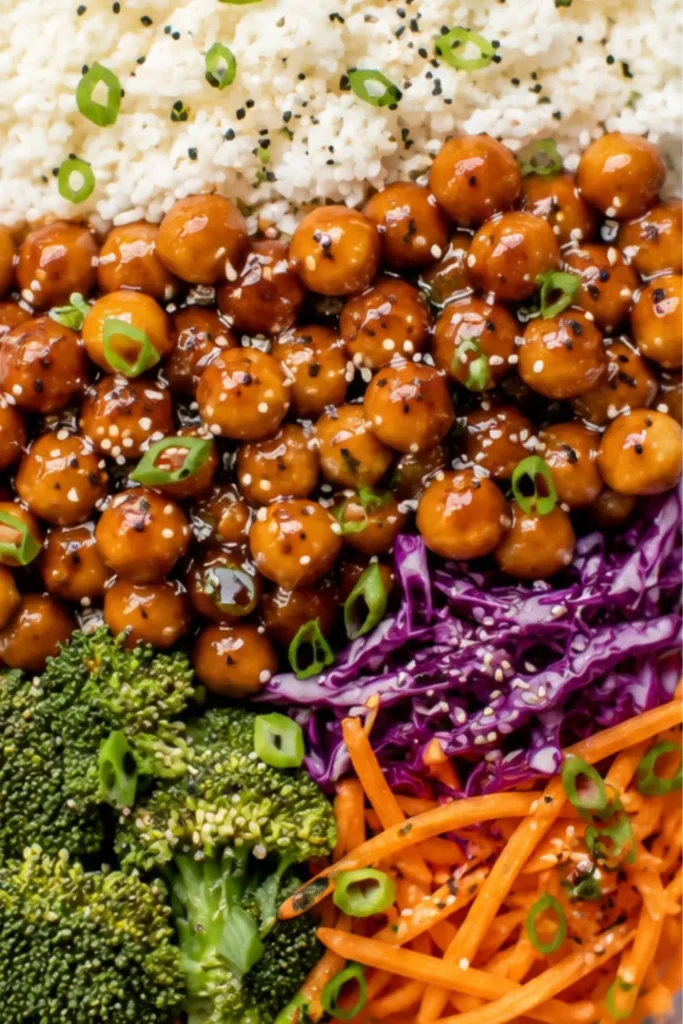
For Cooking
Large sauté pan or skillet – the primary cooking vessel. Large enough to spread the chickpeas in a single layer with space between each one. A 10-12 inch pan handles one can of chickpeas comfortably. Crowded chickpeas steam rather than crisp this is the most common reason pan-fried chickpeas disappoint.
Medium bowl – for mixing and holding the teriyaki sauce while the chickpeas cook
Small bowl – for the cornstarch slurry
Steamer basket or microwave-safe bowl – for steaming broccoli
Rice cooker or saucepan – for the jasmine rice
For Bento Assembly
2 bento box containers with compartments – the compartmentalization is specifically what makes these bento boxes rather than just lunch containers. Multiple compartments prevent the teriyaki sauce from spreading into the rice and vegetables during transport.
Popular bento box options:
- Monbento Original – two-tier, generous capacity, excellent sealing
- Sistema Bento Cube – affordable, widely available, multiple compartments
- Bentgo Classic – specifically designed for multiple components, leak-resistant dividers
- Any divided meal prep container – if you don’t own a dedicated bento box, any container with internal dividers works
The compartment strategy for this specific recipe:
- Compartment 1- Teriyaki chickpeas over jasmine rice
- Compartment 2- Steamed broccoli and edamame
- Compartment 3- Pineapple or mango chunks
- Small sauce container: Extra teriyaki sauce for drizzling
Step-by-Step Instructions For Teriyaki Chickpea & Jasmine Rice Bento Box
Stage 1 – Start the Rice First
Jasmine rice takes 15-18 minutes to cook start it before anything else so it’s ready when the chickpeas are done.
For jasmine rice- Combine 1 cup jasmine rice with 1½ cups water in a saucepan. Bring to a boil, cover, reduce heat to very low, and cook for 15 minutes without lifting the lid. Remove from heat and allow to steam with the lid on for 5 more minutes, then fluff with a fork.
Why jasmine rice specifically- Jasmine rice’s slightly aromatic, slightly sticky quality makes it the perfect base for teriyaki dishes it absorbs sauce that drips from the chickpeas and holds its shape better in a lunch container than looser-grained rice varieties.
Stage 2 – Make the Teriyaki Sauce
Combine the soy sauce, water, brown sugar, seasoned rice vinegar, grated ginger, and minced garlic in a medium bowl. Stir until the sugar dissolves. Set aside you’ll pour this into the pan after the chickpeas have crisped.
The separate mixing step matters- Adding the sauce components to a separate bowl and stirring them before they touch heat ensures the sugar fully dissolves before cooking, which produces a more uniformly flavored sauce rather than pockets of concentrated sweetness.
Stage 3 – Pan-Fry the Chickpeas
Heat 1 tablespoon of vegetable oil in a large sauté pan over medium-high heat. While the oil heats, drain and rinse the chickpeas thoroughly, then pat them as dry as possible with a clean kitchen towel. Dry chickpeas crisp significantly better than wet ones surface moisture creates steam that prevents browning.
Add the chickpeas to the hot pan. Sprinkle the onion powder, garlic powder, and salt over the top, then stir to distribute the seasoning.
Cook for 5-7 minutes, stirring occasionally, until the chickpeas are lightly golden brown and have developed some crispness. Don’t stir constantly allowing the chickpeas to sit undisturbed for 1-2 minutes between stirs creates better browning contact with the pan.
Oil-free option: Skip the oil and use a non-stick pan. The chickpeas won’t get quite as golden but will still crisp adequately through the dry heat.
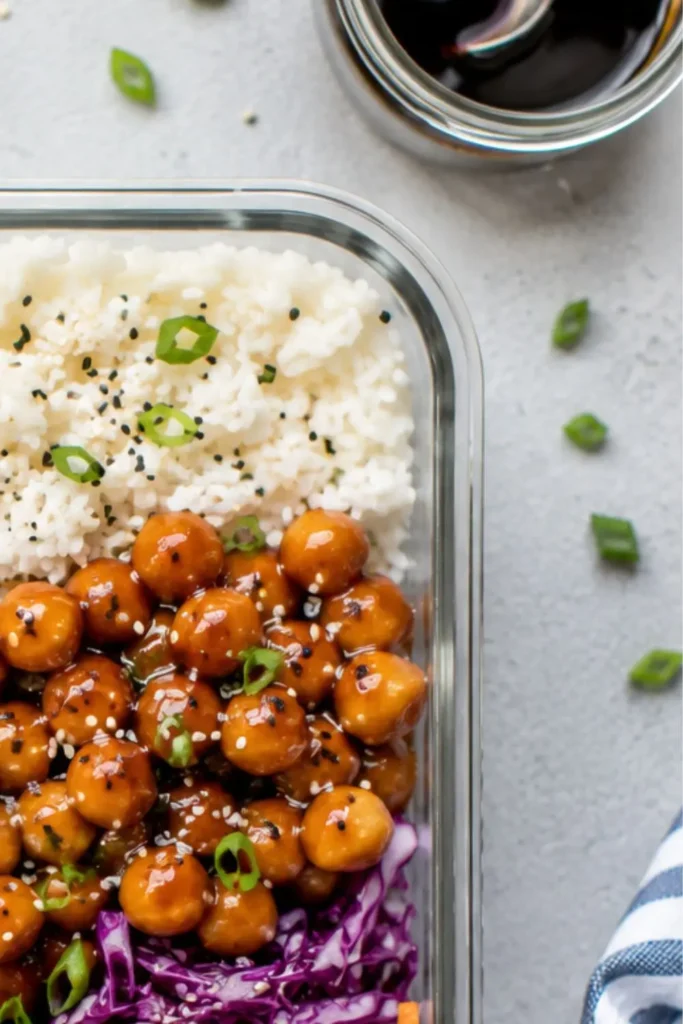
Stage 4 – Add the Teriyaki Sauce and Thicken
Give the teriyaki sauce mixture one final stir to re-incorporate any settled sugar, then pour it into the pan with the chickpeas. The sauce should immediately begin bubbling from the pan’s heat.
Bring to a simmer and cook for 1-2 minutes, stirring occasionally.
In a small bowl, combine the cornstarch and water into a smooth slurry. Pour into the pan while stirring constantly. The sauce thickens noticeably within 30-60 seconds stir continuously during this stage to prevent any cornstarch from clumping on the pan bottom.
The finished sauce should coat the back of a spoon and cling to the chickpeas. If it’s too thick, add a splash of water. If it’s too thin, another small cornstarch slurry (1 teaspoon cornstarch + 1 teaspoon water) added and stirred in will bring it to the right consistency.
Stage 5 – Steam the Broccoli
While the teriyaki sauce thickens, steam the broccoli:
Steamer basket method- Place broccoli in a steamer basket over 1 inch of boiling water, cover, and steam for 3-4 minutes until bright green and tender-crisp.
Microwave method- Place broccoli in a microwave-safe bowl with 2 tablespoons of water, cover with a plate or microwave-safe lid, and microwave on HIGH for 3 minutes.
The tender-crisp target- Broccoli should be bright green and slightly yielding when pressed but still hold its shape not raw and hard, not soft and gray. Bright green indicates properly cooked broccoli; gray-green indicates overcooking.
Stage 6 – Assemble the Bento Boxes
Allow everything to cool slightly before packing hot food packed immediately creates condensation inside the bento box that makes the rice wet and the crispy chickpeas soft.
Cool for 5-10 minutes at room temperature, then pack:
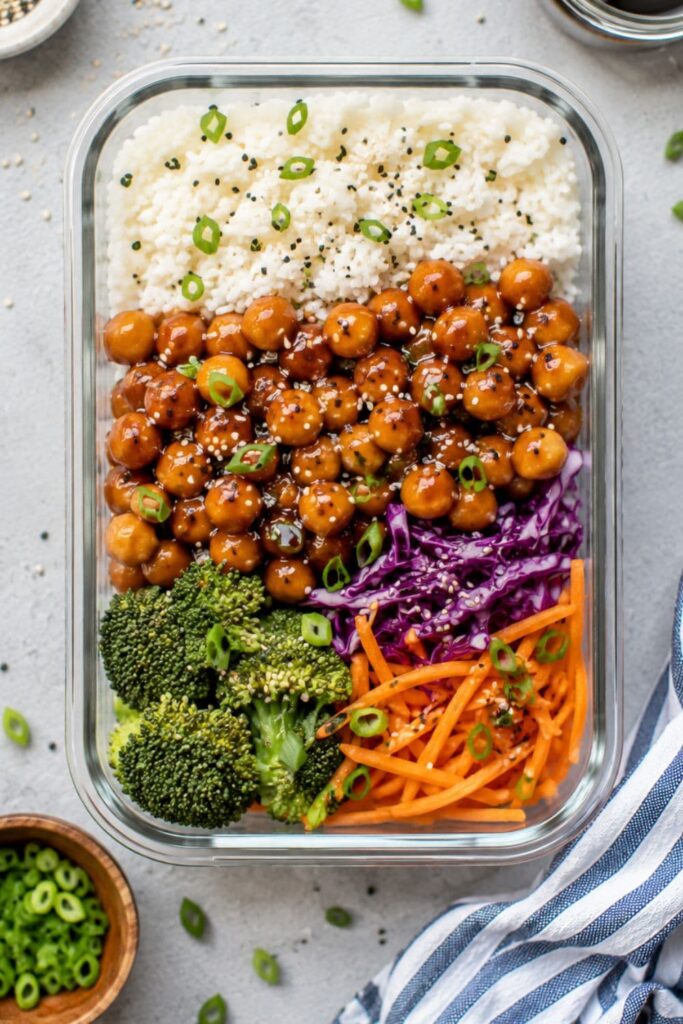
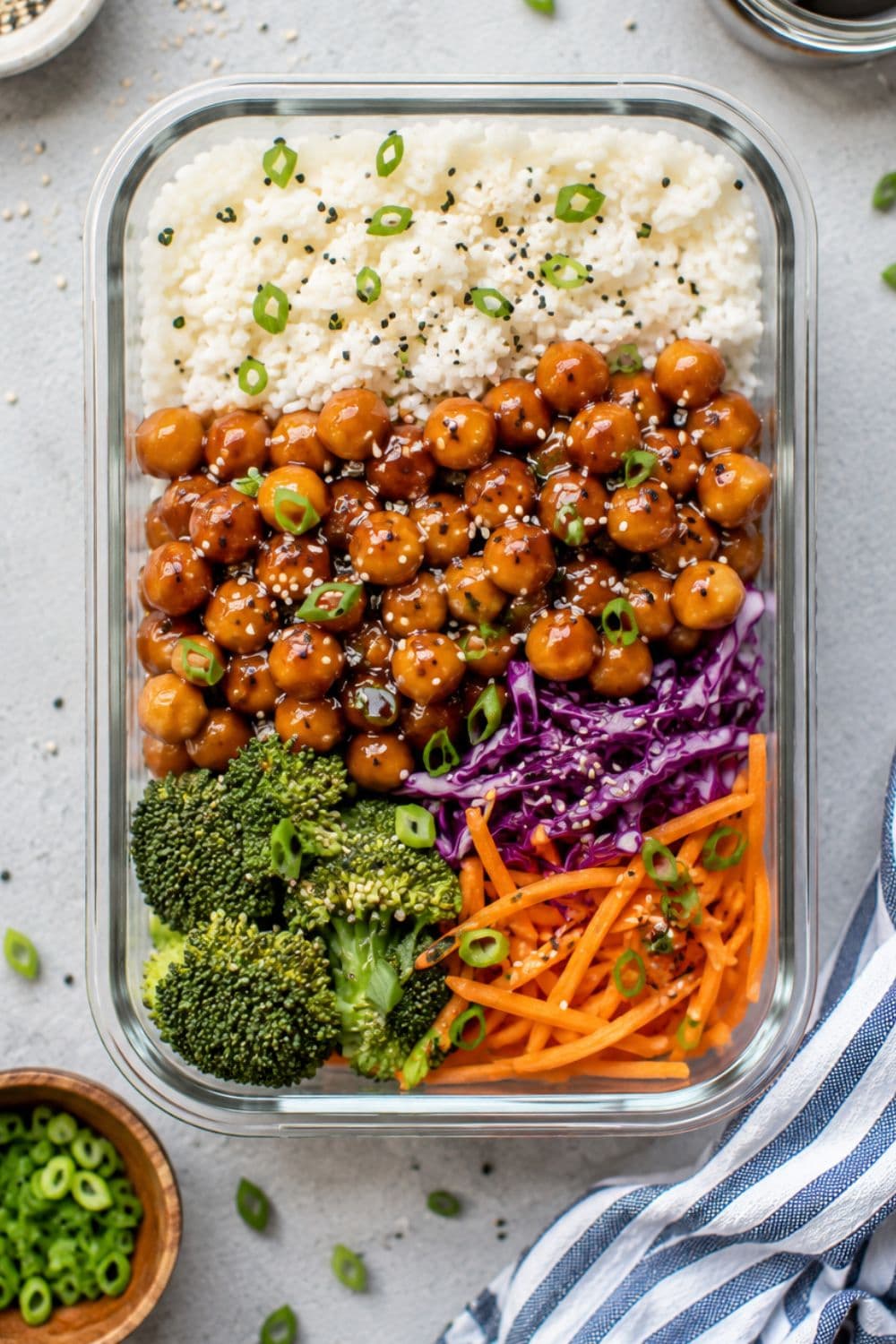
- Rice in the largest compartment, topped with teriyaki chickpeas
- Steamed broccoli and edamame in a separate compartment
- Fresh pineapple or mango in another compartment
- Top the chickpeas with a sprinkle of sesame seeds and sliced green onions
Building the Perfect Bento Box Component Variety Guide
The recipe lists “use what you like” for the bento components, and this flexibility is genuinely the best part. Here’s a framework for building a balanced bento box every time:
The Bento Box Components Formula:
- 1 protein component (teriyaki chickpeas) – provides satiety and flavor intensity
- 1 grain component (jasmine rice) – provides carbohydrate energy and substance
- 1-2 vegetable components (broccoli + edamame) – provides fiber, nutrition, and color
- 1 fruit component (pineapple or mango) – provides natural sweetness and refreshing contrast
- Garnish (green onions + sesame seeds) – provides visual interest and final flavor
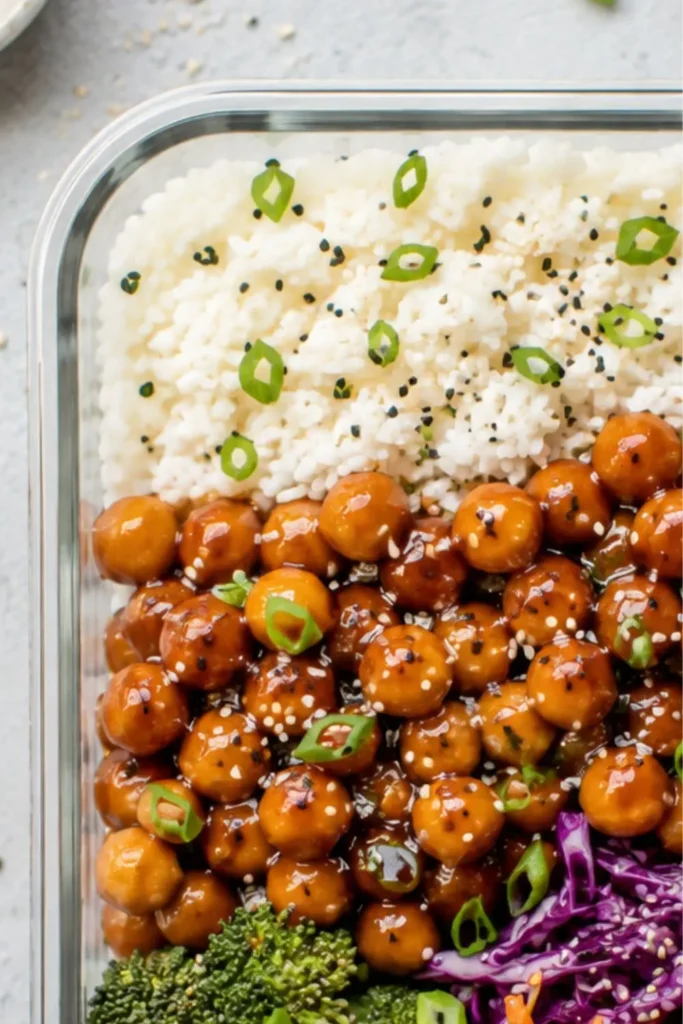
Color variety specifically is what makes bento boxes look genuinely beautiful the green of broccoli and edamame, the orange of pineapple, the golden-brown of chickpeas, the white of jasmine rice, and the black of sesame seeds create a visual composition that looks carefully assembled even when it took 10 minutes to pack.
Meal Prep Strategy for the Week
This recipe scales efficiently for weekly meal prep:
Double the recipe (serves 4)- Make 2 cans of chickpeas in the same pan (use a large 12-inch pan) with doubled sauce quantities. The cooking time increases by only 2-3 minutes.
Component storage:
- Teriyaki chickpeas: Refrigerate in an airtight container for up to 5 days
- Cooked jasmine rice: Refrigerate for up to 5 days
- Steamed broccoli and edamame: Refrigerate for up to 4 days
- Fresh fruit: Prep day-by-day for maximum freshness
Assembly timing- Pack bento boxes the night before or morning-of, assembling from refrigerated components. The teriyaki chickpeas taste excellent at room temperature or slightly reheated.
Gluten-Free Version
To make this Teriyaki Chickpea & Jasmine Rice Bento Box fully gluten-free:
- Use tamari instead of soy sauce (tamari is naturally gluten-free; most standard soy sauce contains wheat)
- Confirm that your panko breadcrumbs are GF-certified if using
- Use certified GF jasmine rice (all plain rice is naturally GF; verify no cross-contamination)
You may also like Next recipe
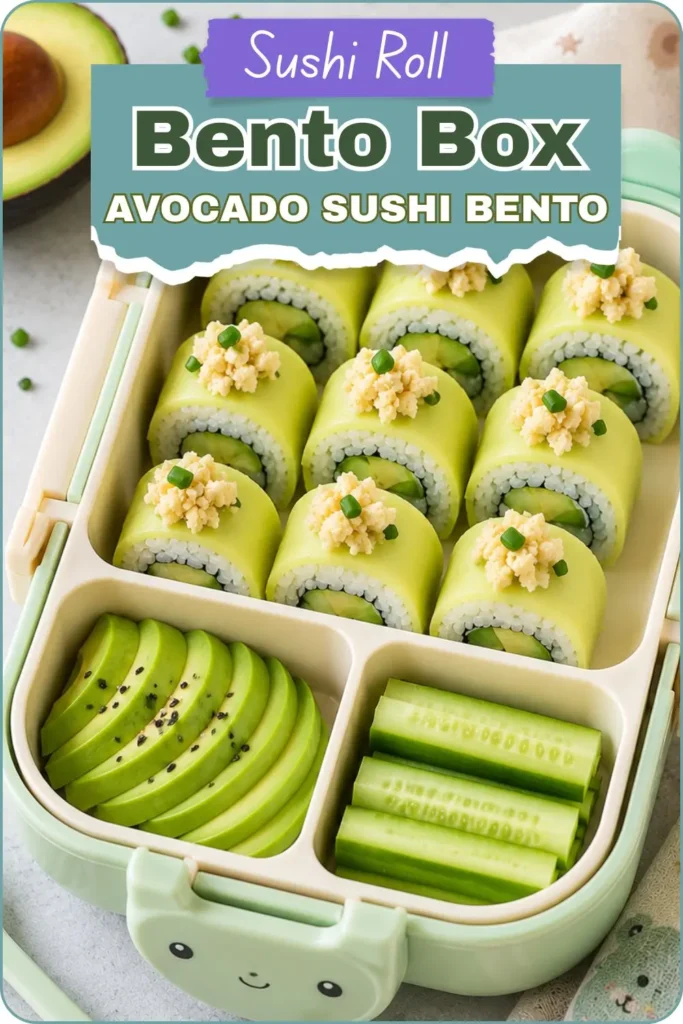
Avocado Sushi Roll & Cucumber Bento Box
Nutrition Information Per Serving
At 334 calories per serving for 2 servings:
| Nutrient | Per Serving |
| Calories | 334 kcal |
| Carbohydrates | 63g |
| Protein | 14g |
| Fat | 4g |
| Fiber | 10g |
| Sugar | 27g |
| Sodium | 1,100mg |
| Calcium | 122mg |
| Iron | 3mg |
| Potassium | 501mg |
14 grams of plant protein per serving from chickpeas and edamame. 10 grams of fiber approximately 36% of the daily recommended intake from chickpeas, broccoli, and edamame combined. The 1,100mg of sodium reflects the soy sauce base use low-sodium soy sauce as specified and this is the appropriate level for a complete meal.
Storage
- Packed bento boxes- Refrigerate for up to 4 days. The teriyaki chickpeas maintain their flavor well; the rice may need a splash of water when reheating.
- Teriyaki chickpeas separately- Refrigerate for up to 5 days in an airtight container
- Does not freeze well- The chickpeas’ texture changes significantly after freezing
My Final Thoughts
Teriyaki Chickpea & Jasmine Rice Bento Box is the bento box meal that makes lunch feel like a genuinely considered meal rather than an afterthought. 334 calories per serving, 14 grams of protein, 20 minutes of cooking, and a visual presentation that makes opening your lunch container feel specifically satisfying.
Cook the rice first. Dry the chickpeas before frying. Mix the cornstarch slurry separately. Cool slightly before packing.
Then pack the bento boxes, refrigerate overnight, and discover that the best lunch is genuinely the one you already made.
Teriyaki Chickpea & Jasmine Rice Bento Box
Ingredients
Equipment
Method
- Stage 1 – Start the Rice First
- Jasmine rice takes 15-18 minutes to cook start it before anything else so it’s ready when the chickpeas are done.
- For jasmine rice- Combine 1 cup jasmine rice with 1½ cups water in a saucepan. Bring to a boil, cover, reduce heat to very low, and cook for 15 minutes without lifting the lid. Remove from heat and allow to steam with the lid on for 5 more minutes, then fluff with a fork.
- Why jasmine rice specifically- Jasmine rice’s slightly aromatic, slightly sticky quality makes it the perfect base for teriyaki dishes it absorbs sauce that drips from the chickpeas and holds its shape better in a lunch container than looser-grained rice varieties.
- Stage 2 – Make the Teriyaki Sauce
- Combine the soy sauce, water, brown sugar, seasoned rice vinegar, grated ginger, and minced garlic in a medium bowl. Stir until the sugar dissolves. Set aside you’ll pour this into the pan after the chickpeas have crisped.
- The separate mixing step matters- Adding the sauce components to a separate bowl and stirring them before they touch heat ensures the sugar fully dissolves before cooking, which produces a more uniformly flavored sauce rather than pockets of concentrated sweetness.
- Stage 3 – Pan-Fry the Chickpeas
- Heat 1 tablespoon of vegetable oil in a large sauté pan over medium-high heat. While the oil heats, drain and rinse the chickpeas thoroughly, then pat them as dry as possible with a clean kitchen towel. Dry chickpeas crisp significantly better than wet ones surface moisture creates steam that prevents browning.
- Add the chickpeas to the hot pan. Sprinkle the onion powder, garlic powder, and salt over the top, then stir to distribute the seasoning.
- Cook for 5-7 minutes, stirring occasionally, until the chickpeas are lightly golden brown and have developed some crispness. Don’t stir constantly allowing the chickpeas to sit undisturbed for 1-2 minutes between stirs creates better browning contact with the pan.
- Oil-free option: Skip the oil and use a non-stick pan. The chickpeas won’t get quite as golden but will still crisp adequately through the dry heat.
- Stage 4 – Add the Teriyaki Sauce and Thicken
- Give the teriyaki sauce mixture one final stir to re-incorporate any settled sugar, then pour it into the pan with the chickpeas. The sauce should immediately begin bubbling from the pan’s heat.
- Bring to a simmer and cook for 1-2 minutes, stirring occasionally.
- In a small bowl, combine the cornstarch and water into a smooth slurry. Pour into the pan while stirring constantly. The sauce thickens noticeably within 30-60 seconds stir continuously during this stage to prevent any cornstarch from clumping on the pan bottom.
- The finished sauce should coat the back of a spoon and cling to the chickpeas. If it’s too thick, add a splash of water. If it’s too thin, another small cornstarch slurry (1 teaspoon cornstarch + 1 teaspoon water) added and stirred in will bring it to the right consistency.
- Stage 5 – Steam the Broccoli
- While the teriyaki sauce thickens, steam the broccoli:
- Steamer basket method- Place broccoli in a steamer basket over 1 inch of boiling water, cover, and steam for 3-4 minutes until bright green and tender-crisp.
- Microwave method- Place broccoli in a microwave-safe bowl with 2 tablespoons of water, cover with a plate or microwave-safe lid, and microwave on HIGH for 3 minutes.
- The tender-crisp target- Broccoli should be bright green and slightly yielding when pressed but still hold its shape not raw and hard, not soft and gray. Bright green indicates properly cooked broccoli; gray-green indicates overcooking.
- Stage 6 – Assemble the Bento Boxes
- Allow everything to cool slightly before packing hot food packed immediately creates condensation inside the bento box that makes the rice wet and the crispy chickpeas soft.
- Cool for 5-10 minutes at room temperature, then pack:
- Rice in the largest compartment, topped with teriyaki chickpeas
- Steamed broccoli and edamame in a separate compartment
- Fresh pineapple or mango in another compartment
- Top the chickpeas with a sprinkle of sesame seeds and sliced green onions
Notes
Nutrition Information Per Serving
At 334 calories per serving for 2 servings:| Nutrient | Per Serving |
| Calories | 334 kcal |
| Carbohydrates | 63g |
| Protein | 14g |
| Fat | 4g |
| Fiber | 10g |
| Sugar | 27g |
| Sodium | 1,100mg |
| Calcium | 122mg |
| Iron | 3mg |
| Potassium | 501mg |

Hi — I’m Rachel. I’m a wife, a mom, and a home cook who believes that food should bring comfort, joy, and compassion to the table. I live with my family — two hungry little foodies who are my most honest recipe testers — and together we’ve built a kitchen culture that’s all about good food that happens to be 100% vegan. I started this blog because I wanted a place to share the recipes that keep our days moving, the dishes that make weeknights feel a little easier, and the meals that become our little family traditions.