
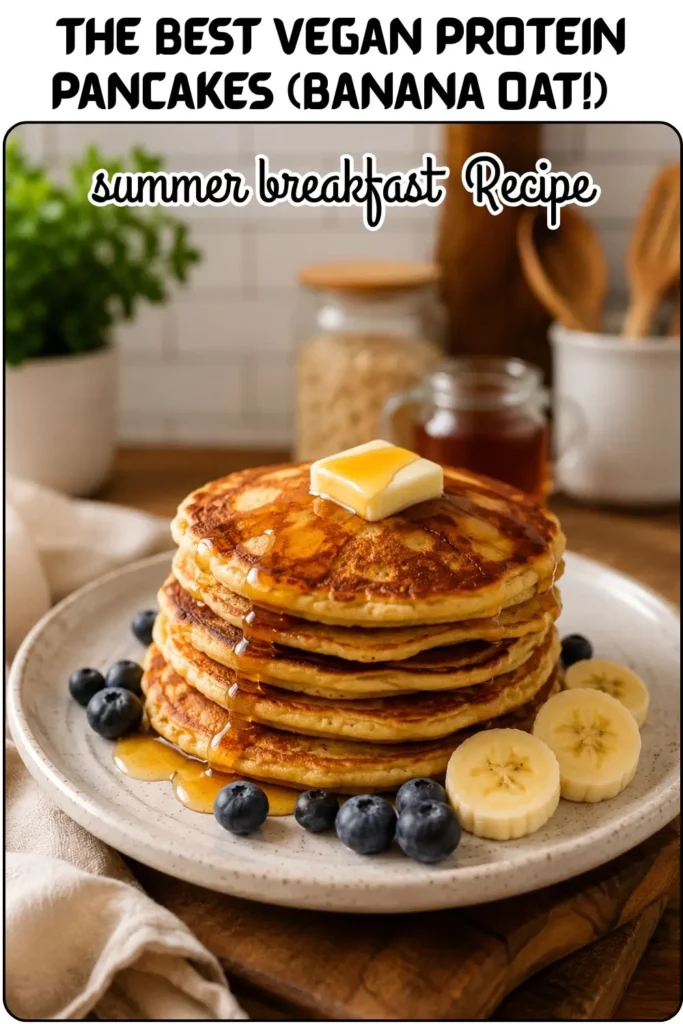
Pancakes that use no eggs, no dairy, and no protein powder and still deliver real, satisfying protein per serving? That’s exactly what these Vegan Protein Pancakes with Banana and Oat do, and they do it with a short, clean ingredient list that you probably already have in your kitchen. No specialty items, no supplements, no compromises on flavor or texture.
I made these for the first time on a summer Saturday when I wanted pancakes but didn’t want to feel sluggish for the rest of the morning. The banana-oat combination creates a batter that’s naturally sweet, slightly nutty, and wonderfully thick and the texture is closer to a proper fluffy pancake than most egg-free versions manage. These quickly became my weekend go-to. Let me show you how to get them right every single time.
My Recipe Details at a Glance
Your complete overview before heating the pan:
- Course- Breakfast or Brunch
- Prep Time- 7 minutes
- Cook Time-15 minutes
- Total Time- 22 minutes
- Servings- 8 pancakes (using ¼ cup batter each)
- Serves- 2–4 people (2 generous servings or 4 lighter ones)
- Calories per Pancake- 143 kcal
- Diet- 100% Vegan, Dairy-Free, Egg-Free, Naturally Gluten-Free (with certified GF oats)
At 143 calories per pancake, two to three pancakes land you in a satisfying 285–430 calorie breakfast range real fuel without overdoing it, even before you add toppings.
Equipment You’ll Need For
The blender is the key piece of kit here:
- A high-powered blender – This is the most important tool in the recipe. You need enough power to blend rolled oats and banana into a smooth, slightly grainy batter without leaving large oat chunks that don’t cook through properly. A Vitamix or Ninja Blender handles this effortlessly in about 30 seconds. A standard countertop blender can work but may need an extra 30–60 seconds.
- A food processor – A reliable alternative if you don’t have a high-powered blender. The key difference with a food processor is technique: blend the oats alone first until they resemble coarse flour, then add the remaining ingredients and blend together. Skipping this step with a food processor leaves you with chunky, uneven batter.
- A griddle or non-stick skillet – A flat griddle surface gives you the most even heat distribution and room to cook multiple pancakes simultaneously. A standard non-stick skillet works equally well for cooking two at a time. Avoid stainless steel or carbon steel for this recipe oat-based batters without eggs stick aggressively to uncoated surfaces.
- A ¼ or ⅓ cup measure – For portioning consistent batter amounts. Even-sized pancakes cook at the same rate, which means you can flip them all at once rather than monitoring each one individually.
- A thin spatula – Flexible enough to slide cleanly under a pancake without tearing it. A silicone spatula with a thin edge is ideal.
- A pastry brush – For applying a light coating of oil between batches.
FYI beyond the blender, this is a completely standard pancake setup. Nothing specialist, nothing you need to order online.
Ingredients What You Need and Why Each One Earns Its Place
The Oat Base (The Clever Part)
- 1½ cups (150g) rolled oats, divided – The oats do triple duty in this recipe: they form the flour (when blended), provide fiber and plant-based protein (oats contain roughly 5g of protein per half cup), and the reserved whole oats add texture. Large flake / old-fashioned rolled oats produce the best results they blend into a better batter consistency than quick oats (too fine) or steel-cut oats (don’t blend smoothly at all). Use certified gluten-free oats if you’re making these for anyone with celiac or gluten sensitivity.
The Natural Binder and Sweetener
- 1 medium ripe banana (about 130g peeled) – The riper the better. You want a banana that’s spotty, soft, and fragrant not a pale yellow, underripe one. A ripe banana does three things it naturally sweetens the batter (no added sugar needed), it acts as a binding agent that partially replaces eggs, and it contributes to the soft, moist interior of each pancake. An underripe banana does none of these things effectively. If your banana isn’t spotty, leave it on the counter for another day or two.
The Lift and Flavor
- 1 tablespoon baking powder – A full tablespoon, which sounds like a lot but is correct. Oat-based batters are denser than wheat-flour batters and need more leavening to achieve any meaningful lift. This is what gives your pancakes a fluffy interior rather than a flat, dense puck.
- 1 teaspoon ground cinnamon– Pairs naturally with banana and oats to create a warm, slightly spiced flavor that makes these taste far more interesting than plain pancakes. Increase to 1¼ teaspoons if you want a more prominent cinnamon note.
- ½ teaspoon fine sea salt – Balances the natural sweetness of the banana and prevents the batter from tasting flat.
- 1 tablespoon vanilla extract – A full tablespoon, not a teaspoon. The generous amount of vanilla is part of what makes these pancakes taste genuinely good rather than just “fine for vegan pancakes.” It deepens the flavor and makes the banana notes more aromatic.
The Fat and Liquid
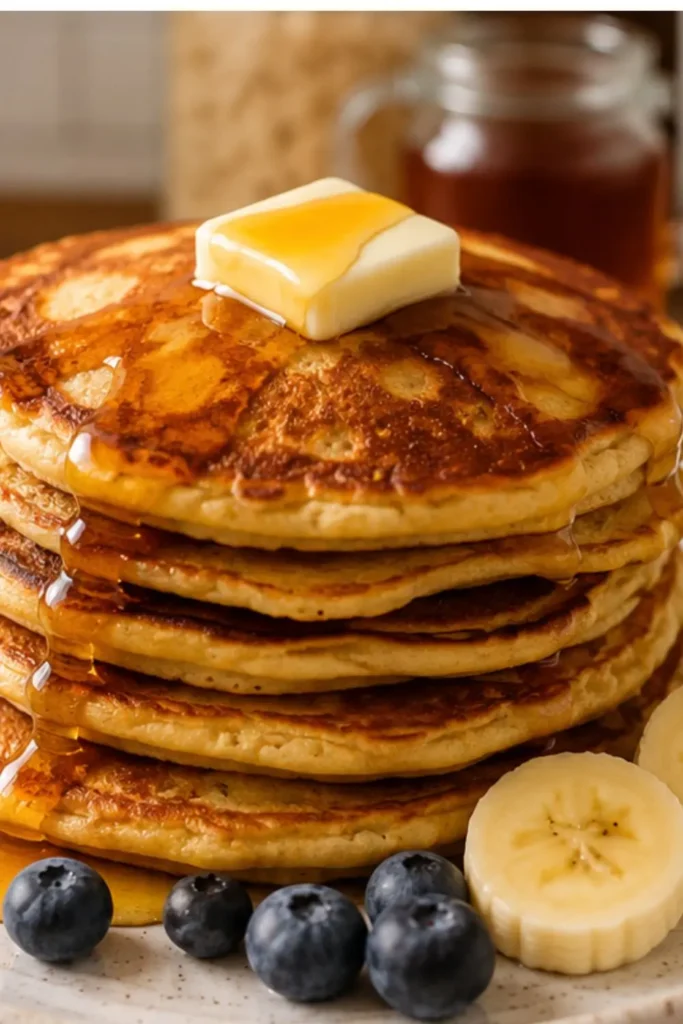
- 3 tablespoons oil or melted vegan butter – Oil keeps these pancakes moist and gives them a slightly tender, soft texture. Neutral oils (avocado, sunflower, refined coconut) work best. Vegan butter adds richness but can make the pancakes slightly less consistent in texture oil is the more reliable choice. Plus more for frying the pancakes in the pan.
- ¾ cup (180ml) non-dairy milk – Oat milk produces a creamy, slightly sweet result that complements the oat batter beautifully. Almond milk gives a lighter result. Soy milk adds more protein. Any unsweetened plant milk works add it to the blender last so the powdery dry ingredients (cinnamon, baking powder, salt) don’t coat the inside of the blender lid and fly around when it starts.
Optional Mix-Ins
- ⅓ cup (60g) mix-ins – Chocolate chips, chopped walnuts, blueberries, or chopped pecans all work. Sprinkle these onto the pancake after pouring the batter into the pan, not before this gives you even distribution across the surface rather than mix-ins sinking to the bottom of the batter pool.
How to Make the Best Vegan Banana Oat Protein Pancakes
Step 1 – Build the Blender Batter
Add 1¼ cups (125g) of the oats to your blender reserve the remaining ¼ cup (25g) for later. Add the peeled banana in chunks, then the baking powder, cinnamon, salt, vanilla extract, and oil. Pour the non-dairy milk in last.
Blend on high until the batter looks smooth and slightly grainy not completely uniform like a liquid, but no large oat chunks remaining. This takes about 30–45 seconds in a high-powered blender, 60–90 seconds in a standard one. Scrape down the sides if needed and blend again.
You may also like Next recipe
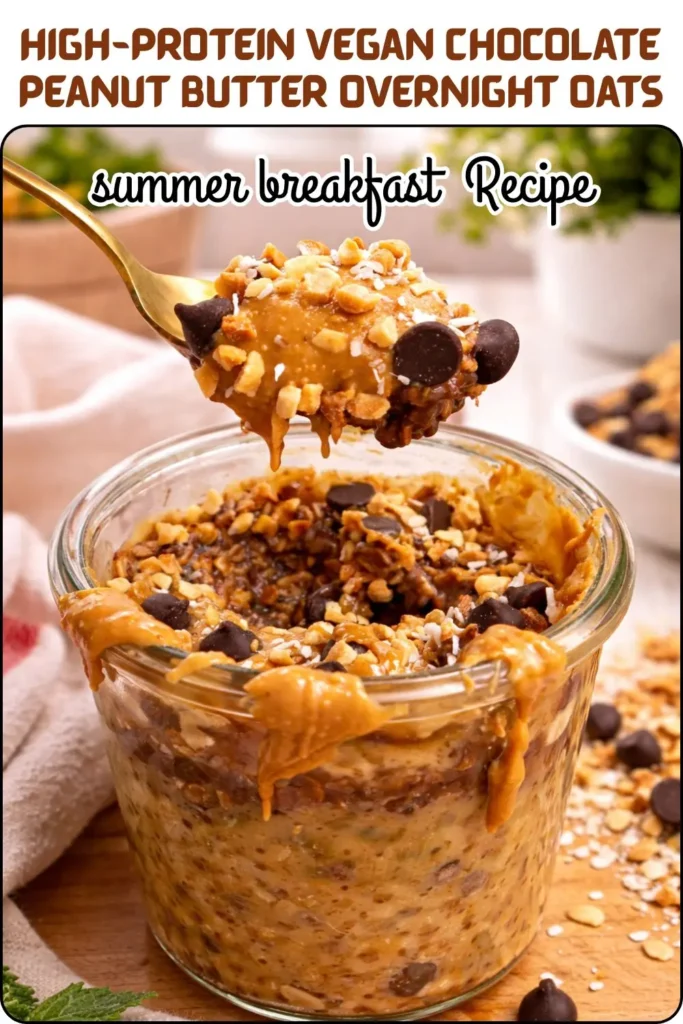
High-Protein Vegan Chocolate Peanut Butter Overnight Oats
Step 2 – Add the Reserved Oats
Add the remaining ¼ cup of whole oats to the blended batter and pulse 3–4 times. You want to break the oats up slightly without blending them smooth. These partially-whole oats add chew and texture that makes the pancakes feel more substantial and less like a protein shake in pancake form.
Let the batter rest for 3–5 minutes while you preheat the pan. The batter will thicken noticeably during this time as the oats absorb the liquid. Don’t worry this is correct. Don’t add more milk to thin it. The thick batter is what produces the fluffy interior.
Step 3- Preheat the Pan Properly
Add oil or vegan butter to your griddle or skillet and place it over medium-low heat. Let it preheat for 2–3 full minutes. Medium-low, not medium this is the most important instruction in the entire recipe. Oat-based pancakes need longer, slower cooking than wheat-flour pancakes. High heat burns the outside before the inside cooks through. Medium-low gives you that even, golden-brown surface and a fully set interior every time.
Step 4 – Pour, Spread, and Wait
Pour ¼ to ⅓ cup of batter per pancake into the preheated pan. The thick batter won’t spread on its own use the back of your measuring cup or a spoon to gently spread it into an even circle. Sprinkle any mix-ins over the top now.
Leave the pancakes completely undisturbed for 4–5 minutes. Don’t press them, don’t peek underneath, don’t turn up the heat because it seems like it’s taking too long. Wait for bubbles to form across the surface and the edges to look set and dry before you even pick up the spatula.
Step 5 – Flip and Finish
Flip each pancake once with your thin spatula and cook the second side for 2 minutes until golden. The second side cooks faster than the first watch it more actively.
Transfer finished pancakes to a plate in a warm oven (lowest heat setting) while you cook the remaining batches. Brush the pan with a little more oil between each batch.
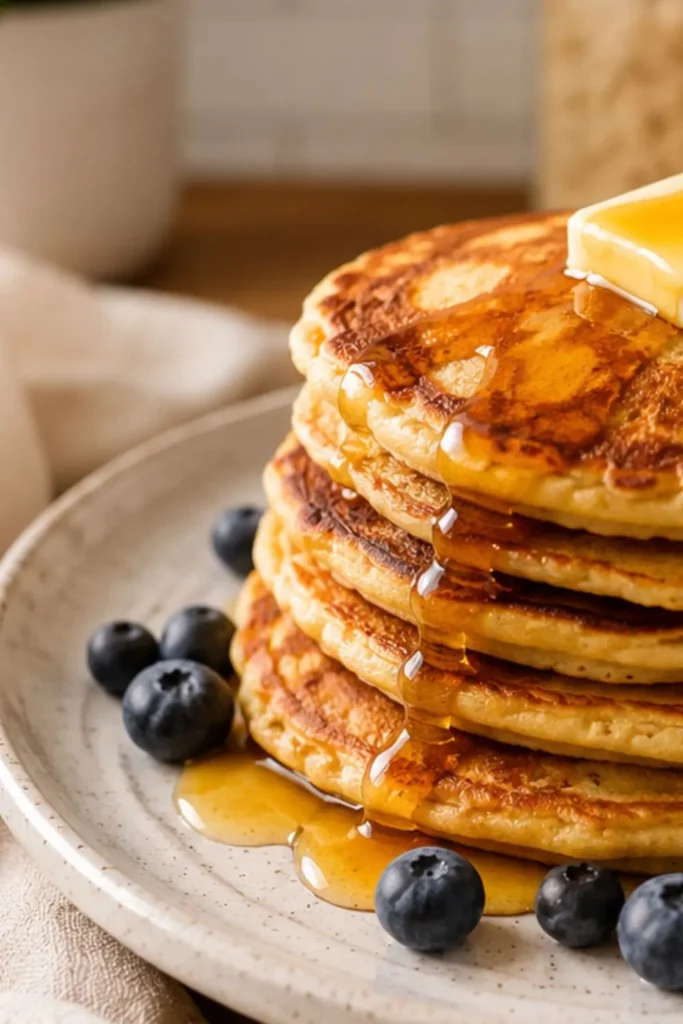
Full Nutritional Breakdown (Per Pancake 1 of 8)
| Nutrient | Amount |
| Calories | 143 kcal |
| Carbohydrates | 17g |
| Protein | 3g |
| Fat | 7g |
| Saturated Fat | 1g |
| Fiber | 3g |
| Sugar | 2g |
| Sodium | 157mg |
| Potassium | 302mg |
| Calcium | 107mg |
| Iron | 1mg |
Two pancakes: 286 kcal, 6g protein, 6g fiber. Three pancakes: 429 kcal, 9g protein, 9g fiber. Stack according to your appetite and activity level the fiber content keeps you full longer than the calorie count suggests.
For extra protein, pair with a side of soy yogurt, serve with hemp seeds scattered over the top, or use soy milk in the batter to maximize the protein from your liquid base.
The Banana Question Why Ripe Matters So Much
Ever tried making banana pancakes with a slightly underripe banana and ended up with something that tasted faintly starchy and barely sweet? That’s not a technique problem that’s a banana problem. Here’s what actually changes as a banana ripens:
- Starch converts to sugar – An underripe banana is mostly starch. A spotty, ripe banana has converted much of that starch into natural fructose and glucose, which is what gives you a sweet batter without adding sugar.
- The texture softens – Ripe banana blends smoothly into the batter. Underripe banana blends unevenly and can leave slightly fibrous bits.
- The binding improves – Ripe banana contains more pectin in a more accessible form, which contributes to better binding in egg-free batters.
The ideal banana- Yellow with brown spots, soft to the touch, fragrant. If yours is solid yellow with no spots, leave it out of the fridge for 1–2 days. If it’s completely brown and mushy, it still works the flavor will be more intensely sweet and banana-forward, which IMO is not a bad thing at all.
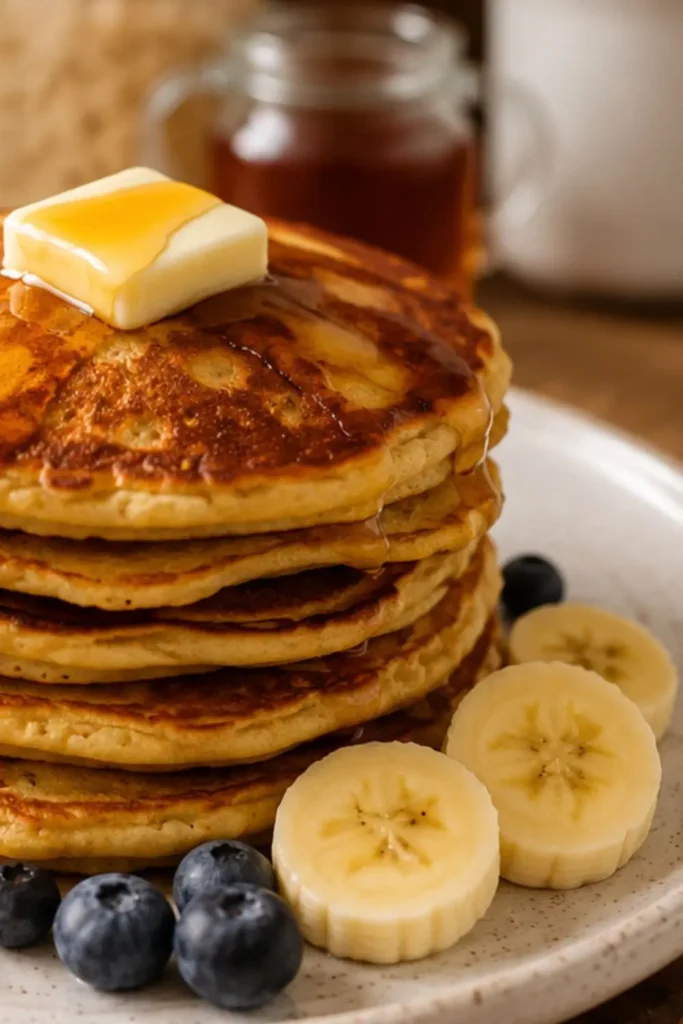
Topping Ideas for Summer Banana Oat Pancakes
The pancakes taste great on their own. The right topping makes them memorable:
Summer-Fresh Toppings
- Fresh sliced peaches and a drizzle of maple syrup – The stone fruit season combo that makes everything taste like July.
- Mixed berries and coconut whipped cream – Bright, cool, and beautiful.
- Sliced banana, chopped walnuts, and a swirl of almond butter – Doubling down on the banana theme with crunch and healthy fats.
Classic Comfort Toppings
- Pure maple syrup and a pat of vegan butter – The original. Still excellent.
- Peanut butter drizzle and sliced strawberries -Protein meets fruit in a combination that works every single time.
- Jam and powdered sugar – Simple, effective, and requiring zero additional prep.
Storage and Reheating
These vegan banana oat pancakes store surprisingly well:
- Refrigerator- Stack cooled pancakes with parchment between layers in an airtight container. Keep for up to 3 days. Reheat in a toaster or in a pan over low heat microwave works but softens the exterior.
- Freezer- Freeze in a single layer on a baking sheet first, then transfer to a freezer bag with parchment between layers. Keeps for up to 2 months. Reheat from frozen in a toaster for 2–3 minutes. They come out with a slightly crispier exterior than fresh, which is actually pretty good.
My Final Troughts
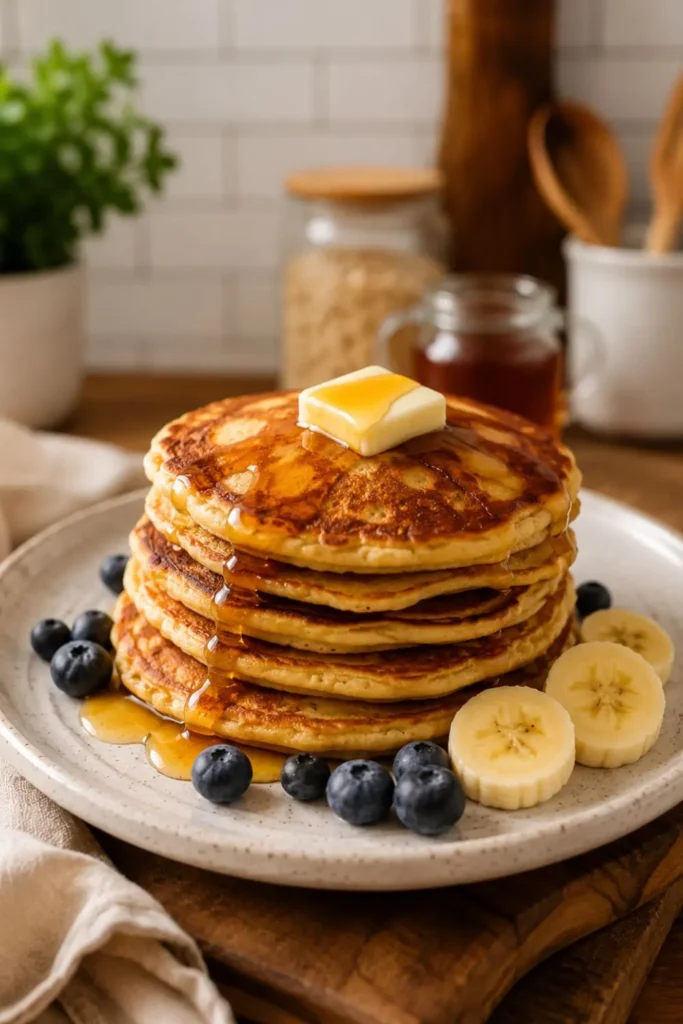
These Vegan Protein Pancakes with Banana and Oat prove that the best breakfast pancakes don’t require eggs, dairy, or a complicated ingredient list. They require a ripe banana, good oats, a blender, and the patience to cook them on medium-low heat without rushing the flip. That’s the entire formula.
22 minutes from start to first bite, 143 calories per pancake, real fiber and real protein from whole food ingredients, and a flavor that makes Saturday morning feel exactly the way Saturday morning should. Make them once and they’ll earn a permanent spot in your breakfast rotation. The bar for “best vegan pancakes” just moved.
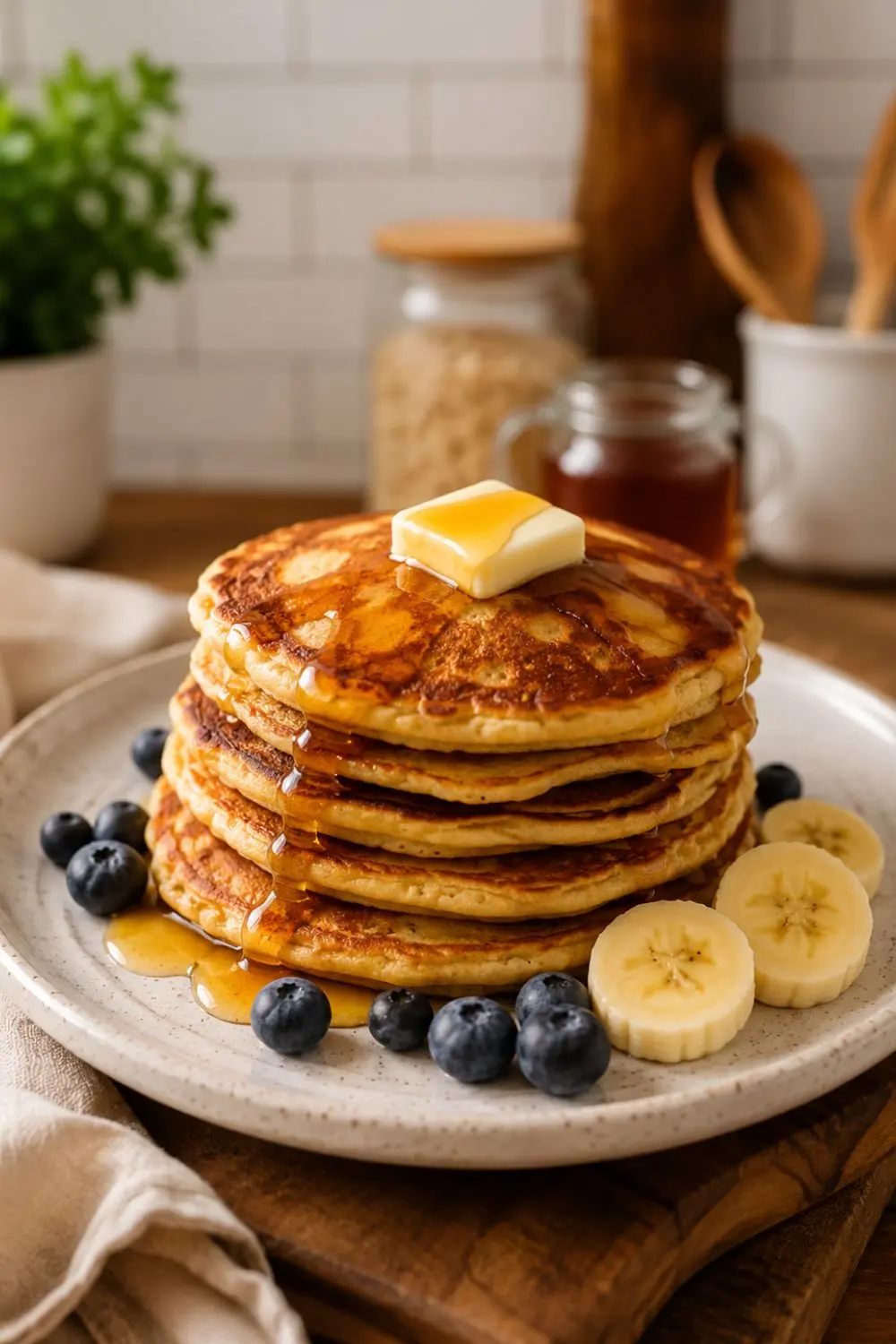
The Best Vegan Protein Pancakes (Banana Oat!)
Ingredients
Equipment
Method
- Step 1 – Build the Blender Batter
- Add 1¼ cups (125g) of the oats to your blender reserve the remaining ¼ cup (25g) for later. Add the peeled banana in chunks, then the baking powder, cinnamon, salt, vanilla extract, and oil. Pour the non-dairy milk in last.
- Blend on high until the batter looks smooth and slightly grainy not completely uniform like a liquid, but no large oat chunks remaining. This takes about 30–45 seconds in a high-powered blender, 60–90 seconds in a standard one. Scrape down the sides if needed and blend again.
- Step 2 – Add the Reserved Oats
- Add the remaining ¼ cup of whole oats to the blended batter and pulse 3–4 times. You want to break the oats up slightly without blending them smooth. These partially-whole oats add chew and texture that makes the pancakes feel more substantial and less like a protein shake in pancake form.
- Let the batter rest for 3–5 minutes while you preheat the pan. The batter will thicken noticeably during this time as the oats absorb the liquid. Don’t worry this is correct. Don’t add more milk to thin it. The thick batter is what produces the fluffy interior.
- Step 3- Preheat the Pan Properly
- Add oil or vegan butter to your griddle or skillet and place it over medium-low heat. Let it preheat for 2–3 full minutes. Medium-low, not medium this is the most important instruction in the entire recipe. Oat-based pancakes need longer, slower cooking than wheat-flour pancakes. High heat burns the outside before the inside cooks through. Medium-low gives you that even, golden-brown surface and a fully set interior every time.
- Step 4 – Pour, Spread, and Wait
- Pour ¼ to ⅓ cup of batter per pancake into the preheated pan. The thick batter won’t spread on its own use the back of your measuring cup or a spoon to gently spread it into an even circle. Sprinkle any mix-ins over the top now.
- Leave the pancakes completely undisturbed for 4–5 minutes. Don’t press them, don’t peek underneath, don’t turn up the heat because it seems like it’s taking too long. Wait for bubbles to form across the surface and the edges to look set and dry before you even pick up the spatula.
- Step 5 – Flip and Finish
- Flip each pancake once with your thin spatula and cook the second side for 2 minutes until golden. The second side cooks faster than the first watch it more actively.
- Transfer finished pancakes to a plate in a warm oven (lowest heat setting) while you cook the remaining batches. Brush the pan with a little more oil between each batch.
Notes
Full Nutritional Breakdown (Per Pancake 1 of 8)
| Nutrient | Amount |
| Calories | 143 kcal |
| Carbohydrates | 17g |
| Protein | 3g |
| Fat | 7g |
| Saturated Fat | 1g |
| Fiber | 3g |
| Sugar | 2g |
| Sodium | 157mg |
| Potassium | 302mg |
| Calcium | 107mg |
| Iron | 1mg |

Hi — I’m Rachel. I’m a wife, a mom, and a home cook who believes that food should bring comfort, joy, and compassion to the table. I live with my family — two hungry little foodies who are my most honest recipe testers — and together we’ve built a kitchen culture that’s all about good food that happens to be 100% vegan. I started this blog because I wanted a place to share the recipes that keep our days moving, the dishes that make weeknights feel a little easier, and the meals that become our little family traditions.