

“This post contains affiliate links. If you purchase through my links, I may earn a small commission at no extra cost to you.”
You know those breakfast photos on Instagram that look like someone spent three hours arranging fruit in perfect geometric patterns? What if I told you that you could make something that looks exactly like that in literally five minutes — and it tastes even better than it looks? That’s exactly what this Tropical Vegan Breakfast Bowl with Mango and Pineapple delivers, every single time.
This is my go-to summer breakfast when I want something cold, fresh, and genuinely satisfying without turning my kitchen into a disaster zone. It’s thick, creamy, loaded with tropical fruit, and topped with whatever crunchy things you have in the cupboard. Fully vegan, naturally sweet, and absolutely no cooking required. Let’s get into it.
Quick Stats
- Total Time: 5 minutes
- Yield: 2 smoothie bowls
- Diet: 100% Vegan
- Serves: 2 people
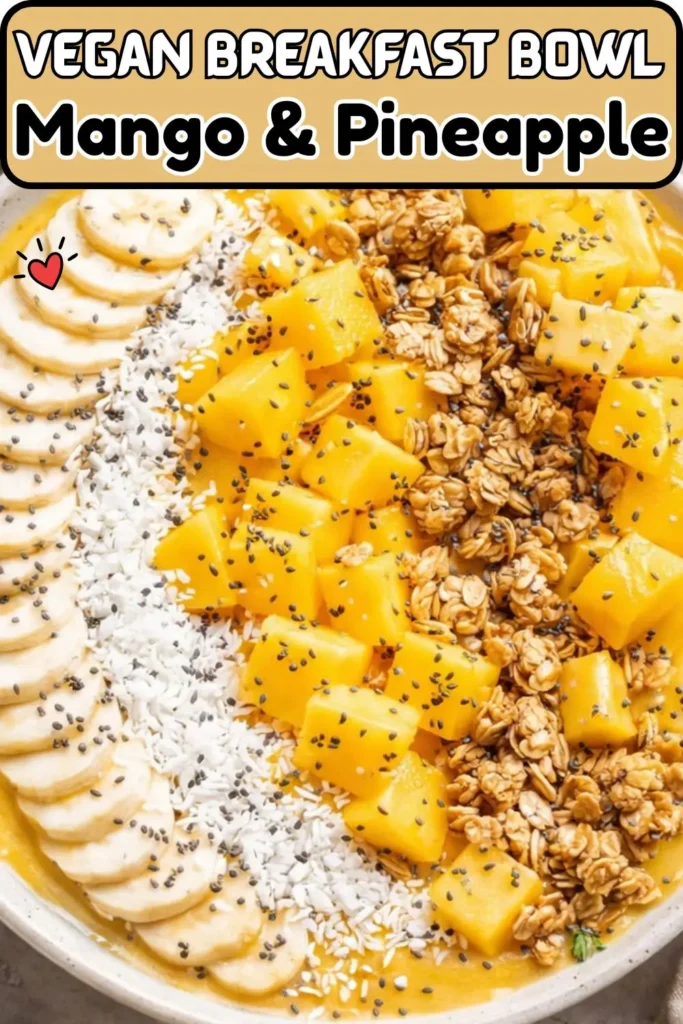
The Full Ingredient List
For the smoothie bowl base:
- 1 cup frozen pineapple
- 1 cup frozen mango
- 1 banana
- ¼ cup almond milk
For the toppings:
- ¼ cup granola
- Fresh mango chunks and/or pineapple chunks
- 1 banana, sliced
- Shredded coconut
- Chia seeds
How to Make It – Step by Step for Tropical Vegan Breakfast Bowl with Mango and Pineapple
Step 1: Add the frozen pineapple, frozen mango, banana, and almond milk to your blender. Blend until completely smooth. The mixture will be very thick — that’s exactly what you want. If your blender is struggling, add an extra splash of almond milk, but keep it minimal.
Step 2: Pour the blended mixture into two shallow bowls. Then arrange your toppings — granola, fresh fruit, banana slices, shredded coconut, and chia seeds — on top however you like. Serve immediately and enjoy.
That’s genuinely it. Two steps. Five minutes. Done.
Equipment You’ll Need
Again, nothing complicated here:
- A high-powered blender or NutriBullet — this is the one non-negotiable. A weak blender will struggle with frozen fruit.
- Two shallow bowls — shallow is key. You want surface area for toppings, not a deep bowl where everything sinks.
- A spatula to scrape every last bit of that smoothie out of the blender
- Measuring cups for the fruit and milk
- A knife and chopping board for slicing the fresh topping fruit
The blender really does make or break this recipe. A high-speed blender like a Vitamix or NutriBullet handles frozen fruit beautifully and gives you that thick, ice-cream-like texture. A cheap blender can work, but you’ll need to stop and scrape the sides more often, and the result won’t be quite as smooth.
Calorie & Nutrition Breakdown (Per Bowl)
| Nutrient | Per Serving |
| Calories | ~320–380 kcal |
| Carbohydrates | ~68g |
| Protein | ~5g |
| Total Fat | ~6g |
| Fibre | ~8g |
| Natural Sugars | ~40g |
These numbers shift depending on your granola and how generous you are with the toppings — some granolas are quite high in fat and sugar, so check the label if you’re watching that. The base smoothie itself is naturally low in fat and high in natural fruit sugars, making it a fantastic energy-boosting breakfast. FYI: both mango and pineapple are brilliant sources of vitamin C, and chia seeds add a meaningful hit of omega-3 fatty acids on top.
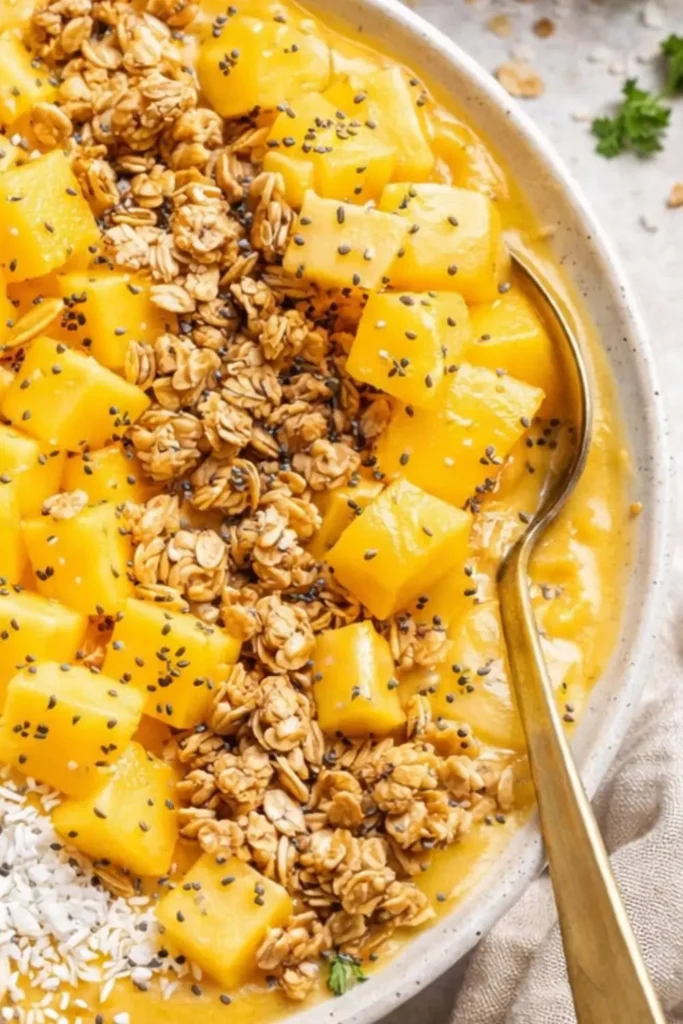
Why This Tropical Vegan Breakfast Bowl Actually Works
Here’s the thing about smoothie bowls — when they’re done badly, they’re basically just a sad, watery smoothie in a bowl with some granola chucked on top. When they’re done right, they’re a completely different experience. So what makes this one work?
The Frozen Fruit Is Everything
Using frozen mango and pineapple (rather than fresh) is the move that makes the whole bowl. Frozen fruit blends into a texture that’s thick, cold, and almost ice-cream-like — somewhere between a sorbet and a soft serve. Fresh fruit just gives you a regular smoothie that goes liquid the second it hits the bowl. Keep your fruit frozen, and your bowl stays perfectly thick and scoopable.
The Banana Does the Heavy Lifting
The banana isn’t just for flavour — it acts as a natural binder and sweetener that brings everything together. No added sugar needed at all, because ripe bananas are naturally sweet enough to balance both the mango and the pineapple. It also adds a creamy richness that you don’t get from fruit alone.
The Almond Milk Is Just a Starting Point
You only need ¼ cup — just enough to get the blender moving. This is the secret to thickness. Most people add too much liquid to their smoothie bowls and end up with something that’s too runny. Less is more here. If your blender is really struggling, add milk one tablespoon at a time, not in big pours.
Breaking Down the Toppings — and Why Each One Matters
The toppings aren’t just decoration (even though they do make the bowl look incredible). Each one adds something to the eating experience.
Granola
Granola adds the crunch factor that a smoothie bowl desperately needs. Without it, every bite is just soft and cold. The contrast of crunchy granola against the thick, creamy base is what makes this feel like a proper meal rather than just a fancy smoothie. Use a good quality vegan granola — one with oats, nuts, and seeds rather than one that’s mostly sugar.
Fresh Mango and Pineapple Chunks
Adding fresh fruit on top of the frozen base gives you two different textures of the same flavour — the creamy blended version underneath, and the juicy, fresh version on top. It also makes the bowl look genuinely stunning, which, let’s be honest, matters. We eat with our eyes first.
Banana Slices
Sliced banana on top adds another layer of natural sweetness and a soft texture that contrasts nicely with the crunch of the granola. It also adds potassium and fills you up more than a bowl without it.
Shredded Coconut
Coconut adds a slightly chewy texture and a tropical flavour that ties everything together. Toasted coconut takes it to another level entirely — just dry-fry it in a pan for two minutes until it goes golden and fragrant, and it transforms from “nice addition” to “honestly essential.”
Chia Seeds
Chia seeds are doing nutritional work here. They add fibre, omega-3 fatty acids, and protein, and their slight crunch adds another texture layer to the bowl. They don’t change the flavour, but they make the whole thing more nutritious without you having to do anything extra. That’s my kind of ingredient.
Tips for Making This Bowl Absolutely Perfect
- Keep your frozen fruit in the freezer until the very last second. The colder it is, the thicker your base will be.
- Use a shallow, wide bowl. This gives you maximum surface area for toppings and makes the whole thing look more impressive.
- Don’t over-blend. You want it smooth, but stop blending as soon as it’s combined — over-blending warms the mixture up and makes it runny.
- Arrange your toppings with intention. Seriously, take 30 extra seconds to place them nicely. It sounds ridiculous, but eating something that looks beautiful genuinely tastes better. Science says so. IMO it’s one of the best parts of making a smoothie bowl.
- Eat it immediately. Smoothie bowls don’t wait. The frozen base starts to melt and the granola starts to soften within minutes. Sit down, eat it now.
- Taste the base before pouring. Dip a spoon in and check the sweetness. If the mango and pineapple are on the tarter side, add half a banana more. If it’s already very sweet, leave it.
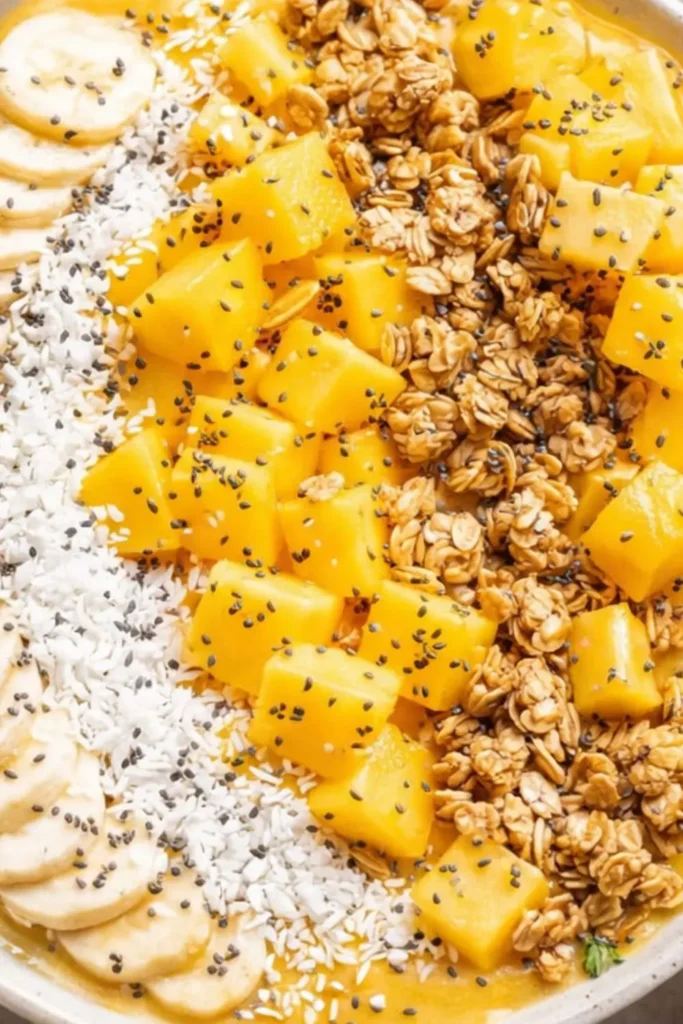
How to Store and Freeze This Smoothie Bowl
Storing in the Fridge
Smoothie bowls are always best fresh — but if you need to, you can refrigerate the base (without toppings) for one to two hours. After that, the texture starts to change and it loses that thick, scoopable quality you’re after. If you refrigerate it, give it a stir before serving and add the toppings fresh.
Freezing the Base
Here’s something most people don’t know — this smoothie base freezes surprisingly well. Because it’s so thick and loaded with frozen fruit, it holds its texture when frozen. Portion any leftover base into a freezer-safe container and freeze for up to 2–3 months.
When you want to eat it, thaw it in the fridge for a few hours or let it soften at room temperature for 10–15 minutes. Give it a stir to bring it back together, then add your toppings fresh. It won’t be exactly the same as freshly made, but it’s still really good — and it means zero waste, which is always a win.
One Thing to Never Do
Don’t freeze the assembled bowl with toppings already on it. The granola turns to mush, the fresh fruit goes icy and weird, and the chia seeds do something unpleasant. Always freeze the base on its own and add toppings fresh every single time.
Variations to Make This Bowl Your Own
Once you’ve made the base recipe a couple of times, start experimenting. Here are some genuinely great directions to take it:
- Extra Tropical: Add a handful of frozen passion fruit pulp to the blend. The tartness is incredible.
- Green Version: Add a large handful of spinach to the blender. You won’t taste it at all, but the colour turns this gorgeous deep green and you sneak in extra iron and folate. I highly recommend it.
- Creamy Coconut Base: Swap the almond milk for full-fat coconut milk. Richer, more indulgent, and the coconut flavour comes through beautifully.
- Protein-Boosted Bowl: Add a scoop of vanilla vegan protein powder to the base. The texture stays thick and you hit 20g+ of protein per bowl.
- Berry Tropical Mashup: Replace half the mango with frozen strawberries or raspberries. You get a gorgeous pink-orange colour and a sweet-tart flavour combination that’s really interesting.
- Nut Butter Swirl: Drop a teaspoon of almond butter or cashew butter on top of the finished bowl. The richness it adds against the fresh fruit is something else entirely.
- Acai Boost: Add a packet of frozen acai to the blend for extra antioxidants and a deeper, slightly earthier flavour.
Why This Bowl Works So Well for Summer
There’s something genuinely perfect about eating something cold, fresh, and fruit-forward when it’s hot outside. This Tropical Vegan Breakfast Bowl with Mango and Pineapple hits every single note that a summer breakfast should hit — it’s refreshing, it’s light enough that you don’t feel heavy afterwards, but it’s filling enough that you’re not hungry again in an hour.
The tropical flavour profile — mango, pineapple, coconut, banana — genuinely makes you feel like you’re on holiday, even if you’re eating it at your kitchen table at 7:30am before a full day of work. That psychological lift matters more than people give it credit for.
It’s also the perfect breakfast for hot weather because you don’t have to turn the oven on, stand near a hob, or do anything that generates heat in your kitchen. You blend four things. You pour. You top. You eat. The whole process actually cools you down rather than heating things up. In the middle of a hot summer, that alone is worth making it.
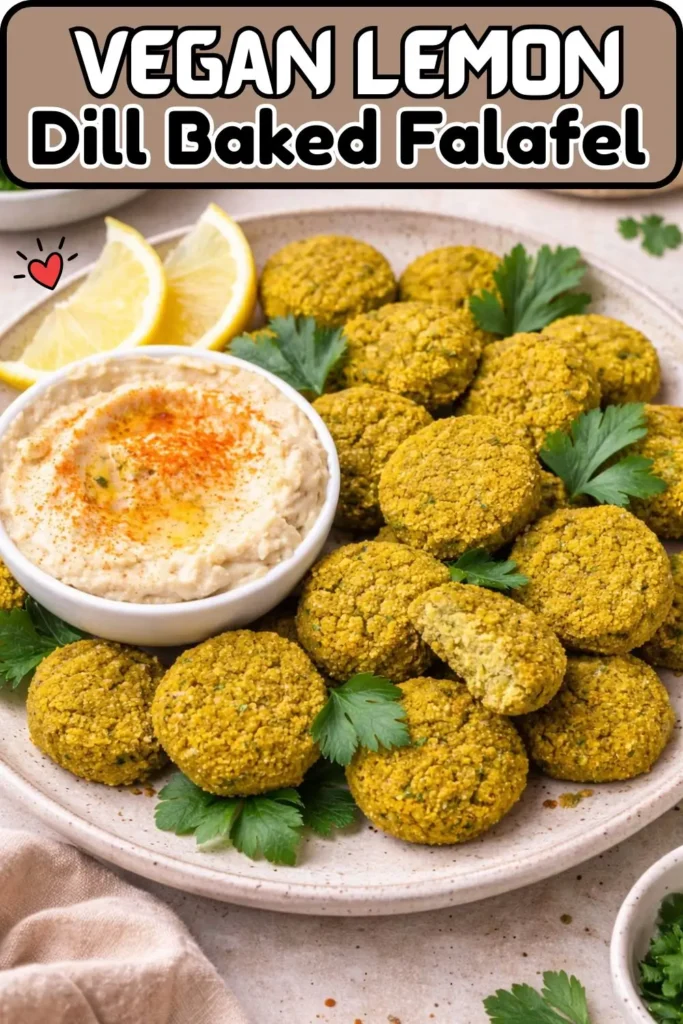
Still Hungry, Try It Next recipe :-
Vegan Lemon-Dill Baked Falafel
Frequently Asked Questions
Can I use fresh fruit instead of frozen? Technically yes, but the result will be very different. Fresh fruit blends into a regular, liquid smoothie consistency rather than the thick, scoopable texture you want. If you only have fresh fruit, freeze it first for at least 4 hours before using it.
What’s the best blender for smoothie bowls? A high-powered blender is strongly recommended — a NutriBullet, Ninja, or Vitamix all work brilliantly. The thick, frozen mixture is tough on weaker blenders. If yours struggles, add liquid one tablespoon at a time rather than all at once.
Can I make this the night before? You can freeze the base the night before and thaw it in the fridge overnight, but freshly blended is always better. If you thaw overnight, the texture will be slightly softer — still good, just not quite the same.
Can children eat this? Absolutely — this is a kid-friendly, naturally sweet breakfast with no added sugar in the base. Kids tend to love the bright colours and the fact that it looks a bit like ice cream. Win-win.
What can I use instead of almond milk? Oat milk, coconut milk, soy milk, or cashew milk all work perfectly. Coconut milk gives the richest, most tropical-flavoured result. Oat milk is the most neutral. Use whatever you have.
Is this actually filling enough for breakfast? Yes — between the banana, frozen fruit, granola, chia seeds, and any nut butter you add on top, you get a good balance of carbohydrates, fibre, fat, and some protein. If you need more sustenance, add a bigger scoop of granola or a spoonful of nut butter.
A Word on Why Plant-Based Breakfasts Like This Are Worth It
I’ll keep this brief because nobody wants a lecture with their breakfast recipe. But genuinely — the quality of vegan breakfast options right now is extraordinary. A bowl like this doesn’t ask you to compromise on anything. It’s sweet, creamy, cold, crunchy, colourful, and completely satisfying. There’s no “real” version of this that’s better — this is the real version.
The fact that it’s also packed with vitamins, naturally free from dairy and eggs, and takes five minutes to make is almost beside the point. The point is that it tastes brilliant. Everything else is just a bonus.
Still Hungry, Try It Next recipe :-
Vegan Spring Berry and Balsamic Salad with Candied Nuts
Make It This Morning
Here’s the bottom line: two cups of frozen fruit, one banana, a splash of almond milk, and five minutes stand between you and the best breakfast you’ve had this summer. Load up your toppings, pick a sunny spot, and eat it before it melts — because it will melt, and a melted smoothie bowl is a tragedy nobody deserves.
Make this once and it’ll be in your regular rotation before the week is out. Consider this your sign to finally clear some space in your freezer for a bag of frozen mango. Your future morning self will be genuinely thrilled about it
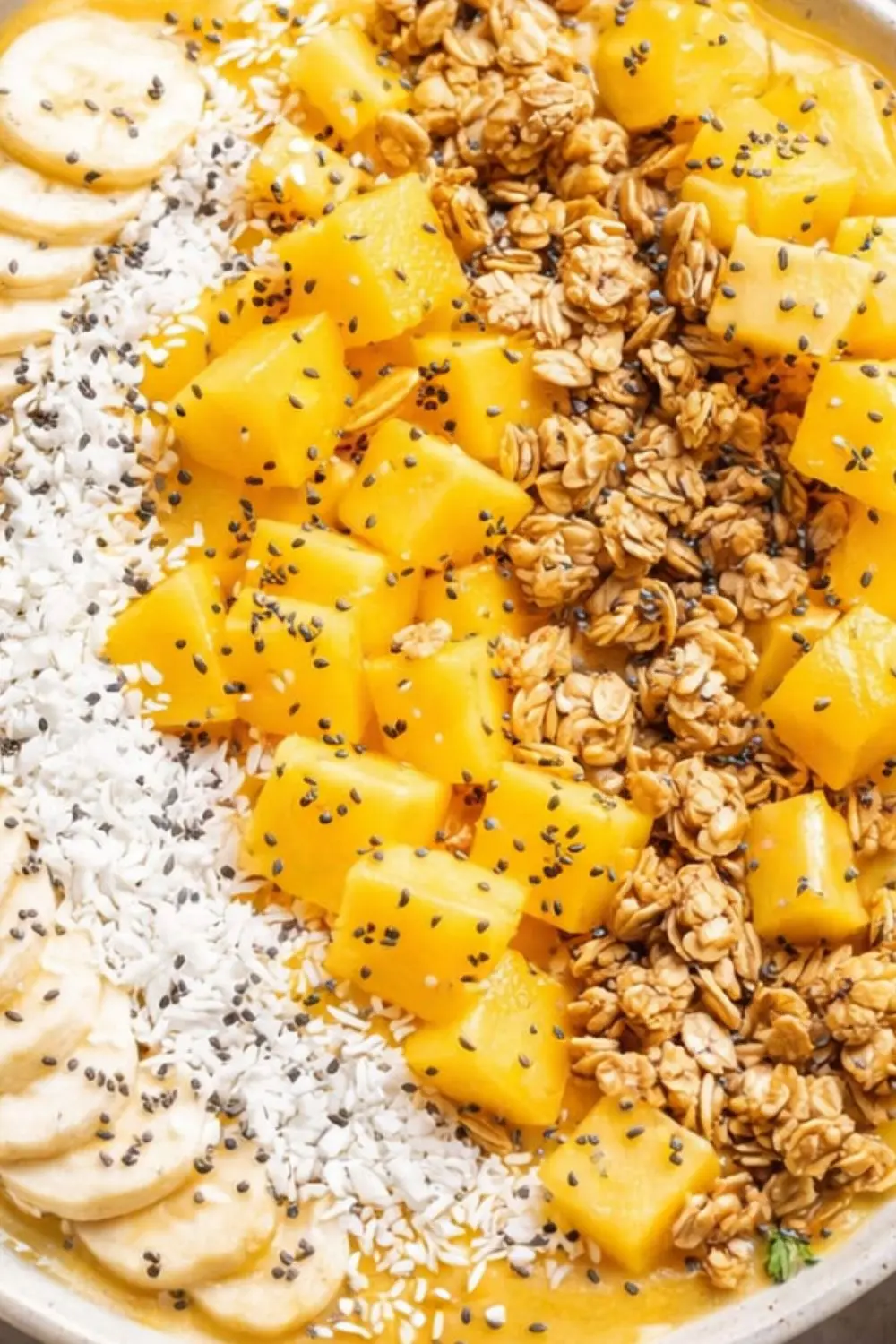
Tropical Vegan Breakfast Bowl with Mango and Pineapple
Ingredients
Equipment
Method
- Step 1: Add the frozen pineapple, frozen mango, banana, and almond milk to your blender. Blend until completely smooth. The mixture will be very thick — that’s exactly what you want. If your blender is struggling, add an extra splash of almond milk, but keep it minimal.
- Step 2: Pour the blended mixture into two shallow bowls. Then arrange your toppings — granola, fresh fruit, banana slices, shredded coconut, and chia seeds — on top however you like. Serve immediately and enjoy.
- That’s genuinely it. Two steps. Five minutes. Done.
Notes
Breaking Down the Toppings — and Why Each One Matters
The toppings aren’t just decoration (even though they do make the bowl look incredible). Each one adds something to the eating experience.Granola
Granola adds the crunch factor that a smoothie bowl desperately needs. Without it, every bite is just soft and cold. The contrast of crunchy granola against the thick, creamy base is what makes this feel like a proper meal rather than just a fancy smoothie. Use a good quality vegan granola — one with oats, nuts, and seeds rather than one that’s mostly sugar.Fresh Mango and Pineapple Chunks
Adding fresh fruit on top of the frozen base gives you two different textures of the same flavour — the creamy blended version underneath, and the juicy, fresh version on top. It also makes the bowl look genuinely stunning, which, let’s be honest, matters. We eat with our eyes first.Banana Slices
Sliced banana on top adds another layer of natural sweetness and a soft texture that contrasts nicely with the crunch of the granola. It also adds potassium and fills you up more than a bowl without it.Shredded Coconut
Coconut adds a slightly chewy texture and a tropical flavour that ties everything together. Toasted coconut takes it to another level entirely — just dry-fry it in a pan for two minutes until it goes golden and fragrant, and it transforms from “nice addition” to “honestly essential.”Chia Seeds
Chia seeds are doing nutritional work here. They add fibre, omega-3 fatty acids, and protein, and their slight crunch adds another texture layer to the bowl. They don’t change the flavour, but they make the whole thing more nutritious without you having to do anything extra. That’s my kind of ingredient.
Hi — I’m Rachel. I’m a wife, a mom, and a home cook who believes that food should bring comfort, joy, and compassion to the table. I live with my family — two hungry little foodies who are my most honest recipe testers — and together we’ve built a kitchen culture that’s all about good food that happens to be 100% vegan. I started this blog because I wanted a place to share the recipes that keep our days moving, the dishes that make weeknights feel a little easier, and the meals that become our little family traditions.