
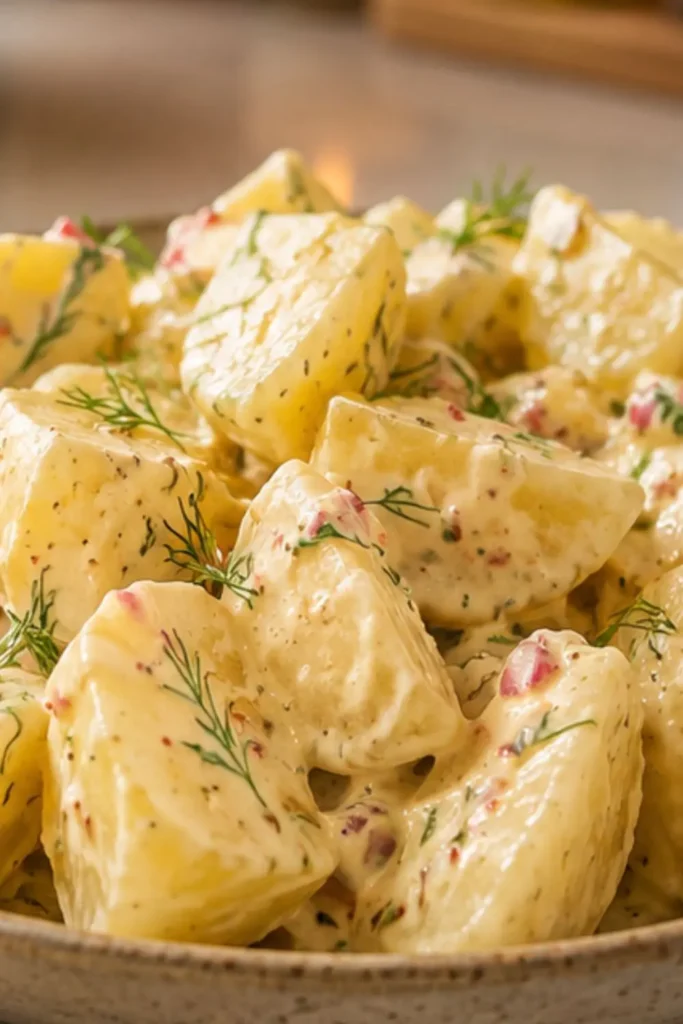
Potato salad has the kind of reputation that either means everything at a cookout or absolutely nothing depending entirely on who made it. Bad potato salad is mushy, under-seasoned, and swimming in sad mayo. Good potato salad makes people go quiet for a moment after the first bite, which is the highest possible compliment a side dish can receive. This Vegan Potato Salad with Dill and Whole-Grain Mustard is firmly in the second category creamy, tangy, herby, and built around a dressing with vegan mayo, stone-ground mustard, fresh dill, and a touch of nutritional yeast that adds a subtle savory depth nobody can quite identify but everyone keeps tasting.

I make this the night before every cookout I host. That overnight chill is where the magic actually happens and once you try it both ways, you’ll never make same-day potato salad again.
Why This Vegan Potato Salad Stands Out From Every Other Version
The difference between a forgettable potato salad and an outstanding one usually comes down to two things: the texture of the potato and the complexity of the dressing. This recipe gets both right.
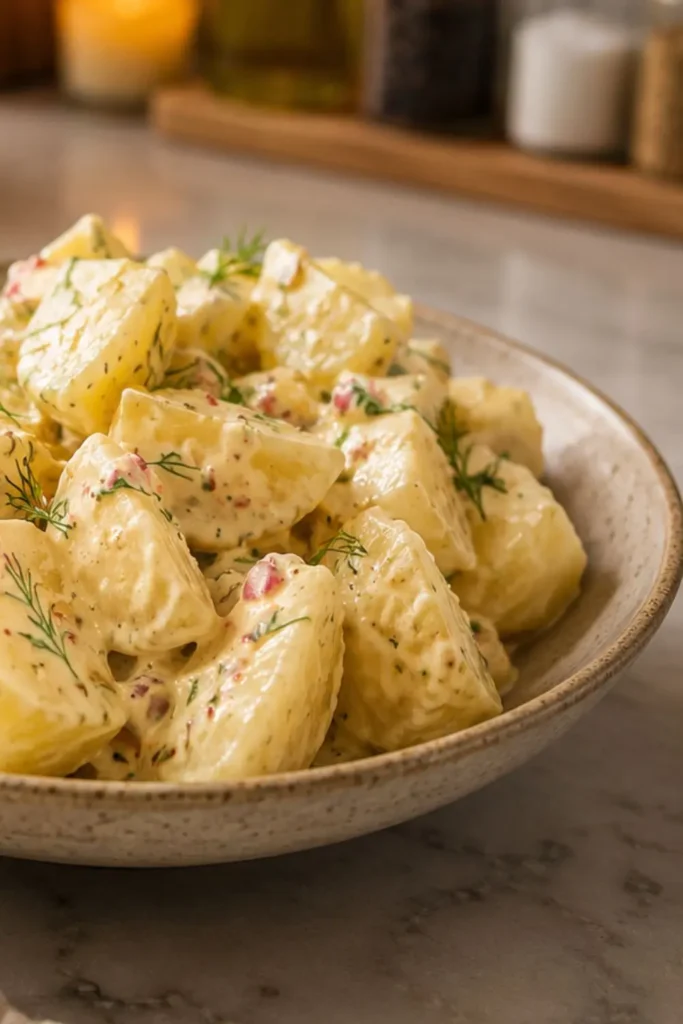
The Yukon Gold potatoes cook to a firm, slightly waxy texture that holds its shape after cubing and dressing no mush, no falling apart, no sad potato paste. The stone-ground mustard adds visible texture and a punchy, slightly bitter depth that regular yellow mustard simply doesn’t have. The fresh dill brings a bright, herby quality that cuts through the richness of the mayo. And the nutritional yeast quietly adds a savory, almost cheesy note that makes the dressing taste more layered than its ingredients suggest.
Together, these elements produce a Vegan Potato Salad with Dill and Whole-Grain Mustard that genuinely earns its place as one of the best cookout side dishes you can bring to any summer gathering.
My Recipe At a Glance
Full timing and serving overview:
| Detail | Info |
| Prep Time | 10 minutes |
| Cook Time | 15 minutes |
| Total Time | 25 minutes (+ 6 hours or overnight chilling) |
| Servings | 4 people |
| Calories per Serving | 292 kcal |
| Course | Side Dish / Cookout |
| Cuisine | American / Vegan |
The 25-minute active time is accurate the 6-hour minimum chill time (or overnight) is where the flavors fully develop and the dressing settles into every surface of the potato. Plan to make this the day before your cookout. You’ll be glad you did.
Equipment You’ll Need For Vegan Potato Salad with Dill and Whole-Grain Mustard
Standard kitchen tools nothing specialized:
- Medium to large pot – for boiling the potatoes. Wide enough to hold 1 pound of cubed Yukon Golds comfortably submerged in water. A pot that’s too small crowds the potatoes and leads to uneven cooking.
- Colander – for draining the potatoes after boiling. Have it ready in the sink before the potatoes finish cooking so you can drain immediately.
- Large mixing bowl – for combining the cooled potatoes and dressing. Go bigger than you think you need; tossing in a too-small bowl leads to potato cubes flying off the edge, which is technically a loss
- Small bowl– for mixing the dressing ingredients together before adding to the potatoes. Making the dressing separately gives you full control over seasoning before it touches the potatoes.
- Sharp knife and cutting board – for cubing the potatoes, dicing the celery and red onion, and finely chopping the fresh dill. Even, consistent potato cubes are important for even cooking irregular sizes mean some pieces overcook while others stay firm.
- Vegetable peeler – for peeling the potatoes before cubing.
- Measuring cups and spoons – the dressing ratios matter here; the balance of mayo, mustard, vinegar, and sugar creates the right sweet-tangy-creamy profile.
- Airtight container with lid -for the overnight refrigerator rest. The dressing continues to develop flavor as it chills and the covered environment prevents the potatoes from absorbing refrigerator odors.
That’s the complete list. A pot, a bowl, and a knife the fundamentals of a good potato salad require nothing more.
Ingredients (Serves 4)
All plant-based, all pulling serious flavor weight:
For the Potatoes:
- 1 lb Yukon Gold potatoes – the right potato for this recipe, full stop. Yukon Golds have a naturally buttery, slightly waxy flesh that holds its shape after boiling and cubing without turning mushy under the weight of the dressing. Russet potatoes absorb too much water and fall apart. Red potatoes work as the best substitute their texture is similar to Yukon Gold and they hold up equally well. Avoid starchy baking potatoes entirely.
- Salt – for the boiling water. Generously salted water is the only opportunity to season the potato flesh itself; everything else seasons the surface.
For the Dressing:
- ½ cup vegan mayo – the creamy base. Hellmann’s Vegan has the closest texture and flavor to traditional mayo and produces the most consistent dressing. Vegenaise is a strong second option. Just Mayo is slightly thinner but works well. Avoid vegan “salad dressings” that use the word mayo loosely they’re too watery for a proper potato salad.
- 1 tablespoon stone-ground mustard – whole-grain mustard with visible seeds, not smooth mustard. The texture of the whole seeds creates pockets of mustard flavor throughout the salad that you don’t get with smooth preparations. Yellow or Dijon mustard work as substitutes but produce a noticeably different result smooth, one-note mustard flavor rather than complex, seeded depth.
- ¼ teaspoon paprika powder– adds a mild warmth and a touch of color to the dressing.
- 1 small red onion– finely diced adds sharp, savory bite that balances the richness of the mayo. Fine dice is essential here. Large chunks of raw red onion are overpowering in a cold salad where every bite should taste balanced. FYI if raw red onion is too sharp for your crowd, soak the diced pieces in cold water for 10 minutes before adding. It removes the harshest bite while keeping the flavor.
- ¼ cup celery-finely diced adds crunch and a mild, slightly vegetal freshness that contrasts the creamy dressing. Celery is the element that keeps this from feeling too rich don’t skip it.
- 2–3 teaspoons sugar– adjusted to taste balances the vinegar’s sharpness and rounds out the overall dressing flavor. Start with 2 teaspoons and add more if the dressing tastes too acidic.
- ½ teaspoon apple cider vinegar (or distilled white vinegar) – adds a subtle brightness that keeps the dressing from tasting flat or heavy. Apple cider vinegar has a slightly warmer, more rounded acidity; white vinegar is sharper and more direct. Both work well here.
- 1–2 tablespoons fresh dill finely chopped (including stalks) – the herb that defines this particular potato salad. Fresh dill has a grassy, slightly anise-like brightness that’s completely different from dried dill. Use fresh specifically. I include the stalks because they have real flavor and there’s no point in wasting them.
- ½ tablespoon nutritional yeast – the subtle ingredient that makes people ask what’s in the dressing. Nutritional yeast adds a savory, slightly cheesy depth that makes the dressing taste more complex than its ingredients suggest. Vegan parmesan works as a substitute.
- Salt and pepper to taste
Step-by-Step Instructions For Vegan Potato Salad with Dill and Whole-Grain Mustard
Five stages. Twenty-five minutes of active work. Here’s exactly how to build it.
Stage 1 – Prep and Boil the Potatoes
Wash, peel, and cube the potatoes into 1 to 1.5-inch pieces. Consistency matters similar-sized pieces cook in the same amount of time. A mix of large and small chunks means some cook to mush while others stay firm. Take the extra minute to cut evenly.
Add the cubed potatoes to your pot and cover completely with cold water always start with cold water, not boiling, so the potatoes heat gradually from the outside in and cook more evenly. Bring to a boil over high heat. Once boiling, add a generous amount of salt to the water this is your one chance to season the potato flesh itself rather than just the surface.
Reduce to a steady simmer and cook for 10–12 minutes until the potatoes are tender with a slight bite at the center. You want them cooked through but not collapsing a fork should slide in with moderate resistance, not zero resistance. Mushy potato salad is a real and preventable tragedy.
Stage 2 – Cool the Potatoes
Drain immediately in your colander and run cold water over the potatoes for a full minute to stop the cooking process. This cold rinse is important potatoes continue cooking from residual heat after you pull them off the stove, and a cold water stop prevents them from overcooking as they sit and cool. Spread them out slightly in the colander rather than leaving them in a pile, which traps heat.
Allow the potatoes to cool to room temperature before adding the dressing. Warm potatoes absorb more mayo dressing than cold ones, which sounds appealing but actually produces a heavier, greasier result. Cool potatoes stay firmer and the dressing coats rather than soaks. 🙂
Stage 3 – Make the Dressing
Combine all the dressing ingredients in your small bowl: vegan mayo, stone-ground mustard, paprika, diced red onion, celery, sugar, vinegar, fresh dill, nutritional yeast, salt, and pepper. Mix until completely combined. Taste the dressing directly and adjust more sugar if it’s too sharp, more vinegar if it’s too sweet, more dill if you want more herb presence, more salt if it tastes flat.
The dressing should taste creamy, tangy, herby, and well-balanced on its own before it touches the potatoes. Getting the seasoning right at this stage means the finished potato salad hits the right notes after chilling.
Stage 4 – Combine and Chill
Add the cooled potatoes to your large bowl. Pour the dressing over them and fold gently until every potato cube is well-coated. Use a folding motion rather than vigorous stirring gentle folding keeps the potato cubes intact while still distributing the dressing evenly.
Transfer to your airtight container and refrigerate for at least 6 hours overnight is ideal. This resting time is what transforms the potato salad from good to genuinely great. The dressing absorbs into the surface of the potatoes, the flavors meld together, and the whole thing develops a depth and cohesion that a freshly made potato salad simply doesn’t have.
Stage 5 – Serve
Remove from the fridge and give it one gentle stir before serving. Taste and adjust seasoning chilling slightly dulls salt and acid, and a small pinch of extra salt or splash of vinegar often refreshes the flavor beautifully right before the salad goes to the table.
Full Nutrition Breakdown (Per Serving)
| Nutrient | Amount |
| Calories | 292 kcal |
| Carbohydrates | 27g |
| Protein | 3g |
| Total Fat | 18g |
| Saturated Fat | 2g |
| Fiber | 3g |
| Sugar | 4g |
| Sodium | see note |
| Potassium | 543mg |
| Vitamin C | 24mg |
| Calcium | 27mg |
| Iron | 1mg |
Note on sodium- The original recipe sodium figure reflects added salt to the boiling water, much of which is discarded with the cooking water. The actual sodium in the finished dish will be significantly lower depending on how much salt you use and your specific vegan mayo brand. Season with awareness and taste as you go.
Tips for the Best Vegan Potato Salad Every Time
These details make a consistent, meaningful difference:
- Use Yukon Gold potatoes specifically. Their waxy texture holds up after boiling and chilling. Russet potatoes turn grainy and mushy in a cold salad dressing. The potato choice is the single biggest factor in texture.
- Start potatoes in cold water. Cold water to boil gives even, gradual cooking. Hot water from the start causes the outside to overcook before the center is done.
- Salt the boiling water generously. This is where the potato flavor comes from. Under-salted water produces bland potato salad no matter how good the dressing is.
- Cool the potatoes completely before dressing. Warm potatoes absorb too much mayo and produce a heavier, wetter result. Cold potatoes hold their shape and the dressing clings properly to the surface.
- Refrigerate overnight. IMO, same-day potato salad is always noticeably inferior to overnight potato salad. The six-hour minimum is a real minimum overnight is better in every way.
- Re-season before serving. Chilling dulls flavors. Always taste and adjust salt, acid, or dill right before the salad goes to the table.
Still Hungry, Try It Next recipe
Variations Worth Trying
The base recipe is excellent, but here are directions that work particularly well:
Smoky Bacon-Style Version
Add 2 tablespoons of crumbled smoky tempeh bacon (marinated in soy sauce, maple syrup, and smoked paprika, then pan-fried) to the finished salad. The smoky, salty tempeh pieces against the creamy dill dressing creates a genuinely satisfying combination that people who miss bacon potato salad will love.
German-Style Potato Salad Version
Skip the mayo entirely. Dress the warm potatoes with apple cider vinegar, olive oil, whole-grain mustard, diced red onion, and fresh dill. German potato salad is served warm and vinegar-dressed rather than cold and creamy a completely different but equally excellent variation for those who prefer something lighter.
Herby Green Version
Add ¼ cup of finely chopped fresh chives and 2 tablespoons of fresh flat-leaf parsley alongside the dill. The triple-herb combination creates a more aromatic, garden-forward flavor profile that feels more spring-like and elegant for dinner parties.
Make-Ahead and Storage Tips
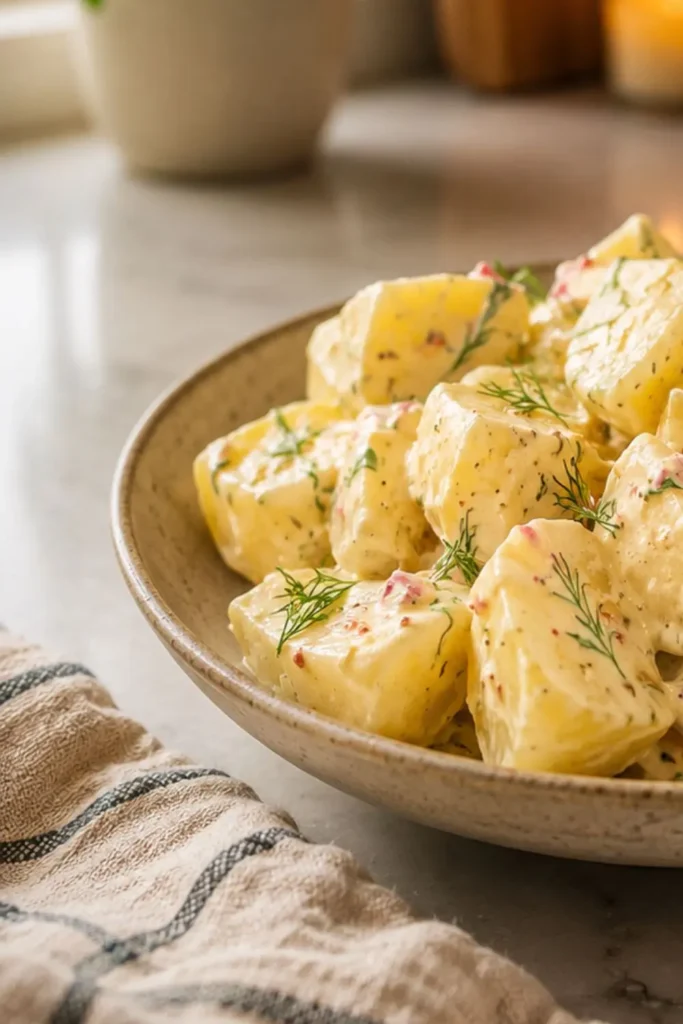
Vegan Potato Salad with Dill and Whole-Grain Mustard is one of the best make-ahead cookout side dishes available:
- Make 24 hours ahead- The overnight rest is genuinely recommended by the recipe this is make-ahead-friendly by design. The flavor improves significantly with an overnight chill.
- Store in the fridge for 5–7 days- This potato salad keeps exceptionally well in a sealed container. The vegan mayo dressing stays stable and the flavors continue to develop over the first two days.
- Re-stir and re-season before each serving- Always stir before serving and do a quick taste-and-adjust check. A small splash of vinegar or pinch of dill refreshes the whole bowl after a day or two in the fridge.
- Don’t freeze- Mayo-based potato salads separate badly after freezing and thawing. Keep refrigerated only.
How to Serve at a Cookout
This potato salad travels and presents beautifully:
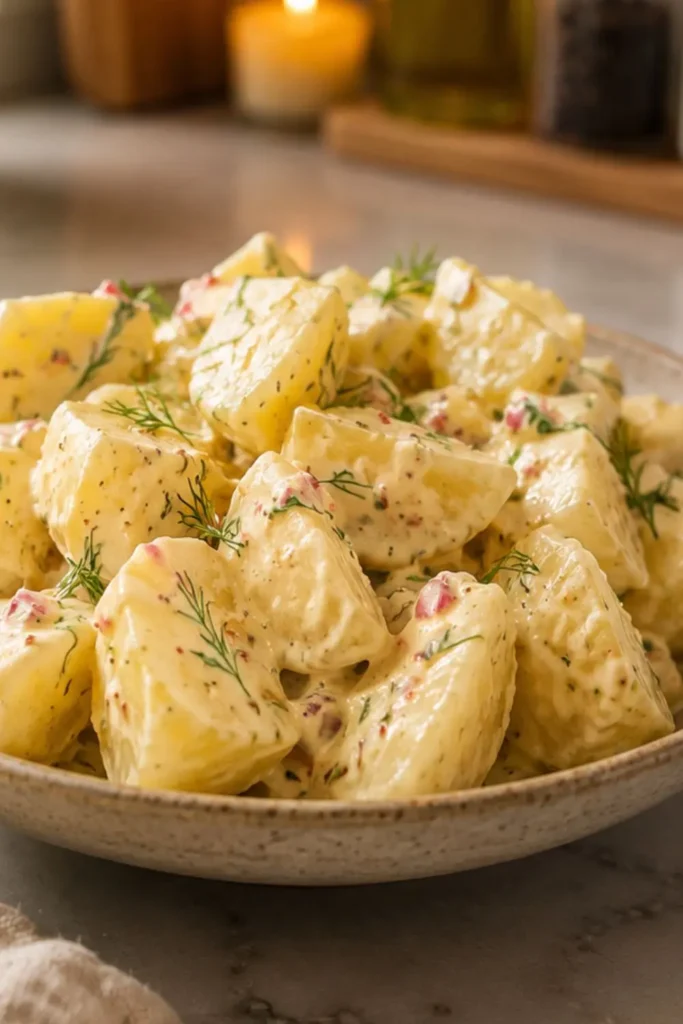
- Serve in a wide, shallow bowl so the dill and visible mustard seeds show clearly on the surface
- Garnish with extra fresh dill fronds and a light dusting of paprika right before serving for a finished, intentional look
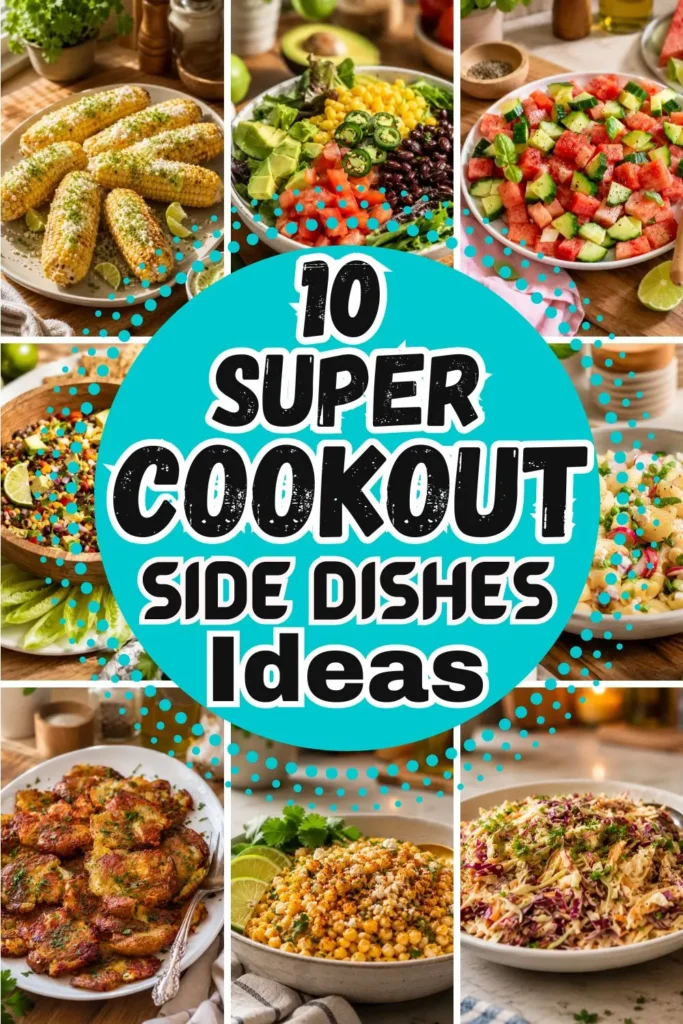
- Pair alongside BBQ baked beans, grilled corn, and vegan coleslaw for a complete plant-based cookout spread
- Keep it chilled until serving set the bowl inside a larger bowl filled with ice for outdoor summer meals to maintain food safety and texture
My Final Thoughts
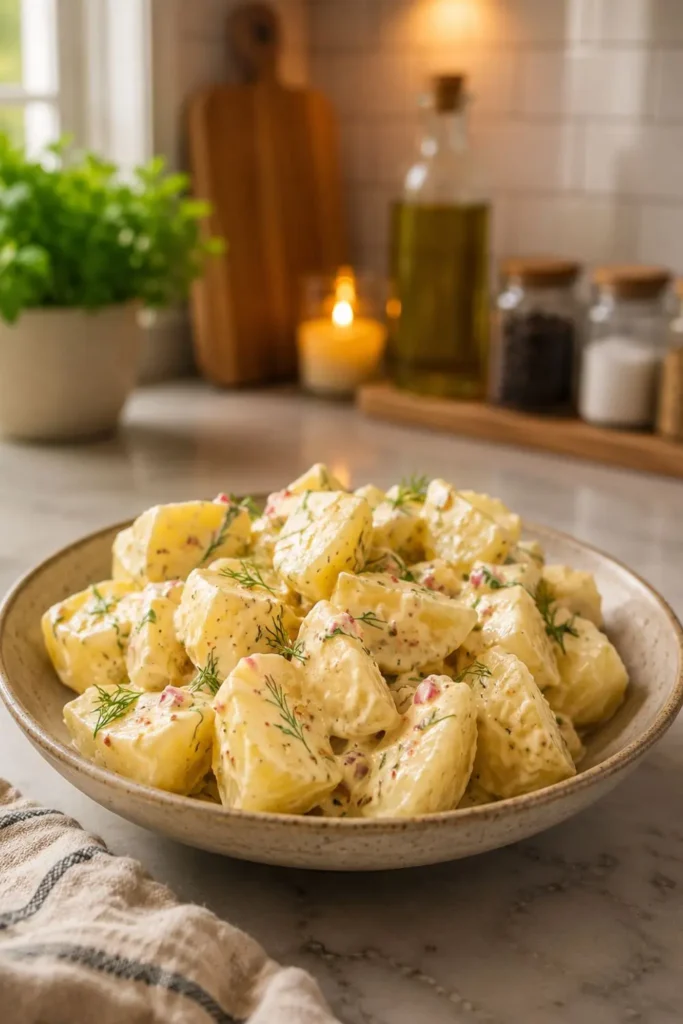
Vegan Potato Salad with Dill and Whole-Grain Mustard earns its place as a permanent cookout side dish staple because it delivers on every front: proper potato texture, a dressing with genuine complexity from the stone-ground mustard and fresh dill, and the kind of overnight depth that makes people reach for seconds before they’ve registered they’re doing it.
Make it the night before. Season the boiling water. Cool the potatoes completely before dressing. Taste and adjust before serving. And when someone tells you it’s the best potato salad they’ve had vegan or otherwise accept the compliment without any qualifying explanation. It’s just good potato salad. Full stop.
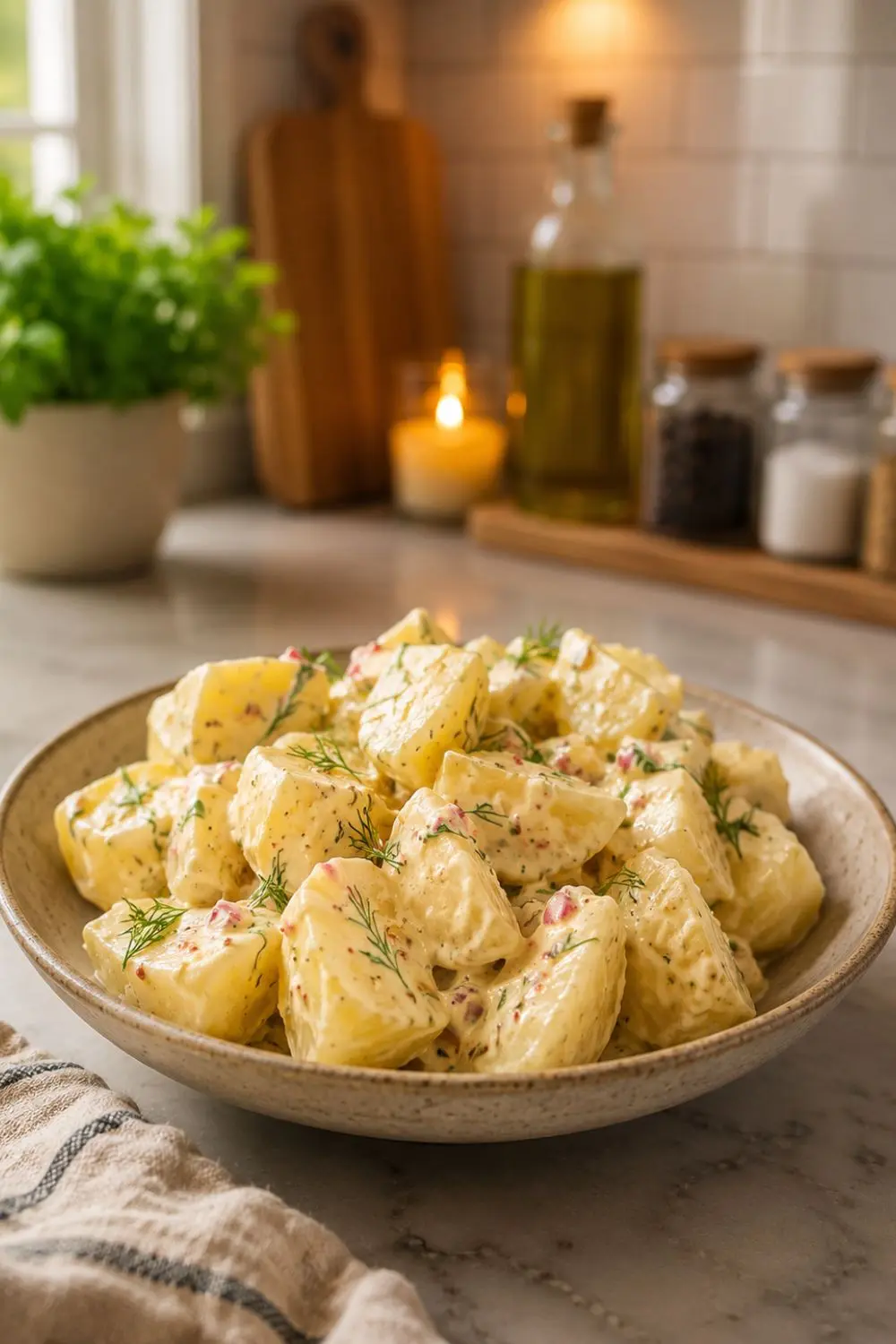
Vegan Potato Salad with Dill and Whole-Grain Mustard
Ingredients
Equipment
Method
- Five stages. Twenty-five minutes of active work. Here’s exactly how to build it.
- Stage 1 – Prep and Boil the Potatoes
- Wash, peel, and cube the potatoes into 1 to 1.5-inch pieces. Consistency matters similar-sized pieces cook in the same amount of time. A mix of large and small chunks means some cook to mush while others stay firm. Take the extra minute to cut evenly.
- Add the cubed potatoes to your pot and cover completely with cold water always start with cold water, not boiling, so the potatoes heat gradually from the outside in and cook more evenly. Bring to a boil over high heat. Once boiling, add a generous amount of salt to the water this is your one chance to season the potato flesh itself rather than just the surface.
- Reduce to a steady simmer and cook for 10–12 minutes until the potatoes are tender with a slight bite at the center. You want them cooked through but not collapsing a fork should slide in with moderate resistance, not zero resistance. Mushy potato salad is a real and preventable tragedy.
- Stage 2 – Cool the Potatoes
- Drain immediately in your colander and run cold water over the potatoes for a full minute to stop the cooking process. This cold rinse is important potatoes continue cooking from residual heat after you pull them off the stove, and a cold water stop prevents them from overcooking as they sit and cool. Spread them out slightly in the colander rather than leaving them in a pile, which traps heat.
- Allow the potatoes to cool to room temperature before adding the dressing. Warm potatoes absorb more mayo dressing than cold ones, which sounds appealing but actually produces a heavier, greasier result. Cool potatoes stay firmer and the dressing coats rather than soaks. 🙂
- Stage 3 – Make the Dressing
- Combine all the dressing ingredients in your small bowl: vegan mayo, stone-ground mustard, paprika, diced red onion, celery, sugar, vinegar, fresh dill, nutritional yeast, salt, and pepper. Mix until completely combined. Taste the dressing directly and adjust more sugar if it’s too sharp, more vinegar if it’s too sweet, more dill if you want more herb presence, more salt if it tastes flat.
- The dressing should taste creamy, tangy, herby, and well-balanced on its own before it touches the potatoes. Getting the seasoning right at this stage means the finished potato salad hits the right notes after chilling.
- Stage 4 – Combine and Chill
- Add the cooled potatoes to your large bowl. Pour the dressing over them and fold gently until every potato cube is well-coated. Use a folding motion rather than vigorous stirring gentle folding keeps the potato cubes intact while still distributing the dressing evenly.
- Transfer to your airtight container and refrigerate for at least 6 hours overnight is ideal. This resting time is what transforms the potato salad from good to genuinely great. The dressing absorbs into the surface of the potatoes, the flavors meld together, and the whole thing develops a depth and cohesion that a freshly made potato salad simply doesn’t have.
- Stage 5 – Serve
- Remove from the fridge and give it one gentle stir before serving. Taste and adjust seasoning chilling slightly dulls salt and acid, and a small pinch of extra salt or splash of vinegar often refreshes the flavor beautifully right before the salad goes to the table.
Notes
Full Nutrition Breakdown (Per Serving)
| Nutrient | Amount |
| Calories | 292 kcal |
| Carbohydrates | 27g |
| Protein | 3g |
| Total Fat | 18g |
| Saturated Fat | 2g |
| Fiber | 3g |
| Sugar | 4g |
| Sodium | see note |
| Potassium | 543mg |
| Vitamin C | 24mg |
| Calcium | 27mg |
| Iron | 1mg |

Hi — I’m Rachel. I’m a wife, a mom, and a home cook who believes that food should bring comfort, joy, and compassion to the table. I live with my family — two hungry little foodies who are my most honest recipe testers — and together we’ve built a kitchen culture that’s all about good food that happens to be 100% vegan. I started this blog because I wanted a place to share the recipes that keep our days moving, the dishes that make weeknights feel a little easier, and the meals that become our little family traditions.