Go Back
Vegan Potato Salad with Dill and Whole-Grain Mustard

Vegan Potato Salad with Dill and Whole-Grain Mustard

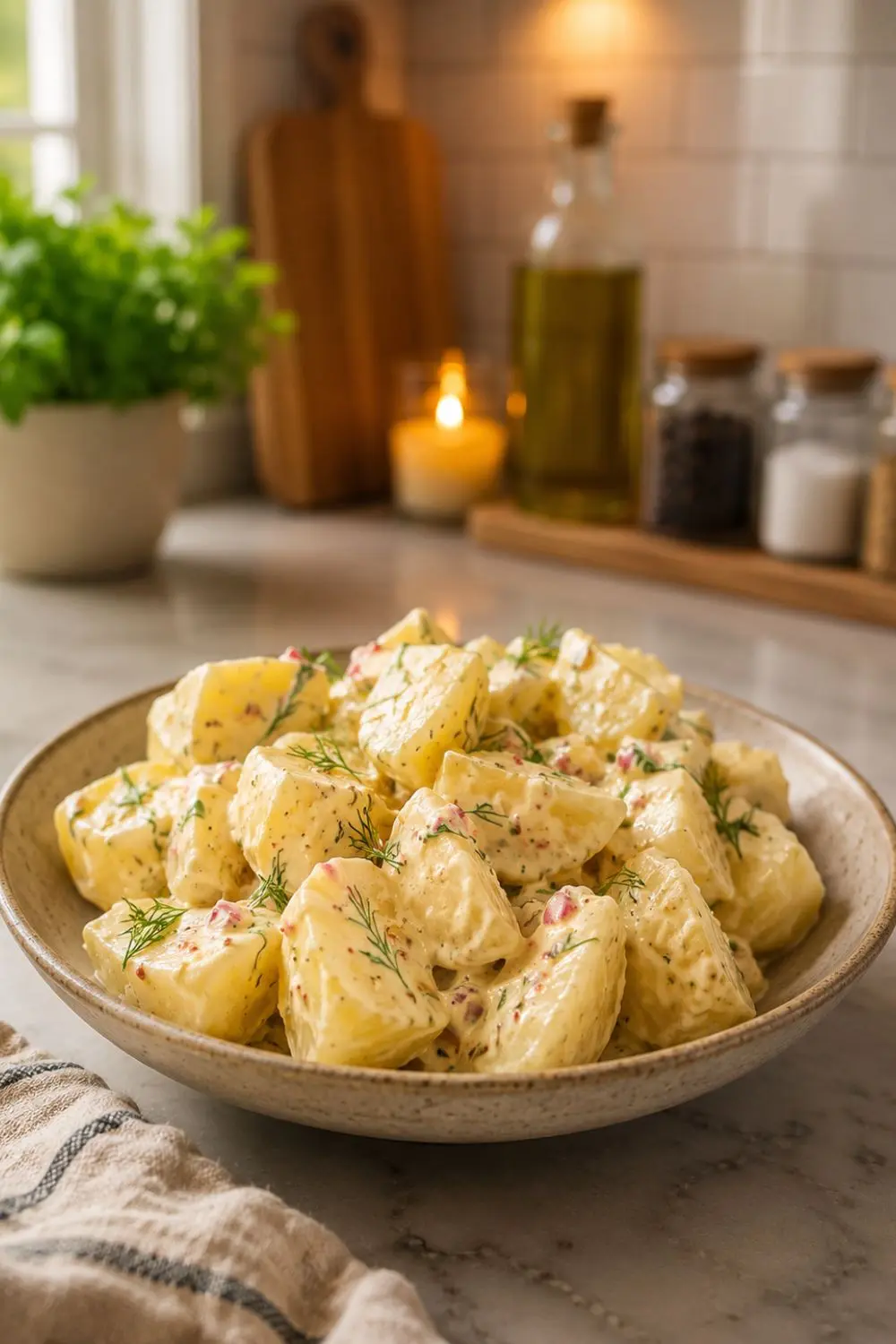
Potato salad has the kind of reputation that either means everything at a cookout or absolutely nothing depending entirely on who made it. Bad potato salad is mushy, under-seasoned, and swimming in sad mayo. Good potato salad makes people go quiet for a moment after the first bite, which is the highest possible compliment a side dish can receive. This Vegan Potato Salad with Dill and Whole-Grain Mustard is firmly in the second category creamy, tangy, herby, and built around a dressing with vegan mayo, stone-ground mustard, fresh dill, and a touch of nutritional yeast that adds a subtle savory depth nobody can quite identify but everyone keeps tasting.
Prep Time 10 minutes
Cook Time 15 minutes
Total Time 25 minutes
Servings: 4
Course: Cookout Side Dishes, Gluten-free, Side Dish
Cuisine: American
Calories: 292

Ingredients
  

  • All plant-based all pulling serious flavor weight:
  • For the Potatoes:
  • 1 lb Yukon Gold potatoes - the right potato for this recipe full stop. Yukon Golds have a naturally buttery, slightly waxy flesh that holds its shape after boiling and cubing without turning mushy under the weight of the dressing. Russet potatoes absorb too much water and fall apart. Red potatoes work as the best substitute their texture is similar to Yukon Gold and they hold up equally well. Avoid starchy baking potatoes entirely.
  • Salt - for the boiling water. Generously salted water is the only opportunity to season the potato flesh itself; everything else seasons the surface.
  • For the Dressing:
  • ½ cup vegan mayo - the creamy base. Hellmann's Vegan has the closest texture and flavor to traditional mayo and produces the most consistent dressing. Vegenaise is a strong second option. Just Mayo is slightly thinner but works well. Avoid vegan "salad dressings" that use the word mayo loosely they're too watery for a proper potato salad.
  • 1 tablespoon stone-ground mustard - whole-grain mustard with visible seeds not smooth mustard. The texture of the whole seeds creates pockets of mustard flavor throughout the salad that you don't get with smooth preparations. Yellow or Dijon mustard work as substitutes but produce a noticeably different result smooth, one-note mustard flavor rather than complex, seeded depth.
  • ¼ teaspoon paprika powder- adds a mild warmth and a touch of color to the dressing.
  • 1 small red onion- finely diced adds sharp savory bite that balances the richness of the mayo. Fine dice is essential here. Large chunks of raw red onion are overpowering in a cold salad where every bite should taste balanced. FYI if raw red onion is too sharp for your crowd, soak the diced pieces in cold water for 10 minutes before adding. It removes the harshest bite while keeping the flavor.
  • ¼ cup celery-finely diced adds crunch and a mild slightly vegetal freshness that contrasts the creamy dressing. Celery is the element that keeps this from feeling too rich don't skip it.
  • 2 –3 teaspoons sugar- adjusted to taste balances the vinegar's sharpness and rounds out the overall dressing flavor. Start with 2 teaspoons and add more if the dressing tastes too acidic.
  • ½ teaspoon apple cider vinegar or distilled white vinegar - adds a subtle brightness that keeps the dressing from tasting flat or heavy. Apple cider vinegar has a slightly warmer, more rounded acidity; white vinegar is sharper and more direct. Both work well here.
  • 1 –2 tablespoons fresh dill finely chopped including stalks - the herb that defines this particular potato salad. Fresh dill has a grassy, slightly anise-like brightness that's completely different from dried dill. Use fresh specifically. I include the stalks because they have real flavor and there's no point in wasting them.
  • ½ tablespoon nutritional yeast - the subtle ingredient that makes people ask what's in the dressing. Nutritional yeast adds a savory slightly cheesy depth that makes the dressing taste more complex than its ingredients suggest. Vegan parmesan works as a substitute.

Equipment

  • Standard kitchen tools nothing specialized:
  • Medium to large pot - for boiling the potatoes. Wide enough to hold 1 pound of cubed Yukon Golds comfortably submerged in water. A pot that's too small crowds the potatoes and leads to uneven cooking.
  • Colander - for draining the potatoes after boiling. Have it ready in the sink before the potatoes finish cooking so you can drain immediately.
  • Large mixing bowl - for combining the cooled potatoes and dressing. Go bigger than you think you need; tossing in a too-small bowl leads to potato cubes flying off the edge, which is technically a loss
  • Small bowl- for mixing the dressing ingredients together before adding to the potatoes. Making the dressing separately gives you full control over seasoning before it touches the potatoes.
  • Sharp knife and cutting board - for cubing the potatoes, dicing the celery and red onion, and finely chopping the fresh dill. Even, consistent potato cubes are important for even cooking irregular sizes mean some pieces overcook while others stay firm.
  • Vegetable peeler - for peeling the potatoes before cubing.
  • Measuring cups and spoons - the dressing ratios matter here; the balance of mayo, mustard, vinegar, and sugar creates the right sweet-tangy-creamy profile.
  • Airtight container with lid -for the overnight refrigerator rest. The dressing continues to develop flavor as it chills and the covered environment prevents the potatoes from absorbing refrigerator odors.

Method
 

  1. Five stages. Twenty-five minutes of active work. Here's exactly how to build it.
  2. Stage 1 - Prep and Boil the Potatoes
  3. Wash, peel, and cube the potatoes into 1 to 1.5-inch pieces. Consistency matters similar-sized pieces cook in the same amount of time. A mix of large and small chunks means some cook to mush while others stay firm. Take the extra minute to cut evenly.
  4. Add the cubed potatoes to your pot and cover completely with cold water always start with cold water, not boiling, so the potatoes heat gradually from the outside in and cook more evenly. Bring to a boil over high heat. Once boiling, add a generous amount of salt to the water this is your one chance to season the potato flesh itself rather than just the surface.
  5. Reduce to a steady simmer and cook for 10–12 minutes until the potatoes are tender with a slight bite at the center. You want them cooked through but not collapsing a fork should slide in with moderate resistance, not zero resistance. Mushy potato salad is a real and preventable tragedy.
  6. Stage 2 - Cool the Potatoes
  7. Drain immediately in your colander and run cold water over the potatoes for a full minute to stop the cooking process. This cold rinse is important potatoes continue cooking from residual heat after you pull them off the stove, and a cold water stop prevents them from overcooking as they sit and cool. Spread them out slightly in the colander rather than leaving them in a pile, which traps heat.
  8. Allow the potatoes to cool to room temperature before adding the dressing. Warm potatoes absorb more mayo dressing than cold ones, which sounds appealing but actually produces a heavier, greasier result. Cool potatoes stay firmer and the dressing coats rather than soaks. :)
  9. Stage 3 - Make the Dressing
  10. Combine all the dressing ingredients in your small bowl: vegan mayo, stone-ground mustard, paprika, diced red onion, celery, sugar, vinegar, fresh dill, nutritional yeast, salt, and pepper. Mix until completely combined. Taste the dressing directly and adjust more sugar if it's too sharp, more vinegar if it's too sweet, more dill if you want more herb presence, more salt if it tastes flat.
  11. The dressing should taste creamy, tangy, herby, and well-balanced on its own before it touches the potatoes. Getting the seasoning right at this stage means the finished potato salad hits the right notes after chilling.
  12. Stage 4 - Combine and Chill
  13. Add the cooled potatoes to your large bowl. Pour the dressing over them and fold gently until every potato cube is well-coated. Use a folding motion rather than vigorous stirring gentle folding keeps the potato cubes intact while still distributing the dressing evenly.
  14. Transfer to your airtight container and refrigerate for at least 6 hours overnight is ideal. This resting time is what transforms the potato salad from good to genuinely great. The dressing absorbs into the surface of the potatoes, the flavors meld together, and the whole thing develops a depth and cohesion that a freshly made potato salad simply doesn't have.
  15. Stage 5 - Serve
  16. Remove from the fridge and give it one gentle stir before serving. Taste and adjust seasoning chilling slightly dulls salt and acid, and a small pinch of extra salt or splash of vinegar often refreshes the flavor beautifully right before the salad goes to the table.
Notes

Full Nutrition Breakdown (Per Serving)

Nutrient
Amount
Calories
292 kcal
Carbohydrates
27g
Protein
3g
Total Fat
18g
Saturated Fat
2g
Fiber
3g
Sugar
4g
Sodium
see note
Potassium
543mg
Vitamin C
24mg
Calcium
27mg
Iron
1mg