
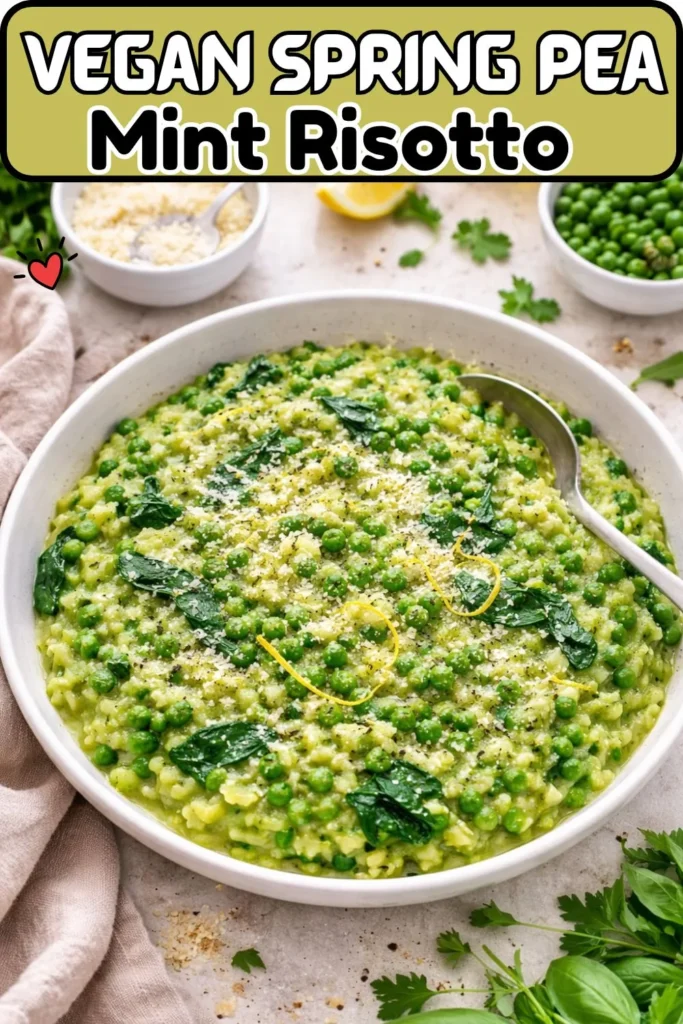
Bright green, silky risotto studded with sweet peas and a burst of mint — fancy enough for guests, easy enough for a weeknight. This Vegan Spring Pea & Mint Vegan Risotto sings of spring and takes about 55 minutes from start to finish. Cozy, fresh, and totally plant-based — yes, please.
I make this when I want something comforting that still feels light. The peas keep it cheerful, the mint keeps it lively, and the creamy texture makes everyone pretend they spent hours in the kitchen. FYI, you don’t need dairy to get that decadent, spoon-licking risotto texture.
Why you should make this
This risotto brings fresh spring flavor to your table without fuss. It combines tender Arborio rice, bright blanched peas, and mint, then finishes with vegan “cheese” and a touch of truffle oil if you’re feeling bougie. The whole batch feeds 4 people and clocks in at about 55 minutes. Bold takeaway: it looks restaurant-level but mostly needs gentle stirring and patience.
Ever wondered why risotto feels so luxurious? The slow absorption of warm broth unlocks the rice’s creamy starches. That technique works wonders even when you use plant-based ingredients.
Equipment you’ll need
- Heavy-bottomed pot or Dutch oven (for even heat) — 1
- Medium saucepan (to keep broth warm) — 1
- Wooden spoon or silicone spatula — 1
- Measuring cups & spoons — essentials
- Blender or food processor (for the pea purée) — 1
- Fine microplane (for lemon zest; optional) — 1
You don’t need anything flashy beyond a sturdy pot and a blender. If you own a ladle, use it — the process becomes a zen ritual.
Ingredients (Yield: 4)
Pea Risotto
- 4 cups vegetable broth, warmed
- 3 tbsp olive oil, divided
- 2 shallots (or 1 small leek, or 1 white onion), diced
- 2 garlic cloves, rough chopped
- 1 cup Arborio rice
- 1/2 cup dry white wine (or water + 1 tsp lemon juice)
- 2 cups peas (fresh blanched or frozen)
- 1/2 cup vegan grated cheese or 3 tbsp nutritional yeast (for that cheesy finish)
- Zest of 1 lemon
- Salt & black pepper, to taste
- 1/4 cup fresh mint, packed and sliced
- Drizzle of truffle oil (optional, for finishing)
Optional additions: Aleppo chili flakes, sautéed mushrooms, microgreens.
Bold note: swap Pecorino for vegan parmesan or nutritional yeast to keep it 100% vegan.
Time & nutrition (estimated)
- Prep time: 10 minutes
- Cook time: 45 minutes
- Total time: 55 minutes
- Serves: 4
- Estimated calories per serving: ~350–370 kcal (depends on vegan cheese and oil amounts)
- Protein per serving: ~11–12 g; Fiber: ~4 g. (These are approximate — use your nutrition app for exact tracking.)
Why the range? Different vegan cheeses and olive oil amounts change calories slightly. I estimate ~357 kcal per serving as a reasonable ballpark.
Step-by-step recipe for Vegan Spring Pea & Mint Risotto
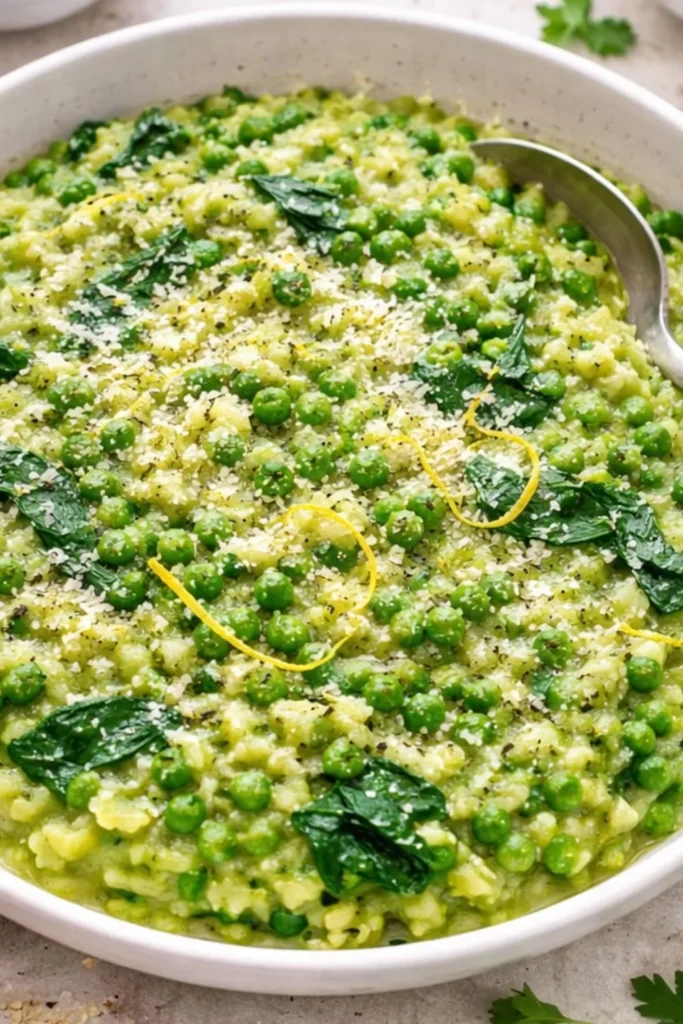
1. Warm the broth
Heat the 4 cups vegetable broth in a saucepan and keep it at a gentle simmer. Keeping the broth warm helps the rice absorb evenly and speeds things along.
2. Sauté aromatics
In a heavy-bottomed pot, heat 2 tbsp olive oil over medium-low heat. Add the diced shallots and garlic and sauté gently for 4–5 minutes until soft and fragrant, stirring so they don’t brown. Keep the heat mellow; you want sweetness, not onion crisps.
3. Toast the rice
Add the Arborio rice and stir for 1 minute to coat the grains in oil. Pour in the white wine and simmer until the wine mostly absorbs. That little sizzle adds depth — don’t skip it.
4. Add warm broth, slowly
Add 1 cup of the hot broth, then stir every 45–60 seconds until the rice absorbs the liquid. Repeat, adding broth half-cup or cup by cup, stirring patiently. Keep the heat at medium-low so the rice cooks gently. This gradual absorption releases starch and makes that silky risotto texture.
5. Prepare the peas
While the rice simmers, bring a small pot of salted water to a boil. Blanch 2 cups peas for 2–3 minutes, drain, and reserve ½ cup of blanched peas for blending. (Pro tip: if peas are frozen, you can skip blanching and just lightly warm them.)
6. Make the pea purée
Blend ½ cup blanched peas with ½ cup water and 1 tbsp olive oil until silky. Add a handful of spinach if you want a brighter green. Set the purée aside. It adds color and a concentrated pea flavor without lumpiness.
7. Finish the risotto
When the rice reaches tender but still slightly firm (al dente) — about 18–22 minutes total of adding broth — stir in the vegan cheese or nutritional yeast, lemon zest, the blanched peas, and the pea purée. Add salt and black pepper to taste, then fold in ⅔ of the chopped mint, saving the rest for garnish.
8. Plate and elevate
Spoon the risotto into warm bowls, scatter remaining mint on top, and finish with a drizzle of truffle oil if you like. Add a pinch of Aleppo flakes for a cheeky smoky-spicy note.
Serve immediately. Risotto waits for no one.
Tips for perfect risotto
- Keep broth warm. Cold broth shocks the rice and slows cooking.
- Stir, but not obsessively. Gentle, regular stirring releases starch; vigorous stirring stresses you and the rice.
- Taste often. Rice tells you when it’s ready. Stop when the center still has a tiny bite.
- Adjust texture. If it gets too thick, loosen with a splash of warm broth or water.
- Make it extra green. Add more pea purée for color without changing texture.
Want a shortcut? Use a simmering pressure-cooker method if you own one, but expect slightly different texture. IMO, traditional slow absorption gives the best creaminess.
Variations & add-ins
- Mushroom & thyme: Sauté sliced mushrooms with shallots and fold in. Earthy and cozy.
- Chili kick: Sprinkle Aleppo or urfa biber to add smoky heat.
- Herby twist: Swap some mint for basil or tarragon if you prefer.
- Add protein: Top with pan-seared tofu cubes or crispy chickpeas for extra protein while keeping it vegan.
- Truffle optionality: Truffle oil lifts the dish but use sparingly — a little goes a long way (and, yes, it’s a bit of a flex).
Serving suggestions
Serve this risotto with a crisp green salad or grilled asparagus for a springtime spread. For a more indulgent dinner, add a side of garlicky roasted mushrooms. The bright mint and lemon make this risotto pair well with light white wines or a sparkling water with a lemon wedge.
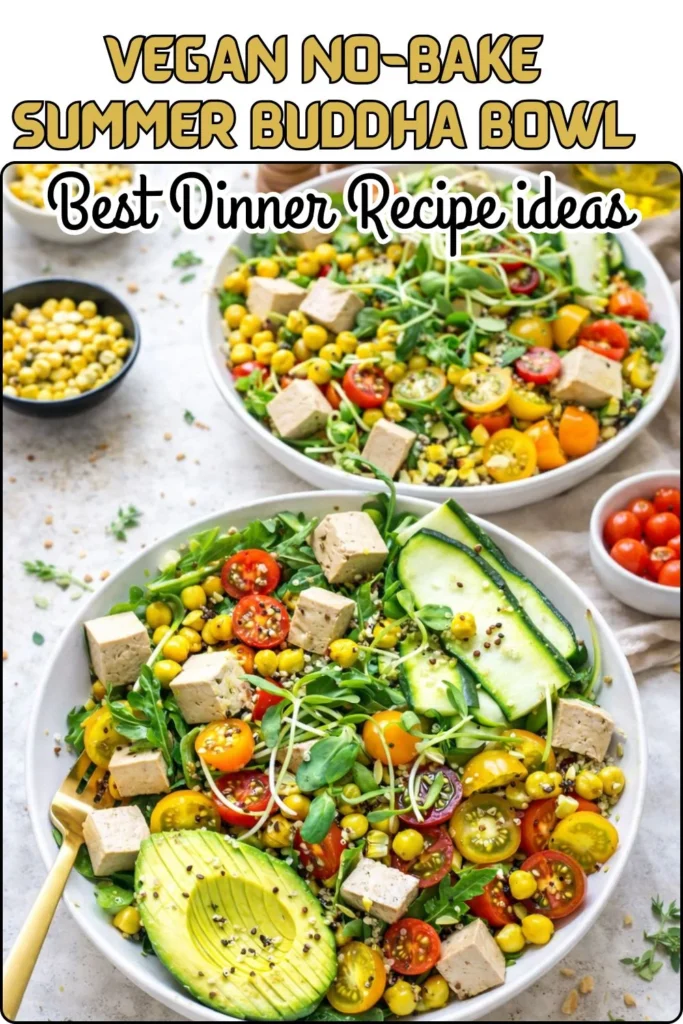
Still Hungry, Try It Next recipe :-
Vegan No-Bake Vegan Summer Buddha Bowl
Storage & leftovers
- Fridge: Transfer leftovers to an airtight container and store for up to 2 days. Reheat gently in a pan with a splash of warm broth to bring back creaminess.
- Freezer: I don’t recommend freezing risotto — the texture changes. If you must, freeze in portions and plan to use in a baked risotto cake later.
- Make-ahead: You can prepare the pea purée and prep shallots a day ahead, but cook the risotto fresh for best texture.
Pro tip: risotto loves immediate serving. If you plan to reheat, keep it looser on the first cook so it recovers better later.
Summon Questions
Q: My risotto turned gluey — what happened?
A: You likely over-stirred or added too much broth too fast. Next time, slow down and taste the rice often.
Q: The risotto feels undercooked but the liquid ran out.
A: Add a ladle of warm broth or water and continue cooking until the rice reaches the right bite.
Q: Can I make this nut-free or oil-free?
A: Yes — swap oils for a small amount of vegetable broth and use oil-free vegan cheese options.
My Final thoughts
This Vegan Spring Pea & Mint Vegan Risotto hits the sweet spot between comfort and freshness. It takes 45 minutes of active and gentle cooking to make something that looks like a chef made it. The peas keep it seasonally bright, the mint adds lift, and vegan cheese or nutritional yeast brings savory depth. Try it once, and I guarantee you’ll make it again when you want something both cozy and green.
So, are you making risotto tonight or what?
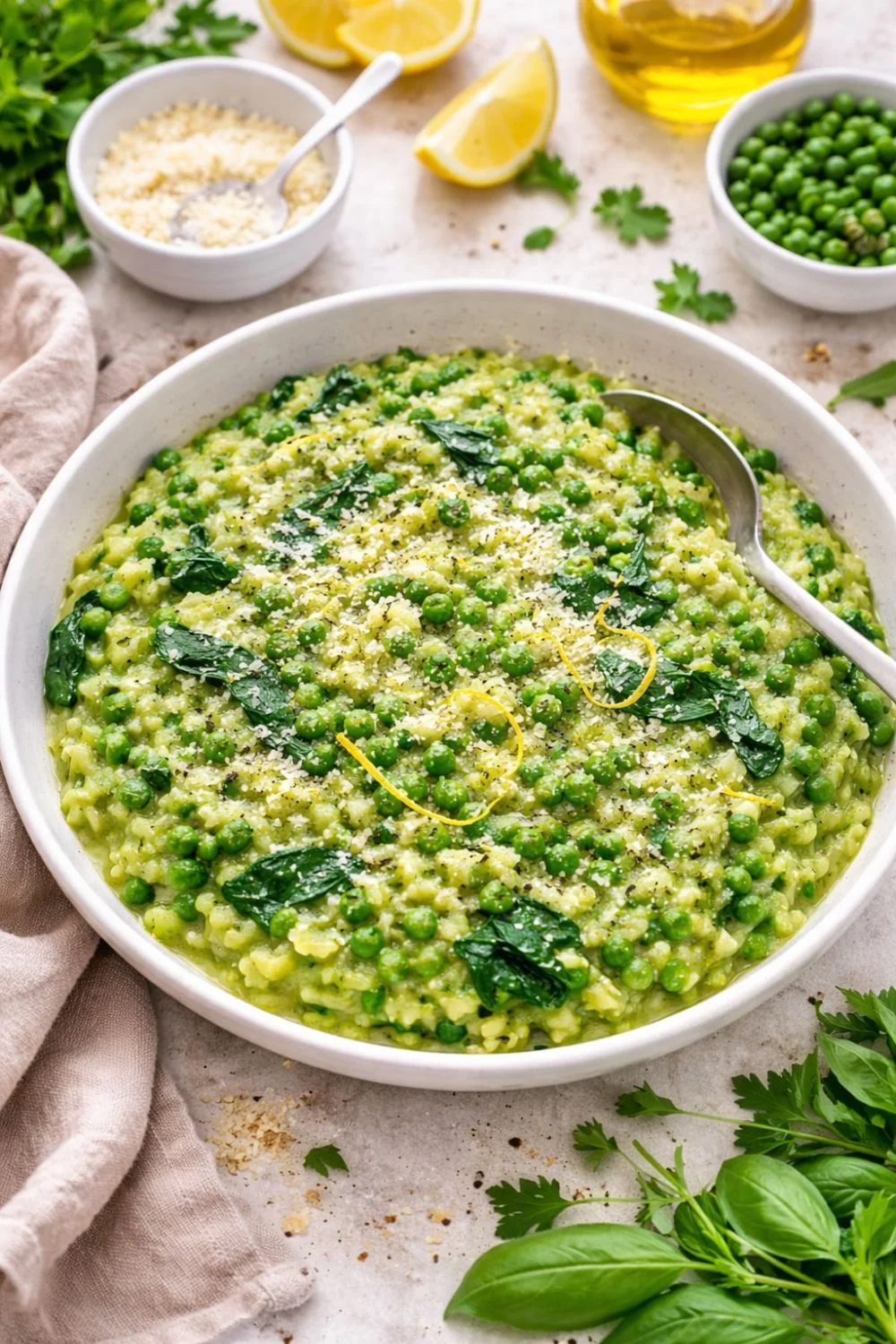
Vegan Spring Pea & Mint Risotto (45-Minute) — spring dinner recipe
Ingredients
Equipment
Method
- Warm the broth
- Heat the 4 cups vegetable broth in a saucepan and keep it at a gentle simmer. Keeping the broth warm helps the rice absorb evenly and speeds things along.
- Sauté aromatics
- In a heavy-bottomed pot, heat 2 tbsp olive oil over medium-low heat. Add the diced shallots and garlic and sauté gently for 4–5 minutes until soft and fragrant, stirring so they don’t brown. Keep the heat mellow; you want sweetness, not onion crisps.
- Toast the rice
- Add the Arborio rice and stir for 1 minute to coat the grains in oil. Pour in the white wine and simmer until the wine mostly absorbs. That little sizzle adds depth — don’t skip it.
- Add warm broth, slowly
- Add 1 cup of the hot broth, then stir every 45–60 seconds until the rice absorbs the liquid. Repeat, adding broth half-cup or cup by cup, stirring patiently. Keep the heat at medium-low so the rice cooks gently. This gradual absorption releases starch and makes that silky risotto texture.
- Prepare the peas
- While the rice simmers, bring a small pot of salted water to a boil. Blanch 2 cups peas for 2–3 minutes, drain, and reserve ½ cup of blanched peas for blending. (Pro tip: if peas are frozen, you can skip blanching and just lightly warm them.)
- Make the pea purée
- Blend ½ cup blanched peas with ½ cup water and 1 tbsp olive oil until silky. Add a handful of spinach if you want a brighter green. Set the purée aside. It adds color and a concentrated pea flavor without lumpiness.
- Finish the risotto
- When the rice reaches tender but still slightly firm (al dente) — about 18–22 minutes total of adding broth — stir in the vegan cheese or nutritional yeast, lemon zest, the blanched peas, and the pea purée. Add salt and black pepper to taste, then fold in ⅔ of the chopped mint, saving the rest for garnish.
- Plate and elevate
- Spoon the risotto into warm bowls, scatter remaining mint on top, and finish with a drizzle of truffle oil if you like. Add a pinch of Aleppo flakes for a cheeky smoky-spicy note.
- Serve immediately. Risotto waits for no one.
Notes
Tips for perfect risotto
- Keep broth warm. Cold broth shocks the rice and slows cooking.
- Stir, but not obsessively. Gentle, regular stirring releases starch; vigorous stirring stresses you and the rice.
- Taste often. Rice tells you when it’s ready. Stop when the center still has a tiny bite.
- Adjust texture. If it gets too thick, loosen with a splash of warm broth or water.
- Make it extra green. Add more pea purée for color without changing texture.

Hi — I’m Rachel. I’m a wife, a mom, and a home cook who believes that food should bring comfort, joy, and compassion to the table. I live with my family — two hungry little foodies who are my most honest recipe testers — and together we’ve built a kitchen culture that’s all about good food that happens to be 100% vegan. I started this blog because I wanted a place to share the recipes that keep our days moving, the dishes that make weeknights feel a little easier, and the meals that become our little family traditions.