Go Back
Vegan Spring Pea & Mint Risotto

Vegan Spring Pea & Mint Risotto (45-Minute) — spring dinner recipe

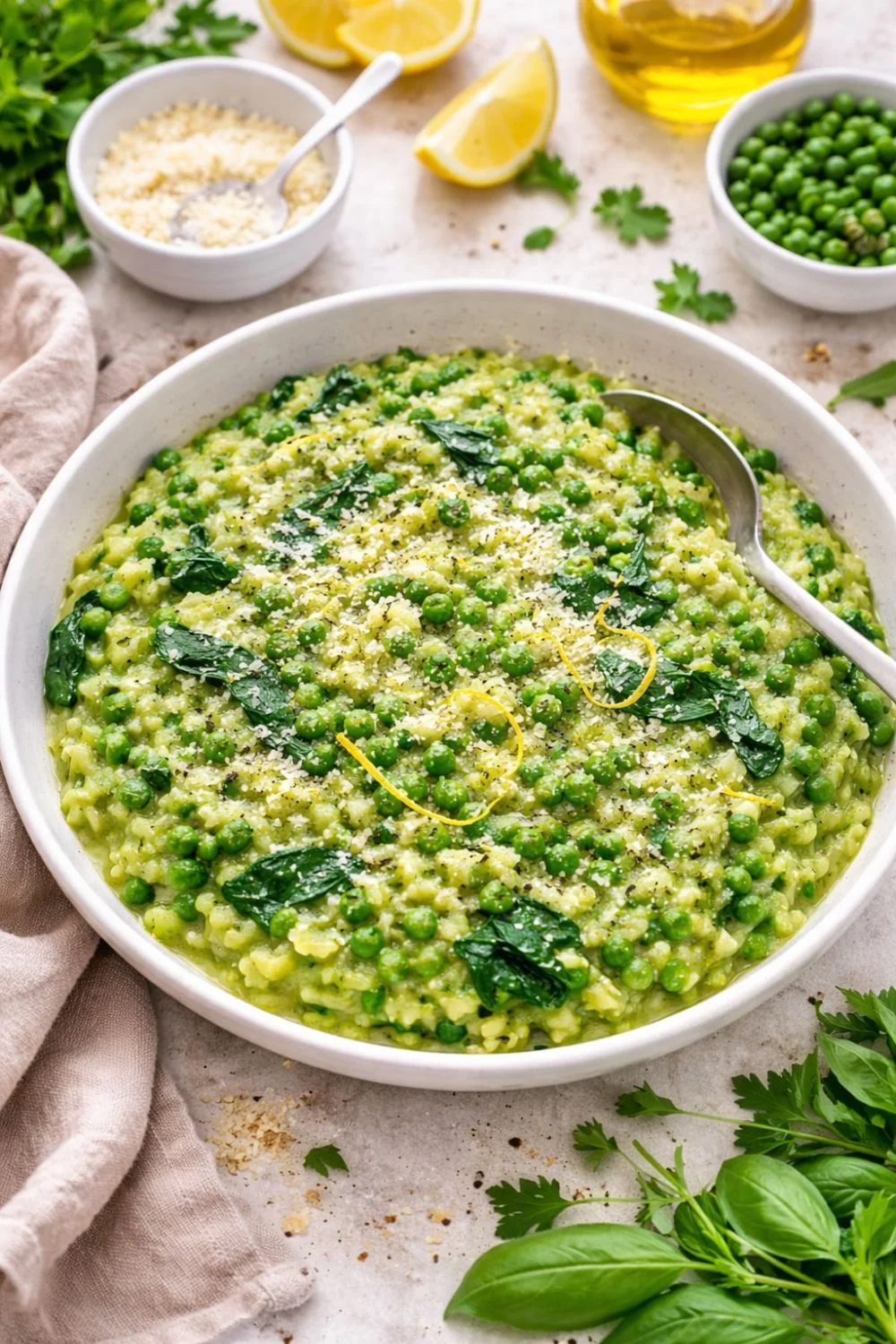
Bright green, silky risotto studded with sweet peas and a burst of mint — fancy enough for guests, easy enough for a weeknight. This Vegan Spring Pea & Mint Vegan Risotto sings of spring and takes about 55 minutes from start to finish. Cozy, fresh, and totally plant-based — yes, please.
Prep Time 10 minutes
Cook Time 45 minutes
Total Time 55 minutes
Servings: 4
Course: Main Course
Cuisine: American
Calories: 350

Ingredients
  

  • Pea Risotto
  • 4 cups vegetable broth warmed
  • 3 tbsp olive oil divided
  • 2 shallots or 1 small leek, or 1 white onion, diced
  • 2 garlic cloves rough chopped
  • 1 cup Arborio rice
  • 1/2 cup dry white wine or water + 1 tsp lemon juice
  • 2 cups peas fresh blanched or frozen
  • 1/2 cup vegan grated cheese or 3 tbsp nutritional yeast for that cheesy finish
  • Zest of 1 lemon
  • Salt & black pepper to taste
  • 1/4 cup fresh mint packed and sliced
  • Drizzle of truffle oil optional, for finishing
  • Optional additions: Aleppo chili flakes sautéed mushrooms, microgreens.
  • Bold note: swap Pecorino for vegan parmesan or nutritional yeast to keep it 100% vegan.

Equipment

  • Heavy-bottomed pot or Dutch oven (for even heat) — 1
  • Medium saucepan (to keep broth warm) — 1
  • Wooden spoon or silicone spatula — 1
  • Measuring cups & spoons — essentials
  • Blender or food processor (for the pea purée) — 1
  • Fine microplane (for lemon zest; optional) — 1
  • You don’t need anything flashy beyond a sturdy pot and a blender. If you own a ladle, use it — the process becomes a zen ritual.

Method
 

  1. Warm the broth
  2. Heat the 4 cups vegetable broth in a saucepan and keep it at a gentle simmer. Keeping the broth warm helps the rice absorb evenly and speeds things along.
  3. Sauté aromatics
  4. In a heavy-bottomed pot, heat 2 tbsp olive oil over medium-low heat. Add the diced shallots and garlic and sauté gently for 4–5 minutes until soft and fragrant, stirring so they don’t brown. Keep the heat mellow; you want sweetness, not onion crisps.
  5. Toast the rice
  6. Add the Arborio rice and stir for 1 minute to coat the grains in oil. Pour in the white wine and simmer until the wine mostly absorbs. That little sizzle adds depth — don’t skip it.
  7. Add warm broth, slowly
  8. Add 1 cup of the hot broth, then stir every 45–60 seconds until the rice absorbs the liquid. Repeat, adding broth half-cup or cup by cup, stirring patiently. Keep the heat at medium-low so the rice cooks gently. This gradual absorption releases starch and makes that silky risotto texture.
  9. Prepare the peas
  10. While the rice simmers, bring a small pot of salted water to a boil. Blanch 2 cups peas for 2–3 minutes, drain, and reserve ½ cup of blanched peas for blending. (Pro tip: if peas are frozen, you can skip blanching and just lightly warm them.)
  11. Make the pea purée
  12. Blend ½ cup blanched peas with ½ cup water and 1 tbsp olive oil until silky. Add a handful of spinach if you want a brighter green. Set the purée aside. It adds color and a concentrated pea flavor without lumpiness.
  13. Finish the risotto
  14. When the rice reaches tender but still slightly firm (al dente) — about 18–22 minutes total of adding broth — stir in the vegan cheese or nutritional yeast, lemon zest, the blanched peas, and the pea purée. Add salt and black pepper to taste, then fold in ⅔ of the chopped mint, saving the rest for garnish.
  15. Plate and elevate
  16. Spoon the risotto into warm bowls, scatter remaining mint on top, and finish with a drizzle of truffle oil if you like. Add a pinch of Aleppo flakes for a cheeky smoky-spicy note.
  17. Serve immediately. Risotto waits for no one.
Notes

Tips for perfect risotto

  • Keep broth warm. Cold broth shocks the rice and slows cooking.
  • Stir, but not obsessively. Gentle, regular stirring releases starch; vigorous stirring stresses you and the rice.
  • Taste often. Rice tells you when it’s ready. Stop when the center still has a tiny bite.
  • Adjust texture. If it gets too thick, loosen with a splash of warm broth or water.
  • Make it extra green. Add more pea purée for color without changing texture.
Want a shortcut? Use a simmering pressure-cooker method if you own one, but expect slightly different texture. IMO, traditional slow absorption gives the best creaminess.