Go Back
Crockpot Vegan Mango Habanero Black Beans

Crockpot Vegan Mango Habanero Black Beans

Sweet mango and habanero heat in the same pot as slow-cooked black beans sounds like a culinary dare and the payoff is genuinely spectacular. Crockpot Vegan Mango Habanero Black Beans take everything that makes a great spicy black bean dish and push it into bold, tropical territory with the addition of fresh mango sweetness and habanero's distinctive, fruity heat that's completely different from any other chili pepper. The slow cooker does six hours of patient work transforming dried black beans into something deeply flavorful, satisfying, and completely plant-based.
Prep Time 10 minutes
Cook Time 5 hours
Total Time 5 hours 10 minutes
Servings: 6
Course: crockpot, DINNER, healthy dinner, Main Course
Cuisine: American
Calories: 303

Ingredients
  

  • The Beans:
  • 1 pound dried black beans soaked overnight drained and rinsed
  • The Aromatics and Vegetables:
  • 1 yellow onion finely chopped
  • 1 red bell pepper finely chopped
  • 2 jalapeños seeds removed and finely chopped
  • 1 –2 habanero peppers seeds removed and finely minced the mango-habanero stars
  • 1 large ripe mango peeled and diced into ½-inch cubes
  • 2 teaspoons minced garlic about 4 cloves
  • 1 cup salsa or diced tomatoes
  • The Liquid:
  • 4 cups low-sodium vegetable broth
  • The Spice Blend:
  • 1 heaping tablespoon chili powder
  • 2 teaspoons ground cumin
  • 1 teaspoon ground black pepper
  • ½ teaspoon salt
  • ½ teaspoon cayenne pepper reduce or omit since the habanero already adds significant heat
  • ½ teaspoon paprika
  • For Topping:
  • Sliced avocado
  • Fresh cilantro
  • Additional fresh mango for brightness at serving

Equipment

  • This recipe's equipment needs are minimal and completely accessible:
  • Essential Equipment
  • Large slow cooker (6-quart) handles 1 pound of dried black beans comfortably with room for expansion. Dried black beans roughly double in volume during soaking and cooking adequate space prevents overflow as the beans expand and absorb the broth. A 6-quart also gives you room to stir without difficulty.
  • Large bowl for the overnight soak. The bowl needs to accommodate the beans expanding to roughly double their dry volume. A 4-quart bowl or larger works well.
  • For the Optional Blending Step
  • The recipe offers three texture options at the end leave it chunky, partially blend, or fully blend. Your equipment choice depends on which you prefer:
  • Immersion blender the safest, most convenient option for partial or full blending directly in the slow cooker. No hot liquid transfer required, no risk of a blender lid blowing off under steam pressure. This is IMO the right tool for any blending step in a hot soup or stew.
  • Countertop blender works for full blending but requires careful hot liquid handling. Fill no more than halfway, remove the center lid cap, hold a thick kitchen towel firmly over the top, and start on the lowest speed. Work in batches.
  • Supporting Equipment
  • Colander for draining and rinsing the soaked beans the morning after soaking
  • Sharp knife and cutting board for finely chopping the onion, bell pepper, jalapeños, habanero, and cubing the mango. Wear gloves when handling habanero capsaicin from habanero peppers lingers on skin and will transfer painfully if you touch your eyes or face afterward.
  • Measuring spoons and cups
  • Wooden spoon or silicone spatula for stirring everything together before cooking and after
  • Ladle for serving
  • The glove recommendation for habanero prep is genuinely important. Habanero heat is significantly more intense than jalapeño about 12–100 times hotter depending on the specific pepper. Capsaicin from habanero peppers can cause skin irritation even without touching your face. Disposable kitchen gloves for the mincing step prevent an extremely unpleasant cooking experience. Don't skip this.
  • The Overnight Soak Why It Matters and How to Do It Right
  • The overnight soak is the only advance planning this recipe requires, and it's worth understanding why dried beans need it for this specific recipe.
  • Why soak at all? Dried black beans contain complex sugars (oligosaccharides) that cause digestive discomfort in many people. Soaking and then discarding the soaking liquid removes a significant portion of these sugars, making the finished beans more digestible. Soaking also hydrates the beans from the outside in, which reduces the cook time needed for the center to fully soften.
  • How to soak correctly: Place the dried beans in a large bowl. Cover with water by at least 1 inch the beans absorb a substantial amount and you need them to stay submerged throughout the soaking period. Leave at room temperature for 8+ hours (overnight works perfectly). In the morning, drain in a colander and rinse thoroughly under cool running water.
  • What the soaking liquid looks like: The water turns dark purple-black and slightly cloudy from the bean starch and the sugars that leach out during soaking. This is normal and correct you want to drain and discard this liquid rather than cook with it.

Method
 

  1. Step-by-Step Instructions
  2. Step 1 - The Night Before: Soak the Beans
  3. Place the 1 pound of dried black beans in a large bowl. Cover with water by at least 1 inch. Leave overnight at room temperature. In the morning, drain completely in a colander and rinse under cool running water until the water runs clear.
  4. Step 2 - Prep the Mango and Habanero
  5. This step deserves its own moment because it requires care. Put on disposable kitchen gloves. Cut the habanero open, remove the seeds (the primary heat concentration sits in the seeds and surrounding membrane), and mince as finely as possible. Keep the gloves on while you handle the mango and remove them only after washing your hands thoroughly.
  6. Peel and dice the mango into approximately ½-inch cubes. Ripe mango is slippery to cut use a firm grip and a sharp knife. The classic method: slice down each flat side of the pit, score the flesh in a grid, and slice off the cubes. Set both the habanero and mango aside.
  7. Step 3 - Load the Slow Cooker
  8. Add everything to the slow cooker - the drained black beans, vegetable broth, finely chopped onion, finely chopped red bell pepper, jalapeños, minced habanero, diced mango, minced garlic, salsa, chili powder, cumin, black pepper, salt, cayenne, and paprika. Stir everything together thoroughly.
  9. The mango goes in raw at the start -this is intentional. The full 6-hour cook allows the mango to break down completely into the beans' surrounding liquid, infusing the broth with its sweetness gradually rather than adding it as a surface element at the end. By the time the beans finish cooking, the mango has essentially become part of the sauce.
  10. Do not add additional salt beyond the ½ teaspoon until after cooking. As with all dried bean slow cooker recipes, excess salt added during cooking can prevent the beans from fully softening. Season to final taste at the end.
  11. Cover and cook on HIGH for 6 hours until the beans are completely tender.
  12. Step 4 - Choose Your Texture and Final Season
  13. When the 6 hours end, taste the beans and check their tenderness they should crush easily between two fingers with zero resistance. If any firmness remains, cook for another 30 minutes and check again.
  14. Choose your texture:
  15. Chunky: Leave the beans completely intact. The mango has dissolved into the broth by now.
  16. Partially blended: Use an immersion blender to blend about half the beans this thickens the broth naturally while keeping whole beans throughout for texture.
  17. Fully smooth: Blend the entire pot until completely smooth for a thick, creamy bean purée.
  18. Season with salt and pepper to taste. The habanero heat will have mellowed slightly during the 6-hour cook if you want more heat, add a minced fresh habanero or a drizzle of habanero hot sauce now.
  19. Step 5 - Serve with the Right Toppings
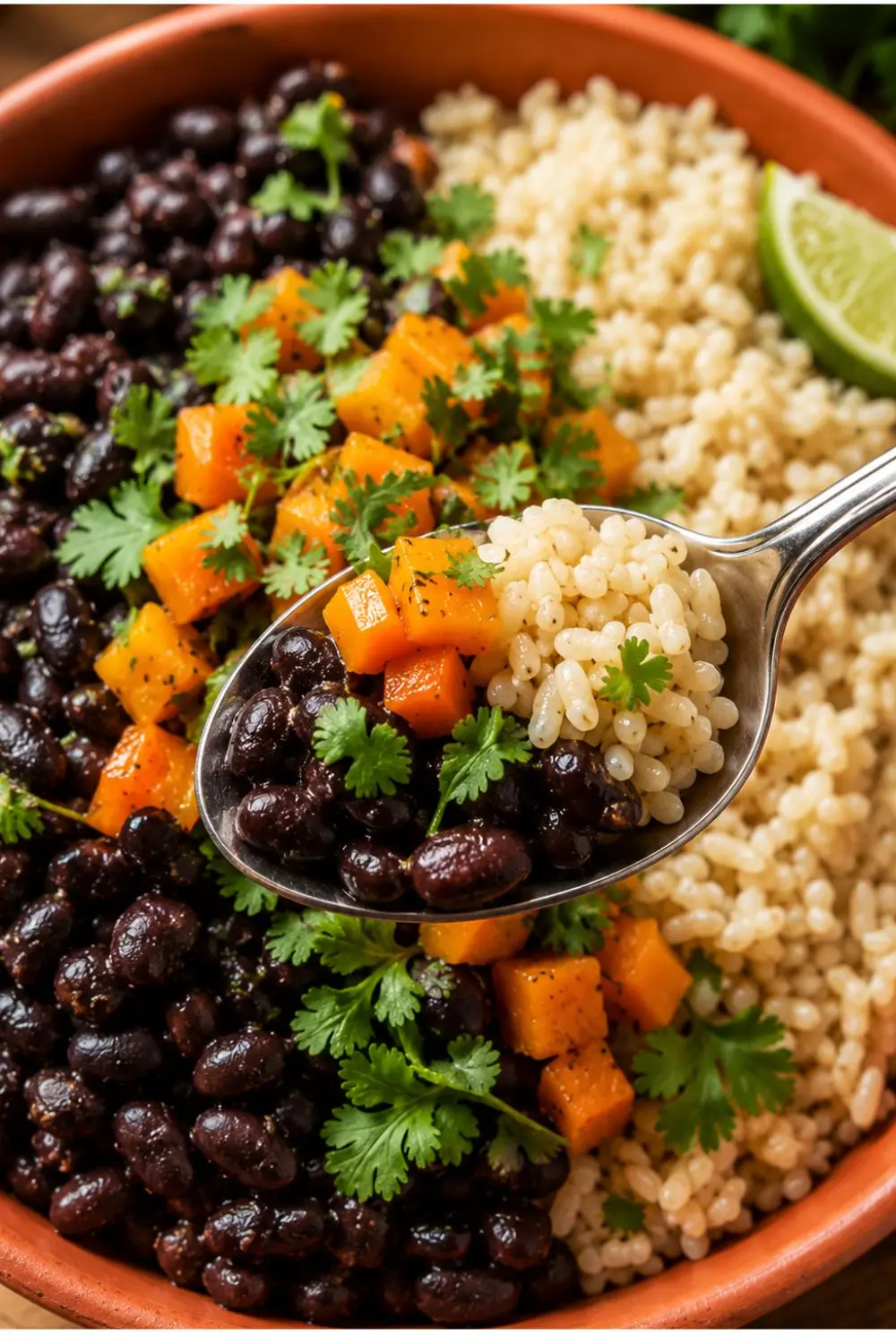
  20. Ladle into bowls. Top with sliced avocado, fresh cilantro, and additional fresh diced mango. The fresh mango added at serving provides a bright, distinct mango presence that contrasts beautifully with the mango that cooked into the beans different texture, same tropical thread running through the whole bowl.
Notes

Nutrition Information Per Serving

At 303 calories per bowl, these beans deliver extraordinary nutritional value:
Nutrient
Per Serving
Calories
303 kcal
Total Carbohydrates
57.1g
Protein
17.7g
Total Fat
1.7g
Dietary Fiber
13.8g
Sugars
6.4g
Sodium
700.2mg
Vitamin C
40% DV
Iron
30% DV
Calcium
10% DV
Cholesterol
0mg