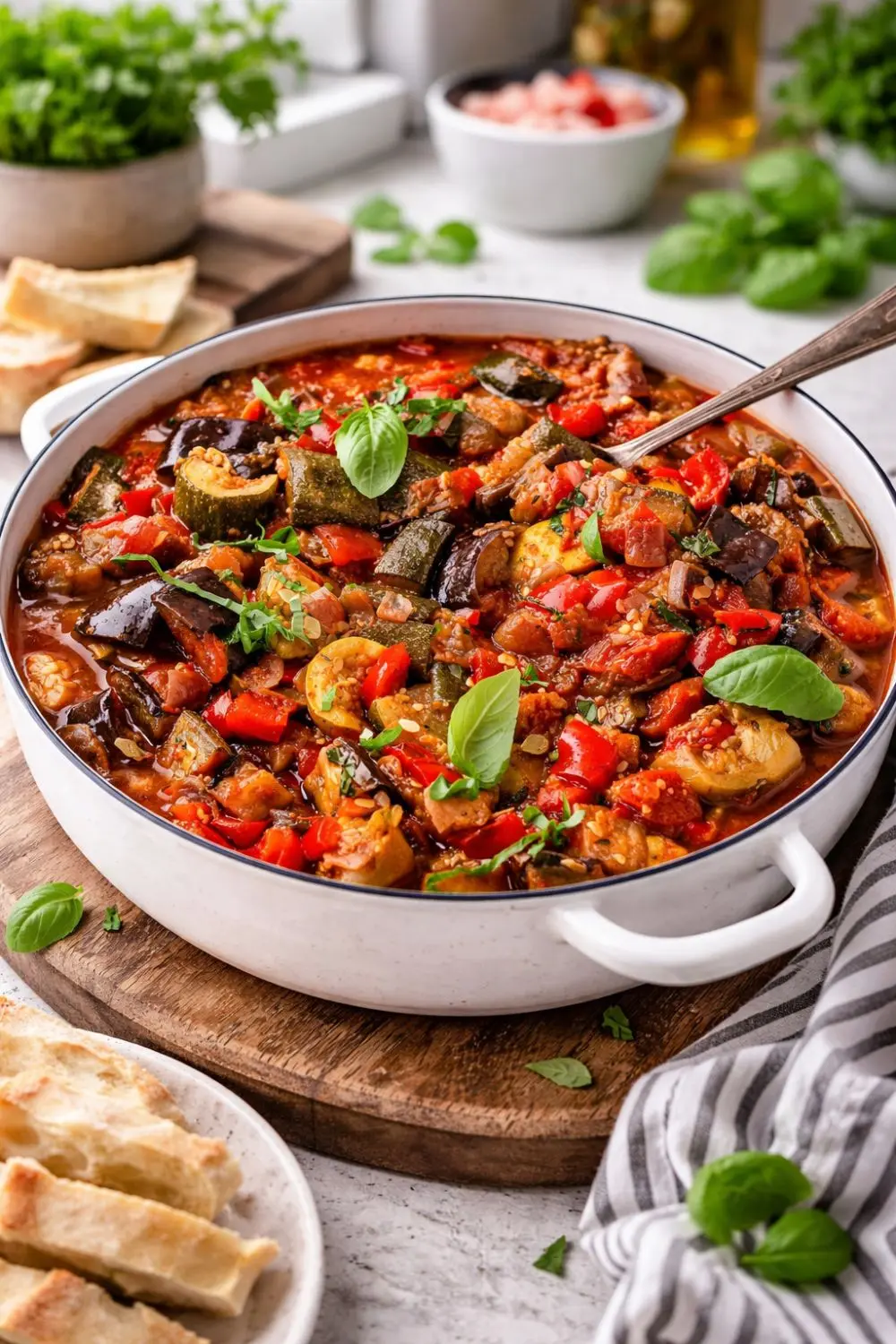
Step 1 — Salt the Eggplant
Add your cubed eggplant to a colander set in the sink. Sprinkle with ½ teaspoon of kosher salt, toss to coat, and set aside for 30 minutes. This runs concurrently with your other prep, so you're not wasting time.
Step 2 — Build the Flavor Base in a Skillet
Heat a large skillet over medium heat and add 2 tablespoons of olive oil. Add the red onion with a pinch of salt and cook for about 5 minutes, stirring occasionally, until softened and slightly golden. Add the tomato paste and minced garlic and cook for 1 minute, stirring constantly — you'll smell the moment it becomes fragrant. Pour in the white wine and stir, scraping up any browned bits from the bottom of the pan.
This step takes less than 10 minutes, but it builds enormous flavor depth. Skipping this and just dumping raw onion and garlic into the crockpot would give you a completely different — and considerably less interesting — result. The brief sauté makes all the difference.
Step 3 — Transfer to the Slow Cooker
Carefully pour the onion and tomato paste mixture into your 6-quart slow cooker. Give the salted eggplant a gentle squeeze to remove excess liquid, then add it to the slow cooker along with the bell peppers, zucchini, yellow squash, and chopped tomatoes.
Add the remaining 1 tablespoon of olive oil, 1 teaspoon of salt, Italian seasoning, and black pepper. Stir everything together until well combined.
Step 4 — Cook Low and Slow
Cover the slow cooker and cook on HIGH for 3–5 hours or LOW for 5–7 hours. The cook time depends entirely on your texture preference — and this is where you get to make it your own.
Here's how to think about the timing:
3–4 hours on HIGH — Vegetables retain their shape and distinct texture. Great if you want a chunkier, more structured stew.
5+ hours on HIGH — Vegetables meld together into a softer, more unified consistency. Closer to a traditional slow-cooked ratatouille where everything becomes deeply intertwined.
Neither option is wrong. It's purely a matter of what you enjoy. IMO, the 4-hour version hits the sweet spot — the vegetables still hold their shape but the flavors have fully developed. :)
Step 5 — Season and Finish
When the cook time ends, uncover the slow cooker and add another ½ teaspoon of salt. Taste and adjust seasoning as needed. Don't be shy here — proper seasoning is what separates good ratatouille from great ratatouille.
Step 6 — Cool, Garnish, and Serve
Remove from the slow cooker and allow it to cool to room temperature, or refrigerate for serving later. Just before serving, scatter fresh basil generously over the top. The basil adds brightness and a fresh herbal note that contrasts beautifully with the deeply cooked vegetables.