The roasting step deserves its own section because getting it right is central to the stew's success.
Method 1 — Gas Burner (Fastest and Best Char)
Place the poblano peppers directly on the gas burner grate over medium-high heat. Let them sit undisturbed until you hear the skin start making a popping or crackling sound — this means the skin is blistering from the heat. Use long tongs to flip the pepper and expose the next side.
Rotate the peppers every 2–3 minutes until every surface develops dark charring. This takes approximately 8–10 minutes total for both peppers. You want significant charring — deeply blistered and blackened skin is the goal, not just a few light marks. The char is what becomes the smokiness in the finished stew.
Method 2 — Broiler (Better for Electric Stoves)
Place the whole poblano peppers on a baking sheet and position it under the broiler on the top rack. Broil for 10 minutes, using tongs to rotate the peppers every 2–3 minutes so all sides char evenly. Watch them closely — broiler intensity varies between ovens and the peppers can go from perfect to actually burnt faster than you'd expect.
After Roasting — The Steaming Step
Transfer the charred peppers to a large bowl and cover immediately with a plate or aluminum foil. Let them sit and steam for 10 full minutes. The steam loosens the charred skin from the flesh, making removal significantly easier.
After steaming, use dish gloves or paper towels to scrape the outer charred skin away. It peels off in sections — don't stress about getting every single charred bit, a few small remnants add to the flavor. Remove the core and seeds, then dice the flesh and set it aside.
Step-by-Step Stew Instructions for
Step 1 — Build the Aromatic Base
Warm the 3 tablespoons of dairy-free butter in your large pot over medium heat. Add the diced onion and cook for 2–3 minutes, stirring occasionally, until it becomes translucent and slightly softened. The butter adds richness to the base that olive oil doesn't quite replicate — if you haven't tried dairy-free butter in soup bases, this recipe will convert you. :)
Add the minced garlic, chopped celery, diced potatoes, cumin, oregano, and salt. Stir everything together and continue cooking for another 5 minutes, stirring occasionally. The potatoes and celery begin to soften slightly, the spices bloom in the butter, and the entire pot smells extraordinary.
Step 2 — Add the Corn and Broth
Add all 4 cups of fresh corn kernels to the pot along with the 4 cups of vegetable broth. Stir well to combine everything. Raise the heat and bring the pot to a full boil, then reduce to a steady simmer.
Cook for 25–30 minutes until the potatoes are completely soft and easily pierced with a fork. The corn will have released its natural sweetness into the broth during this time, and the entire stew will smell like concentrated summer.
Step 3 — Partial Blend for Creaminess
This step is where the stew's character transforms. Carefully transfer approximately half of the soup to a blender. Blend until completely smooth, then pour the blended portion back into the pot with the remaining chunky soup.
Safety note for hot liquid blending: Fill the blender no more than half full, remove the center cap from the blender lid, hold a folded kitchen towel firmly over the top, and start on the lowest speed before increasing. Hot liquid expands dramatically when blended and can force the lid off if you're not careful. An immersion blender used directly in the pot avoids all of this entirely — blend about half the soup with the immersion blender while leaving the rest chunky.
The result is a stew with a dual texture — thick, creamy, and smooth from the blended portion, with whole pieces of corn, potato, and vegetables providing substance and interest throughout.
Step 4 — Add Coconut Milk and Poblanos
Stir in the ½ cup of unsweetened coconut milk and the diced roasted poblano peppers. The coconut milk adds the final layer of creaminess that makes this stew genuinely luxurious. The poblanos distribute their smoky, slightly spicy flavor throughout the thick base.
Taste the stew and adjust salt as needed. The seasoning at this final stage determines the finished flavor — take your time here and add salt gradually, tasting between additions.
Step 5 — Serve with the Essential Finishing Touches
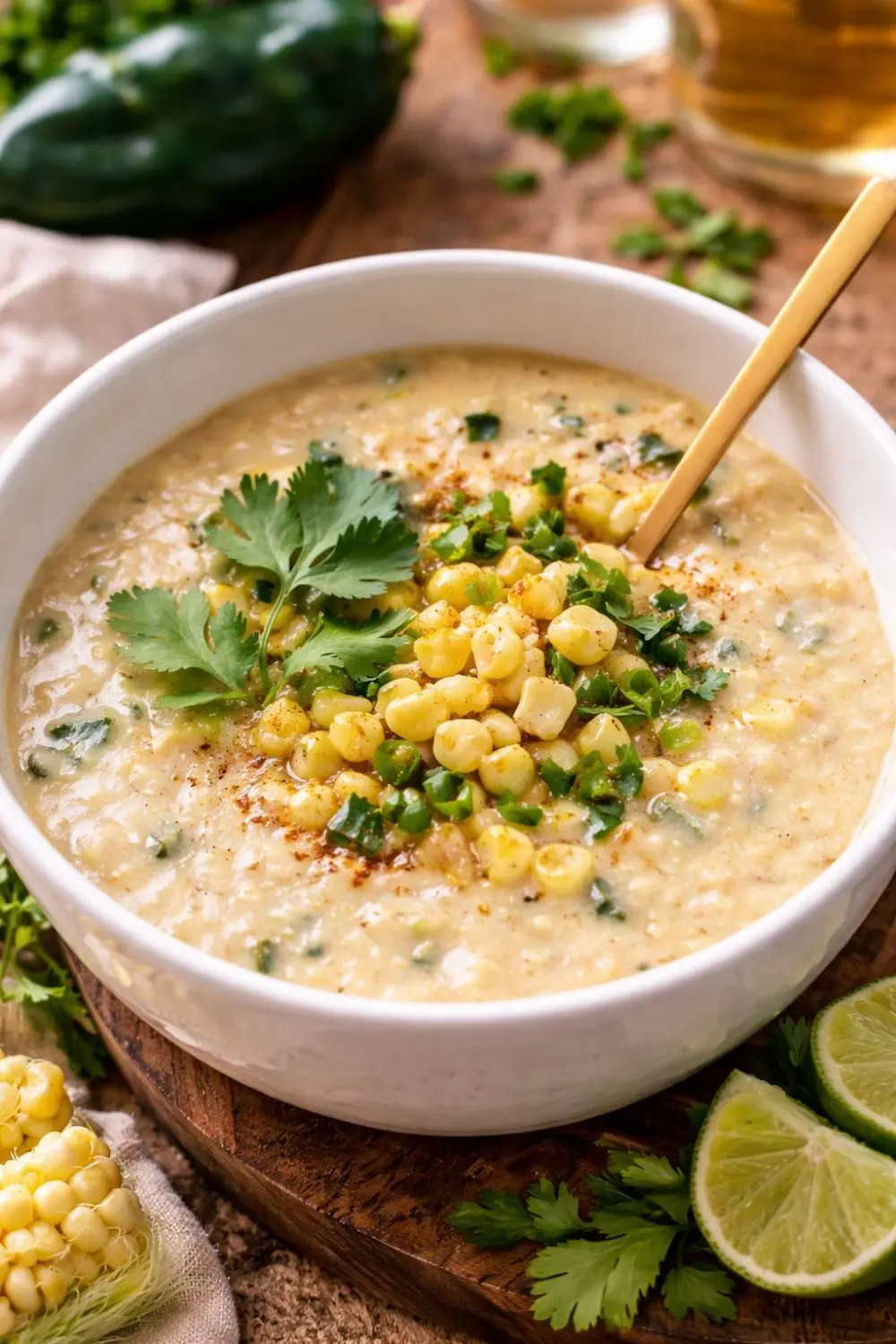
Ladle the stew into bowls. Squeeze fresh lime juice generously over each serving — the acidity is essential, not decorative. Scatter fresh cilantro over the top and dust with a pinch of smoked paprika for visual appeal and an additional smoky note.