Go Back
Easy Vegan French Toast with Coconut Milk

Easy Vegan French Toast with Coconut Milk

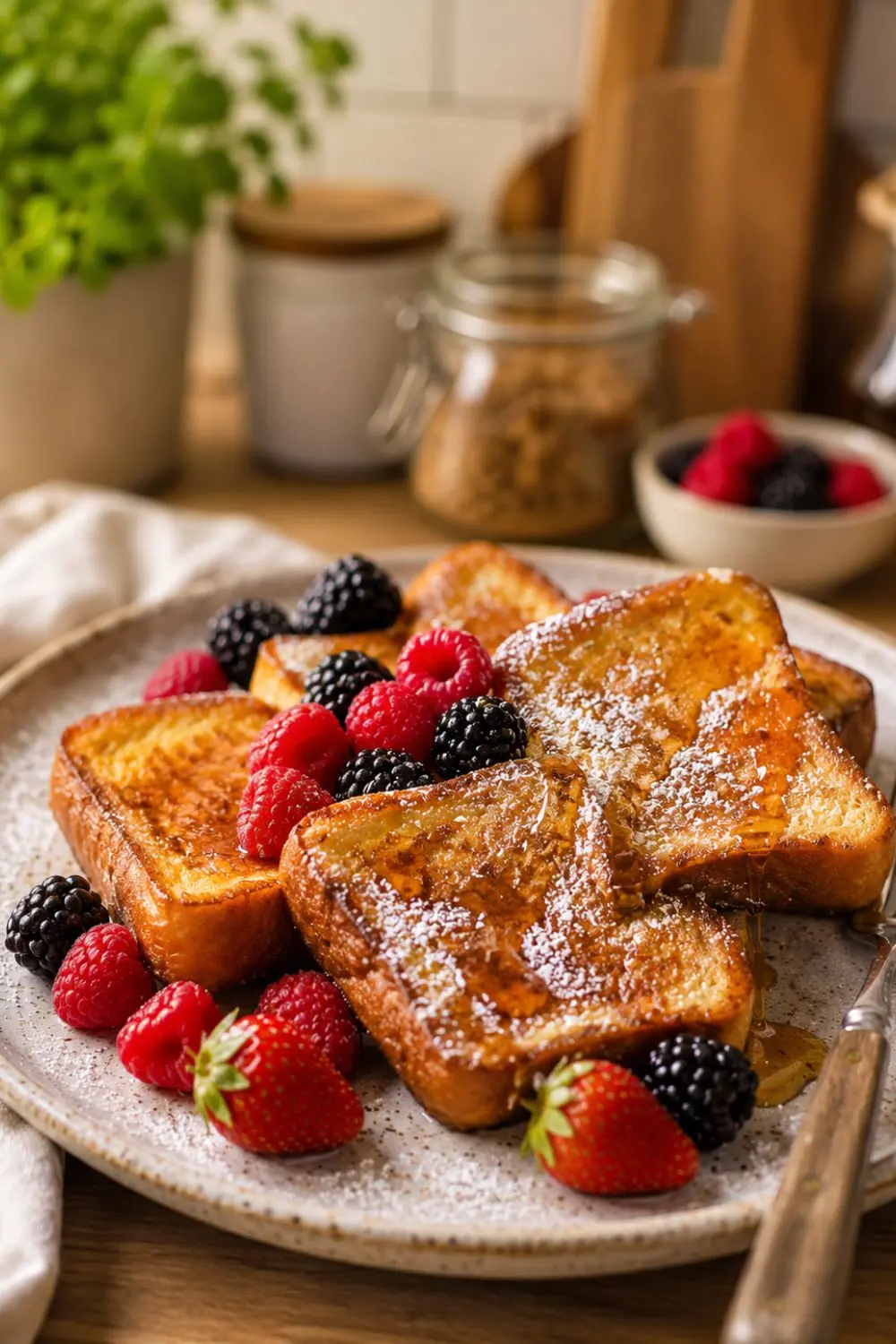
French toast always felt like the kind of breakfast that required eggs like, specifically eggs, non-negotiable, end of discussion. Turns out that's completely wrong. This Easy Vegan French Toast with Coconut Milk uses a flax egg and plant-based milk batter that crisps up in a buttered pan just as beautifully as the classic version, with golden edges, a soft center, and all the warm vanilla-cinnamon flavor you grew up loving.
Prep Time 5 minutes
Cook Time 10 minutes
Total Time 15 minutes
Servings: 3
Course: Breakfast, healthy breakfast, summar breakfast, vegan breakfast
Cuisine: American
Calories: 152

Ingredients
  

  • The Vegan French Toast Batter
  • 1½ tablespoons ground flax seed -This is your egg replacement and it works remarkably well. Ground flax seed mixed with liquid creates a gel that binds the batter and coats the bread with enough structure to hold together in the pan. It must be ground flax whole flax seeds don't gel and don't absorb liquid the same way. Pre-ground flax meal saves time; alternatively, blend whole flax seeds in a blender for 10 seconds.
  • ¾ cup plant-based milk - The recipe title calls out coconut milk and for good reason. Light canned coconut milk adds a subtle creaminess and richness to the batter that almond or oat milk can't quite match. It makes the French toast taste indulgent without tasting overtly tropical. That said, oat milk produces a slightly sweeter, more neutral result that many people prefer. Soy milk adds more protein. All three work coconut milk is just the most luxurious option.
  • 2 tablespoons agave or maple syrup - Sweetens the batter directly so every bite has flavor not just the topping layer. Maple syrup adds its characteristic warmth and depth. Agave is slightly more neutral and sweeter by volume. IMO, maple syrup wins here for flavor, but either works perfectly.
  • 1 teaspoon vanilla extract- Essential. Vanilla is what makes French toast taste like French toast rather than just sweetened bread. Use pure extract the flavor difference between pure and imitation vanilla is noticeable at this quantity.
  • ¼ teaspoon salt - A small amount that balances the sweetness and prevents the batter from tasting flat.
  • ¼ teaspoon cinnamon - Warm aromatic, and perfectly paired with vanilla and maple syrup. Don't skip it. You can increase to ½ teaspoon if you love cinnamon-forward French toast.
  • The Bread
  • 3 slices of bread cut in half - The bread choice shapes the entire character of your French toast. Here's a quick comparison:
  • Thick-cut white sandwich bread- Soft center light exterior, classic diner-style result.
  • Sourdough- Slightly tangy chewier, with more structural integrity for soaking without falling apart. Excellent choice.
  • Brioche-style vegan bread- The richest most indulgent option. Produces pillowy, custardy French toast that leans toward dessert territory.
  • Gluten-free bread- Works well choose a denser variety that holds up to soaking without disintegrating.
  • Day-old bread- A genuine improvement over fresh bread. Slightly stale bread absorbs the batter more evenly and holds together better in the pan. If you only have fresh toast it lightly first for 2 minutes before soaking.
  • For Cooking and Serving
  • Vegan butter - For the pan. Vegan butter gives you the richness and browning that oil alone doesn't quite deliver. Earth Balance and Miyoko's are both excellent. Use enough to coat the pan generously - skimping leads to sticking and pale edges.
  • Powdered sugar - Optional but classic. A light dusting over the finished French toast takes it from homemade to visually polished in about three seconds.
  • Fresh fruit -Sliced strawberries blueberries, peach slices, or banana all pair beautifully with the vanilla-cinnamon base. Summer fruit makes this feel particularly seasonal and fresh.

Equipment

  • Minimal gear, which is exactly what a 15-minute breakfast deserves:
  • A large, shallow bowl- Wide enough to lay a half-slice of bread flat for soaking. If your bowl is too small, you end up dunking bread at an angle and getting uneven batter coverage, which means uneven cooking. A pasta bowl or wide soup bowl works perfectly.
  • A non-stick skillet or cast iron pan - The pan choice matters. A non-stick skillet gives you the most consistent results and easy flip. A well-seasoned cast iron pan produces slightly crispier edges and a better golden crust. Either works just make sure it's fully preheated before the bread goes in.
  • A spatula - Thin enough to slide cleanly under the soaked bread without tearing it.
  • Measuring spoons and measuring cups - For the flax, milk, sweetener, and spices. The batter ratios are calibrated, so measure rather than guess the first time.

Method
 

  1. Step 1 - Make the Batter
  2. In your large, shallow bowl, combine the ground flax seed, plant-based milk, agave or maple syrup, vanilla extract, salt, and cinnamon. Whisk or stir vigorously until everything is fully combined and the flax is evenly distributed no clumps.
  3. Let the batter sit for about 2 minutes. The ground flax starts to gel almost immediately and slightly thickens the batter, which helps it cling to the bread more effectively. You'll see the texture change from thin liquid to something slightly more viscous that's exactly what you want.
  4. Step 2 - Preheat the Pan
  5. This step matters more than people give it credit for. Place your skillet over medium heat and add a generous pat of vegan butter. Let the pan heat fully until the butter melts and starts to foam slightly. A properly preheated pan sears the surface of the bread immediately on contact, creating crispy golden edges. A cold or warm-but-not-hot pan produces pale, soft, slightly sad French toast. :/ Give it 2–3 full minutes to preheat.
  6. Step 3 - Soak the Bread
  7. Lay a half-slice of bread flat in the batter. Let it soak for about 20–30 seconds per side long enough for the batter to penetrate slightly into the bread, but not so long that the bread becomes waterlogged and falls apart when you pick it up. Lift the soaked slice carefully and let any excess batter drip off before it goes into the pan.
  8. Step 4 - Cook Until Golden
  9. Place the soaked bread into the hot buttered pan. Cook for about 2–3 minutes per side until deep golden brown with slightly crispy edges. Don't rush the flip check the underside by lifting a corner with your spatula. If it looks pale, it needs more time. When it releases cleanly and shows a proper golden crust, flip it confidently.
  10. Cook in batches, adding more vegan butter between each batch to keep the pan well-greased and the edges crispy.
  11. Step 5 - Plate and Top
  12. Transfer finished pieces to a plate and add your toppings immediately. A dusting of powdered sugar, a drizzle of maple syrup, and a handful of fresh summer berries is the combination I keep coming back to. For a more indulgent version, add a spoonful of coconut whipped cream and a drizzle of vegan caramel sauce.
Notes

Full Nutritional Breakdown (Per Serving  1 of 3)

Nutrient
Amount
Calories
152 kcal
Carbohydrates
26g
Protein
4g
Fat
4g
Saturated Fat
0.3g
Fiber
2g
Sugar
11g
Sodium
409mg
Potassium
71mg
Calcium
121mg
Iron
1mg