Build the aromatic base. Add the diced onion and a dash of oil to a large pot over high heat. Saute for 5 minutes, stirring occasionally, until the onion turns slightly translucent and the edges begin to colour. Add the crushed garlic, chopped ginger, and miso paste. Saute for 2 minutes, stirring constantly, until everything smells deeply fragrant. If the ingredients start to stick or darken too fast, add a small splash of vegetable broth to deglaze the pot.
Build the broth. Pour in the vegetable broth, tahini, soy sauce or tamari, and rice wine vinegar if using. Stir well to dissolve the miso paste and tahini fully into the liquid. Reduce the heat to medium and simmer for at least 10 minutes — this resting time is not optional. It allows the flavours to develop and meld together properly. If the broth reduces faster than expected, add a splash of water.
Choose your broth texture. This is where you decide what kind of ramen you want. For a thick, creamy broth, use an immersion blender or transfer to a stand blender and puree until completely smooth. For a thin, clear broth with cleaner flavour, pour the soup through a fine mesh sieve into a large bowl, discard the solids, and return the strained liquid to the pot. Both versions taste excellent — the thick version is richer and more filling; the thin version is lighter and more elegant.
Cook the noodles and greens. Bring the soup to a boil. Add the ramen or soba noodles and the halved bok choy to the pot. Cook for 5 to 7 minutes until the noodles reach tender but still have a slight bite and the bok choy is bright green and just softened.
Add the tofu. Five minutes before you plan to serve, add the cubed tofu directly to the pot. Allow it to heat through gently in the broth — you are warming it, not cooking it, so gentle heat is the right approach here.
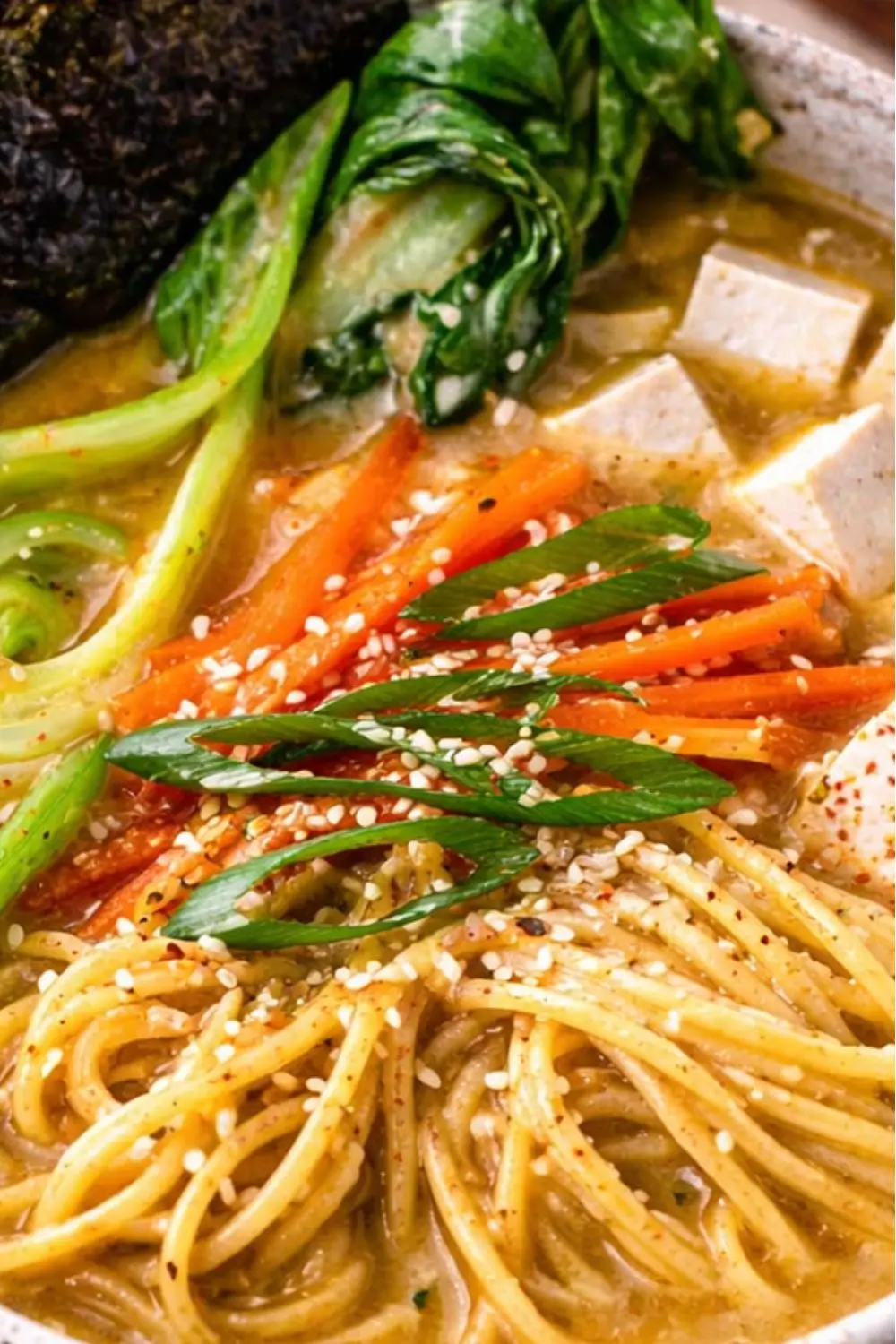
Assemble and serve. Divide the soup, noodles, bok choy, and tofu evenly between four deep bowls. Top each bowl with julienned carrots, finely chopped spring onion, sesame seeds, and Shichimi Togarashi if using. Serve immediately — ramen waits for no one, and noodles sitting in hot broth continue cooking and turn soft.