Step 1 — Cook the Mushrooms
Coat the bottom of your large nonstick pot or a separate skillet with 1–2 tablespoons of olive oil and place it over medium heat. When the oil is hot, add the mushrooms in as even a single layer as possible. Don't crowd the pan — overcrowding causes the mushrooms to steam rather than brown, which produces a completely different flavor and a waterlogged texture.
Cook the mushrooms for about 5 minutes per side without moving them excessively, until they develop deep golden-brown coloring. Work in batches if needed, adding oil between batches. Transfer the cooked mushrooms to a plate and set aside. They'll rejoin the dish at the very end.
Step 2 — Build the Aromatic Base
Coat the bottom of your large pot with 1 tablespoon of olive oil and place it over medium heat. Add the chopped shallots and cook for about 5 minutes, stirring occasionally, until soft and translucent. Shallots bring a more delicate, slightly sweet onion flavor compared to regular onions — they're the right choice for risotto where the aromatics need to support rather than dominate.
Add the minced garlic and cook for about 1 minute with the shallots, stirring, until the mixture becomes intensely fragrant. Your kitchen should smell incredible at this point.
Step 3 — Toast the Rice
Add the arborio rice to the pot and cook for 1–2 minutes, stirring constantly, until the grains turn shiny and slightly translucent around the edges. This toasting step coats each grain in oil and creates a barrier that helps the rice cook evenly and maintain some texture as the starch releases slowly into the broth.
Stir in the white wine, thyme, rosemary, and sage. Bring the wine to a simmer and cook, stirring frequently, until the rice fully absorbs the liquid. The wine adds acidity, depth, and a subtle complexity that the finished risotto would noticeably miss without it.
Step 4 — Add the Broth Gradually
Begin adding the warm vegetable broth to the pot approximately ½ cup at a time. After each addition, bring the liquid to a simmer and stir frequently until the rice absorbs it almost completely before adding the next ½ cup. This process takes patience — about 20 minutes across 3 to 3½ cups of broth.
The gradual broth addition is the technique that creates risotto's signature creaminess. Each addition of liquid activates the starch release from the rice. Frequent stirring keeps the starch suspended in the liquid rather than settling on the bottom of the pot. Skip this method and the results will be noticeably less creamy. It's genuinely worth doing properly.
Step 5 — Add Coconut Milk and Miso
After about 3 to 3½ cups of broth, the rice should be very creamy with just a slight firmness remaining at the center of each grain — this is the texture you're targeting. Stir in the coconut milk and miso paste, making sure to fully incorporate the miso until no visible lumps remain.
The easiest way to incorporate miso without lumps is to dissolve it first in a small amount of the warm broth before adding it to the pot. This takes an extra 30 seconds and prevents unincorporated chunks of miso from sitting in the finished risotto.
Allow the rice to continue cooking until the coconut milk absorbs. Test a grain — the center should be tender with just a tiny bit of resistance, not chalky or hard. Add a bit more broth and cook a few minutes longer if needed.
Step 6 — Finish and Serve
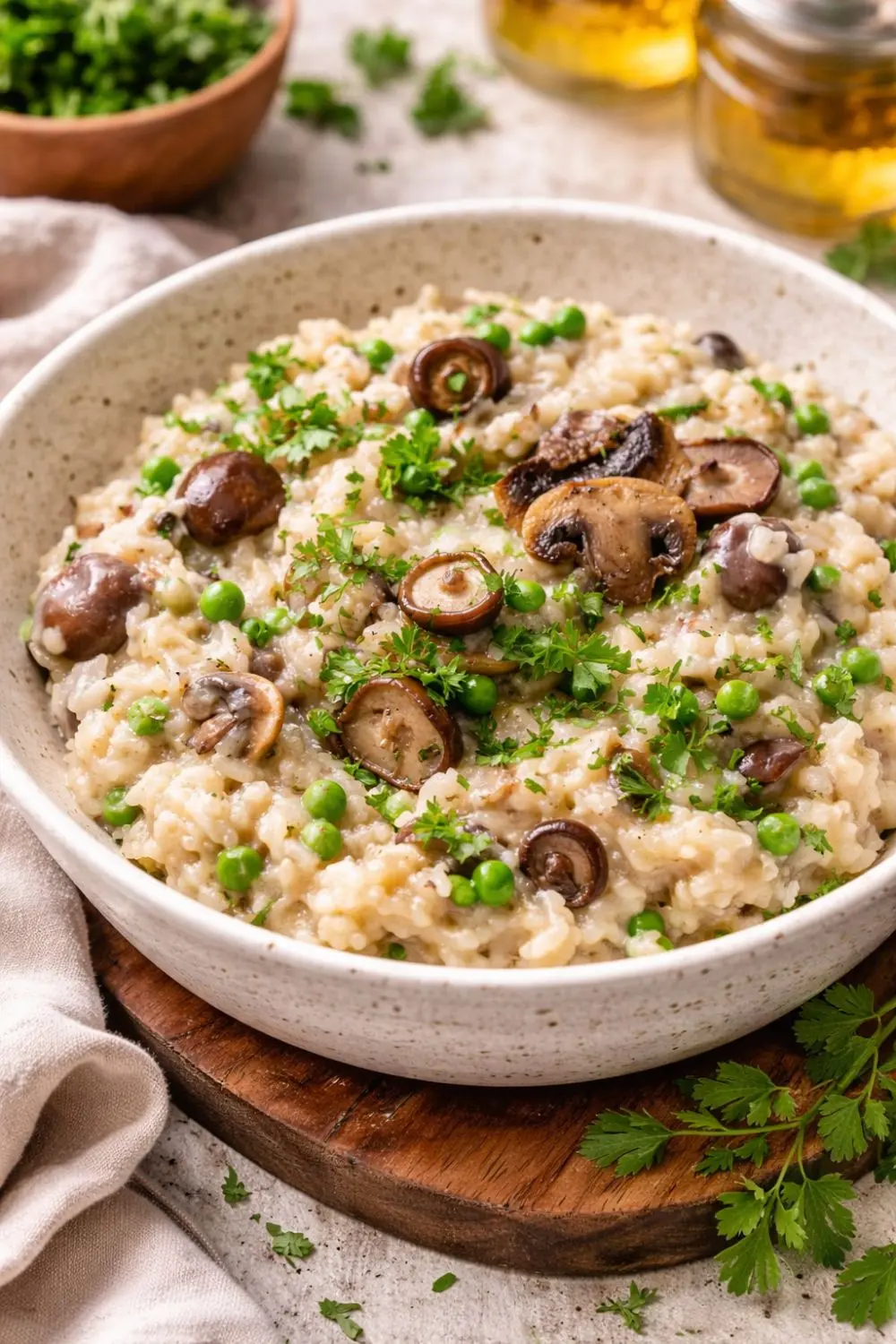
Remove the pot from heat. Stir in the cooked mushrooms, lemon juice, truffle oil, and thawed peas. The residual heat warms everything through without further cooking. Taste and season generously with salt and pepper.
Serve immediately — risotto waits for nobody. It thickens as it cools and loses that perfect, flowing creaminess within minutes of leaving the heat.