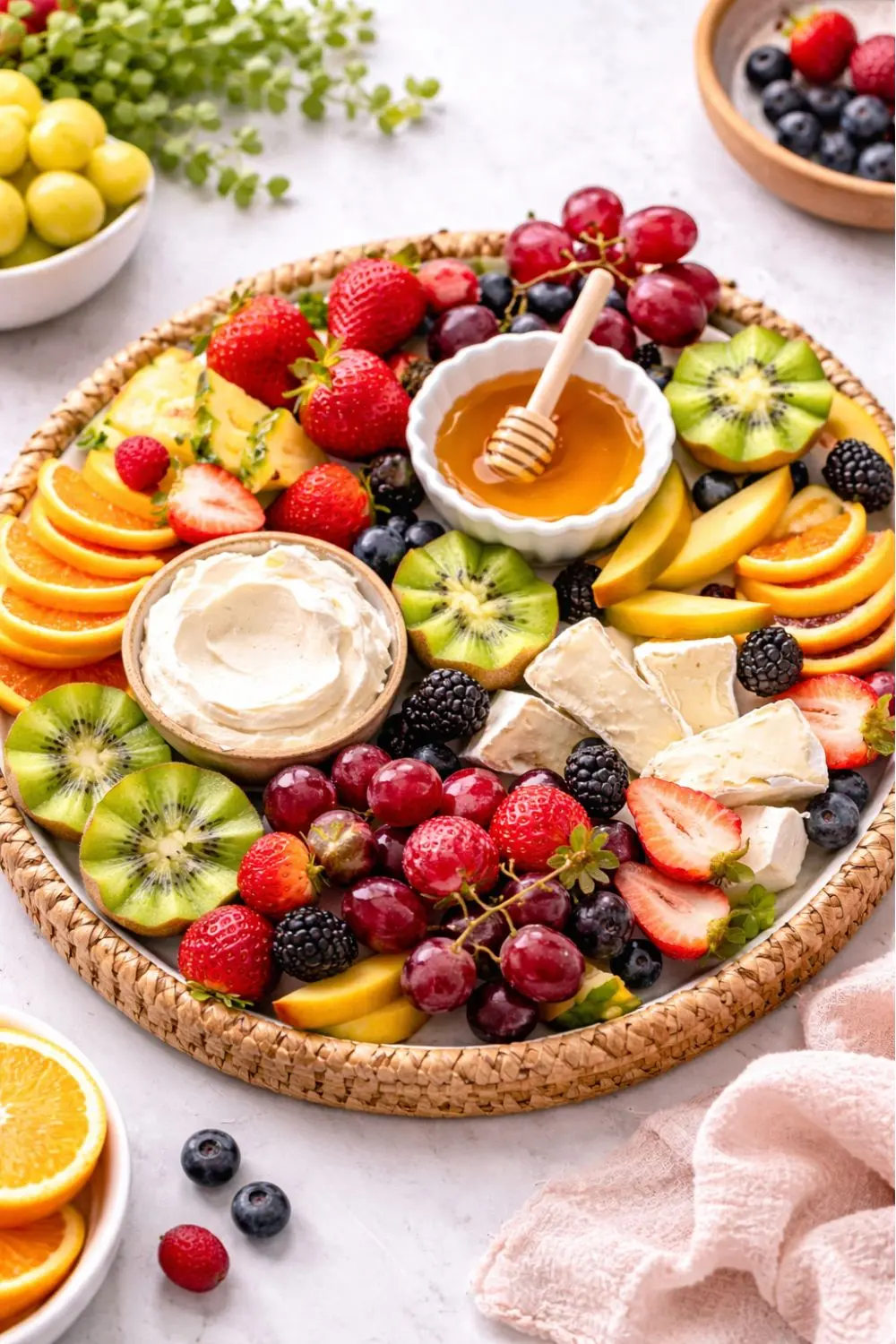
Step 1 - Place the Anchor Elements First
Start with the large, structured pieces that define the board's geography:
Place the dip bowls first they're the non-negotiable fixed points everything else arranges around
Position watermelon wedges along one edge, fanned slightly
Fan pineapple wedges along another edge
These large items create the board's visual structure
Step 2 - Add Medium Elements
Place strawberries in a cluster or row near one dip bowl
Create a grape cluster "cascade" that drapes over the edge of one section
Arrange kiwi halves cut-side up, spread across the board
Position mandarin segments in a fan or scattered cluster
Step 3 - Fill Gaps with Small Berries
The berries blueberries, raspberries, and blackberries are the board's gap-fillers and color-intensifiers:
Fill gaps between larger fruits with single-color berry clusters
Keep the three berry varieties in distinct areas rather than mixing the separation makes each color pop more strongly
Use berries to soften transitions between drastically different colors
Step 4 - Add the Melon Ball Bowl
Position the melon balls in their small bowl in a spot that adds color balance the pale green and orange of honeydew and cantaloupe complement the deep reds and purples of the berries and grapes.
Step 5 - Final Adjustments
Step back and look at the board from a distance. Fill any remaining visible board surface with additional berries. Add fresh mint leaves as a finishing touch if you have them the green sprigs add freshness and variety against the fruit colors.