

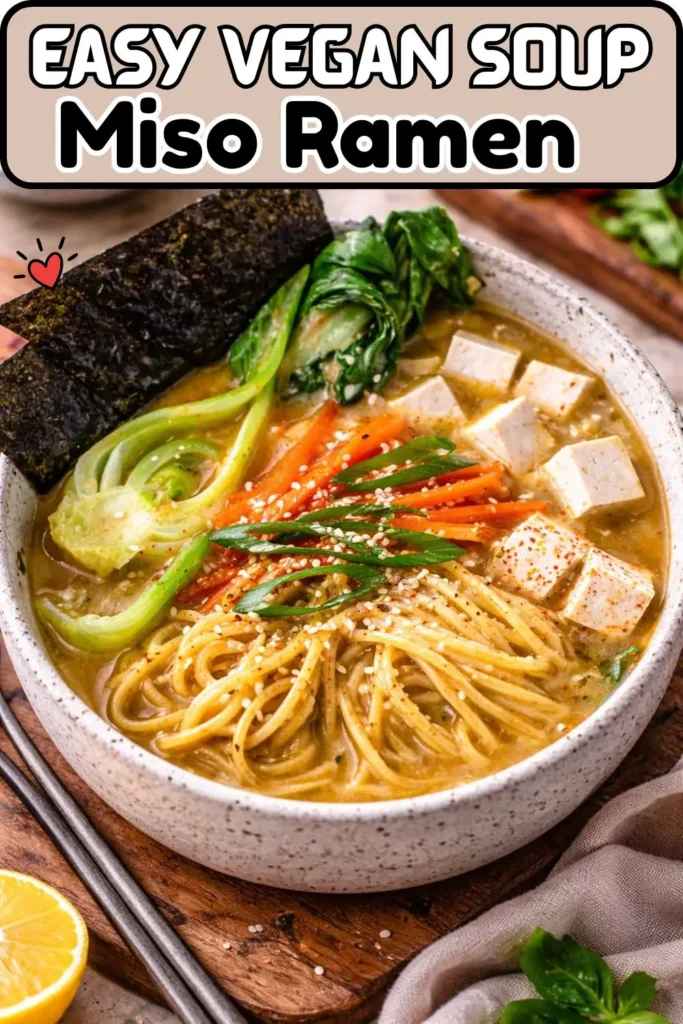
Good ramen costs time, skill, and often a 45-minute wait at a restaurant that may or may not accommodate vegans. This Easy Vegan Miso Ramen costs 40 minutes of your own kitchen time, uses ingredients you can find at any decent supermarket, and produces a broth that is genuinely rich, layered, and deeply satisfying. The tahini is the move nobody expects. More on that shortly.
“This post contains affiliate links. If you purchase through my links, I may earn a small commission at no extra cost to you.”
I started making this on weeknights when takeout felt like too much effort and plain vegetable soup felt like too little reward. This recipe sits exactly in that gap — impressive enough to feel like a proper meal, simple enough to make on a Tuesday.
Why This Vegan Miso Ramen Beats Takeout
Most restaurant ramen builds its flavor from pork or chicken bones simmered for hours. Vegan versions at restaurants often compensate with excessive salt or sweetness and miss the mark on depth. This recipe takes a different approach: miso paste, tahini, soy sauce, and aromatics work together to build a broth that has genuine umami without a drop of meat or dairy.
The tahini is the surprise element. It adds a nutty richness and a slight creaminess to the broth that rounds out the sharpness of the miso and soy beautifully. Once you add tahini to ramen broth, going back to versions without it feels like a step backward.
Who This Recipe Is For
This recipe works for four people as a substantial main course. It suits:
- Weeknight cooking when you want something that feels special without the effort
- Meal preppers who store the components separately and assemble fresh each day
- Anyone transitioning to plant-based eating who misses the satisfying richness of restaurant ramen
- Experienced vegan cooks looking for a reliable, customizable base recipe
Prep: 15 min | Cook: 25 min | Total: 40 min | Servings: 4 | Calories: 424 kcal | 100% Vegan
Equipment You Will Need
The equipment list here is genuinely minimal:
- Large pot — big enough to hold the broth, noodles, bok choy, and tofu comfortably; this is your main working vessel
- Immersion blender or stand blender — only needed if you want a smooth, thick broth; completely optional if you prefer a thinner, clearer soup
- Fine mesh sieve — for straining the broth if you want the thin version
- Sharp knife and chopping board — for the onion, garlic, ginger, carrots, and bok choy
- Vegetable peeler — for the carrots
- Grater or microplane — for finely grating the ginger if you prefer that to chopping
- Ladle — for portioning into bowls
- Four deep ramen or noodle bowls — depth matters here; shallow bowls do not do this soup justice
No special equipment, no hard-to-source tools. A large pot and a sharp knife handle most of the work.
Ingredients
For the Soup Broth:
- 1 medium brown onion, diced
- Extra-virgin olive oil, sesame oil, or vegetable broth, as needed for sauteing
- 3 cloves garlic, crushed
- 1 knob fresh ginger, peeled and finely chopped (optional but recommended)
- 2 Tbsp. miso paste, or to taste
- 4 cups (1 litre) vegetable broth
- 3 Tbsp. tahini, hulled or unhulled
- 1 Tbsp. soy sauce or tamari
- Dash of rice wine vinegar or any mild vinegar (optional)
For the Toppings and Protein:
- 4 serves dried ramen or soba noodles (gluten-free if needed)
- 2 to 4 heads bok choy, halved
- 600g soft or medium tofu, cubed
To Serve:
- Spring onions, finely chopped
- Sesame seeds
- Japanese mixed chilli (Shichimi Togarashi), optional
- 2 medium carrots, peeled and julienned
Step-by-Step Instructions for Easy Vegan Miso Ramen Better Than Takeout
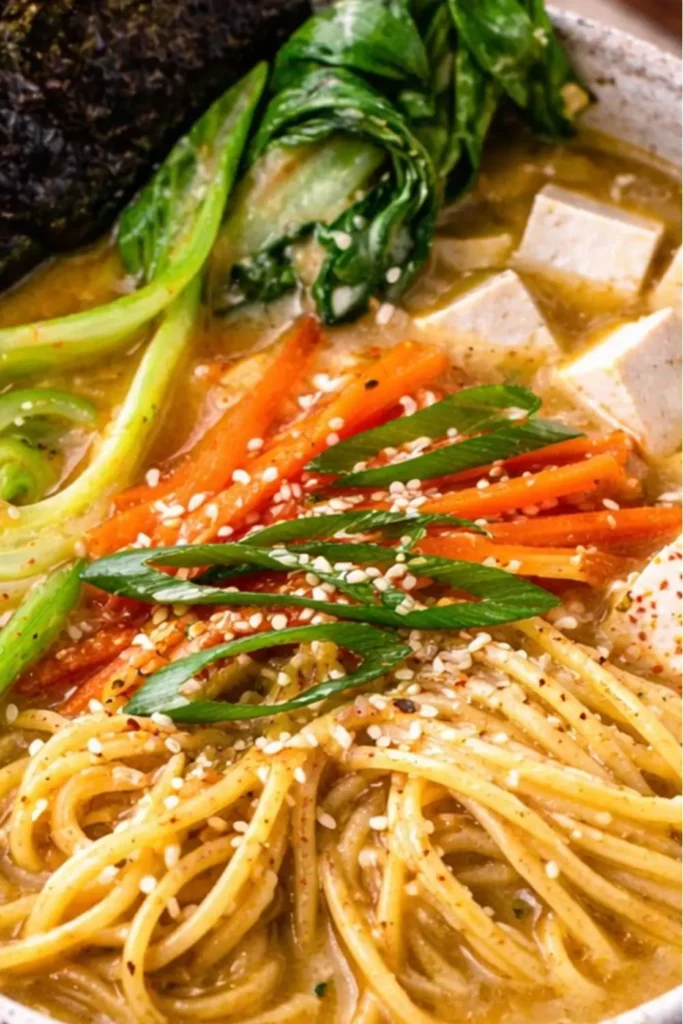
1. Build the aromatic base. Add the diced onion and a dash of oil to a large pot over high heat. Saute for 5 minutes, stirring occasionally, until the onion turns slightly translucent and the edges begin to colour. Add the crushed garlic, chopped ginger, and miso paste. Saute for 2 minutes, stirring constantly, until everything smells deeply fragrant. If the ingredients start to stick or darken too fast, add a small splash of vegetable broth to deglaze the pot.
2. Build the broth. Pour in the vegetable broth, tahini, soy sauce or tamari, and rice wine vinegar if using. Stir well to dissolve the miso paste and tahini fully into the liquid. Reduce the heat to medium and simmer for at least 10 minutes — this resting time is not optional. It allows the flavours to develop and meld together properly. If the broth reduces faster than expected, add a splash of water.
3. Choose your broth texture. This is where you decide what kind of ramen you want. For a thick, creamy broth, use an immersion blender or transfer to a stand blender and puree until completely smooth. For a thin, clear broth with cleaner flavour, pour the soup through a fine mesh sieve into a large bowl, discard the solids, and return the strained liquid to the pot. Both versions taste excellent — the thick version is richer and more filling; the thin version is lighter and more elegant.
4. Cook the noodles and greens. Bring the soup to a boil. Add the ramen or soba noodles and the halved bok choy to the pot. Cook for 5 to 7 minutes until the noodles reach tender but still have a slight bite and the bok choy is bright green and just softened.
5. Add the tofu. Five minutes before you plan to serve, add the cubed tofu directly to the pot. Allow it to heat through gently in the broth — you are warming it, not cooking it, so gentle heat is the right approach here.
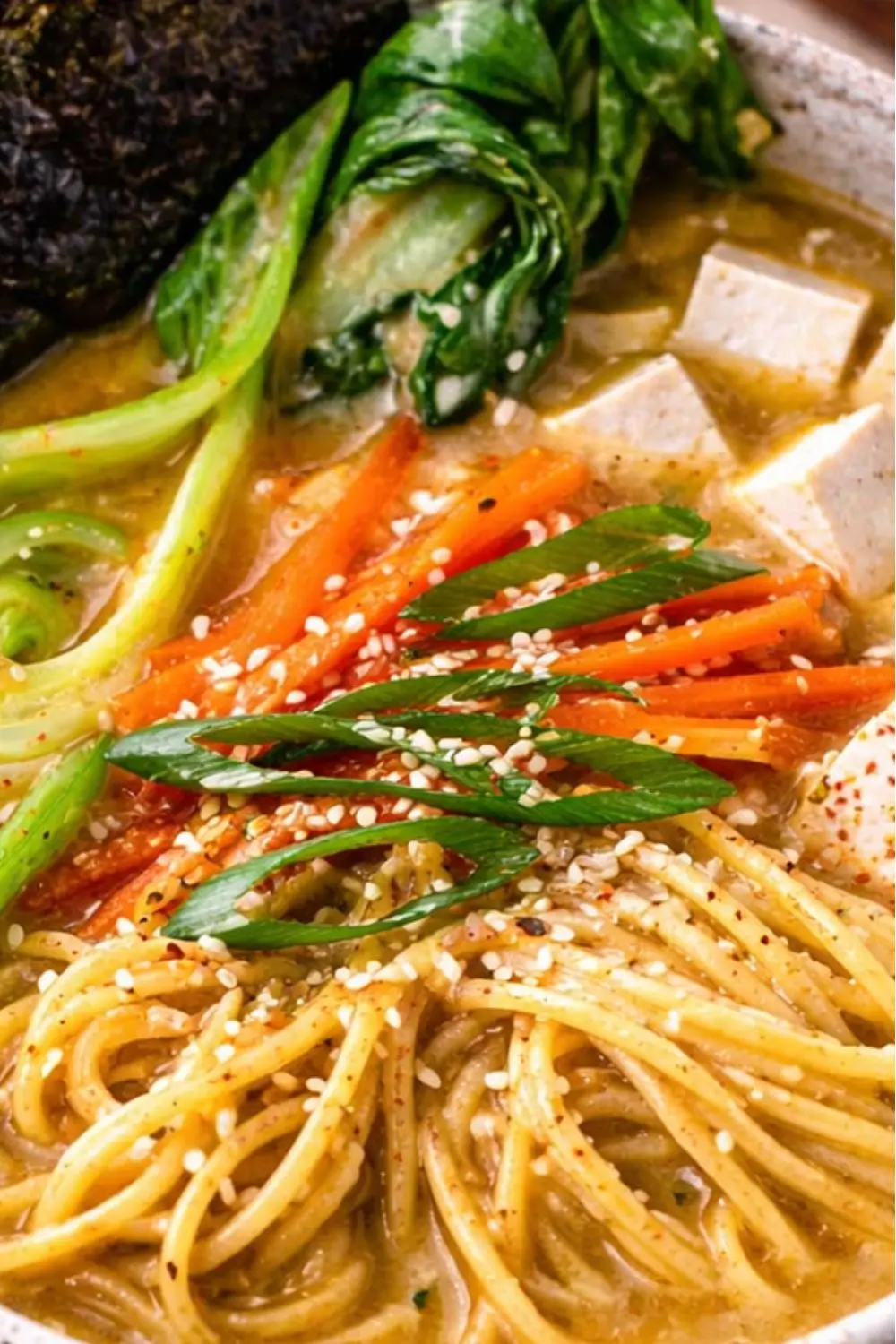
6. Assemble and serve. Divide the soup, noodles, bok choy, and tofu evenly between four deep bowls. Top each bowl with julienned carrots, finely chopped spring onion, sesame seeds, and Shichimi Togarashi if using. Serve immediately — ramen waits for no one, and noodles sitting in hot broth continue cooking and turn soft.
Understanding the Flavour Builders
This broth works because each ingredient contributes something specific. Understanding what each one does helps you adjust the recipe confidently to your own taste.
Miso Paste — The Foundation
Miso is fermented soybean paste, and it provides the primary umami backbone of this broth. Start with 2 tablespoons and adjust from there — different miso varieties vary significantly in saltiness and intensity.
- White miso (shiro): Mild, slightly sweet, fermented for a shorter time. Good for lighter broths.
- Yellow miso: Middle ground — more complex than white, less intense than red. Works well here.
- Red miso (aka): Strong, salty, deeply fermented. Use less — start with 1 tablespoon and add more to taste.
- Mixed miso: Often the most balanced option and widely available. The recipe’s default choice.
Always add miso after removing the pot from direct high heat. Boiling miso for extended periods kills the beneficial fermentation cultures and dulls its flavour.
Tahini — The Unexpected Depth
Three tablespoons of tahini transforms this broth from a good vegetable soup into something that genuinely resembles the rich, slightly fatty mouthfeel of a traditional ramen broth. Tahini emulsifies into the hot liquid and adds body, nuttiness, and a creaminess that miso and soy alone cannot produce.
Hulled tahini (made from sesame seeds with the hull removed) is milder and creamier. Unhulled tahini is slightly more bitter and more nutritious. Either works here. If your tahini has separated in the jar, stir it thoroughly before measuring — the oil sitting on top alone will not give you the right result.
Soy Sauce vs. Tamari
Both add saltiness and umami, but they behave differently.
| Soy Sauce | Tamari | |
| Gluten | Contains wheat (most brands) | Gluten-free |
| Flavour | Slightly sharper | Rounder, deeper |
| Best for | Standard version | Gluten-free version |
If you cook for someone with gluten sensitivity, tamari is the straightforward swap. The flavour difference in a finished broth this layered is minimal.
Ginger — Optional but Recommended
Fresh ginger adds warmth and a clean, slightly spicy note that lifts the broth and cuts through the richness of the tahini. The recipe marks it as optional, and you can skip it if you genuinely dislike ginger. But if you are on the fence, include it — it does not make the broth taste strongly of ginger; it just makes everything else taste brighter.
Thick Broth vs. Thin Broth — Which Should You Choose
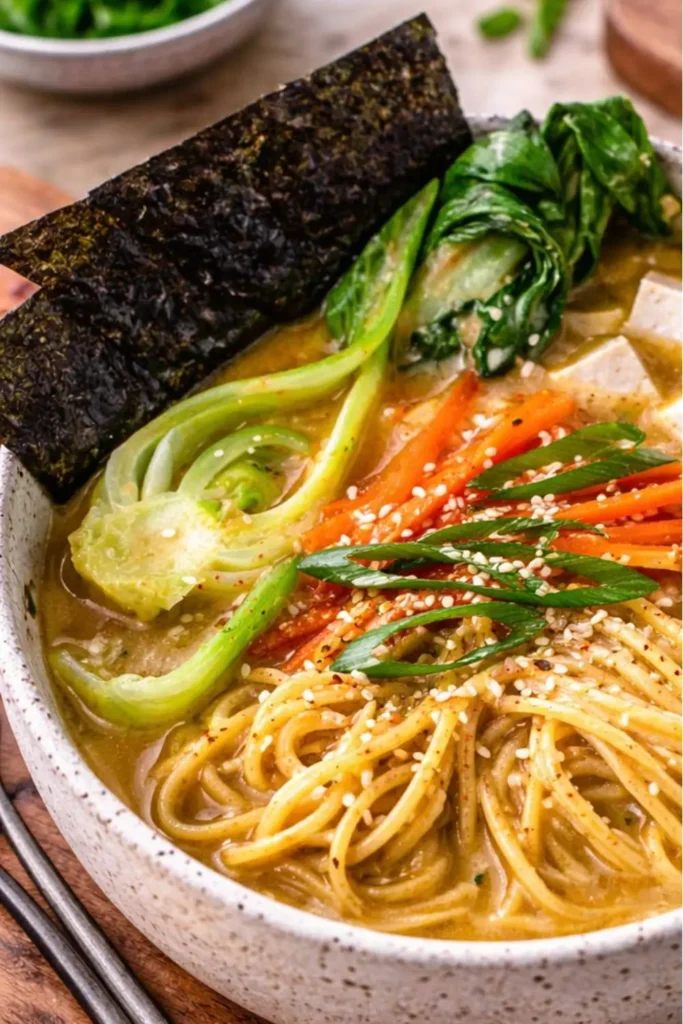
This is the most personal decision in the recipe, and the right answer depends entirely on what you want from the bowl.
Choose the thick, blended broth if you:
- Want maximum richness and a creamy, coating texture
- Prefer a more filling, restaurant-style miso ramen
- Enjoy a broth that clings to the noodles with every bite
- Are cooking for people who might be skeptical that vegan ramen can be satisfying
Choose the thin, strained broth if you:
- Prefer a cleaner, more elegant flavour profile
- Want to taste the individual elements — miso, ginger, soy — more distinctly
- Find thick broths heavy after a full bowl
- Prefer lighter eating in summer heat
IMO, the thick version is more impressive and more satisfying as a main meal. The thin version works better as part of a larger spread. Both are correct, and both use exactly the same ingredients — only the technique differs.
Choosing the Right Noodles
The recipe gives you flexibility here, and it is worth using it thoughtfully.
Ramen Noodles
Traditional dried ramen noodles are wheat-based, alkaline, and slightly chewy. They hold their texture in hot broth longer than most other noodles. Check the package to confirm they are vegan — some dried ramen contains egg or dried seafood seasoning in the flavour packet (which you discard anyway for this recipe, but worth noting).
Soba Noodles
Buckwheat soba noodles add a slightly nutty, earthy flavour that pairs well with the miso broth. They cook quickly — usually 4 to 5 minutes — and have a softer texture than ramen noodles. Pure buckwheat soba is naturally gluten-free; however, many commercial soba noodles contain wheat flour as well, so check the label if gluten is a concern.
Rice Noodles
Rice noodles make this recipe fully gluten-free with no compromise in texture. They cook in 3 to 4 minutes and absorb broth flavour readily. Use flat rice noodles rather than thin vermicelli, which can turn mushy quickly.
Critical rule regardless of noodle type: Do not cook the noodles in the broth until you are ready to serve immediately. Noodles sitting in hot liquid continue absorbing it and become soft and thick. For meal prep, cook noodles separately, rinse under cold water, and store apart from the broth.
Tofu — Choosing and Preparing It Properly
The recipe specifies soft or medium tofu, and that choice is deliberate. Soft and medium tofu heat through in the broth without turning rubbery, and their gentle texture works well against the chewy noodles and crisp-tender bok choy.
Firm or extra-firm tofu works if that is what you have, but the texture will be more dense and requires less gentle treatment. It also absorbs the broth more slowly.
Should You Press the Tofu?
For this recipe, pressing is not necessary. You add the tofu directly to the hot broth to warm through — it is not getting stir-fried or pan-seared. Soft and medium tofu hold enough structure to cube and ladle without pressing.
If you want to add a pan-seared tofu option instead, press firm tofu for 20 minutes, cube it, and fry in a hot oiled pan until golden on all sides before adding to the finished bowl as a topping. This adds a textural contrast that works extremely well.
Marinated Tofu as an Upgrade
Before adding tofu to the broth, toss the cubes in a mixture of 1 Tbsp. soy sauce, 1 tsp. sesame oil, and a pinch of garlic powder. Let it sit for 10 minutes. The broth will season it further, but starting with a lightly marinated tofu adds another layer of flavour to the finished bowl.
Still Hungry, Try It Next recipe :-
Easy Vegan Corn Chowder Recipe For Summer

The Toppings — What Each One Contributes
Good ramen is as much about the toppings as the broth. Each one in this recipe earns its place.
Julienned carrots — added raw at serving, not cooked in the broth. They stay crisp and provide a sweet, fresh contrast to the rich, savoury broth. The rawness is intentional.
Spring onions — finely sliced and scattered over the top. They add a sharp, fresh bite that cuts through the tahini richness. Do not skip these.
Sesame seeds — add visual texture and a subtle nuttiness that echoes the tahini in the broth. Toasting them briefly in a dry pan before serving amplifies their flavour significantly.
Shichimi Togarashi — Japanese seven-spice blend that adds heat, citrus notes, and a complexity that works beautifully in miso-based broths. Find it at Asian grocery stores or online. Entirely optional, genuinely recommended.
Bok choy — cooked in the broth for the final 5 to 7 minutes. Use baby bok choy halved lengthways so it cooks evenly. The leaves wilt into the broth; the stem stays slightly firm and provides texture. Other Asian greens — pak choi, choy sum, or broccolini — work equally well.
Nutrition Per Serving (Serves 4)
| Nutrient | Per Serving |
| Calories | 424 kcal |
| Carbohydrates | 45g |
| Fat | 18g |
| Protein | approximately 20g (from tofu and tahini) |
| Fiber | 4g |
| Sugar | 7g |
| Potassium | 857mg |
| Vitamin A | 3,559 IU |
| Vitamin C | 73mg |
| Calcium | 495mg |
| Iron | 7mg |
The calcium figure here — 495mg per serving — is notably high for a plant-based meal, coming primarily from the tofu and sesame. The iron at 7mg per serving is also significant for a vegan dish. This ramen earns its place not just as comfort food but as genuinely nutritious eating.
Customising the Broth Strength
The recipe gives you starting points, but ramen broth is fundamentally personal. Here is how to adjust:
- Too mild: Add more miso paste, 1 teaspoon at a time, stirring and tasting between additions
- Too salty: Add more water or unsalted vegetable broth to dilute
- Needs more depth: Add a splash more soy sauce or tamari, or a few drops of sesame oil
- Too thin in flavour: Simmer the broth uncovered for an additional 5 minutes to concentrate it
- Needs more richness: Add another tablespoon of tahini and stir well to incorporate
The 10-minute simmer time is a minimum, not a ceiling. A 20-minute simmer produces a noticeably more developed broth if you have the time. FYI — tasting the broth before adding noodles is the single most important quality control step in this recipe. Adjust there, not after everything is in the bowl.
Storage and Meal Prep
This is one of the best ramen recipes for meal prep precisely because every component stores separately and reassembles quickly.
Store all components separately:
- Broth: airtight container in the fridge for up to 3 days, or frozen for up to 1 month
- Noodles: cooked, rinsed in cold water, tossed with a small amount of sesame oil to prevent sticking, stored in the fridge for up to 3 days
- Tofu: stored dry in the fridge for up to 3 days
- Bok choy and carrots: raw, stored in the fridge, and cooked fresh when assembling
To reassemble: Reheat the broth in a pot, bring to a simmer, add bok choy, then tofu, then serve over noodles. Total reassembly time is under 10 minutes.
Storing noodles in broth overnight is the main thing to avoid. The noodles absorb liquid continuously and turn thick and soft. Keep them separate and you get a fresh-tasting bowl every time.
Variations Worth Trying
Spicy Vegan Miso Ramen
Add 1 to 2 tablespoons of gochujang (Korean chilli paste) to the broth alongside the miso. It adds heat, fermented depth, and a slight sweetness that works beautifully in a miso base.
Coconut Miso Ramen
Replace 1 cup of vegetable broth with full-fat coconut milk. The broth turns creamier, slightly sweeter, and richer. Reduce the tahini to 1 tablespoon to prevent the broth from becoming too heavy.
Mushroom Miso Ramen
Add 200g of sliced shiitake mushrooms when you saute the onion. Mushrooms add a deep, earthy umami that builds on the miso beautifully. Dried shiitake reconstituted in warm water, with the soaking liquid added to the broth, amplifies the effect further.
Miso Ramen with Roasted Vegetables
Roast cauliflower, broccoli, or sweet potato at 200C / 400F until caramelised. Serve as a topping over the finished ramen instead of or alongside the tofu. Adds texture, sweetness, and visual variety to the bowl.
Still Hungry, Try It Next recipe :-
Creamy Vegan Tomato Basil Soup

FAQs
Can I make this without tahini? You can, but the broth will be noticeably thinner and less rich. If you do not have tahini, substitute with 2 tablespoons of natural almond butter or sunflower seed butter. The flavour changes slightly but the creamy function remains.
What if I cannot find miso paste? Miso is worth seeking out — most large supermarkets stock it in the international foods aisle or the refrigerated condiment section. Without it, this is not really miso ramen. You could substitute with 2 tablespoons of soy sauce and 1 tablespoon of white wine vinegar for a different but still good savoury broth.
Can I make this gluten-free? Yes. Use tamari instead of soy sauce, choose certified gluten-free soba noodles or rice noodles, and confirm your miso paste is gluten-free (most are, but some contain barley).
Can I add other vegetables? Absolutely. Corn kernels, bean sprouts, sliced mushrooms, baby spinach, and edamame all work well in the finished bowl. Add delicate greens like spinach at the very end — just before serving — so they wilt without overcooking.
Is this suitable for children? Yes, with adjustments. Skip the Shichimi Togarashi and reduce or eliminate the ginger and red pepper elements. The base broth is mild and palatable for most children, and noodles with tofu tend to be well received.
Why This Works as a Summer Recipe
Ramen has a strong association with cold weather, and the warmth of the broth does feel appropriate in autumn and winter. But the fresh toppings in this recipe — raw julienned carrot, crisp spring onion, bright green bok choy — make it feel genuinely suited to summer eating too.
The thin broth option in particular works as a lighter summer bowl. A clear, clean miso and ginger broth with fresh vegetables and noodles is not heavy eating. It sits comfortably alongside cold-weather ramen as a warm-weather alternative, particularly when you want something satisfying without the weight of a cream-based or stew-like soup.
There is also the practical argument: this recipe takes 40 minutes. In summer, when you want dinner to happen quickly and without heating up the kitchen for an hour, 40 minutes with one pot is an entirely reasonable proposition.
My thinking
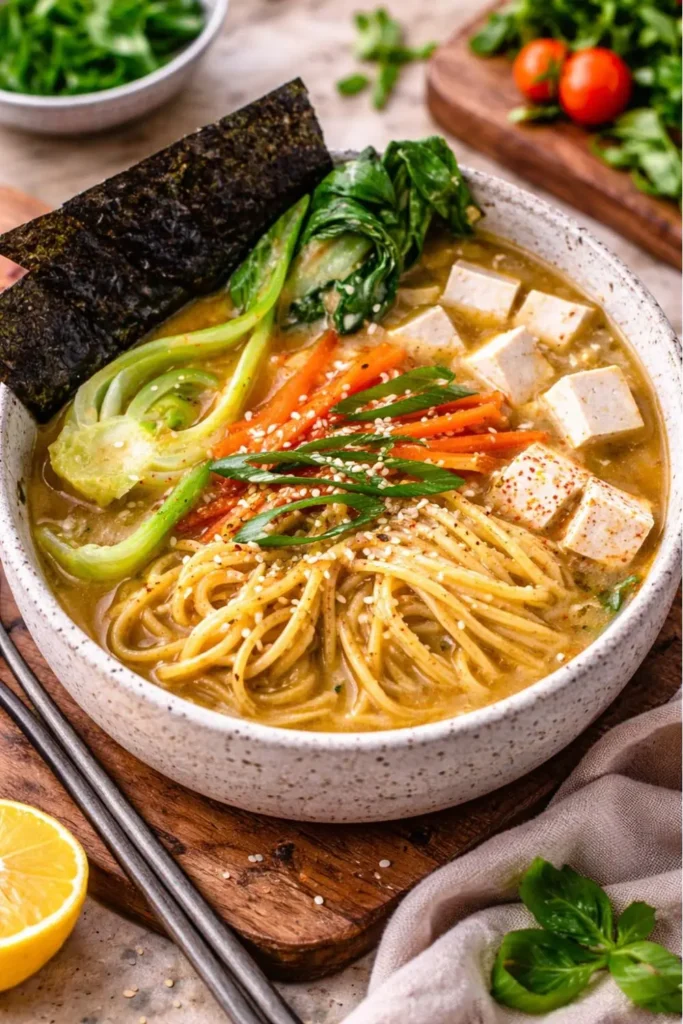
This Easy Vegan Miso Ramen delivers on its headline claim. The broth is genuinely better than many takeout versions — richer, more complex, and built from ingredients you control. The tahini is the unexpected ingredient that makes it work. The 40-minute cook time makes it realistic on a weeknight. And the customisation options mean you can build a different bowl every time from the same base recipe.
Make it thick for a cold evening. Make it thin for a summer night. Change the toppings, adjust the miso, swap the noodles. The base holds up to all of it. That kind of flexibility is what separates a good recipe from a great one — and this one earns that distinction without much debate.
Easy Vegan Miso Ramen Better Than Takeout! Summer Soup Recipe
Ingredients
Equipment
Method
- Build the aromatic base. Add the diced onion and a dash of oil to a large pot over high heat. Saute for 5 minutes, stirring occasionally, until the onion turns slightly translucent and the edges begin to colour. Add the crushed garlic, chopped ginger, and miso paste. Saute for 2 minutes, stirring constantly, until everything smells deeply fragrant. If the ingredients start to stick or darken too fast, add a small splash of vegetable broth to deglaze the pot.
- Build the broth. Pour in the vegetable broth, tahini, soy sauce or tamari, and rice wine vinegar if using. Stir well to dissolve the miso paste and tahini fully into the liquid. Reduce the heat to medium and simmer for at least 10 minutes — this resting time is not optional. It allows the flavours to develop and meld together properly. If the broth reduces faster than expected, add a splash of water.
- Choose your broth texture. This is where you decide what kind of ramen you want. For a thick, creamy broth, use an immersion blender or transfer to a stand blender and puree until completely smooth. For a thin, clear broth with cleaner flavour, pour the soup through a fine mesh sieve into a large bowl, discard the solids, and return the strained liquid to the pot. Both versions taste excellent — the thick version is richer and more filling; the thin version is lighter and more elegant.
- Cook the noodles and greens. Bring the soup to a boil. Add the ramen or soba noodles and the halved bok choy to the pot. Cook for 5 to 7 minutes until the noodles reach tender but still have a slight bite and the bok choy is bright green and just softened.
- Add the tofu. Five minutes before you plan to serve, add the cubed tofu directly to the pot. Allow it to heat through gently in the broth — you are warming it, not cooking it, so gentle heat is the right approach here.
- Assemble and serve. Divide the soup, noodles, bok choy, and tofu evenly between four deep bowls. Top each bowl with julienned carrots, finely chopped spring onion, sesame seeds, and Shichimi Togarashi if using. Serve immediately — ramen waits for no one, and noodles sitting in hot broth continue cooking and turn soft.
Notes
Nutrition Per Serving (Serves 4)
| Nutrient | Per Serving |
| Calories | 424 kcal |
| Carbohydrates | 45g |
| Fat | 18g |
| Protein | approximately 20g (from tofu and tahini) |
| Fiber | 4g |
| Sugar | 7g |
| Potassium | 857mg |
| Vitamin A | 3,559 IU |
| Vitamin C | 73mg |
| Calcium | 495mg |
| Iron | 7mg |

Hi — I’m Rachel. I’m a wife, a mom, and a home cook who believes that food should bring comfort, joy, and compassion to the table. I live with my family — two hungry little foodies who are my most honest recipe testers — and together we’ve built a kitchen culture that’s all about good food that happens to be 100% vegan. I started this blog because I wanted a place to share the recipes that keep our days moving, the dishes that make weeknights feel a little easier, and the meals that become our little family traditions.