
Twenty minutes. That’s it. Dump-and-Go Vegan Silken Tofu Tomato Curry is the kind of recipe that makes you question why you ever spend more than half an hour on a weeknight dinner. A spicy, savory, umami-packed sauce built from chili garlic sauce, soy sauce, sesame oil, and vegetable broth coats delicate silken tofu and crisp-tender vegetables in a glossy, restaurant-quality bowl that’s genuinely one of the most satisfying things you can make this fast. This is fusion cooking at its best bold, efficient, and completely plant-based.
I discovered this style of tofu curry when I needed dinner on the table in under 30 minutes and had a block of silken tofu sitting in the fridge giving me that “use me or lose me” look. The result shocked me. Silken tofu in a high-heat spicy sauce with shiitake mushrooms and vegetables is a combination that delivers big flavor without any complicated technique. One wok, one sauce, 20 minutes and dinner is genuinely impressive.
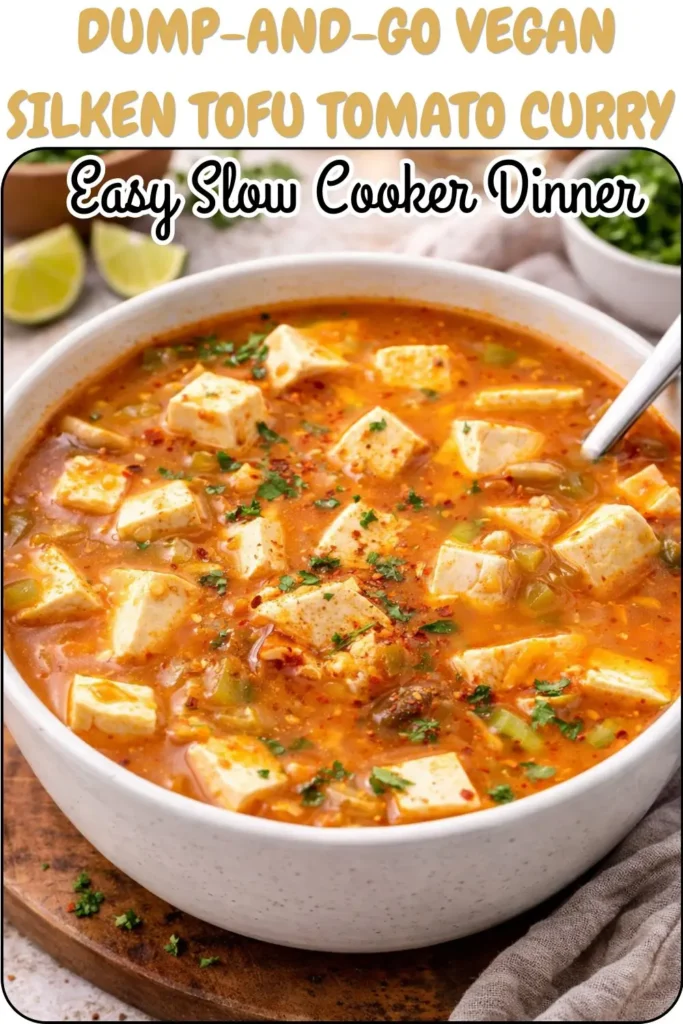
Recipe Timing and Serving Details
Here’s your complete planning overview:
| Detail | Info |
| Prep Time | 10 minutes |
| Cook Time | 10 minutes |
| Total Time | 20 minutes |
| Servings | 4 large servings |
| Serving Size | 1 main serving |
| Calories Per Serving | 175 kcal |
| Course | Lunch / Dinner |
| Cuisine | Fusion |
| Diet | 100% Vegan |
20 minutes total for a deeply flavored, protein-rich curry that serves 4 people as a satisfying main course. At just 175 calories per serving before the rice this is one of the lightest, most nutritionally efficient recipes in this entire summer series. Served over steamed white rice, the complete meal lands at approximately 380–420 calories per person. That’s a genuinely complete, satisfying dinner at a very reasonable caloric investment.
What Makes This Curry Taste So Complex in Just 20 Minutes
Traditional curry development takes time building spice layers, slow-simmering aromatics, reducing sauces. Dump-and-Go Vegan Silken Tofu Tomato Curry achieves remarkable flavor depth in 20 minutes through a completely different approach: using pre-built, already-complex condiments as the sauce foundation.
Chili garlic sauce particularly a high-quality brand like Lee Kum Kee contains fermented chilies, garlic, vinegar, and seasoning that have already developed complexity through their production process. When you add it to a hot pan, that complexity transfers directly to your dish without requiring hours of development on your end.
Rice vinegar and toasted sesame oil add two entirely different flavor dimensions simultaneously. The vinegar brings bright acidity that cuts through the richness of the tofu. The sesame oil adds a nutty, slightly smoky depth that makes the sauce taste roasted and developed. Together they create the characteristic flavor of great Asian-inspired cooking the kind where you can’t quite identify every element but the combination is deeply satisfying.
Cornstarch thickening is the final move that takes the sauce from flavorful liquid to glossy, clingy, coating perfection. The sauce clings to the tofu and vegetables and creates that restaurant-quality presentation where every piece looks lacquered and inviting.
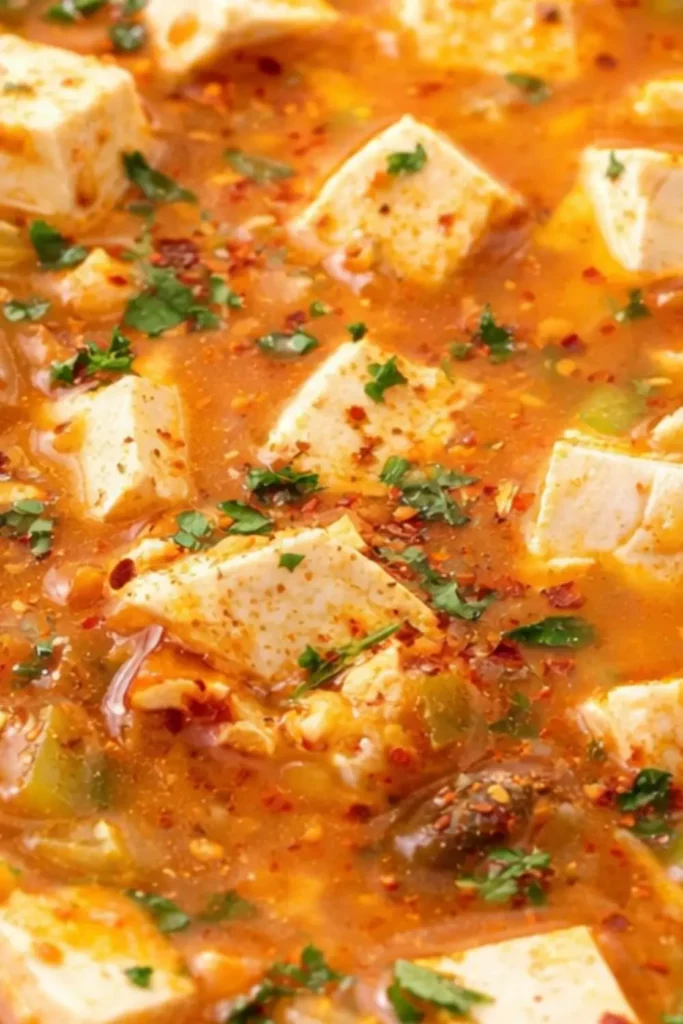
Ingredients You’ll Need
A focused list where every ingredient carries serious flavor weight:
The Vegetables:
- 1½ tablespoons sunflower or canola oil — any neutral, high-heat oil
- 1 medium carrot (or 2 small), small diced
- 1 yellow onion, small diced
- 6 shiitake mushrooms (approximately 4.6 oz), wiped clean and thinly sliced
- 1 green bell pepper, small diced
The Star:
- 17 oz firm or extra-firm silken tofu — not pressed, not regular tofu
The Spicy Sauce:
- 2 cups vegetable broth
- 1 tablespoon plus 1 teaspoon light soy sauce
- 1 tablespoon plus 1 teaspoon rice vinegar
- 2 tablespoons chili garlic sauce Lee Kum Kee recommended
- 1 teaspoon toasted sesame oil
- 1 teaspoon sugar
- 1 clove garlic, crushed
- 1 tablespoon cornstarch (mixed with ¼ cup cold water separately)
- Salt to taste
The 17 oz package of silken tofu is specifically the larger package you typically find in Asian grocery stores significantly cheaper than the smaller packages available in mainstream supermarkets. FYI if you cook with silken tofu regularly, finding an Asian grocery store near you for this purchase alone saves meaningful money over time. The quality is also often better in the larger specialty store packages.
Understanding Silken Tofu — Why It Works Differently Here
Silken tofu is not the same as regular firm or extra-firm tofu, and the differences matter significantly for this recipe:
Silken tofu has a smooth, custard-like texture with high water content. It doesn’t press, it doesn’t crumble, and it doesn’t get crispy in a pan. What it does do is hold its shape surprisingly well in a sauce when handled gently, absorb surrounding flavors through its porous structure, and create a delicate, silky texture contrast against the crisp vegetables and glossy sauce.
Why you don’t press it: Pressing removes moisture from regular tofu to improve crisping. Silken tofu is meant to stay moist that’s the whole point. The moisture is part of its texture appeal. Press silken tofu and you’ll end up with crumbled, broken pieces rather than intact squares.
Why firm or extra-firm silken tofu specifically: The recipe explicitly warns against very soft silken tofu, which breaks down completely in a hot pan and turns the sauce cloudy and mushy. Firm or extra-firm silken tofu holds its shape through the high-heat stir-fry and the sauce cooking process while still delivering that characteristic silky interior. IMO, the texture of properly handled firm silken tofu in a spicy sauce is one of the most satisfying things in vegan cooking.
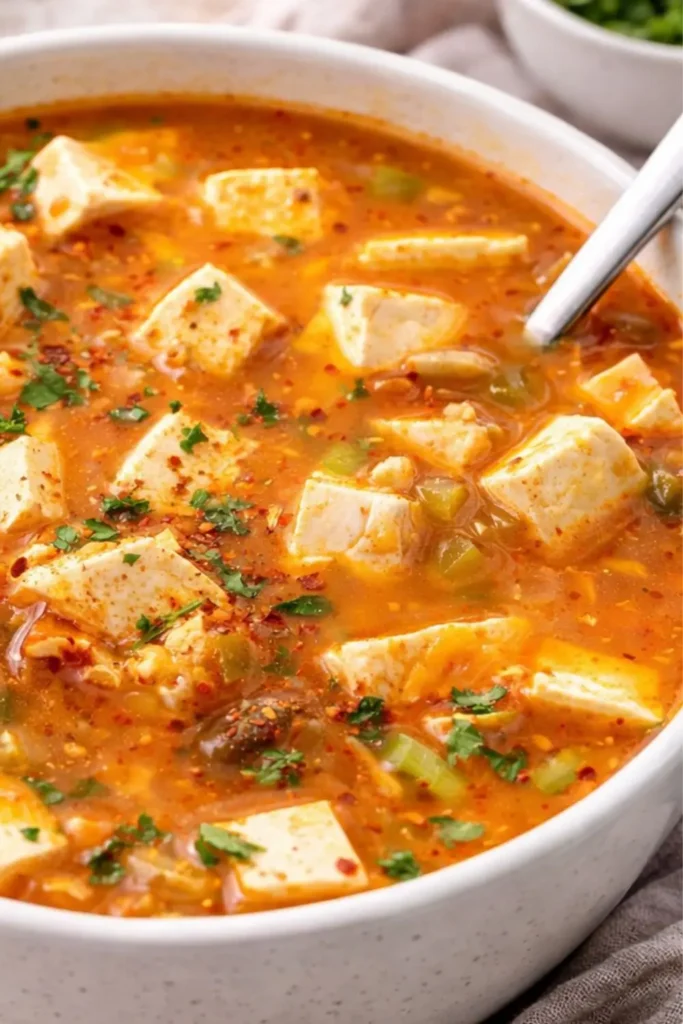
Equipment You’ll Need
This recipe runs on a single high-heat cooking vessel:
Primary Equipment
- Wok (ideal) or large pan with high sides the wok is specifically recommended for this recipe, and the reasoning is sound. A wok’s wide, sloped sides allow you to stir-fry the vegetables at very high heat without them flying out of the pan, and the concentrated heat at the bottom creates proper stir-fry conditions fast cooking that develops slight char on the vegetables without steaming them.
A large, wide sauté pan works as an alternative if you don’t own a wok. Use your largest pan to avoid crowding, which would cause steaming rather than proper high-heat stir-frying.
Carbon steel wok if you have one it heats faster than stainless or non-stick and creates better high-heat stir-fry conditions. Season it properly before use and it becomes essentially non-stick anyway.
Supporting Equipment
- Sharp knife and cutting board — significant vegetable prep happens upfront. Small dicing the carrots, onion, and pepper, plus thinly slicing the shiitake mushrooms, takes the full 10-minute prep window.
- Damp cloth or paper towel — for wiping the shiitake mushrooms clean. Never rinse mushrooms under water they absorb moisture like sponges and steam rather than stir-fry when wet.
- Medium mixing bowl — for whisking together the sauce ingredients before cooking
- Small bowl — for the cornstarch and water mixture, prepared separately and added at the specific moment the recipe requires
- Whisk — for the sauce and the cornstarch slurry
- Wooden spoon or wok spatula — for stir-frying
Step-by-Step Instructions
Step 1 — Prep the Vegetables and Sauce
Small dice the carrots, onion, and green pepper into approximately ¼-inch pieces uniform size ensures everything cooks at the same rate during the quick high-heat stir-fry. Wipe the shiitake mushrooms clean with a damp cloth, cut each in half, then slice thinly.
In a medium bowl, whisk together all the sauce ingredients except the cornstarch vegetable broth, soy sauce, rice vinegar, chili garlic sauce, toasted sesame oil, sugar, and crushed garlic. Whisk until the sugar dissolves completely. Set aside.
In a separate small bowl, whisk the cornstarch with ¼ cup of cold water until completely smooth. Keep this separate until the specific moment it’s needed adding cornstarch too early or too late changes how the sauce thickens.
Drain the silken tofu package and slice carefully into ½-inch to 1-inch squares or rectangles. Handle gently silken tofu breaks easily at this stage before the heat sets it slightly.
Step 2 — Heat the Oil to Smoking
Add the 1½ tablespoons of sunflower or canola oil to your wok or large pan and place over high heat. Wait until the oil reaches smoking point actual thin wisps of smoke rising from the surface. This takes about 2 minutes.
The smoking oil is critical for proper stir-frying. Oil that isn’t hot enough causes the vegetables to steam in their own moisture rather than developing the slight char and intense flavor of true high-heat stir-frying. Smoking oil is hot enough. Don’t add vegetables until you see it.
Step 3 — Stir-Fry the Vegetables
Add all the prepped vegetables carrots, onion, green pepper, and shiitake mushrooms to the smoking oil. Stir-fry on high heat for 3 minutes, stirring and tossing constantly. The vegetables should sizzle loudly when they hit the oil. They should develop some color at the edges while staying slightly crisp at the centers not soft, not raw.
Three minutes at high heat gives the vegetables the right texture contrast against the silky tofu. They provide the structural element in the bowl slightly firm, slightly caramelized at the edges, deeply flavored from the high-heat cooking.
Step 4 — Add Sauce and Tofu, Boil for Three Minutes
Pour the whisked sauce directly into the hot pan with the vegetables. Add the sliced silken tofu pieces and gently mix everything together use a soft spatula or wooden spoon and move carefully to avoid breaking the tofu into pieces. Keep the heat on high.
When the sauce comes to a full boil, set a timer for 3 minutes. Allow the sauce to boil actively during this time, gently stirring occasionally. The high heat continues cooking the vegetables, the tofu heats through completely, and the sauce begins reducing and concentrating its flavor.
Step 5 — Add Cornstarch Slurry and Finish
When the 3 minutes end, give the cornstarch and water mixture a final whisk (cornstarch settles quickly) and pour it into the pan. Stir quickly and thoroughly to incorporate move the spatula through the entire pan, getting into the corners. When the sauce returns to a boil, set a timer for 2 more minutes.
During these final 2 minutes, the cornstarch activates at the boiling temperature and transforms the sauce from a thin, flavorful liquid into a thick, glossy, clingy coating. Watch the transformation it happens quickly and it’s genuinely satisfying to observe.
After 2 minutes, remove the pan from heat. Season with salt the recipe suggests ¾ to 1 teaspoon, but taste first since the soy sauce, chili garlic sauce, and vegetable broth all contribute sodium.
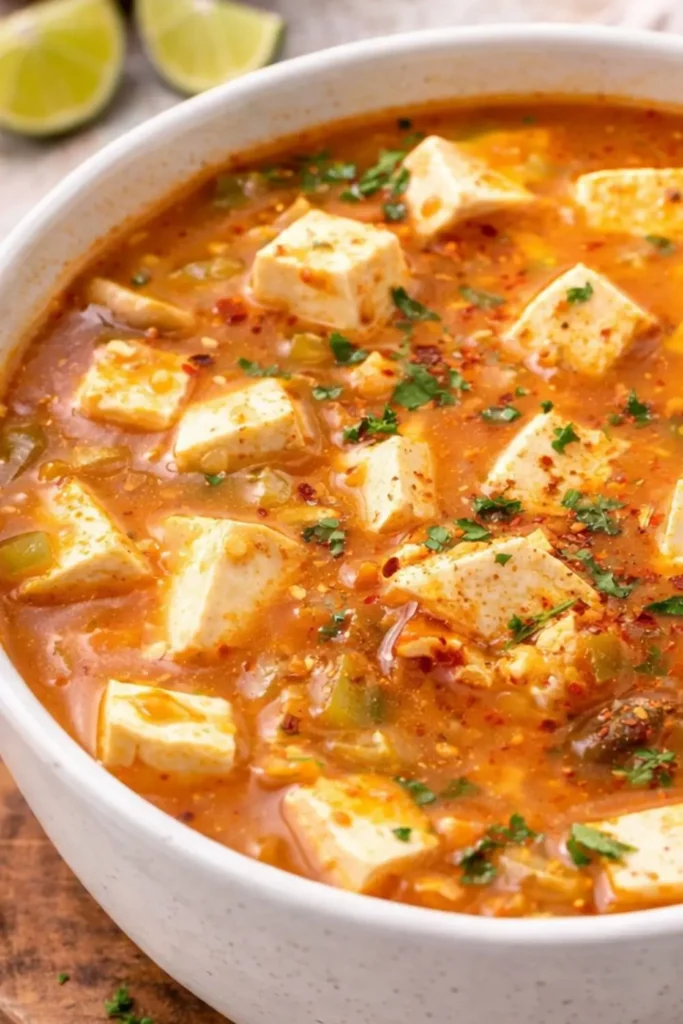
The Chili Garlic Sauce — Why Brand Matters Here
The recipe is unusually specific about recommending Lee Kum Kee chilli garlic sauce and this specificity is warranted. Not all chili garlic sauces are created equal, and the flavor difference between a high-quality fermented chili garlic sauce and a cheaper alternative is significant in a recipe where the sauce carries the entire flavor profile.
Lee Kum Kee uses fermented chilies and a more complex seasoning profile that delivers both heat and depth. The fermentation adds an umami quality that makes the sauce taste developed and complex. Available at Asian grocery stores and increasingly in mainstream supermarkets.
What to use if unavailable:
- Sambal oelek — milder, less garlic-forward, still works well with an extra clove of crushed garlic added
- Sriracha — sweeter, use slightly less (1½ tablespoons instead of 2)
- Harissa — completely different flavor profile but some readers have had good results
What not to use: Generic store-brand hot sauce. The flavor profile is too thin and too acidic to carry this sauce the way fermented chili garlic sauce does. The result tastes flat and one-dimensional.
The Vegetable Lineup — What Each Brings to the Bowl
Every vegetable in this recipe serves a specific purpose:
Shiitake mushrooms — the umami powerhouse. Shiitakes contain high levels of glutamates that create natural savory depth. Their firm texture holds up beautifully through high-heat stir-frying and the boiling sauce stage without becoming mushy.
Carrots — structural backbone. Small-diced carrots stay slightly firm even after the full cooking process, providing textural contrast to the silky tofu.
Yellow onion — aromatic foundation. At high heat, onion pieces develop sweet, slightly caramelized notes that layer into the spicy sauce.
Green bell pepper — brightness and color. Green pepper adds a slightly bitter, fresh note that balances the richness of the sauce and keeps the overall flavor profile from becoming too heavy.
Try It Next recipe
Crockpot Vegan Pulled Jackfruit Tacos Summer Crockpot Recipe
Nutrition Information Per Serving
At just 175 calories per serving, this curry is remarkably light:
| Nutrient | Per Serving |
| Calories | 175 kcal |
| Carbohydrates | 11g |
| Protein | 10g |
| Fat | 11g |
| Saturated Fat | 1g |
| Fiber | 2g |
| Sugar | 6g |
| Sodium | 728mg |
10 grams of plant-based protein at 175 calories per serving is an exceptional protein-to-calorie ratio. The fat content reflects the oil used for stir-frying and the tofu’s natural fat all plant-based sources. The sodium at 728mg is on the higher side, primarily from the soy sauce and chili garlic sauce use low-sodium soy sauce to reduce this meaningfully.
Served over ½ cup of cooked white rice per person, the complete meal reaches approximately 380–420 calories with additional protein and carbohydrates from the rice a very well-balanced dinner.
Storage and Reheating
- Refrigerator: Store in an airtight container for up to 3 days. The silken tofu softens slightly as it sits in the sauce still delicious, just more meltingly tender.
- Reheating: Warm gently on the stovetop over medium-low heat, stirring carefully to avoid breaking the tofu further. Microwave at medium power in 60-second intervals, stirring between each.
- Freezer: Not recommended silken tofu changes texture significantly after freezing, becoming grainy and unpleasant. This recipe is best made fresh or consumed within 3 days.
Final Thoughts — Make This Curry Tonight and Skip the Takeout
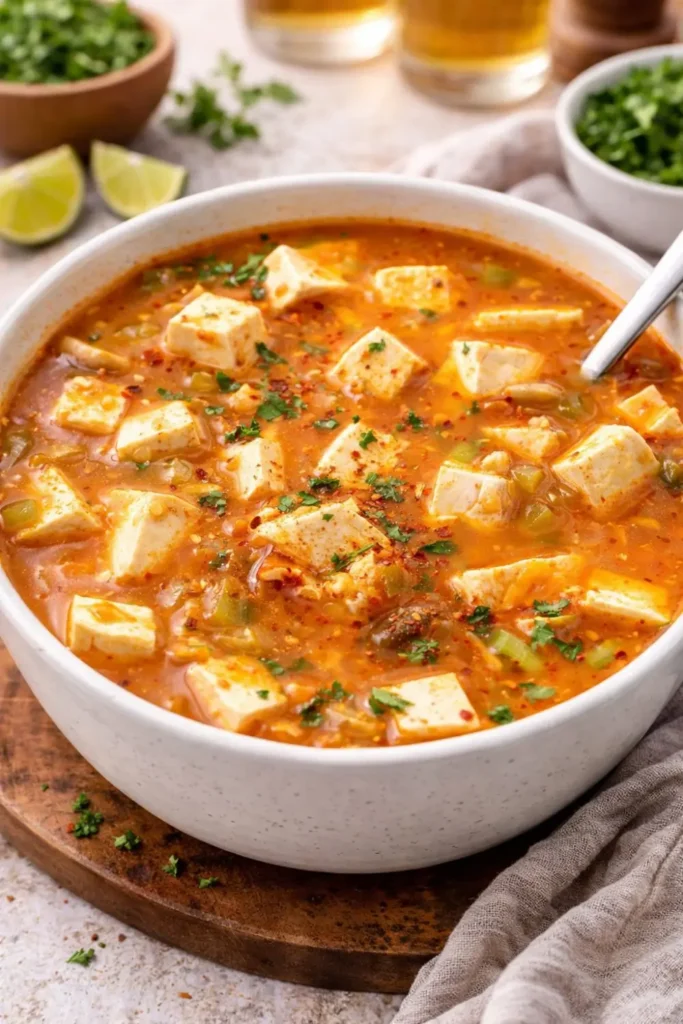
Dump-and-Go Vegan Silken Tofu Tomato Curry proves definitively that 20 minutes and a handful of pantry ingredients can produce a genuinely restaurant-quality vegan dinner. The spicy, savory, umami-packed sauce, the delicate silken tofu, the crisp-tender vegetables everything works together in a bowl that looks impressive and tastes even better than it looks.
175 calories per serving, 10 grams of protein, and a flavor profile that keeps you thinking about the bowl long after dinner is done. The only genuine downside is discovering this recipe means you’ll never feel quite as justified ordering takeout again.
Get that wok hot. Dinner is 20 minutes away.
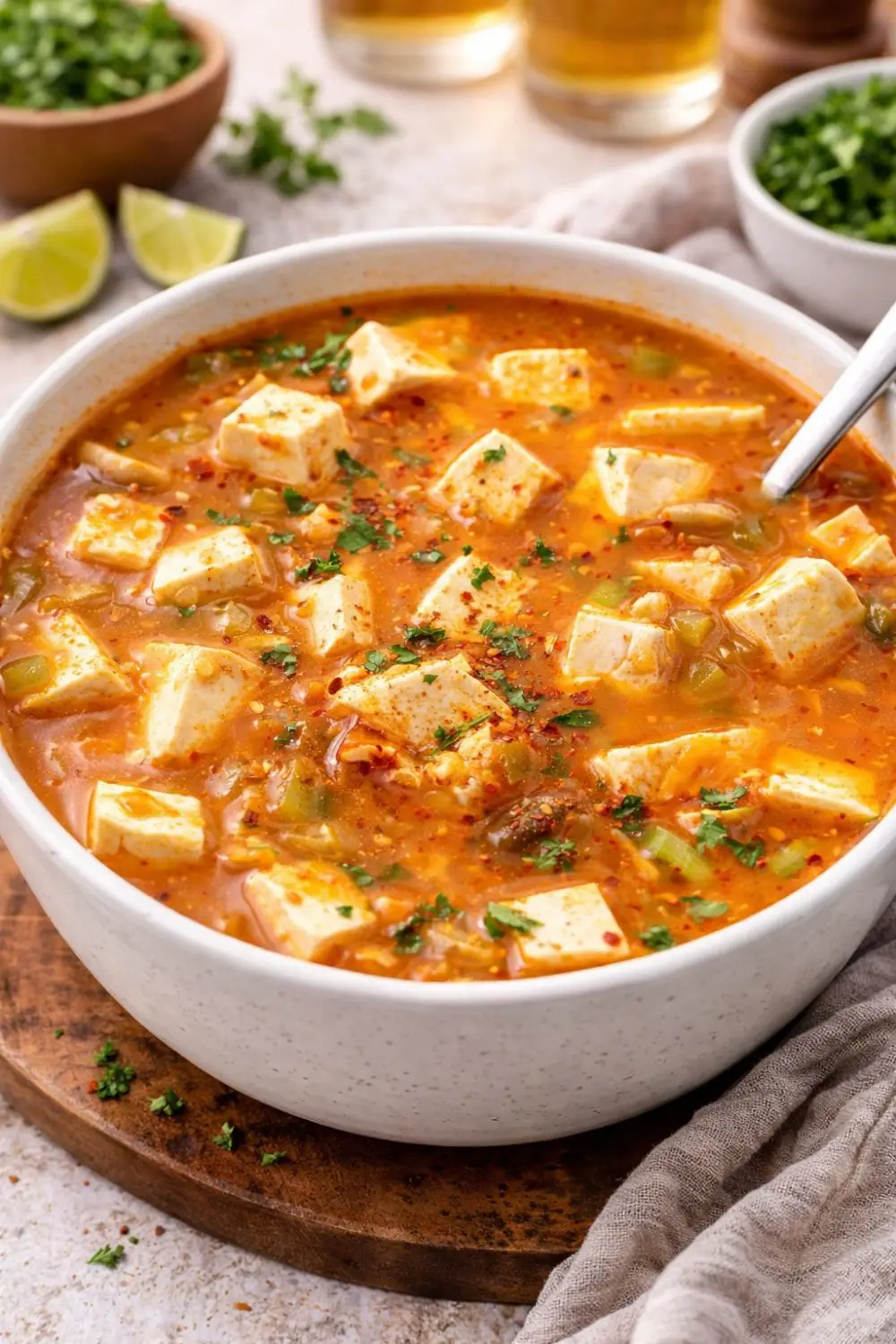
Dump-and-Go Vegan Silken Tofu Tomato Curry
Ingredients
Equipment
Method
- Step-by-Step Instructions
- Step 1 — Prep the Vegetables and Sauce
- Small dice the carrots, onion, and green pepper into approximately ¼-inch pieces uniform size ensures everything cooks at the same rate during the quick high-heat stir-fry. Wipe the shiitake mushrooms clean with a damp cloth, cut each in half, then slice thinly.
- In a medium bowl, whisk together all the sauce ingredients except the cornstarch vegetable broth, soy sauce, rice vinegar, chili garlic sauce, toasted sesame oil, sugar, and crushed garlic. Whisk until the sugar dissolves completely. Set aside.
- In a separate small bowl, whisk the cornstarch with ¼ cup of cold water until completely smooth. Keep this separate until the specific moment it’s needed adding cornstarch too early or too late changes how the sauce thickens.
- Drain the silken tofu package and slice carefully into ½-inch to 1-inch squares or rectangles. Handle gently silken tofu breaks easily at this stage before the heat sets it slightly.
- Step 2 — Heat the Oil to Smoking
- Add the 1½ tablespoons of sunflower or canola oil to your wok or large pan and place over high heat. Wait until the oil reaches smoking point actual thin wisps of smoke rising from the surface. This takes about 2 minutes.
- The smoking oil is critical for proper stir-frying. Oil that isn’t hot enough causes the vegetables to steam in their own moisture rather than developing the slight char and intense flavor of true high-heat stir-frying. Smoking oil is hot enough. Don’t add vegetables until you see it.
- Step 3 — Stir-Fry the Vegetables
- Add all the prepped vegetables carrots, onion, green pepper, and shiitake mushrooms to the smoking oil. Stir-fry on high heat for 3 minutes, stirring and tossing constantly. The vegetables should sizzle loudly when they hit the oil. They should develop some color at the edges while staying slightly crisp at the centers not soft, not raw.
- Three minutes at high heat gives the vegetables the right texture contrast against the silky tofu. They provide the structural element in the bowl slightly firm, slightly caramelized at the edges, deeply flavored from the high-heat cooking.
- Step 4 — Add Sauce and Tofu, Boil for Three Minutes
- Pour the whisked sauce directly into the hot pan with the vegetables. Add the sliced silken tofu pieces and gently mix everything together use a soft spatula or wooden spoon and move carefully to avoid breaking the tofu into pieces. Keep the heat on high.
- When the sauce comes to a full boil, set a timer for 3 minutes. Allow the sauce to boil actively during this time, gently stirring occasionally. The high heat continues cooking the vegetables, the tofu heats through completely, and the sauce begins reducing and concentrating its flavor.
- Step 5 — Add Cornstarch Slurry and Finish
- When the 3 minutes end, give the cornstarch and water mixture a final whisk (cornstarch settles quickly) and pour it into the pan. Stir quickly and thoroughly to incorporate move the spatula through the entire pan, getting into the corners. When the sauce returns to a boil, set a timer for 2 more minutes.
- During these final 2 minutes, the cornstarch activates at the boiling temperature and transforms the sauce from a thin, flavorful liquid into a thick, glossy, clingy coating. Watch the transformation it happens quickly and it’s genuinely satisfying to observe.
- After 2 minutes, remove the pan from heat. Season with salt the recipe suggests ¾ to 1 teaspoon, but taste first since the soy sauce, chili garlic sauce, and vegetable broth all contribute sodium.
Notes
Nutrition Information Per Serving
At just 175 calories per serving, this curry is remarkably light:| Nutrient | Per Serving |
| Calories | 175 kcal |
| Carbohydrates | 11g |
| Protein | 10g |
| Fat | 11g |
| Saturated Fat | 1g |
| Fiber | 2g |
| Sugar | 6g |
| Sodium | 728mg |

Hi — I’m Rachel. I’m a wife, a mom, and a home cook who believes that food should bring comfort, joy, and compassion to the table. I live with my family — two hungry little foodies who are my most honest recipe testers — and together we’ve built a kitchen culture that’s all about good food that happens to be 100% vegan. I started this blog because I wanted a place to share the recipes that keep our days moving, the dishes that make weeknights feel a little easier, and the meals that become our little family traditions.