
There are two types of people in this world: those who scroll past smoothie bowl photos thinking “I could never make that,” and those who actually make them and realise it took five minutes and a blender. If you’re in the first group — this article is for you. Because this Creamy Vegan Strawberry Banana Smoothie Bowl is genuinely one of the easiest, most satisfying breakfasts you can put together, and the result looks like you spent considerably more effort than you actually did.
I started making this on summer mornings when I wanted something cold and fresh but didn’t want to just drink a smoothie out of a glass like a normal, boring person. The bowl format changes everything — you get toppings, you get texture, you get something worth sitting down for. And it’s completely, unapologetically vegan. Let’s get into it.
Quick Stats
- Prep Time: 5 minutes
- Total Time: 5 minutes
- Servings: 1 bowl
- Diet: 100% Vegan
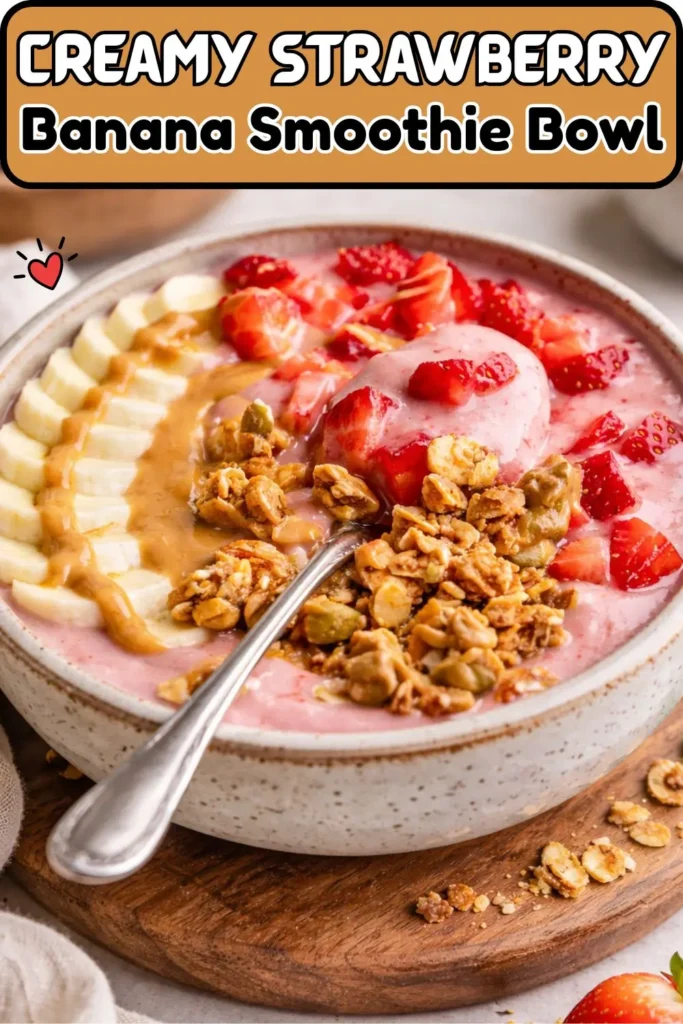
The Full Ingredient List
For the smoothie bowl base:
- 1 banana, frozen
- 1½ cups frozen strawberries
- ½ cup unsweetened coconut milk (or any plant milk you prefer)
- Optional: a scoop of your favourite vegan protein powder
For the toppings:
- Freeze-dried strawberries and bananas
- Fresh strawberries, sliced
- Fresh banana, sliced
- Chia seeds
How to Make It Step by Step Creamy Vegan Strawberry Banana Smoothie Bowl
Step 1: Add the frozen banana, frozen strawberries, and coconut milk to your blender. Blend until completely smooth. The mixture should be very thick — think soft-serve ice cream consistency, not a drinkable smoothie. If your blender is struggling, add a tiny splash more milk, but go slowly. One tablespoon at a time.
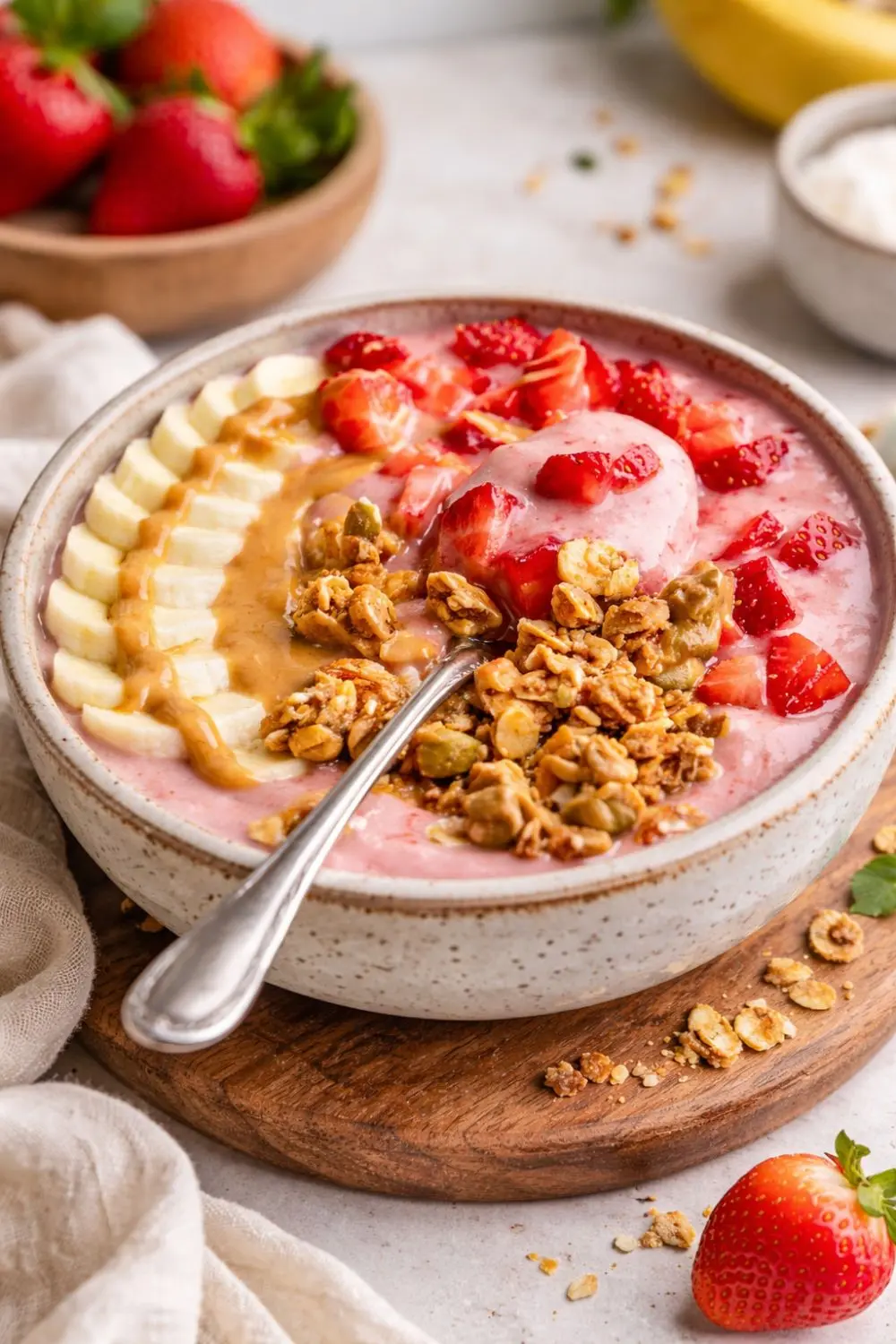
Step 2: Pour the blended base into a bowl. Arrange your toppings on top however you like — freeze-dried fruit, fresh sliced strawberries and banana, and a sprinkle of chia seeds. Serve immediately and eat it before it softens.
Two steps. Five minutes. That’s the whole recipe. Honestly, making this is easier than deciding what to have for breakfast.
Equipment You’ll Need
- A high-powered blender — a Vitamix, NutriBullet, or Ninja works brilliantly. Frozen fruit is tough on weak blenders, so if yours struggles, let the fruit thaw for 3–4 minutes before blending.
- A wide, shallow bowl — surface area matters here. A deep bowl means less room for toppings and honestly, the toppings are half the point.
- A spatula to scrape every last bit of that thick base out of the blender
- Measuring cups for portioning the fruit and milk
- A knife and board for slicing the fresh topping fruit
That’s genuinely everything. No special equipment, no fancy gadgets — just a blender and a bowl.
Calorie & Nutrition Breakdown (Per Bowl)
| Nutrient | Per Serving |
| Calories | ~340–400 kcal |
| Carbohydrates | ~72g |
| Protein | ~5g (more with protein powder) |
| Total Fat | ~7g |
| Fibre | ~9g |
| Natural Sugars | ~38g |
The base itself is naturally sweet from the fruit — zero added sugar needed. The calorie count shifts quite a bit depending on your toppings and whether you add protein powder. Granola adds roughly 100–150 kcal on its own, and nut butter adds another 90–100 kcal per tablespoon. But all of those additions also make the bowl more filling and more nutritious, so they’re worth it.
FYI: Strawberries are one of the best sources of vitamin C you can eat, and frozen strawberries retain virtually all of their nutritional value. So yes — this bowl is basically a vitamin hit disguised as dessert for breakfast.
Why This Creamy Vegan Strawberry Banana Smoothie Bowl Works So Well
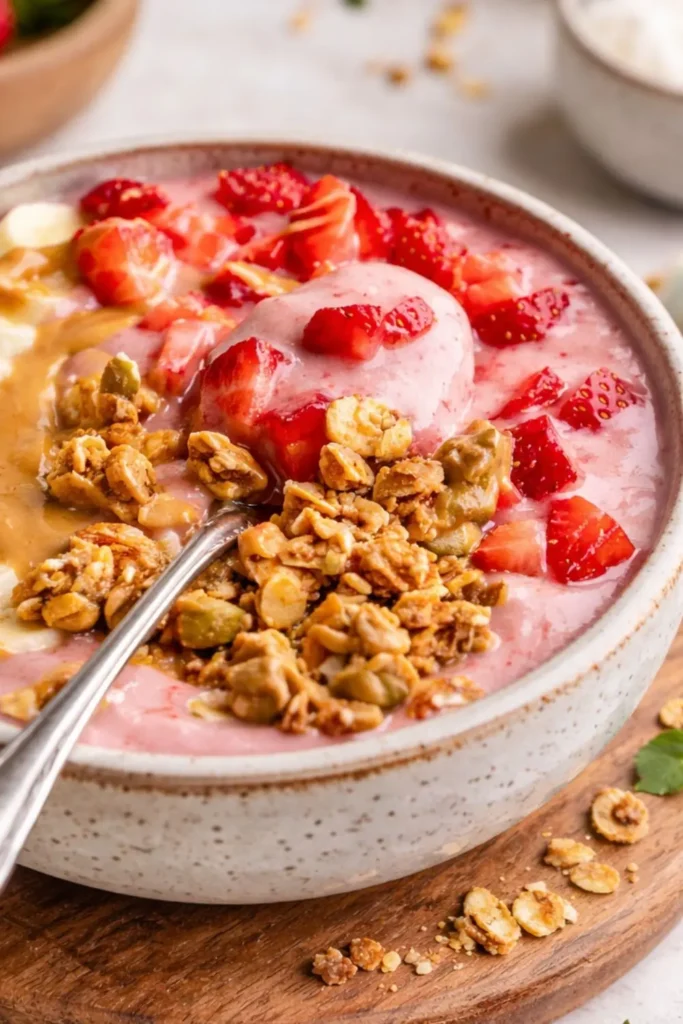
Before you dismiss this as just another smoothie-in-a-bowl, let me explain why this specific combination of ingredients actually delivers something special.
Frozen Fruit Is Non-Negotiable
This is the single most important thing to understand about smoothie bowls. Fresh fruit gives you a liquid smoothie. Frozen fruit gives you a thick, scoopable base. That thick texture is what makes a smoothie bowl feel like a meal rather than a drink. The strawberries and banana need to go frozen — not chilled, not room temperature, but properly frozen. If you only have fresh fruit, slice it up and freeze it for at least four hours before you use it.
The Banana Is Doing Three Jobs at Once
The frozen banana acts as a natural sweetener, a creamy binder, and a thickening agent all at the same time. It’s what gives the base that smooth, almost ice-cream-like quality. Without it, you’d just have frozen strawberries blended with milk, which would be tarter and grittier. The banana rounds everything out. Riper bananas work better here — the riper they are, the sweeter and creamier your bowl will be.
Coconut Milk Is the Right Call
You could use any plant milk here, but coconut milk is the one that genuinely elevates the recipe. Its natural fat content adds richness and helps create that thick, creamy texture you want. A watery almond milk technically works, but the result is noticeably thinner. Full-fat coconut milk from a tin gives you the most luxurious result — though carton coconut milk works well too if that’s what you have.
Breaking Down the Toppings — Why Each One Earns Its Place
The toppings on a smoothie bowl aren’t just decoration. Every single one adds something meaningful to the eating experience.
Freeze-Dried Strawberries and Bananas
This is the topping that most people skip, and honestly, that’s a mistake. Freeze-dried fruit has an incredibly intense flavour — much more concentrated than fresh — and a light, airy crunch that holds up against the thick base much better than fresh fruit does. It also looks gorgeous. If you can only add one “extra” topping, make it the freeze-dried fruit.
Fresh Strawberries and Banana Slices
Fresh fruit on top of a frozen base creates a really satisfying contrast — juicy and soft on top, cold and thick underneath. It also means you get two versions of the same flavour in one bowl: the blended, creamy version and the fresh, whole version. Slice everything right before serving so it doesn’t oxidise and go brown.
Chia Seeds
Chia seeds are the quiet achievers of this bowl. They add fibre, omega-3 fatty acids, and a tiny bit of protein, and their mild crunch provides another texture layer without overpowering anything. They also absorb a little liquid from the base over time, which means they slightly thicken the surface of the bowl as you eat. IMO they’re worth adding every single time — they take one second to sprinkle on and make the whole thing more nutritious without any effort.
Tips for Getting This Bowl Absolutely Right
- Don’t add too much liquid. This is the number one mistake people make. Start with ½ cup and only add more if the blender genuinely can’t process the frozen fruit. Thickness is the goal.
- Use a tamper if your blender has one. Most high-powered blenders come with a tamper — that stick you push down through the lid to coax thick mixtures into the blades. Use it. It’s the difference between a smooth, even base and a lumpy one.
- Chill your bowl first. Pop your serving bowl in the freezer for 5 minutes before you blend. It keeps the base colder for longer once you pour it in, which means the toppings stay crisp and the texture holds.
- Add toppings in sections, not piles. Lay each topping in its own section across the surface of the bowl rather than piling everything in the middle. It looks intentional, it’s easier to eat, and it photographs brilliantly if that matters to you 🙂
- Eat it immediately. Smoothie bowls don’t wait around. The base starts to melt and the toppings start to soften within minutes. This isn’t a make-it-and-come-back-later situation.
- Taste the base before pouring. If your strawberries are on the tart side, add half a ripe banana more. If it’s already very sweet, squeeze in a tiny bit of lemon juice to balance it.
Variations That Work Really Well
Once you’ve nailed the base recipe, you have a solid foundation to build on. Here are some of my favourite ways to switch things up:
- Protein-boosted version: Add a scoop of vanilla or unflavoured vegan protein powder before blending. The texture stays thick and you easily hit 20–25g of protein per bowl.
- Berry mix: Replace half the strawberries with frozen raspberries or frozen blueberries. You get a deeper, more complex flavour and a gorgeous deep purple colour.
- Tropical strawberry twist: Add ½ cup of frozen mango alongside the strawberries. The combination is really vibrant and unexpected.
- Peanut butter swirl: Drop a teaspoon of natural peanut butter or almond butter on top after adding your other toppings. The richness against the fresh fruit is absolutely excellent.
- Chocolate strawberry: Add a tablespoon of raw cacao powder to the base blend. The combination of chocolate and strawberry is a classic for a reason — it works every single time.
- Greens version: Add a handful of spinach to the base. You genuinely cannot taste it, the colour turns a beautiful deep pink-green, and you sneak in iron and folate without any effort.
- Acai boost: Add half a packet of frozen acai to the blend for extra antioxidants and a slightly earthier, richer flavour.
How to Store It (and Whether You Should Bother)
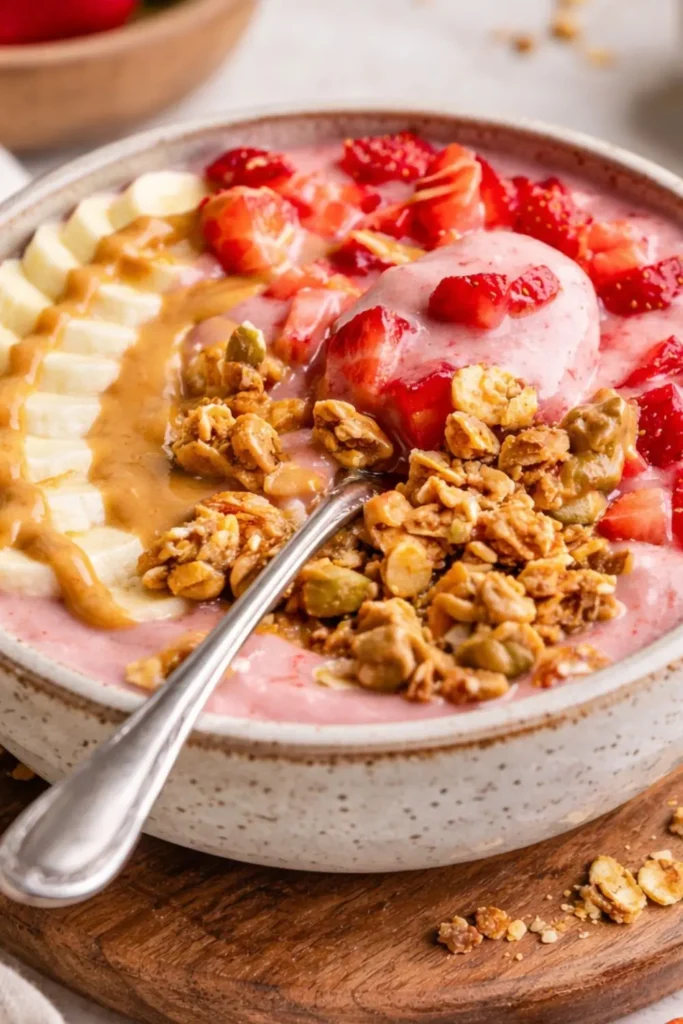
The Honest Truth About Storage
Smoothie bowls are always best eaten fresh. The frozen base starts to melt at room temperature almost immediately, and once the granola or freeze-dried fruit absorbs moisture, it goes soft. There’s no getting around this — smoothie bowls are a fresh food, full stop.
That said, life isn’t always perfect, and sometimes you need to store it.
Fridge Storage
You can refrigerate the base only (without toppings) for up to an hour or two. It will soften slightly but still taste good. Before eating, give it a stir to recombine any liquid that’s separated, then add your toppings fresh.
Freezer Storage
Here’s the genuinely useful hack: the base freezes really well. Because it’s already loaded with frozen fruit and very thick, it holds its texture in the freezer for up to 2–3 months. Portion any leftover base into a freezer-safe container, freeze solid, and thaw in the fridge for a couple of hours when you want it. Stir before serving and add toppings fresh.
This means you can actually batch-make a few servings of base at once, freeze them in individual portions, and have breakfast ready to go on busy mornings. Defrost the night before in the fridge, and it’s ready when you wake up. That’s the kind of meal prep that actually fits into real life.
Why This Bowl Suits Summer Perfectly
Eating something cold and fruit-forward on a warm morning just makes sense. This Creamy Vegan Strawberry Banana Smoothie Bowl feels refreshing in a way that a hot breakfast simply can’t compete with during summer. It cools you down, it energises you, and it genuinely looks like summer in a bowl — the red of the strawberries, the yellow of the banana, the tiny black chia seeds scattered across the top.
It also requires zero heat, zero cooking, and zero standing near a hot hob. You blend, you pour, you eat. On a hot morning when the last thing you want is to make your kitchen warmer, that matters more than you’d think.
And there’s something genuinely cheerful about starting your day with something colourful and vibrant. It sounds small, but eating a beautiful breakfast sets a better tone for the morning than eating something beige out of a mug. Start bright, stay bright — that’s the philosophy.
The Protein Powder Question — Should You Add It?
This comes up a lot, so let’s address it properly. Should you add protein powder to your smoothie bowl?
The honest answer is: it depends on what you’re doing with your morning.
If this is a standalone breakfast and you have a physically active day ahead, adding a scoop of vegan protein powder is a genuinely good idea. It bumps your protein from around 5g to 25g+ per bowl, which makes a meaningful difference in how full and energised you feel through the morning.
If you’re having this as part of a bigger breakfast, or you’re not particularly focused on protein intake, the base recipe is perfectly satisfying without it.
What type of protein powder works best? A vanilla or unflavoured pea protein or rice protein blends well with the strawberry-banana base without changing the flavour too dramatically. Chocolate protein powder also works surprisingly well here. Avoid anything with a very strong artificial flavour — it competes with the natural fruit sweetness and makes the whole thing taste synthetic.
Still Hungry, Try It Next recipe :-
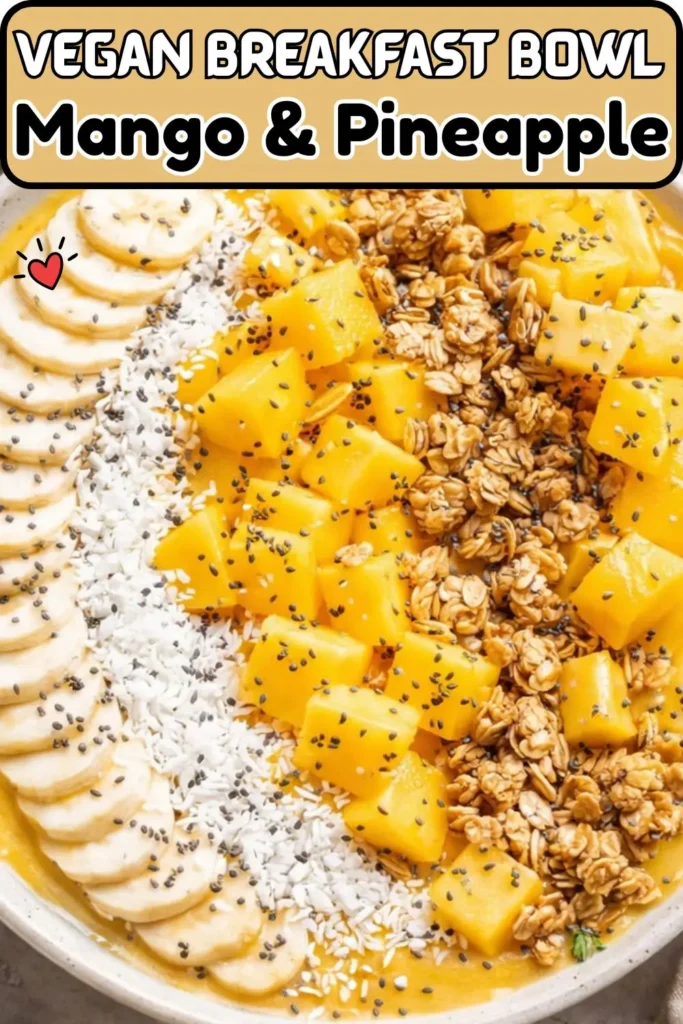
Tropical Vegan Breakfast Bowl with Mango and Pineapple
Frequently Asked Questions
Can I use fresh strawberries instead of frozen? You can, but the bowl will be much thinner and more like a regular smoothie. If you only have fresh strawberries, slice them and freeze them for at least 4 hours before blending. The frozen texture is genuinely essential to the bowl.
What’s the best blender for smoothie bowls? Vitamix or NutriBullet are the gold standard. A Ninja works well too. The key is power — frozen fruit is hard on weaker blenders. If yours struggles, let the frozen fruit sit at room temperature for 3–4 minutes before blending to take the edge off.
Can I make this the night before? Not ideally — but you can freeze the base and thaw it in the fridge overnight. The texture will be slightly softer than freshly blended, but still very good. Add toppings fresh in the morning.
Is one bowl actually enough for breakfast? For most people, yes — especially with generous toppings. If you’re particularly hungry or very active, double the recipe and make two bowls, or add extra toppings like granola, nut butter, or an extra banana.
What can I use instead of coconut milk? Oat milk, almond milk, soy milk, and cashew milk all work. Coconut milk gives the richest, creamiest result. Oat milk is neutral and creamy. Avoid very watery milks or the base will be too thin.
Why does my smoothie bowl turn out too runny? Too much liquid is almost always the answer. Start with less milk than you think you need — ½ cup is the absolute maximum for this recipe. Add more than only a tablespoon at a time if the blender is really struggling.
A Quick Word on Why Plant-Based Smoothie Bowls Are Just Brilliant
Here’s the thing about a recipe like this — it asks absolutely nothing of you in terms of compromise. It’s sweet, it’s creamy, it’s cold, it’s colourful, it’s satisfying, and it happens to be entirely plant-based. There’s no dairy version of this that’s somehow more indulgent or delicious. This bowl stands completely on its own merits.
Frozen banana and strawberries blended with coconut milk and topped with fresh fruit and chia seeds is genuinely excellent food. The fact that it’s also high in vitamin C, naturally free from dairy and eggs, and takes five minutes to make is the kind of bonus that makes you feel quietly smug about your life choices.
Still Hungry, Try It Next recipe :-
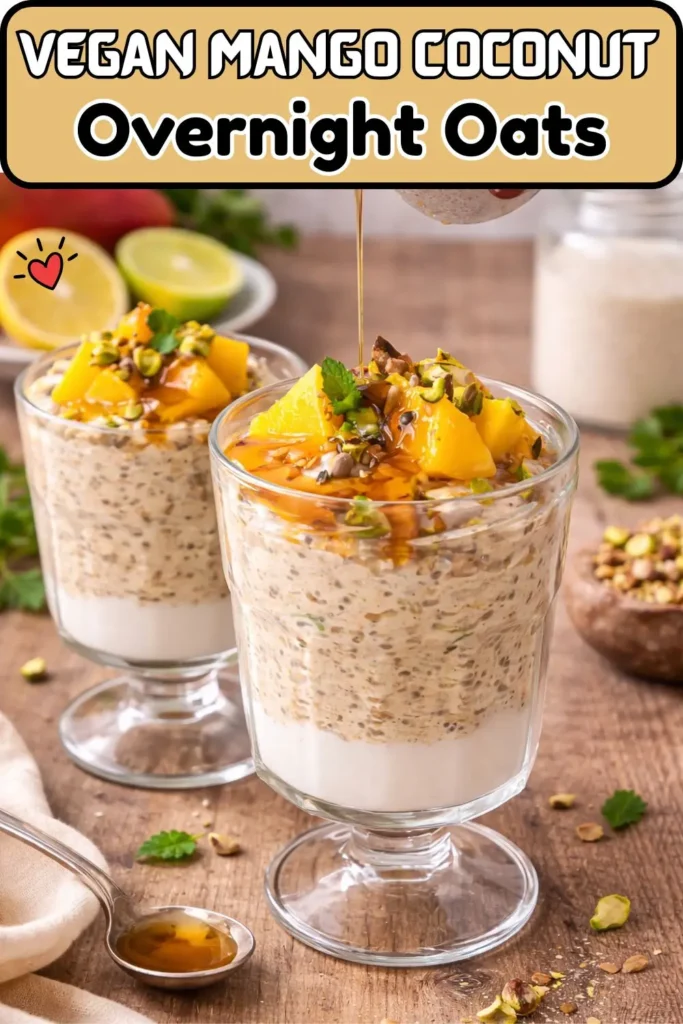
Easy Vegan Mango Coconut Overnight Oats
Go Make This Right Now
Here’s where we land: one frozen banana, one and a half cups of frozen strawberries, half a cup of coconut milk, and five minutes is all that stands between you and the best-looking, best-tasting breakfast you’ve made this summer.
Load it up with toppings, find a good spot to sit, and eat it before it melts — because it will melt, and nobody wants a puddle of strawberry smoothie where a gorgeous bowl used to be. That’s a tragedy we can all avoid.
Make this once and you’ll understand why smoothie bowls have taken over every breakfast feed on the internet. They’re this good. Full stop.
Creamy Vegan Strawberry Banana Smoothie Bowl
Ingredients
Equipment
Method
- Step 1: Add the frozen banana, frozen strawberries, and coconut milk to your blender. Blend until completely smooth. The mixture should be very thick — think soft-serve ice cream consistency, not a drinkable smoothie. If your blender is struggling, add a tiny splash more milk, but go slowly. One tablespoon at a time.
- Step 2: Pour the blended base into a bowl. Arrange your toppings on top however you like — freeze-dried fruit, fresh sliced strawberries and banana, and a sprinkle of chia seeds. Serve immediately and eat it before it softens.
- Two steps. Five minutes. That’s the whole recipe. Honestly, making this is easier than deciding what to have for breakfast
Notes
Calorie & Nutrition Breakdown (Per Bowl)
| Nutrient | Per Serving |
| Calories | ~340–400 kcal |
| Carbohydrates | ~72g |
| Protein | ~5g (more with protein powder) |
| Total Fat | ~7g |
| Fibre | ~9g |
| Natural Sugars | ~38g |

Hi — I’m Rachel. I’m a wife, a mom, and a home cook who believes that food should bring comfort, joy, and compassion to the table. I live with my family — two hungry little foodies who are my most honest recipe testers — and together we’ve built a kitchen culture that’s all about good food that happens to be 100% vegan. I started this blog because I wanted a place to share the recipes that keep our days moving, the dishes that make weeknights feel a little easier, and the meals that become our little family traditions.