
Chana masala chickpeas in a rich, spiced tomato-coconut sauce is one of the most beloved dishes in Indian cooking, and for good reason. It’s bold, deeply aromatic, satisfying, and completely plant-based by tradition. Dump-and-Go Vegan Chickpea Marsala brings that same experience to your summer kitchen in 50 minutes with a streamlined technique that doesn’t require any prior experience with Indian cooking. The spice blend does all the complex work. Your job is mostly stirring and waiting.
I started making this after realizing that the chana masala I was ordering from my favorite Indian restaurant was almost certainly something I could recreate at home and probably make better, since I could control the spice level and ingredient quality. After some experimentation, this version became my go-to. The caramelized onion base, the fresh ginger and garlic, the coconut milk finish these components work together to create a sauce that’s genuinely restaurant-quality. And it serves six people, which makes leftovers for the rest of the week practically mandatory.
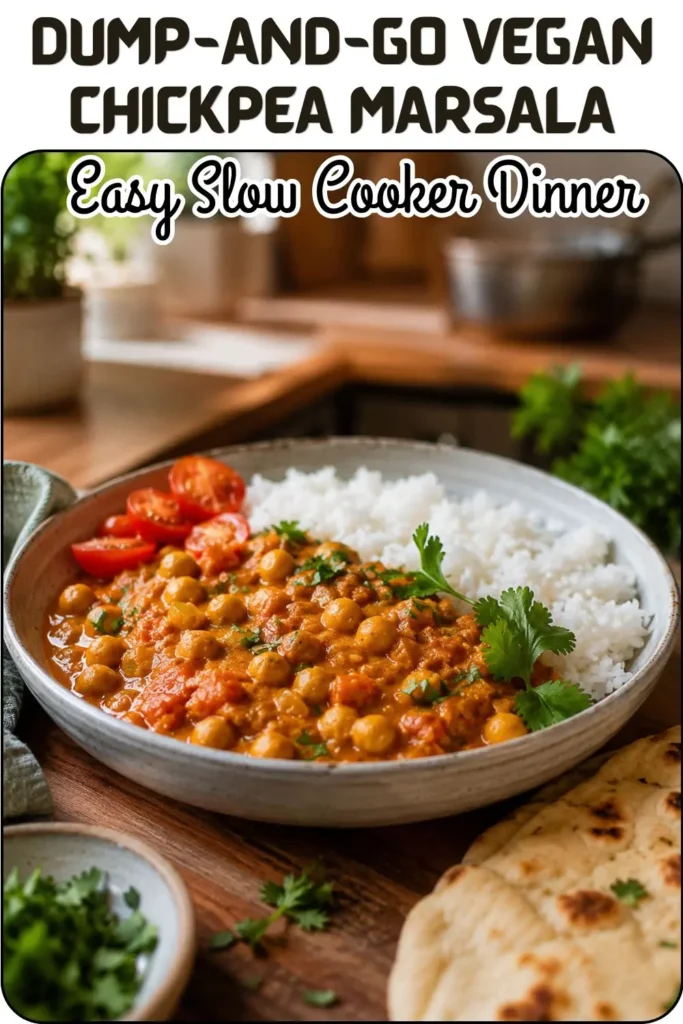
Recipe Timing and Serving Details
Here’s your complete planning overview:
| Detail | Info |
| Prep Time | 10 minutes |
| Cook Time | 40 minutes |
| Total Time | 50 minutes |
| Servings | 6 servings |
| Serving Size | 1 of 6 portions |
| Estimated Calories Per Serving | ~320–360 kcal |
| Course | Entrée / Main Course |
| Cuisine | Indian-Inspired |
| Diet | 100% Vegan, Gluten-Free, Dairy-Free |
50 minutes total for a deeply spiced, creamy, restaurant-quality chickpea marsala that serves 6 people generously. At approximately 320–360 calories per serving (without the grain base), this dish delivers a satisfying, nutritionally complete meal that works over rice, quinoa, or alongside vegan naan. The calorie count increases by approximately 200 calories per serving when you add rice still a completely reasonable, nutritionally excellent dinner.
What Makes This Chickpea Marsala So Special
Most people assume Indian-style curries require specialized cooking knowledge or hard-to-find ingredients. Dump-and-Go Vegan Chickpea Marsala proves that assumption wrong. The technique is straightforward stovetop cooking sauté, add spices, build sauce, simmer. The complexity comes entirely from the spice combination, not from any advanced technique.
The defining moves in this recipe are three things that genuinely elevate it above average:
Caramelizing the onions properly –- 8–12 minutes in the pan until deeply golden and slightly browned at the edges. This develops natural sweetness and a concentrated savory depth that becomes the backbone of the entire sauce. Rushed, undercooked onions produce a flat sauce. Properly caramelized onions produce something genuinely complex.
Blooming the spices in the oil — cooking garam masala, turmeric, and cayenne directly in the oil with the aromatics before adding any liquid activates the fat-soluble flavor compounds in each spice. This produces dramatically more flavor than adding spices directly to liquid would.
The coconut milk finish — added at the end, the coconut milk brings richness, creaminess, and a subtle sweetness that rounds the sharp edges off the spice blend and transforms the tomato base into a luxurious sauce. FYI full-fat coconut milk produces a noticeably richer result than lite. Both work, but the full-fat version is worth it for a dish this good.
Try It Next recipe
Slow Cooker Vegan Black Eyed Peas
Ingredients You’ll Need
A focused ingredient list with significant flavor impact:
The Aromatic Base:
- 2 tablespoons olive oil — or ¼ cup water/broth for oil-free
- 1 large onion, diced
- 1 teaspoon cumin seeds
- 3–4 garlic cloves, minced
- 2-inch piece of fresh ginger, minced or grated
The Spice Blend:
- 1 tablespoon ground coriander (optional but recommended)
- 1½ teaspoons turmeric
- 1 heaping teaspoon garam masala
- ½–1 teaspoon cayenne — adjust to heat preference
- ½ teaspoon mineral salt
The Sauce:
- 2 cans (14 oz each) diced tomatoes with their juices or 4 fresh tomatoes, chopped
- 2 tablespoons tomato paste
- 2 cans (14 oz each) chickpeas, drained and rinsed
- 1 can (15 oz) full-fat coconut milk
For Serving:
- ½ cup fresh cilantro, chopped
- Cooked rice, quinoa, or couscous
- Vegan naan — highly recommended
The cumin seeds in this recipe are specifically whole seeds, not ground cumin. Whole cumin seeds toasted in hot oil pop and release an intensely nutty, aromatic flavor that ground cumin simply cannot replicate. They’re worth keeping in your pantry specifically for recipes like this and once you taste the difference, you’ll understand immediately why Indian cooking relies on them so heavily.
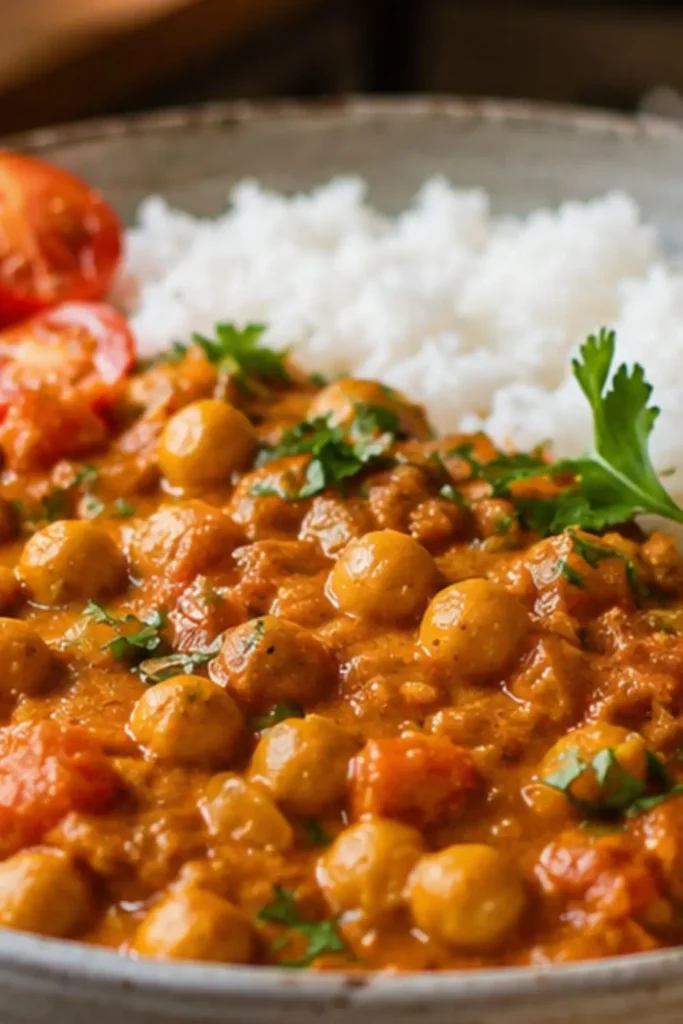
Equipment You’ll Need
This stovetop recipe runs primarily in a single large pan:
- Large deep-sided skillet or wide sauté pan — a 12-inch, deep-sided skillet works perfectly. You need depth to accommodate two cans of chickpeas, two cans of diced tomatoes, and a full can of coconut milk without the sauce bubbling over during the simmer stage. A 5–6 quart Dutch oven also works excellently and makes the simmering stage even more manageable.
- Lid — for covering the pan during the 25–30 minute simmer stage. A tight-fitting lid retains moisture and prevents the sauce from reducing too aggressively during the long cook.
- Microplane or fine grater — for grating the fresh ginger. Fresh ginger grated finely integrates more seamlessly into the sauce than minced pieces. If you only have a knife, mince as finely as possible. Ground ginger works as a last resort but produces a noticeable flavor difference fresh ginger has a brightness that the dried version lacks.
- Sharp knife and cutting board — for dicing the onion, mincing the garlic, and preparing the ginger
- Wooden spoon or silicone spatula — for stirring throughout all the cooking stages
- Can opener — for the diced tomatoes, chickpeas, and coconut milk
- Measuring spoons
- Ladle — for serving
The pan choice matters more than most people realize for this recipe. A thin-bottomed pan creates hot spots that make the onion caramelization uneven and can scorch the spices during the blooming stage. A heavy-bottomed pan distributes heat evenly every piece of onion caramelizes at the same rate, and no spices burn in a hotter corner of the pan. IMO, this is the recipe that finally convinced me a good heavy-bottomed pan is worth the investment.
Step-by-Step Instructions for Dump-and-Go Vegan Chickpea Marsala
Step 1 — Caramelize the Onion with Cumin Seeds
Heat the 2 tablespoons of olive oil in your large skillet over medium heat. Add the diced onion and the 1 teaspoon of cumin seeds together. Cook for 8–12 minutes, stirring occasionally, until the onions turn deeply golden and develop browned edges and the cumin seeds become fragrant and slightly darker.
This step takes patience. The temptation to turn up the heat and rush the onions is real and you should resist it completely. Medium heat over sufficient time is what produces that deep golden color and concentrated sweetness. High heat burns the outside while leaving the inside raw and sharp-tasting. Give the onions their full time and the sauce rewards you for it.
Step 2 — Add Garlic and Ginger
Add the minced garlic and grated ginger to the pan. Stir constantly and cook for 1–2 minutes until the mixture becomes intensely fragrant. The garlic and ginger hit the hot oil and start releasing their aromatic compounds immediately your kitchen will smell extraordinary at this moment.
Don’t walk away during this step. Garlic burns in the same time it takes to answer a quick text, and burned garlic creates a bitter note that carries through the entire finished dish. Keep stirring and keep the heat at medium.
Step 3 — Bloom the Spices
Add the garam masala, turmeric, cayenne, coriander (if using), and salt to the pan all at once. Stir constantly for 1–2 minutes until the spices coat the onion and garlic mixture and become intensely fragrant. The pan will look very dry during this step that’s expected. The spices are toasting in the residual oil and drawing flavor out of every granule.
Blooming spices directly in oil with aromatics is the single technique that distinguishes good Indian-style cooking from mediocre Indian-style cooking. The difference in final flavor between bloomed spices and spices added directly to liquid is significant and immediately noticeable. This step takes 2 minutes. It’s worth every second.
Step 4 — Build the Tomato Sauce
Pour in both cans of diced tomatoes with all their juices. Stir well to incorporate the spiced onion base throughout the tomatoes. Cook for 4–5 minutes, stirring occasionally, until the tomatoes soften, break down partially, and start becoming saucy. The mixture should begin to smell like an actual curry sauce rather than individual components at this point.
Step 5 — Add the Chickpeas and Coconut Milk, Then Simmer
Stir in the tomato paste, both cans of drained and rinsed chickpeas, and the can of coconut milk. Stir everything together thoroughly until the coconut milk incorporates evenly and the sauce becomes uniformly creamy and rich-looking.
Bring the pot to a gentle simmer not a rolling boil, just small, lazy bubbles breaking the surface. Cover and cook for 25–30 minutes, stirring occasionally, until the chickpeas have absorbed some of the surrounding sauce and become deeply flavored throughout. The sauce should thicken noticeably during this time.
Keep the heat genuinely low during this simmering stage. Coconut milk at a rolling boil can separate and become grainy. A gentle simmer keeps it creamy and smooth throughout the long cook.
Step 6 — Taste, Adjust, and Serve
Remove the lid and taste the marsala. Adjust seasoning more salt, more cayenne for heat, a pinch more garam masala if the flavor needs more warmth and complexity. Stir in any adjustments and cook uncovered for 2–3 more minutes.
Serve over your grain of choice and scatter fresh cilantro generously over each bowl.
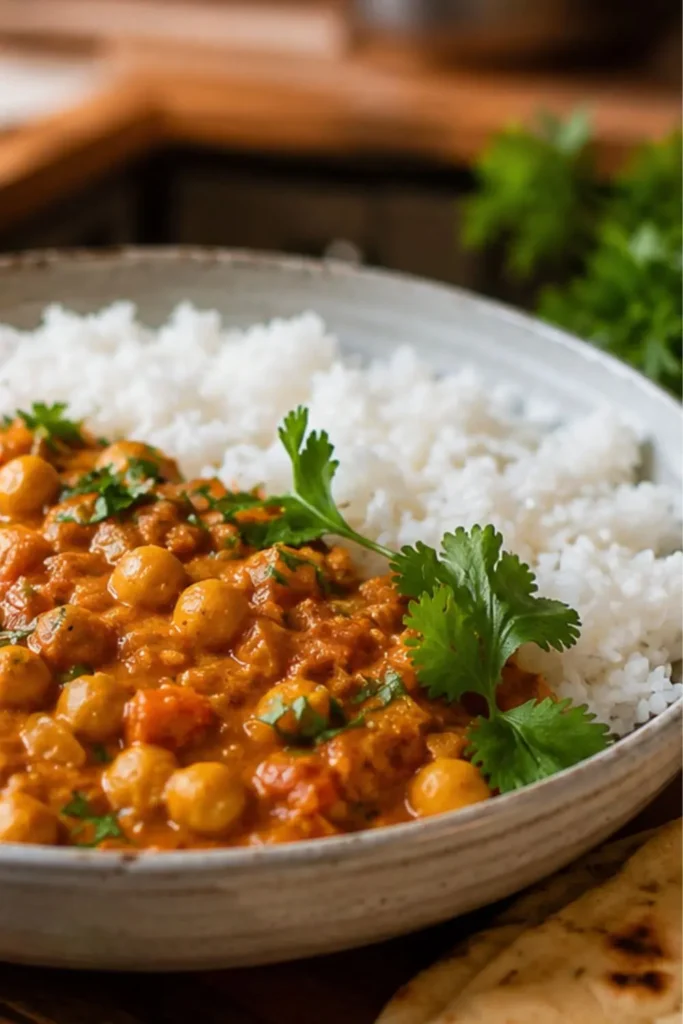
The Spice Blend — What Each Ingredient Contributes
Understanding the spice blend helps you customize this recipe confidently:
Cumin seeds — nutty, earthy, aromatic backbone. The whole seeds toasted in oil deliver more depth than ground cumin ever could.
Garam masala — a warming, complex blend of spices (cardamom, cinnamon, cloves, pepper) that defines the “masala” character of the dish. This is the soul of the whole recipe.
Turmeric — earthy, slightly bitter, and responsible for the gorgeous golden color. Also brings anti-inflammatory properties that are genuinely beneficial.
Cayenne — the heat source. Control this number carefully based on your tolerance. Start with ½ teaspoon and add more to taste at the end.
Ground coriander — bright, slightly citrusy, adds a lightness to the heavy, warm spices. Listed as optional but genuinely improves the sauce.
Fresh ginger — bright, warming, slightly spicy. Brings a live, vibrant quality that no dried ginger can replicate.
Optional Add-Ins That Work Beautifully
The recipe invites additions that make the meal even more substantial:
- 1 sweet potato, diced into ¼–½ inch cubes add with the chickpeas. They soften during the simmer and add natural sweetness and body to the sauce.
- 2 cups cauliflower florets — add with the chickpeas. Cauliflower absorbs the curry sauce beautifully during the simmer.
- 1 cup sliced carrots — add with the chickpeas. They add color, natural sweetness, and additional nutrition.
- Baby spinach — stir in a few handfuls during the final 5 minutes. Wilts quickly and adds significant nutritional value.
The Overnight Rest — Why Leftovers Are Even Better
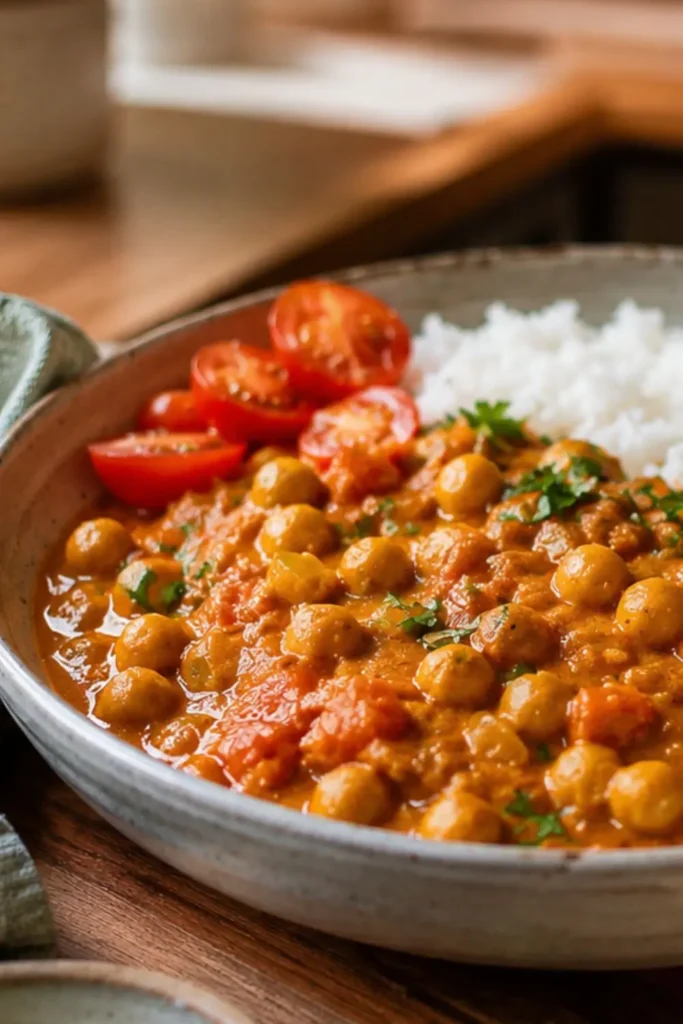
Here’s one of the recipe’s best practical features: this dish genuinely tastes better the next day. Overnight rest in the refrigerator allows the chickpeas to fully absorb the surrounding sauce, the spices to meld and deepen, and the sauce to thicken to a perfect consistency.
If you can plan ahead and make this the day before serving, do it. The improvement between freshly made and next-day chickpea marsala is noticeable enough that I specifically make it a day ahead when serving guests.
What to Serve Alongside
Dump-and-Go Vegan Chickpea Marsala is versatile enough to work with several different bases:
- Basmati rice — the classic pairing. Fluffy, long-grain basmati soaks up the sauce and creates a complete, traditional serving experience.
- Cilantro lime rice — adds brightness that complements the warming spices beautifully
- Quinoa — higher protein, slightly nuttier flavor, works well for a more nutritionally dense meal
- Couscous — absorbs the sauce quickly and creates a more unified texture
- Vegan naan — for scooping directly and enjoying the sauce at its most concentrated. This is the best option when you want to fully experience the curry’s flavor without dilution.
Estimated Nutrition Per Serving
Based on 6 servings with full-fat coconut milk, without grain base:
| Nutrient | Per Serving (approx.) |
| Calories | ~320–360 kcal |
| Carbohydrates | ~38g |
| Protein | ~12g |
| Fat | ~15g |
| Saturated Fat | ~9g (from coconut milk) |
| Fiber | ~10g |
| Iron | ~4mg |
The higher fat content reflects the full-fat coconut milk plant-based saturated fat from coconut that behaves differently metabolically than animal-sourced saturated fat. Use lite coconut milk to reduce fat content meaningfully while maintaining a creamy sauce. The 12 grams of plant-based protein and 10 grams of fiber per serving make this a genuinely complete, filling main course.
Storage and Reheating
- Refrigerator: Store in covered containers for 4–6 days. The sauce thickens during storage add a splash of water, broth, or coconut milk when reheating.
- Freezer: Freeze in individual freezer-safe containers or large ziplock bags for up to 2–3 months.
- Reheating: Warm on the stovetop over medium-low heat, stirring and adding liquid as needed. Or microwave in 90-second intervals at medium power, stirring between each. Always taste and re-season after reheating the flavors can concentrate during storage.
Final Thoughts — Make This Chickpea Marsala
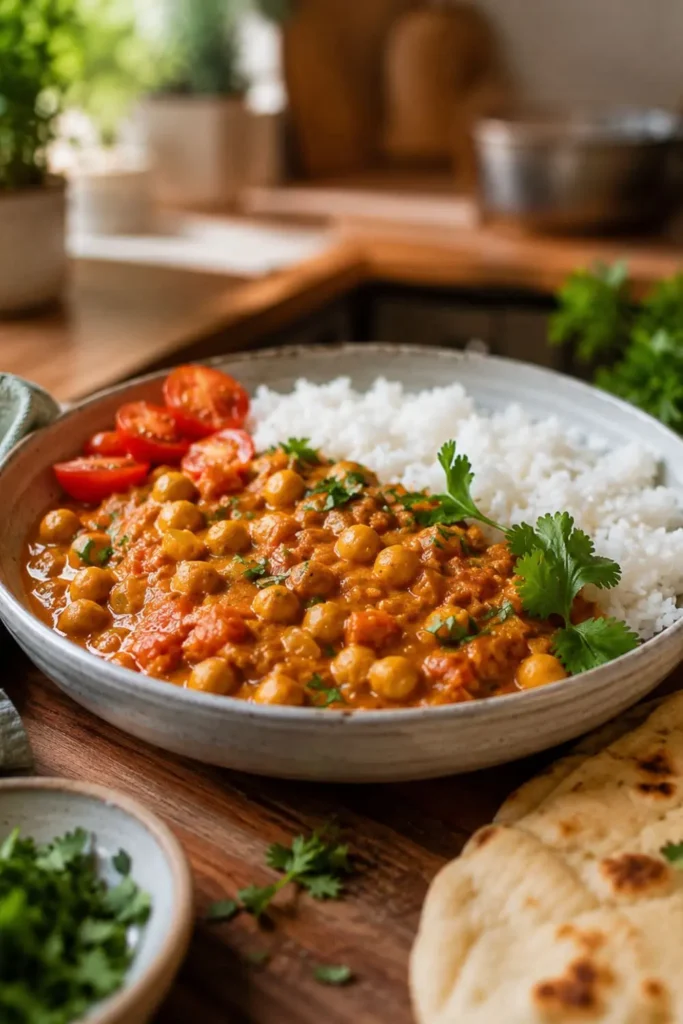
Dump-and-Go Vegan Chickpea Marsala delivers genuine restaurant-quality results in 50 minutes with completely accessible ingredients and a technique that anyone can master. Six generous servings, deeply spiced, creamy, and fully plant-based this is the weeknight recipe that makes you feel like you genuinely know what you’re doing in the kitchen.
The caramelized onions take patience. The bloomed spices take 2 minutes. The 25-minute simmer takes a little trust. The finished bowl makes all of it feel completely effortless in retrospect.
Make a batch tonight. Eat it tomorrow when it tastes even better. Your takeout app can wait.
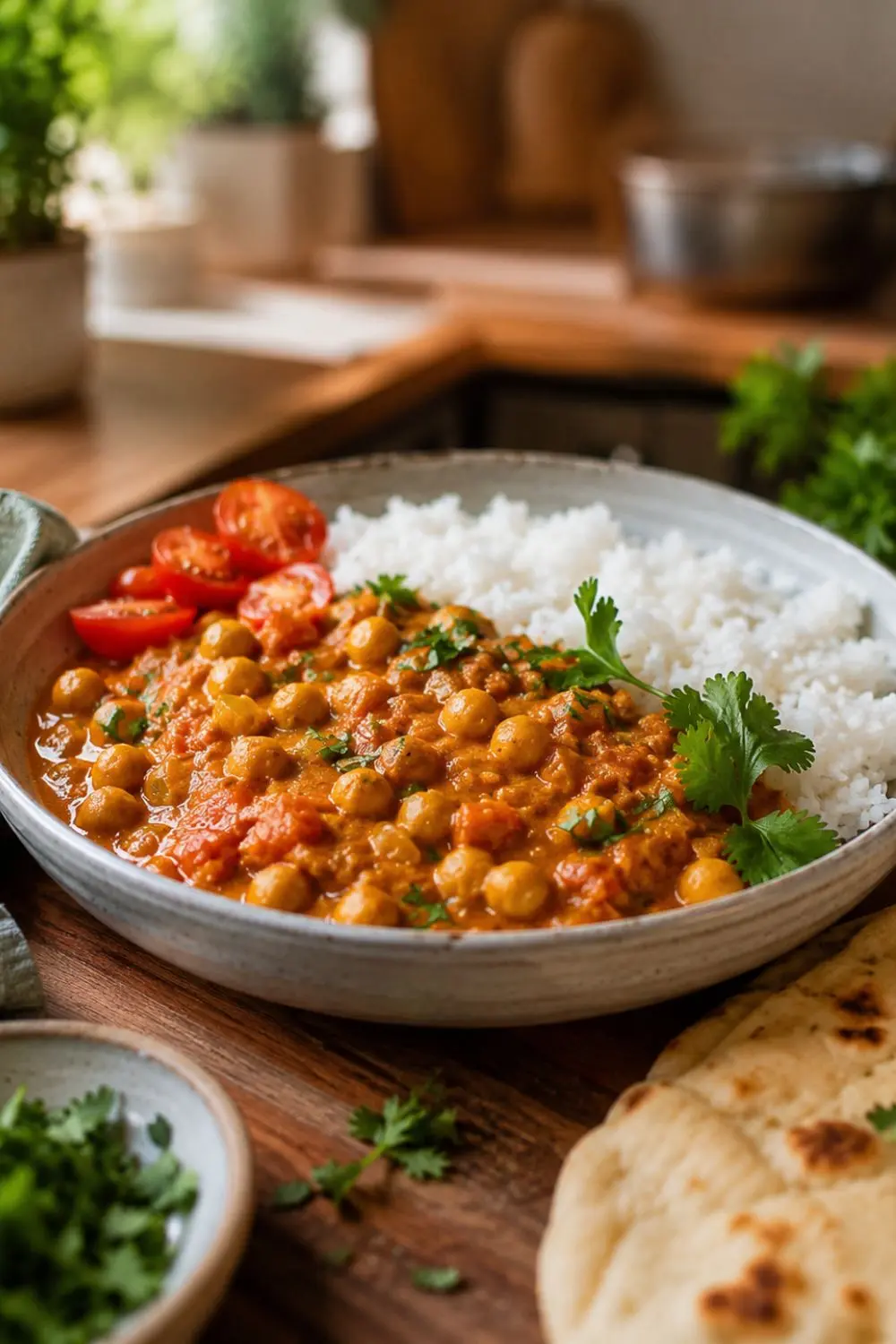
Dump-and-Go Vegan Chickpea Marsala
Ingredients
Equipment
Method
- Step-by-Step Instructions
- Step 1 — Caramelize the Onion with Cumin Seeds
- Heat the 2 tablespoons of olive oil in your large skillet over medium heat. Add the diced onion and the 1 teaspoon of cumin seeds together. Cook for 8–12 minutes, stirring occasionally, until the onions turn deeply golden and develop browned edges and the cumin seeds become fragrant and slightly darker.
- This step takes patience. The temptation to turn up the heat and rush the onions is real and you should resist it completely. Medium heat over sufficient time is what produces that deep golden color and concentrated sweetness. High heat burns the outside while leaving the inside raw and sharp-tasting. Give the onions their full time and the sauce rewards you for it.
- Step 2 — Add Garlic and Ginger
- Add the minced garlic and grated ginger to the pan. Stir constantly and cook for 1–2 minutes until the mixture becomes intensely fragrant. The garlic and ginger hit the hot oil and start releasing their aromatic compounds immediately your kitchen will smell extraordinary at this moment.
- Don’t walk away during this step. Garlic burns in the same time it takes to answer a quick text, and burned garlic creates a bitter note that carries through the entire finished dish. Keep stirring and keep the heat at medium.
- Step 3 — Bloom the Spices
- Add the garam masala, turmeric, cayenne, coriander (if using), and salt to the pan all at once. Stir constantly for 1–2 minutes until the spices coat the onion and garlic mixture and become intensely fragrant. The pan will look very dry during this step that’s expected. The spices are toasting in the residual oil and drawing flavor out of every granule.
- Blooming spices directly in oil with aromatics is the single technique that distinguishes good Indian-style cooking from mediocre Indian-style cooking. The difference in final flavor between bloomed spices and spices added directly to liquid is significant and immediately noticeable. This step takes 2 minutes. It’s worth every second.
- Step 4 — Build the Tomato Sauce
- Pour in both cans of diced tomatoes with all their juices. Stir well to incorporate the spiced onion base throughout the tomatoes. Cook for 4–5 minutes, stirring occasionally, until the tomatoes soften, break down partially, and start becoming saucy. The mixture should begin to smell like an actual curry sauce rather than individual components at this point.
- Step 5 — Add the Chickpeas and Coconut Milk, Then Simmer
- Stir in the tomato paste, both cans of drained and rinsed chickpeas, and the can of coconut milk. Stir everything together thoroughly until the coconut milk incorporates evenly and the sauce becomes uniformly creamy and rich-looking.
- Bring the pot to a gentle simmer not a rolling boil, just small, lazy bubbles breaking the surface. Cover and cook for 25–30 minutes, stirring occasionally, until the chickpeas have absorbed some of the surrounding sauce and become deeply flavored throughout. The sauce should thicken noticeably during this time.
- Keep the heat genuinely low during this simmering stage. Coconut milk at a rolling boil can separate and become grainy. A gentle simmer keeps it creamy and smooth throughout the long cook.
- Step 6 — Taste, Adjust, and Serve
- Remove the lid and taste the marsala. Adjust seasoning more salt, more cayenne for heat, a pinch more garam masala if the flavor needs more warmth and complexity. Stir in any adjustments and cook uncovered for 2–3 more minutes.
- Serve over your grain of choice and scatter fresh cilantro generously over each bowl.
Notes
Estimated Nutrition Per Serving
Based on 6 servings with full-fat coconut milk, without grain base:| Nutrient | Per Serving (approx.) |
| Calories | ~320–360 kcal |
| Carbohydrates | ~38g |
| Protein | ~12g |
| Fat | ~15g |
| Saturated Fat | ~9g (from coconut milk) |
| Fiber | ~10g |
| Iron | ~4mg |

Hi — I’m Rachel. I’m a wife, a mom, and a home cook who believes that food should bring comfort, joy, and compassion to the table. I live with my family — two hungry little foodies who are my most honest recipe testers — and together we’ve built a kitchen culture that’s all about good food that happens to be 100% vegan. I started this blog because I wanted a place to share the recipes that keep our days moving, the dishes that make weeknights feel a little easier, and the meals that become our little family traditions.