
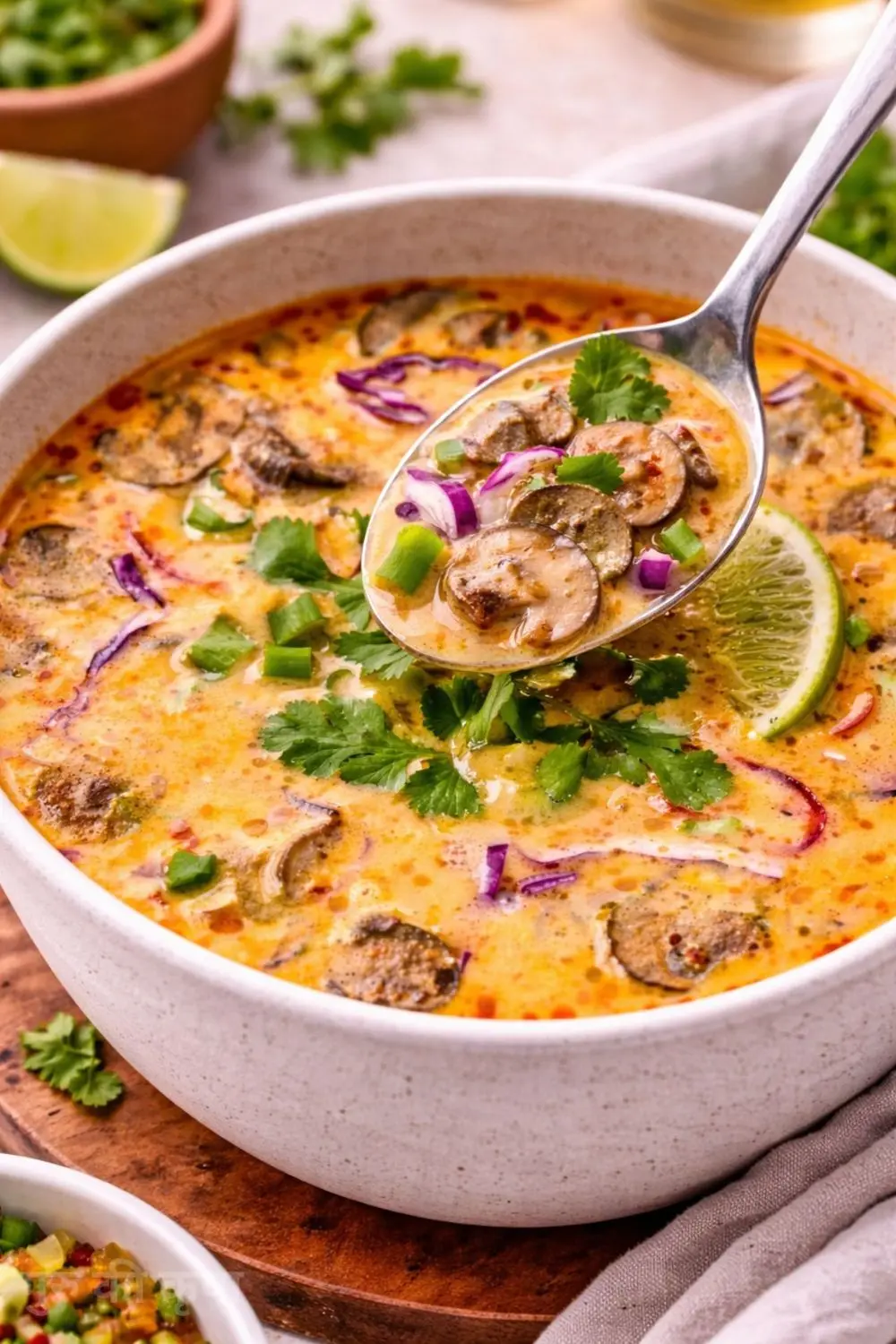
Thai coconut lemongrass soup is the kind of dish that makes your entire kitchen smell like a high-end Thai restaurant the moment the lemongrass hits the hot oil. Easy Crockpot Vegan Thai Coconut Lemongrass Soup delivers that exact experience in just 26 minutes fragrant, creamy, slightly spicy, and genuinely complex in a way that makes people assume you spent significantly more time and effort than you actually did.
Sweet coconut milk, bright lime, earthy ginger, warming curry powder, and that unmistakable lemongrass aroma all come together in a soup that’s light enough for summer but bold enough to be genuinely exciting.
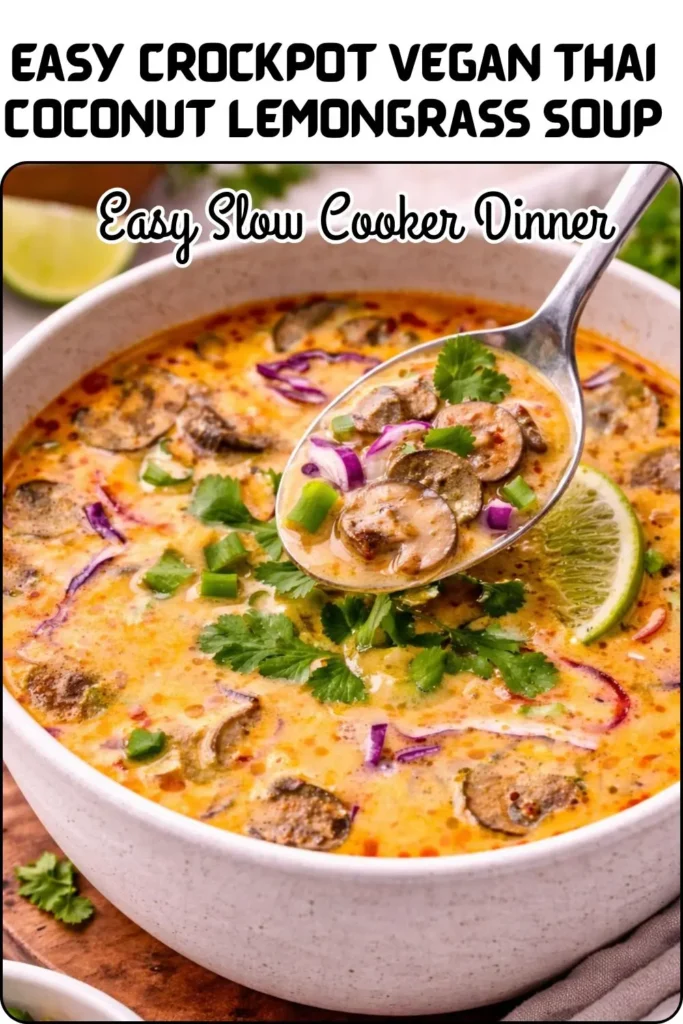
I started making this when I found myself craving the Tom Kha Gai from my favorite Thai restaurant and realized that most of the flavor complexity comes from ingredients that are increasingly easy to find. Fresh lemongrass, a good Asian chili paste, curry powder, and coconut milk that’s the foundation. Everything else supports those four. Once I nailed the technique, I made this soup on a loop for most of the summer. No regrets.
My Recipe Timing and Serving Details
Here’s your complete planning overview:
| Detail | Info |
| Prep Time | ~10 minutes |
| Cook Time | ~16 minutes |
| Total Time | 26 minutes |
| Servings | 4 servings |
| Serving Size | 1¼ cups |
| Calories Per Serving | 203 kcal |
| Course | Soup / Main Course |
| Cuisine | Thai-Inspired |
| Diet | 100% Vegan |
26 minutes total for a deeply aromatic, creamy, restaurant-quality Thai coconut soup that serves 4 people. At just 203 calories per serving, this soup is one of the lightest recipes in this entire summer series satisfying in terms of flavor without weighing you down at all. It’s the kind of bowl that feels restorative and exciting simultaneously, which is a combination that most recipes only aspire to.
What Makes This Soup Taste So Authentic
Traditional Thai coconut lemongrass soup often called Tom Kha builds its distinctive flavor from a specific combination of aromatics that create a multi-layered broth you can’t achieve by shortcutting any of them. Easy Crockpot Vegan Thai Coconut Lemongrass Soup uses the same foundational approach with a streamlined technique that makes it accessible for any weeknight.
Fresh lemongrass is the ingredient that defines the entire soup. It contributes a citrusy, slightly floral, deeply aromatic quality that dried herbs and bottled substitutes simply cannot replicate at the same intensity. When it hits hot oil, the essential oils release immediately and fill the kitchen with that unmistakable Thai restaurant aroma.
Fresh ginger adds warmth and a bright, slightly spicy heat that’s different from chili pepper heat more immediate and gingery, less building. Asian chili paste layers on a deeper, fermented heat with complexity that straight cayenne or crushed red pepper doesn’t deliver.
Coconut milk finishes the broth with richness, natural sweetness, and that characteristic creaminess that makes Tom Kha so satisfying. The combination of all these elements creates a broth so aromatic and complex that it tastes like it simmered for hours rather than the 26 minutes it actually takes. FYI this soup is one of those recipes where ingredient quality directly determines result quality. Use fresh lemongrass, good chili paste, and full-fat coconut milk for the best outcome.
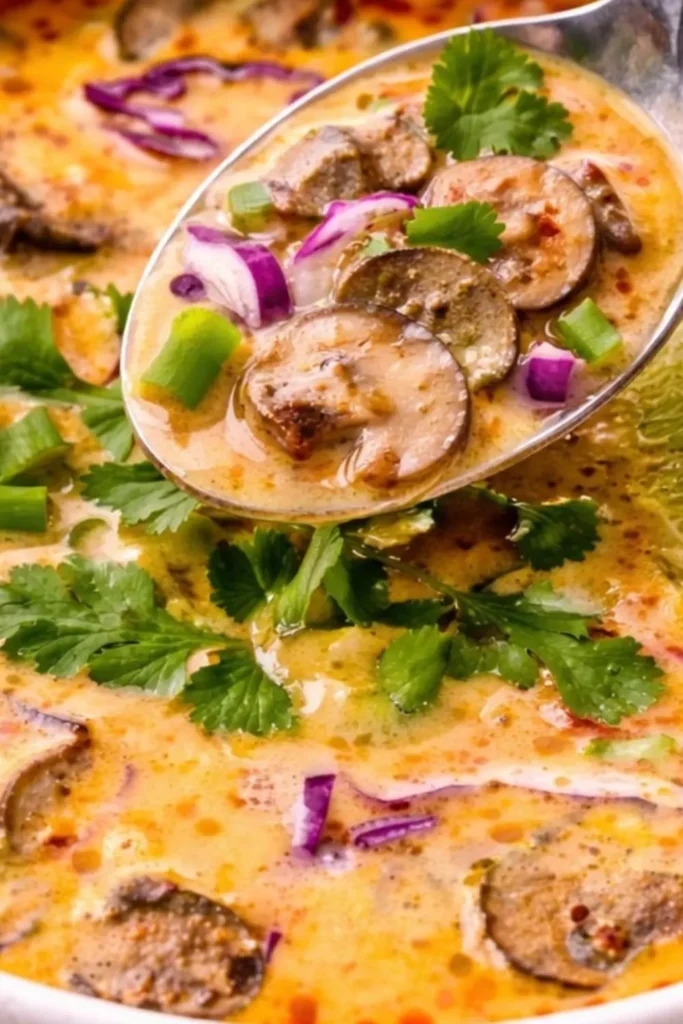
Ingredients You’ll Need
A focused ingredient list where every element matters:
The Aromatic Base:
- 1 tablespoon light olive oil or avocado oil
- 1 tablespoon freshly grated ginger
- 2 teaspoons minced garlic
- 1 tablespoon Asian chili paste , adjust to your heat preference
- 1 stalk fresh lemongrass, peeled and cut into 1-inch pieces
- 2–3 teaspoons curry powder , mild or hot depending on preference
The Broth:
- 4 cups organic vegetable broth or stock
- 2 tablespoons gluten-free soy sauce or tamari (the vegan substitute for fish sauce)
- 1 tablespoon raw sugar
The Soup:
- 1 can (15 oz) regular or light coconut milk
- 8 oz white mushroom caps, sliced
- 2 teaspoons lime zest (from 1 lime)
- Fresh lime juice to taste
For Serving:
- Chopped scallions (green portion only)
- Fresh torn cilantro
- 2 red Thai peppers, sliced seeds in or removed based on heat preference
Optional Add-Ins:
- Cubed firm tofu — pressed and added with the mushrooms
- Shredded cabbage — adds texture and volume
- Rice noodles — for a more substantial meal
The gluten-free soy sauce or tamari replaces the fish sauce the original recipe calls for this is the essential swap that makes the soup fully vegan. Tamari provides the same salty, savory, umami depth that fish sauce delivers, minus any animal products. Use a high-quality tamari the flavor difference between decent and cheap tamari is noticeable in a soup this delicate.
Equipment You’ll Need
This stovetop recipe runs efficiently in a single pot:
Primary Equipment
- Large pot — a 4–5 quart heavy-bottomed pot handles this recipe comfortably. You need enough room for 4 cups of broth, a full can of coconut milk, and the mushrooms without the soup threatening to bubble over. A Dutch oven works beautifully for even heat distribution, but any large pot handles this well given the shorter cook time.
- Fine mesh strainer (optional) for straining the lemongrass pieces and ginger from the finished broth if you prefer a cleaner, more refined soup without fibrous lemongrass pieces to navigate while eating. The recipe notes this as optional but acknowledges it may reduce some flavor intensity. IMO, straining is worth it for presentation and eating ease just simmer the lemongrass slightly longer before straining to extract maximum flavor first.
Supporting Equipment
- Microplane or fine grater , for grating the fresh ginger. Fresh ginger grated finely integrates into the hot oil and broth more completely than chunked or sliced ginger, contributing more flavor per tablespoon.
- Sharp knife and cutting board, for peeling and cutting the lemongrass, slicing the mushrooms, mincing the garlic, and slicing the Thai peppers
- Wooden spoon or silicone spatula , for stirring the aromatics and throughout the cooking process
- Measuring spoons and cups
- Citrus zester — for the lime zest
- Citrus juicer — for the lime juice
- Ladle — for serving
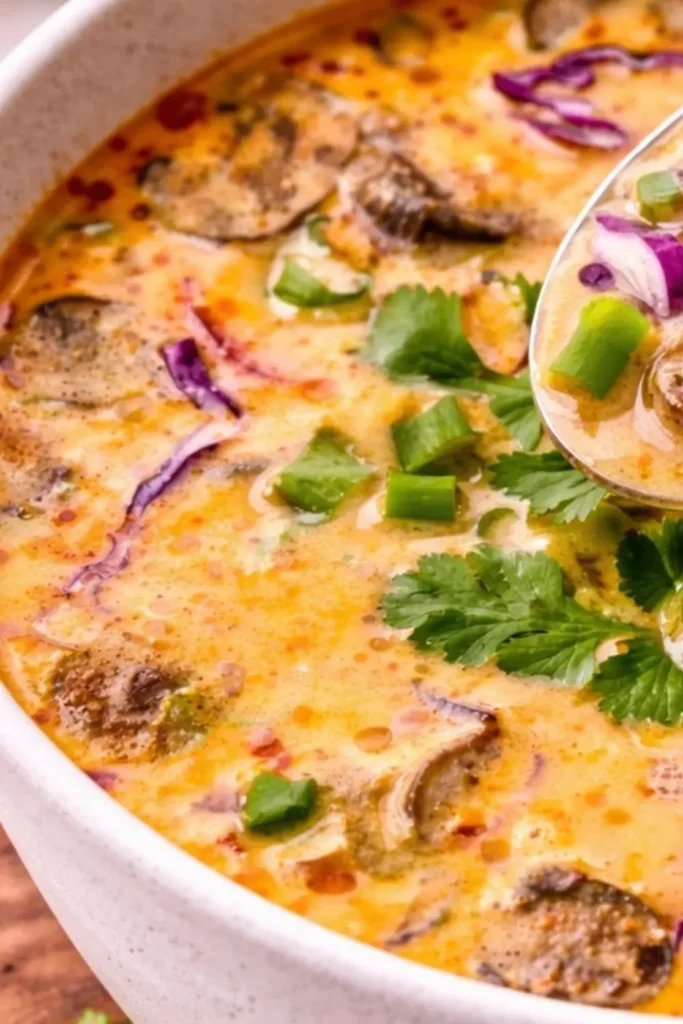
Understanding Lemongrass The Essential Prep Step
Fresh lemongrass is one of those ingredients that looks intimidating until you work with it once, and then you can’t imagine cooking Thai food without it. Here’s exactly how to handle it:
Peeling lemongrass: Remove and discard the outer 2–3 layers of the stalk these are dry, tough, and fibrous with minimal flavor. The inner layers are softer and more fragrant.
Cutting lemongrass: Cut the peeled stalk into 1-inch pieces for the soup. These pieces steep in the hot broth and release their essential oils throughout the simmering stage. They’re not meant to be eaten their purpose is purely aromatic infusion.
Bruising lemongrass (optional enhancement): Before cutting, use the flat side of your knife to lightly crush the lemongrass stalk. This breaks the cell walls and releases the essential oils more readily during cooking, producing a more intensely flavored broth in less time.
Lemongrass paste substitute: The recipe notes that 1½ tablespoons of lemongrass paste works as a direct substitute for the fresh stalk. Lemongrass paste is available in most Asian grocery stores and some mainstream supermarkets in the herb section. It’s convenient and shelf-stable great for keeping on hand. The flavor is slightly less vibrant than fresh but still produces an excellent soup.
Step-by-Step Instructions For
Step 1 — Bloom the Aromatics
Heat the 1 tablespoon of olive or avocado oil in your large pot over medium heat. Add the freshly grated ginger, minced garlic, Asian chili paste, cut lemongrass pieces, and curry powder all at once.
Cook, stirring constantly, for 1–2 minutes until the mixture becomes intensely fragrant. The lemongrass essential oils, ginger, and curry powder all bloom in the hot oil simultaneously the aroma at this stage is extraordinary and signals that the base is developing exactly right.
Don’t rush this step and don’t raise the heat above medium. Garlic burns fast, chili paste can scorch, and lemongrass needs moderate heat to release its oils without becoming bitter. Keep stirring and keep the heat at a genuine medium.
Step 2 — Build the Broth
Add the 4 cups of vegetable broth, 2 tablespoons of tamari, and 1 tablespoon of raw sugar to the pot. Stir well to incorporate all the aromatics into the liquid. The broth will immediately turn golden from the curry powder and chili paste.
Reduce the heat to low and simmer for 10–15 minutes. This simmering stage is where the lemongrass and ginger slowly steep into the broth, infusing it with deep aromatic flavor. The longer you simmer, the more intense the lemongrass character becomes.
Optional straining step: At the end of the simmer, use a fine mesh strainer to remove the lemongrass pieces and any large ginger bits. Pour the strained broth back into the pot and proceed. This produces a cleaner, more refined soup that’s easier to eat. The recipe acknowledges this step may reduce some flavor but notes the lemongrass has contributed substantially during the simmer.
Step 3 — Add Coconut Milk and Mushrooms
Pour in the can of coconut milk and stir until completely incorporated into the broth. The soup transforms immediately the golden broth becomes creamy, slightly thickened, and visually beautiful. Add the sliced mushrooms and lime zest and stir to combine.
Continue cooking on low to medium-low heat for 5–8 minutes until the mushrooms cook through and soften completely. Keep the heat genuinely low during this stage coconut milk at a rolling boil can separate and become grainy. A gentle simmer keeps everything creamy and smooth.
This is also when you add any optional protein cubed tofu, shredded cabbage, or rice noodles all go in with the mushrooms and cook through in the same 5–8 minute window.
Step 4 — Finish with Lime and Garnish
Stir in fresh lime juice to taste start with the juice of half a lime and add more based on how bright you want the finished soup. Lime juice added at this final stage preserves its fresh, vibrant quality rather than becoming muted by extended cooking.
Ladle into bowls and immediately garnish with chopped scallions, fresh torn cilantro, and sliced red Thai peppers. Serve while hot.
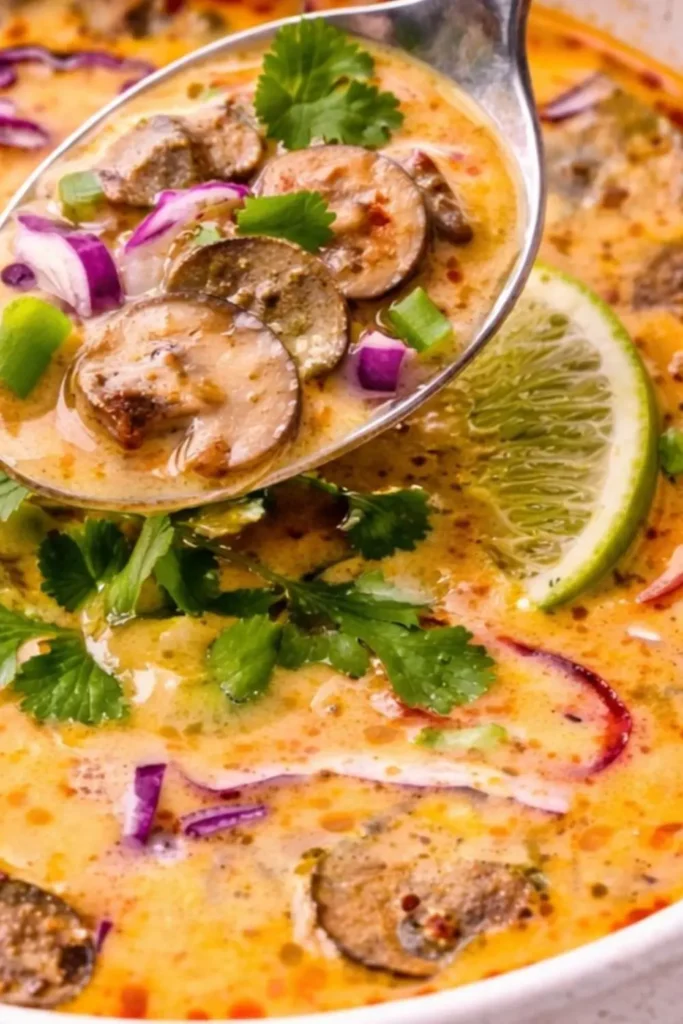
The Chili Paste and Curry Powder Decision
These two ingredients significantly affect the soup’s heat level and flavor character, and the right choice depends on your specific ingredients and tolerance:
Choosing Your Chili Paste
Sambal oelek — pure chili paste with a clean, direct heat. Use this when you want heat without much additional seasoning from the paste itself.
Gochujang — Korean fermented chili paste with sweetness and depth. Produces a slightly different flavor profile but works beautifully. Reduces to 2 teaspoons since it’s more intensely flavored.
Thai red curry paste — adds lemongrass, galangal, and kaffir lime leaf flavors beyond just heat. Doubles down on the Thai character of the soup. IMO this is the most interesting choice if you can find a quality vegan version check that it doesn’t contain shrimp paste.
Lee Kum Kee chili garlic sauce — widely available, well-balanced, and reliably good. A solid default choice.
Curry Powder — Mild vs. Hot
The recipe specifically notes using mild curry powder when your chili paste already runs hot which is smart, thoughtful layering. If you use a milder chili paste, switch to a medium or hot curry powder to compensate. The goal is balanced warmth throughout the soup rather than one-dimensional heat from a single source.
Madras curry powder — more complex and slightly warmer than standard yellow curry powder. Excellent choice for this soup.
Standard yellow curry powder — mild, accessible, widely available. Works perfectly well in this recipe.
Coconut Milk — Regular vs. Light
You may also like Next recipe
Summer Vegan Slow Cooker Peanut Noodles
The recipe gives you the choice between regular and light coconut milk, and the difference is meaningful:
Regular (full-fat) coconut milk produces a richer, creamier, more luxurious broth. The fat content creates body and silk that light coconut milk can’t match. This is the better choice for a soup where the creaminess is part of the experience.
Light coconut milk produces a lighter, more broth-forward soup that’s less creamy but still flavorful and satisfying. At 203 calories per serving with full-fat coconut milk, the calorie count is already very reasonable there’s no compelling nutritional reason to use light unless you strongly prefer a thinner consistency.
Nutrition Information Per Serving
At just 203 calories per 1¼-cup serving, this soup delivers exceptional nutritional value:
| Nutrient | Per Serving |
| Calories | 203 kcal |
| Carbohydrates | 12.4g |
| Protein | 7.4g |
| Fat | 13.3g |
| Saturated Fat | 8g |
| Fiber | 1.3g |
| Sugar | 7.9g |
| Sodium | 480mg |
| Cholesterol | 0mg |
7.4 grams of plant-based protein at 203 calories per serving reflects the mushrooms and broth contributing meaningfully. The fat content comes from the coconut milk plant-based saturated fat from coconut that’s metabolized differently than animal saturated fat. Add tofu to the soup and protein per serving increases by approximately 5–7 additional grams, making it an even more complete meal.
Storage and Reheating
- Refrigerator: Store cooled soup in an airtight container for up to 4 days. The lemongrass flavor deepens and matures overnight this soup genuinely tastes better on day two.
- Freezer: Freeze without the fresh garnishes for up to 2 months. Coconut milk soups can separate slightly after freezing stir vigorously while reheating to recombine.
- Reheating: Warm on the stovetop over low heat, stirring gently. Avoid boiling reheated coconut milk soup it separates at high heat. Microwave at medium power in 60-second intervals works well for individual portions.
- Garnishes: Always add fresh scallions, cilantro, and Thai pepper after reheating never store or reheat with fresh garnishes already in.
My Final Thoughts — Make This Soup and Bring Thailand to Your Kitchen

Easy Crockpot Vegan Thai Coconut Lemongrass Soup is everything a summer soup should be aromatic enough to fill your kitchen with incredible fragrance, light enough to eat comfortably in warm weather, and flavorful enough to make you genuinely look forward to dinner. 26 minutes, 4 servings, 203 calories, zero compromise on the flavors that make Thai cooking so beloved.
The lemongrass is the ingredient that makes this recipe worth making. Once you smell what it does to hot oil, you’ll keep fresh lemongrass in your kitchen permanently.
Make the soup tonight. Taste the difference fresh lemongrass makes. Then go ahead and cancel that Thai takeout order your kitchen just leveled up.
Easy Crockpot Vegan Thai Coconut Lemongrass Soup
Ingredients
Equipment
Method
- Step 1 — Bloom the Aromatics
- Heat the 1 tablespoon of olive or avocado oil in your large pot over medium heat. Add the freshly grated ginger, minced garlic, Asian chili paste, cut lemongrass pieces, and curry powder all at once.
- Cook, stirring constantly, for 1–2 minutes until the mixture becomes intensely fragrant. The lemongrass essential oils, ginger, and curry powder all bloom in the hot oil simultaneously the aroma at this stage is extraordinary and signals that the base is developing exactly right.
- Don’t rush this step and don’t raise the heat above medium. Garlic burns fast, chili paste can scorch, and lemongrass needs moderate heat to release its oils without becoming bitter. Keep stirring and keep the heat at a genuine medium.
- Step 2 — Build the Broth
- Add the 4 cups of vegetable broth, 2 tablespoons of tamari, and 1 tablespoon of raw sugar to the pot. Stir well to incorporate all the aromatics into the liquid. The broth will immediately turn golden from the curry powder and chili paste.
- Reduce the heat to low and simmer for 10–15 minutes. This simmering stage is where the lemongrass and ginger slowly steep into the broth, infusing it with deep aromatic flavor. The longer you simmer, the more intense the lemongrass character becomes.
- Optional straining step: At the end of the simmer, use a fine mesh strainer to remove the lemongrass pieces and any large ginger bits. Pour the strained broth back into the pot and proceed. This produces a cleaner, more refined soup that’s easier to eat. The recipe acknowledges this step may reduce some flavor but notes the lemongrass has contributed substantially during the simmer.
- Step 3 — Add Coconut Milk and Mushrooms
- Pour in the can of coconut milk and stir until completely incorporated into the broth. The soup transforms immediately the golden broth becomes creamy, slightly thickened, and visually beautiful. Add the sliced mushrooms and lime zest and stir to combine.
- Continue cooking on low to medium-low heat for 5–8 minutes until the mushrooms cook through and soften completely. Keep the heat genuinely low during this stage coconut milk at a rolling boil can separate and become grainy. A gentle simmer keeps everything creamy and smooth.
- This is also when you add any optional protein cubed tofu, shredded cabbage, or rice noodles all go in with the mushrooms and cook through in the same 5–8 minute window.
- Step 4 — Finish with Lime and Garnish
- Stir in fresh lime juice to taste start with the juice of half a lime and add more based on how bright you want the finished soup. Lime juice added at this final stage preserves its fresh, vibrant quality rather than becoming muted by extended cooking.
- Ladle into bowls and immediately garnish with chopped scallions, fresh torn cilantro, and sliced red Thai peppers. Serve while hot.
Notes
Nutrition Information Per Serving
At just 203 calories per 1¼-cup serving, this soup delivers exceptional nutritional value:| Nutrient | Per Serving |
| Calories | 203 kcal |
| Carbohydrates | 12.4g |
| Protein | 7.4g |
| Fat | 13.3g |
| Saturated Fat | 8g |
| Fiber | 1.3g |
| Sugar | 7.9g |
| Sodium | 480mg |
| Cholesterol | 0mg |

Hi — I’m Rachel. I’m a wife, a mom, and a home cook who believes that food should bring comfort, joy, and compassion to the table. I live with my family — two hungry little foodies who are my most honest recipe testers — and together we’ve built a kitchen culture that’s all about good food that happens to be 100% vegan. I started this blog because I wanted a place to share the recipes that keep our days moving, the dishes that make weeknights feel a little easier, and the meals that become our little family traditions.